
You can buy patio paint today at Home Depot, Lowe's, Sherwin-Williams, Benjamin Moore dealers, or online through those same retailers. All four carry dedicated porch and patio floor paints designed for concrete, wood, and masonry surfaces. The real trick isn't finding paint, it's buying the right kind for your specific surface and your local climate, because a paint that works great on a shaded wood deck in Georgia will bubble and peel on a sun-baked concrete slab in Arizona within a season.
Where to Buy Patio Paint: Best Stores and What to Get

Elise Prescott
11 Jun 2026
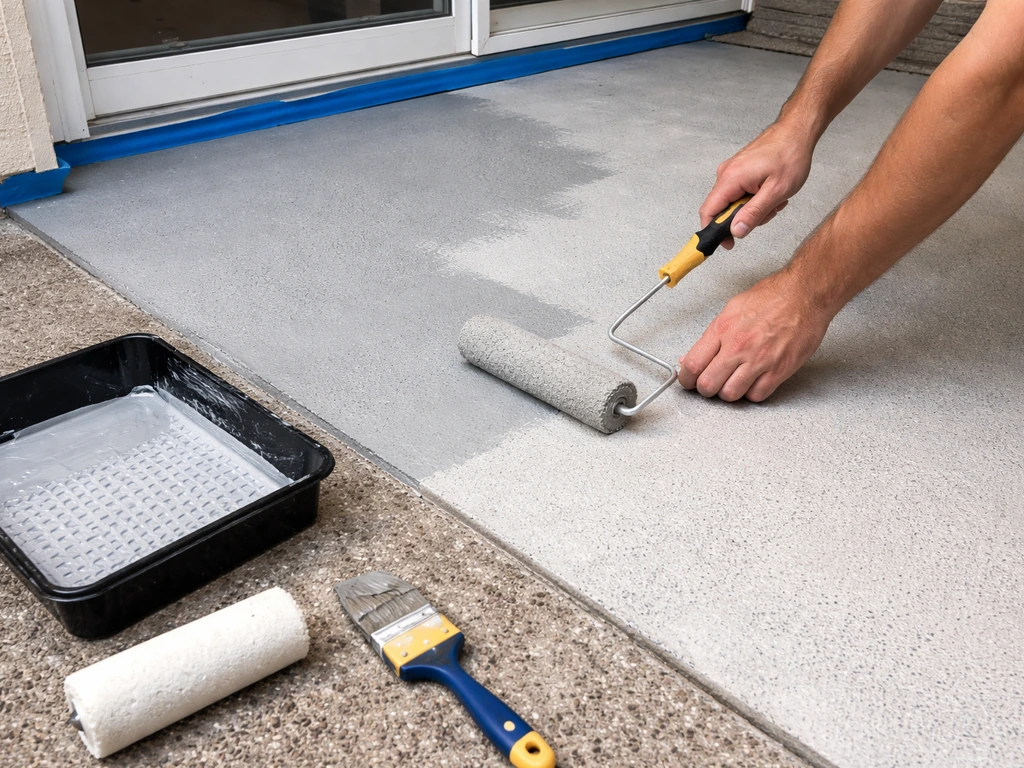
Best places to buy patio paint right now
For most homeowners, one of these four options will get you sorted today, whether you need it in your hands this afternoon or delivered to your door by the weekend.
Home Depot
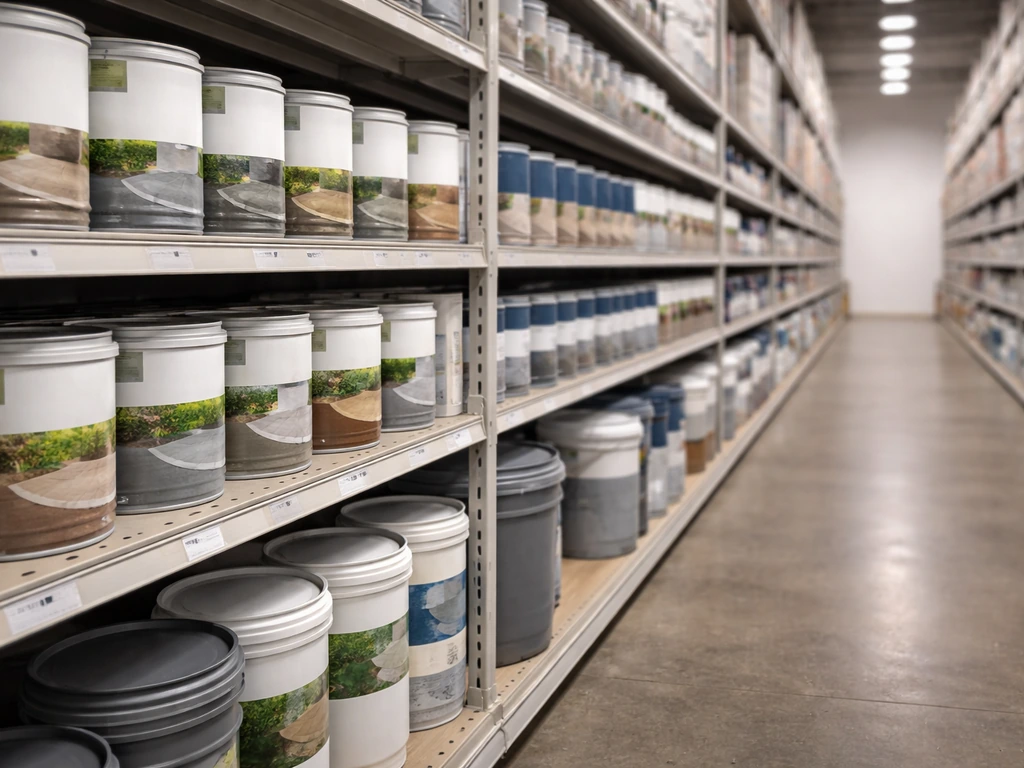
Home Depot has a dedicated online category for exterior concrete and patio floor paint. BEHR PREMIUM Porch and Patio Floor Paint is one of their most popular options, available in both a low-lustre enamel and a gloss enamel, and you can order it for delivery or check store pickup availability. Coverage runs roughly 250 to 400 square feet per gallon depending on how porous your surface is. It's a solid everyday choice for concrete patios and works for covered porches too.
Lowe's
Lowe's carries a dedicated Porch and Floor Paints section online, including products like Rust-Oleum Concrete Saver porch and floor paint. Lowe’s lists Rust-Oleum Concrete Saver porch and floor paint under its Porch, Floor and patio category online. Their site lets you filter by surface type (concrete is its own subcategory), which helps when you're sorting through options. Anti-skid floor paints for outdoor horizontal surfaces are also listed here, which matters a lot if your patio gets wet or you're working near a pool.
Sherwin-Williams

Sherwin-Williams is worth visiting in person if you want expert help matching a color or selecting the right primer for a tricky surface like old stucco or brick. Their LOXON Concrete and Masonry Primer/Sealer is one of the best concrete primers available and pairs well with their exterior floor and patio coatings. Store staff can pull your existing color from a chip or swatch, which saves a lot of guesswork. You won't find Sherwin-Williams at big-box stores, so check their store locator.
Benjamin Moore dealers
Benjamin Moore sells through independent paint dealers and some hardware stores rather than company-owned chains. Their Floor and Patio Latex Enamel (Low Sheen) is a strong option with coverage listed at 500 to 600 square feet per gallon, which is generous. Their Insl-X Tough Shield Porch and Floor Coating is the heavy-duty choice for abrasion-heavy patios, and it pairs with their Insl-X Sure Step Anti-Slip Coating for areas that get slippery when wet. To find a dealer near you, use Benjamin Moore's store locator on their site.
Online ordering
All four brands above offer online ordering with home delivery. Home Depot and Lowe's both let you buy patio paint online and pick it up curbside the same day if it's in stock. For specialty finishes or exact color matches, in-store is better, but for a standard gray or tan concrete paint in a popular brand, ordering online is perfectly fine. Just double-check the coverage rate and surface compatibility listed on the product page before you add it to your cart.
Match the paint to your patio surface first
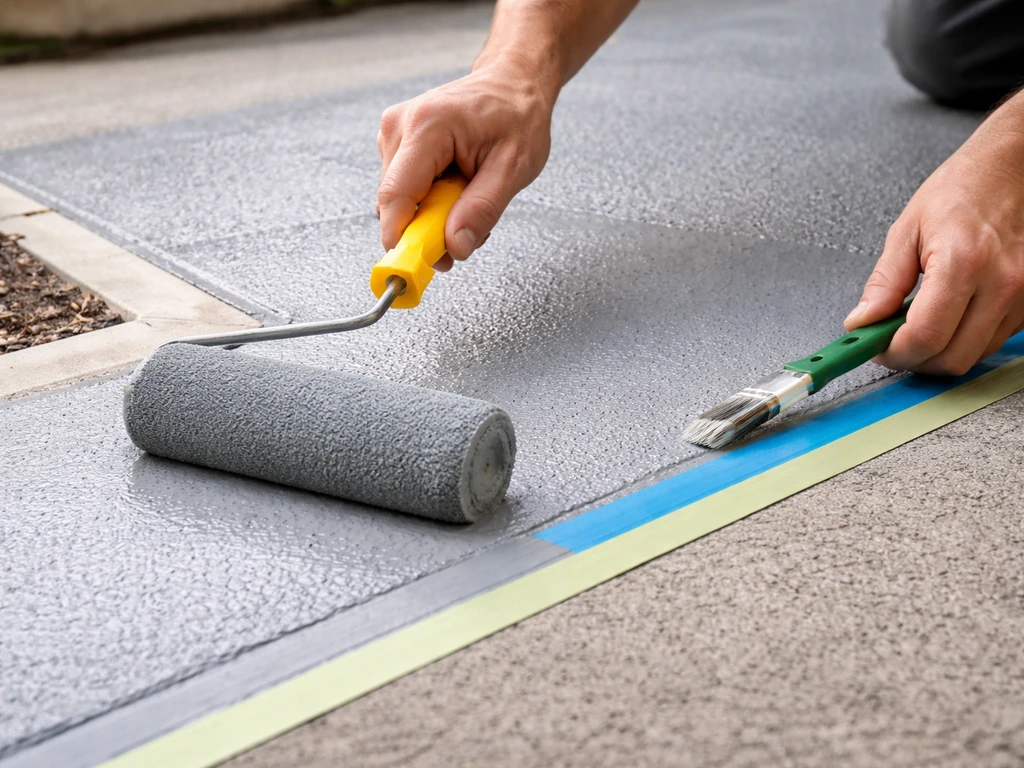
This is where most people make mistakes. Not all patio paints work on all surfaces, and using the wrong one is the number one reason paint peels, flakes, or turns chalky within a year. Before you buy anything, identify exactly what your patio surface is made of. After that, you can choose the best patio deck paint formula for your exact material and the weather it will face.
| Surface | Best paint type | Primer needed? | Notes |
|---|---|---|---|
| Concrete (bare or painted) | 100% acrylic porch/floor enamel or epoxy-based floor coating | Yes, concrete/masonry primer | Etch or clean first; porous surfaces need extra primer |
| Pavers (concrete or clay) | Masonry paint or concrete patio paint | Yes, masonry primer | Avoid film-forming paints that trap moisture under pavers |
| Brick | Masonry or elastomeric paint | Yes, masonry primer | Breathable formulas prevent moisture trapping |
| Stucco | Elastomeric or 100% acrylic masonry paint | Yes, LOXON-type primer | Fill cracks before painting |
| Wood deck/porch floor | Porch and floor enamel or solid deck stain | Yes, wood primer or stain-blocking primer | Check for rot before painting; solid stain often outlasts paint on wood |
| Metal (patio furniture, railings) | Rust-inhibiting enamel or direct-to-metal paint | Optional (use self-priming formula or metal primer) | Sand rust spots first; oil-based holds up better outdoors |
| Composite/PVC decking | Manufacturer often prohibits paint; use deck restorer | Varies | Check manufacturer warranty before painting |
If you have a concrete slab, which is the most common patio surface, you want a 100% acrylic or epoxy-modified floor paint specifically labeled for exterior concrete. Products like BEHR Porch and Patio Floor Paint and Rust-Oleum Concrete Saver are built for this. If you're working with pavers or brick, make sure the paint is breathable or vapor-permeable so moisture can escape from underneath without lifting the film.
Choose the right finish and performance features
The performance specs on a patio paint matter as much as the color, especially given how much abuse an outdoor floor takes from sun, rain, foot traffic, and temperature swings.
Sheen level
Patio floor paints typically come in flat, low-lustre (satin), or gloss. Low-lustre and satin are the most common choices because they're easier to clean than flat but don't show imperfections the way high-gloss does. Gloss looks sharp on covered porches but can be slippery when wet and shows every scratch on high-traffic surfaces. For most outdoor patios, a low-lustre or satin finish is the practical sweet spot. If you want the best paint color for an outdoor patio, start with a low-lustre or satin finish in a shade that complements your outdoor space best paint color for outdoor patio.
UV and weather resistance
If you're in a hot, sunny climate like the Southwest or Florida, UV resistance is non-negotiable. Look for products specifically labeled fade-resistant or UV-stable. BEHR's Porch and Patio Floor Paint is marketed for scuffing, fading, and peeling resistance, which checks the right boxes. In climates with hard freeze-thaw cycles (think Minnesota, Colorado, or upstate New York), you need a paint that can flex slightly as the concrete expands and contracts, so elastomeric or 100% acrylic formulas hold up better than rigid epoxies in those conditions.
Mildew and mold resistance
In humid climates like the Southeast or Pacific Northwest, mildew resistance is a must-have feature. BEHR's Porch and Patio Floor Paint explicitly includes mildew-resistant properties in both its low-lustre and gloss enamel versions. If you're in a damp climate and the product label doesn't mention mildew resistance, keep looking.
Slip resistance
This one is easy to overlook until someone slips. If your patio gets wet regularly, whether from rain, a sprinkler system, or proximity to a pool, you need slip resistance built in or added. If you want the best pool patio paint, prioritize a slip-resistant coating rated for wet conditions near water. Benjamin Moore's Insl-X Sure Step Anti-Slip Coating uses a special anti-slip aggregate and covers 80 to 120 square feet per gallon. Rust-Oleum also sells an anti-slip texture additive (their RockSolid version) that you mix directly into a coating system. Benjamin Moore's own product documentation for the Tough Shield floor coating explicitly says to apply Sure Step where skid resistance is important, meaning the base paint alone isn't always enough for wet areas.
What else you'll need to buy alongside the paint
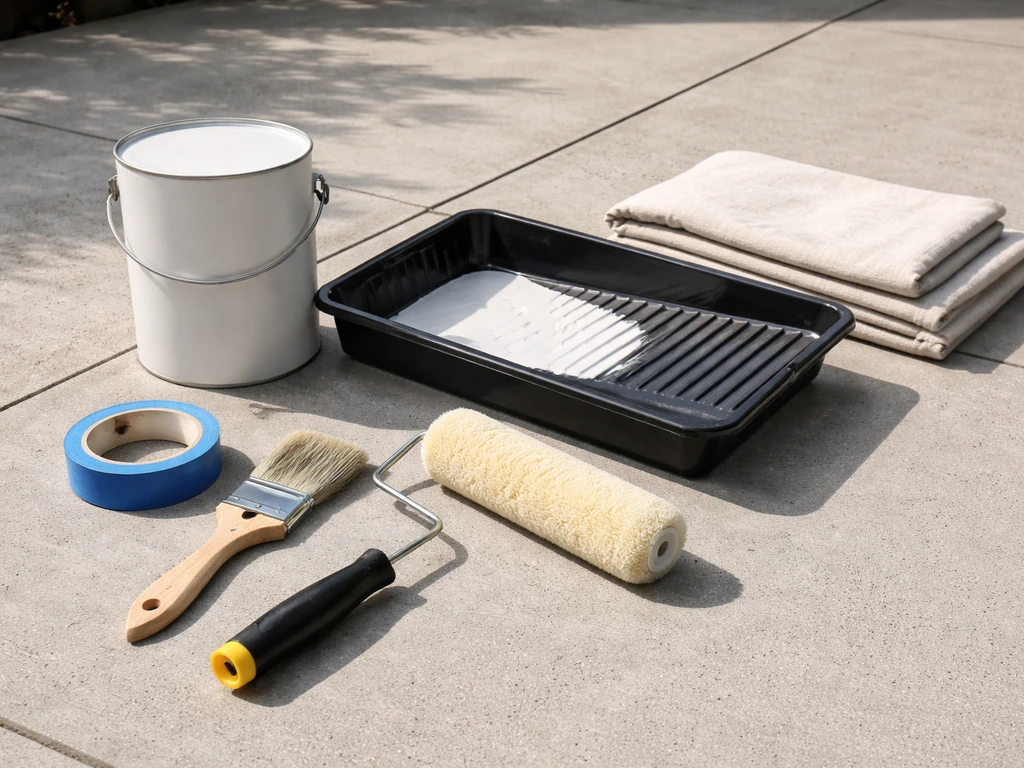
Walking out of the store with just paint is a good way to end up making two trips. Here's what you'll likely need to buy at the same time.
- Concrete/masonry primer: Sherwin-Williams LOXON Concrete and Masonry Primer/Sealer is one of the best options, covering 200 to 320 square feet per gallon and bonding to concrete, brick, stucco, and plaster. Don't skip primer on bare or previously painted concrete.
- Patching material: Fill any cracks, divots, or spalled areas with a concrete patching compound before priming. Painting over damaged concrete will just highlight the damage.
- Cleaner and degreaser: Concrete needs to be clean, dry, and free of oil before anything goes on it. TSP substitute or a dedicated concrete cleaner works well. A pressure washer is even better if you have one.
- Painter's tape: Mask off walls, base molding, and any adjacent surfaces you don't want painted.
- Brushes and rollers: Use a 3/8 to 1/2 inch nap roller for smooth to lightly textured concrete. A 4-inch brush handles edges. For larger areas or detailed surfaces like pavers, an airless sprayer speeds things up considerably.
- Sealer or clear topcoat (optional but recommended): For high-traffic areas or decorative finishes, a clear topcoat adds protection against staining and chemical damage. Rust-Oleum's RockSolid clear coat, for example, requires at least 12 hours of dry time after the last paint coat before application, so factor that into your schedule.
- Anti-slip additive: If your patio is a slip risk, buy the additive or anti-slip coating when you buy the paint, not as an afterthought.
How to calculate coverage and buy the right amount
Measure your patio's length and width, multiply them together to get square footage, then divide by the paint's listed coverage rate. Always round up and buy a little extra for touch-ups later, especially if your color is a custom mix that might be hard to replicate exactly.
Coverage varies quite a bit depending on the product and your surface. Here's a quick comparison of common options:
| Product | Coverage per gallon | Notes |
|---|---|---|
| BEHR Porch & Patio Floor Paint | 250–400 sq. ft. | Lower end on porous/older concrete |
| Benjamin Moore Floor & Patio Latex Enamel (Low Sheen) | 500–600 sq. ft. | Good for smoother surfaces |
| Rust-Oleum RockSolid Metallic Kit | 200–250 sq. ft. (smooth) / 125–150 sq. ft. (porous) | Older concrete needs significantly more product |
| Sherwin-Williams LOXON Concrete Primer | 200–320 sq. ft. | Per coat; porous surfaces absorb more |
| Insl-X Sure Step Anti-Slip Coating | 80–120 sq. ft. | Lower coverage due to aggregate texture |
Old, porous, or previously unpainted concrete always eats more paint than the label suggests. If you're painting bare concrete for the first time, use the lower coverage number from the range and buy accordingly. A 200-square-foot patio might need 1.5 gallons for two coats on porous concrete, even if the can says 400 square feet per gallon. Two coats are almost always necessary outdoors.
Color matching, sample testing, and getting the finish right
Outdoor color looks completely different than it does inside a store or on a screen. Natural light, concrete texture, and the surrounding landscape all change how a color reads once it's on the ground. Don't skip the sample step.
Most paint stores, including Home Depot and Lowe's, sell small sample jars or quarts so you can test a color on an inconspicuous corner of your patio before committing to gallons. Brush or roll the sample on, let it cure for 24 hours, then look at it in morning light, afternoon light, and on a cloudy day. Colors that look neutral indoors sometimes read very yellow or cool-gray outdoors once the concrete texture and surrounding elements are factored in.
If you're trying to match an existing color, bring a chip, a photo, or even a painted piece of concrete to the store. Sherwin-Williams and Benjamin Moore dealers are particularly good at color matching from physical samples. Home Depot and Lowe's can do it too using their in-store spectrophotometers, though independent paint stores often give more nuanced results.
For finish testing, especially if you're choosing between satin and gloss, paint a small section with each and let them cure fully before deciding. Gloss shows surface imperfections more, which can be surprising on a rough concrete slab. If choosing the best patio colors for your overall outdoor space is something you're still working through, it's worth doing that homework before you commit to paint, since the floor color anchors everything else on the patio. If you’re shopping for the best patio colorado springs options, focus on products labeled for exterior concrete and the weather your patio gets best patio colors. Choosing the best patio paints for your outdoor space starts with that homework and helps the whole look come together.
One more thing: let your test patch cure for at least 48 to 72 hours before evaluating it. Fresh paint always looks slightly different than cured paint, particularly in sheen level and color depth.
When to buy from a local pro or specialty paint store instead
Big-box stores are convenient and carry solid products, but there are situations where going to a local pro or specialty store is genuinely the better move, not just a luxury.
- Your patio surface is unusual or in bad shape: If you're painting old, cracked, heavily stained, or previously sealed concrete, an independent paint store or Sherwin-Williams rep can help you identify the right bonding primer and system rather than guessing at the big-box store.
- You're near a pool: Pool decks require slip-resistant coatings and often specific chemical-resistant formulas. A specialty or professional-grade product like Insl-X Sure Step is the right call here, and staff at a dedicated paint store can walk you through the full system.
- You're in a climate with extreme conditions: If you're in a high-altitude region with intense UV and freeze-thaw cycles, or a coastal area with salt air, a specialty paint store can recommend products specifically engineered for those conditions. BEHR and Rust-Oleum from the big-box stores are fine for average conditions, but regional specialists know what actually holds up locally.
- You want a decorative or custom finish: Metallic, stained, or textured concrete finishes are best handled by a specialty coatings supplier or a professional contractor who works with those systems regularly. The Rust-Oleum RockSolid metallic system, for example, has a specific multi-coat process with mandatory dry times between coats that's easier to get right with hands-on guidance.
- You're painting a large area or want a contractor to do the work: If your patio is more than 500 square feet or the prep work is significant (grinding, acid etching, extensive crack repair), hiring a local contractor who supplies their own professional-grade materials is often more cost-effective than multiple DIY attempts gone wrong.
Local painting contractors who specialize in exterior and concrete work often buy from professional supply accounts at Sherwin-Williams or regional paint distributors, which gives them access to product lines not sold in retail stores. If you're on the fence about DIY versus hiring out, getting a quote from a vetted local contractor is worth doing before you commit to buying materials, especially for concrete that needs significant prep work.
Wherever you buy, the most important thing is matching the product to your specific surface, your climate, and your performance needs before the transaction. The paint itself is rarely the expensive part of getting this wrong: it's the prep, the second attempt, and the lost time that adds up. Get the right product the first time and the job is straightforward.
FAQ
Can I use the same patio paint on concrete, wood, and brick if I have all three surfaces?
Usually not. Patio floor paints are formulated for specific substrates, for example 100% acrylic or epoxy-modified concrete coatings for exterior concrete, and different systems for wood and masonry. If you have multiple materials, buy separate products (and primers) per surface so adhesion and moisture behavior match each substrate.
What primer do I need before applying patio floor paint?
It depends on what you have now. Bare, stained, or previously painted concrete typically needs a matching primer or sealer so the topcoat can bond and resist peeling. For porous concrete, a primer that seals and improves adhesion is especially important, while for already sound, properly prepared paint layers you may be able to skip primer if the coating system allows it.
If my patio paint is peeling or flaking, should I scrape everything off?
Yes, to a sound edge. Loose, chalky, or peeling paint prevents new coating from bonding, so you need to scrape to firm material and then clean and repair. Many products also require specific surface prep steps (degreasing, rinsing, drying time) for the warranty-level performance to hold.
Do I need two coats even if the paint coverage looks like it will cover enough?
Most outdoor horizontal coatings need two coats, even when a label suggests one. Coverage numbers are based on ideal conditions, and outdoor floors are typically rougher, more porous, and exposed to wear. Plan on two coats and use the lower end of the label’s coverage range when the surface is old or porous.
How do I calculate how much patio paint to buy for a second coat and touch-ups?
Calculate square footage (length times width), then divide by the product’s stated coverage, and multiply by the number of coats (commonly 2). Round up and add extra for texture loss and future touch-ups, especially for custom colors that may be hard to reproduce later.
Is gloss actually a bad choice for outdoor patios?
Gloss is not inherently wrong, but it changes two things: it highlights imperfections and it can feel slick when wet. If your patio gets rain, sprinklers, or near-pool splashes, choose a low-lustre or satin finish with slip resistance, or pair the coating with an anti-slip system intended for wet traffic.
How can I tell whether I need slip resistance before buying patio paint?
Look at how water behaves on your patio. If you have frequent puddling, use sprinklers nearby, or the patio is shaded and stays damp, assume wet conditions. Choose products that mention anti-slip or skid resistance, and if you’re near a pool or wet cleaning area, consider a system that includes an anti-slip additive or topcoat rather than relying on paint alone.
What should I look for if I live somewhere with freeze-thaw winters?
Choose a coating system designed to flex with concrete movement. Products labeled as 100% acrylic or elastomeric generally handle expansion and contraction better than rigid epoxies in many climates with repeated freeze-thaw cycles. Also confirm the system’s stated temperature limits for application and curing.
I’m worried about mildew. Does patio paint always resist it?
Not always. In humid or damp regions, verify the label specifically mentions mildew resistance. If a product doesn’t list mildew resistance, you may need a mildew treatment for the surface before coating and then use a coating system that’s formulated to resist regrowth.
Can I paint over an older coating without removing it?
Only if it’s fully sound. If the existing coating is peeling, chalky, or not tightly bonded, you should remove or scrape to stable material. If it’s in good condition, properly cleaned, and compatible with the new product system, some coatings allow recoating without full removal, but compatibility is critical.
Is it better to buy patio paint online or in-store for the same product?
Online is fine for standard colors and common concrete coatings, especially if you can verify coverage and surface compatibility. In-store is better when you need exact color matching, spectrophotometer matching from a sample, or help selecting the right primer and system for unusual substrates like old stucco or brick.
Do I need to test a color patch if I already saw the paint color online?
Yes. Outdoor light, concrete texture, and temperature can shift perceived color and sheen. Do a cure-time test patch (not just a 10-minute look), and evaluate it in morning, afternoon, and cloudy conditions. Also remember fresh paint can look darker and different until it fully cures.
How long should I wait before judging the final look and durability after painting?
Plan for at least 48 to 72 hours before evaluating color and sheen, and longer for full cure when moisture and foot traffic are involved. If you can walk on it sooner, it still may not be fully cured, which can affect cleanability, abrasion resistance, and how slip resistance performs.
What equipment should I have if I want a smooth, long-lasting patio floor finish?
Have the right roller or application method for the coating’s intended use, and prepare for thorough surface cleaning. For texture-heavy or anti-slip systems, you may need specific mixing steps or tools for the aggregate or additive. Using the wrong applicator can change thickness and leave thin spots that wear faster.