
For most concrete pool patios, the best coating system is a two-part epoxy primer followed by a UV-stable polyaspartic topcoat with a broadcast aggregate for slip resistance. That combination handles chlorine splash, UV exposure, moisture cycling, and foot traffic better than anything else on the market right now. If your patio moves or cracks seasonally, or if water intrusion is an issue, swap the polyaspartic topcoat for an elastomeric coating like Sika Thorolastic-750 instead.
Best Pool Patio Paint: Pick the Right Coating for Your Surface

Elise Prescott
28 Jun 2026
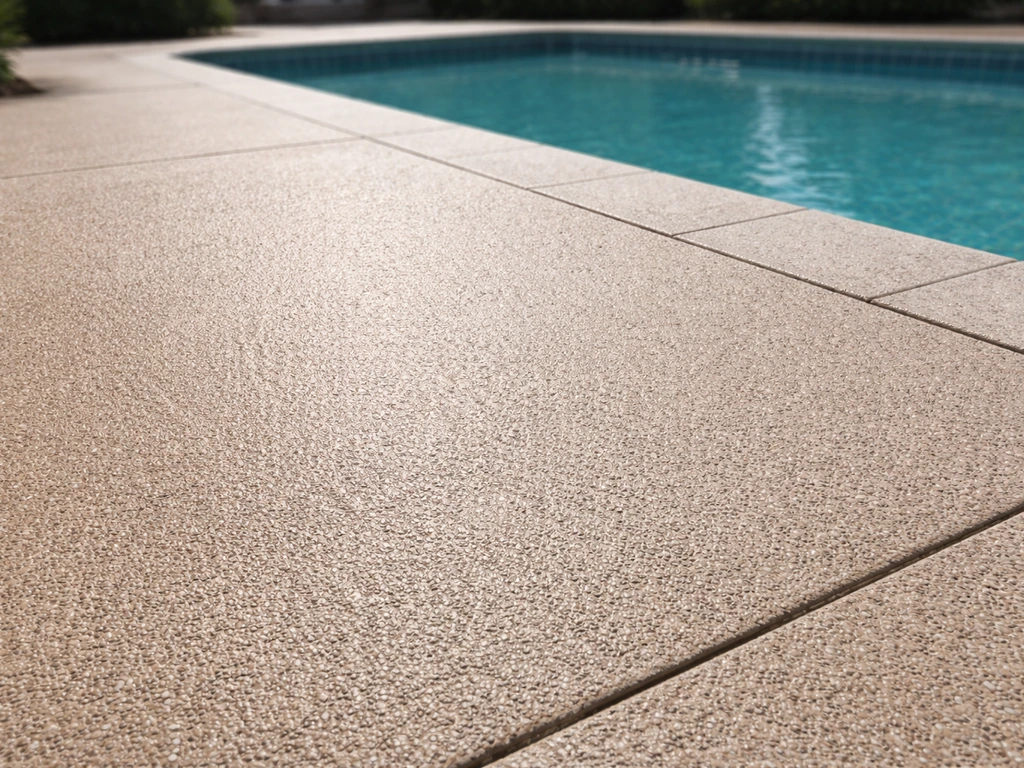
Wood and composite porch-style pool surrounds need a dedicated exterior deck paint or solid stain, not a concrete coating. If you’re painting a wood or composite patio deck, choosing the best patio deck paint for exterior use matters just as much as the prep exterior deck paint. The surface type and your local conditions are what truly determine which product actually lasts.
Figure out your surface first
Before you look at a single product label, you need to know exactly what you're painting and what condition it's in. Pool patios come in bare concrete, stamped concrete, pavers, brick, stucco, and wood or composite decking. Each one behaves differently under a coating, and using the wrong product is the single biggest reason pool patio paint fails within a season.
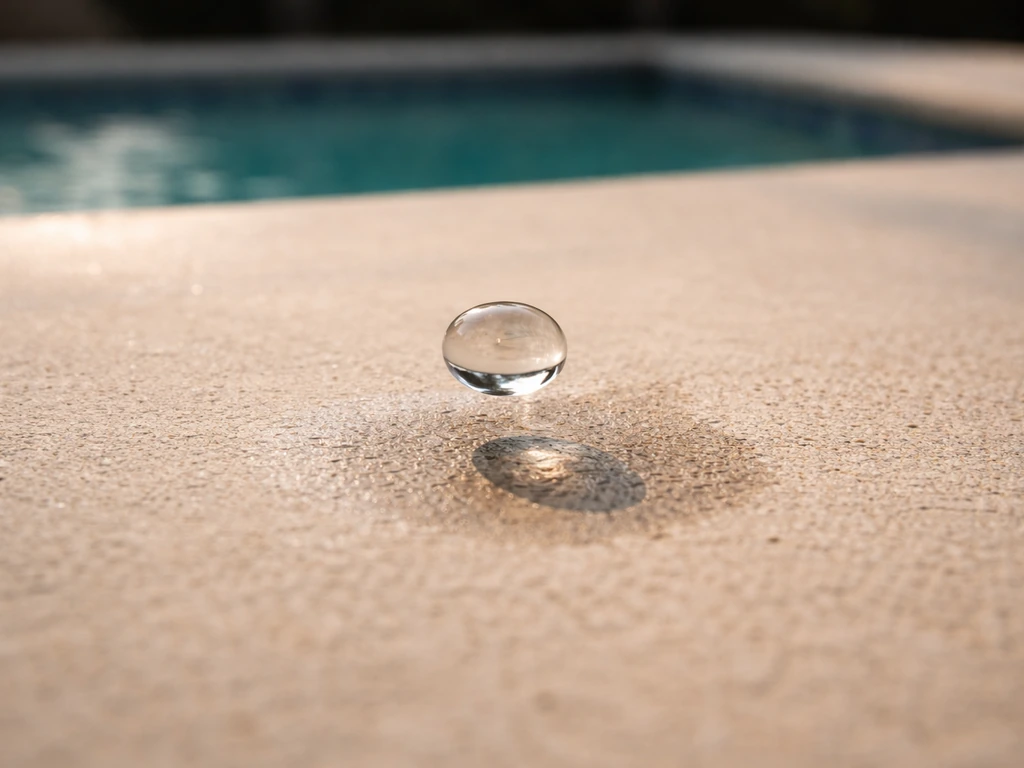
For concrete surfaces, do a simple water-drop test (referenced in ASTM F3191-16 guidance): drop a small amount of water on the surface. If it absorbs in under a minute, the concrete is porous enough to accept a coating or primer. If it beads up, you're dealing with a sealer, curing compound, or residual contamination that has to come off first. Curing compounds, old sealers, adhesive residue, and paint are all bond killers. You cannot skip this step and expect any coating to stick.
Also check whether anything has been applied before. If there's an existing coating, don't assume a new product will bond to it. Many manufacturers, including ConSeal, explicitly say to contact their technical team before coating over an existing coating, and recommend patch-testing adhesion on a representative section. If you're not sure what's on the concrete, assume something is and prep accordingly.
For pavers and brick, the main issue is joint movement. These surfaces flex slightly, so rigid coatings like single-component epoxy can crack and peel at the joints. Elastomeric coatings handle that movement much better. Stucco pool surrounds are similar. For wood pool decks or porch-style planking around a pool, you need a product rated for exterior wood specifically. Concrete coatings won't flex with wood grain movement and will crack and peel fast.
What actually makes a pool patio paint the "best"
Pool areas are brutal on coatings. You've got UV radiation baking the surface, chlorine and chemical splash off the water, constant wet-dry cycling, foot traffic with bare wet feet, and in many climates, freeze-thaw cycles. A paint or coating that checks all these boxes is genuinely harder to find than a product that checks just two or three.
- Slip resistance: This is non-negotiable around water. Look for products tested to ASTM D2047, which measures static coefficient of friction using the James machine. A compliant coating reduces the risk of wet-foot slip falls. Many polyaspartic topcoats include or support an optional broadcast aggregate (fine polymer or aluminum oxide grit) that dramatically improves traction on wet surfaces.
- UV stability: Standard latex and alkyd paints chalk, fade, and degrade quickly under direct sun. Look for coatings specifically rated UV-stable. Polyaspartic topcoats are among the best performers here. Products like PPG's 100% Solids Polyaspartic are marketed specifically for UV resistance in exterior applications.
- Moisture and chemical resistance: Chlorine splash and pool chemicals attack binders over time. Epoxy and polyaspartic systems hold up far better than standard exterior paint. Check that any product you're considering explicitly lists chemical resistance.
- Mildew and algae resistance: A wet pool surround in a warm climate is a prime environment for algae and mildew. Some coatings include antimicrobial additives. At minimum, choose a product that doesn't provide a surface texture that traps organic material.
- Adhesion strength: This is what prevents peeling. ASTM D7234-22 is the pull-off adhesion test standard used for concrete coatings. Well-formulated epoxy primers are designed to penetrate porous concrete and create a mechanical bond. Without strong adhesion, nothing else matters.
- VOC compliance: Pool coatings are applied outdoors, but VOC content still matters for health and in some regions, legal compliance. Verify that your chosen product meets EPA architectural coatings standards under 40 CFR §59.402 for its product category.
Best paint and coating types matched to your surface
There's no single best product for every pool patio. Best paint and coating types matched to your surface best patio paints. Here's how to match the coating type to your actual surface and wear conditions.
Epoxy primer plus polyaspartic topcoat (best for bare or lightly-sealed concrete)
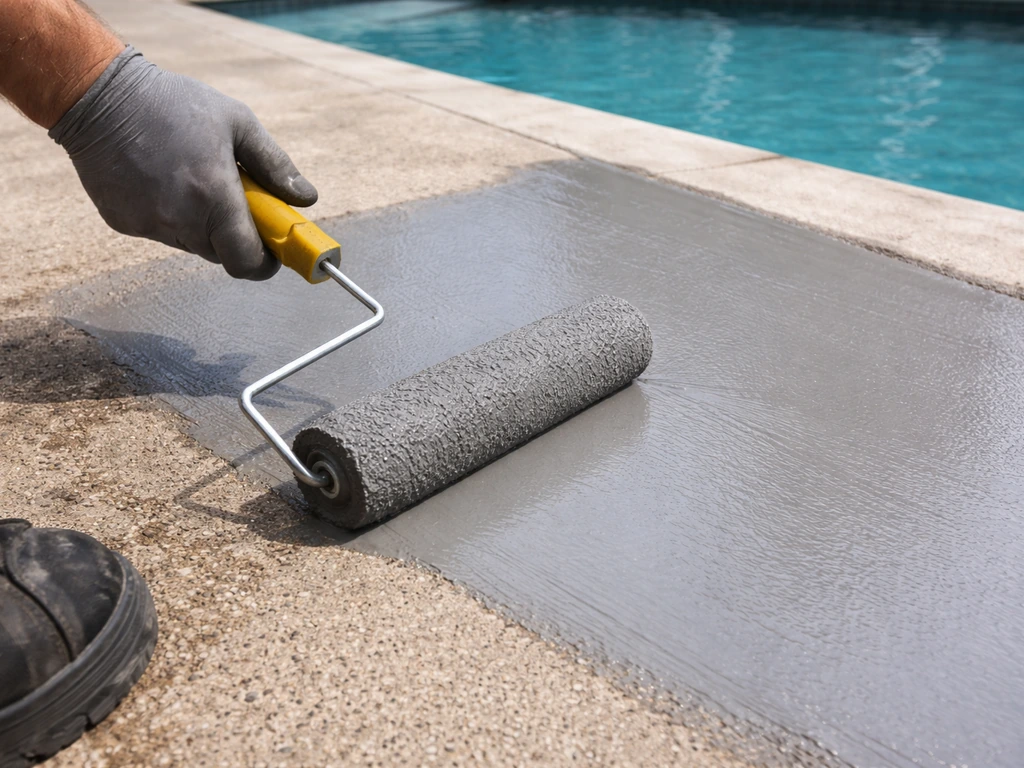
This is the gold standard for concrete pool decks with moderate to heavy foot traffic. The epoxy primer, such as Durabak EP90 MegaPrime or a GAF epoxy primer, penetrates the concrete and creates a strong mechanical bond. The polyaspartic topcoat, such as PPG Flooring 100% Solids Polyaspartic or SwiftTop TC 446, provides UV stability, chemical resistance, and a hard-wearing surface. A broadcast aggregate layer between coats or embedded in the topcoat gives you the [ASTM D2047-rated slip resistance](https://store.
astm. org/d2047-17. html) you need for a wet pool environment. Products like the ResinTech TUE/TUE-FC epoxy primer combined with a UV-stable polyaspartic topcoat are purpose-built for exactly this application.
Expect 8 to 10 years of service life with proper prep and maintenance. One important caveat: don't use a single-component garage floor epoxy kit on a pool deck. 343 Epoxy also cautions against using unmodified single-coat garage epoxy kits on pool decks and warns that polished or bare concrete finishes can create UV and slip hazards without the proper slip-rated system single-component garage floor epoxy kit on a pool deck.
They aren't formulated for UV exposure or chemical splash and will yellow, peel, or delaminate quickly.
Elastomeric coatings (best for cracked, moving, or moisture-prone surfaces)
If your concrete has hairline cracks, shows seasonal movement, or sits in a region with significant freeze-thaw cycles, an elastomeric coating is a better choice than a rigid epoxy system. Elastomerics stretch with the substrate instead of cracking. Sika Thorolastic-750 is a well-regarded example, applied as a two-coat system to a total dry-film thickness of 16 to 20 mils. It's designed to reduce water penetration and handle minor movement without failing. This is also a good category for stucco pool surrounds and pavers where joint flex is expected. Elastomeric coatings are not as hard-wearing as polyaspartic systems, but they tolerate substrate movement that would crack a rigid coating within a season.
Waterproofing traffic deck systems (best for elevated or waterproofing-critical surfaces)
For elevated pool decks or surfaces where water intrusion into the structure below is a real concern, a full waterproofing deck coating system is the right approach. ARDEX WPM 429 is a good example: a UV-stable polyurethane traffic deck waterproofing topcoat used with a solvent-free epoxy primer and optional aggregate broadcast. These systems are more involved to install than standard coatings and often require professional application, but they're the right tool when drainage and structural protection are priorities.
Exterior deck paint or solid stain (for wood and composite pool decks)
If your pool surround includes wood planking or a porch-style wood deck, use an exterior deck paint or penetrating solid stain formulated for wood. If you want the best porch and patio paint, start by matching the coating type to the surface and moisture exposure, then follow a strict prep routine for reliable adhesion exterior deck paint. These are designed to flex with wood grain movement and provide UV and moisture protection appropriate to that material. Look for products with mildew-resistant additives and a satin finish for better traction than high-gloss options. Concrete coatings applied to wood will crack and peel as the wood moves.
| Surface Type | Recommended Coating System | Key Advantage | Watch Out For |
|---|---|---|---|
| Bare concrete (pool deck) | Epoxy primer + polyaspartic topcoat | Durability, UV and chemical resistance, slip ratings | Requires thorough prep; don't use garage epoxy kits |
| Cracked or moving concrete | Elastomeric coating (e.g., Thorolastic-750) | Tolerates movement and minor cracking | Less hard-wearing than epoxy/polyaspartic |
| Pavers or brick | Elastomeric or flexible sealer/topcoat | Handles joint movement | Rigid coatings crack at joints |
| Elevated or waterproofing-critical deck | Traffic deck waterproofing system (e.g., ARDEX WPM 429) | Full waterproofing plus traffic wear | More complex install, often pro-only |
| Wood or composite decking | Exterior deck paint or solid stain | Flexes with wood movement | Concrete coatings will crack and peel on wood |
Prep is where the job actually gets won or lost
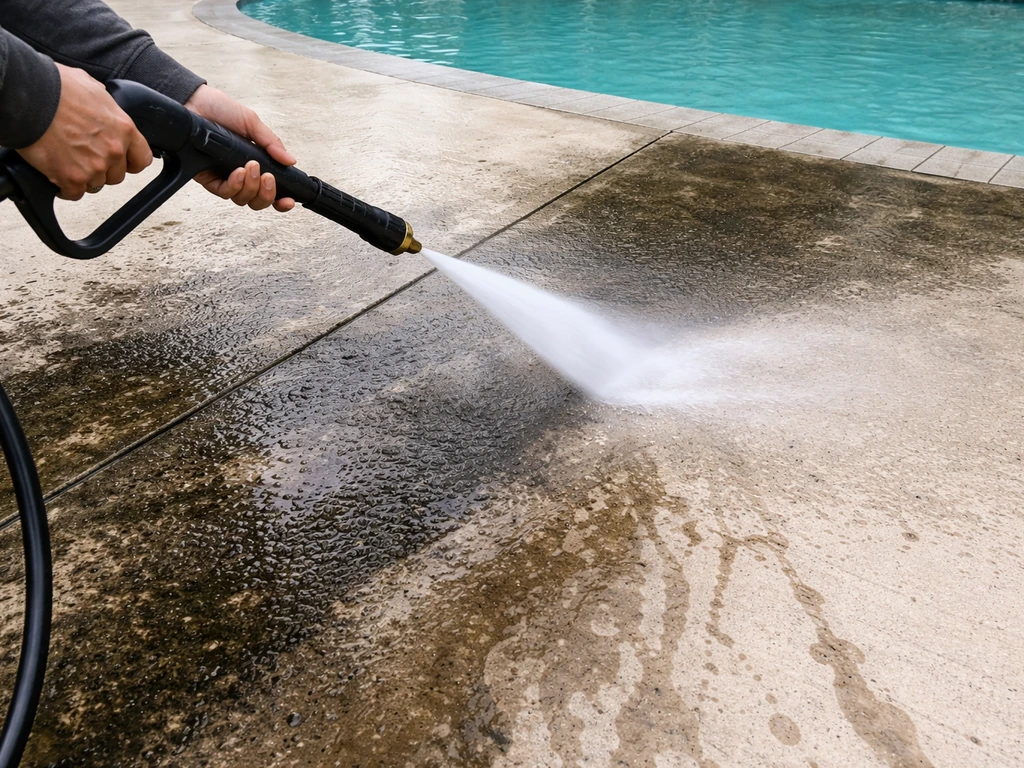
I'll be direct: most pool patio paint failures come from skipped or rushed prep, not from a bad product choice. A great coating system applied over contaminated or wet concrete will fail just as fast as a cheap product. Give prep the time it deserves.
Pre-application checklist
- Pressure wash the entire surface at high pressure to remove dirt, algae, mildew, and loose material. Follow the manufacturer's specification, as some systems like Sika recommend high-pressure power washing or abrasive blast for profile creation.
- Degrease any areas with oil, sunscreen residue, or chemical buildup. These are invisible bond killers.
- Remove all existing coatings, sealers, and curing compounds that would prevent adhesion. Mechanical grinding or shot blasting is the most reliable method.
- Repair cracks and spalls before priming. Use a compatible patching compound and allow it to fully cure before applying any coating over it.
- Test for moisture. For epoxy or polyaspartic systems, concrete moisture content should not exceed 4% by mass (measured with a Tramex meter, per Sika Sikalastic P 280 FS guidance). You can also use the ASTM F1869 calcium chloride test or the ASTM F2170 in-situ relative humidity test for a more rigorous moisture assessment. A simple plastic sheet tape test is a rough indicator but not sufficient for high-performance coatings.
- Confirm concrete is fully cured. New concrete should be at minimum 28 days old before coating.
- Do the water-drop porosity test. If water beads, more prep is needed.
- Apply primer according to manufacturer specs. For solventborne primers like CS-80 from ConSeal, the surface must be completely dry before application. Apply epoxy primers in the correct temperature and humidity window.
- Check ambient conditions before and during application. Most polyaspartic topcoats, including SwiftTop TC 446, require the surface temperature to be at least 3°C above dew point. Do not apply below manufacturer-specified minimum temperatures. Sika Thoroseal Plus, for example, should not be applied below 40°F (5°C).
- Allow full cure time before exposing the coating to traffic, water, or chemicals. Full chemical cure for epoxy and polyaspartic systems typically requires 24 to 72 hours for light foot traffic and up to 7 days for full service. Do not rush this.
One thing worth flagging: if you're applying over any kind of existing sealer or coating, do a patch test first. Apply the new primer to a small representative section, let it cure, and do a pull test to confirm adhesion before committing to the full surface. This is industry standard practice and it can save you from a complete re-do.
How long it lasts and how to keep it that way
A well-prepped epoxy plus polyaspartic system on a concrete pool deck typically delivers 8 to 10 years of durable service under normal use. Sika Thoroseal Plus also specifies that it should not be applied when the room or substrate temperature is under 40°F (5°C), and it advises managing conditions for the following 24 hours under normal use. Elastomeric systems on moving or cracked concrete tend to need attention sooner, usually in the 5 to 7 year range depending on climate. Wood deck paint or stain on a high-traffic pool surround may need a recoat every 3 to 5 years.
Routine maintenance that won't damage the finish
Regular cleaning is the best way to extend the life of any pool patio coating. Rinse the surface with a garden hose after pool use to remove chlorine and chemical residue before it concentrates and attacks the binder. For deeper cleaning, use a pH-neutral cleaner and a soft-bristle brush or mop. Avoid harsh solvents, bleach at high concentrations, and pressure washing at very high PSI directly on the coating surface, especially for elastomeric systems. These can erode the surface and reduce both traction and waterproofing performance over time.
Preventing the most common failures
- Peeling and delamination: Almost always caused by poor adhesion from inadequate prep, contamination, or moisture in the substrate at the time of application. Prevent it by doing moisture testing, removing all contaminants, and not skipping the primer.
- Blistering and bubbling: Caused by moisture vapor pressure under the coating. If you have hydrostatic pressure, underground springs, or a compromised vapor barrier, even a perfect application can blister. No coating system prevents moisture damage from hydrostatic pressure, as Stauf explicitly warns. Address the moisture source before applying any coating.
- Chalking and UV degradation: A sign the topcoat wasn't UV-stable. Prevent it by using a confirmed UV-stable polyaspartic or polyurethane topcoat, not a standard latex or alkyd exterior paint.
- Algae and mildew growth: Choose a coating with antimicrobial additives if this is a recurring issue in your climate. Also ensure the surface drains properly so standing water isn't sitting on the coating.
- Recoat timing: Don't wait until the coating has fully failed to recoat. Inspect the surface annually. When you see consistent chalking, color loss, or areas where traction aggregate is worn through, that's your signal to clean, lightly abrade, and apply a maintenance coat before water gets under the existing film.
Choosing the right color and finish for a pool patio
Color and finish decisions for a pool deck aren't just aesthetic. They have a real effect on surface temperature, slip risk, and how often you'll be cleaning the surface. Picking the right color is only half the equation for creating the best patio colors, so match the shade to a slip-resistant finish and your coating system.
Gloss level and slip risk
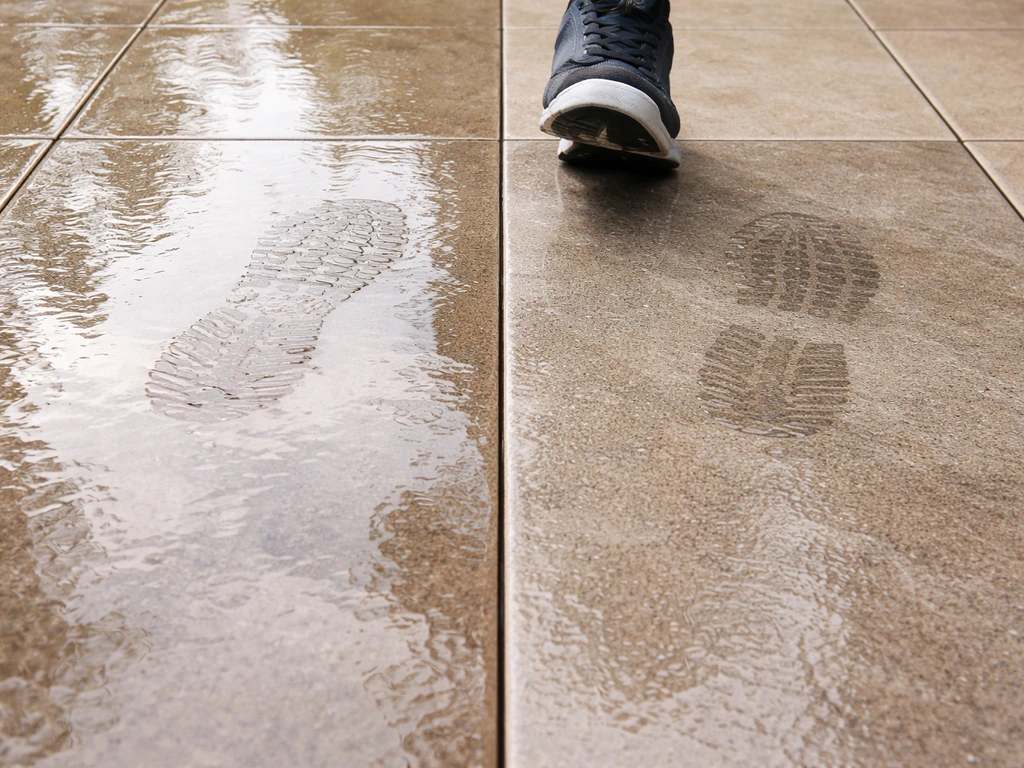
High-gloss finishes look sharp and are easy to clean, but they can be genuinely slippery when wet, especially without a broadcast aggregate. Around a pool, a satin or low-sheen finish is a safer default. More importantly, whatever finish you choose, verify that the coating system includes a traction aggregate or has been tested to ASTM D2047 slip-resistance standards. Visual finish and actual slip performance are different things. A tumbled marble patio can look slip-resistant and be dangerous when wet. Don't rely on appearance alone.
Color and heat
Dark colors absorb significantly more solar heat than light colors. On a concrete pool deck in a hot-sun climate like Arizona, Texas, or Southern California, a dark gray or charcoal coating can become genuinely painful to walk on barefoot by midday. Light gray, off-white, tan, and similar light tones reflect more heat and keep the surface cooler.
If you're in a cooler climate like Colorado or the Pacific Northwest, this is less of a concern, and you have more color flexibility. If you’re searching for the best patio in Colorado Springs, focus on matching the coating type to your surface and moisture or freeze-thaw conditions. In hot climates, lean toward light and cool. This also aligns with the site's general guidance around heat management for outdoor spaces.
Drainage and surface texture
The texture created by a broadcast aggregate does double duty: it improves traction and it creates micro-channels that help water drain away from the surface instead of sitting in a flat sheet. When specifying or shopping for a coating system, look for products that include an aggregate broadcast option or that have been applied with a fine polymer or aluminum oxide grit added to the topcoat. UV-stable sealers and topcoats with slip-rated finishes, as recommended by pool deck safety specialists, are the right specification for wet-foot environments.
If you're comparing color choices more broadly for your overall patio project, the same heat-reflectivity logic applies to other patio surfaces and finishes covered elsewhere on this site. If you want the best paint color for outdoor patio spaces, choose a finish and tone that won’t overheat and that works well on your specific surface.
Your next steps: what to buy, test, and schedule
Here's how to turn everything above into a confident purchase or specification today. If you want to get it quickly, start by checking pool deck and hardware stores that carry the specific epoxy or polyaspartic systems recommended for your surface.
- Identify your substrate. Is it bare concrete, sealed/stamped concrete, pavers, stucco, or wood? Do the water-drop test right now to check porosity and detect existing sealers.
- Check for existing coatings. If anything has been previously applied, plan for mechanical removal or at minimum a patch adhesion test before proceeding.
- Test for moisture. Use a Tramex moisture meter or commission an ASTM F1869 calcium chloride test if you're investing in a full epoxy or polyaspartic system. Don't guess on moisture.
- Match your coating system to the surface. Bare concrete in good shape: epoxy primer plus polyaspartic topcoat with aggregate. Cracked or moving concrete: elastomeric system. Wood decking: exterior deck paint or solid stain.
- Verify slip resistance specs. Look for ASTM D2047 compliance or an R-rating on the product data sheet, and confirm aggregate options are available.
- Check the VOC rating for your region. Confirm the product you're purchasing meets EPA 40 CFR §59.402 limits for its coating category, especially if you're in a state with stricter air quality rules.
- Plan your weather window. Most systems require surface temps above 50°F (10°C) and at least 3°C above dew point. In most of the country, late spring through early fall is the reliable window. Check the forecast for a dry 3 to 7 day stretch before you start.
- Budget for real prep time. If you're DIYing, budget at least one full day for pressure washing, degreasing, crack repair, and letting everything dry before you open a product container.
- Get a local pro estimate if prep is significant. If you're dealing with hydrostatic moisture problems, large areas of spalling, or an elevated deck requiring a waterproofing system, get a professional application quote. The coating cost is only part of the total investment.
The right pool patio coating done correctly will look great and perform safely for years. The wrong one done in a hurry will peel before the summer is over. Spend the time on prep and product selection upfront, and you won't be redoing this job in two seasons.
FAQ
Can I apply the best pool patio paint over an existing sealer or coating?
Yes, but only if the old coating is compatible and firmly bonded. Do a patch-test adhesion pull on a small area, then confirm the surface is fully cured, dry, and free of curing compounds or residual sealers. If the existing layer is sealed or glossy, sanding or mechanical profiling is often required before any epoxy or polyaspartic primer.
What pool patio paints should I avoid even if they say they’re exterior-rated?
Avoid water-based latex “floor paints” for pool decks. They usually lack the chemical resistance and UV stability needed for chlorine and wet-dry cycling, and they can lose traction as they wear. For the best results, use the same coating class recommended in the article (epoxy primer plus UV-stable polyaspartic, elastomeric when movement is expected, or a dedicated waterproofing deck system).
How soon after pouring new concrete can I coat my pool patio?
You can coat new concrete, but only after it is fully cured and meets dryness requirements. Epoxy and polyaspartic systems can fail if the slab is still off-gassing or too wet, even when it looks dry on top. Plan for longer cure times than you think, and test moisture if you are within a short window of pour date.
Does temperature or humidity affect how long pool patio paint lasts?
No. Most rigid systems bond better when applied within a proper temperature and humidity window so the coating cures correctly. If you paint when the slab is too hot, direct sun can cause premature flash-off and weaker adhesion, and if it’s too cold or humid, curing slows and chemical resistance may be compromised. Check product data for the specific application climate range.
Will a smooth, glossy finish be safe around the pool?
It depends on the coating system and slip strategy. If the topcoat includes aggregate broadcast (or is mixed with grit), it typically maintains traction better. If you choose a smoother finish without traction media, barefoot wet slip risk goes up even if the coating looks “well cured.” Confirm the finished surface is slip-rated for wet conditions, not just the paint’s marketing claims.
What’s the most common reason pool patio coating peels or fails early?
Generally, no for the “best” system longevity. Rushing prep can trap contaminants and moisture beneath the primer, leading to peeling, blistering, or delamination. Also, pressure washing at very high PSI can erode surface texture needed for bond, especially on elastomeric systems, so use controlled cleaning and mechanical profiling methods that match your substrate.
If my concrete beads water, what should I do before applying paint?
On concrete, the usual best practice is a two-step approach: first verify porosity and contamination via the water-drop test, then do a consistent mechanical prep method (often sanding, grinding, or scarifying) to remove sealer residue and create a profile for the primer. If water beads, you should treat it as an existing sealer or contamination case, not as a “paint over it” situation.
Should I patch-test in multiple areas, or is one spot enough?
Yes, because pool decks often have localized high-risk areas like drain edges, step transitions, and around handrails. Patch-test only on the flat field is risky, since edge conditions can hide contamination. Test in a representative spot near problem zones, then replicate the exact prep and application method across the rest of the deck.
How do color and finish choices affect barefoot comfort and heat?
Lighten the color choice rather than relying only on finish sheen. Dark coatings can heat up enough to be uncomfortable barefoot in hot climates, and aggregate-filled traction can feel hotter than you expect. If you want darker tones, consider lighter base colors for the walking lane or choose a system explicitly designed for outdoor UV exposure with a lighter pigment option.
What’s the best coating choice for a pool patio in a freeze-thaw climate?
If you have freeze-thaw or ongoing movement, switch the coating strategy to an elastomeric or a system designed to handle substrate motion and moisture reduction. Rigid epoxy-only approaches are more likely to craze, crack, and let water in when the slab cycles. For waterproofing priorities, a full deck waterproofing system can be the safer path than just a topcoat.
How should I clean pool patio paint to keep it from becoming slippery?
Regular rinsing helps, but your maintenance routine should also avoid under-scrubbing. Use a pH-neutral cleaner and a soft bristle tool to remove chemical residue buildup, especially in shaded areas where salts linger. Avoid high-concentration bleach and very high PSI washing because they can reduce traction texture and erode performance over time.
How can I tell if my coating will be slip-resistant when wet before I finish the project?
Yes, and it matters for safety. A troweled look, even with a nice sheen, can still be dangerous when wet if there is not enough aggregate or proper slip performance. If traction is critical, choose a system with broadcast aggregate or verified slip-resistance behavior for wet conditions, and consider a satin or low-sheen finish over high gloss.