
For most outdoor patios, a warm greige, soft gray, or earthy taupe in a low-lustre or satin finish is the most forgiving, versatile, and durable paint color direction you can choose. Those mid-tone neutrals hide concrete's natural blotchiness, stay cooler underfoot than dark colors, resist showing dirt and UV fade, and pair well with almost any home exterior or landscaping style. That said, the actual best color for your patio depends on three things you have to nail first: how much sun and heat your slab takes, what surface you're painting, and what's already on it. Get those right and the color choice becomes pretty straightforward.
Best Paint Color for Outdoor Patio: Choose by Sun, Surface

Elise Prescott
14 Jun 2026
Start with your patio's real conditions before picking a color
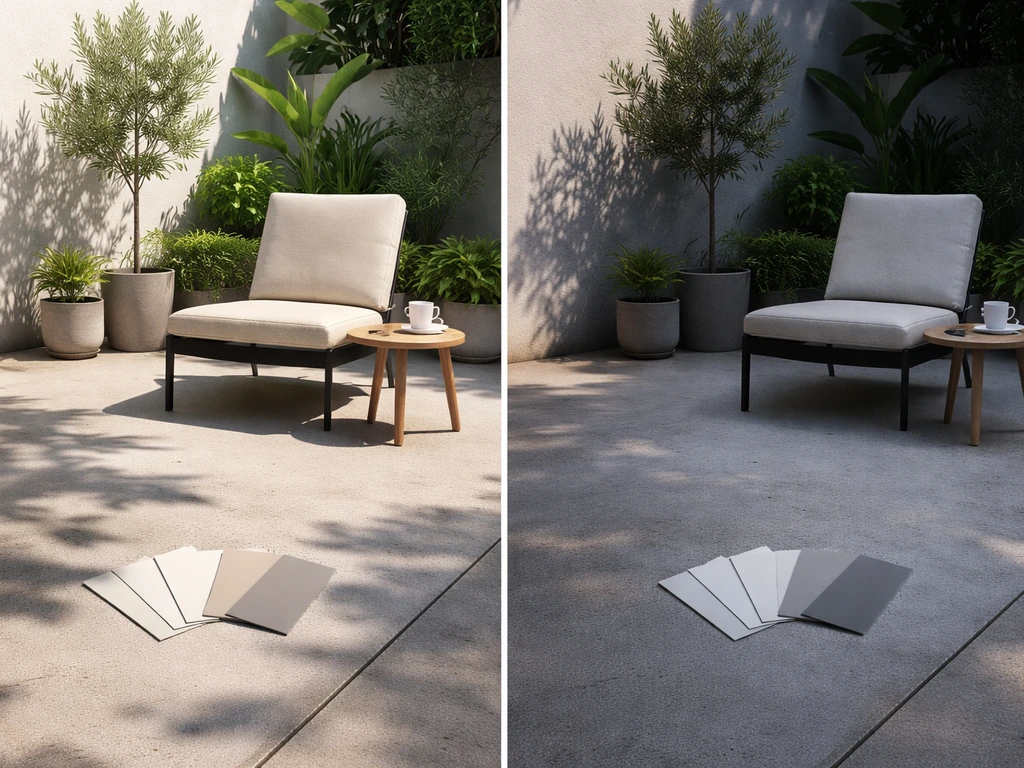
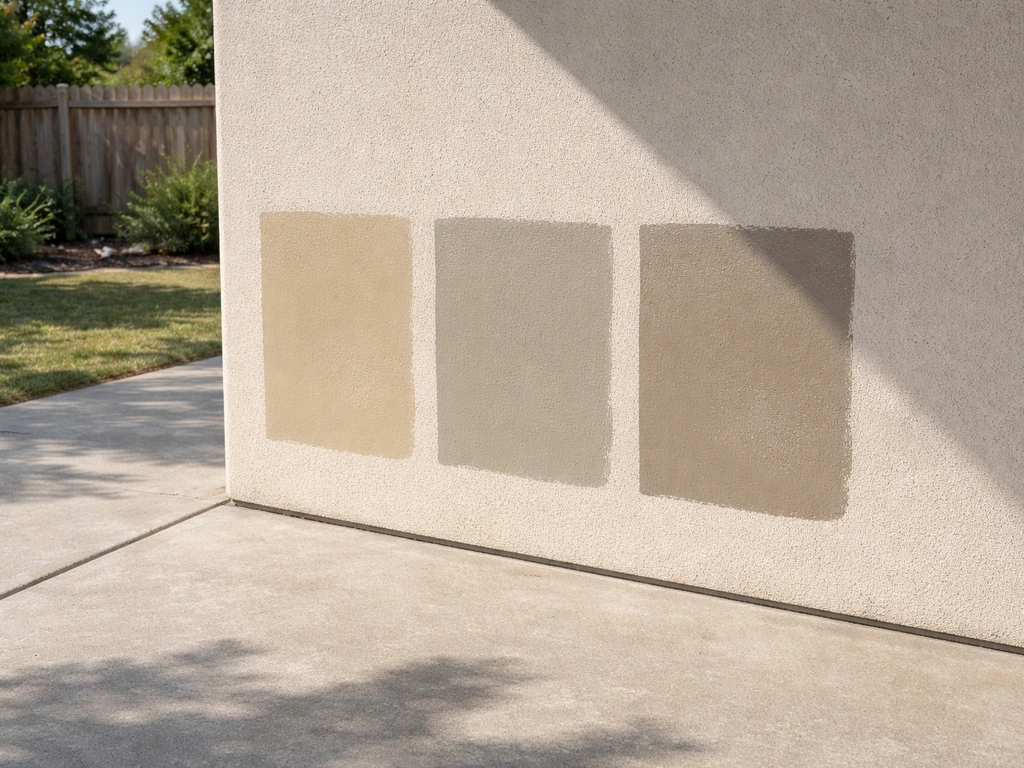
Before you open a single paint chip, stand on your patio at noon on a sunny day. Is it blasted with direct sun, completely shaded by a cover or tree canopy, or somewhere in between? This one factor shapes everything from the color family you should consider to the sheen level and product formula you need.
Full-sun patios in hot climates (think Arizona, Texas, or Florida) are brutal on paint. Dark colors absorb dramatically more heat, which softens some coatings, accelerates fading, and makes the surface uncomfortable barefoot. In those conditions, stick to lighter values: mid-tone tans, light grays, or warm whites. In cooler climates like Colorado or the Pacific Northwest, darker earthy tones are more viable because the surface temperature penalty isn't as severe, and a deeper color can actually help the surface dry faster after rain. If you are looking for the best patio Colorado Springs, focus on weather-suitable colors and a durable low-lustre or satin finish that can handle sun exposure.
Humidity and moisture are the other big variables. Coastal air carries salt that attacks coatings faster, so you need a product specifically rated for exterior masonry with strong mildew resistance. Sherwin-Williams notes that mildew commonly forms on damp areas or surfaces with little direct sunlight, and recommends cleaning affected areas with a solution of one part liquid bleach to three parts water before any painting begins. If your patio is under a covered structure or surrounded by landscaping that keeps it consistently damp, mildew resistance is non-negotiable in whatever product you choose.
Match the color to your surface and whatever's already on it
Concrete slabs, brick, stucco, wood decking, and metal railings all behave differently, and painting over an existing coat adds another layer of complexity. If you ignore what's underneath, you'll end up with peeling, patchiness, or a color that looks nothing like the chip because the old surface is bleeding through.
Bare concrete is porous and alkaline, which means it fights adhesion if you skip a proper masonry primer. New concrete is especially problematic because of high pH levels. Sherwin-Williams' guidance recommends allowing new concrete to cure at least 7 days to bring the pH below 13, then priming with a dedicated acrylic masonry primer like their Loxon line before any topcoat. Benjamin Moore's Ultra Spec Masonry Primer (N609) is another solid option, rated for alkali resistance up to pH 13 and suitable for stucco, block, and new construction. Skipping this step is the number one reason paint peels on concrete patios.
Concrete and masonry surfaces also commonly develop efflorescence, those chalky white salt deposits that appear when moisture pushes through the slab. Both Sherwin-Williams and Dunn-Edwards recommend removing efflorescence completely before painting, using a wire brush, power brush, or low-pressure washing followed by thorough rinsing. Painting over efflorescence guarantees the new coat will peel. Once you clean the surface, lighter colors will show any remaining staining or repair patches more readily than mid-tones, which is another reason mid-range values tend to look better on concrete long-term.
If you're painting over an existing coat, test compatibility first. Oil-based paint over latex (or the reverse without proper prep) causes adhesion failures. Do a quick tape test: apply painter's tape firmly, pull it off fast, and see whether the existing paint lifts. If it does, you need to strip or prime extensively before layering a new color on top. Color-matching over an old dark coat also requires more coats than going lighter, so factor that into your plan.
| Surface Type | Key Prep Step | Primer Needed? | Color Caution |
|---|---|---|---|
| Bare concrete slab | Cure 7+ days, clean, degrease | Yes, alkali-resistant masonry primer | Lighter values hide patchiness better |
| Stucco | Remove efflorescence, rinse, dry | Yes, high-build masonry primer | Mid-tones reduce lap mark visibility |
| Brick | Wire brush, rinse, allow to fully dry | Yes, penetrating masonry primer | Dark brick + dark paint = heat buildup |
| Wood deck/porch floor | Sand, clean, remove any peeling paint | Yes, exterior wood primer | Solid stain often outperforms paint here |
| Metal railings | Sand rust, degrease, wipe clean | Yes, rust-inhibiting metal primer | Gloss or semi-gloss topcoat for durability |
| Previously painted surface | Tape test, clean, lightly sand | If adhesion is questionable, prime | Going darker requires more coats |
Best color directions for outdoor patios and what each one does
Here are the color families that consistently perform well outdoors, both visually and practically. None of these are single colors; they're directions, and within each family you have plenty of range to dial in your specific look.
Warm neutrals: greige, taupe, and warm beige
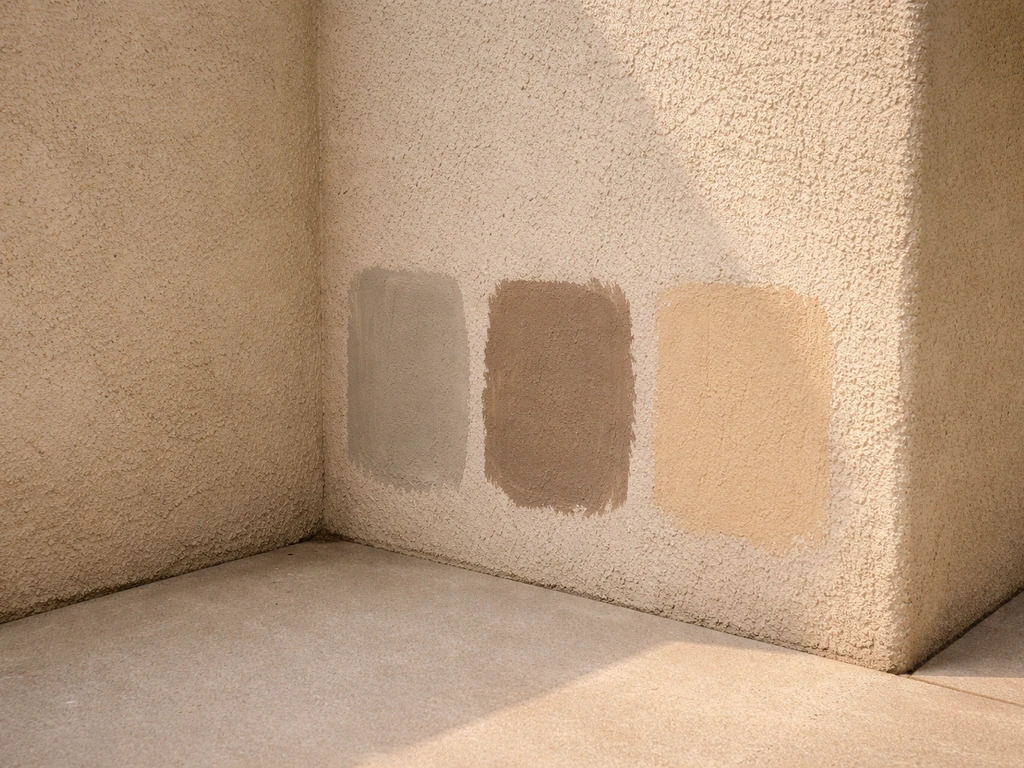
This is the most universally flattering direction for a concrete or stucco patio. Warm neutrals bridge the gap between the gray of concrete and the warm tones of wood furniture, brick walls, and landscaping. They're forgiving on uneven surfaces because mid-value tones don't show every trowel mark or repair patch the way a stark white or near-black would. They also reflect enough heat to stay comfortable in moderate climates. If your home exterior is a warm tan, cream, or terracotta, greige and taupe are natural matches.
Cool grays and blue-grays
Cool grays have become a dominant patio color in the last several years, and for good reason. They feel modern, pair well with white trim and stainless or black outdoor furniture, and they photograph beautifully. Light to mid-range cool grays are especially smart for full-sun patios because they reflect UV more effectively than warm tones. In shaded or cooler climates, you can go a bit deeper into slate or charcoal territory without the heat absorption becoming a problem. Be careful with very light cool grays on concrete though: any existing staining or patchy repairs can read as dirt against a near-white background.
Earth tones: terracotta, clay, warm brown
If your home has Southwestern, Mediterranean, or craftsman architecture, earth tones are hard to beat. Terracotta and warm clay tones connect the patio visually to brick, natural stone, and desert landscaping. They also hide dirt and grime incredibly well, which makes them practical for high-traffic areas. The downside: medium-to-deep earth tones absorb heat, so in a Phoenix or Las Vegas climate you'll want to stay on the lighter side of the palette and use a product with strong UV-resistance.
True neutrals: warm white, soft cream
Light or white patios look stunning in photos, especially in cottage, coastal, or farmhouse settings. The practical reality: white shows every scuff, stain, mildew spot, and repair. If your patio is a high-traffic area where kids play or furniture gets dragged around, white will require noticeably more maintenance. In a covered or low-traffic setting, a warm white can look genuinely beautiful and keeps the space feeling bright and open. Use it where you can stay on top of cleaning it seasonally.
Accent colors: slate blue, sage green, deep charcoal
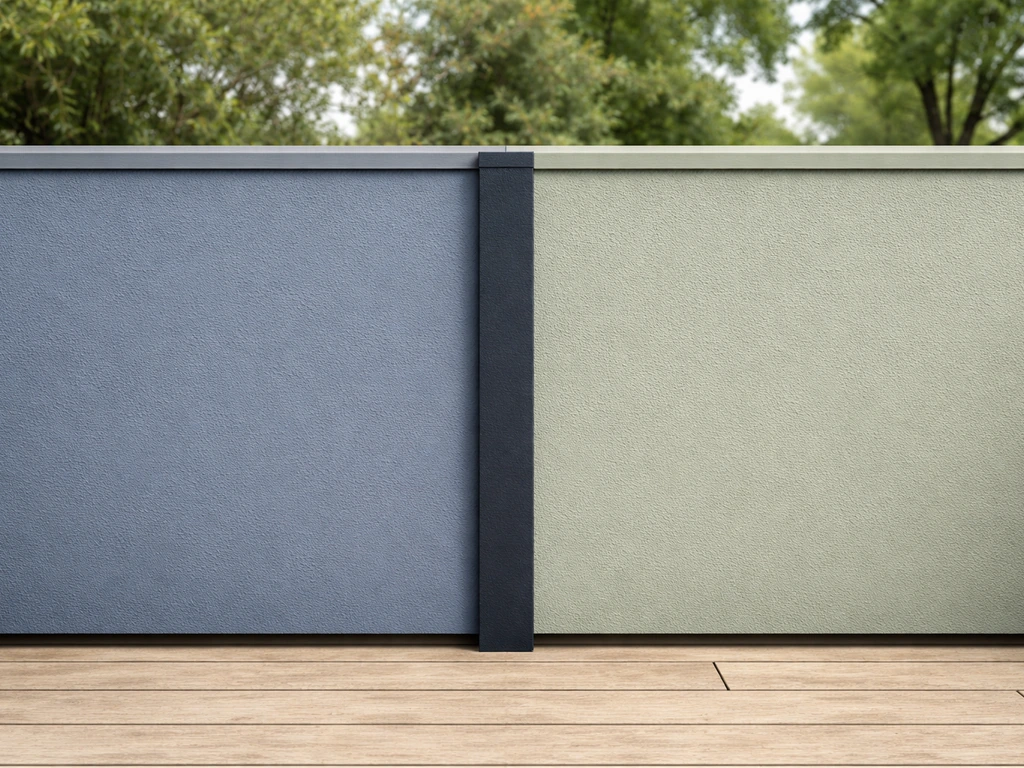
Accent colors work best on vertical surfaces like walls, railings, or a painted feature wall rather than the floor itself. A slate blue or sage green on a stucco wall or privacy fence can completely transform the feel of a patio without the heat-absorption and maintenance challenges of using that color on the ground plane. If you want a bolder floor color, deep charcoal on a shaded patio in a mild climate can look sophisticated, but go in with clear eyes: it will need recoating sooner than a lighter color in the same conditions.
Finish and sheen: why matte vs satin matters more than you think outdoors
The sheen level you choose affects how the color reads, how the surface performs under foot traffic, and how much glare you deal with on a sunny day. For patio floors specifically, the sweet spot for most homeowners is a low-lustre or satin finish. BEHR's Porch & Patio Floor Paint (No. BEHR’s technical data sheet for this 6050 Low-Lustre floor paint lists a blank" rel="noopener noreferrer">recoat time of about 4 to 6 hours, with evaluations based on conditions at 77°F and 50% RH. 6050), for example, comes specifically in Low-Lustre and Gloss Enamel options because those are the two finishes that hold up to foot traffic while maintaining appearance.
Low-lustre (similar to what most brands call satin) gives you a slight sheen that's easy to wipe clean but doesn't create blinding glare on a sunny afternoon. It also hides surface imperfections better than gloss. Full gloss on a horizontal surface looks good for about a season, then starts showing scuffs, scratches, and UV wear in ways that make it look worse than if you'd never painted it. Matte or flat finishes are technically the most forgiving for imperfections, but they're nearly impossible to clean once dirt is ground in, and they tend to wear unevenly under foot traffic.
For vertical surfaces like stucco walls or fences, a satin exterior paint is still the best call for most climates. Matte is fine on a shaded, low-humidity wall, but satin's slight sheen helps water bead and run off rather than soak in, which directly improves mildew resistance and the paint's long-term adhesion.
| Finish | Best For | Glare in Sun | Cleanability | Longevity on Floor |
|---|---|---|---|---|
| Flat/Matte | Shaded walls, low-traffic areas | None | Poor (stains set) | Low |
| Low-Lustre/Satin | Patio floors, exterior walls (most situations) | Minimal | Good | High |
| Semi-Gloss | Trim, railings, accent details | Moderate | Very good | Moderate on floors |
| Gloss | Metal railings, high-contrast accents | High | Excellent | Low on floors (shows wear fast) |
Prep, primer, and picking the right exterior product
The most common reason a patio repaint fails within a year or two isn't the color or even the product. It's inadequate prep. Sherwin-Williams' exterior surface preparation guidance is blunt about this: remove all surface contamination by washing with an appropriate cleaner, rinse thoroughly, and allow to dry completely before applying any primer or paint. For concrete, that means degreasing (motor oil and grill drippings are common culprits), removing efflorescence, and letting the surface dry for at least 24 hours in good conditions.
Once the surface is clean and dry, prime without exceptions for bare masonry, wood, or metal. The primer is what bonds the topcoat to the surface and provides alkali resistance on concrete. On a previously painted surface in good condition, a bonding primer is still a smart insurance move, especially if you're making a dramatic color change or have any doubt about what's underneath.
For the topcoat, use a product specifically formulated for exterior porch and patio floors. Products like BEHR's 100% acrylic Porch & Patio Floor Paint are engineered to resist scuffing, fading, cracking, and peeling because they're built for that specific application. General exterior wall paint is not the right product for a floor: it lacks the hardeners and flexibility needed to handle foot traffic and thermal cycling. Benjamin Moore's AURA Exterior line uses their Colour Lock Technology for fade resistance and is marketed explicitly for standing up to UV damage, rain, and temperature swings, making it a strong choice for wall surfaces and vertical applications.
- Clean the surface: degrease, remove mildew with bleach/water solution (1:3 ratio), scrub off efflorescence, rinse completely
- Let the surface dry: minimum 24 hours, longer if the concrete is new or the climate is humid
- Apply alkali-resistant masonry primer (new concrete: wait 7+ days first to get pH below 13)
- Let primer cure per the manufacturer's spec before topcoating
- Apply porch and patio floor paint in thin, even coats; BEHR's 6050 Low-Lustre has a recoat window of 4 to 6 hours under ideal conditions (77°F, 50% RH, so adjust for your climate)
- Apply a second coat for full coverage and durability, especially with lighter colors over a stained or dark surface
Test samples first and avoid the most common color mistakes
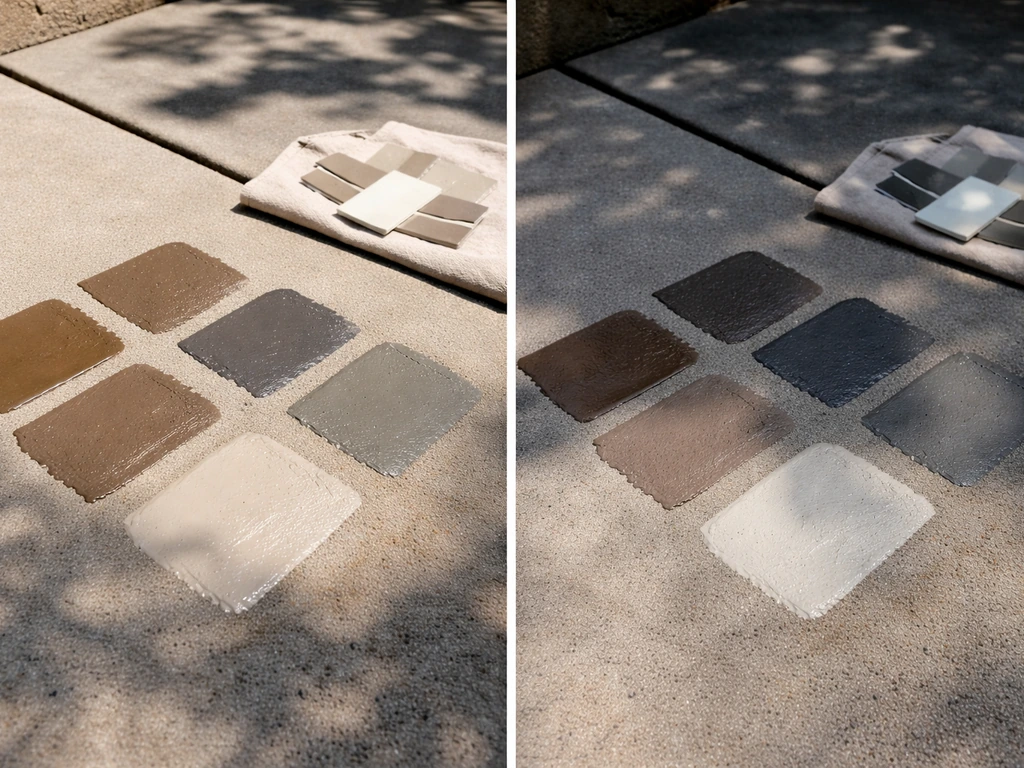
Never choose a patio color from a chip alone. The same color looks completely different on a concrete slab in direct sun at noon versus a shaded wall in the afternoon. Most major paint brands sell sample sizes, and it's worth buying two or three candidates. Paint a roughly two-foot-square patch of each directly on your actual patio surface, let it dry fully (wet paint always looks different), then observe it at different times of day over at least 48 hours.
Pay attention to how the color looks in morning shade, midday full sun, and late afternoon golden light. The color that reads right in all three conditions is your winner. Also note how the sample interacts with your home's exterior, your furniture, and any landscaping. A color that clashes with a terracotta pot or a red-brick wall is going to bother you every time you sit outside.
Dark colors on a sun-baked slab are the biggest practical mistake I see homeowners make. A deep charcoal or navy might look incredible in a showroom photo, but in a sunny Southern climate, the surface can heat up enough to be genuinely uncomfortable barefoot and to accelerate coating failure. Dunn-Edwards and Sherwin-Williams both have technical guidance on chalking versus color fade, and the core message is the same: UV exposure degrades pigment, and darker pigments in full sun often show this faster than lighter ones. Dunn-Edwards' technical bulletin, “Chalking vs. Color Fade,” explains how and why these two processes differ, and how they affect how different paint systems age outdoors blank" rel="noopener noreferrer">Dunn-Edwards technical guidance on chalking versus color fade. If you love a bold deep color, use it on a wall or vertical surface where it's not taking the full thermal load.
Patchy results on concrete are almost always a prep or primer issue, not a color issue. If you see the old surface telegraphing through, or the color looks uneven after two coats, the surface wasn't properly cleaned or the primer wasn't adequate. Adding more topcoat coats won't fix it; you need to address what's underneath.
DIY vs hiring a pro, and what to expect over time
Painting a concrete patio is absolutely a DIY-friendly project if you're comfortable with the prep work. The prep is genuinely the hardest part: scrubbing, rinsing, waiting for things to dry, and applying primer before you ever touch the actual paint color. If you rush prep, no amount of premium paint will save the job. For a straightforward concrete slab with no major cracks or efflorescence problems, a motivated DIYer can get a great result over a weekend.
Where hiring a pro makes sense: if you have significant structural cracks that need patching and grinding, if there's widespread efflorescence that requires acid etching, if the surface has years of oil or grease contamination, or if you're dealing with a large or complex area. A professional prep and paint job on a patio typically costs between $1 and $4 per square foot for labor, depending on your region and the condition of the surface. Get at least two bids and ask specifically whether the estimate includes a dedicated masonry primer, what product they plan to use, and how many coats are included.
On maintenance expectations: a properly prepped and painted concrete patio with a quality acrylic porch paint should look good for 3 to 5 years in most climates before it needs a fresh coat. best patio paints. In harsh sun or heavy-traffic situations, plan for the shorter end of that range. The maintenance cycle is much easier once the first job is done right: clean the surface well, do a light scuff sand in worn areas, and reapply a topcoat without having to strip everything back to bare concrete. If you chose a color in the popular best patio colors neutral families (greige, soft gray, warm taupe), the recoat will be seamless. If you went with a very specific or bold hue, getting a perfect color match years later can be tricky, so keep a note of the exact color code and product name.
Worth knowing: the conversation about the best patio colors for floors overlaps significantly with decisions about the best porch and patio paint product itself and whether to use paint versus a penetrating stain on wood surfaces. If you want to narrow down the best patio colors, focus on factors like sun exposure, surface type, and sheen. If your patio includes a wood deck section, the color and product decisions there are different enough that they deserve their own look before you buy anything. For wood deck boards, the best patio deck paint choice is a deck-specific exterior formula that resists scuffing and moisture while matching your desired finish.
Your recommendation path in plain terms
Here's the honest shortcut: if you're painting a concrete patio in full sun, pick a mid-tone warm neutral or light cool gray in a low-lustre finish, use an alkali-resistant masonry primer, and apply a dedicated porch and patio floor paint. If you’re ready to buy, look for a dedicated porch and patio floor paint in the finish and color family that matches your surface, then check local hardware stores or reputable online retailers. If you're in a shaded or covered area, you have more color latitude and can go deeper or bolder. Test at least two samples on the actual surface, observe them through a full day of light, and don't skip the primer no matter how tempting it is to just roll on the color and call it done. That one shortcut is responsible for more failed patio paint jobs than any color choice ever was.
FAQ
Do I need to use a primer on every outdoor patio surface, or can I skip it?
It depends on what you are painting. Concrete and brick patios usually need an acrylic masonry primer for alkali resistance, while bare wood generally needs a different sealer or stain-blocking primer and metal needs rust-inhibiting primer. If you use the wrong primer, you can get adhesion failures even if the topcoat is “premium.”
How can I make sure I can repaint the patio years later without a noticeable color mismatch?
Yes, color-matching can be hard later if you choose a unique or tinted hue. Save the exact product name and color code, and take a photo of the label and sheen number before you leave the store. When you recoat, you will likely need the same batch or a close formulation to avoid visible shade drift.
What should I do if my tape test shows the old paint is failing?
If the old coating is intact and fully bonded, you may get good results by cleaning, sanding/scuffing, and applying a bonding primer before the new topcoat. But if the tape test shows lifting or you see peeling, you generally must remove loose paint and address any moisture or surface contamination first.
Can I use exterior house paint on the patio floor?
Choose a product designed for horizontal traffic. Exterior wall paint is usually formulated for vertical exposure (less abrasion) and may be too soft for scuffing and thermal movement on a patio floor, leading to faster wear or peeling. Look specifically for “porch and patio floor” or equivalent floor-rated terminology.
What if I clean efflorescence but it comes back a few days later?
Efflorescence is not just cosmetic, it can ruin adhesion. Remove it fully and then let the surface dry completely before priming and painting. If you still see chalky residue after rinsing, repeat cleaning and drying, because sealing over active salts often leads to recurrence and eventual failure.
How long should I leave paint samples on the patio before deciding?
Don’t test only one lighting window. At minimum, observe samples in morning shade, midday sun, and late afternoon sun, and reassess once they fully dry (some paints darken or dull as water evaporates). If possible, leave samples for about a full weekend to catch how they react to temperature swings.
Which sheen is best for a patio that gets a lot of foot traffic and strong sunlight?
For high-traffic areas, satin or low-lustre tends to balance cleanability and glare. Flat or matte hides imperfections better at first, but it can scuff and become harder to clean once dirt is ground in. If glare bothers you in direct sun, avoid full gloss on a floor.
How do I choose a paint for a patio that stays damp due to shade or sprinklers?
If the patio is consistently damp (near irrigation overspray, under a roof that never dries, or coastal salt exposure), prioritize mildew-resistant exterior masonry products and make cleaning part of your maintenance routine. Also consider improving drainage and spacing plants so airflow increases, because paint cannot fully compensate for ongoing moisture.
Can I still use a dark color if my patio is in full sun?
Yes, using dark colors on floors in full sun can increase surface temperature, which accelerates wear and can make the coating feel uncomfortable underfoot. A practical compromise is to use your preferred bold color on a vertical feature (wall or railing) and keep the floor a mid-tone neutral, or choose a lighter version of the same family.
Why do some patio paint colors look uneven even after two coats?
Staining and patch visibility depend on concrete texture and where water travels. Lighter colors can show repair work and remaining discoloration, while mid-tones tend to camouflage minor patch variation. If you have known patching, test samples over the repaired areas, not just in clean spots.
Do I need to acid-etch concrete before painting, or is pressure washing enough?
Acid etching may be required for some concrete conditions, especially if efflorescence is stubborn, but it should not replace proper cleaning and drying. It can also change surface profile, so it must be followed by thorough neutralizing and rinsing. For your specific slab condition, the safer DIY path is to verify whether mechanical cleaning alone is enough before using chemicals.
How do I handle patio cracks before choosing paint color and finish?
If your patio has large cracks or movement, paint can crack along with the slab. Proper repair may require routing and patching, possibly with a product meant for exterior masonry or crack bridging, followed by priming. If cracks are structural or widespread, that is a strong reason to hire a pro.
Do I need to strip and repaint the whole patio when it’s time for a touch-up or recoating?
In many cases, you can extend service life by scuff-sanding worn areas lightly before recoating, cleaning thoroughly, and reapplying topcoat only where needed. Avoid scraping down to bare concrete everywhere unless adhesion has truly failed, because spot-priming is often enough to prevent peeling.
My patio mixes concrete and wood decking, should I use the same color and product on both?
For wood deck sections, treat them as a separate system from concrete. Deck boards often need deck-specific exterior paint or a stain, and the preparation (including moisture management) is different from masonry. If your patio is mixed materials, choose finishes independently so the maintenance schedules align.