
There is no single best patio air conditioner because patios are not rooms. They leak air constantly, sit in direct sun, face rain and humidity, and often lack the electrical infrastructure to run heavy cooling equipment. That said, the right setup for your specific patio absolutely exists, and it usually comes down to three things: whether you have an enclosed or semi-enclosed space, what your local climate looks like, and how much cooling you realistically need versus how much you think you need. For most homeowners, a portable AC unit with proper venting handles a covered, semi-enclosed patio well. In dry climates, an evaporative cooler often works better, costs less, and uses far less energy. In dry climates, the best patio evaporative cooler can provide strong cooling with far less energy than compressor-based units. In fully open patios in humid regions, neither option will impress you, and a combination of shade, fans, and misting usually beats any AC unit.
Best Patio Air Conditioner: How to Choose and Set Up

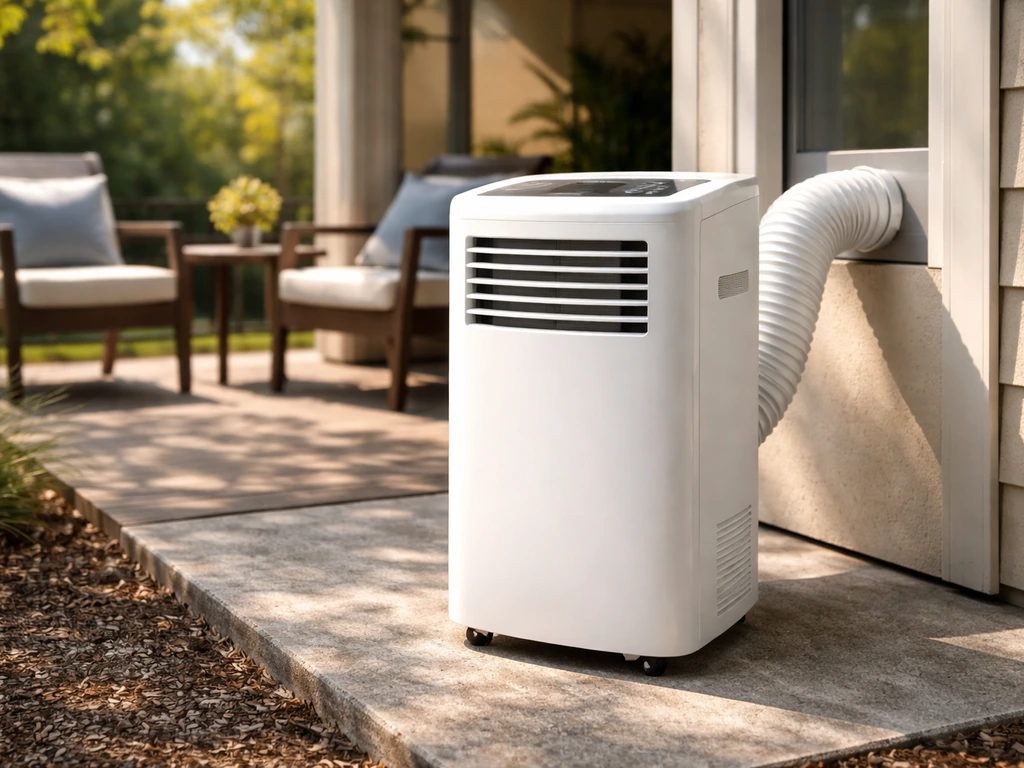
What 'best' actually means for your specific patio
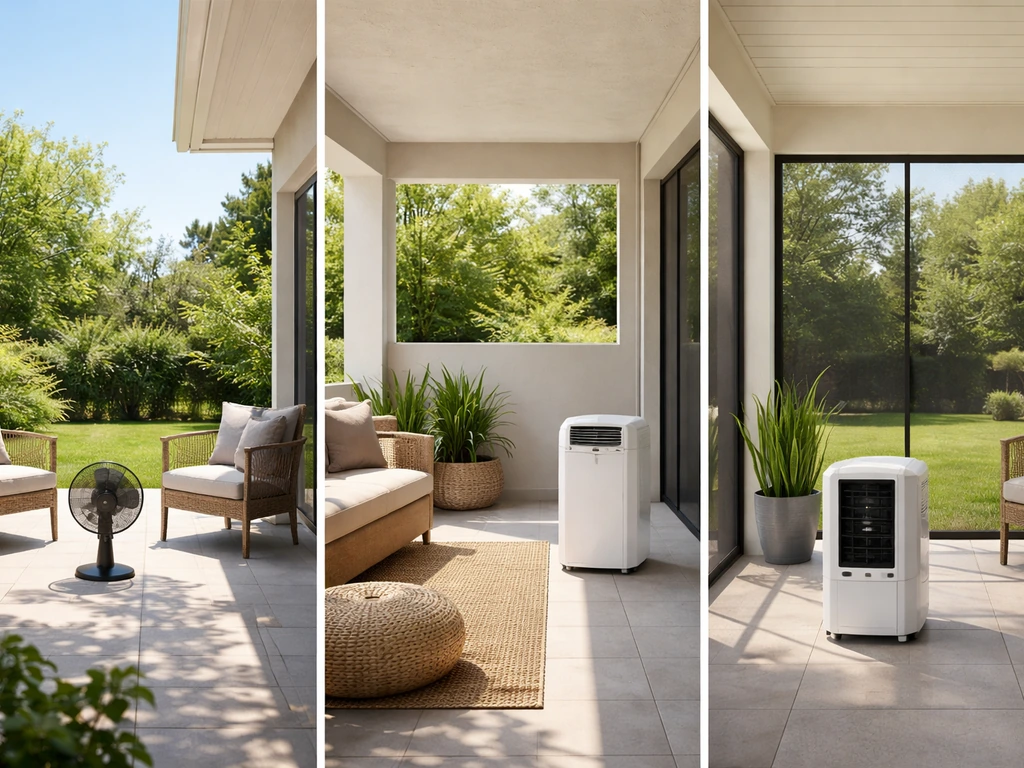
Before you spend anything, be honest about what kind of patio you have. A fully open patio, no walls, no roof, or just a pergola overhead, is essentially the outdoors. Pumping cold air into it is like air conditioning a parking lot. You will burn through electricity and feel almost nothing. A semi-enclosed patio with a solid roof and two or three partial walls starts to behave a little more like a room, especially if you can hang curtains, install screens, or use temporary panels to reduce air leakage. A fully screened-in or enclosed patio room (sometimes called a Florida room or sunroom) is the most realistic candidate for a traditional air conditioner, because it can actually hold cooled air.
The 'best' unit is also shaped by your climate. In Phoenix or Tucson, an evaporative cooler can drop air temperature by 15 to 40 degrees Fahrenheit according to the DOE, because the desert air is dry enough for evaporation to work. In Houston or Miami, that same evaporative cooler barely makes a dent because high humidity means the air is already close to saturated. So 'best' in a dry state looks completely different from 'best' in the Gulf South. Get clear on your climate zone and your patio structure before you compare a single spec sheet.
Cooling needs: BTUs, coverage, and the hard limits of outdoor spaces
BTUs (British Thermal Units per hour) measure how much heat a unit can remove from a space. For indoor rooms, a common rough guide is about 20 BTUs per square foot. For a partially enclosed patio, plan to roughly double that estimate, because the walls and ceiling are far less insulated than a home interior, and solar heat gain through a roof or screens adds up fast. A 200-square-foot screened patio might need a unit rated at 8,000 to 12,000 BTU/h minimum, and more if it gets full afternoon sun.
One thing worth knowing: DOE changed how portable AC cooling capacity is tested and reported using a standardized test procedure (Appendix CC of 10 CFR 430). NIST’s SIBR record summarizes DOE amendments to the portable AC test procedure that incorporate more representative measures of cooling capacity and energy consumption under 10 CFR 430. The result is that many portable ACs show lower BTU ratings on the label today than the same unit would have shown a few years ago. AHAM (the Association of Home Appliance Manufacturers) even issued a notice to consumers about this. The practical takeaway is that a 12,000 BTU portable under the current test methodology may cool somewhat less aggressively than an older 12,000 BTU unit, so lean toward sizing up rather than down for a patio application.
There are also real climate limits to accept. A portable AC works by removing heat and humidity from the air it processes. On a 105-degree day with blazing sun, any moderately sized portable unit is fighting a losing battle in an open or semi-open space. You can push a patio from miserable to tolerable, but do not expect it to feel like your living room unless the space is truly enclosed. In humid climates above roughly 60 to 70 percent relative humidity, you will also feel muggy even at reasonable temperatures because humidity affects perceived comfort independently of air temperature.
The main options: how patio-friendly cooling actually breaks down
There are four realistic categories to consider for patio cooling. If you want the best outdoor patio cooling system, start by matching your patio setup to the right cooling category four realistic categories. Understanding how each one works, and where each one fails, saves you from an expensive mistake.
Portable single-duct AC units
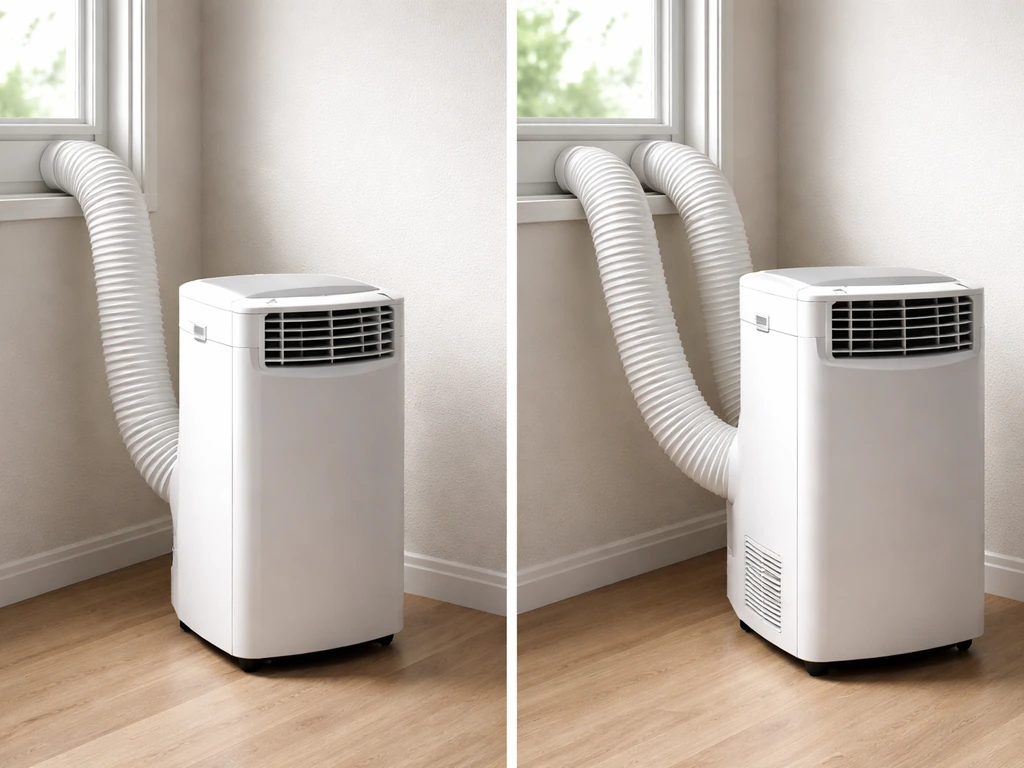
These are the rolling units you see everywhere. The DOE defines a portable air conditioner as a portable, encased assembly that delivers cooled air to an enclosed space using single-phase electrical current. For a patio specifically, look for the best portable air conditioner for patio that can vent the hot exhaust properly and match your space and climate. The key word is enclosed. A single-duct portable pulls indoor air, cools part of it, and blows the hot exhaust out a hose. That exhaust has to go somewhere, meaning you need a way to vent it outside your patio space. If your patio has a screen door, a window panel kit usually works. If not, you need a hole in a wall, a panel between deck posts, or a gap you can route the hose through. Exhaust hoses are typically limited to around 48 inches in length for efficiency, and you should use the shortest length possible. The hose supplied with the unit is not usually extendable beyond the manufacturer's limit, so check that spec before you buy.
Dual-duct portable AC units
Dual-duct units have two hoses: one to pull fresh outdoor air for the condenser, one to exhaust the hot air. They are more efficient than single-duct models because they do not create negative pressure inside your space. For a semi-enclosed patio, dual-duct units are worth the extra cost. They still need a vent pathway, but they recirculate less and keep the cooled zone more stable.
Through-the-wall or window units adapted for patio use
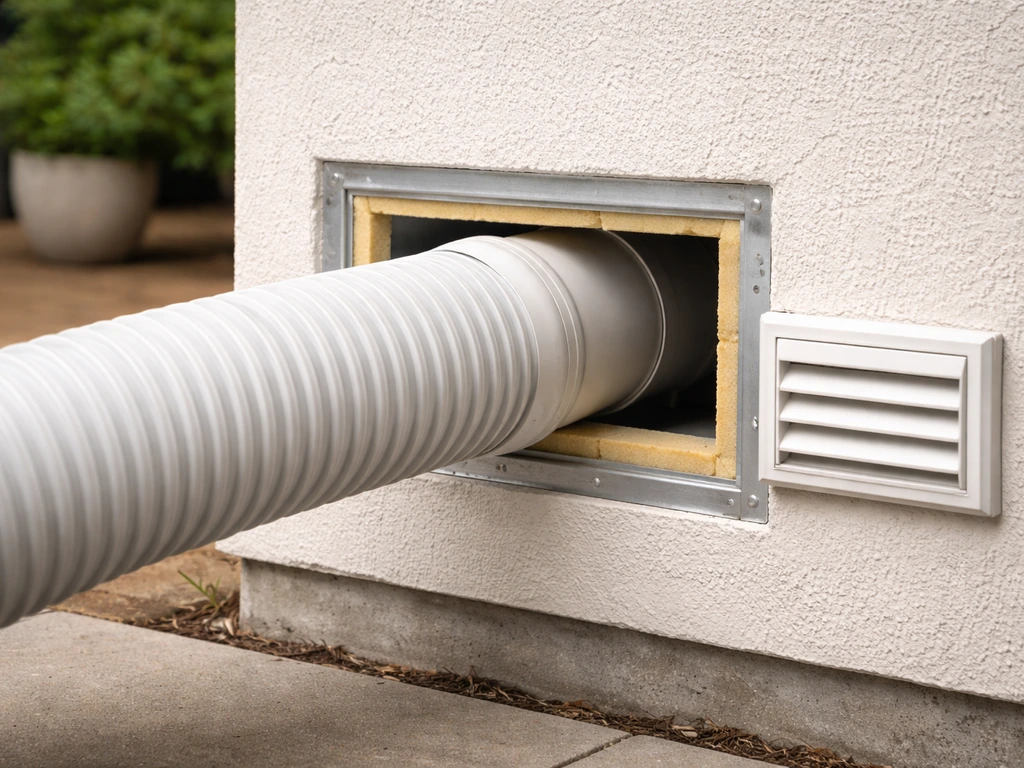
If your patio has a solid wall shared with your house, or a permanent wall on one side, a through-the-wall AC unit can work well. Installation requires cutting a sleeve through the wall with the correct dimensions, mounting a support bracket, and ensuring the outdoor louvers have clearance for airflow. This is the most permanent solution and the most efficient for a given BTU rating, but it requires more installation work and typically a permit. Window units can sometimes be adapted for use in a patio wall opening, but the opening needs to be properly sealed around the unit to prevent hot air recirculation.
Evaporative coolers and misting systems
For dry climates (think the Southwest, parts of the Mountain West, low-humidity inland areas), evaporative coolers are genuinely excellent patio solutions. They push water-saturated air into the space using a fan, and the evaporation process drops the air temperature dramatically. They use significantly less electricity than a compressor-based AC, they work well in open and semi-open spaces (because they need fresh air intake to function, unlike AC which needs enclosure), and they are usually cheaper to buy and run. The DOE notes they can drop temperatures by 15 to 40 degrees Fahrenheit under the right conditions. The hard stop is humidity: once relative humidity climbs above roughly 60 to 70 percent, the evaporation rate drops sharply and cooling effectiveness falls off fast. Misting systems work similarly at a smaller scale and are covered in more detail in the complementary solutions section below.
| Option | Best For | Climate Fit | Venting Required | Typical Cost Range |
|---|---|---|---|---|
| Single-duct portable AC | Semi-enclosed patios, temporary setups | All climates (humid included) | Yes, exhaust hose | $300–$700 |
| Dual-duct portable AC | Semi-enclosed patios, better efficiency | All climates | Yes, two hoses | $450–$900 |
| Through-the-wall unit | Enclosed patio rooms, permanent installs | All climates | Built-in (wall sleeve) | $500–$1,500+ installed |
| Evaporative cooler | Open or semi-open patios | Dry climates only (under ~60% RH) | No (needs fresh air) | $150–$600 |
| Misting system | Open patios, supplemental cooling | Dry to moderate climates | No | $50–$800 |
How to choose: the specs and checklist that actually matter
When you are standing in front of a spec sheet or product page, these are the numbers and features worth your attention for a patio application. Everything else is marketing.
Cooling capacity (BTUs)
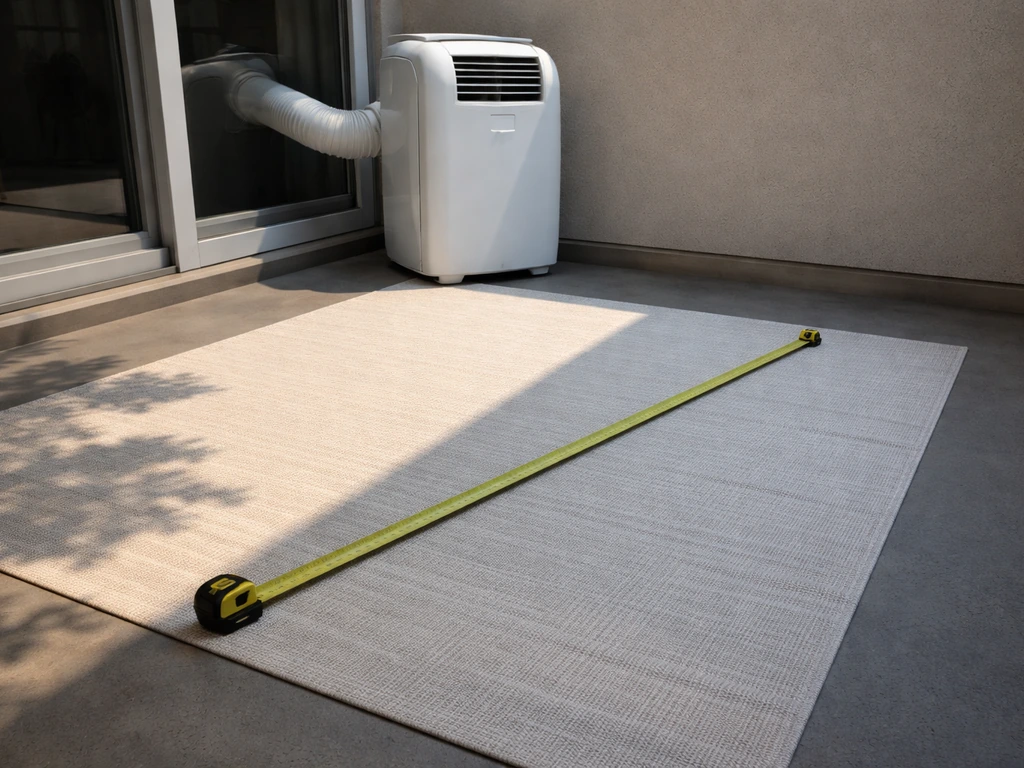
Size up for patios. Calculate your patio's square footage, double the typical indoor BTU-per-square-foot estimate to account for heat leakage, and then add more if you have direct sun exposure or live in an extreme heat zone. A 300-square-foot covered patio in direct summer sun in Texas probably needs a 14,000 to 18,000 BTU unit, not the 6,000 BTU unit that would handle the same square footage indoors.
Noise level
Patio spaces are where you relax and entertain, so noise matters. Portable AC units typically list noise in dB(A) on the spec sheet, and you can compare this across brands (LG, Hisense, Greenlite, and others all publish these figures). Look for units under 55 dB(A) for low-mode operation if you plan to use the patio for conversation or dining. Anything above 60 dB(A) will be noticeable and potentially annoying during quiet evenings.
Weather resistance and outdoor rating
Most portable AC units are designed for indoor use and have no weather protection rating. If your patio is exposed to rain splash, heavy humidity, or condensation from outdoor air, this matters. Look for NEMA Type 3R ratings or IP ratings on any unit you plan to use in a truly outdoor environment. NEMA Type 3R means the enclosure protects against rain, sleet, and ice formation. If you cannot find a weather rating on a unit, assume it is for sheltered indoor use only, and plan accordingly: place it under a covered area, away from direct rain or irrigation spray, and cover it when not in use.
Power requirements
Large portable AC units (12,000 BTU and up) typically require a dedicated 115V/15A or 115V/20A circuit. Do not use an extension cord or adapter with an AC unit. Both Home Depot and Lowe's safety documentation are explicit about this: extension cords and adapters increase the risk of electrical hazard, and most AC manufacturers void warranties if the unit is not on a dedicated circuit. If your patio does not have a proper outdoor outlet, you will need an electrician before you buy a unit. Factor that into your budget.
Drainage method
Portable AC units pull moisture out of the air (dehumidification is a byproduct of cooling). That condensate has to go somewhere. Some units have a gravity drain that requires the drain hose to be routed downward to a floor drain or outside edge of the patio. Others have a built-in pump that can push condensate upward or horizontally. GE Appliances, Frigidaire, and Windchaser all handle this differently across their product lines, and the drainage method affects where you can place the unit. Confirm the drainage approach for any unit you are considering, and make sure your patio placement has a feasible drain path.
Shopping checklist
- Measure your patio square footage and note how enclosed it is (open, screened, partial walls, fully enclosed)
- Check your local average summer relative humidity to determine if evaporative cooling is viable
- Confirm your patio has a dedicated outdoor outlet or budget for electrical work
- Identify a viable exhaust hose route (for portable units) before you buy
- Identify a condensate drain path (floor drain, exterior edge, or pump-capable unit)
- Check the noise level in dB(A) for the unit's low setting
- Verify weather resistance rating if the unit will be exposed to rain or splash
- Size BTUs for patio use (double indoor estimates, add more for sun exposure)
- Read the exhaust hose length spec and ensure your space allows it without extension
Installing and setting up a patio AC the right way
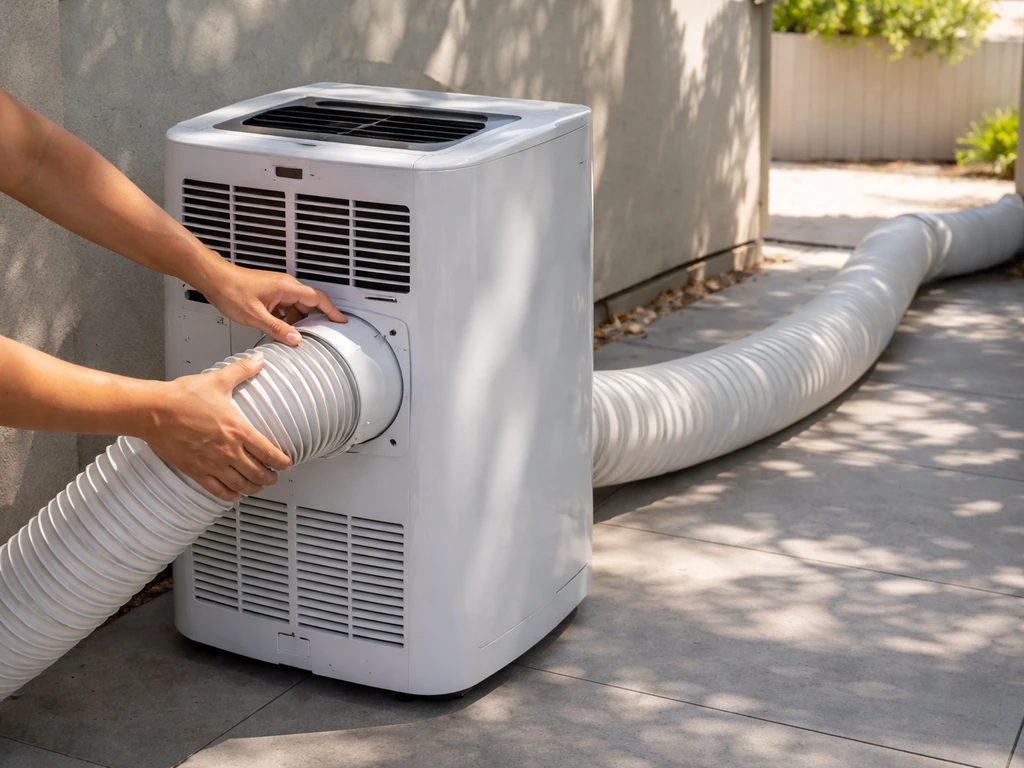
Placement matters more than people think
Put the unit in a shaded spot on your patio if at all possible. A portable AC sitting in direct afternoon sun has to work harder because the unit itself absorbs radiant heat. If you can tuck it under a covered area or near a shaded wall, it will run more efficiently and last longer. Keep it away from grills, outdoor heaters, or anything else generating heat nearby.
Venting the exhaust correctly
The single biggest mistake people make with patio portable ACs is letting the hot exhaust recirculate back into the space. If your patio is semi-enclosed and you vent the exhaust hose to the outside through a screen panel or wall gap, make sure the hot air has nowhere to drift back in through another opening. Route the hose as short and straight as possible (the Lowe's use guide recommends using the shortest hose length for maximum efficiency). On a breezy day, check that the exhaust is actually escaping and not being pushed back inside by wind.
Drainage setup on a patio
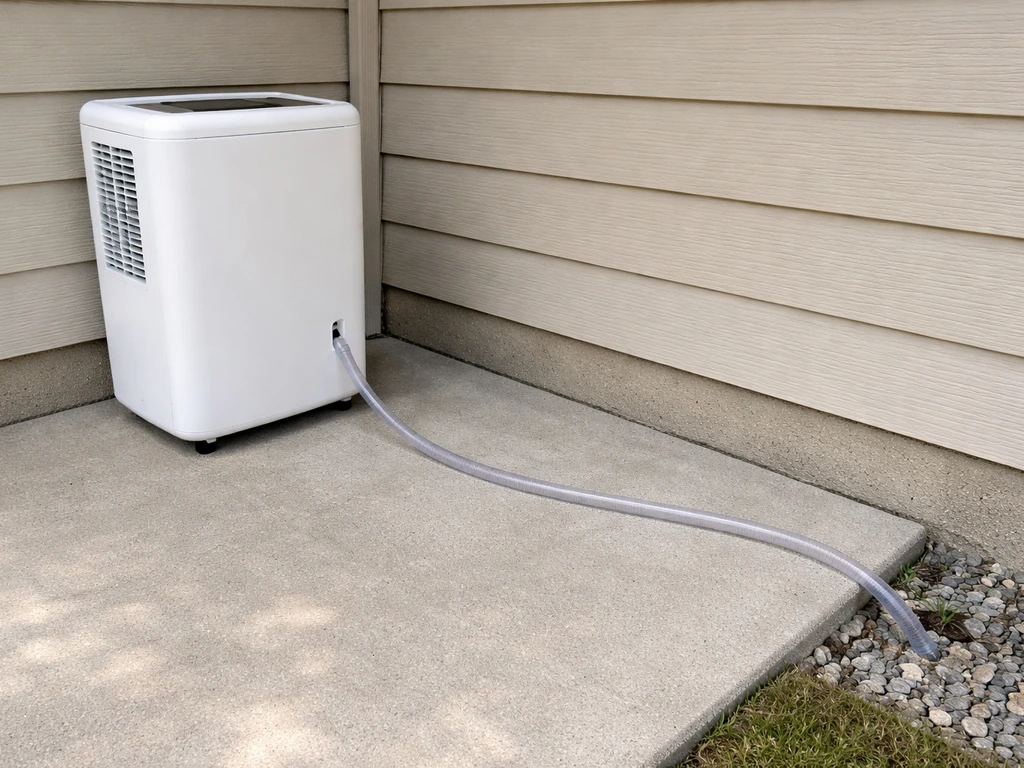
If your unit uses gravity drainage, the drain hose needs to slope downward continuously to wherever the water exits. On a patio, this might mean routing the hose to the edge of the deck or to a floor drain if you have one. If the hose has to run uphill at any point, gravity drainage will not work and you will need a unit with a pump, or you will need to manually empty the collection tank. For heavy use in humid climates, a continuous drain setup is far more practical than emptying a tank every few hours.
Protecting the unit and keeping it running
When the unit is not in use, cover it with a breathable outdoor appliance cover to protect it from sun, dust, and moisture. Clean or replace air filters every two to four weeks during heavy summer use, because outdoor air carries more dust and debris than typical indoor air. Check the exhaust hose for kinks or blockages periodically. If you are using the unit on a wood deck, put it on a rubber mat or pad to protect the deck surface and to reduce vibration noise.
Improving comfort without overbuying
A lot of homeowners jump straight to buying an air conditioner when layering a few cheaper solutions would get them 80 percent of the comfort at 20 percent of the cost. Before you commit to a unit, think through whether any of these apply to your situation.
Patio covers and shade
A solid patio cover (aluminum, wood, or insulated panel) blocks direct solar radiation, which is the biggest single driver of outdoor discomfort. Cutting direct sun on your patio surface and furniture can make the space feel 10 to 15 degrees cooler before you add any mechanical cooling. If you do not have a patio cover, that is often the first investment worth making. A solid insulated roof also gives a portable AC unit something to work with, because it reduces the heat load it has to fight.
Fans and airflow design
A good outdoor ceiling fan or pedestal fan creates perceived cooling through convective heat loss (the wind-chill effect). It does not lower air temperature, but it makes people feel significantly cooler by moving air across skin. In mild heat (say, below 90 degrees Fahrenheit), a fan under a covered patio can make the space genuinely comfortable. Combining a fan with an AC unit also lets the AC work less hard, because the fan distributes cooled air more evenly instead of letting it pool near the unit.
Misting systems
Misting systems spray fine water droplets that evaporate in the air, creating cooling similar to an evaporative cooler but at a much smaller scale. They work best in dry climates (the same humidity rules apply as for evaporative coolers) and are a popular and affordable solution for open patios where you cannot enclose the space. A mid-range misting system for a medium patio runs $100 to $400, requires a water connection, and can be DIY-installed in a few hours. In humid regions, misting can actually make you feel stickier, so think carefully about your climate before investing. If you are already exploring the best outdoor evaporative cooler for a patio or a dedicated patio evaporative cooler, misting systems operate on the same basic principle at a lower cost and lower capacity. If you are comparing the best outdoor evaporative cooler for a patio, make sure you match it to your humidity and patio layout so it can actually cool effectively.
Layering strategies that work
The most effective and cost-efficient approach for most homeowners is to layer solutions: a solid patio cover to block sun, a ceiling fan to move air, and then a portable AC or evaporative cooler if those alone are not enough. This is especially true if you are in a climate with high humidity, where mechanical AC is the only reliable option and everything else is just supporting it. Think of the AC as the last layer, not the first.
Hiring a pro vs DIY: what to know before you decide
When DIY makes sense
A portable AC unit on a semi-enclosed patio is almost always DIY-friendly. You roll it out, route the exhaust hose, plug it in (to a proper dedicated outlet), and set up the drainage. The same goes for evaporative coolers and misting systems. If your patio already has outdoor electrical outlets, no permits are typically required for a portable unit, and you can be up and running in under an hour. This is the path most homeowners should take for a first attempt at patio cooling.
When you need a pro
If you want to install a through-the-wall or mini-split system, or if you need new electrical circuits run to the patio, you need a licensed electrician and possibly a general contractor. Through-the-wall AC installation involves cutting through a finished wall (sometimes stucco, brick, or siding), installing a sleeve, mounting the unit, sealing the opening against weather and pests, and verifying the circuit. In most jurisdictions, this requires a building permit and inspection. Mini-split systems (ductless AC that mounts on a wall and uses a separate outdoor compressor) are among the best options for a fully enclosed patio room, but installation runs $1,500 to $5,000 depending on the unit size and local labor costs.
What to ask contractors
- Are you licensed and insured for HVAC and electrical work in this state?
- Will this installation require a permit, and will you pull it?
- What size unit do you recommend for my specific patio square footage and enclosure type?
- Where will the condensate drain, and is a pump needed?
- What is the total installed cost including any electrical upgrades?
- What warranty does the unit carry, and do you service what you install?
- Can you show me the exhaust or refrigerant line routing before you cut anything?
Budget reality check
A portable AC for a semi-enclosed patio costs $300 to $700 for the unit, plus $0 to $300 for electrical work if you already have a suitable outlet. A through-the-wall unit installed professionally runs $800 to $2,000 total. A ductless mini-split for an enclosed patio room runs $2,000 to $5,000 installed. An evaporative cooler for a dry-climate patio runs $150 to $600 for the unit, DIY setup. A misting system runs $100 to $800. The combination of a patio cover plus a ceiling fan plus a portable AC is often the smartest total investment for most homeowners, delivering real comfort without the permanent installation commitment or cost of a mini-split. If you are comparing against the best portable air conditioner options specifically for a patio, keep in mind that the portables in the $450 to $700 range tend to offer the best balance of BTU output, noise control, and drainage options for outdoor use.
Setting realistic expectations
No patio air conditioner will make a fully open outdoor space feel like an air-conditioned room. If your patio has no walls, no roof, or significant air gaps, start with shade and fans before spending on mechanical cooling. If your patio is semi-enclosed and in a hot, humid climate, a properly sized portable AC can make a real difference during the hottest hours of the day, especially when paired with ceiling fans and a solid overhead cover. If you are in a dry climate, an evaporative cooler or a quality patio air cooler may be your best overall investment and will serve you well for years at lower operating cost. For many dry climates, the best patio air cooler options combine efficient evaporative cooling with airflow and humidity-aware placement quality patio air cooler. Know what you are starting with, size your solution to your actual space, and you will land on a setup that genuinely works.
FAQ
Can I use a patio portable AC in a fully open outdoor area with no walls or roof?
You can try, but expect very low cooling because hot air keeps flowing in and the unit is not designed to create a contained, cooled zone. If the patio has any meaningful enclosure, like screens and a solid overhead cover, portable AC becomes more viable, otherwise start with shade, fans, and misting instead.
How do I know if I sized the BTUs correctly for my patio?
Use the patio square footage and the “double the indoor BTU per square foot” approach, then adjust upward if you get full afternoon sun or strong radiant heat from nearby surfaces. A simple check is this, if the unit runs continuously and the space still feels muggy or unbearable at peak heat, you are likely undersized for your patio’s heat load, not just under-vented.
Do single-duct portable AC units work on a semi-enclosed patio if I vent the hose to outside?
They can, as long as the exhaust air has a clear path out and you do not create negative pressure that pulls that same hot air back in through other openings. If your patio has multiple gaps, use shorter, straighter vent routing, and on breezy days confirm the exhaust direction stays outward.
What is the maximum safe exhaust hose length for a patio portable AC?
Most portable units are limited by manufacturer design, commonly around 48 inches for efficiency, and the included hose often cannot be extended safely beyond that limit. If you need to route farther, prioritize a venting path that uses the shortest route rather than adding adapters or longer hose.
Can I leave a portable AC uncovered outdoors when it rains?
Only if the product is explicitly rated for weather exposure (for example, NEMA 3R or an equivalent IP rating). Otherwise, treat it as sheltered-use equipment, place it under a covered section, keep it away from direct sprinkler and irrigation spray, and use a breathable cover when stored.
Does a portable AC remove humidity on a patio, or do I need a dehumidifier?
Portable AC units remove moisture as a byproduct, so they typically dehumidify while cooling. If you still feel sticky, it usually means the air is not getting cooled enough, the exhaust is recirculating, or humidity is very high for evaporative approaches, in which case mechanical AC plus fans is the reliable path.
Where should the condensate go, and what if my patio has no floor drain?
If the unit has gravity drain, the drain hose must slope continuously to a floor drain or an approved outlet edge, any upward section can break drainage. If you do not have that path, choose a model with a condensate pump or a design that supports tank-free drainage, and verify placement before you mount or position the unit.
Is it safe to run a portable AC on an extension cord for a patio outlet that is far away?
No. Extension cords and adapters increase fire and shock risk and many AC manufacturers will void warranties. If the outlet is not positioned properly, you generally need a dedicated outlet and circuit, sometimes an electrician can confirm a correct wiring route rather than guessing.
How noisy will a patio portable AC be during dinner or conversation time?
Check the dB(A) spec at the specific fan or cooling mode you plan to use, not just the highest output level. If you want low-distraction operation, aim for under about 55 dB(A) at low-mode, and expect more noticeable sound outdoors because there are fewer indoor surfaces to absorb vibration.
Will a ceiling fan make the AC work better, or just add airflow?
It can help the comfort experience and can reduce how hard the AC has to run, because moving air improves perceived cooling and prevents cold air from pooling near the unit. For best results, run the fan on a mode that circulates across people, and place the AC so airflow distribution is not blocked by furniture or barriers.
What’s the biggest reason a patio AC feels underpowered even when the BTUs seem right?
Hot exhaust recirculation is the most common culprit. Another frequent issue is long, kinked, or blocked exhaust routing, plus placement in direct sun where the unit’s condenser load increases. Before swapping for a larger unit, check vent routing, hose condition, and unit shading.
When would I choose a through-the-wall unit or mini-split instead of a portable AC?
Choose through-the-wall or mini-split if you have a fully enclosed patio room, want quieter operation, and do not want to manage exhaust hoses and condensate routing. Also consider them if you lack a suitable dedicated outdoor outlet for a portable unit or if local electrical limitations make adding circuits expensive.