
For most patios, a hard-sided ice chest in the 45 to 70-quart range is the best cooler to buy. If you are prioritizing overall patio comfort instead of just chilling drinks, a best patio evaporative cooler is a strong related option for hot, dry days. It handles a full afternoon of entertaining, keeps drinks below 40°F for multiple days if you manage it right, and survives years of sun, spills, and concrete. If you want zero-hassle cold without buying bags of ice, a plug-in thermoelectric or compressor cooler works well near an outlet. If your crowd is big or your events run long, go hard-sided with thick foam insulation and a freezer-style gasket, not a basic grocery-store box.
Best Cooler for Patio: How to Choose the Right One

Elise Prescott
29 Apr 2026
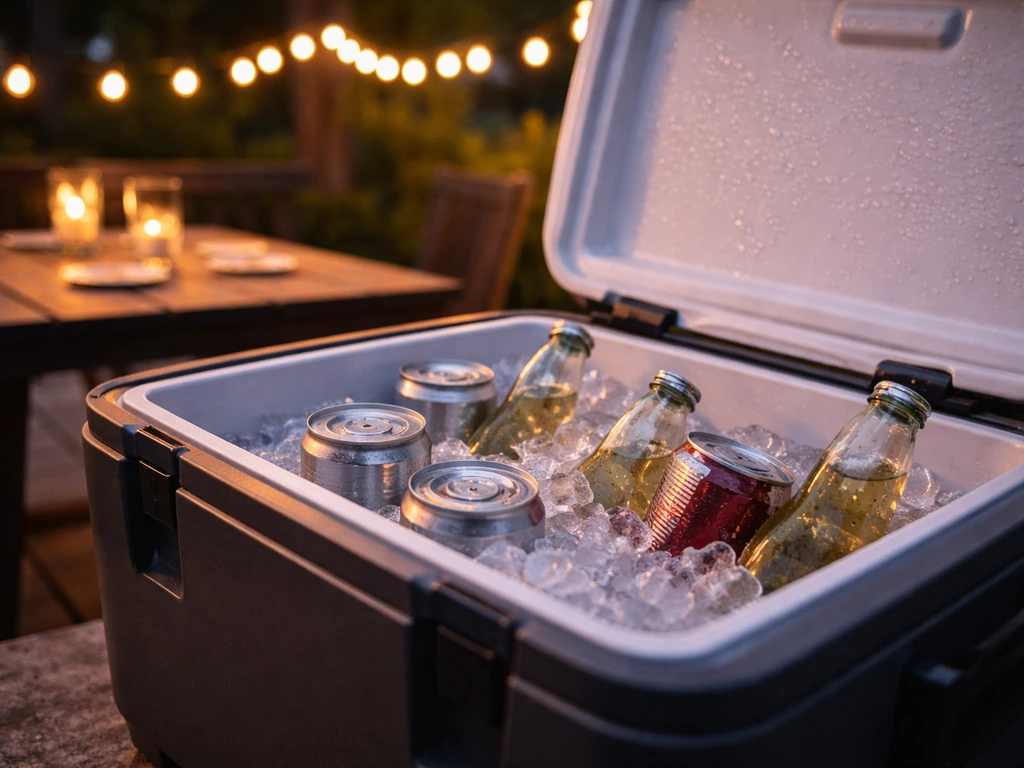
Ice chest, cooler box, or beverage center: which one do you actually need?
The term "cooler" gets used loosely, so let's get specific. A classic ice chest is the insulated hard box you fill with ice and canned drinks. A soft-sided cooler box is lighter and easier to carry but gives up significant ice retention. A beverage or serving cooler is more of a drink station, sometimes wheeled, sometimes with built-in cup holders and a butler tray. And then there are plug-in electric coolers that use a Peltier chip or compressor to cool without ice at all.
For a patio specifically, the hard ice chest wins for most situations. It can double as seating or a side table, it handles heavy use, and a quality model keeps ice for three to five days in real-world conditions. Soft-sided bags are fine for a quick trip but aren't great for an all-day summer cookout in 95-degree heat. Wheeled drink stations like the Igloo Trailmate series are excellent if you want a designated drink spot that stays put, with cup holders, food baskets, and drain plugs all built in. Electric coolers (covered more below) are a different category and work best for people who want a truly ice-free setup.
How big of a cooler do you need?
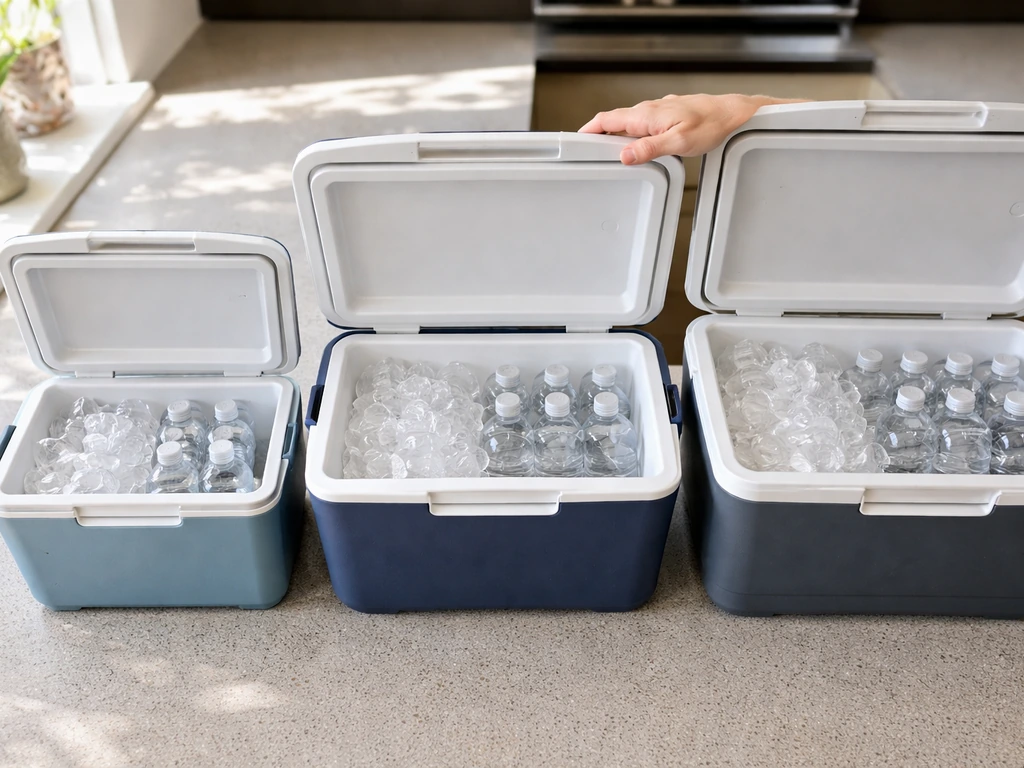
A rough planning rule: budget about 2.5 pounds of ice per guest just to keep things cold, and that ice takes up space before you've put in a single can. A 45-quart cooler fits roughly 45 to 50 cans with ice packed around them, which works well for a group of 8 to 10 people at a few-hour party. Step up to a 65 or 70-quart cooler and you're in good shape for 15 to 20 guests or a full day event where you're serving both drinks and food.
| Cooler Size | Rough Can Capacity (with ice) | Good For | Refill Strategy |
|---|---|---|---|
| 20–28 qt | 20–24 cans | 1–4 guests, short events | Single ice bag, plan to refill after ~1.5 days |
| 45 qt | 45–50 cans | 6–10 guests, half-day to full day | One large ice bag, refill around day 2–3 |
| 65–70 qt | 70–80 cans | 12–20 guests, all-day or multi-day | Two large ice bags, refill every 2–4 days depending on insulation |
| 100+ qt | 100+ cans | Large parties, weekend events | Bulk ice delivery or ice machine; pre-chill before use |
If you're running a short afternoon party with plenty of shade, a 45-quart is genuinely enough for a group of ten. Go bigger if the sun beats down on your patio all day, because heat is the enemy and you'll burn through ice faster than the label suggests. For multi-day events or camping-style weekend gatherings, a 65 to 70-quart with serious insulation is where I'd put my money.
What ice retention claims actually mean (and what to expect in real life)
Every cooler brand stretches their ice retention claims, and it's worth knowing why. YETI itself points out there's no industry standard for these tests. Brands like Igloo fill the cooler to 90% capacity with ice pre-chilled to 10°F, then measure how long it takes to hit 40°F under controlled alternating temperatures. Arctic Zone uses a similar protocol with the cooler packed 100% with ice and never opened. Neither test reflects real life, where you're opening the lid every 20 minutes and the cooler is only two-thirds full of room-temperature drinks.
In independent testing, the Coleman Xtreme 70-quart held below 40°F for about 3.7 days, even without pre-chilling. With pre-chilling and a better ice ratio, you'd squeeze out more. RTIC recommends choosing a cooler rated for at least 5-plus days if you need reliable cold for 3 days, specifically to account for this real-world gap. That's practical advice. The features that actually drive retention are the thickness of the foam (YETI uses up to 3 inches of polyurethane; RTIC uses about 2.8 inches of closed-cell foam), the tightness of the lid gasket (a freezer-style rubber gasket makes a real difference), and how you use the cooler.
How to get more days out of any cooler
- Pre-chill the cooler the night before: throw in a sacrificial bag of ice to bring the walls down to temperature before you pack real food and drinks
- Start with cold drinks and cold food, not room temperature items that will melt ice on contact
- Keep the lid closed as much as possible: every opening lets cold air out and warm air in
- Use block ice when you can: it melts slower than cubed ice
- Keep the cooler in shade: a covered patio or even a towel draped over it makes a measurable difference
- Fill air gaps with extra ice or crumpled newspaper; empty space is the enemy of retention
Features that actually matter for patio life
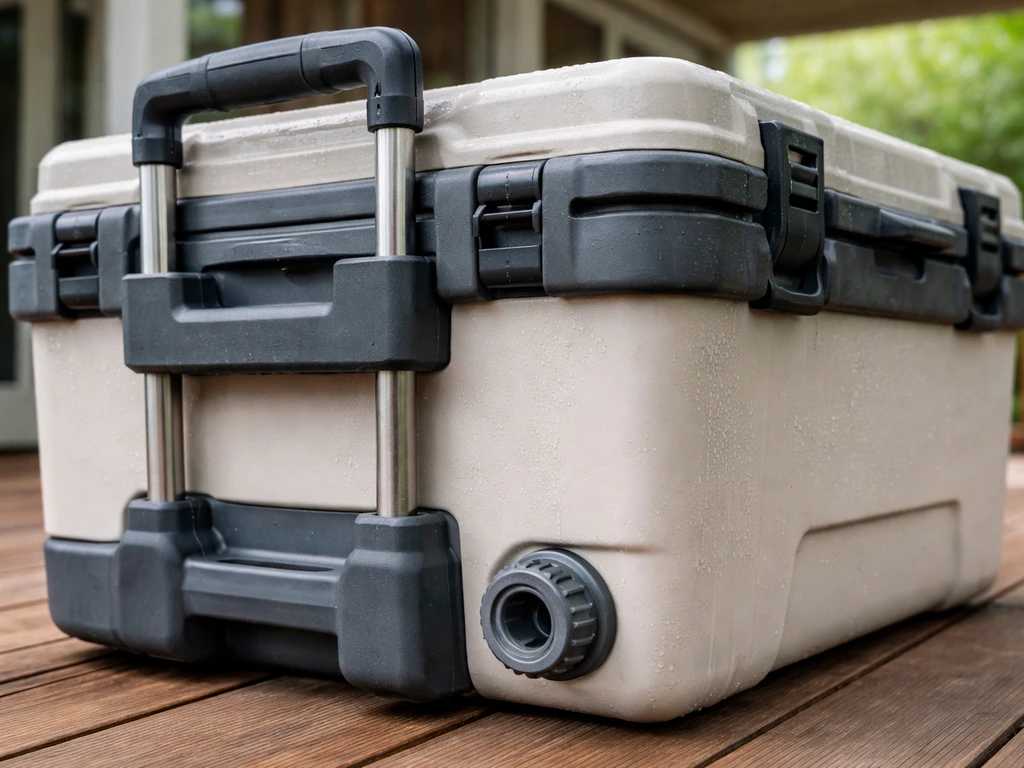
Outdoor entertaining puts specific demands on a cooler that you don't think about until you're wrestling a 70-pound full cooler across a wood deck or chasing a melted-ice puddle across your patio stones. Here are the features worth paying for.
- Wheels and telescoping handle: essential for anything 45 quarts and up. The Igloo Trailmate series is built specifically around this. Dragging a full hard cooler across pavers without wheels is miserable.
- Drain plug: you need one, and it needs to work. A channel drain or rust-proof drain plug makes emptying melted ice easy. Avoid models where the drain is awkward to access (some Igloo Trailmate Marine versions got flagged for this in independent testing).
- Freezer-style gasket: this is what separates premium coolers from budget ones. A tight rubber seal around the lid keeps cold air in. It's also what lets a RTIC or YETI hold ice for days instead of hours.
- T-latches or roto-molded latches: secure lid closure matters for both retention and keeping the lid from blowing open in wind on a patio.
- Cup holders: nice to have, especially on a dedicated drink station. The Coleman Xtreme 70-quart has four in the lid. The Igloo Trailmate Journey has a butler tray built in.
- Rot-resistant and UV-stable materials: patio coolers live outside. Look for UV-resistant plastic and rust-proof hardware. Avoid coolers with cheap metal hinges or hardware that will rust after one season.
- Easy-clean interior: a smooth liner with no tight corners makes rinsing out fish smell or spilled juice much easier. This matters more than it sounds after a summer of use.
- Tie-down points or non-slip feet: on a deck or sloped patio surface, a cooler that slides around is annoying and potentially dangerous.
Power options: ice, plug-in electric, or battery
Most patio setups run on plain ice and that's perfectly fine. For a patio setup, you can also look for models that add more cooling power through electric or ice-free designs patio setups. But if you want to go beyond ice, there are real options worth understanding.
Ice-only coolers
The standard approach. Pick a well-insulated hard cooler, follow the pre-chill and packing tips above, and you can hold safe temperatures for 3 to 5 days without any power. This is the most flexible option since it works anywhere on your patio, doesn't need an outlet, and is easy to move. The trade-off is managing ice: buying it, storing it, and draining the melt water every day or two.
Plug-in thermoelectric coolers
Thermoelectric coolers use a Peltier chip to move heat rather than a compressor or ice. The Igloo Iceless 40-quart, for example, can cool contents roughly 38°F below ambient temperature. That sounds impressive until you realize that on a 90°F patio, 38°F below ambient is still 52°F, which is warmer than ideal for food safety but fine for keeping drinks cool. These units draw around 55 watts (about 4 to 4.8 amps per hour on a 12V source) and typically run off a 12V car outlet or a standard AC adapter. They work well on a covered patio near an outlet or near a vehicle. They won't freeze anything and they're not a substitute for a proper cooler in extreme heat, but for everyday drink-cooling duty without handling ice, they're genuinely convenient.
Compressor-style coolers and battery power
Compressor coolers (sometimes called 12V fridges) use a real refrigeration cycle and can hit actual refrigerator temperatures, even below freezing. Brands like BougeRV, Alpicool, and EcoFlow make popular versions. These are more expensive (typically $200 to $600 or more) but give you true fridge performance without any ice. On a patio near an outlet, they're excellent. Away from an outlet, a portable power station from brands like Jackery or EcoFlow can run a compressor cooler for a full day or more on a single charge, depending on capacity. This is especially useful on a large backyard patio without outdoor outlet access. If you're going this route, look for a power station rated at least 500Wh to get comfortable run times.
| Power Type | Cooling Ability | Needs Power? | Best For | Approximate Cost |
|---|---|---|---|---|
| Ice-only hard cooler | Below 40°F for 3–5+ days | No | Any patio, maximum flexibility | $30–$400+ |
| Thermoelectric (Peltier) | ~38°F below ambient | Yes (12V or AC) | Covered patio near outlet, no-ice convenience | $50–$150 |
| Compressor cooler | True fridge/freezer temps | Yes (AC or battery) | All-day events, no ice restocking, large patios | $200–$600+ |
| Battery + compressor | True fridge/freezer temps | Battery power station | Patios without outlets, overnight or multi-day events | $400–$1,200+ combined |
Best cooler by patio scenario and budget
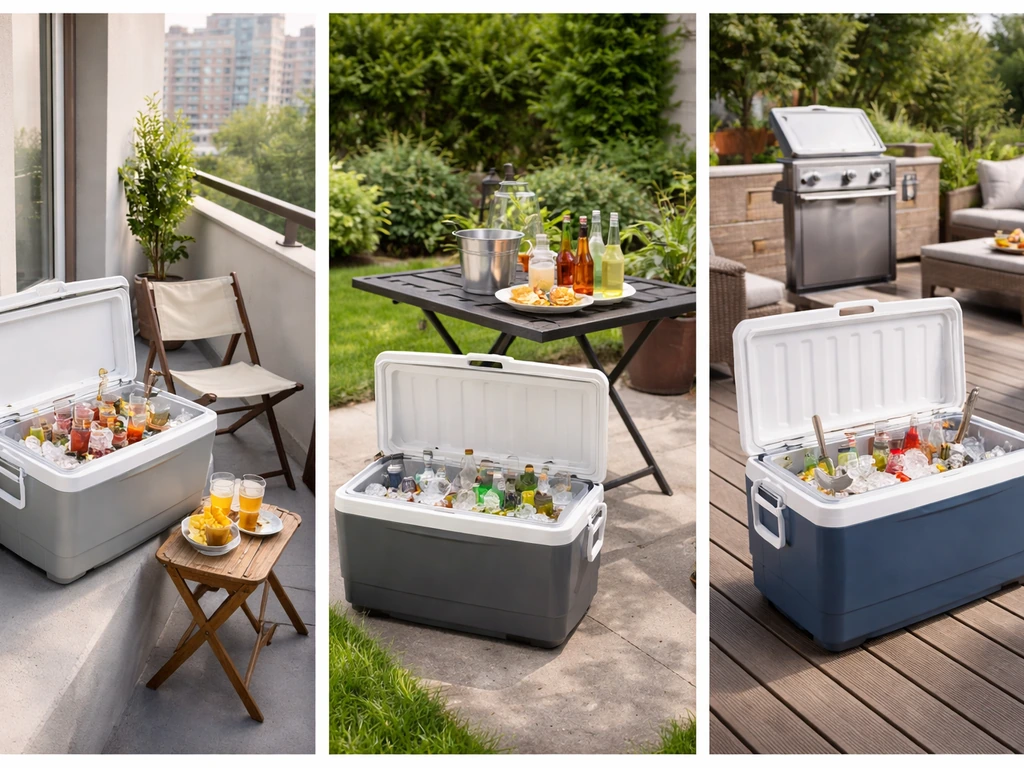
The right cooler depends less on brand loyalty and more on what your patio actually looks like and how you entertain. Here's how I'd match them up.
Small balcony or apartment patio, 1–4 guests, short gatherings
Space is limited so go 20 to 28-quart. A Coleman 28-quart or similar budget hard cooler in the $30 to $60 range does the job. If you don't want to deal with ice at all, an Igloo Iceless 26-quart thermoelectric unit with its 8-foot 12V cord works well plugged into a nearby outlet with an adapter. Don't overthink this tier: a compact, easy-carry cooler with a solid drain plug is all you need.
Mid-size backyard patio, 8–15 guests, afternoon to evening parties
This is the most common scenario and where the 45 to 65-quart range shines. At the budget end ($60 to $120), the Coleman Xtreme 5-Day series consistently performs above its price, holding below 40°F for close to 4 days in real testing. Mid-range ($120 to $250), models from Igloo Trailmate Journey 70-quart give you wheels, cup holders, a butler tray, and a drain plug in a purpose-built patio-friendly package. At the premium end ($250 to $400), RTIC's 45 or 65-quart hard cooler with 2.8 inches of closed-cell foam and freezer gasket, or a YETI Tundra, will out-perform anything else in sustained heat.
Large backyard, 20+ guests, all-day or weekend events
Go 70-quart or larger, and seriously consider a compressor cooler or a dedicated outdoor beverage refrigerator alongside a traditional ice chest. For ice-only at this scale, a 100-quart Igloo or Coleman with wheels is a workhorse. If you want zero ice management, a compressor-style 12V fridge paired with a 500Wh-plus portable power station (EcoFlow River 2 or Jackery Explorer 500 class) will run for a full party day without refueling. Hot-climate patios in Texas, Arizona, or Florida especially benefit from the compressor approach since ambient temps in summer regularly exceed 90°F, which limits thermoelectric performance.
Covered or shaded patio vs. full sun
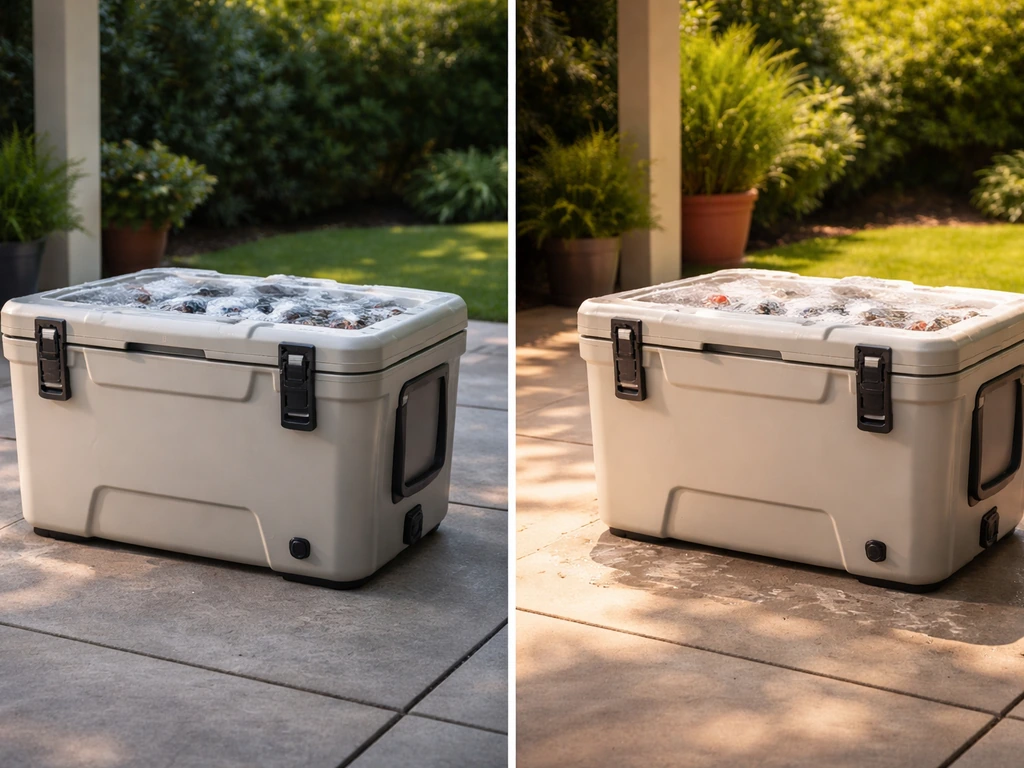
Shade changes the equation significantly. A mid-range 45-quart cooler on a covered patio in the Southeast might hold ice for 4 days. That same cooler sitting in direct Texas sun might need a refill after 36 hours. If your patio is exposed, either invest in a premium high-insulation cooler (RTIC, YETI, Orca), place a light-colored towel or reflective cover over the cooler, or position it under your patio cover or umbrella. This matters more than the brand name on the side.
Placement, setup, and keeping it working all season
Where you put the cooler and how you set it up matters more than most people realize. A few practical habits will stretch ice retention and keep the cooler in good shape for years.
Setup and placement
- Put it in shade whenever possible: under a patio cover, pergola, or large umbrella. Direct sun heats the walls and kills retention fast.
- Elevate it slightly if condensation is an issue on wood decks: a rubber mat or small platform prevents moisture damage to the deck surface.
- Keep the drain plug closed during use and open it slightly when you tilt to drain melted water. YETI notes you should loosen the drain plug (not fully remove it) and tilt the cooler for drainage.
- Don't place it near a grill or outdoor heater: radiant heat from a grill a few feet away dramatically accelerates ice melt.
- For electric coolers, make sure the cord reaches your outlet without stretching tight across a walking path.
Maintenance and end-of-season storage
Coolers are simple to maintain but easy to neglect. At the end of a party, rinse the interior with clean water and a mild soap, paying attention to the lid gasket where mold loves to grow. Igloo specifically recommends storing coolers with the drain plug open so trapped moisture can escape instead of sitting and causing mildew. Leave the lid cracked or propped open in storage so air circulates. Most drain plug hardware is replaceable if it cracks or warps from UV exposure, so don't throw out a good cooler over a $3 part.
If you're storing the cooler through winter, give the gasket a light coat of silicone lubricant to keep it from drying and cracking. Check the latches and hinges for any rust or stiffness, especially if your patio is near saltwater. A cooler that gets this basic seasonal care will realistically last ten years or more. One that gets thrown in a garage wet and forgotten might start to smell and degrade by year three.
A quick note on other cooling approaches
If you're exploring broader outdoor climate control for your patio and not just drink cooling, there's a whole world of evaporative coolers, misting systems, and patio air conditioners that address the ambient temperature rather than just what's in the box. A great option for evaporative cooling is the best outdoor evaporative cooler for patio, which uses water evaporation to lower the air temperature on hot, dry days. A best patio air conditioner can help take the edge off the ambient heat so your outdoor space feels more comfortable even between drink runs. Those are different tools for a different problem, but they often work well alongside a good ice chest for a fully comfortable outdoor setup in summer heat. If you mainly want to cool the space itself, a best portable air conditioner for patio is a related option that targets ambient comfort alongside your ice chest. If you want to focus specifically on air temperature comfort, a best patio air cooler approach can complement drink cooling during the hottest hours best patio air conditioner. If you mainly want colder drinks with minimal hassle, a best outdoor patio cooling system often combines shaded placement with plug-in or portable electric cooling options.
FAQ
How can I keep drinks cold longer without buying more ice?
Pack the cooler 2/3 to 3/4 full, pre-chill cans and bottles in the fridge, use a block of ice (or freeze water bottles) in the bottom half, and keep the lid closed. Every time you open the lid, you replace cold air with warm air, which shortens retention more than most people expect.
What’s the best way to manage melt water so my patio stays clean?
Put a drip tray under the cooler if it’s on pavers or wood, and drain into a small utility bin or bucket rather than letting it pool. If you have a drain plug, keep it closed during the party, then drain promptly at breaks, because standing water also speeds up temperature rise.
Should I use regular ice or bagged ice for a patio cooler?
Regular ice from a cooler bin or bagged ice both work, the key is temperature and size. If possible, use larger pieces or freeze-and-use blocks, they melt slower and create less liquid than lots of small cubes.
Is it safe to put food in the same cooler as drinks?
Yes if you use separate containers and monitor temperatures. Keep meat and dairy in sealed boxes, keep them surrounded by ice, and do not rely on “cold to the touch” as a thermometer substitute. Consider using one cooler for food and one for drinks if you’ll be opening the lids often.
How do I choose between a 45-quart and a 70-quart when I’m not sure how many guests?
Count by event length, not just headcount. For a few hours, a 45-quart can work for about 8 to 10 guests with careful packing, but for an all-day cookout or sun exposure, jump to 65 to 70 quarts to reduce ice changes and avoid repeated lid openings.
What cooler features matter most for patio durability and ease of use?
Focus on a tight freezer-style lid gasket, a well-sealed drain plug, thick closed-cell foam, and sturdy hinges/latches that can take UV exposure. Wheels and cup holders are convenient, but insulation and sealing usually determine how long you stay cold.
How should I position the cooler on the patio for best performance?
Set it on a shaded surface, ideally under cover or next to a wall that blocks direct sun. Avoid placing it on dark heat-absorbing materials, keep it away from direct grills or heat sources, and elevate it slightly on a towel or mat so airflow and drainage work better.
Can I run a plug-in thermoelectric cooler safely for long parties?
Yes, but expect it to be “cooler than ambient,” not a true ice-chest substitute. Use it on a covered patio near a working outlet, avoid extension cords that are undersized, and plan for drinks to be colder when the unit starts near room temperature rather than fully warm.
What battery or power station size do I need for a compressor cooler?
Aim for at least 500Wh for comfortable run times on a small fridge-style cooler, then size up if you expect long runtime or higher capacity draws. Also check the compressor’s watt rating on startup versus steady-state consumption, since surge power can drain batteries faster than the average rating.
Why do some coolers lose cold faster in direct sun even if the model is high-end?
Direct sunlight increases heat transfer through the lid and walls, especially when the lid gasket area warms. Even premium insulation can be overwhelmed if the cooler sits in sun for hours, so using a reflective cover, light towel, and placing it under shade often improves results more than swapping brands.
How do I prevent mold or bad smells in a patio cooler after parties?
Rinse with mild soap and water, dry thoroughly, then store with the drain open and the lid cracked so moisture cannot get trapped. If the gasket has visible residue, wipe it clean during cleanup because trapped film is where odor starts, especially in warm, humid patio storage areas.
When is it worth replacing a cooler instead of fixing it?
If the insulation foam is wet and degraded, the lid no longer seals, or the gasket is torn and cannot seat properly even after replacement, replacement may be more cost-effective. Many common fixes are inexpensive, like replacing a cracked drain plug or latch hardware, so check those first before retiring the cooler.