
For most homeowners in 2023, a mid-range pump-driven misting system running at 250–1000 PSI hits the sweet spot between real cooling performance and manageable cost. If you have a small patio (under 200 sq ft) in a dry climate like Arizona or Texas, a solid hose-end kit in the $50–$150 range will genuinely drop the felt temperature by 15–25°F. For larger spaces or humid Southern climates, you need a dedicated high-pressure pump system (1000–1500 PSI) with fine nozzles and a proper filtration setup, and you should budget $400–$1,200 or more depending on coverage area. Here's exactly how to figure out which setup fits your patio, climate, and budget.
Best Patio Misting System 2023: Buyer Guide and Setup

Elise Prescott
6 Jun 2026
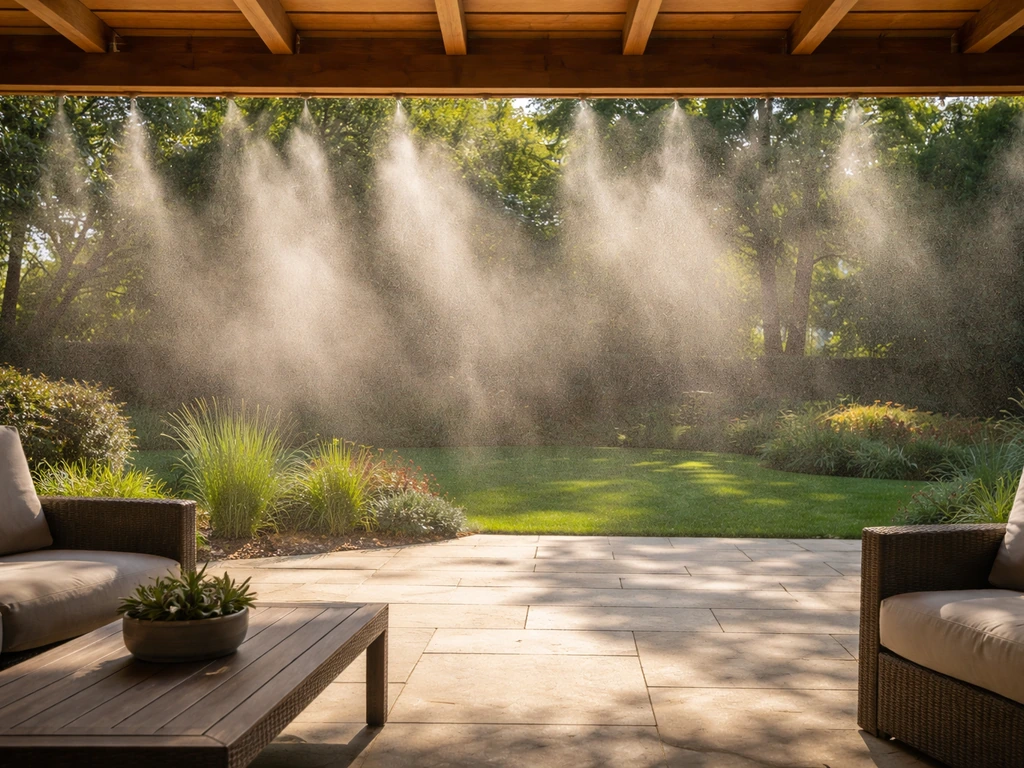
What patio misting actually does and when it's worth the investment
A misting system works through evaporative cooling. Tiny water droplets are pushed through nozzles under pressure, and as those droplets evaporate in the air around you, they pull heat out of the surrounding atmosphere. The operative word is "evaporate." If the droplets don't evaporate before they land on you, your furniture, or your floor, you're not getting cooling, you're getting wet. That distinction matters more than almost any other factor when choosing a system.
Evaporative cooling performs best in high-temperature, low-humidity conditions. In a very dry climate (think relative humidity around 13–30%), a well-designed misting system can drop the ambient temperature by 15°F or more. In humid regions like Florida, coastal Louisiana, or the mid-Atlantic in July, the air is already close to saturated, and added moisture has nowhere to go. Above roughly 80% relative humidity, evaporation slows dramatically and the cooling effect becomes minimal while the wetting risk goes up significantly.
So is misting worth it? If you're in a dry or semi-arid climate and you spend regular time on an exposed or semi-covered patio during summer, yes, a good system pays for itself in comfort within a single season. If you're in a humid climate, misting fans with directional airflow can still provide some benefit, but a full perimeter misting setup will mostly make your patio feel like a sauna. Know your climate before you buy anything.
What to look for when comparing systems
Shopping for a misting system feels overwhelming because the specs can seem technical. Here's what actually matters and what the numbers mean in practice.
Operating pressure
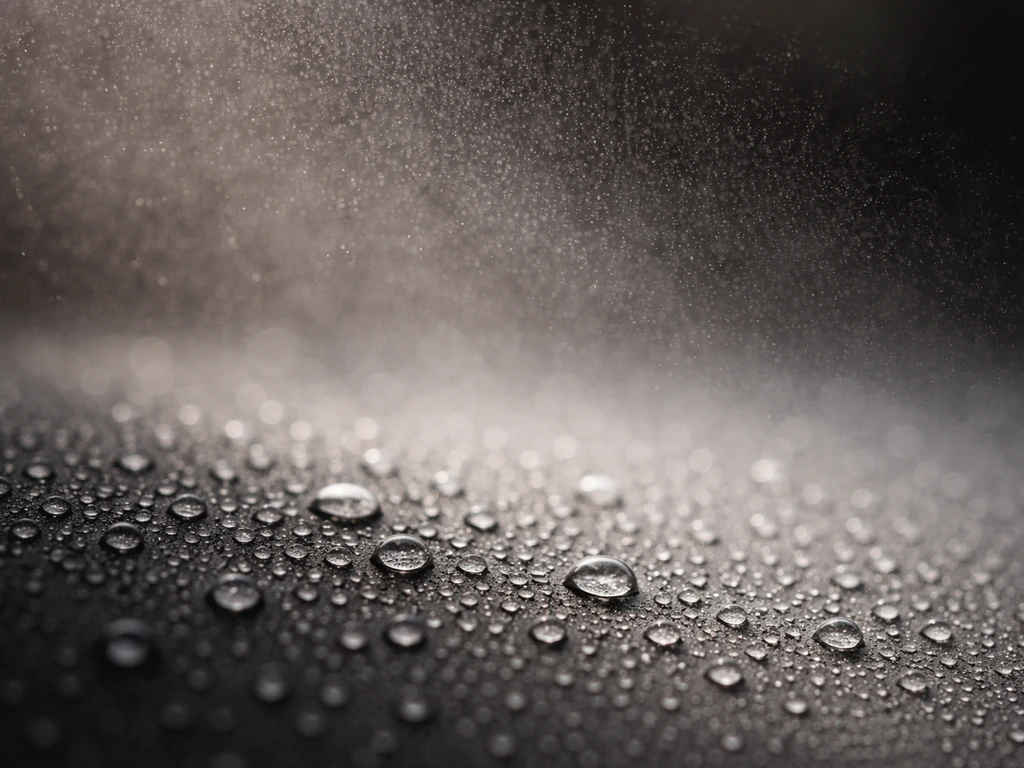
Pressure is the single biggest driver of mist quality. Low-pressure systems run on standard garden hose pressure (40–80 PSI) and produce larger droplets that are more likely to wet surfaces. Mid-pressure systems (250–400 PSI) hit a reasonable balance for semi-dry climates. High-pressure systems (1000–1500 PSI) produce genuinely fine fog, which is what you need for true evaporative cooling without getting wet. Professional high-pressure systems operate in the 1000–1500 PSI range and can support anywhere from 75 to 150+ nozzles depending on pump capacity.
Droplet size
Droplet size is measured in microns (µm). For true evaporative cooling without wetting, you want droplets in the 10–50 µm range. At that size, droplets evaporate before they land. Systems targeting 10–20 µm (typically high-pressure, 1000+ PSI) perform best in dry heat. Larger droplets (above 50–100 µm) from low-pressure systems will wet surfaces, which matters a lot if you have wood decking, upholstered furniture, or electronics nearby. DripWorks describes a “Red Mister” with built-in anti-drip and notes a smallest micron size at about 50 microns, along with spray diameter and pressure-range details that help estimate wetting versus evaporation smallest micron size at ~50 microns.
Nozzle size and material

Nozzle orifice size directly affects droplet size and flow rate. Ultra-fine nozzles with a 0.006-inch orifice produce the finest mist but are the most prone to clogging from mineral buildup or debris. Nozzle material matters too: stainless steel nozzles resist corrosion and scale better than brass in hard water areas, and they hold up longer outdoors. Any decent kit should include at least 5-micron filtration to protect those small orifices.
Coverage area and nozzle spacing
Standard nozzle spacing for perimeter misting is 18–24 inches apart along tubing that runs around the edge of your patio cover or pergola. A single low-pressure spray nozzle covers roughly a 2–3 foot diameter at 40–100 PSI. To estimate your nozzle count, measure your patio perimeter, divide by your spacing interval, and add 10–15% for corners and overlap. A 400 sq ft patio with a 20-foot by 20-foot perimeter would need roughly 16–20 nozzles at 18-inch spacing.
Tubing and fittings
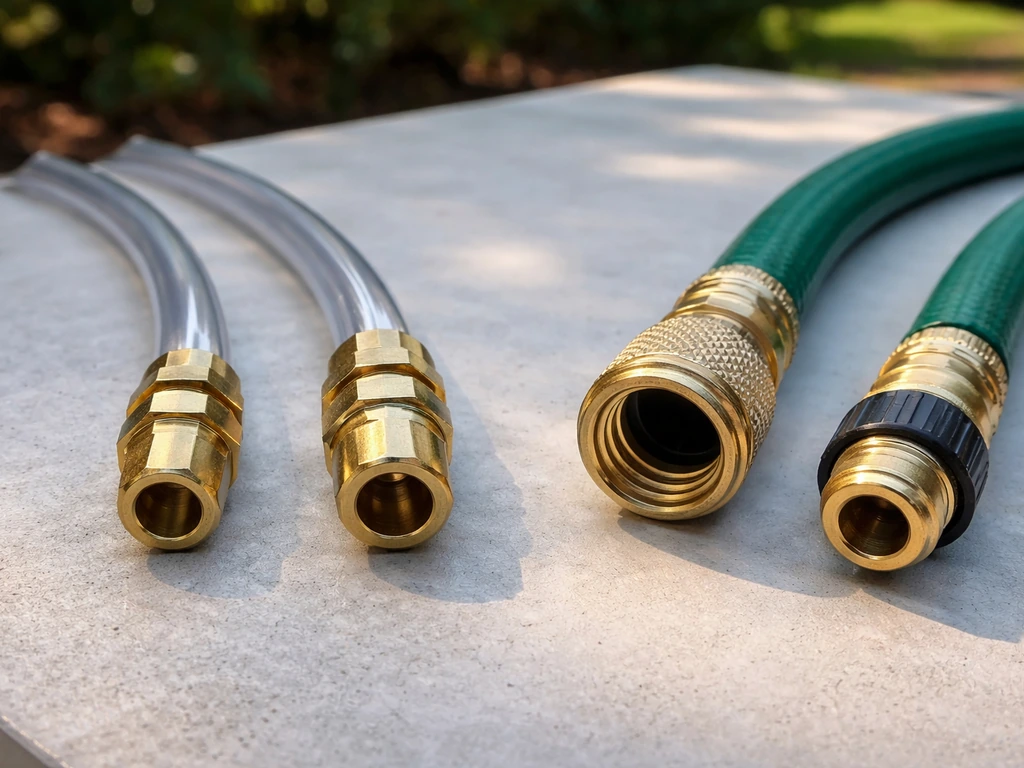
High-pressure systems typically use 1/4-inch or 3/8-inch poly tubing with compression fittings. Low-pressure and hose-end systems use standard garden hose connections. The quality of fittings matters more than people expect: cheap plastic compression fittings at high pressure will leak or blow apart. Look for brass compression fittings on anything above 250 PSI.
The four main types of patio misting systems
| System Type | Pressure Range | Best For | Rough Cost | Key Limitation |
|---|---|---|---|---|
| Hose-end / low-pressure kit | 40–80 PSI | Small patios, dry climates, renters | $30–$150 | Larger droplets, wetting risk in high humidity |
| Gravity-fed / bottle pump | Very low / variable | Terrace planters, small zones, off-grid | $20–$80 | Very limited coverage, no real cooling |
| Mid-pressure pump | 250–400 PSI | Medium patios (200–400 sq ft), semi-dry climates | $150–$500 | Not as fine as high-pressure; some wetting possible |
| High-pressure plumbed system | 1000–1500 PSI | Large patios, dry heat climates, permanent installs | $400–$2,000+ | Higher cost, professional install often needed |
Hose-end (low-pressure) kits
These screw directly onto your garden hose or hose bib and run on standard household water pressure. They're genuinely easy to set up, and for a covered patio under 200 sq ft in a dry climate, they work well enough. The tradeoff is droplet size: at 40–80 PSI, you're producing larger droplets that may wet furniture or flooring if the wind shifts or nozzles are too close to seating. If you're in a semi-arid area and want a seasonal, budget-friendly option, this is a fine starting point.
Gravity-fed and bottle/pump misters
These are mostly handheld or small reservoir-based systems. They're fine for misting individual plants or providing spot cooling for one person sitting still, but they're not practical for cooling an outdoor living space. If your goal is patio comfort for entertaining or regular outdoor use, skip these and step up to a proper pump system.
Mid-pressure pump systems
Mid-pressure pumps (250–400 PSI) are the workhorse of the residential misting market. You get real pressure behind the nozzles without the cost of a commercial-grade high-pressure pump. These systems typically include a dedicated pump unit, a length of 1/4-inch tubing, compression fittings, and 12–24 nozzles. They're plumbed into a hose bib or utility water line and mount to a pergola, patio cover beam, or fence. For most homeowners in the Southwest or Mountain West, this category is where I'd point you first.
High-pressure plumbed systems (1000–1500 PSI)
High-pressure systems produce genuinely fog-like mist, with droplets in the 10–20 µm range that evaporate almost instantly in dry heat. A 1500 PSI pump system can support up to 40 nozzles at roughly 0.30 GPM total flow, and commercial-grade setups (like those from Aero Mist at 1000 PSI) can run 75–150 nozzles for large covered patios, restaurants, and entertainment venues. These systems typically include 5-micron filtration, a solenoid control valve, and sometimes a low-water cutoff. They're the premium option and are best installed by a professional if you're also plumbing them into your home's water supply, which triggers backflow preventer requirements in most municipalities.
Installation: what the process actually looks like
Planning before you buy anything
- Measure your patio perimeter and note the mounting surface (wood beam, aluminum patio cover, steel pergola).
- Identify your water source — nearest hose bib, distance in feet, and whether it's on a dedicated line or shared.
- Check your local water pressure with an inexpensive gauge (most hose bibs run 40–80 PSI).
- Count your planned nozzle positions, spacing them 18–24 inches apart around the perimeter.
- Estimate water use: a typical mid-pressure system with 20 nozzles at 0.5 GPH each uses about 10 gallons per hour.
Step-by-step installation for a pump-based kit
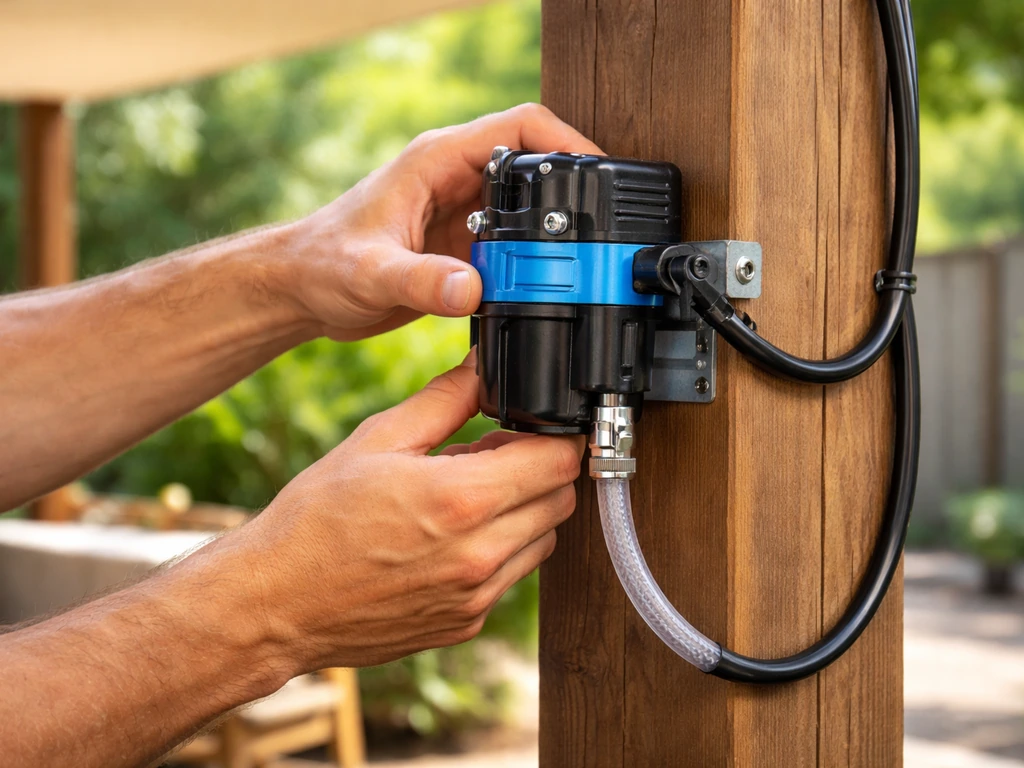
- Mount the pump unit on a shaded wall or post near your water source, following manufacturer spacing requirements for ventilation.
- Connect the pump inlet to your water supply line using the included fittings and add a filter (5-micron minimum) before the pump inlet.
- Run 1/4-inch poly tubing along the underside of your patio cover or pergola beams, using zip ties or tubing clips every 12–18 inches.
- Install compression fittings and nozzle holders at your pre-planned positions, keeping spacing consistent.
- Thread in nozzles hand-tight, then one quarter-turn more. Do not overtighten — you'll crack the orifice.
- Turn on water supply slowly, check for leaks at every fitting, and run the system for 10–15 minutes before adjusting nozzle positions.
- Add a timer or solenoid controller if your system supports one, to automate operation during peak heat hours.
DIY or hire a pro?
A hose-end or mid-pressure pump kit is genuinely DIY-friendly if you're comfortable with basic plumbing (connecting hoses, running tubing, using compression fittings). Most homeowners can install a 20-nozzle mid-pressure system in 2–4 hours. High-pressure systems at 1000+ PSI that tap into your home's plumbing are a different story. Connecting to a potable water line typically requires a backflow prevention assembly by code, and in many jurisdictions that installation must be inspected. If you're going this route, especially for a large permanent installation, hiring a plumber or a dedicated misting system contractor is worth the cost. They'll also do proper pressure testing and can handle the electrical side if your pump needs a dedicated circuit.
Keeping your system running: maintenance, winterization, and troubleshooting
Routine maintenance
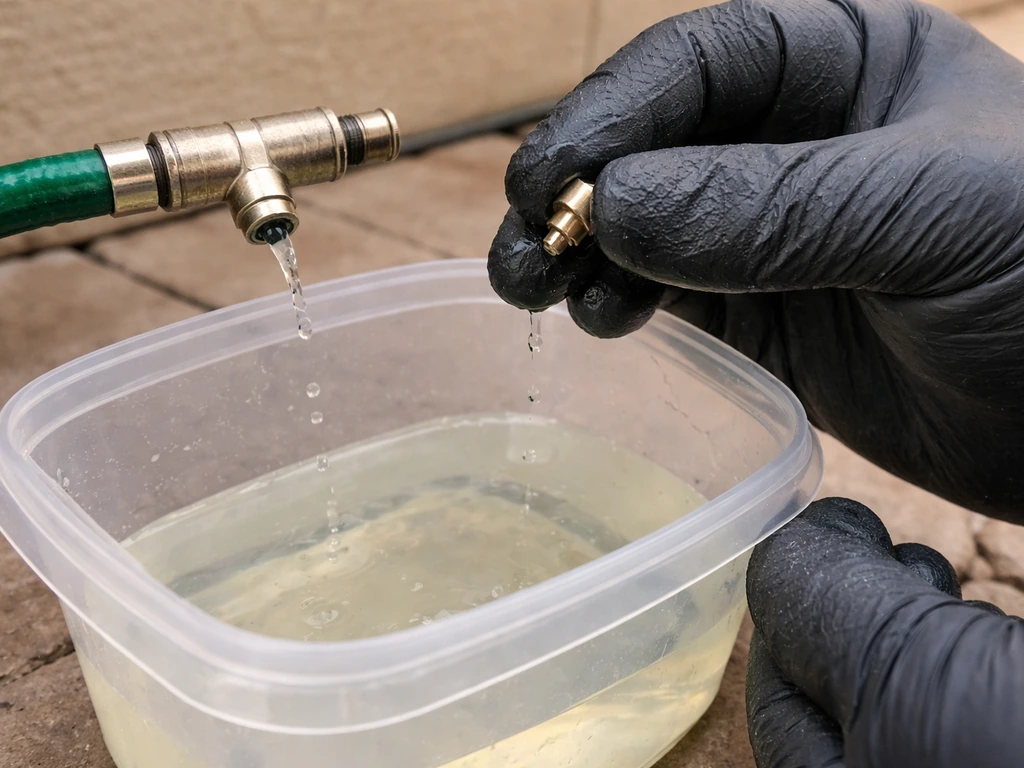
The number one maintenance task for any misting system is cleaning or replacing nozzles. Mineral deposits from hard water will gradually clog the tiny orifices, reducing mist output or creating uneven spray patterns. Soak nozzles in white vinegar for 30–60 minutes every 4–6 weeks during heavy use season, then flush with clean water before reinstalling. Also check and clean your inline filter monthly, a dirty filter starves the pump of flow and accelerates nozzle clogging.
Winterizing in freeze-prone climates
If you're in a region that drops below freezing, winterizing your misting system is not optional. Water left in tubing and pump components will freeze, expand, and crack fittings or damage the pump. The standard approach is to shut off the water supply, then blow out all lines with compressed air starting from the pump and working out to each nozzle position.
An NHTSA technical service bulletin on winterizing misting systems describes removing water from lines by blowing out with air pressure, and if using antifreeze, ensuring the solution sprays out of each nozzle blow out all lines with compressed air starting from the pump and working out to each nozzle position.
Drain the pump housing, filter bowl, and any low-point traps. Some contractors recommend unscrewing the lowest nozzle in each line run to let gravity drain residual water. For plumbed-in systems with backflow preventers, use a blow-out adapter or hire a professional, since over-pressuring a backflow preventer during blow-out can damage it.
Troubleshooting common problems
- Weak or no mist from some nozzles: Almost always a clog from mineral deposits. Remove and soak in vinegar, then flush.
- Uneven coverage across the line: Check for a kinked tube, a partially closed fitting, or a nozzle with a cracked orifice that's releasing pressure unevenly.
- Dripping instead of misting: Water pressure is too low for the nozzle size, or the nozzle orifice is too large for your pump. Try higher pressure or step down to a finer nozzle.
- Leaking at fittings: Compression fittings on poly tubing need to be snug but not overtightened. If a fitting leaks after re-tightening, replace it — cheap fittings fatigue quickly.
- Pump running but no pressure building: Check that all nozzles are installed (an open port dumps pressure) and that the filter isn't blocked.
Where misting helps and where it causes problems
Misting works brilliantly in the right conditions and makes things noticeably worse in the wrong ones. Before you commit to a layout, think through these scenarios honestly.
Where misting shines
- Open or semi-covered patios in dry climates (Southwest, Mountain West, Central Texas) where relative humidity stays below 50–60% during peak heat
- Covered pergolas and patio covers where mist can disperse downward into the seating zone before blowing away
- Restaurants, event venues, and large entertaining spaces where ambient temperature reduction is the goal
- Areas with good airflow to help carry mist into the zone without it concentrating and raising local humidity too fast
Where you should think twice (or skip it entirely)
- High-humidity climates above 70–80% RH: Evaporation slows, droplets land on surfaces instead of evaporating, and you raise humidity further instead of cooling.
- Near outdoor electronics: Televisions, speaker systems, smart lighting, and outdoor fans can all be damaged by mist drift. Keep nozzles at least 4–6 feet away from any electronics and aim mist away from those zones.
- Over wood decking or composite decking: Repeated wetting accelerates mold, warping, and surface degradation. If your nozzles are angled downward and close to the deck, reconsider the placement.
- Fully enclosed or poorly ventilated spaces: Mist in an enclosed area will raise humidity rapidly, making the space feel more uncomfortable, not less.
- Windy, exposed locations: Strong or shifting wind carries mist unpredictably. You'll soak guests and furniture instead of the air above the seating area.
Matching systems to your patio size, climate, and budget
Rather than ranking specific branded products (which change availability and pricing season to season), the most useful framework is matching system type and specs to your actual situation. If you want the most up-to-date pickup guidance, compare options using a best patio misting system 2021 shortlist style approach and verify pressure, nozzle size, and filtration for your specific climate matching system type and specs. Here's how that breaks down for 2023 buyers.
If you want a shortcut for 2020, compare the top-rated patio misting systems based on pressure level, nozzle size, and filtration so you get real evaporative cooling best patio misting system 2020. If you want the best patio misting system 2022 recommendations, match your pressure tier and droplet size to your humidity and patio size first.
| Scenario | Recommended System Type | Pressure Target | Budget Range | Notes |
|---|---|---|---|---|
| Small patio (under 200 sq ft), dry climate, renter or seasonal use | Hose-end low-pressure kit | 40–80 PSI | $40–$120 | Easy DIY, no pump needed, store indoors off-season |
| Medium patio (200–400 sq ft), semi-dry climate, homeowner | Mid-pressure pump kit | 250–400 PSI | $150–$400 | Good balance of performance and cost, DIY-friendly |
| Large patio (400+ sq ft), dry/hot climate, permanent install | High-pressure pump system | 1000–1500 PSI | $500–$1,500+ | Best cooling performance, consider pro install if plumbing into supply line |
| Any patio, humid climate (Southeast, Gulf Coast) | Misting fan only | N/A | $80–$300 | Perimeter misting not recommended above 75% RH |
| Premium/custom outdoor living space | High-pressure plumbed with controller/solenoid | 1000–1500 PSI | $1,200–$3,000+ | Hire a contractor, integrate with smart home or timer system |
Budget-first buyers
If you're working with under $150 and have a small, covered patio in a dry climate, a quality hose-end misting kit is a reasonable starting point. Look for kits that include brass or stainless nozzles rather than plastic, an inline filter, and adjustable nozzle holders. Avoid the cheapest kits (under $25) where the tubing and fittings are too flimsy to hold up through a season. Spend a bit more on nozzle quality and you'll save yourself the frustration of constant clogging and leaking.
Mid-range buyers
The $200–$500 range is where you get a real mid-pressure pump, proper filtration, and enough tubing and nozzles to cover a real patio. These systems are a meaningful step up from hose-end kits and will work well in semi-arid to dry climates on patios up to about 400 sq ft. Most come with enough components to get started and can be expanded with additional tubing and nozzle kits.
Premium buyers and large installations
If you're building or renovating an outdoor living space and want a permanent, high-performance misting system, the 1000–1500 PSI pump category is what you want. If you're specifically shopping for the best patio mister system, this high-pressure category is usually the place to start 1000–1500 PSI pump category. These systems produce true fog-quality mist, support large nozzle counts, and can be tied into solenoid controls or smart timers for automated operation.
For large installations, get quotes from two or three misting system contractors and ask specifically about nozzle spacing for your patio dimensions, water usage estimates (a 40-nozzle system at 1500 PSI uses roughly 0. 30 GPM or about 18 gallons per hour), and whether a backflow preventer is required by local code for your connection type.
Your next steps before you buy
Walk your patio with a tape measure and note the perimeter length, the mounting surface (beam depth and material), and the nearest water source. Check the current water pressure at your hose bib with a $10 gauge from any hardware store. If you're in a humid climate, check your typical July afternoon relative humidity online before committing to a perimeter misting setup. Then pick the pressure tier that matches your climate and patio size using the table above, and focus your search on systems with stainless or brass nozzles, at least 5-micron filtration, and brass compression fittings. Those details separate systems that last three seasons from ones that need constant repairs after one.
If you want to compare specific product reviews before deciding, the broader landscape of patio misting system reviews covers individual product performance in more detail. And if a misting fan rather than a perimeter system sounds like a better fit for your setup, that's worth exploring as its own category with different placement and coverage considerations. If you are looking specifically for the best patio misting fan, pay attention to mist output, coverage range, and how it handles airflow in humid versus dry conditions. Either way, the framework above gives you the foundation to evaluate any system you come across without getting lost in marketing specs.
FAQ
If my patio misting system leaves wet spots, is it a sign I bought the wrong system?
It usually means droplets are landing before evaporating. Common causes are low humidity mismatch for evaporative cooling, wind shifts, or nozzle droplet size that is too large for your setup. To fix it, move to a higher pressure or finer nozzle set (aim for 10 to 50 µm), add more spacing so the mist plume stays airborne, and confirm your system is actually reaching the rated pressure under load.
How long should I run a patio misting system at a time?
For most residential setups, mist should run only long enough to create a comfortable zone, then cycle. A practical approach is 10 to 20 minute bursts, then pause 10 to 20 minutes depending on temperature and humidity. Continuous runtime can increase wetting, raise mineral buildup, and accelerate nozzle clogging, especially in hard water areas.
Will hard water ruin a misting system faster, and what should I do about it?
Hardness affects clogging rate more than total system size. If you have hard water, you will typically need to clean more often, especially with ultra-fine nozzles. Use at least 5-micron filtration, consider a higher-quality inline filter, and plan for nozzle soaking (vinegar) on a tighter schedule during the peak season.
How do I place nozzles to get cooling without misting my furniture and floors?
Nozzle placement affects coverage and wetting. For perimeter systems, keep nozzles evenly spaced around the edge and avoid aiming directly at seating, grills, or table surfaces. If you have a covered beam or pergola, mount so droplets project outward into open air, not downward onto deck boards.
Does misting cool the whole patio equally, or does it only cool certain areas?
Yes, and it depends on whether you are evaporating successfully. In very dry conditions, the air can feel cooler quickly but the effect drops once the droplets stop evaporating (for example, if you turn the system off or if humidity rises). In humid regions, cooling is limited and the main risk becomes wetting and slick surfaces, so a misting fan plus airflow management can be safer than perimeter misting.
What is the best way to automate a misting system (timer, smart plug, or something else)?
Use a dedicated solenoid valve and a controlled timer or smart controller rather than relying on turning the hose on and off. Frequent hose cycling can cause pressure swings that lead to uneven mist output and may increase leaks at fittings. For high-pressure installs, the control system also helps protect the pump by limiting dry or low-flow operation.
How should I winterize a pump-based misting system to prevent cracked tubing or damaged pumps?
Freezing risk is real even with short outdoor exposure. If your system is connected to a hose bib and you can access it before freezes, do a full blow-out starting at the pump and moving toward each nozzle, then drain low points. For plumbed-in systems with a backflow preventer, use a blow-out adapter or professional service to avoid damaging the backflow device.
Do I need a backflow preventer for a residential misting system?
It depends on installation method. If the system ties into your home's potable water line, you often need a backflow preventer assembly by code and may need inspection. If you run from a dedicated tank or non-potable source, requirements can be different. Before buying, confirm your local rules based on your intended connection type.
Can I add more nozzles later, or will that reduce cooling performance?
Tubing diameter and fitting quality matter for maintaining pressure at many nozzles. If you expand too aggressively with the same pump, you may lose target pressure at the far runs, creating uneven mist and larger droplets. Follow nozzle count and tubing recommendations for your pressure tier, and consider zoning (separate circuits) for long or complex layouts.
Will a misting system work better if I add outdoor fans?
Most systems are designed to work with continuous airflow and evaporation. If you do not have airflow, droplets can accumulate and wet surfaces. In humid climates, consider pairing with directional outdoor fans to move air across the mist plume, but in very humid conditions a full perimeter setup still tends to produce mostly wetting rather than strong cooling.
Can a misting fan outperform a perimeter misting system in humid weather?
Yes, but choose a fan that supports outdoor use and safe mounting, and position it to move air across the mist zone, not blow directly onto people in a way that drives droplets onto them. Also, adjust mist duration to reduce puddling risk. For humid regions, fans can improve comfort, but they do not replace the evaporative conditions required for perimeter misting.
How can I troubleshoot low mist output or uneven spray patterns?
A simple check is to ensure it hits the expected operating pressure at the pump under typical flow, then look for consistent spray patterns at multiple nozzles. Uneven patterns often point to clogged nozzles, restricted filtration, or leaks at compression fittings. If you recently changed fittings or tubing, recheck that compression fittings are seated and tightened correctly for the pressure tier.