
The best patio misting fan for most homeowners is a high-pressure misting fan with adjustable speed, UV-resistant housing, and either a direct hose connection or a large reservoir tank. For a mid-size patio (up to about 400 square feet) in a hot, dry climate like Arizona or Texas, a portable oscillating misting fan in the 18- to 24-inch range running at 1,000 PSI or higher will drop the felt temperature by 15 to 25 degrees on a 100°F day. If you live somewhere more humid, like the Gulf Coast, you need a higher-pressure unit that produces finer droplets to get any real cooling benefit, and even then you'll see less dramatic results than a desert homeowner.
Best Patio Misting Fan: Top Picks, Sizing, and Setup Guide

Elise Prescott
13 May 2026
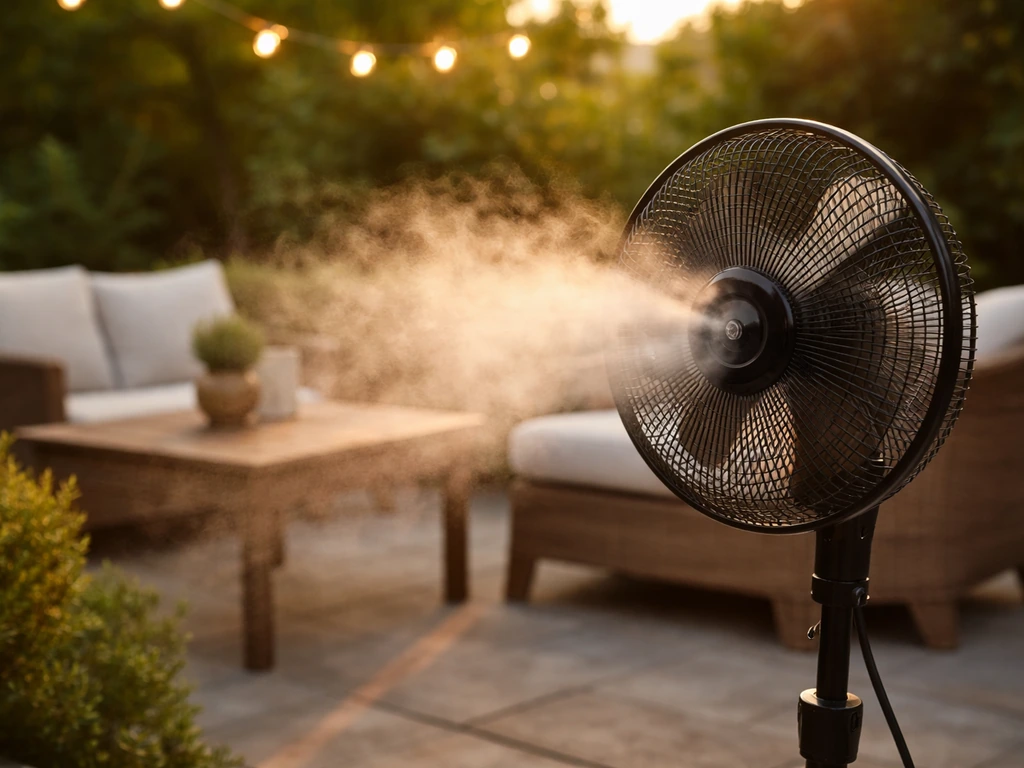
How a patio misting fan works (and who it's for)
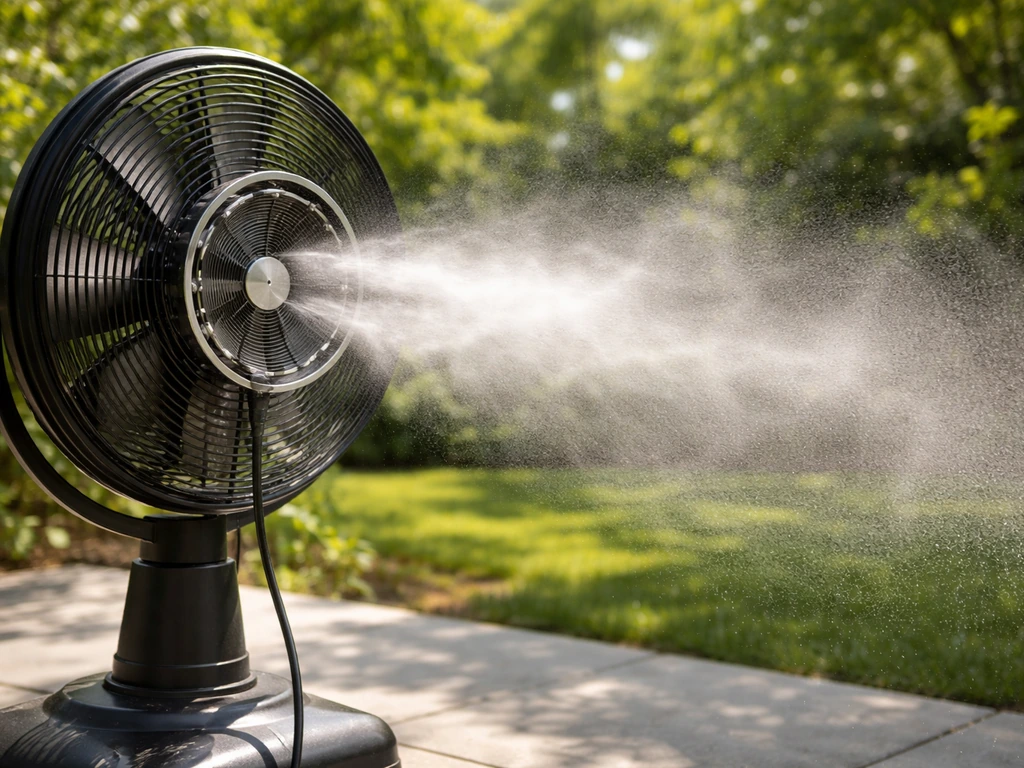
A misting fan combines two things: a standard fan blade that moves air and a ring or nozzle array that atomizes water into a fine mist. As the fan pushes air through that mist cloud, the tiny water droplets evaporate almost instantly, pulling heat energy out of the surrounding air. That's evaporative cooling in a nutshell. The U.
S. Department of Energy notes that evaporative cooling can reduce air temperature by 15°F to 40°F depending on conditions, but the key phrase there is 'depending on conditions.
' It works best when the air is hot and dry because dry air has more capacity to absorb moisture. In high-humidity environments, the air is already close to saturated, so the droplets can't evaporate quickly, which means less cooling.
The cooling effect is directly tied to droplet size. Lower-pressure systems (under 250 PSI) produce larger droplets that you actually feel landing on you. That's fine for some settings, but it can make furniture and surfaces wet. Higher-pressure systems (800 to 1,200+ PSI) create an ultra-fine mist that flashes off before it lands on anything, giving you the temperature drop without the dampness. For a pure patio comfort upgrade, that fine mist is what you want. The difference between a cheap $40 misting fan and a quality $200 unit often comes down to that pump pressure.
This type of cooling is ideal for open or semi-open spaces: covered patios, pergolas, pool decks, outdoor dining areas, and backyard entertainment zones. It is not meant for enclosed spaces. If your patio is fully enclosed with glass or solid walls, you'd be better served by a portable evaporative cooler (swamp cooler) or a ceiling fan.
Misting fans are also a distinctly different product from a standalone patio misting system, which is a fixed ring or line of nozzles mounted along a patio edge or pergola beam without a fan. Both approaches can work well and the right choice often depends on your setup. We'll cover both in the recommendations below.
If you decide to go beyond a portable fan, the best patio misting system 2020 approach uses a fixed nozzle line and a high-pressure pump for even coverage recommendations below.
Top picks: best misting fans and outdoor misters by patio size and climate
Rather than just naming specific model numbers that may be discontinued next season, here's how to think about the product categories and what features separate the good options from the junk. I'll break this down by patio size and climate so you can self-select the right tier.
Small patios (up to 200 sq ft) or budget-first buyers
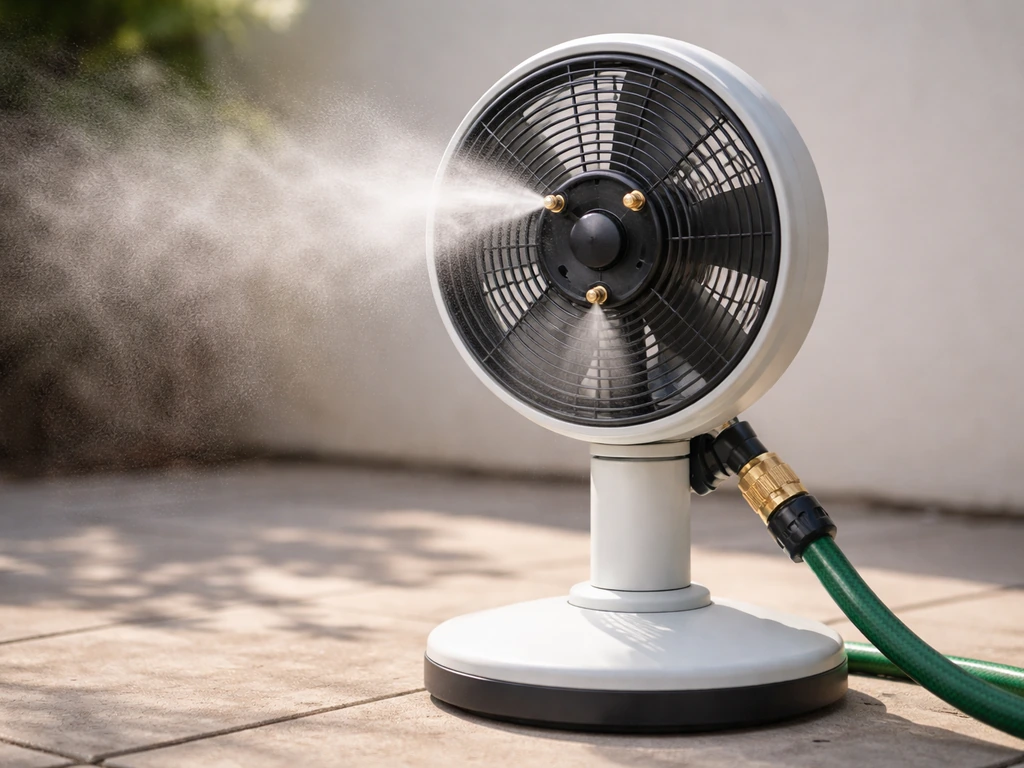
A portable pedestal-style misting fan in the 16- to 18-inch range is your best bet here. These typically run on standard household current (120V), connect to a garden hose, and include a simple dial for mist output. Expect to pay $80 to $150 for a decent unit from brands like Lasko, Arctic Cove, or Geek Aire. Most operate at low to mid-range pressure (250 to 500 PSI), which is adequate for dry climates. In Arizona, New Mexico, or inland California, one of these fans placed at the edge of a small seating area will make a meaningful difference. In humid climates like Florida or the Gulf Coast, manage your expectations: you'll feel airflow more than actual cooling.
Medium patios (200 to 500 sq ft) in hot-dry climates
This is where the investment in a high-pressure misting fan really pays off. Look for units with a built-in pump running at 800 to 1,200 PSI, an 18- to 24-inch fan diameter, and either a reservoir tank (typically 3 to 10 gallons) or a direct hose hookup. Brands like Big Ass Fans (their Haiku Outdoor with misting accessories), NewAir, and Cool-Off produce units in this class. Budget $180 to $350.
The ultra-fine droplets at this pressure range evaporate before reaching furniture, and a single unit can keep a 300 to 400 square foot covered patio genuinely comfortable during peak summer heat. If your patio is uncovered and exposed to full sun, plan to use two units or position one strategically upwind of the seating zone.
Large patios or whole-perimeter coverage
For patios over 500 square feet, a single fan rarely cuts it. At this scale, a fixed patio misting system (a dedicated nozzle line run along the perimeter or overhead beams) combined with a ceiling fan or wall-mount fan gives you better, more even coverage than any portable unit. If you want the best patio misting system 2021, look for a fixed setup that delivers even, perimeter or overhead coverage with a properly sized pump.
If you're shopping for the best patio misting system 2023, start by matching the system type to your patio size and humidity conditions a [fixed patio misting system](/best-patio-misting-system-2023). These systems tie directly into your water supply and use a pump rated at 1,000 to 1,500 PSI to push water through multiple nozzles. This is a fundamentally different product category from a portable misting fan, and it overlaps with what a full patio misting system review would cover in detail.
If you're comparing options, these patio misting system reviews can help you focus on performance, coverage, and reliability before you install. If you're leaning this direction, the installation planning section below still applies to you, and working with a patio contractor makes sense at this scale.
Humid climates: adjusted strategy
If you're in a region where summer humidity regularly tops 60 to 70 percent, a misting fan is still useful for the airflow alone, but evaporative cooling will underperform. In these regions, focus on maximizing fan power (CFM rating) over mist pressure, because moving air past your skin matters more than trying to evaporate water. A high-CFM industrial-style floor fan with a basic misting ring still beats nothing. Alternatively, consider a patio cover with a ceiling fan as the primary comfort strategy and use misting as a secondary accent during the driest part of the afternoon.
Sizing, coverage, and where to place your misting fan
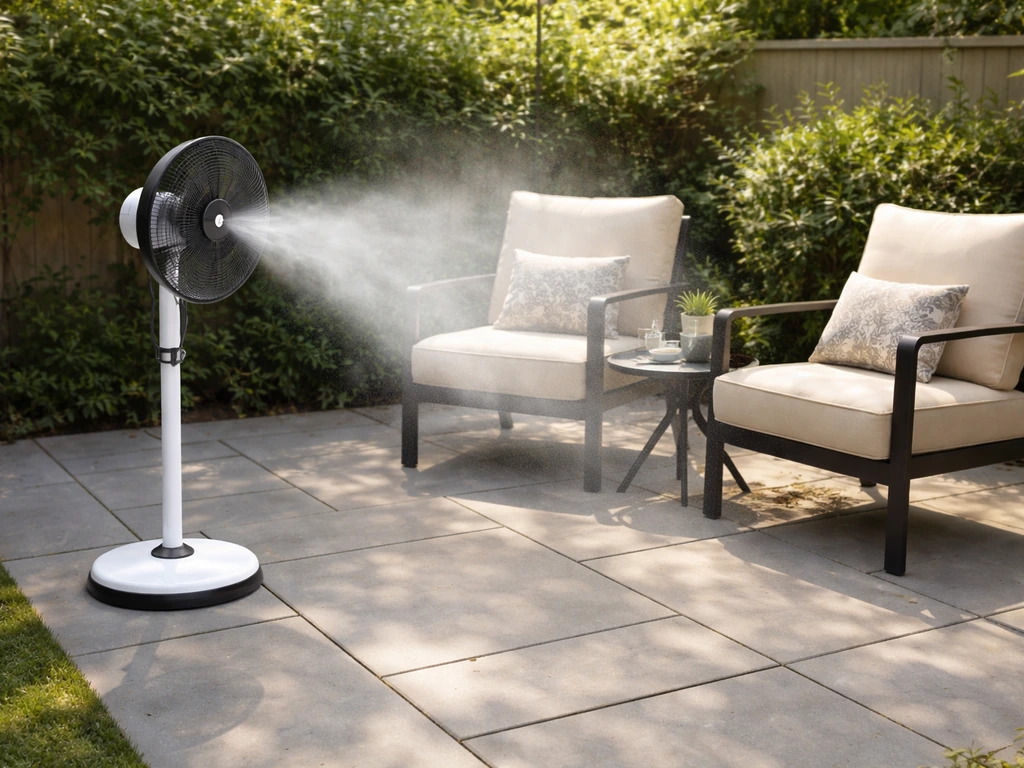
Misting fans are rated in CFM (cubic feet per minute) for airflow and by coverage area, but the listed coverage numbers from manufacturers are almost always optimistic. A fan listed for 400 square feet will realistically cool a comfortable zone of about 150 to 200 square feet because the mist dissipates and the airflow weakens at distance. A good rule of thumb: plan for about half the manufacturer's claimed coverage area when it's genuinely hot outside.
Placement height matters too. For a pedestal or floor fan, aim for the fan head to sit at 5 to 6 feet off the ground so the mist cloud forms at head and shoulder level for seated guests. If you're wall-mounting a misting fan, 7 to 8 feet is the sweet spot: high enough to avoid getting anyone directly hit with undissipated water, low enough that the mist cloud drifts down into the occupied zone. Angle the fan slightly downward (10 to 15 degrees) for best results.
For hose routing on plumbed-in or hose-connected units, keep the run as short and straight as possible. Long hose runs (over 25 feet) can drop your operating pressure enough to affect droplet quality, especially on lower-pressure units. Use the 1/4-inch high-pressure tubing that comes with the unit when possible, and avoid kinks. If you're adding a misting ring to an existing fan, most kits come with brass or stainless steel nozzles and compression fittings for 1/4-inch or 3/8-inch line. Stainless steel nozzles resist mineral buildup better than plastic and are worth the extra cost.
Choosing the right features: what actually matters
Not every spec on the product listing deserves equal weight. Here's what I'd actually focus on when comparing misting fans.
| Feature | What to look for | Why it matters |
|---|---|---|
| Pump pressure (PSI) | 800–1,200 PSI for fine mist; 250–500 PSI for basic units | Determines droplet size and whether mist evaporates before landing on surfaces |
| Fan diameter / CFM | 18–24 inches; 2,000+ CFM for medium patios | Controls how far and how wide airflow reaches |
| Housing material | UV-stabilized ABS plastic or powder-coated steel | Determines longevity in sun and rain exposure |
| Water source | Hose connection preferred; reservoir for portable use | Reservoir tanks need refilling; plumbed units are hands-off |
| Speed and mist controls | 3+ speeds; independent mist on/off | Flexibility to run fan only or fan + mist depending on conditions |
| Noise level (dB) | Under 65 dB at medium speed | Important for conversation-friendly outdoor dining |
| Oscillation | 120° or greater | Wider coverage from a single unit |
| IP rating / weather resistance | IPX4 or better | Indicates resistance to water splashing from any direction |
Noise is something I'd pay close attention to if you're using the fan near a dining table or conversation area. Cheaper motors in budget misting fans can drone at 68 to 72 dB, which is close to the level of a running vacuum cleaner. Better units with brushless motors run at 55 to 62 dB, which is much more livable. Always check user reviews specifically for noise complaints rather than trusting the manufacturer spec sheet.
For controls, a basic dial or toggle is fine for simple setups. If you want to run the system automatically or tie it into a smart home setup, look for models with a timer function or ones compatible with smart plug adapters. Some higher-end patio misting systems include dedicated controllers with humidity sensors that shut off the misting function when ambient humidity exceeds a set threshold, which is genuinely useful and prevents wasteful operation on muggy days.
Cost breakdown, maintenance, and winterizing
What you'll actually spend
- Budget portable misting fan (low-pressure, reservoir): $40 to $90
- Mid-range hose-connected pedestal fan (mid-pressure): $100 to $200
- High-pressure standalone misting fan with built-in pump: $200 to $400
- Fixed perimeter misting system (DIY kit, no fan included): $100 to $300 for materials
- Professionally installed patio misting system with pump and controller: $500 to $2,500+ depending on patio size and pump spec
- Annual maintenance (nozzle replacement, filter, tubing): $20 to $60 DIY
For most homeowners doing a single-patio upgrade, spending $150 to $300 on a quality mid-to-high-pressure misting fan is the sweet spot. You get real performance without needing a contractor or a dedicated water line. If you're outfitting a large patio, an outdoor kitchen, or a pergola where aesthetics matter, budgeting for a professional installation of a fixed misting system typically runs $800 to $1,500 for a standard suburban patio and delivers a much cleaner look than portable fans scattered around.
Keeping it clean and running well
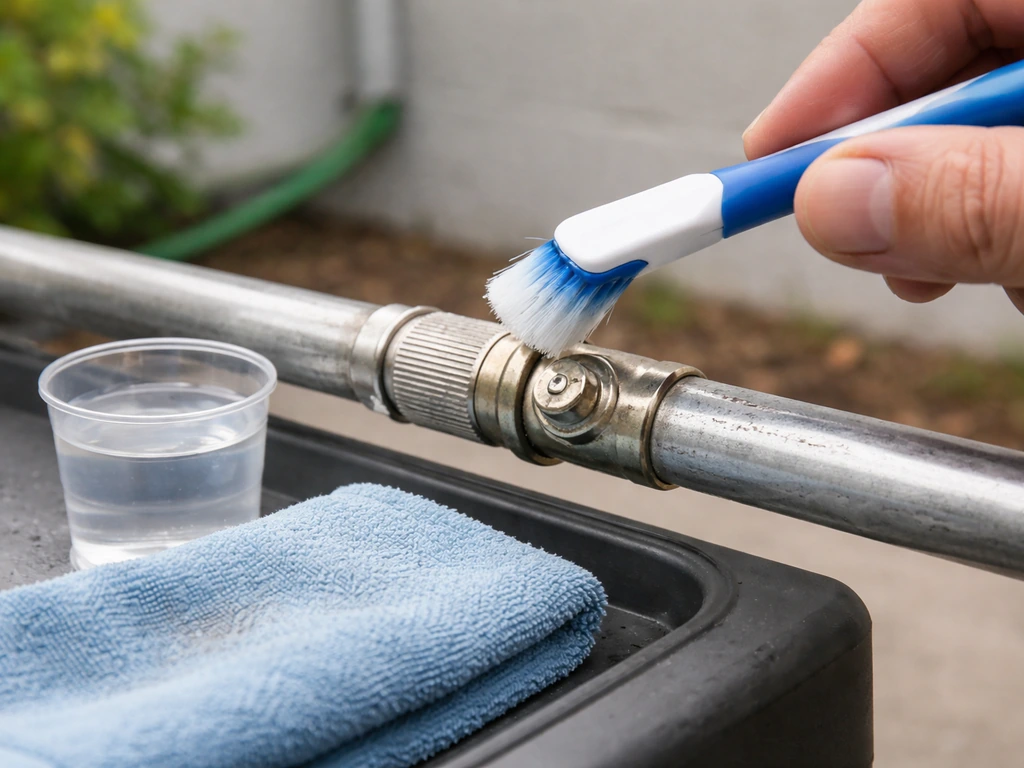
The most common maintenance issue with misting fans is clogged nozzles. Mineral deposits from hard water accumulate in the tiny orifice of each nozzle (typically 0.006 to 0.012 inches in diameter) and restrict or deflect the mist stream. Clean nozzles every 4 to 6 weeks during active use by soaking them in white vinegar for 30 minutes and rinsing with water. If you're in an area with very hard water, consider a simple inline sediment filter on the hose connection, which you can add for about $10 to $20 and replace once a season. Also flush the tubing at the start and end of each season to clear any buildup.
Winterizing: don't skip this step
If you're in a climate where temperatures drop below freezing (anything north of roughly USDA Zone 8), you need to winterize your misting fan or system before the first freeze. Water left in lines, nozzles, or the pump will expand when it freezes and crack fittings or the pump housing. For portable fans, disconnect the hose, run the fan briefly to expel any water in the misting ring, and store the unit indoors.
For plumbed-in systems, shut off the water supply at the valve, open a drain point, and use a compressor to blow air through the lines until no water comes out. This is the same approach used for irrigation systems. A contractor can do this for $75 to $150 if you'd rather not DIY it.
Safety, water use, and when misting is the wrong tool
Water and electrical equipment in an outdoor environment require some common sense precautions. Make sure any misting fan you use outdoors is rated for outdoor use and plugged into a GFCI-protected outlet. Never use an indoor fan with a DIY misting ring attached unless the motor and controls are explicitly rated for wet conditions. Keep the fan's electrical components and cord away from direct water contact, and don't run extension cords through standing water.
Wet surfaces around the fan are a slip hazard, especially on smooth concrete, tile, or composite decking. Position the fan so the mist drifts across the seating zone rather than directly onto the patio floor. A slightly elevated angle helps with this. If you have kids playing in the area, be aware that lower-pressure misting fans can create noticeably wet spots that turn into a slip zone.
On water usage: a typical residential misting fan uses about 1 to 2 gallons per hour at medium mist output. A full perimeter misting system with 10 to 20 nozzles running at high pressure can use 3 to 5 gallons per hour. That's modest compared to a garden hose (about 9 gallons per minute), but it's worth knowing if you're in a drought region or on a metered supply. Timer controls help keep usage in check.
One thing worth addressing clearly: some homeowners ask about using misting systems for mosquito control by adding pesticide or essential oils to the water. The CDC does not recommend residential misting systems for mosquito control, and the EPA notes these systems have not been scientifically proven to prevent mosquito-borne disease spread. Beyond effectiveness concerns, adding anything other than clean water to a misting system can coat furniture, toys, and plants with chemical residue. Stick to plain water for comfort cooling and handle pest control separately.
Finally, know when misting just isn't the right solution. If your area routinely hits 80 percent or higher relative humidity in summer, a misting fan will mostly just be a fan. In that case, you'd get more comfort from a shade sail or solid patio cover combined with a ceiling fan, or you'd need to look at a full evaporative cooler or even a small ductless mini-split for a screened porch.
Understanding your local climate is step one before spending a dollar on any cooling equipment. The psychrometrics behind evaporative cooling, as documented in ASHRAE's handbook, make it clear: the gap between your dry-bulb and wet-bulb temperature is your cooling headroom. The bigger that gap, the better misting will work for you.
How misting fans compare to standalone patio misting systems
It's worth drawing a quick distinction because many people searching for the best patio misting fan end up discovering that a fixed misting system might actually be a better fit for their setup. A fixed setup is often what homeowners mean when they search for the best home patio misting system. A misting fan is portable, self-contained, and requires no installation, but it's a single point of cooling and takes up floor space.
A fixed patio misting system runs nozzles along your pergola beam or patio perimeter and provides 360-degree ambient cooling without occupying the floor, but it requires routing tubing and either a plumbed connection or a pump unit. If you are specifically shopping for the best patio misting system 2022, this fixed setup is the one to evaluate for even coverage across your whole patio fixed patio misting system.
For a covered patio with existing structure to mount to, a fixed system paired with a ceiling fan often outperforms any portable misting fan and looks far better. The tradeoff is cost and installation effort.
| Factor | Portable Misting Fan | Fixed Patio Misting System |
|---|---|---|
| Installation | Plug-in, no tools needed | Requires mounting, tubing, and plumbing connection |
| Coverage | Directional, 150–300 sq ft effectively | Perimeter-wide, scales with number of nozzles |
| Appearance | Visible fan unit on floor or pole | Discreet tubing and nozzles along structure |
| Portability | Fully portable | Permanent or semi-permanent |
| Cost (equipment) | $80–$400 | $100–$2,500+ installed |
| DIY-friendly | Yes, minimal effort | Moderate DIY or contractor install |
| Water source | Hose or reservoir | Plumbed or pump-fed |
| Best for | Renters, small patios, flexibility | Large patios, outdoor kitchens, permanent setups |
If you're a homeowner investing in a patio as a long-term living space, the fixed system route is worth at least getting a quote on. The upfront cost is higher, but the comfort and aesthetics payoff over a decade of summer use is substantial. If you're renting, setting up a temporary outdoor space, or just want to test whether misting even helps in your climate before committing, a quality portable misting fan in the $150 to $250 range is the right starting point.
FAQ
How do I choose between a high-pressure misting fan and a lower-pressure one?
If your goal is cooling without getting surfaces wet, prioritize high-pressure misting (about 800 to 1,200+ PSI) and finer droplets. If you mostly want airflow and light mist for comfort, a lower-pressure unit can work, but expect larger droplets and more dampness on people and furniture.
Will a misting fan actually cool my patio if it is covered but still in full sun?
Cover helps, but full sun can overwhelm evaporative cooling. For uncovered or strongly sun-exposed seating areas, plan on repositioning for windward cooling and consider using two units or one larger high-pressure unit, since single-unit performance can drop beyond roughly 150 to 200 square feet of comfortable zone.
What is the correct fan height and angle if I keep blowing mist onto the floor?
For a pedestal or floor unit, aim for roughly 5 to 6 feet to the fan head, and slightly downward (about 10 to 15 degrees). If mist is still falling flat, move the fan closer to the seating zone and reduce overspray by angling it so the mist cloud forms around shoulder height.
How short should the hose run be to avoid poor mist quality?
Keep the hose as short and straight as possible, ideally under about 25 feet. Longer runs can reduce operating pressure, causing bigger droplets, weaker atomization, and more wetting, especially with mid-range pressure units.
Can I use hard water without damaging the nozzles?
Hard water increases nozzle clogging, so you need more frequent cleaning and, ideally, an inline sediment filter on the hose connection. Even then, soak nozzles periodically (about every 4 to 6 weeks during active use) to prevent gradual restriction that reduces cooling.
How do I prevent the slip hazard when misting on smooth surfaces?
Position the fan so mist drifts across the seating zone instead of directly onto patio flooring. If your patio has tile, smooth concrete, or composite decking, treat it as a slip-risk area and keep kids and pets away from the wetest overspray until you dial in placement.
Are misting fans safe to use around food or near a dining table?
Use units with outdoor ratings and prioritize quieter models if you are near conversation. Also check whether your setup produces noticeable wet spots, because overspray can damp table surfaces and create an unpleasant dining experience even when the unit is operating correctly.
How much water should I expect to use, and how can I reduce it?
Expect roughly 1 to 2 gallons per hour for many residential misting fan setups at medium output, while larger high-pressure systems can be several gallons per hour depending on the number of nozzles. Using a timer or smart plug scheduling, and reducing mist output when humidity rises, cuts waste.
Can I add something to the water for mosquito control?
Do not add pesticide or essential oils to residential misting systems. Beyond inconsistent pest results, residues can coat nearby surfaces, toys, and plants, and misting is primarily intended for comfort cooling using plain water.
What happens if humidity is high, like during Gulf Coast summers?
When relative humidity is frequently high (around 60 to 70 percent or higher), evaporative cooling underperforms, so the benefit is mostly airflow. In those climates, emphasize higher CFM airflow, use mist more sparingly, and lean more on shade and ceiling fans for meaningful temperature reduction.
How do I winterize a misting fan or system in freezing climates?
Before the first freeze, disconnect and fully drain the system, then expel remaining water. For portable units, disconnect the hose, run briefly to clear the mist ring, and store indoors. For plumbed systems, shut off the water supply, open drains, and blow out lines until dry to avoid cracked fittings or pump damage.
What noise level should I expect, and why do some units sound worse?
Motor design matters, budget units can drone into the high 60 dB range, while better brushless motors may be closer to the low 60 dB range. If noise complaints appear in reviews for the exact model, treat that as a stronger signal than the spec sheet, especially if you eat outside regularly.
Do I need a GFCI outlet, and what is the safest power setup?
Yes, use outdoor-rated equipment plugged into a GFCI-protected outlet. Avoid indoor fans with DIY misting add-ons, keep cords away from direct spray, and do not run extension cords through standing water.
Is a fixed patio misting system always better than a portable misting fan?
Not always. A fixed system typically provides more even coverage across the whole patio with less floor clutter, but it costs more and requires installation and water routing. If you are testing whether misting works in your specific climate or you rent, start with a quality portable high-pressure fan and upgrade later if needed.