
For most homeowners in 2021, a mid-pressure pump-fed DIY kit is the sweet spot: it costs $150–$400, you can install it in an afternoon, and it drops the perceived temperature by 15–25°F on a dry day. If you're in a dry climate like Arizona, Texas, or Southern California, almost any decent kit with a quality pump and brass nozzles will feel like magic. If you're in a humid climate like Florida or the Gulf Coast, you need to be more realistic, misting works by evaporation, and when humidity is already high, that evaporation slows down and so does your cooling. High-pressure professional systems (1,000–2,000 PSI) give you the finest, driest mist for the least wetness, but they cost $1,500–$3,000+ installed. The right choice depends on your climate, patio size, and how much DIY you're comfortable with.
Best Patio Misting System 2021 Guide: Choose and Install

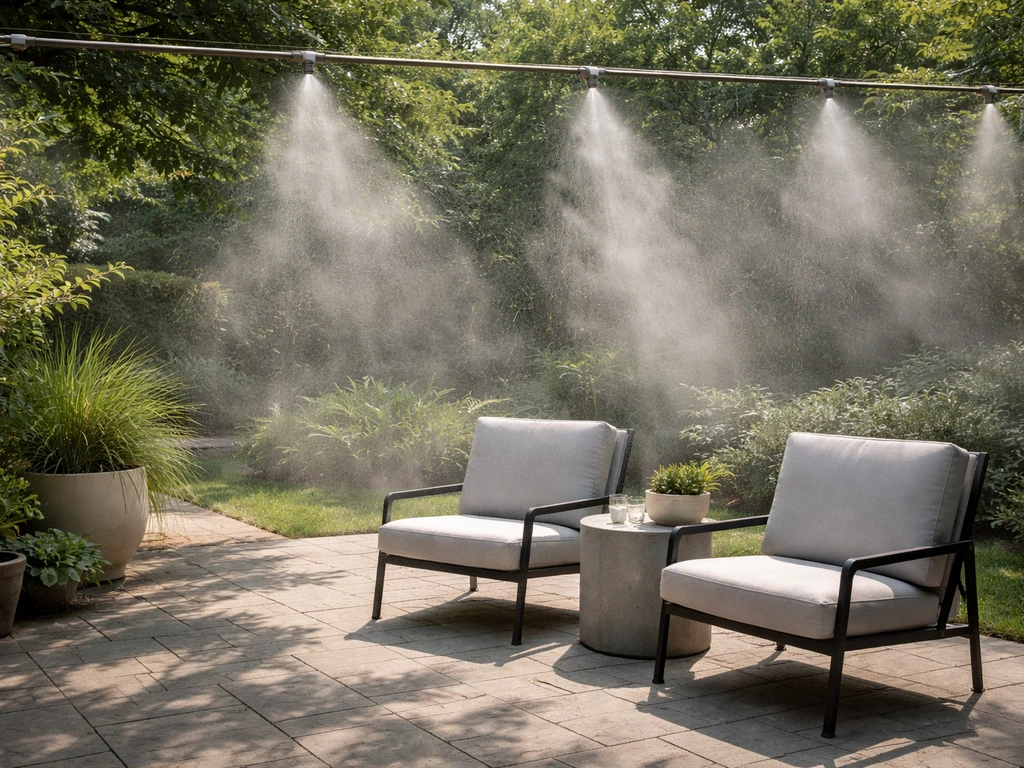
What a patio misting system actually does (and who benefits most)
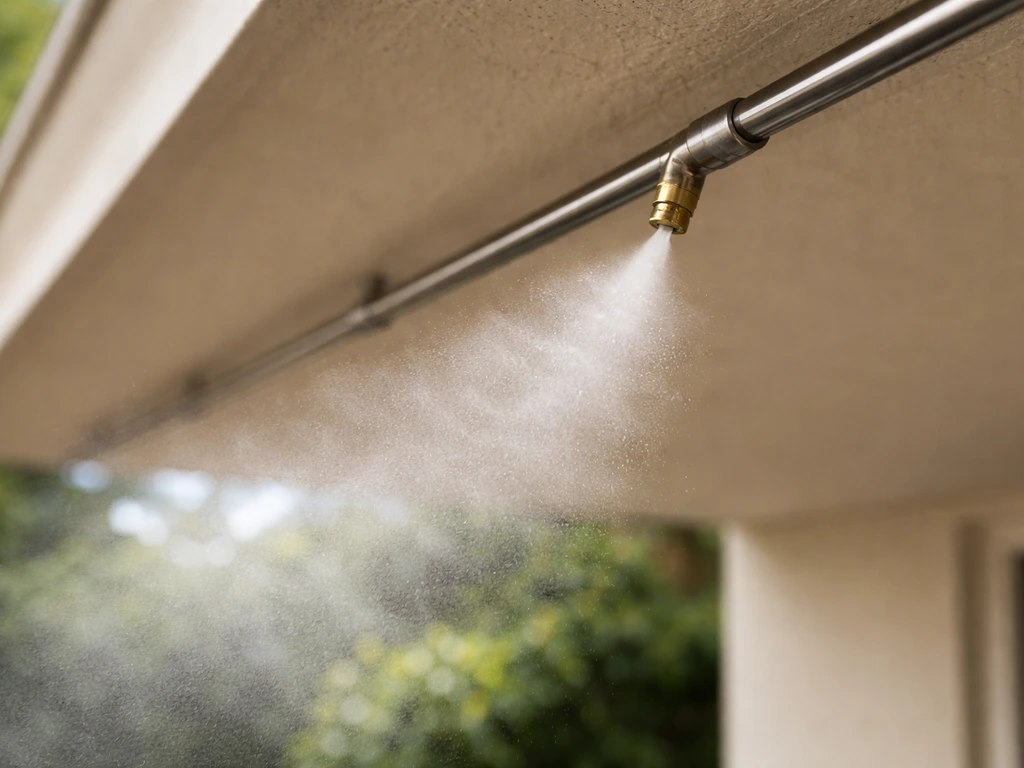
A misting system forces water through small nozzles under pressure, creating a fine fog of tiny droplets. Those droplets absorb heat from the surrounding air as they evaporate, that's the direct evaporative cooling process. You're trading sensible heat (air temperature) for latent heat (evaporation energy), which drops the dry-bulb temperature you feel. The key word is "evaporate." If the droplets hit your skin or furniture before they evaporate, you feel wet rather than cool. That's why nozzle size, operating pressure, and humidity all matter so much.
The people who get the most out of patio misting systems are in climates where relative humidity regularly sits below 60% during the hot months. Desert Southwest, inland California, much of Texas, the Mountain West, these are ideal zones. You can still use misting in humid climates, but you'll get a milder cooling effect and you'll need to manage wet surfaces more carefully. Beyond climate, misting works best for people who spend real time outdoors near fixed seating areas: dining patios, covered decks, outdoor kitchens, pergolas, and pool cabanas. You're cooling a zone, not a whole yard.
Sizing your system for your actual patio
Before you buy anything, measure your patio perimeter and note whether it's covered or open. These two factors drive nozzle count, pump sizing, and line length more than anything else.
A reliable rule of thumb used by misting professionals is one nozzle every 2 feet along your misting line. So a 20-foot patio edge needs roughly 10 nozzles. For parallel runs (if you're covering a wide open area with multiple lines), spacing between lines should be about 6 feet apart for fully open spaces, 12 feet apart for a covered patio open on all four sides, and 14 feet apart for a covered patio with one or more closed walls. These aren't arbitrary numbers, they reflect how mist disperses in different airflow environments.
Mounting height has a huge impact on whether you feel cool or wet. The sweet spot is 10–12 feet above the floor. Below 8 feet and you'll often feel the mist as droplets before they fully evaporate. Above 14 feet and the mist rises rather than cooling the zone where people actually sit. For most residential patios with standard 9–10 foot covers, mounting along the inside perimeter of the structure at header height works well. Keep nozzle mounting points at least 6 feet away from any solid surface directly in the mist path to avoid walls, fences, and furniture getting soaked. Cloudburst’s misting FAQ notes that the most immediate cooling effect happens only when you are within about 6 ft of the nozzle Cloudburst’s misting FAQ notes the most immediate cooling happens only when you are within about 6 ft of the nozzle.
For pump sizing, the key number is total flow rate across all your nozzles at operating pressure. Flow rate scales with the square root of pressure, double the pressure and you get about 41% more flow, not double. This means if you add nozzles to a system sized for fewer, you'll drop pressure and degrade mist quality across the whole run. Size your pump to your full nozzle count from the start, or build in a zone valve so you can run sections independently.
DIY kit vs. professional install, and gravity vs. pump
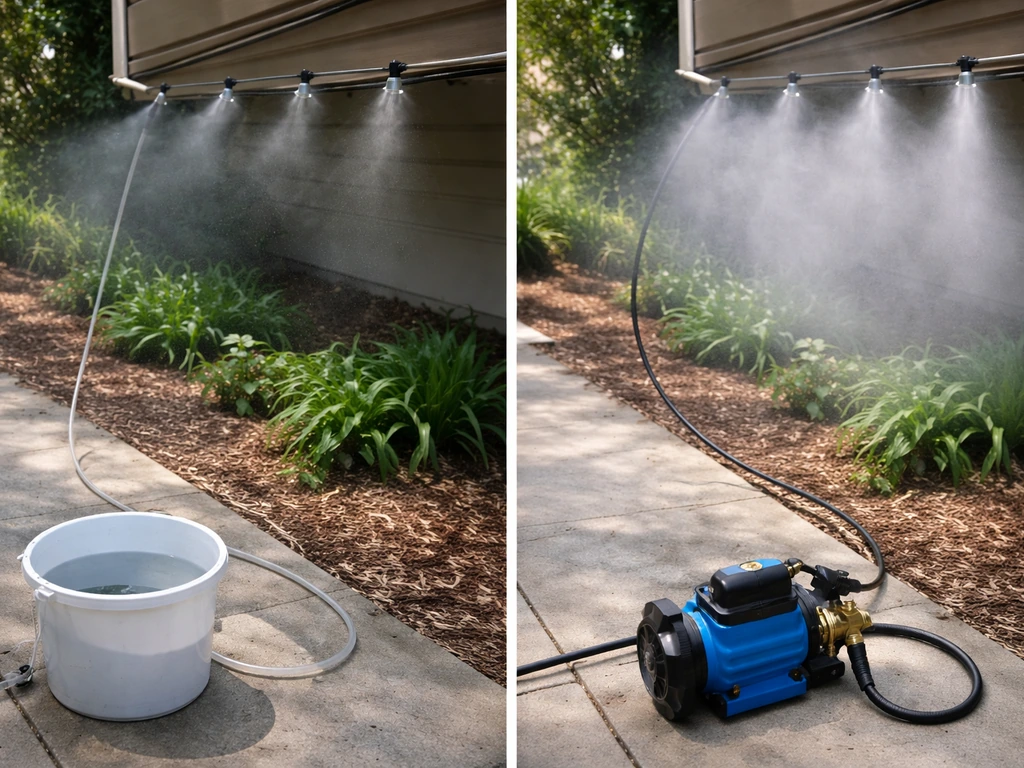
This is the decision most people overthink. Here's a straightforward breakdown of what each option actually delivers.
| System Type | Pressure Range | Typical Cost | Mist Quality | Best For |
|---|---|---|---|---|
| Gravity-fed / garden hose attachment | 40–80 PSI (city water) | Under $50 | Coarser, wetter mist | Small patios, budget entry, humid-tolerant uses |
| DIY low-pressure kit (pump included) | 100–250 PSI | $80–$200 | Moderate mist, some wetness | Small-medium patios, casual DIYers |
| DIY mid-pressure pump kit | 250–500 PSI | $150–$400 | Fine mist, minimal wetness | Most homeowners in dry climates |
| Professional high-pressure system | 1,000–2,000 PSI | $1,500–$3,000+ installed | Ultra-fine dry fog | Large patios, premium comfort, humid climates |
Gravity-fed and garden hose systems
These connect directly to your outdoor spigot and rely on household water pressure (typically 40–80 PSI) to push water through the nozzles. They're cheap and easy, but the droplets are larger and wetter. You'll feel refreshed standing directly under them, but your patio furniture, decking, and pavers will stay damp. For a small, uncovered porch where you just want a cool-down during a backyard barbecue, this can work fine. For a covered patio with wood floors, outdoor rugs, or cushioned seating, skip it.
DIY pump-fed kits (low to mid pressure)
This is where most 2021 homeowners land. You get a small pump unit, a length of tubing (usually 3/8-inch poly or stainless-sleeved), a set of nozzles, and the fittings to connect it all. Mid-pressure kits in the 250–500 PSI range (like those using a CB420-style pump module with factory-calibrated pressure) produce noticeably finer mist than basic hose-fed kits and leave much less surface wetness. Installation is straightforward: attach the pump to your water supply, mount the tubing along the perimeter of your cover, insert nozzles at 2-foot intervals, and plug in the pump. Most people finish in 2–4 hours.
Professional high-pressure systems
At 1,000–2,000 PSI, professional systems produce droplets in the 10–25 micron range, so small they evaporate almost instantly on contact with warm air. You get the cooling benefit with virtually no wetness, even close to the nozzles. The catch is cost and installation complexity. These systems require hard-plumbed stainless or copper tubing, a dedicated high-pressure pump unit (like the aerMist 300A at 0.8 GPM), and proper filtration to protect those tiny nozzle orifices. They're absolutely worth it for a large covered outdoor kitchen or a high-end pergola setup, but they're overkill for a 12-foot apartment balcony.
My honest recommendation: if your patio is under 500 square feet, you're in a dry climate, and you're comfortable with basic plumbing, a mid-pressure DIY kit is the best value in 2021. If you want a quick comparison of options like these, see the best patio misting system 2020 for a short list of proven picks. If you want the best patio mist cooling system for your setup, start by matching nozzle spacing and pressure to your climate and patio size. If your patio is large, you want a permanent installation, or you're in a more humid region where ultra-fine mist matters more, get quotes from a professional installer for a high-pressure system.
The features that actually matter when comparing 2021 models
Marketing descriptions are noisy. Here's what to look at on any spec sheet.
- Operating pressure: This is the single biggest driver of mist quality. Low pressure (under 250 PSI) = wet. Mid pressure (250–500 PSI) = fine mist. High pressure (1,000–2,000 PSI) = ultra-dry fog. Match the pressure rating to your climate and comfort tolerance for surface wetness.
- Nozzle orifice size and droplet diameter: Smaller orifices (like the CB108 at roughly 0.008-inch bore) produce finer droplets than larger ones (CB120). Fine droplets around 25 microns or smaller evaporate before hitting surfaces. Larger droplets cool by contact, which means wetter furniture.
- Flow rate per nozzle: Nozzle flow in gallons per hour (GPH) or liters per hour (LPH) determines how much water the pump must supply. At a spacing of 1 nozzle per 2 feet, a 30-nozzle system with 0.5 GPH nozzles needs a pump rated for at least 15 GPH at operating pressure.
- Filtration: Every misting system needs an inline sediment filter, and high-pressure systems also need a carbon or RO pre-filter to reduce mineral content. This is the most overlooked spec — skipping proper filtration is the number-one cause of clogged nozzles.
- Tubing material and diameter: Stainless-sleeved poly tubing handles mid-pressure well and resists UV. Bare poly degrades outdoors in 2–3 seasons. Full stainless or copper is needed for high-pressure systems.
- Controls and zoning: Entry-level kits use a manual valve. Better kits include a timer or thermostat controller. High-pressure systems can integrate with smart home controls and zone separately for covered vs. open areas.
- Anti-drip solenoid valves: After the pump shuts off, low-quality systems drip from nozzles as pressure bleeds down. An anti-drip solenoid or check valve prevents this and keeps pavers and furniture from getting spot-soaked.
Installation basics: how to actually set this up
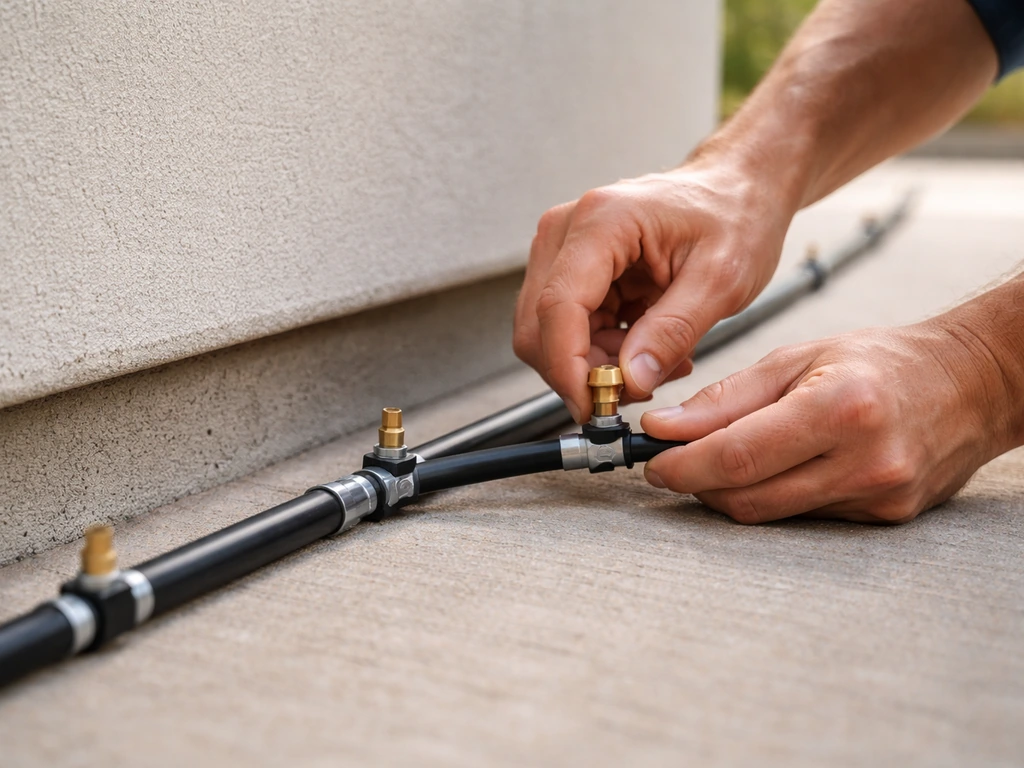
Whether you're installing a $200 kit or a $2,500 professional system, the fundamentals are the same. Here's how to approach it.
Step-by-step for a DIY pump kit
- Measure your patio perimeter and sketch the nozzle placement plan. Mark one nozzle every 2 feet along the lines you want to mist. Count nozzles and calculate total flow to verify your pump can handle it.
- Install the inline filter on your water supply line before the pump inlet. For city water, a 30-micron sediment filter is a minimum. If your water is hard, add a calcium/scale filter to extend nozzle life.
- Mount the pump unit near an outdoor GFCI outlet. Keep it shaded and accessible for seasonal maintenance. Pumps don't love direct sun and extreme heat.
- Run the tubing along the inside perimeter of your patio cover at 10–12 feet height, or as high as your structure allows in the 8–14 foot window. Use the included clips or add stainless zip ties every 18–24 inches to keep the line secure and straight.
- Install nozzles at your marked 2-foot intervals. Hand-tighten brass nozzles with a small wrench — snug but not over-torqued, as orifices are precision-drilled.
- Connect the pump to the water supply and power, then run the system for 5 minutes while checking for leaks at every fitting. A slow drip at a nozzle fitting is usually a missing or torn O-ring.
- Adjust any nozzle angles so mist points slightly inward and downward toward seating areas, not toward walls, furniture, or electrical outlets.
Winterizing (don't skip this)
If you're in a climate that sees freezing temperatures, winterizing your misting system is non-negotiable. Water left in lines freezes, expands, and can crack tubing, fittings, and even pump housings. At the end of the season, shut off the water supply, drain the pump by opening the lowest nozzle or a drain fitting, then blow out the lines with compressed air until no water remains. Remove any nozzles from the line if your system design allows it, store them indoors, and cap the tubing ends. For pump units, follow the manufacturer's specific winterization procedure, most recommend running the pump briefly with air to clear the internal passages before storage.
What it costs to run and how to keep it working
Water use
A mid-pressure system with 10 nozzles running at 0.5 GPH per nozzle uses about 5 gallons per hour. Run it 4 hours a day for a 30-day hot month and you're looking at roughly 600 gallons, a meaningful but not outrageous addition to your water bill in most regions. High-pressure fine-mist systems often use less water overall because the smaller droplets evaporate fully rather than dripping off surfaces and going to waste.
Filter and nozzle maintenance
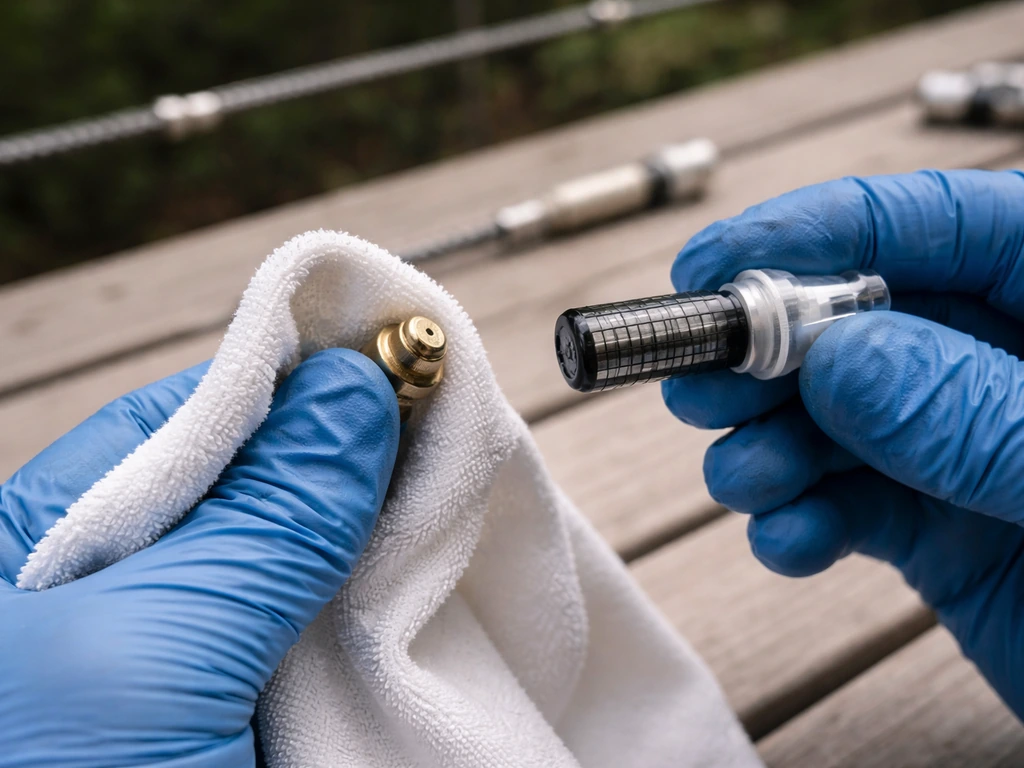
Clogged nozzles are the most common problem with any misting system, and mineral deposits from hard water are almost always the culprit. Plan to inspect nozzles monthly during peak season. You'll notice a clogged nozzle because its output drops or it sprays at an odd angle. Remove the nozzle, soak it in a commercial mineral-deposit cleaner (white vinegar works in a pinch), and use a nozzle-cleaning needle or pin to clear the orifice, never a metal drill bit, which will enlarge the precision opening. Rinse thoroughly before reinstalling. Check your inline filter at least monthly: a dirty filter drops pump inlet pressure and degrades the whole system's performance.
Annual nozzle cleaning should be a scheduled task regardless of whether you've noticed performance issues. Partial mineral buildup inside a nozzle changes its flow characteristics even before it clogs completely, causing uneven mist distribution across your patio. If you're in a hard-water area, consider a softener or scale inhibitor on the supply line to reduce buildup frequency.
Troubleshooting uneven mist
If some nozzles are misting well and others are barely dripping, the three most common causes are: a partially clogged inline filter, one or more clogged nozzles early in the run that reduce pressure downstream, or a pump that's undersized for the total nozzle count. Check the filter first, it's the easiest fix. Then inspect each nozzle from inlet to outlet. If the pump is running audibly harder than usual, that's often a sign of a flow restriction upstream.
When misting works great, when it struggles, and real safety considerations
Humidity and wind: the two biggest variables
Evaporative cooling is directly limited by how much moisture the air can still absorb. In Phoenix in July at 10% relative humidity, a mid-pressure system can drop felt temperature by 25°F or more. In Houston at 85% humidity, that same system might deliver 5–8°F of relief at best, and your patio surfaces will stay noticeably damp. If you're in a consistently humid climate, a high-pressure ultra-fine mist system performs meaningfully better because more of the smaller droplets evaporate before reaching surfaces, but no misting system overcomes saturation physics entirely.
Wind is a mixed bag. Light airflow actually helps carry evaporated moisture away and refreshes the air around the misting zone. Strong wind (above 10 mph) blows mist away from the cooling zone before it can do any work, and it makes performance inconsistent. On gusty days, your misting system will deliver noticeably less cooling than on calm evenings. This is one reason covered patios with some enclosure on the sides work better than fully open areas, the structure buffers wind and keeps mist in the zone longer.
Slip hazards, mold risk, and furniture protection
Oversaturation is a real problem if your system is poorly positioned or running too long. Wet pavers and tile surfaces become slipping hazards, especially for kids and older adults. Keep the nozzle angles pointed inward and slightly downward toward seating, not at flooring directly below. If you notice water pooling on pavers, adjust nozzle direction or reduce run time.
Consistently damp surfaces, under outdoor rugs, behind cushions, in enclosed wall corners, can develop mold. This is primarily a concern in humid climates where surfaces don't dry out between misting cycles. Direct mist away from walls, furniture upholstery, and any enclosed corners. Let the system run during the hottest part of the day when evaporation rates are highest, and let surfaces dry completely overnight. Mold exposure can cause health issues, particularly for anyone in your household with respiratory sensitivities or a compromised immune system, so it's worth taking the placement question seriously.
Keep mist directed away from electrical outlets, lighting fixtures, and any outdoor electronics. Use weatherproof outlet covers and make sure all outlets in the misting zone are on GFCI circuits. This isn't optional, it's a basic safety requirement for any outdoor water system.
When misting genuinely isn't the right tool
If your patio is fully exposed to direct sun with no cover, misting will help somewhat but you're fighting radiant heat as much as air temperature, and a shade structure will do more for comfort. If your ambient humidity regularly exceeds 70–75% during outdoor use hours, consider a misting fan (which adds airflow to the evaporative effect) rather than a static misting line. If you're comparing options, look for the best patio misting fan models that move air consistently while keeping the spray fine enough to evaporate fast. If your outdoor space is mostly enclosed with solid walls on all sides, mist can't disperse and you'll end up with a wet, muggy space rather than a cool one.
Your next steps: what to measure, choose, and do
Here's how to move from reading this to having a cool patio. First, measure your patio perimeter (or the specific edges you want to mist) and check your local summer relative humidity averages, your weather app or a quick search for your city's average July humidity will tell you what you're working with. If it's regularly above 65%, budget for a high-pressure system or set realistic expectations. If it's below 60%, a mid-pressure DIY kit will serve you extremely well.
Divide your perimeter footage by 2 to get your nozzle count. Multiply nozzle count by per-nozzle flow rate (usually 0.4–0.6 GPH for mid-pressure nozzles) to get your minimum pump flow capacity. Add 20% headroom. Buy a system with an inline filter included, or budget $15–$30 for one. If you're in a hard-water area, add a scale inhibitor. Plan for winterizing before your first freeze, and schedule a nozzle cleaning once a month during the season. Do those things and a mid-pressure misting system will give you genuinely cool, comfortable outdoor time for years.
If you want to explore specific product categories further, it's worth comparing notes on the best patio misting fans (which pair airflow with evaporative cooling for humid climates), reviewing dedicated patio misting system reviews for real-world durability feedback, or looking at what the best home patio misting systems offer for permanently installed setups. If you want a shortcut, start with the best patio misting system 2022 picks and then match the approach to your climate and patio layout. To find the best patio misting system 2023 for your space, compare pressure range, nozzle output, and whether it includes filtration for low-clog operation. For the simplest comparison shoppers, you can also review dedicated best patio mister system recommendations and real-world durability notes before you buy. The core principles here carry across all of those categories, pressure, nozzle quality, filtration, and smart placement are what separate a system that cools from one that just makes you damp. For hands-on buyer guidance, reading patio misting system reviews can also help you spot recurring issues like clogging, inconsistent spray patterns, and real installation hassles.
FAQ
How do I tell if my misting system is putting out the right droplet size for my patio?
The easiest check is wetness pattern after 10 to 15 minutes on a hot afternoon. If you see heavy runoff, puddling near seating, or constant dampness on the first row of furniture, your droplets are likely too wet or too low in pressure. If most of the mist disappears before it reaches surfaces, you have the right combination of pressure, nozzle spacing, and mounting height.
Can I mix different nozzle types or replace nozzles with a different brand on the same system?
Try to avoid mixing unless the manufacturer explicitly allows it. Nozzle orifice size and spray angle affect pressure and flow balance across the line, so swapping can cause uneven misting where some nozzles run drier and others wet. If you must replace, match the listed spray pattern and flow rate for your exact kit model.
What water filtration should I use if I have hard water or frequent clogging?
If you already have an inline filter, make sure you also use the correct filter micron rating for the system, not just any generic cartridge. In hard-water areas, adding a scale inhibitor on the supply line can reduce buildup frequency, but still inspect and clean the nozzle set monthly during peak use to prevent partial buildup from distorting spray.
Is a misting system safe for wood furniture, decking, and outdoor rugs?
It can be safe with correct aiming, but wood and fabrics need extra caution. Keep mist directed toward seating, not directly at floor surfaces, and avoid running long cycles overnight. For decking, check for lingering damp spots after shutdown, if you smell mustiness or see discoloration, adjust nozzle angles or shorten run time.
How long should I run the misting system each time?
Instead of long continuous runs, use shorter cycles based on how quickly your patio dries between passes. A practical approach is 10 to 20 minute bursts during peak heat, then reassess wetness and cooling. If surfaces remain visibly damp after the cycle ends, reduce duration or move nozzles slightly to reduce direct impingement.
Does misting work at night, or will it just make the patio wet?
Nighttime typically reduces cooling benefit because evaporation rate drops as air cools and humidity often rises. If you run mist after sunset, oversaturation and mold risk increase, especially near enclosed corners and under rugs. The safer strategy is to mist during the hottest hours, then let the system stay off long enough for surfaces to fully dry before reusing them.
What should I do if my system makes uneven mist, some nozzles strong and others weak?
Check the filter first, a partially blocked inline filter can starve downstream nozzles. Then inspect nozzles along the length of the line, early clogs often reduce pressure further along. If the pump sounds unusually strained or you added nozzles after purchase, the pump may be undersized for the total count.
Will wind ruin the cooling effect?
Wind reduces consistency, mild airflow can help evaporated moisture disperse, but gusts above roughly 10 mph can carry droplets out of the cooling zone before they evaporate. If your patio is exposed, prioritize a setup with some side enclosures or adjust nozzle direction inward so mist stays centered over the seating area.
Where should I mount the lines to avoid soaking walls and valuables?
Mount nozzles at the height range that keeps droplets suspended long enough to evaporate, and keep nozzle mounting points at least a few feet away from any solid surface that sits in the mist path. Also aim slightly downward toward people and seating rather than straight at floors, walls, or furniture legs.
How do I winterize properly if I have a mid-pressure DIY kit?
Plan for the first hard freeze, shut off water, drain the pump by opening the lowest nozzle or a designated drain, then blow out lines with compressed air until dry. Remove and store nozzles indoors if your kit design allows it, and cap tubing ends. For the pump unit, follow the manufacturer guidance, some recommend clearing internal passages by running with air briefly before storage.
Will using a misting system increase my water bill significantly?
Yes, but the impact depends on nozzle flow rate and daily run time. Mid-pressure setups commonly average around several gallons per hour for a full line, so multi-hour daily use during hot months can add up. Track your expected gallons per hour, multiply by intended daily runtime, and compare to your utility rates before committing.
Can I use a misting system near outdoor outlets or lights?
Keep mist away from electrical components, even weatherproof fixtures. Use GFCI protection for all outlets in the misting zone, and confirm outlet covers are rated for outdoor exposure. If you cannot reroute the lines, consider moving the nozzles or adding physical shielding to prevent direct spray.