
For most patios, a 5/8-inch diameter, 50-foot hybrid polymer hose with crush-resistant brass or anodized aluminum fittings is the right buy. It gives you enough flow at the nozzle without being so heavy you dread dragging it out, and 50 feet covers the majority of residential patios without the pressure drop you get with a 100-footer. If your patio is compact (under 20 feet from the spigot), a quality 25-foot version saves money and stores more easily. If you're watering container gardens, running a misting system, or dealing with a hot sunny climate, the material and kink resistance of the hose matter a lot more than the brand name on the label.
Best Patio Garden Hose: How to Choose the Right Length

Elise Prescott
26 Jun 2026
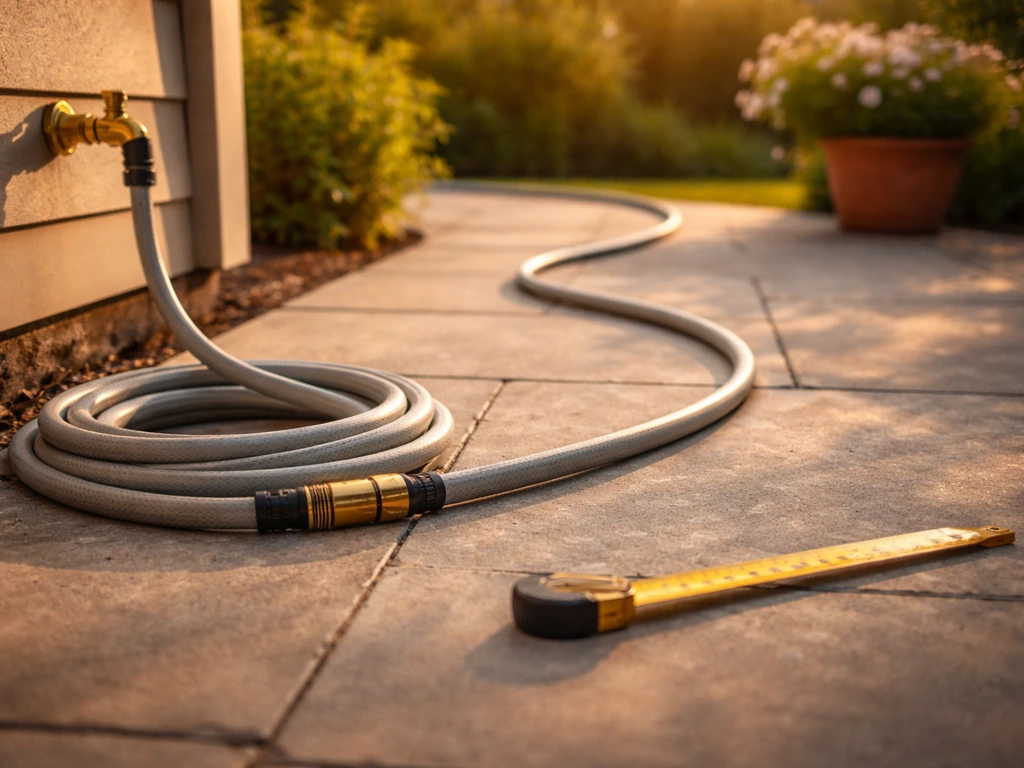
How to choose the right patio hose (length, diameter, fittings)
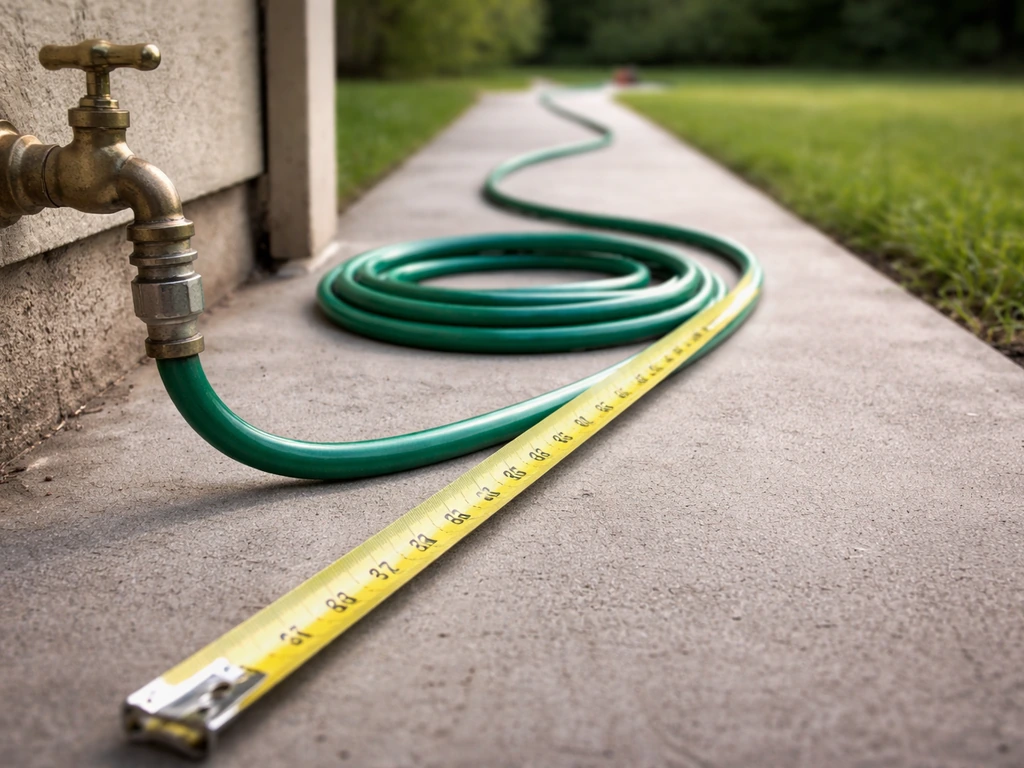
Start with length. Measure the actual distance from your outdoor spigot to the farthest point you'll water, then add about 10 feet of slack so you're not yanking the hose tight around furniture or corners. For a typical patio setup, that usually lands somewhere between 25 and 50 feet. Resist the urge to buy 100 feet just to have coverage.
Longer hoses lose pressure and flow due to friction loss inside the hose, and a 100-foot run at the same spigot pressure delivers meaningfully less water at the nozzle than a 25-foot run. If your patio is large or your spigot is far from a garden bed, go 50 or 75 feet and accept that you may need a pressure booster, or just move the hose in sections.
Diameter is the next call. The two standard options are 1/2-inch and 5/8-inch inside diameter. A 5/8-inch hose handles longer runs significantly better because it has less friction loss per 100 feet at any given flow rate. If you're running 50 feet or more, always go 5/8-inch. If you're on a short 25-foot run and mainly spot-watering potted plants, a 1/2-inch hose is lighter and easier to manage. A 3/4-inch hose is also available and useful for high-flow tasks like filling large planters or running a garden sprinkler, but for general patio use it adds unnecessary weight and bulk.
For fittings, the standard in the US is 3/4-inch Garden Hose Thread (GHT), officially designated as NH thread. It runs at 11. 5 threads per inch and is specified under ANSI/ASME B1. 20.
7. This is not the same as 3/4-inch NPT, which uses 14 TPI, so don't try to force an NPT fitting onto a GHT spigot. Nearly every residential outdoor faucet and the overwhelming majority of nozzles, sprinklers, and splitters on the market use GHT, so a hose with standard 3/4-inch GHT fittings will work with your existing setup without adapters. Look for crush-resistant couplings, either solid brass or anodized aircraft-grade aluminum.
These survive being rolled over by furniture, stepped on, or knocked around in storage. Cheap pot-metal fittings crack and leak after one winter.
Best hose materials and durability for patio use
The material of the hose body determines how it handles heat, UV, abrasion, and cold. Patio hoses live harder lives than typical garden hoses: they get left coiled on hot concrete, draped over deck railings, and sometimes forgotten outside through the first hard freeze. Here's how the main material types stack up.
| Material | UV Resistance | Kink Resistance | Weight | Cold Flexibility | Best For |
|---|---|---|---|---|---|
| Hybrid polymer (e.g., Flexzilla) | Good (store shaded in winter) | Excellent | Light to medium | Very good | Hot climates, frequent patio use |
| Rubber (e.g., Goodyear Gorilla) | Fair (degrades faster in sun) | Good | Heavy | Excellent | High-pressure tasks, heavy-duty use |
| Vinyl / lightweight composite (e.g., Gilmour AquaArmor) | Good with UV-treated cover | Good with coil reinforcement | Light | Fair to good | Casual watering, small patios |
| Expandable (fabric-covered latex/TPC) | Fair | N/A (expands under pressure) | Very light | Poor (do not store outside) | Compact storage, low-frequency use |
| Stainless steel braided | Excellent | Excellent | Medium to heavy | Good | Coastal, high-corrosion environments |
Hybrid polymer hoses are the best general-purpose choice for most patio owners right now. Products like Flexzilla use an abrasion-resistant outer cover and a flexible inner core that stays pliable in both heat and moderate cold. The fittings on quality hybrid hoses are anodized aircraft aluminum, which resists corrosion better than standard brass in coastal or high-humidity areas. Flexzilla's product line includes SwivelGrip connectors that reduce twisting stress at the spigot end, which is a genuinely useful feature when the hose runs around furniture or planters.
Rubber hoses like the Goodyear Gorilla are rated at up to 500 psi working pressure and are essentially indestructible under normal patio conditions. Goodyear Rubber Products' Gorilla hose marketing and spec page states the design is crush-resistant and rates the hose at a maximum working pressure of 500 psi Gorilla hose is rated at a maximum working pressure of 500 psi. They're overkill for watering tomatoes, but if you're using a patio pressure washer attachment or filling large water features, they're worth the extra weight. They also hold up better outdoors in cold climates than most polymers, though you should still drain them before a hard freeze.
Lightweight vinyl hoses like the Gilmour AquaArmor have improved a lot. Gilmour uses internal reinforcement coils near the ends (the most common kink points) and an abrasion-resistant cover with UV treatment. These are a solid budget-friendly pick for smaller patios where you're not dragging the hose across rough concrete daily.
No-kink vs easy-reel options: handling and storage
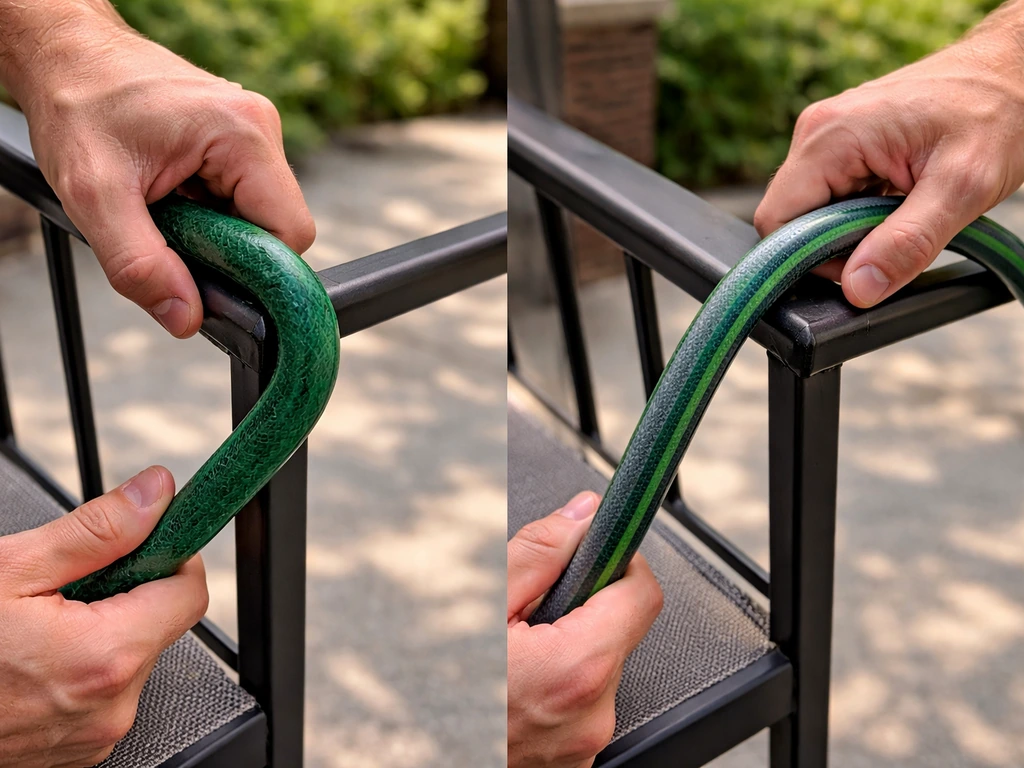
Kinking is the most common complaint about patio hoses, and it's almost always a combination of material stiffness, tight bends around furniture or railings, and heat softening the hose at contact points. To find the best patio brush for your surface, start by matching the bristles to your patio material and the level of grime you need to remove. The fix is partly in the hose design and partly in how you store it.
Hoses marketed as kink-resistant generally achieve this through one of three approaches: a more flexible inner core (Teknor Apex uses their Tru-Flex core in the Neverkink line), reinforcement coils at high-stress points near the couplings (Gilmour AquaArmor), or a material that stays pliable enough in heat that it doesn't hold a sharp bend (hybrid polymers like Flexzilla). A good weed tool makes quick work of patio beds and helps you target weeds without damaging nearby plants. All three approaches work reasonably well. The weak link is usually the first two feet near the spigot end, where the hose makes its sharpest bend. If your hose kinks anywhere, it's almost always there.
Expandable hoses solve the kink problem in a different way: they collapse flat when there's no water pressure, so there's no hose to kink when it's not in use. Under pressure they expand to working length. The downside is that expandable hoses restrict flow more than standard hoses, especially at lower municipal water pressures, because the internal diameter is generally smaller and the design adds resistance. If your outdoor water pressure is already on the low side (under 40 PSI at the spigot), an expandable hose may frustrate you. They also can't be left outside when temps drop below freezing.
For storage, a wall-mounted hose reel is the easiest way to prevent kinking over time. Reels keep the hose coiled in large, even loops rather than tight figure-eights that stress the material. If you don't want a permanent mount, a hose hanger (the simple J-hook style) works well for hoses under 50 feet. For longer hoses or frequent use, a cart-style reel that lets you pull the hose with you across the patio is worth the $40 to $80 investment. Keeping the hose neatly stored also connects directly to your overall patio organization setup, the same principle that makes good patio storage solutions pay off in reduced wear and longer gear life.
Water pressure and flow performance (and when a boost helps)
A standard 5/8-inch garden hose under ideal conditions at 40 PSI can flow roughly 17 gallons per minute. In real patio use, you never hit ideal conditions. Your municipal pressure may be lower, especially in the morning or evening peak hours. The hose itself causes friction loss that grows with length and shrinks with diameter. blank" rel="noopener noreferrer">Fittings, splitters, and nozzle restrictions add more. By the time water reaches your spray nozzle at the end of a 75-foot hose with a couple of in-line fittings, you may be working with significantly less pressure than your spigot reads.
This matters for specific patio tasks. Watering container plants? You don't need much pressure. Running a patio misting system? Misting nozzles are designed to operate at specific pressures, often 35 to 40 PSI minimum at the nozzle itself, not at the spigot. If you're running a misting line off a long hose, every foot of hose between the spigot and the mist heads is eating into that number. Shortening the supply hose or upsizing to a 3/4-inch hose for the main run can recover meaningful pressure at the misting end.
If your home water pressure is genuinely low (some older homes and well systems run 30 to 35 PSI at outdoor bibs), a small inline booster pump designed for garden hose use can help. These are not common purchases, but if you're trying to run a patio misting system or a soaker circuit from a low-pressure spigot, they're worth knowing about. For most people, the simpler fix is a shorter, wider hose and quality nozzle.
Nozzle and attachment compatibility: building your patio water ecosystem
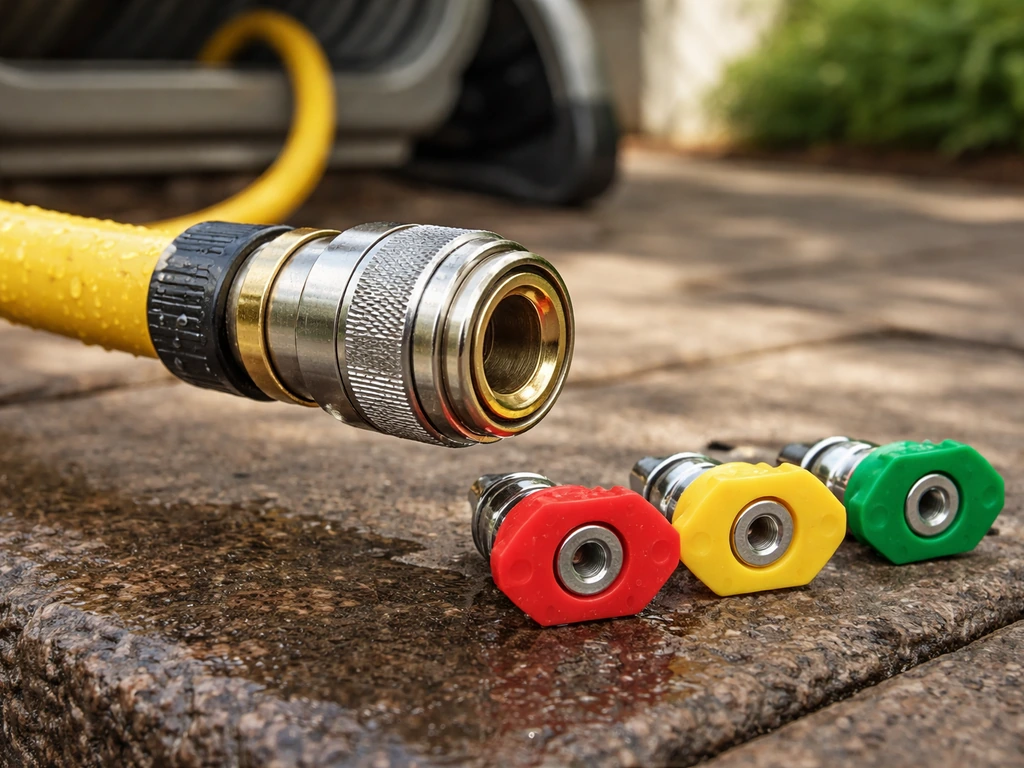
Almost every consumer garden hose and accessory sold in the US uses the same 3/4-inch GHT standard, so compatibility is rarely a real problem if you're buying normal household brands. Where people run into trouble is mixing GHT and NPT fittings (which look similar but have different thread pitches and will either not thread on at all or seem to thread on and then leak) or buying off-brand expandable hoses that use non-standard connectors.
Flexzilla explicitly designs their hoses to be compatible with the majority of nozzles, sprinklers, watering wands, and splitters on the market. That's not a unique claim, but it's backed by the standard GHT fittings. If you're building out a patio water setup with multiple attachments: a spray nozzle, a soaker for container beds, a misting kit for a pergola or shade structure, get a quality hose reel and a 2-way or 4-way hose splitter at the spigot. This lets you keep the hose connected while also running a drip line or misting circuit. Just know that each branch off a splitter reduces available pressure to each line.
For nozzle selection, most testing done around 55 PSI at the spigot shows good spray pattern performance from multi-pattern nozzles in the $15 to $30 range. At that pressure, adjustable fan nozzles, jet settings, and mist settings all perform consistently. Below 40 PSI at the nozzle, mist settings get patchy and some spray patterns flatten out. If you're buying a nozzle for patio misting on a hot Texas afternoon, don't go cheap. A well-sealed, all-metal construction nozzle with a true mist setting holds its output pattern better under pressure fluctuation than plastic-bodied options.
Hose care, maintenance, and seasonal storage
A good hose lasts 5 to 10 years with basic care, or 2 to 3 years if you leave it coiled on hot concrete all summer and outside through the winter. The habits that kill hoses early are the same ones that are easy to avoid.
- Drain the hose completely after each use in freezing climates. Water left inside expands when it freezes and can crack the inner liner or burst the fittings, even on heavy-duty rubber hoses.
- Coil it loosely in large loops, not tight figure-eights. Tight bends stress the inner core and create permanent weak spots that will kink every time.
- Get it off hot concrete when not in use. Direct contact with sun-heated pavement speeds UV and heat degradation of the outer cover, especially on vinyl and polymer hoses. A wall hanger or reel keeps it elevated and cooler.
- Check couplings once a season for cracks, corrosion, or loose seals. A leaking fitting wastes water and reduces pressure. Replacing the rubber washer inside the coupling costs about $1 and fixes most leaks.
- For winter storage, disconnect from the spigot, drain fully, coil loosely, and store indoors or in a garage. Hybrid polymer hoses like Flexzilla specifically recommend indoor or shaded storage during winter and non-use periods to preserve the material.
- Wipe down fittings with a dry cloth and consider a light coat of silicone-based grease on the threads if you're in a coastal or high-humidity climate to prevent corrosion on aluminum fittings.
Hose maintenance connects naturally to the rest of your patio upkeep. If you're already doing end-of-season care for patio furniture, covers, and cleaning tools (including your patio broom or outdoor vacuum), add the hose to that checklist. A patio vacuum can complement your watering setup by making it easier to keep dirt, leaves, and debris from building up between cleanings outdoor vacuum. It takes two minutes and extends the hose life considerably.
Budget vs premium picks by climate and patio setup
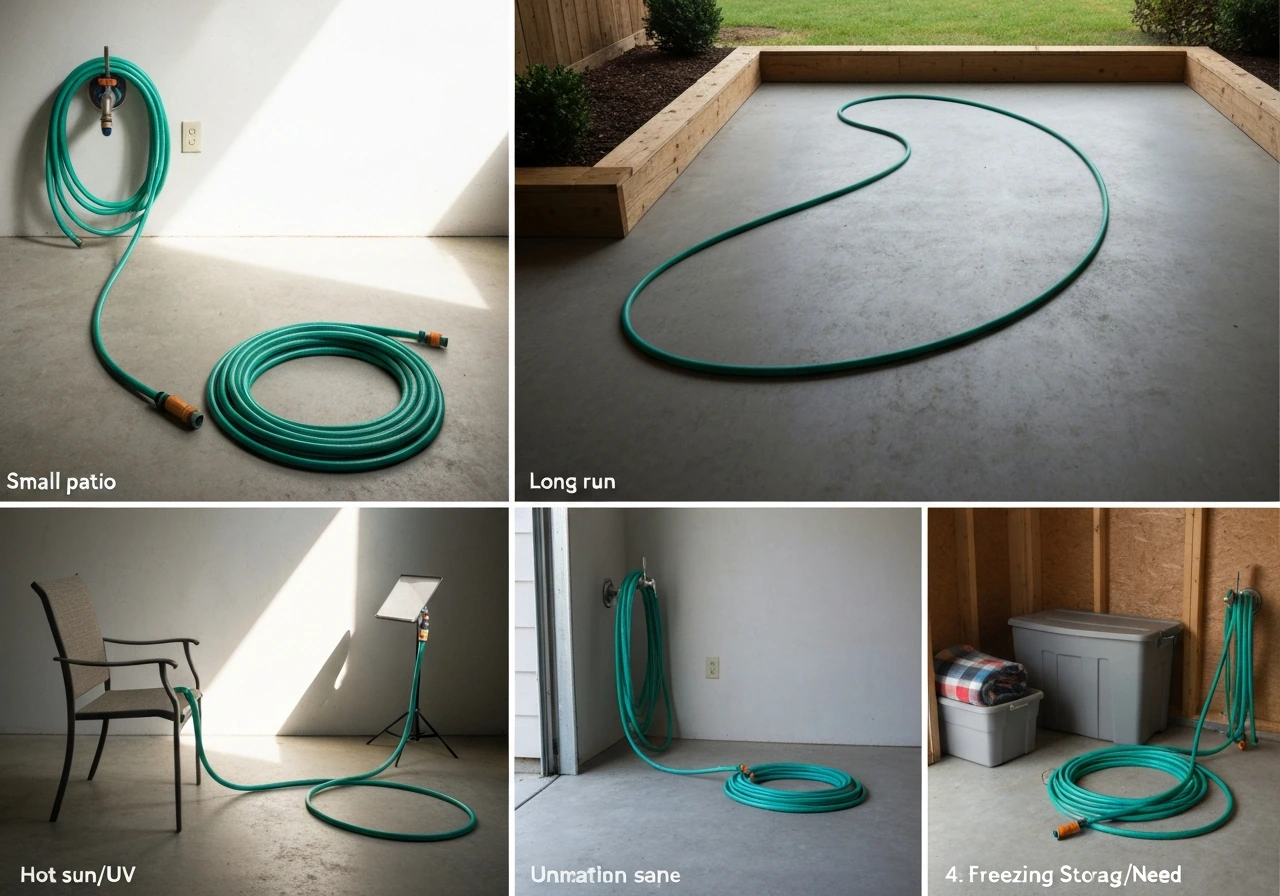
Here's where I'd put my money depending on the situation. These aren't brand endorsements so much as a framework for matching specs to your real conditions.
| Patio Setup / Climate | Recommended Type | Key Specs to Prioritize | Approximate Budget |
|---|---|---|---|
| Small patio, mild climate, occasional use | Lightweight vinyl or composite (e.g., Gilmour AquaArmor) | 25 ft, 5/8 in, UV-treated cover, kink coils at ends | $20–$35 |
| Medium patio, hot/sunny climate (Southwest, South) | Hybrid polymer (e.g., Flexzilla SwivelGrip) | 50 ft, 5/8 in, UV-resistant, anodized fittings, store shaded | $45–$70 |
| Large patio or multiple watering zones | Hybrid polymer or rubber, plus hose reel | 75 ft, 5/8 in or 3/4 in, cart reel or wall reel | $80–$140 (hose + reel) |
| Freezing winters (Midwest, Mountain West) | Rubber or heavy hybrid polymer | 50 ft, 5/8 in, rated for cold flexibility, drain and store inside | $55–$90 |
| Coastal / high humidity (Florida, Gulf Coast) | Stainless steel braided or anodized aluminum-fitted hybrid | 50 ft, 5/8 in, corrosion-resistant fittings, UV-treated cover | $60–$100 |
| Compact patio, premium storage priority | Expandable hose with quality fittings | 50 ft expanded, check pressure requirements, store indoors always | $30–$60 |
| Heavy-duty use: pressure washing, large fills | Rubber (e.g., Goodyear Gorilla) | 50 ft, 5/8 in, 500 psi rated, crush-resistant couplings | $60–$85 |
The sweet spot for most homeowners is right around $45 to $65 for a 50-foot hybrid polymer hose with quality fittings. You're not paying for marketing at that price point, you're paying for a liner that won't kink on you in August heat, fittings that don't crack when you back into them with the lawn chair, and UV protection that keeps the outer cover from splitting after two summers.
A $20 vinyl hose will work, but most people replace it every two to three years. A great patio broom is the same idea: choose the right tool for your surface so you can clean more effectively without extra hassle. A $60 hybrid lasts twice that with the same basic care.
If you're in a hot climate like Arizona, Texas, or Southern California and you run a patio misting system or keep container gardens through the heat, spend the extra $15 on the better hose and pair it with a genuine multi-pattern metal nozzle. The pressure consistency and kink resistance make a real difference when you're watering every day in 100-degree heat. If you're in Minnesota or Colorado, the priority is cold-weather flexibility and the discipline to drain and store before your first hard freeze. No hose material survives a water-filled freeze, even the premium ones.
One last practical note: the hose is just one piece of a well-organized patio water setup. A good reel or hanger, a quality nozzle, a spigot splitter if you're running multiple lines, and a place to store everything between uses (whether that's a deck box or a wall cabinet) all add up to a system that works reliably and doesn't frustrate you every time you head outside. Thinking about patio storage as part of this whole setup, rather than just the hose itself, will save you headaches over the long season.
FAQ
What hose length should I buy if my patio has multiple far corners or zones?
Measure to the farthest point for sizing, then add slack. If the distance changes a lot, consider one 50-foot hose plus a small splitter and shorter accessory runs instead of a single very long hose, since friction loss compounds with both length and added fittings.
How do I tell if I should use a 1/2-inch or 5/8-inch hose for my situation?
Use 5/8-inch when you expect 50 feet or more, or when you are picky about spray coverage (fans and misters). Use 1/2-inch for shorter spot-watering, where weight and easy handling matter more than maximum nozzle flow.
Can I use an NPT fitting on a GHT spigot if it seems to thread on?
Avoid it. NPT and GHT threads are different pitches, so you can get partial engagement that still leaks later. If a connection does not spin on smoothly by hand, stop and switch to a true 3/4-inch GHT-compatible fitting or an adapter specifically labeled for converting between the standards.
Why does my nozzle feel weak at the end of the run even when the spigot pressure is fine?
It is usually friction loss plus nozzle and accessory restrictions. Two common culprits are extra in-line fittings and using a longer hose than necessary. If you need a misting line, shorten the supply hose to each mist head run or upsize the main hose to recover pressure at the nozzle.
Is it better to buy a pressure booster or just replace the hose length/diameter?
Try the simple changes first (shorter hose, wider diameter, fewer fittings). A booster pump makes sense only when your outdoor bib is consistently low for your goal, such as running misting or soaker circuits from a 30 to 35 PSI spigot. Otherwise you just add cost and potential maintenance for a problem the hose could solve.
What PSI should I assume when choosing a nozzle for patio misting?
Do not rely on the spigot rating alone. Many misting heads need about 35 to 40 PSI at the nozzle itself, so any hose length and splitters between the spigot and the mist heads reduce what actually arrives at the spray point.
Where do kink problems usually start, and how can I prevent them?
Most kinks begin in the first two feet near the spigot end, where the hose makes its sharpest bend. Prevent it by using a hose reel or hanger that avoids tight bends, and avoid coiling in the same stressed loop patterns every day.
Do expandable hoses work for patio gardening and misting?
They can be fine for casual watering, but they often restrict flow because their internal diameter is smaller and the design adds resistance. If you have low municipal pressure (under about 40 PSI at the spigot) or you need consistent misting output, a standard 1/2 or 5/8-inch hose is usually a better fit. Also, they should not be left outside during freezing conditions.
How should I store my hose so it lasts longer?
Store it on a wall reel or cart so it forms large, even loops rather than tight figure-eight coils. Keep it out of direct hot sun when possible, and avoid dragging it over rough surfaces that wear the outer cover at contact points.
What cold-weather care should I do to protect the hose in freezing climates?
Drain the hose fully before a hard freeze, including the sections that connect to nozzles or splitters. Even premium hoses can fail if water trapped inside freezes, so detach accessories and let water clear through rather than assuming the spigot purge is enough.
Will a hose splitter reduce watering too much for plants or multiple zones?
Yes, each branch reduces available pressure and flow. If you are feeding multiple tasks, split fewer lines at a time or keep branches close and use shorter hose segments after the splitter. If one task is pressure-sensitive (misting), dedicate a supply run or prioritize that branch.
What is a practical lifespan target for the different hose materials?
Hybrid polymer hoses often last about 5 to 10 years with reasonable storage and winter care. Rubber can go longer under harsh conditions, but it is heavier, and even rubber needs draining before freezes. Vinyl is commonly shorter-lived if it sits on hot surfaces or stays outdoors through winter.
What should I do if my hose connection leaks at the spigot?
First confirm the thread type is correct (3/4-inch GHT for standard US spigots). Then check that the coupling is crush-resistant and tightened evenly, and inspect the hose washer or end seal if your setup includes one. Persistent leaks usually point to wrong threads or damaged fittings, not a small pressure issue.
How do I choose a hose reel or hanger if I already know my hose length?
Under about 50 feet, a quality hose hanger can work if it supports smooth coiling. For longer hoses or frequent use, a cart-style reel reduces wear because you pull and deploy the hose without twisting it around furniture and corners, which is a major factor in kinks and fitting stress.