
For most patios, a cordless wet/dry vacuum like the DEWALT DCV580 or a compact corded wet/dry shop-vac in the 4 to 6 gallon range is the best outdoor vacuum for a patio. They handle the full range of patio messes (dry grit, leaves, pet hair, and light wet debris), they work on concrete, pavers, tile, and wood decking, and they are rugged enough for outdoor conditions. If your patio is large or sits under heavy tree cover, step up to a 10-gallon wet/dry vac or add a blower-vac like the Toro 51599 for bulk leaf work first. A delicate cordless stick vac like a Dyson or Shark is not the right call here: both manufacturers specifically warn against outdoor use on wet surfaces, and patio grit will wreck fine indoor filters fast.
Best Outdoor Vacuum for Patio: Buying Guide and Picks

Elise Prescott
17 May 2026
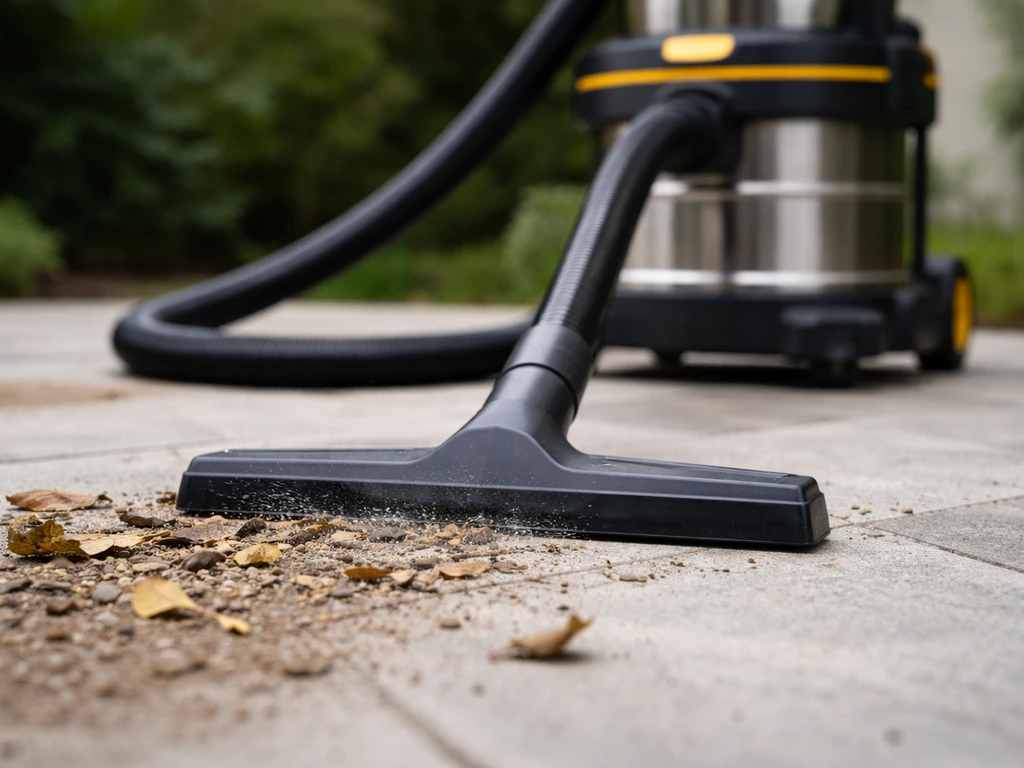
What a patio vacuum actually has to deal with
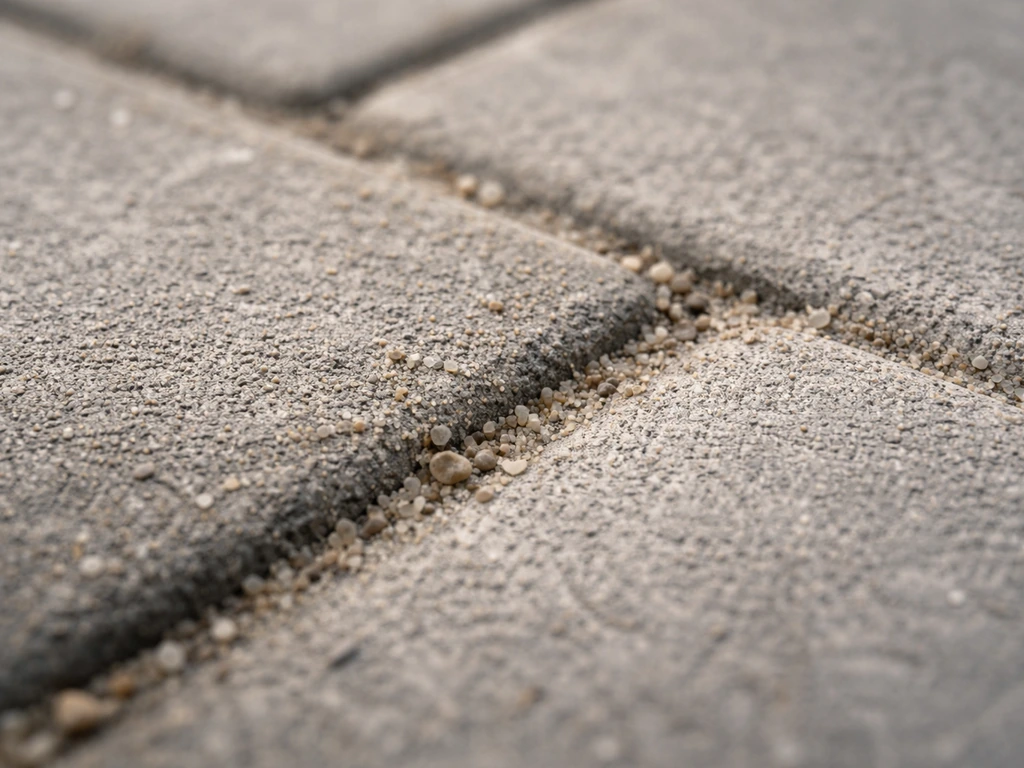
Patios are a genuinely rough environment for any vacuum. You have abrasive grit and sand that wears out impellers, fine cement or stone dust that clogs filters almost instantly, wet leaves and damp debris after rain, pet hair and pollen that sticks to porous surfaces, and grease or soapy residue near grills and dining areas. On top of that, the vacuum itself sits in heat, UV exposure, and humidity, conditions that degrade plastic housings, dry-rot gaskets, and kill batteries faster than indoor use does.
The surface type matters just as much as the mess type. Smooth sealed concrete and tile let you run almost any nozzle flat and get good suction contact. Pavers and flagstone have grout joints and gaps that swallow suction unless you use a crevice tool. Composite or wood decking has board gaps and a direction of grain that requires slower, deliberate passes. Gravel-adjacent areas are a category unto themselves: a powerful vacuum will inhale small stones and jam or damage the impeller, so you need to pre-sweep those zones.
The four vacuum types that actually work outdoors
Cordless wet/dry vacuums
This is the sweet spot for most homeowners. A cordless wet/dry vac, like the DEWALT DCV580 (18/20V MAX, 2-gallon tank, HEPA-rated filter at 99.97% efficiency at 0.3 microns), gives you genuine wet-and-dry capability without a cord to trip over or an outdoor-rated extension cord to source. Battery runtime is the limitation: expect 20 to 40 minutes of actual vacuuming per charge depending on suction setting and debris load. If your patio session runs longer, having a spare battery in the charger is the fix. The DEWALT slots into the 20V MAX ecosystem, so if you already own DEWALT power tools, you likely have compatible batteries sitting in your garage right now.
Corded wet/dry shop-vacs
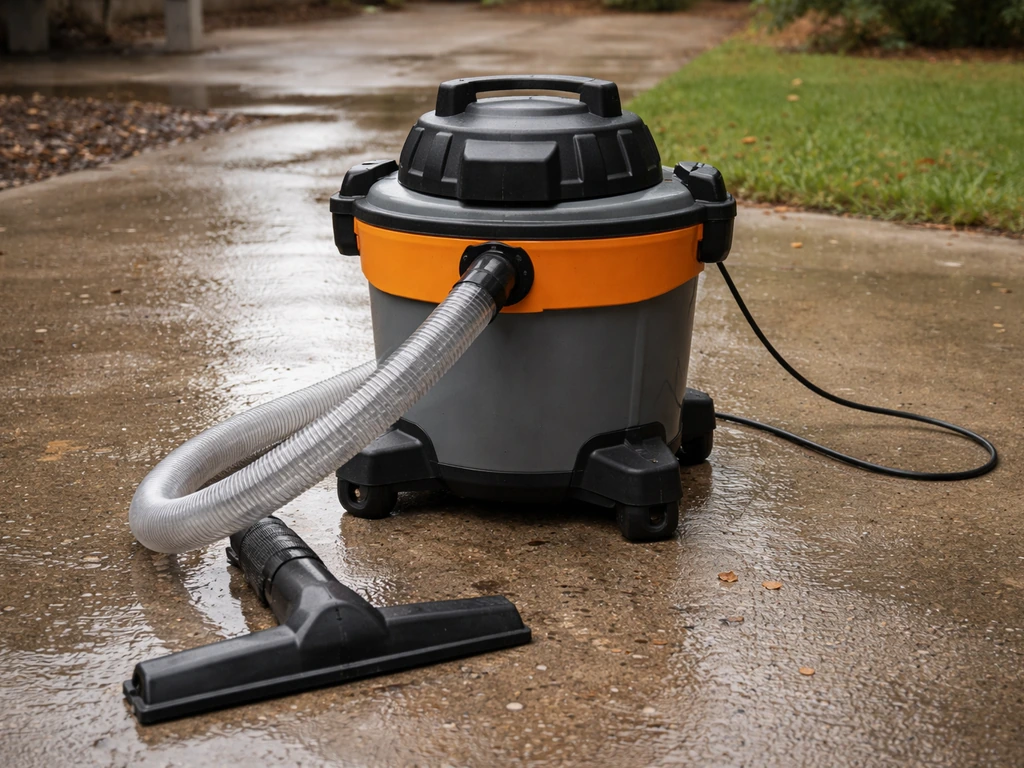
For larger patios or anyone doing serious cleanup after storms, a corded wet/dry vac is hard to beat on value and power. The RIDGID WD1022 runs a 5. 0 peak HP motor with a 10-gallon drum and a built-in drain for liquid emptying without tipping the unit.
RIDGID also backs its wet/dry vac line with a full lifetime warranty, though you need to keep the filter and float cage in place: running the unit without those components during liquid pickup can burn the motor, and that damage is not covered. The cord is the only real frustration outdoors, use only an outdoor-rated extension cord, and keep the motor unit away from rain and standing water. The manual is explicit: [do not expose the motor compartment to rain](https://assets.
website-files. com/66000be9e9c8c821344dacc3/67b31ac848daa34fe8635620_vowumelatewivuzosapan. pdf).
Blower-vacs
A blower-vac like the Toro 51599 Ultra does double duty: blow debris into a pile first, then switch to vacuum mode to collect it. This is a great workflow for large patios with heavy leaf fall. The critical limitation is that the collection bag fills fast, and a packed bag kills airflow and suction noticeably. You will empty it more often than you expect. More importantly, electric blower-vacs are not safe on wet surfaces, the Toro PowerJet F700 manual has a direct electric shock warning against operating in wet conditions. Use blower-vacs for dry debris only, and always turn the unit off before clearing any impeller clogs.
Cordless stick vacuums (mostly a no)
Dyson and Shark make excellent indoor stick vacuums, but both manufacturers specifically warn against outdoor use on wet surfaces in their operating manuals. Beyond the safety issue, fine patio grit (concrete dust, stone particles, sand) will overwhelm filters designed for household dust and wreck suction performance within a few sessions. If your covered, sheltered patio is bone dry and you are just picking up pet hair or pollen, a cordless stick can work in a pinch. But it is not a reliable long-term solution for real patio cleanup.
Features to compare before you buy
| Feature | What to look for | Why it matters outdoors |
|---|---|---|
| Wet/dry rating | Explicit wet/dry capability with float and filter cage | Patio debris is almost never fully dry; rain, dew, and spills happen |
| Motor power | 3.0 peak HP minimum; 5.0 HP for large patios | Grit and debris create more resistance than indoor dust |
| Tank capacity | 2 gal for small patios; 6–10 gal for large or heavy debris | Bigger tank means fewer trips to empty during a session |
| Filtration | HEPA or fine-dust rated filter; washable preferred | Fine stone and cement dust clogs standard filters fast |
| Nozzles included | Wide floor nozzle + crevice tool as minimum | Paver joints and deck board gaps need the crevice tool |
| Cord length / battery runtime | 35 ft+ cord or 20–40 min runtime per charge | Short cords and dead batteries stop you mid-job |
| Weather/dust resistance | IP or similar rating; sealed motor housing | Motor must be protected from rain and abrasive grit |
| Weight and maneuverability | Under 15 lbs for handheld/cordless; wheels for corded | Patio furniture means constant repositioning |
| Noise level | Under 80 dB preferred for residential use | Neighbors and ordinances matter, especially mornings |
One filter rule you need to know before you even unbox the unit: never vacuum dry dust with a wet filter. RIDGID's manuals state this clearly, a wet filter clogs almost immediately when it hits fine dry dust, and it becomes very difficult to clean. If you switch from wet pickup to dry pickup, pull the filter and let it dry completely first. This single habit prevents most of the suction-loss complaints people post online about their outdoor wet/dry vacs.
Best picks matched to your actual patio situation
Small patio, mostly dry debris (under 200 sq ft, leaves and grit)
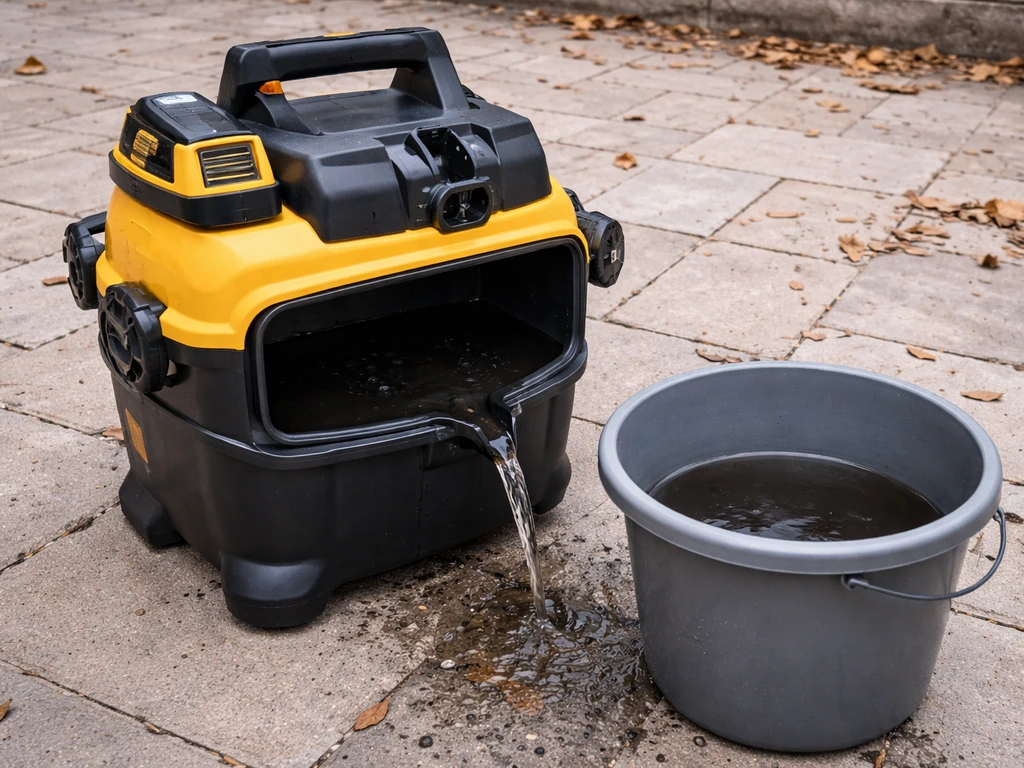
The DEWALT DCV580 cordless wet/dry vac is the ideal match here. The 2-gallon tank is enough for a small session, the HEPA-rated filter handles fine stone dust and pollen, and the cordless design lets you navigate around furniture without pulling an extension cord through a sliding door. At this patio size, one full battery charge gets you through a thorough cleanup. Budget pick in this category: any 4-gallon corded RIDGID wet/dry vac (the WD40500 series). It costs less than a cordless and is more powerful, you just need an outdoor-rated extension cord.
Large patio, heavy debris (200+ sq ft, tree coverage, seasonal leaf fall)
Start with a blower-vac like the Toro 51599 to herd leaf piles into manageable zones, then follow up with a 10-gallon corded wet/dry vac like the RIDGID WD1022 for fine grit, corners, and crevices. The two-tool workflow sounds like extra effort but it is genuinely faster than trying to vacuum loose leaf piles directly: the bag on a blower-vac fills so fast with whole leaves that you spend more time emptying than cleaning. Tackle leaves with the blower-vac first, then detail with the shop-vac.
Wet and soapy messes (post-rain, near outdoor kitchen or grill area)
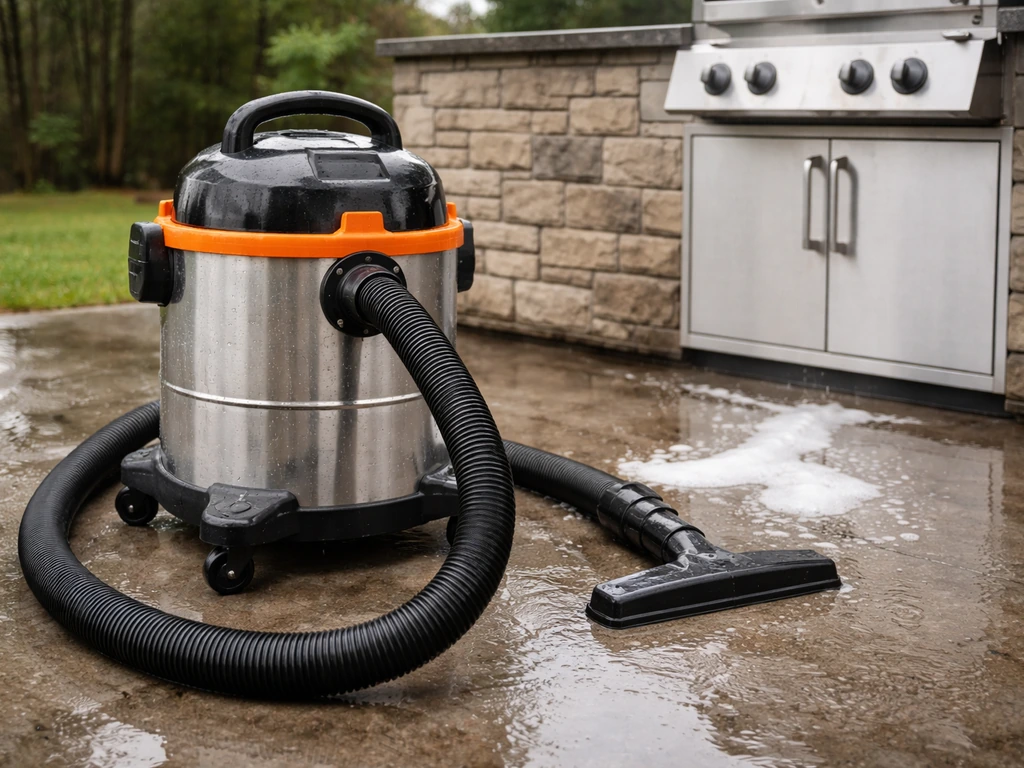
You need a dedicated wet/dry vac with a float system. The RIDGID WD64250 (6-gallon, stainless steel) is a strong choice: the float valve automatically cuts airflow when the drum is full of liquid, protecting the motor, and the stainless drum handles greasy or soapy residue without absorbing odors. The Makita XCV11 (18V LXT brushless, HEPA-rated) is the premium cordless answer if you want to avoid a cord near wet surfaces. Always remove the dry filter before wet pickup and reinstall the foam filter or use the unit filter-free per the manufacturer's instructions for wet mode.
Budget pick (under $80)
A basic 4 to 5 gallon corded wet/dry shop-vac from RIDGID or Craftsman will do the job on any patio under 300 square feet. You will not get HEPA filtration, and the accessories are basic, but the core pickup capability is solid. Buy a crevice tool separately if one is not included, it makes a huge difference on pavers and deck board gaps.
Premium pick (over $200)
The Makita ADCV11Z (18V LXT brushless, part of the wider Makita battery ecosystem) is built for outdoor adventure and tough jobsite conditions, which translates well to heavy patio use. HEPA filtration, brushless motor for longer life, and compatibility with Makita's broad battery platform make it a serious long-term investment. If you already own Makita tools, the value case is even stronger.
How to actually use an outdoor vacuum effectively
- Pre-sweep or blow large debris first. Running a vacuum directly through a thick pile of wet leaves jams the hose and fills the tank in seconds. Use a broom or blower-vac to consolidate and reduce bulk before vacuuming. A good outdoor broom is a genuinely useful complement to any vacuum workflow.
- Start from the far end and work toward your exit. Vacuum debris toward the door or garbage area rather than re-tracking over cleaned zones. This sounds obvious but most people do the opposite.
- Use the crevice tool on every joint, crack, and edge. Paver joints, deck board gaps, and the perimeter edge where the patio meets a wall or raised bed accumulate the most grit and are almost impossible to reach with a wide floor nozzle. Run the crevice tool along all joints before switching back to the floor nozzle.
- Slow down near edges and corners. Suction contact requires the nozzle to be close to and nearly flush with the surface. Moving too fast breaks that seal and just redistributes dust rather than picking it up.
- Check the tank level mid-session on large patios. When the motor pitch changes (sounds strained or higher), that usually means the float has triggered on a wet pickup or the drum is close to full on a dry one. Empty before you lose suction entirely.
- Handle damp debris carefully. On a wet/dry vac, remove the dry filter before vacuuming puddles or wet material. Reinstall and fully dry the filter before switching back to dry debris.
Maintenance, storage, and safety for outdoor vacuums
Filter care is the most important habit
Fine patio dust (concrete dust, stone grit, dry clay) is the fastest way to ruin a vacuum's performance. RIDGID's own manual notes that when picking up very fine dust, you need to empty the drum and clean the filter more frequently than you would for regular debris. For HEPA or washable filters, rinse with water, let them air dry completely (24 hours minimum), and reinstall. Never vacuum dry debris with a damp filter, it clogs almost immediately and can be very hard to restore. Makita's XCV11 manual makes the same point: clogged HEPA or wet filters directly cause poor suction performance.
Emptying and drying the tank
After wet pickup, drain the tank fully (RIDGID's WD1022 has a built-in drain port for this) and leave the drum open to air dry before storage. A damp drum left sealed grows mold and creates odor problems fast, especially in humid climates. For dry debris, empty into a sealed bag rather than dumping into wind, fine stone dust getting redistributed across your freshly cleaned patio is frustrating.
Battery and charging storage
Store cordless vacuums and their batteries indoors, out of direct sun and away from extreme heat. Patio temperatures in summer can exceed 110°F on a covered porch in Texas or Arizona, and lithium-ion batteries degrade quickly at sustained high temps. Charge batteries inside, store them inside, and bring the vacuum unit in when not in use. A weatherproof outdoor storage box is a practical middle ground if you do not have garage space, which connects directly to the broader question of patio storage solutions for tools and accessories. A good strategy for finding the best patio storage is to choose weather-resistant solutions that keep vacuums, hoses, and tools organized and easy to grab patio storage solutions.
Motor and safety rules to never skip
- Never expose the motor compartment to rain, even on a wet/dry vac. Both RIDGID and DEWALT manuals are explicit: the motor housing is not waterproof, only the drum and pickup path are rated for wet material.
- Use only outdoor-rated extension cords for corded vacuums. Standard indoor extension cords are a shock and fire risk outside.
- Always power off before clearing a clog from the hose or impeller. The Toro blower-vac manual specifically calls this out — impeller contact while running can cause serious injury.
- Do not run the wet/dry vac without the filter cage and float installed during liquid pickup. Without those components, liquid can reach the motor and cause burnout.
- Keep blower-vacs away from wet surfaces entirely. Electric shock risk is real and the manufacturer warnings on this are non-negotiable.
When a vacuum is not enough on its own
If you are vacuuming your patio every week because wind constantly blows debris in, the real solution might be upstream: a quality patio cover dramatically reduces how much leaves, dust, and pollen land on the surface in the first place. Similarly, thinking about drainage and surface slope when you have a wet debris problem, or positioning fans and misting systems that affect airflow, can change how debris accumulates.
For stubborn weeds growing in paver joints that the vacuum just cannot address, a dedicated patio weeding tool is a better fit than any vacuum nozzle. And for the regular surface sweeping that should happen between deeper vacuum sessions, a good outdoor broom or patio brush paired with a vacuum gives you the most complete cleanup system.
If you are choosing one, the best patio broom is the one that reaches into paver joints while still sweeping up fine grit a good outdoor broom or patio brush. A good outdoor broom is an easy way to sweep up larger debris before you vacuum, especially on windy days.
The bottom line: buy the DEWALT DCV580 if you want cordless convenience and genuine wet/dry capability for a small to medium patio. For help choosing the best patio garden hose setup alongside your vacuum for wet cleanups, focus on durable, kink-resistant models and the right fittings DEWALT DCV580. Step up to a RIDGID 6 to 10 gallon corded wet/dry vac if your patio is large or you deal with post-storm debris regularly. Add a blower-vac for heavy seasonal leaf work on bigger spaces. Keep filters dry between modes, store everything out of the weather, and your outdoor vacuum will last for years rather than one season.
FAQ
Can I use the outdoor vacuum to clean up standing water after rain?
Yes, but only if the model is explicitly rated for wet pickup and it has a float shutoff (or equivalent liquid protection). Even then, keep the intake above standing water depth, use the correct wet filter setup (dry cartridge removed), and never run the motor unit where the manual prohibits rain exposure, because water can enter the electrical housing or switch area.
My patio vacuum won’t pick up like it used to, what should I check first?
If the vacuum starts losing suction after patio dust, the most common cause is a clogged HEPA or fine-dust filter plus a full drum or blocked hose. Stop, empty the drum, check the hose for packed grit, and clean the filter according to the model’s guidance (many HEPA filters require air-dry only, not heat). Also confirm you are not accidentally using a wet filter for dry dust.
What’s the best way to vacuum paver joints and grout lines?
For pavers and flagstone joints, a crevice tool usually works, but you also need to maintain nozzle contact and use slower passes across the gaps. If grout lines are deep, pre-sweep to lift loose grit first, then vacuum with the crevice tool. Otherwise the vacuum will pull some debris but leave a layer that becomes cemented by moisture over time.
How do I vacuum near gravel without damaging the vacuum?
For gravel-adjacent areas, prevent stone ingestion by using a two-step method. First use a broom to gather and remove small stones, then vacuum only what’s loose dust and leaves. If you must vacuum near gravel, keep the nozzle angle shallow, do not “dig” into the stones, and stop quickly if you hear gravel scraping or hear airflow changing, since impeller damage can be irreversible.
How should I clean and store the vacuum after picking up wet debris?
Drying is not optional. After wet pickup, drain completely and leave the drum open to air dry before closing or storing, because residual moisture promotes mold and odor. For filters, let them air dry fully before using them for dry debris, and never run dry dust through a damp filter, since it clogs rapidly and can be hard to restore.
What’s the best workflow for patios with heavy leaf fall?
If your patio is under heavy tree cover, avoid vacuuming like it’s a one-pass job. Use staged cleanup: blow or herd leaves into smaller zones, vacuum that zone, then do a second pass for remaining grit. Emptying early helps maintain suction, because packed bags or clogged filter mats reduce airflow and leave more residue behind.
Can I use a regular extension cord for a corded outdoor wet/dry vacuum?
Use an outdoor-rated extension cord only when the vacuum manual permits corded operation outdoors, and keep every connection off the ground. Route the cord overhead or along secured points so the hose movement does not pull on plugs, and avoid operating in wet conditions when the manual warns against exposing the motor compartment to rain or standing water.
How do I get through a long patio cleanup with a cordless wet/dry vacuum?
For cordless, runtime is usually the limiting factor, so plan by battery swapping. Have a spare battery charged and ready, use a lower suction setting for dry grit or pollen, and do spot cleaning instead of continuous long runs. If your battery is still the bottleneck, a corded 10-gallon style vacuum will outlast any cordless option for long sessions.
Why is my vacuum picking up leaves but struggling with fine patio dust?
That’s often a filter or nozzle seal issue. Confirm the correct filter is installed for dry mode, check that the hose connections are tight (loose cuffs leak suction), and inspect the floor nozzle for cracks or blockage by fine cement dust. If you frequently vacuum fine stone dust, expect more frequent filter maintenance than you would for leaves.
Can I use a blower-vac to pick up damp leaves after a rain?
You should not. Even if a wet/dry vacuum is physically capable, electric blower-vacs are generally not safe on wet surfaces. Use blower-vac for dry debris only, turn the unit off before clearing clogs, and move wet debris to a true wet/dry vac with proper wet filtration and a float system.
What mistakes can void or limit warranty on a wet/dry vacuum?
Most warranties do not cover damage caused by operating without required components. For units with a float cage or protection system, ensure it is installed for wet pickup and do not run the vacuum in liquid mode without the filter and float components in place, because overheating and motor damage can occur.
What’s the easiest storage setup for patio vacuums and accessories?
If you have minimal storage, prioritize a system that matches your patio shape. Keep the vacuum, hose, and crevice tool together in a dedicated weather-resistant bin or wall mount, and store batteries indoors. For best speed during weekly cleanup, store a broom nearby for quick pre-sweeping so you avoid trying to vacuum heavy buildup in one go.