
The best patio storage box for most homeowners is a weather-resistant resin deck box in the 70 to 100 gallon range, with a ventilated base, UV-stabilized construction, and a reinforced lid that won't warp in the sun. That covers the majority of situations: storing cushions, outdoor covers, gardening tools, and seasonal gear on an uncovered or semi-covered patio.
Best Patio Storage: How to Choose the Right Storage Box

Elise Prescott
5 May 2026
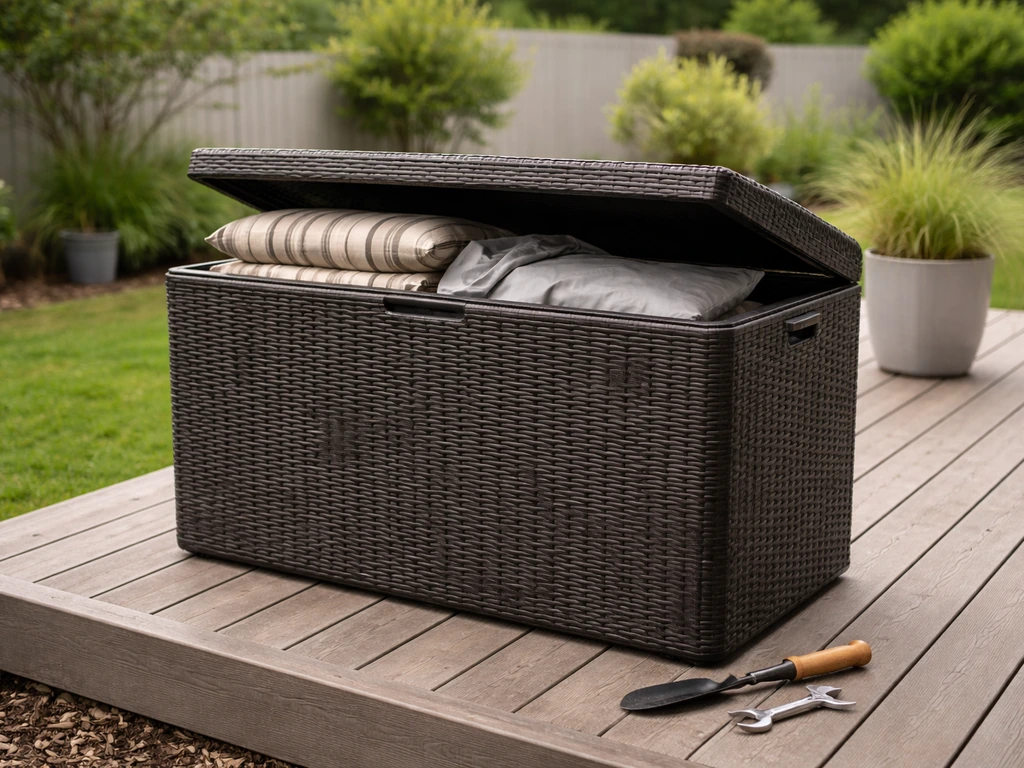
If you want to keep your patio clean between storage sessions, a durable best outdoor broom for patio models can make sweeping debris and dirt much easier. But the right pick for you depends on your climate, how much space you have, what you're actually storing, and whether you need a bench seat on top. This guide walks through all of it so you can make the call confidently.
What 'best' actually means for a patio storage box
Best is doing a lot of heavy lifting in this search, so let's define it for real use. A storage box that's genuinely the best for your patio has to do three things well: keep your stuff dry and protected from the elements, hold up to your specific climate over several years, and fit your space without becoming an eyesore or a tripping hazard. Everything else, price, style, brand name, is secondary to those three things.
The mistake most people make is buying on size and price alone. They grab the biggest box they can afford, it looks fine on delivery, and then six months later the lid is warped and they're pulling mildew-smelling cushions out of a pool of condensation. That's not a best-buy. That's a frustrating replacement purchase. So when I use the word 'best' in this guide, I mean durable enough to last at least five years in your actual climate, practical enough to use daily without fighting the lid, and sized correctly for your space and storage load.
What to store outdoors and what protection you actually need
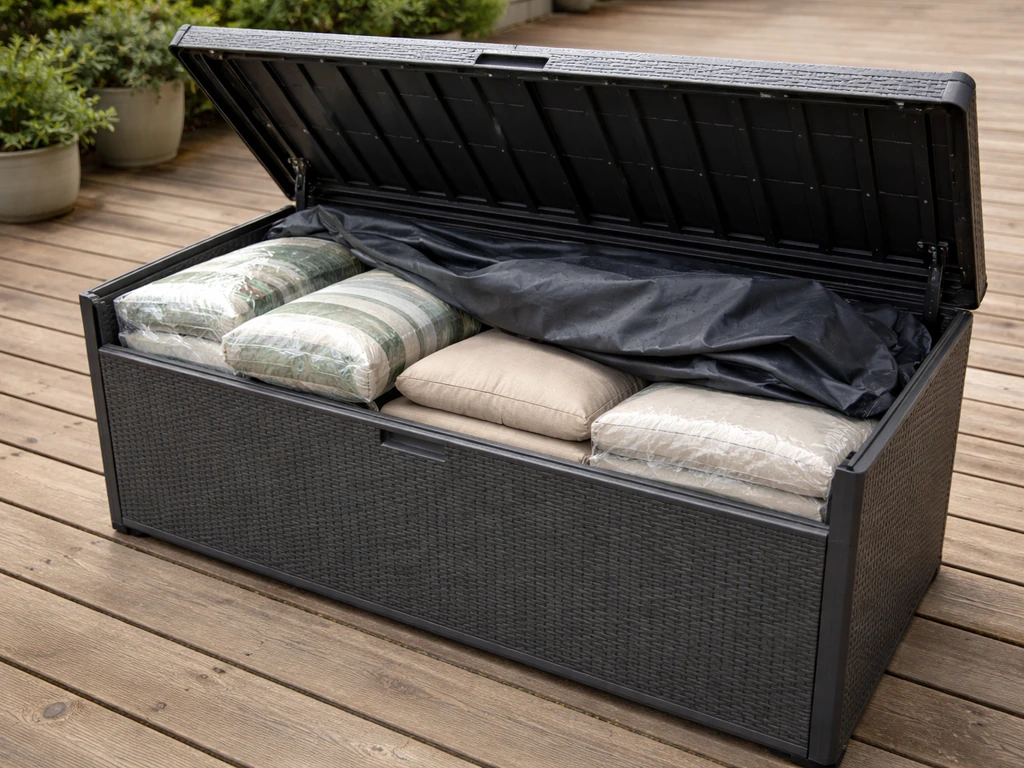
Not everything belongs in an outdoor storage box, and understanding what you're putting in there determines the features you actually need. Here's how to think about it by item type.
- Seat cushions and throw pillows: These need a box that stays dry inside. Ventilation matters here because trapped humidity causes mold even when water doesn't get in directly.
- Furniture covers and tarps: Bulky but not especially moisture-sensitive. The priority is volume capacity and a lid that opens wide enough to stuff large covers in easily.
- Gardening tools, hoses, and small equipment: These are heavier and can scratch or puncture softer box interiors. A reinforced resin or metal box works better than fabric options. If you're storing a garden hose separately, a dedicated hose reel is worth considering alongside a storage box.
- Seasonal items like string lights, outdoor rugs, and decorations: These benefit from UV protection inside the box if you're storing them long-term in uncovered areas.
- Pool and spa accessories, toys, or floats: High-humidity items by nature. Look for a box with a ventilated base or drain plug so any moisture that gets in can escape.
- Propane tanks or grill accessories: Store propane only in a dedicated vented enclosure, never in a sealed deck box. Grill covers and accessories are fine.
The protection level you need is mostly driven by two things: how exposed your patio is and what you're storing. A covered patio in a dry climate like Arizona or Colorado can get away with a less heavy-duty box because rain and UV exposure are limited. An uncovered patio in coastal Florida, Houston, or the Pacific Northwest needs a box rated for real UV exposure, real rainfall, and real humidity. Always buy for your worst-case conditions, not your average day.
Key features checklist before you buy
Here's what to look for when you're evaluating any patio storage box, whether you're shopping in a store or reading product pages online. If you're also shopping for a brush to scrub off grime and pollen from your patio surface, this guide to the best patio brush will help you pick the right type any patio storage box.
Weatherproofing and water resistance
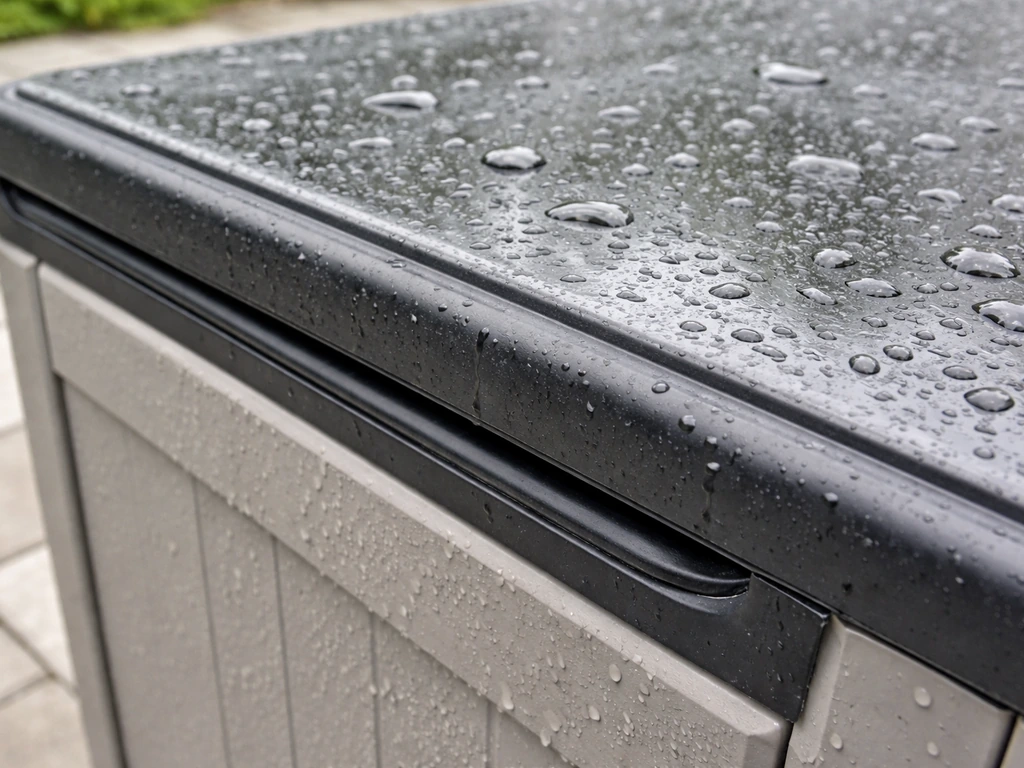
This is the most critical feature and also the most commonly misrepresented. Water-resistant means rain won't soak through the walls. It does not mean the box is waterproof or sealed. Keter, one of the major deck box brands, actually warns that thin plastic lids can bend in the sun, creating gaps between the lid and the base that let water in. So even a brand-name box can fail if the lid warps. Look for boxes with reinforced or double-walled lids, and check whether the lid-to-base seal has a lip or channel that sheds water rather than channeling it inside.
UV resistance
UV degradation is what turns a good-looking deck box into a faded, brittle mess within two or three seasons. Quality brands like Keter and Suncast build UV protection into the resin compound itself, not just as a surface coating. Suncast backs this with a 10-year limited warranty on some of its resin deck boxes, which tells you something about their confidence in UV performance. If a box doesn't mention UV-stabilized or UV-protected construction, treat that as a red flag, especially for hot, sunny climates.
Ventilation and anti-moisture design
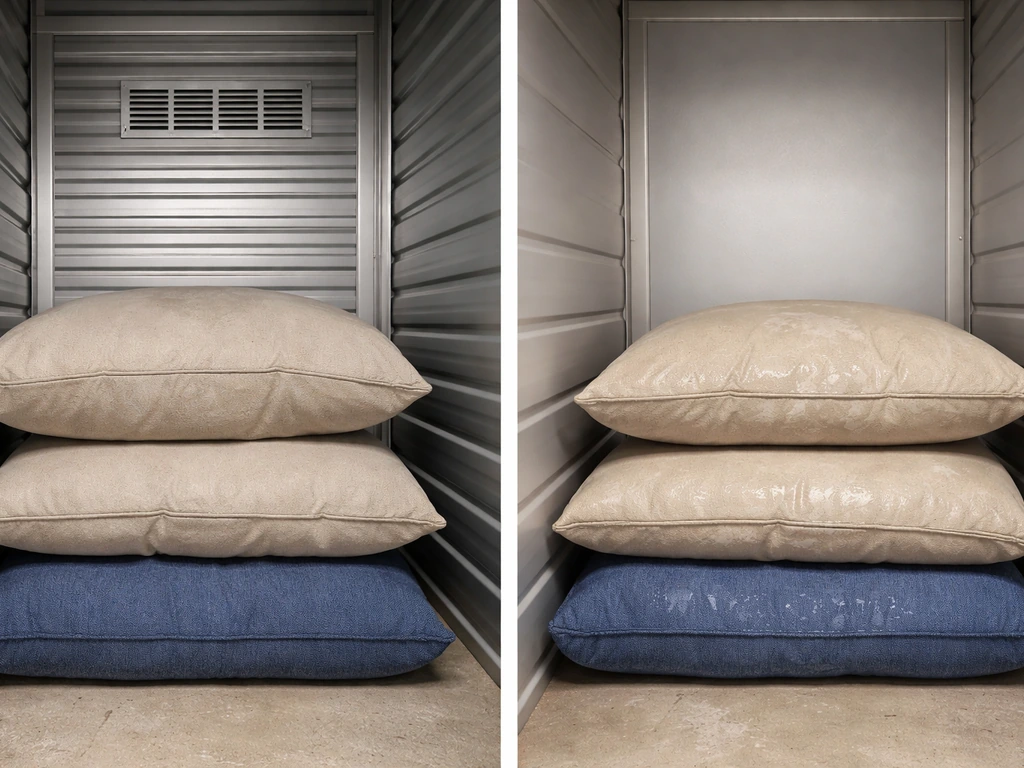
Here's a tension that most buyers don't know about: a fully sealed box keeps rain out, but it also traps the natural moisture that cushions and fabric items release over time. Keter specifically notes that sealed resin boxes can trap natural moisture, which can lead to mold. The best boxes handle this with small ventilation gaps near the base or a removable drain plug at the bottom. These let moisture escape without letting rain water in, since water collects at the base and ventilation gaps are positioned so standing rain can't pool inward.
Capacity and lid mechanics
Capacity is measured in gallons in the US. A patio broom is a simple tool that helps you keep leaves, grit, and debris from building up on outdoor surfaces between cleanings. A 70-gallon box holds roughly four to six standard chair cushions. A 100-gallon box can handle cushions for a full outdoor sectional. Lid mechanics matter more than most people think: a lid with a stay-open hydraulic piston or a lid that locks at 90 degrees is far more practical than one that slams shut on your arms. If you're using the box as a bench, you also want a lid rated for weight bearing, typically 300 to 500 pounds for decent boxes.
Security and lockability
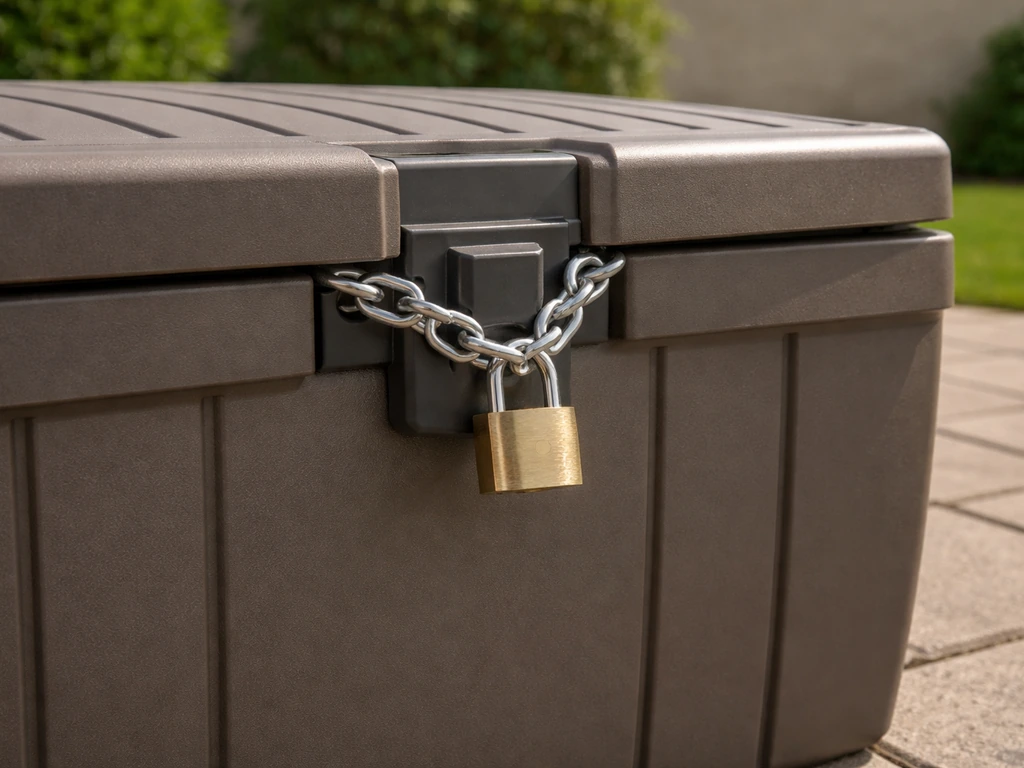
Most deck boxes are not truly secure against a determined theft. But a padlock-compatible latch adds meaningful deterrence, especially if you're storing equipment or tools. Not all boxes come with a padlock hole, so check before you buy if this matters. For high-traffic areas or apartments with shared outdoor spaces, this feature moves up the priority list significantly.
Material comparison and how they perform in different climates
Material choice is where climate fit really comes into play. The four main options you'll encounter are resin, aluminum, wood, and fabric or wicker-style. Each has a real-world profile that makes it better or worse depending on where you live.
| Material | Weather Resistance | UV Resistance | Best Climate Fit | Typical Lifespan | Price Range |
|---|---|---|---|---|---|
| Resin (polypropylene) | Good to excellent if UV-stabilized | Good to excellent (brand dependent) | Most climates; avoid budget resin in intense heat | 5 to 15+ years | $80 to $400 |
| Aluminum | Excellent; won't rust or rot | Excellent | Coastal, humid, extreme sun | 10 to 20+ years | $200 to $600+ |
| Natural wood (teak, cedar) | Moderate without treatment; needs annual maintenance | Poor unless sealed and refinished | Mild, dry climates; covered patios | 5 to 15 years with upkeep | $150 to $800+ |
| Fabric / wicker-look (PE rattan) | Poor in rain; needs covers | Moderate | Covered patios only; mild climates | 2 to 5 years | $60 to $250 |
If you're in a coastal or humid climate like South Florida, the Gulf Coast, or the Pacific Northwest, aluminum is the gold standard. It doesn't warp, rust, or absorb moisture, and it won't fade the way even good resin can over a decade of salt air and intense sun. The trade-off is price: a quality aluminum storage box costs noticeably more upfront.
For most of the country, a quality UV-stabilized resin box from a reputable brand is the practical sweet spot. The keyword is quality. Budget resin boxes with thin walls and unprotected lids are exactly what Keter is warning against when they describe lid warping and gap formation. Spend a little more for double-walled construction and you'll be much happier two summers from now.
Wood is genuinely beautiful and can double as a design element if you have a cedar deck or teak furniture. But be honest with yourself about maintenance. Cedar and teak need to be cleaned and re-sealed or oiled annually to hold up. If you won't do that, or if your patio gets regular rain, wood will look rough within a couple of seasons. Save it for covered patios in mild climates if you want longevity without constant upkeep.
How to size and place a storage box on your patio or balcony
Before you order anything, measure your available space with a tape measure and mark it out with painter's tape on the ground. This sounds obvious, but you'd be surprised how often people receive a 100-gallon box and realize it blocks a door or makes the patio feel cramped. Here's what to actually measure and plan for.
- Measure the footprint you have available, factoring in clearance for the lid to open fully (typically 12 to 18 inches of open lid height above the hinge point).
- Check door clearance: the box should not block sliding glass doors or gate access when the lid is up.
- For balconies and apartment patios, check weight limits. A 100-gallon box fully loaded with cushions can weigh 80 to 120 pounds, which is fine for most concrete balconies but worth confirming with building management.
- On wood decking, place a rubber mat or feet spacers under the box to allow airflow and prevent moisture trapping between the box base and the deck surface. This also helps prevent mold and deck staining.
- On concrete patios, placement is straightforward, but consider anchoring if you're in a high-wind area (more on that below).
- In windy regions like the Texas Hill Country, Colorado Front Range, or coastal areas, anchor the box to the ground or a structural surface with a tie-down strap or through-bolt anchor. Most quality boxes have anchor points built in. This is a simple DIY job with a drill and appropriate concrete or deck anchors.
For small patios and balconies specifically, go vertical before going wide. A narrower, taller cabinet-style storage unit or a slim bench box with a smaller footprint will serve you much better than a wide deck box that eats half your usable floor space. Some manufacturers make balcony-specific storage rated for tight dimensions, typically 30 to 40 gallons, which is the right size for a single set of chair cushions and a few accessories.
Storage box vs bench vs cabinet: which style fits your setup
There are three main style categories you'll encounter, and each solves a slightly different problem.
Deck box (chest-style)
This is the classic rectangular storage chest with a hinged lid. It maximizes volume for the footprint and is the best choice when your primary goal is pure storage capacity. The trade-off is that it doesn't serve double duty as furniture. Deck boxes in the 70 to 120 gallon range are the most popular category because they handle most household outdoor storage needs without being unwieldy. Good for: families with lots of outdoor gear, uncovered patios with heavy weather exposure, anyone who prioritizes storage capacity over aesthetics.
Bench-style storage
A storage bench has a seat-rated lid and often looks more like outdoor furniture than a utilitarian box. Capacity is typically lower, 30 to 70 gallons, but you gain a seating surface, which is genuinely useful on a smaller patio or at the entrance to a covered outdoor area. The lid must be rated for seated weight, usually 300 pounds minimum for quality versions. Good for: small patios, covered porches, anyone who wants the storage box to function as extra seating or an entryway bench.
Cabinet or vertical storage
Vertical outdoor storage cabinets have a smaller floor footprint with shelves or bins stacked upward. They're ideal for balconies or narrow patios where floor space is limited but wall space is available. These work well for tools, accessories, and smaller items, but they're not great for bulky cushions or large covers that don't fold neatly onto shelves. Good for: balconies, apartment patios, garages with patio access, or homeowners storing tools and accessories rather than large fabric items.
| Style | Capacity Range | Best Use Case | Works as Seating? | Best For Small Patios? |
|---|---|---|---|---|
| Deck box (chest) | 50 to 150+ gallons | Maximum storage, cushions, covers | No (usually) | Only if sized appropriately |
| Bench storage | 30 to 70 gallons | Dual-purpose seating and storage | Yes | Yes |
| Vertical cabinet | Variable by shelf | Tools, accessories, small items | No | Yes (narrow footprint) |
My recommendation: if you have a mid-size to large patio and primarily need to store cushions and covers, go with a quality resin deck box in the 80 to 100 gallon range. If you have a small covered patio or want the box to blend into your outdoor furniture arrangement, a bench-style box is worth the capacity trade-off. If you're on a balcony or storing tools and accessories more than soft goods, a vertical cabinet wins on practicality.
Maintenance, useful accessories, and mistakes to avoid
Keeping your storage box in good shape
Resin boxes need almost no maintenance, which is a big part of their appeal. Once or twice a year, wipe down the inside with a mild soap solution and let it dry completely before loading it up again. Check the lid seal for debris that can hold moisture or grit against the sealing edge. For wood boxes, plan on cleaning and re-sealing or oiling every spring, before summer UV and moisture hit hard. For aluminum, occasional cleaning is all that's needed, just rinse it down and check that hinges and hardware haven't corroded.
Accessories worth considering
- Interior liner or bag: A waterproof liner bag inside the box adds an extra moisture barrier for cushions and fabric items, especially if your box is in a high-rainfall area.
- Drain plug or drain tile: Some boxes come with a drain port at the base. If yours doesn't, a shallow layer of gravel or a perforated mat on the interior floor helps moisture escape rather than pool under your stored items.
- Padlock: Buy a weatherproof brass or stainless padlock (not the cheapest zinc option, which rusts fast). Match it to the padlock hole size listed in the product specs, typically 3/8 inch diameter shackle.
- Rubber base mat or furniture feet: Prevents moisture wicking up from concrete or wood deck surfaces into the base of the box.
- Tie-down anchors: Essential for windy regions or elevated decks. A simple L-bracket and anchor bolt through the box's base mounting points does the job for most setups.
Common buying mistakes to avoid
- Buying based on listed gallon capacity without checking dimensions: Gallon ratings don't tell you the actual opening width, which determines whether your largest items fit through the lid.
- Choosing budget resin without checking lid construction: Thin single-wall lids warp in direct sun, creating the exact gaps that let water and pests in. Double-wall lids cost more but maintain their shape.
- Ignoring ventilation in humid climates: A hermetically sealed box in Florida or Houston will grow mold on your cushions even if no rain gets in. Moisture escapes from fabric and needs somewhere to go.
- Placing the box directly against a wall or fence: This traps moisture behind the box, accelerating degradation and potentially damaging fencing. Leave at least a few inches of clearance.
- Skipping the warranty check: A brand offering a 10-year limited warranty like Suncast does on some resin boxes is telling you something important about expected lifespan. Brands that offer 90-day or one-year warranties are telling you something else.
- Forgetting about what else lives on your patio: A storage box that's visually mismatched with your outdoor furniture, umbrella, or patio cover will bother you every time you look at it. Style matters for daily livability, even if it's not a technical spec.
DIY versus hiring for installation and anchoring
The vast majority of deck box setups are pure DIY: unbox, place, load, done. The only time you should consider professional help is if you need to anchor a box into a concrete patio with a masonry anchor bolt (straightforward with a hammer drill, but not everyone has one), or if you're mounting a vertical cabinet to a wall for wind stability. Those are quick jobs for a handyman if you'd rather not DIY. Anything beyond that, like a custom built-in bench with storage underneath, moves into carpentry territory and is worth getting a contractor quote on.
Once you have your storage sorted, the rest of your patio maintenance routine gets easier too. Keeping tools, covers, and cushions organized and protected means less cleanup time and fewer replacements. If you also want to keep your garden tidy, pairing your patio storage with the best patio garden hose for easy watering helps you avoid constant setup and kinks.
If you're specifically looking for the best patio weeding tool, choose one that matches your weed type and your patio surface so you can work efficiently without damaging the area Keeping tools, covers, and cushions organized and protected means less cleanup time and fewer replacements. . Pairing a good storage box with the right outdoor cleaning tools, whether that's a quality patio broom, brush, or outdoor vacuum, keeps the whole space working together instead of fighting you every weekend.
Choosing the best outdoor broom for patio depends on your surface and how much debris you typically deal with. Choosing one of the best outdoor vacuums for a patio can make it much easier to clear dirt, leaves, and grit from outdoor surfaces best outdoor vacuum for patio.
FAQ
How can I tell if a deck box is truly seal-and-lid designed versus just “water resistant” marketing?
Look for language that describes a lid-to-base sealing channel or lip that sheds water outward, plus double-walled or reinforced lid construction. Also check for a drain approach (often a removable drain plug or base ventilation) because a truly weather-handling design manages water at the bottom, not just through the walls.
Is it better to keep cushions fully dry inside a sealed box, or should I leave some airflow?
For fabric and cushions, some airflow is often safer than a fully sealed environment. Boxes that include base ventilation gaps or a drain plug allow moisture to escape after items release humidity, reducing the chance of mildew and odor buildup during humid stretches.
What should I store in a patio storage box to avoid mold and bad smells?
Store dry items only, and avoid packing damp cushions, wet covers, or un-rinsed gardening tools that still carry soil and moisture. If you need to store items shortly after use, let them air dry first, then pack them. A quick rule, if it smells “wet” or feels cold and damp, it is not ready.
Why does my lid warp or become hard to open, even if the box is weather resistant?
Lid warping usually comes from excessive UV exposure, thin lid plastic, or water pooling near the seal and creating constant pressure. Another common cause is overpacking, which stresses the lid edge and gasket. If it feels tight, stop forcing it, remove contents, and clear debris from the sealing area.
Can I leave a padlock on my deck box without damaging it in the weather?
Yes, but choose a box with a padlock-compatible latch and ensure the latch area is metal or reinforced, not just thin plastic. After heavy rain, wipe the latch and shackle area dry to prevent sticking, and avoid locks with exposed parts that rust easily.
What size patio storage should I buy if I want to fit both cushions and a folded outdoor cover?
Use the item volume, not just chair count. A 70-gallon box often fits several cushion sets, but adding a bulky cover usually pushes capacity quickly, especially if you cannot compress it. If you need cushion plus cover, consider stepping up (often toward the 80 to 100 gallon range) or choose a style that lets you organize by compartment.
Do I need ventilation if I live in a very dry, hot climate?
Often yes, but the goal changes. Even in dry heat, ventilation helps prevent odor buildup from humidity trapped when items were stored, brought in wet, or exposed to night fog. If your patio is uncovered, prioritize UV-stabilized materials and a design that sheds water rather than relying on a fully airtight box.
Is a resin deck box safe for long-term storage of fabric items in freezing climates?
It can be, if the box is built with reinforced, UV-stable resin and a design that prevents water from pooling at the base. During freeze-thaw cycles, any water trapped near the lid edge can worsen gaps over time. Choose a box with a drain plug or base ventilation that minimizes standing water, and avoid storing items that are wet.
What’s the best way to anchor a storage box so it won’t lift in wind?
If your patio is exposed, anchoring helps, but only if the manufacturer supports it. For concrete patios, use a masonry anchor method (typically with a hammer drill) and follow the box’s recommended points, not random locations. For vertical cabinets, wall mounting should focus on wind stability and use proper wall hardware.
Can I store tools and garden equipment inside the same box as cushions?
You can, but it is not ideal for preventing smells and rust. Tools often bring soil, moisture, and metal corrosion products into the box environment, which can transfer odors to fabric. If you mix items, use a sealed tote or divider system so cushions stay in a separate, cleaner zone.