
For most patios, a 24-inch push broom with medium-stiffness polypropylene bristles is the best all-around pick. It handles leaves, dust, grit, and light pet hair on concrete, pavers, and brick without scratching. If your surface is softer (stamped concrete, natural stone, or composite deck boards), you want softer bristles like tampico or a fine synthetic blend. And if pet hair is your main problem, a dedicated angle broom with flagged bristle tips beats a wide push broom every time.
Best Patio Broom: Buying Guide for Concrete, Pavers

Elise Prescott
4 Jun 2026
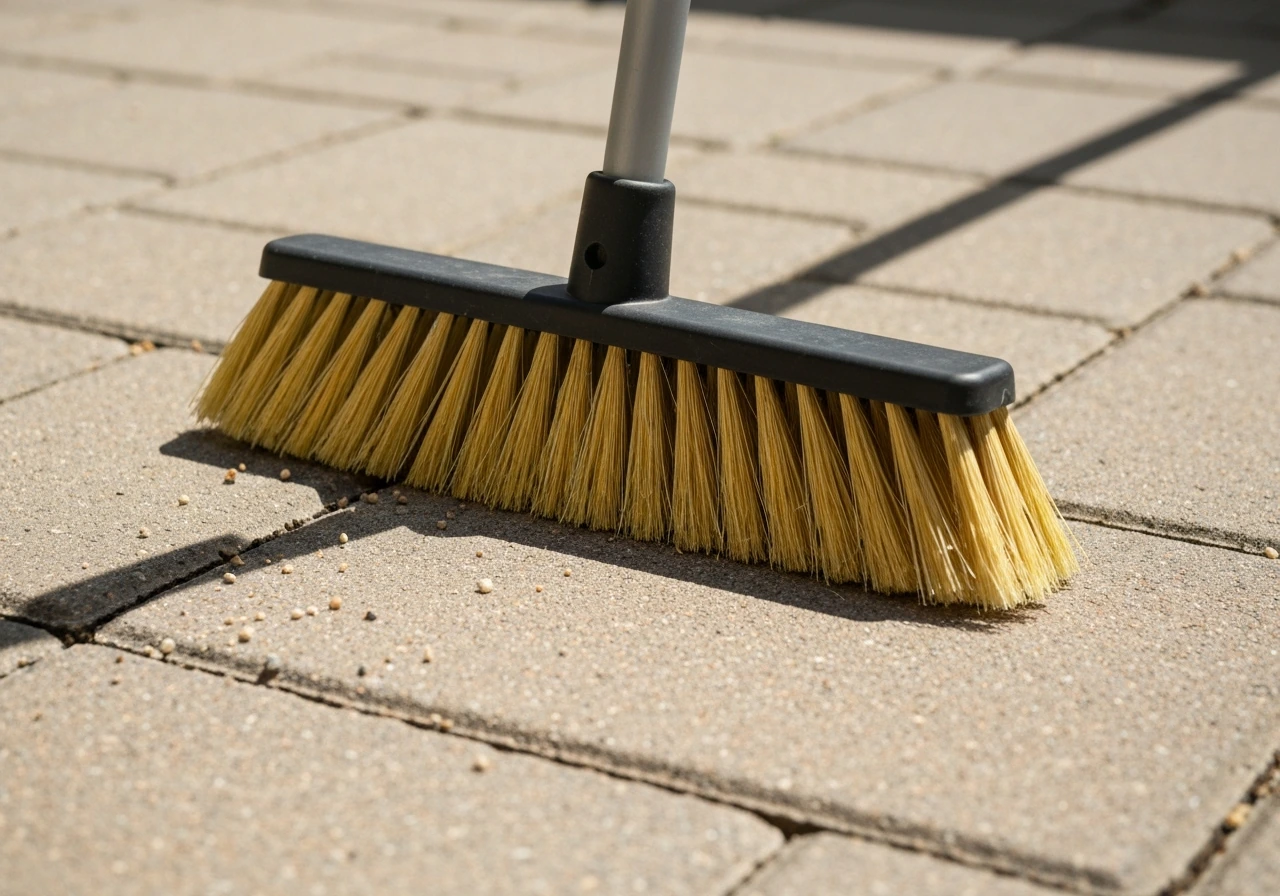
Choose your patio surface and debris type first
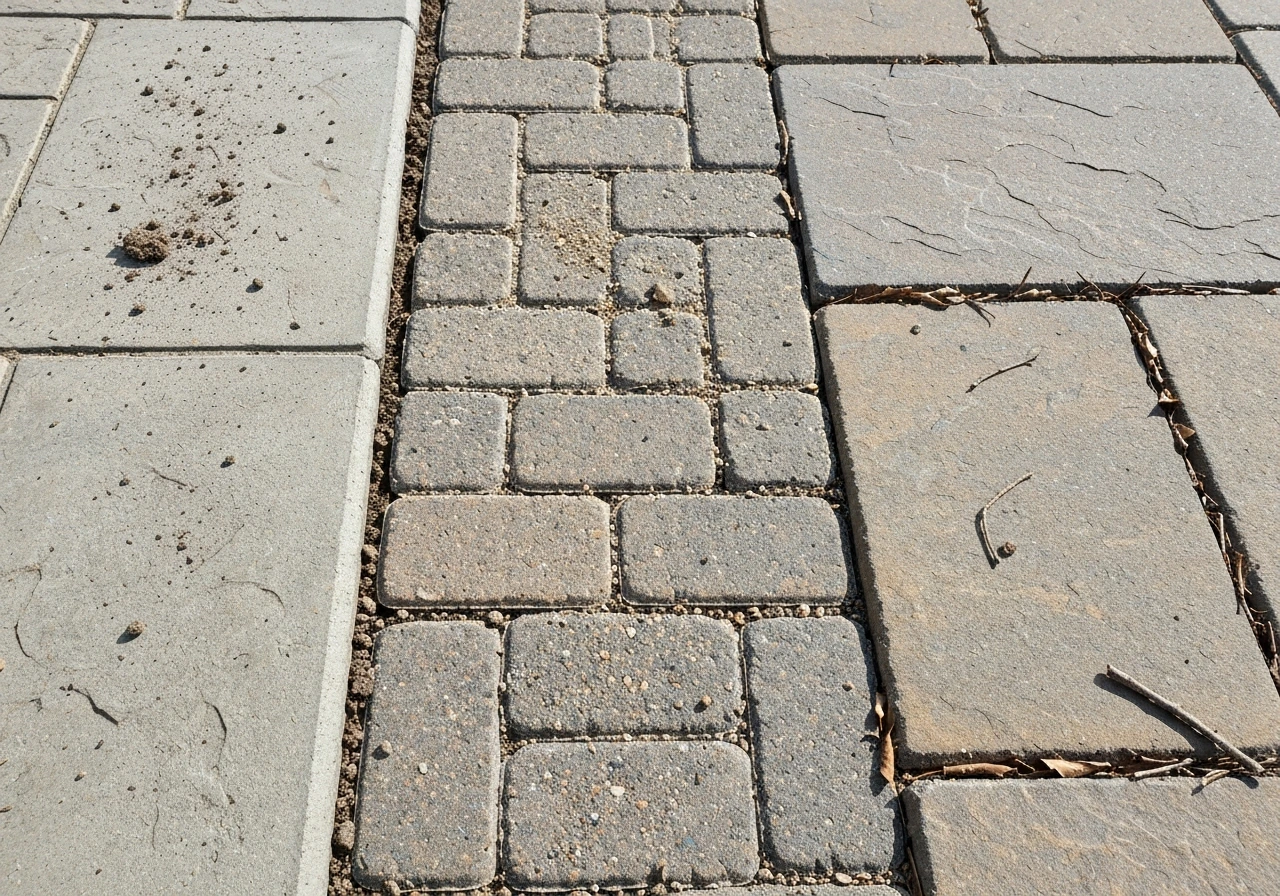
Before you look at a single product, nail down two things: what your patio is made of and what you're mostly sweeping. These two factors drive every other decision, from bristle stiffness to broom width to whether you even need a push broom or an angle broom.
Concrete (including stamped concrete) is the most forgiving surface in terms of bristle choice, but stamped or decorative concrete has a textured surface that traps grit and can be scratched by ultra-stiff wire-center brooms. Standard brushed concrete takes a stiffer polypropylene broom just fine. Brick and clay pavers have grout joints that catch debris, so you want bristles stiff enough to push material out of those joints. Natural stone like bluestone, flagstone, or slate can be surprisingly soft or uneven, and stiff bristles can chip edges or scratch the face over years of use. Composite or wood deck boards have gaps between planks and a grain direction, so a medium-stiff broom swept with the grain works best.
On the debris side, dry leaves and grass clippings are light and airy, so a wide push broom moves them fast. Dust, fine grit, and sand need softer, denser bristles to actually collect the fine particles rather than just scatter them. Pet hair is the awkward one: it clings to bristles and to patio cracks, and most standard brooms just redistribute it. And if you're in a wet climate or you're sweeping after rain, you need bristles that don't absorb water and go limp, which rules out some natural fibers.
| Surface type | Best bristle stiffness | Best bristle material | Watch out for |
|---|---|---|---|
| Brushed concrete | Medium to stiff | Polypropylene | Wire-center brooms that scratch |
| Stamped/decorative concrete | Medium | Fine synthetic or tampico blend | Stiff bristles that catch texture edges |
| Brick/clay pavers | Medium-stiff | Polypropylene or palmyra | Brooms too wide to maneuver around edges |
| Natural stone (flagstone, slate) | Soft to medium | Tampico or horsehair blend | Any abrasive or wire-reinforced head |
| Composite/wood deck boards | Medium | Fine polypropylene or PET fiber | Brooms that snag on board gaps |
Bristles and stiffness: what works on concrete vs pavers vs stone
Bristle material matters more than most people think. Here's a plain-language breakdown of the main options you'll actually encounter when shopping.
Polypropylene (the workhorse)

This is the synthetic plastic bristle in most consumer push brooms, and it earns its place. Polypropylene is resistant to mildew, holds up in wet conditions, and doesn't absorb water, so it stays stiff after a rainstorm. It's available in a range of stiffnesses from fine flagged tips to thick stiff fibers. It's the right call for concrete, brick pavers, and most standard outdoor surfaces. The downside is that the cheapest polypropylene brooms use inconsistent fiber diameters, and the bristles either flare out immediately or snap off.
Recycled PET fiber (newer and worth knowing about)
Some newer brooms use bristles made from recycled PET plastic, essentially the same material as water bottles. Libman's FiberForce line is a notable example, with a 25.5-inch sweeping width and flexible but firm fibers that handle multi-surface outdoor sweeping well. These bristles tend to be springy rather than stiff, which makes them good at getting under debris and bouncing back after use. Libman's commercial catalog notes that their synthetic brooms are made in the USA and use approximately 22 recycled PET water bottles per broom, which is a nice bonus if that matters to you.
Tampico (the natural-fiber option for dust and stone)
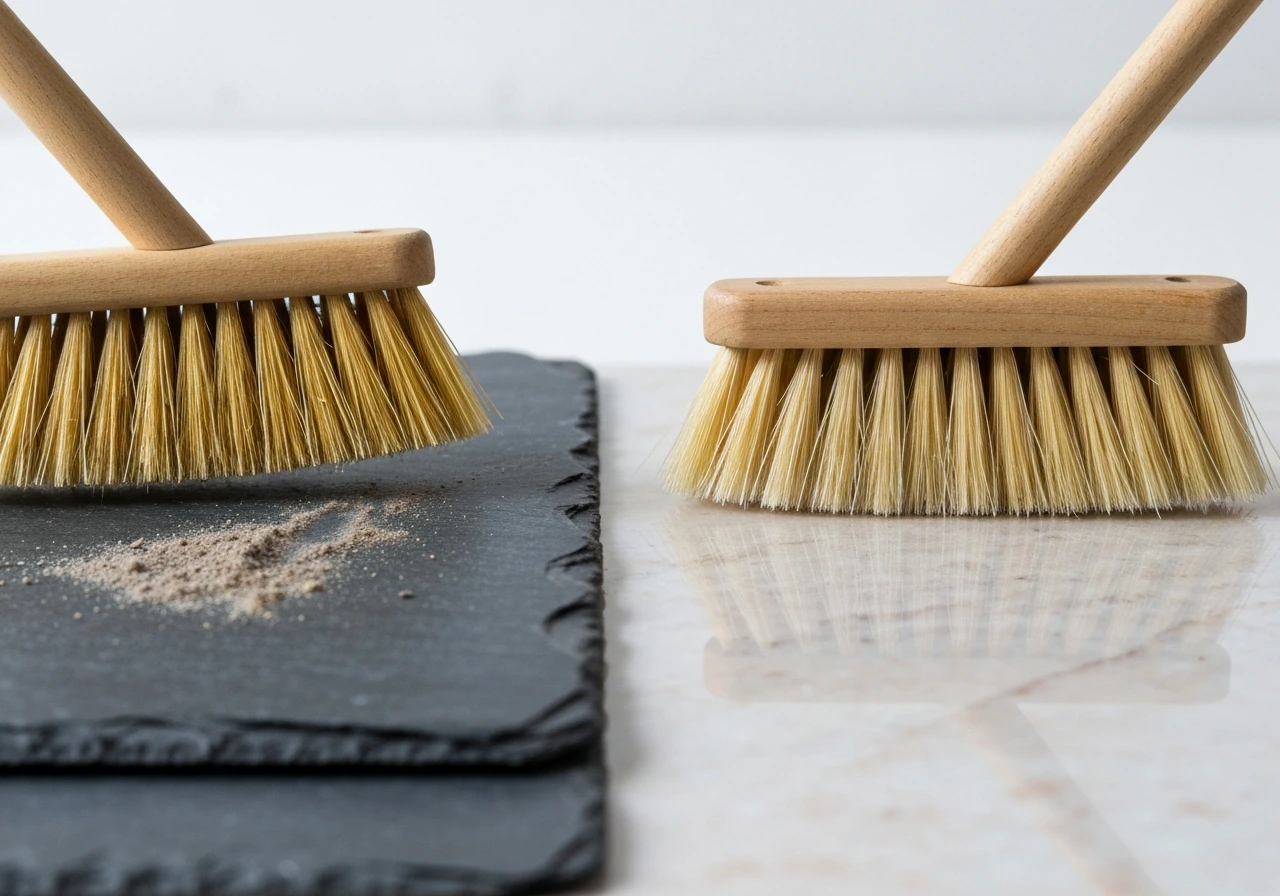
Tampico bristles come from the Agave lechuguilla plant and have a medium texture that's gentler than most synthetics. Woodworkerexpress’s PDF notes that blank" rel="noopener noreferrer">tampico bristles come from the Agave lechuguilla plant, have medium texture, and are gentler than many synthetic options. They're the right pick for dusty surfaces, smooth concrete, and softer natural stone. The O-Cedar commercial catalog specifically recommends tampico bristles for dust sweeping and smooth surface work. The Weiler push brooms you'll find in commercial supply houses often spec tampico for this reason. The catch: tampico can absorb moisture, which makes it swell slightly and can weaken the bristles over time if stored wet. It's not the pick for regions with constant rain or if you're sweeping after irrigation.
Horsehair and natural blends
Horsehair bristles are soft, flexible, and excellent for fine dust on delicate surfaces like slate or polished stone. Some commercial brooms blend tampico with horsehair border fibers, which gives you a softer edge sweep combined with a slightly stiffer center. Milwaukee Dustless makes an 18-inch version in this configuration, labeled average-duty stiff bristle, which sounds like a contradiction but works well for patios with mixed surface textures. Horsehair is not the choice if you have heavy wet debris or if you're dealing with leaf piles in the fall.
Palmyra natural bristles
Palmyra is a stiffer natural fiber used in heavy-duty outdoor brooms. The O-Cedar catalog positions palmyra for wet and dry floor sweeping in demanding conditions. On a residential patio, palmyra brooms handle wet leaves, mud, and heavy grit well. They're tougher on delicate surfaces, though, so skip them on natural stone.
Sizing, reach, and comfort: width, handle length, and edges
Broom width determines how fast you can clear a space, but bigger isn't always better. A 24-inch push broom is the sweet spot for most residential patios, large enough to move quickly across an open concrete slab, but still manageable around furniture and tight corners. The Harbor Freight 24-inch street broom is a good reference point for typical sizing specs in this class. Anything over 30 inches becomes awkward on a residential patio and is really a commercial or driveway tool.
Handle length is the thing people ignore until their back hurts. A handle that's too short forces you to hunch forward, and after 20 minutes of clearing a leaf-covered patio, you'll feel it. Look for handles in the 54-to-60-inch range for most adults. Some push broom handles are adjustable or telescoping, which is genuinely useful if multiple people use the broom or if you're storing it in a tight space.
Edge reach matters most on irregularly shaped patios, around planters, along fence lines, and in the corners between patio walls and the house. A straight-edge push broom does not get into those spots. This is where an angle broom earns its place, even if your main tool is a push broom for the open field. The O-Cedar 24-inch Multi-Surface Push Broom addresses this partly by pairing soft outer bristles with sturdier inner ones, so the outer edge conforms a bit to irregular surfaces. But for really tight corners, a separate angle broom is worth having.
Also check whether the broom head is replaceable. Some quality brooms let you swap the head without buying a new handle, which saves money and reduces waste over time. If you're investing in a solid fiberglass or hardwood handle, look for a universal thread connection that lets you replace just the bristle block.
Top picks by use case
For leaf season and fall cleanup
Go wide and go stiff. A 24-inch polypropylene push broom moves large volumes of dry leaves fast. The O-Cedar 24-inch Multi-Surface Push Broom is a solid value pick here, specifically because the dual-bristle design (soft outer, sturdy inner) lets you push a leaf pile without the fine debris sneaking underneath. If your patio has heavy leaf fall from oak trees or any leaves that get wet and mat down, look for brooms with stiffer inner bristles or palmyra options. A leaf blower handles the open field faster, but a broom beats it for getting debris off corners, furniture feet, and built-in seating areas.
For dust, sand, and fine grit
This is where bristle material matters most. A stiff polypropylene broom scatters fine dust rather than collecting it. You want a broom with finer, softer, or flagged-tip bristles: tampico, a fine PET fiber like Libman's FiberForce, or a soft synthetic blend. Sweep in slow, short strokes toward you rather than long fast pushes, or you'll just create a dust cloud. In dry climates (the American Southwest, for instance), this is probably your primary use case, and it's worth spending a bit more to get a broom with denser bristle coverage so you're not going over the same area three times.
For pet hair and dander
Standard push brooms are genuinely terrible at pet hair. The hair wraps around bristles, fills the gaps, and then stays there. The Libman PetPlus Angle Broom is designed specifically for this problem, using a polypropylene block with 1. 5-inch dustpan teeth and bristle geometry that grabs hair rather than pushing it around.
Angle brooms in general work better than push brooms for pet hair because the angled head lets you apply downward pressure with a forward stroke, which lifts hair off the surface. If you have multiple dogs or a breed that sheds heavily, this is the one use case where a dedicated broom is worth the extra cost over a general-purpose push broom. Pairing this with a patio vacuum for weekly maintenance is a good move too. If you want to go beyond sweeping, pairing your broom with the best outdoor vacuum for patio cleanup can help keep fine dust and debris from settling back in patio vacuum.
Budget vs premium: quick comparison
| Budget tier | What to expect | Best pick type | Price range (approx.) |
|---|---|---|---|
| Value (under $20) | Basic polypropylene, fixed head, economy handle | 24-inch poly push broom from hardware store | $10–$18 |
| Mid-range ($20–$45) | Better fiber quality, replaceable head option, more ergonomic handle | O-Cedar or Libman FiberForce push broom | $20–$40 |
| Premium ($45+) | Commercial-grade block, natural or blended bristles, fiberglass handle | Weiler tampico push broom or similar commercial spec | $45–$80 |
How to test before you buy (and what to avoid)
If you're buying in a store, actually pick the broom up and hold it at sweeping height. Does the handle reach your wrist when the broom is flat on the floor? That's the baseline ergonomic test. Check how the head attaches: a wobbly connection between the handle and the broom block will drive you crazy within a week. Push down lightly on the bristles with your hand. Good bristles spring back quickly and evenly. Cheap bristles stay bent.
Look at the bristle ends. Flagged tips (where the bristle end is split or frayed intentionally) are better at capturing fine particles. Unflagged blunt-cut bristles are stiffer and better for heavy debris but won't pick up dust well. If the bristles look thin and sparse at the ends of the broom head, the edge sweep will be weak, and that's often where you need coverage most.
If you're buying online, check the listed sweep width against the overall broom head length. Some listings use the full head dimension including the mounting bracket, not the actual bristle span, so the effective sweep width can be an inch or two less than advertised. Also look for reviews that specifically mention whether the bristles flared or fanned out after a few uses. That's the most common failure mode in budget brooms and it renders them nearly useless quickly.
What to avoid
- Wire-center brooms on stamped concrete, natural stone, or any decorative surface: the wire can scratch and the stiffness can dislodge mortar from paver joints over time
- Very wide brooms (30+ inches) on small or furniture-filled patios: they're faster in theory but slower in practice when you're constantly maneuvering around obstacles
- All-natural bristle brooms in consistently wet climates: tampico and horsehair absorb moisture, can grow mildew if stored damp, and lose stiffness when wet
- One-piece brooms with non-replaceable heads if you have a large patio you'll be maintaining for years: you'll burn through the bristles and have to replace the whole tool
- Brooms marketed as 'indoor/outdoor' with very fine bristles: they work fine inside but often lack the stiffness to push wet debris, gravel, or heavy leaf piles on outdoor surfaces
Maintenance and storage for a long-lasting patio broom
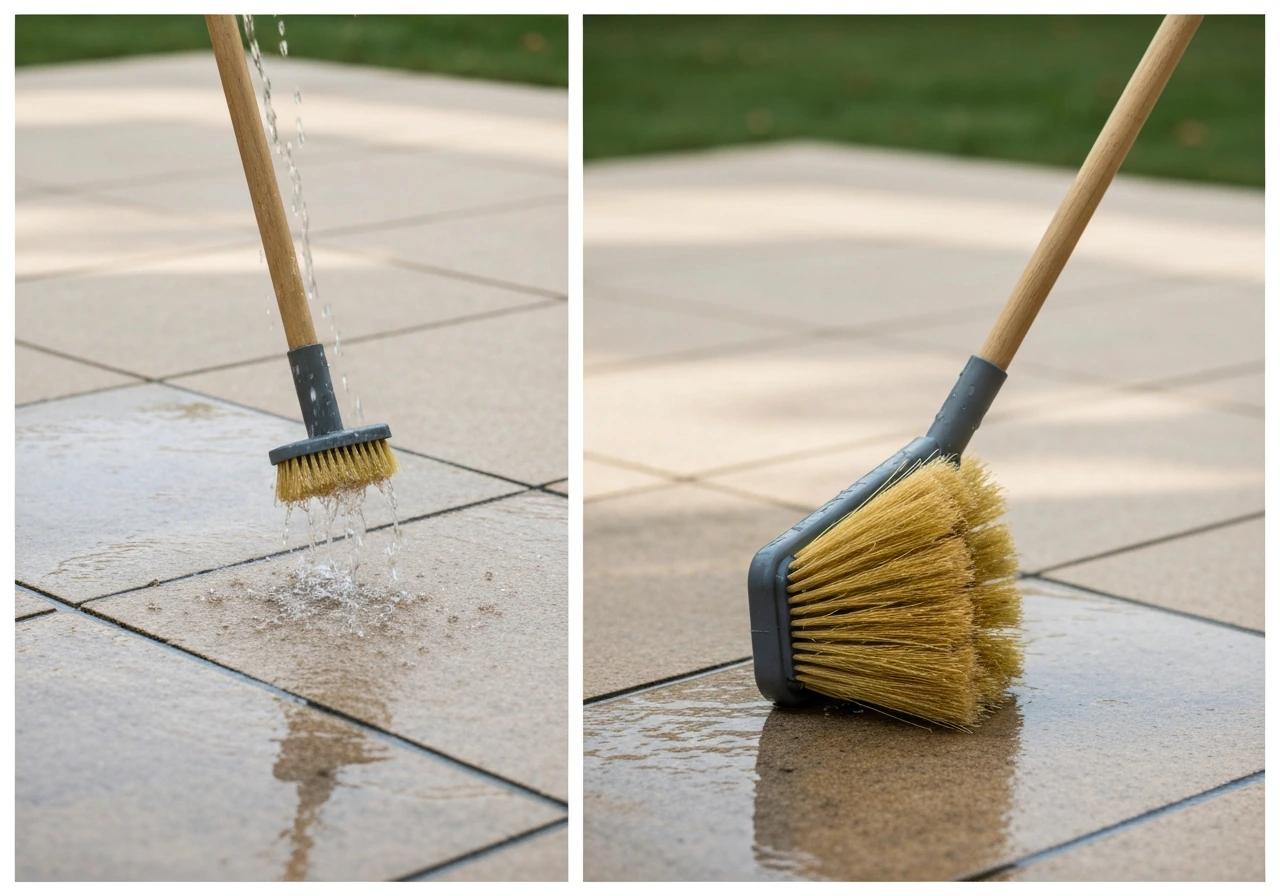
A decent patio broom lasts years if you store and clean it properly. Most people just lean it against the wall bristles-down, which is exactly the wrong move. Storing a broom with weight on the bristles deforms them over time, and once they're bent or fanned out, the broom becomes dramatically less effective. Store it hanging or upright with the bristles in the air, off the ground.
Keep it out of direct sunlight when not in use. UV exposure weakens synthetic bristles and degrades the handle finish faster than regular use does. If you're storing the broom outside in a patio storage cabinet or shed, make sure it's away from pooling water. If you must store it outdoors, cover it with a waterproof tarp. The Ironcraft maintenance guidance makes the same point: dry storage is non-negotiable for bristle longevity, and any applied weight on the head speeds up deformation.
Clean your broom regularly, especially after sweeping grit, sand, or mud. Shake out loose debris first, then rinse the bristles with a hose and let the broom dry completely before storing it, bristles up or hanging. If you want to make that rinse easier and more consistent, the best patio garden hose for outdoor cleaning will deliver solid water pressure and easy handling rinse the bristles with a hose. For natural-fiber brooms like tampico, this drying step matters: storing a wet tampico broom causes swelling and mildew. If bristles have become kinked or bent from an accidental lean-against-the-wall storage session, Redecker's care guidance suggests letting the brush dry overnight in a hanging position, which can partially restore the shape.
Every few months, run your hand along the bristles and look for fibers that are broken, bent outward, or clumped with debris. Remove any debris caught between bristle rows with your fingers or a stiff comb. If the outer bristles have fanned out significantly, the broom is losing sweep efficiency and it's time to replace the head (if it's a replaceable-head model) or the whole broom. A broom that's past its prime doesn't just do a worse job: it also makes you work harder and longer to get the same result.
If your patio maintenance routine goes beyond sweeping, it's worth pairing your broom with other tools suited to specific jobs. A patio brush works well on tight grout lines and textured surfaces where a push broom can't apply enough focused pressure. An outdoor vacuum handles the fine grit and pet hair that even the best broom leaves behind.
If you also want to tackle weeds without damaging your patio surfaces, pair your broom with the best patio weeding tool for the material you have best broom. For those times when sweeping is not enough, the best outdoor vacuum for patio spaces can pick up fine grit and pet hair without leaving residue.
And if joint weeds are a recurring issue between your pavers, a dedicated patio weeding tool saves you from trying to use your broom for a job it wasn't designed for.
FAQ
Can I use a wire-center broom on textured stamped concrete?
Generally no. Ultra-stiff wire-center brooms can scratch decorative or heavily textured stamped concrete over time, especially where grit is trapped in the texture. A medium-stiff polypropylene push broom, or a softer tampico option if dust is the main issue, is usually safer for long-term appearance.
What’s the safest way to sweep sand or fine grit without making a mess?
Choose flagged-tip or finer, softer bristles (tampico or a fine synthetic blend) and sweep with short, controlled strokes. Long, fast pushes tend to scatter sand into a wider area, so expect slower passes and keep the broom angle consistent rather than fully flat.
If my patio has lots of grout lines, should I pick stiffer bristles even if I’m worried about scratching?
Stiffer bristles help push debris out of joints, but on softer natural stone you still need gentler action. A practical approach is medium-stiff synthetic bristles (polypropylene or a blend) for pavers, and for natural stone use softer horsehair or tampico, then follow up with a grout-focused patio brush in the rough spots.
Do I need both a push broom and an angle broom?
Usually, yes if you have corners, planters, steps, or built-in seating. A push broom handles the open field efficiently, while an angle broom helps you apply downward pressure into irregular edges and lift pet hair or debris that gets stuck near walls and patio cracks.
Why does my broom stop picking up dust after a few uses?
Most often, budget bristles flare out or fanning develops at the tips, which reduces capture ability. Check for flagged tips versus blunt-cut ends, and if you notice bristles spreading or staying bent, the broom is effectively losing sweep efficiency and may need replacement sooner than expected.
Should I rinse a natural-fiber broom like tampico with a hose after every use?
You can rinse if there’s grit or residue, but drying is critical. Rinse briefly, shake off excess water, then dry completely with bristles hanging or upright. Leaving a tampico broom damp or storing it bristles-down can lead to swelling, mildew, and weakened fibers.
How do I store my patio broom so it doesn’t warp?
Avoid leaning it against a wall with the weight on the bristles. Store it hanging or upright with the bristles in the air and off the ground. Also keep it out of direct sun and away from pooling water in storage sheds to preserve bristle stiffness and handle finish.
What sweep width should I look for if an online listing includes the mounting bracket?
Compare the listed sweep width to the actual bristle span shown in photos, and read reviews that mention the effective coverage. If the listing counts the bracket, your real sweep area can be 1 to 2 inches less, which matters when you’re trying to clear a large patio efficiently.
Can a patio broom damage composite or deck boards?
It can if you sweep against the grain or use overly stiff bristles. Use medium-stiff bristles and sweep along the direction of the boards, applying steady pressure without digging into the gaps. If debris builds up in seams, consider a dedicated patio brush for focused work instead of forcing it with the push broom.
Is a broom better than a leaf blower on a patio?
A leaf blower clears the open area faster, but a broom is better for details like furniture feet, corners, and built-in seating where leaves and grit get trapped. If you switch tools, do a broom pass afterward to remove what the blower cannot reach.
What should I do if my broom has replaceable heads?
If the head is replaceable, inspect only the bristle block first after a few seasons, especially the edge bristles and tip shape. When bristles fan outward or become kinked, swapping the head can restore performance without replacing a handle that’s still straight and solid.
How can I remove pet hair that’s stuck in patio cracks?
Use an angle broom and apply more downward pressure with forward strokes to lift hair rather than pushing it around. For heavy shedding or ongoing buildup, pair the broom with a patio vacuum for weekly maintenance, since hair often remains in micro-cracks even after sweeping.