
May Awning & Patio Company is a licensed Portland contractor located at 5220 NE Columbia Blvd, Portland, OR 97218, and they specialize in aluminum awnings, patio covers, sunrooms, screenrooms, and patio enclosures. If you landed here after searching for them, you're looking at a full-service local installer who can take you from a basic retractable fabric awning all the way up to an insulated aluminum roof cover or a fully enclosed screenroom. This guide walks you through exactly what they offer, how to pick the right system for Portland's real weather, what it will cost, and how to hire them (or anyone else) without getting burned.
May Awning and Patio Portland Guide to Choosing the Right Cover

Elise Prescott
16 Jun 2026
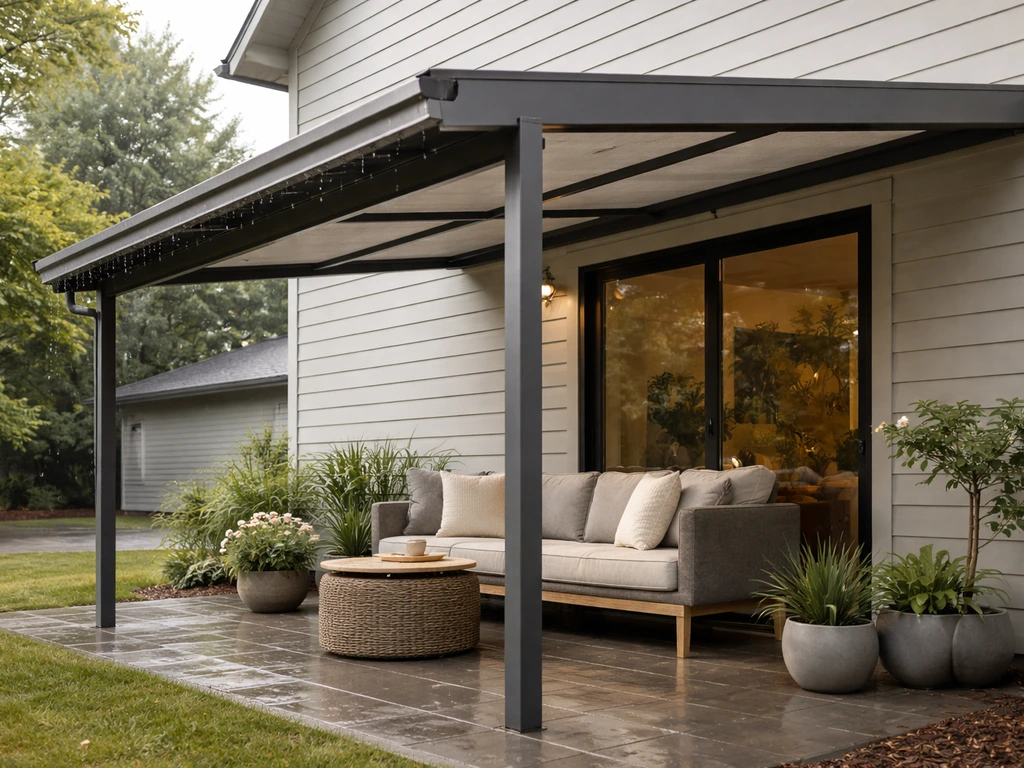
What May Awning & Patio actually offers Portland homeowners
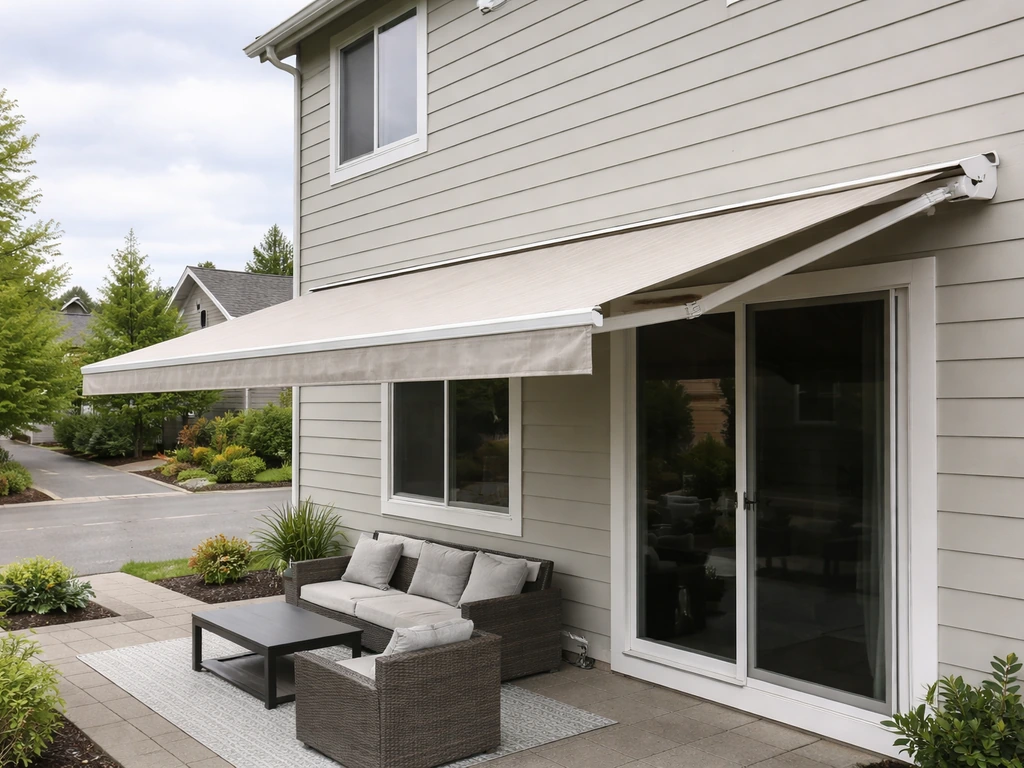
Based on their BBB profile and HomeAdvisor listings, May Awning & Patio covers a wider range of products than a lot of general contractors do. Their lineup includes retractable fabric patio covers, solid roof patio covers, insulated roof patio covers, lattice roof patio covers, and full patio enclosures and screenrooms. That's important to understand upfront because the word "awning" undersells what they can actually build.
If you want something that handles Portland rain seriously, the solid or insulated roof options are a much better fit than a fabric retractable. If you want a livable outdoor room year-round, a screenroom or enclosure is worth asking about. Their Oregon CCB license number is #127345, which you can verify directly through the Oregon Construction Contractors Board before you sign anything.
Choosing the right cover for Portland's actual weather
Portland's climate is not subtle. About 88% of the annual precipitation falls between October and May, and the city averages around 37 inches of rain per year. Summers are genuinely sunny, with UV index levels hitting the high or very high range (averaging around 7.5 on the UV scale from June through August) and very little rain in July and August. What that means practically is that your patio cover needs to handle two very different jobs: keeping you dry from October through May, and keeping you shaded and cool from June through September.
A retractable fabric awning handles the summer sun job well. You extend it in the afternoon, get shade, and retract it when the wind picks up. But fabric retractables are water-resistant at best, not waterproof. If you need patio awnings that keep rain out, focus on systems labeled waterproof and choose a solid or insulated roof solution instead of fabric retractables are patio awnings waterproof.
Sitting under one during a steady Portland November rain is uncomfortable, and leaving a wet retractable extended is a fast way to get mildew. If you want to use your patio more than five months a year, you need to think beyond fabric.
A solid aluminum or insulated patio cover lets you sit outside in a light drizzle or work from a patio table year-round, which is genuinely useful in a city where it drizzles nine months out of twelve.
Awning vs. pergola vs. full patio cover: which one fits Portland
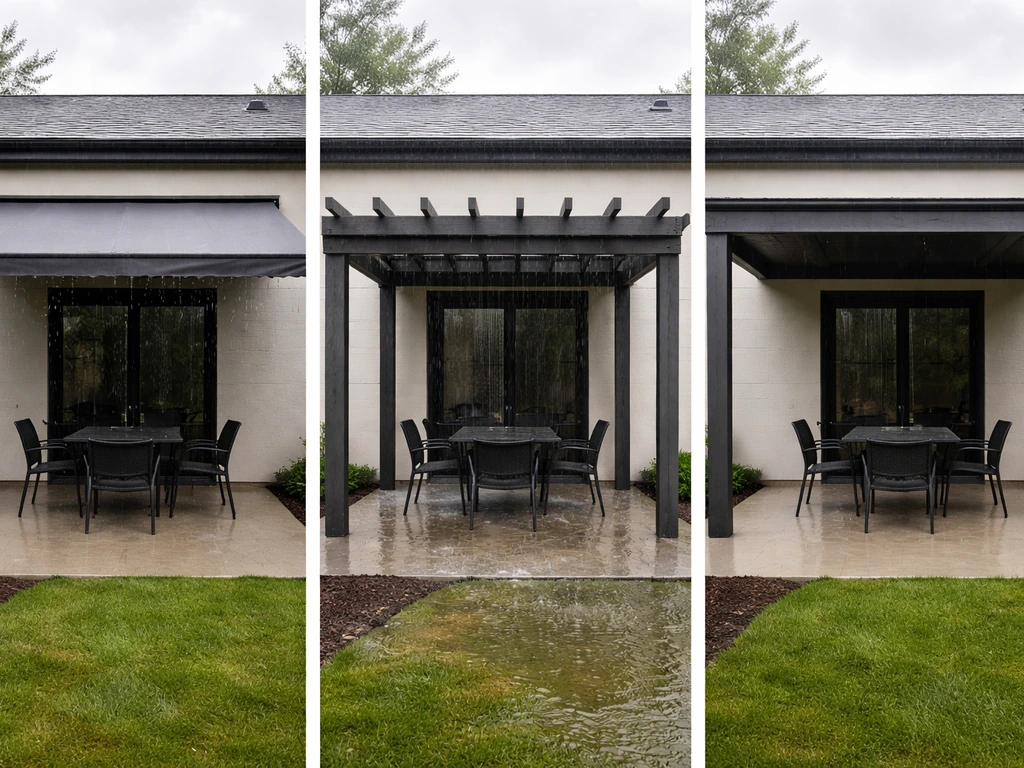
These three options are not interchangeable, and the Portland climate makes the differences matter more than they would somewhere like Phoenix. If you're shopping for shade, you may also hear about offset patio umbrellas and how they differ from wall-mounted awnings and full patio covers what is an offset patio umbrella.
| Cover Type | Rain Protection | Sun/UV Control | Year-Round Use | Portland Fit |
|---|---|---|---|---|
| Retractable fabric awning | Light/no rain only | Excellent when extended | Summer-focused | Good for summer shade, limited in wet season |
| Pergola (open lattice) | Minimal | Partial (depends on coverage) | Limited | Needs add-on roof covering to be useful in rain |
| Lattice roof patio cover | Partial | Good | Moderate | Better than pergola, still lets in some rain |
| Solid aluminum patio cover | Full rain protection | Good with right pitch/overhang | Year-round | Strong fit for Portland wet season |
| Insulated aluminum patio cover | Full rain protection | Excellent, reduces heat transfer | Year-round | Best all-weather option for Portland |
| Polycarbonate/acrylic panel cover | Full rain protection | Good, allows diffused natural light | Year-round | Great for light-loving Portland homeowners |
| Screenroom or enclosure | Full protection | Full control with screens/panels | Year-round | Best for extending living space in all seasons |
The honest recommendation for most Portland homeowners is a solid or insulated aluminum patio cover, or a polycarbonate panel cover if you want natural light. A pergola alone is a summer-only structure in the Pacific Northwest unless you add a polycarbonate or metal roof panel system on top of it. Retractable fabric awnings are a great secondary option or a good entry point if budget is the primary concern, but go in knowing you're not getting a rain solution. If you want to know more about how waterproof different awning types actually are, that's worth reading separately before you decide.
Materials side by side
Each material has real trade-offs in Portland's environment. Here's how the main options stack up in practice.
| Material | Durability in Rain/Wind | Maintenance | Warranty (typical) | Cost Range (installed) |
|---|---|---|---|---|
| Aluminum (solid or insulated panel) | Excellent | Low — wipe down annually | 15–20+ years structural, varies by brand | $20–$50/sq ft installed |
| Fabric (retractable awning) | Water-resistant only, retract in wind | Moderate — seasonal cleaning, mildew watch | 5–10 years (e.g., SunSetter 5–10 yr limited) | $600–$6,000 depending on size |
| Polycarbonate/acrylic panels | Good, handles rain well | Low — soap and water cleaning only | 30-year non-yellowing warranty (e.g., ACRYLITE) | $15–$35/sq ft installed |
| Wood pergola (open) | Poor without added roofing | High — seal/stain every 2–3 years | Varies, typically none from manufacturer | $3,000–$10,000+ depending on size |
| Steel frame patio cover | Excellent | Low to moderate — watch for rust at joints | Varies by fabricator | $25–$60/sq ft installed |
Polycarbonate panels like ACRYLITE are a popular option here because they let diffused light through (Portland skies are already overcast a lot of the year, so blocking all natural light is a real quality-of-life issue) while still providing full rain protection. The 30-year non-yellowing warranty from ACRYLITE is a legitimate selling point. For pure weather performance and minimal upkeep, insulated aluminum is hard to beat. Fabric retractables from quality brands like Sunbrella-covered systems are durable and look great when maintained, but they do require more seasonal attention.
What drives the cost in Portland
Portland is not a cheap market for home improvement work, and patio covers are no exception. Covered patio costs are commonly expressed as square-foot pricing, and examples include retractable awning cover ranges such as about $600 to $6,000 plus solid aluminum patio cover installed rates around $20 to $50 per square foot square-foot pricing for covered patios. Several factors push the price up or down more than most homeowners expect.
- Size: This is the biggest variable. A 10x12 fabric retractable awning can start around $600 on the low end and run up to $3,000 or more installed. A 200-square-foot solid aluminum patio cover at $20–$50/sq ft puts you in the $4,000–$10,000 range installed.
- Attachment type: Freestanding structures cost more to build than wall-attached covers because they need their own footings and posts. Attaching to the house saves money but requires a proper ledger connection that meets Oregon code.
- Roof attachment/engineering: If the cover attaches to your home's roof or requires modifying the fascia, expect additional structural work and potentially an engineering review.
- Motorization: Adding a motorized retraction system to a fabric awning adds $300–$800 or more depending on the motor and remote/smart home integration.
- Permits: Portland requires a permit for any attached, open-sided roofed patio cover over 200 square feet. Permit and plan review fees apply, and your installer should handle this, not you.
- Upgrades: Gutters and drainage systems, LED lighting, ceiling fans, misting systems, side privacy panels, and outdoor speakers all add cost but significantly improve year-round usability. In Portland, gutters on a patio cover are almost essential to keep rain runoff from creating a waterfall off the edge.
- Labor rates: Portland-area labor is higher than national averages. A contractor with a valid Oregon CCB license and insurance will cost more than an unlicensed handyman, and that cost differential is worth it.
Budget roughly $5,000–$15,000 for a professionally installed solid aluminum patio cover in Portland at a common size (150–300 sq ft), depending on material grade and upgrades. Screenrooms and sunrooms can run $15,000–$40,000 or more. Retractable fabric awnings sit lower at $1,500–$5,000 installed for most residential sizes. Get at least two quotes and make sure each quote includes permits, labor, materials, and any structural work separately itemized.
DIY or hire a Portland installer?
Here's the honest answer: in Oregon, anyone doing construction work for compensation must be licensed through the CCB. That applies to the person you hire, not to you working on your own home. So if you want to install a small fabric awning yourself on your own house, Oregon law doesn't prohibit it. But whether it's a good idea is a different question.
A DIY retractable awning installation is realistic for a handy homeowner. Most retractable fabric systems come with installation instructions and mount to a wall or fascia with standard hardware. If you're searching for manual patio awnings UK options, look for systems that include clear mounting instructions and weather-resistant materials. You need to locate solid structural backing (not just siding), drill properly, and follow the manufacturer's instructions for leveling. Errors here cause the awning to rack, retract unevenly, or pull away from the wall in a windstorm. That's a bad day, but it's fixable.
Anything beyond a basic wall-mounted fabric awning gets complicated fast. Solid patio covers require proper footings for posts, a correctly sized ledger board attachment to the house, flashing to prevent water intrusion at the wall connection, and in many cases a permit. Oregon's residential code requires patio covers to handle dead loads, a minimum 10 psf live load, and local wind loads. Getting that wrong means structural failure in a storm. Screenrooms and sunrooms involve additional complexity around framing, screens, and potentially electrical work. For anything structural, the answer is: hire a licensed Oregon CCB contractor, verify their license on the CCB website, and confirm they're pulling the permit.
What to ask before hiring, and red flags to watch for
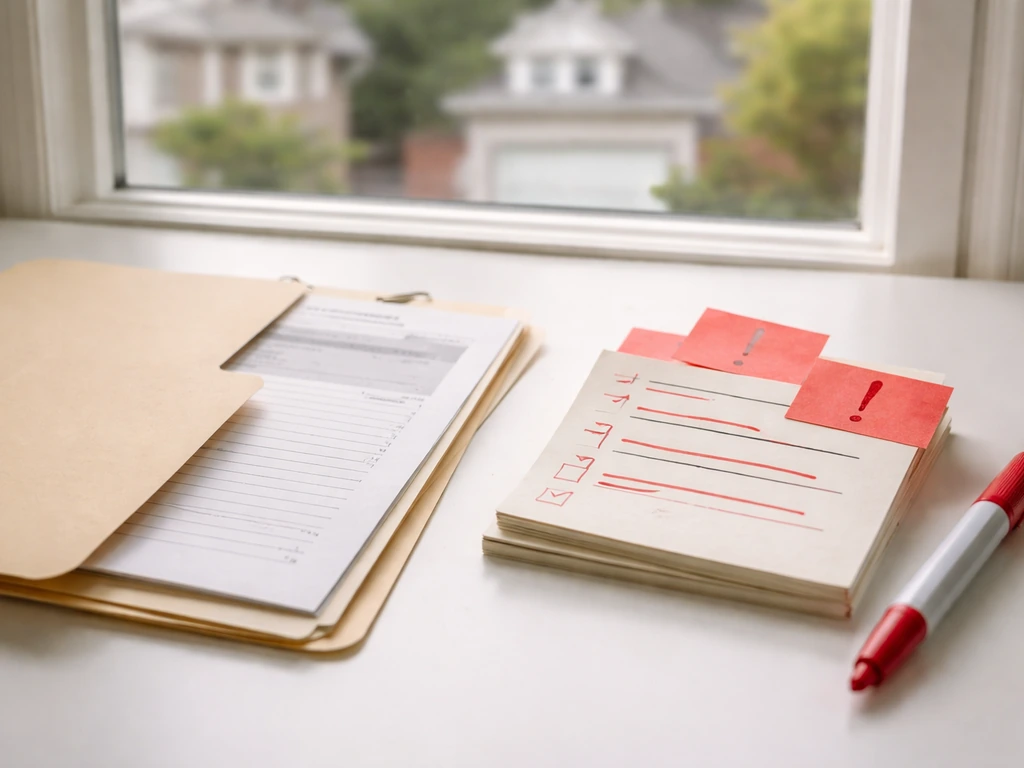
Whether you're calling May Awning & Patio or any other Portland contractor, run through this checklist before you sign a contract.
- Ask for their Oregon CCB license number and verify it at the CCB website before the meeting ends. May Awning & Patio's is #127345. Any legitimate contractor will give you this without hesitation.
- Confirm they carry current general liability insurance and workers' compensation. Ask for a certificate of insurance, not just a verbal confirmation.
- Ask who pulls the permit. For any attached patio cover over 200 sq ft in Portland, a permit is required. If the contractor says 'you don't need one' for a large attached structure, that's a red flag.
- Ask for the warranty in writing, broken into two parts: the manufacturer's material warranty (e.g., 30 years on ACRYLITE panels, 5–10 years on fabric) and the contractor's labor/workmanship warranty. These are different. A good contractor will offer at least 1–2 years on labor.
- Ask for references from Portland-area jobs done in the last two years, specifically for the type of project you're getting. A company that does great awnings may have less experience with insulated roof covers.
- Ask for a timeline and a clear project start date in the contract. Vague 'a few weeks out' answers should be pinned down in writing.
- Get an itemized quote showing materials, labor, permit fees, and any subcontractor work separately. A lump-sum quote makes it hard to compare bids or identify where costs are coming from.
- Ask how they handle water intrusion at the ledger connection. Any contractor who doesn't immediately talk about flashing and caulking at this point is skipping an important detail.
- Check their BBB profile and Google reviews specifically for mentions of follow-up service. Installation problems that were handled promptly are fine. Installation problems that were ignored are a serious warning sign.
Common red flags
- No CCB license number, or they tell you licensing 'isn't required for this type of job'
- Asks for more than 50% upfront before work starts
- Pushes you to skip the permit to save money and move faster
- Gives you only a verbal quote and resists putting it in writing
- Can't provide references from completed Portland-area projects
- Has no fixed business address or operates only through a mobile phone number
Keeping your patio cover in good shape through Portland winters
Portland winters are wet and mild, not harsh. You won't typically deal with heavy snow loads on a patio cover, but you will deal with sustained moisture, moss and algae growth, leaf debris, and occasional wind events. The maintenance routine is straightforward if you stay on top of it annually.
For fabric retractable awnings
- Clean the fabric at least once a year, ideally in early fall before the wet season starts. Use a mild soap solution and a soft brush; Sunbrella recommends cleaning mildew stains with a diluted bleach solution before rinsing thoroughly.
- Let the fabric dry completely before retracting and storing for an extended period. Storing wet fabric causes mildew even on mildew-resistant materials.
- Retract the awning during high winds. Most residential retractable awnings are not designed for sustained wind loads above 25–30 mph.
- Inspect the mounting hardware every fall. Look for loosening bolts, cracks in the wall anchor points, and any rust on metal components.
- If the awning is motorized, check the motor and remote function at the start of each season, and make sure the motor housing is dry before winter sets in.
For aluminum and polycarbonate patio covers
- Clear leaves and debris from the roof surface and gutters at least twice a year: once in November after leaf fall, and once in March. Debris traps moisture and accelerates moss growth.
- Rinse the surface with a garden hose and mild soap annually. For polycarbonate/acrylic panels, use lukewarm water and a soft cloth only; avoid abrasive materials or dry wiping, which scratches the surface and reduces clarity over time.
- Inspect flashing and caulking at the wall connection every year. Portland's freeze-thaw cycles, even mild ones, can work caulk loose over time. Re-caulk any gaps immediately to prevent water intrusion into the wall.
- Check post bases and footings for signs of moisture damage, wood rot (if wood posts are used), or concrete cracking.
- If moss appears on the cover surface, treat it with a diluted white vinegar solution or a commercially available moss killer formulated for roofing surfaces. Do not use pressure washing on polycarbonate panels.
- Check all fasteners and connectors annually and tighten any that have loosened due to thermal expansion and contraction.
A well-maintained aluminum or polycarbonate patio cover in Portland should last 20–30 years with minimal issues. The fabric on a retractable awning typically needs replacement every 8–15 years depending on sun exposure and maintenance quality. Plan for that cost when you're budgeting the original installation.
Your practical next steps
Start by calling May Awning & Patio and asking for a site visit and itemized quote. Tell them specifically whether you want year-round use (which points to solid aluminum or insulated covers) or primarily summer shade (where a fabric retractable makes more sense). If you're comparing options, looking for quality awnings and patios in Portland helps ensure you get the right materials and installation for your space. Confirm they'll handle the permit if your project requires one.
While you're waiting for that quote, get one or two additional quotes from other CCB-licensed Portland contractors so you have a baseline for comparison. Look at their BBB profile and Google reviews for post-installation service quality, not just installation quality. Once you have quotes in hand, compare them line by line on materials, labor, permit costs, warranty terms, and timeline. Then make a decision based on the full picture, not just the bottom-line number.
FAQ
Is a “waterproof” fabric retractable awning actually waterproof in Portland rain?
In Portland, fabric can resist water but it is rarely truly waterproof like a solid roof. If you want to block sustained November rain, prioritize solid aluminum or insulated covers, or ask for the specific water-test details and acceptable water exposure duration for the fabric system.
What roof material is best for both rain and UV when choosing a may awning and patio portland setup?
For mixed-season use, insulated aluminum or solid aluminum typically handles rain better, while polycarbonate panels help with daylight and still shed water. If your goal is year-round comfort, ask whether the system includes UV-resistant coatings and how the panels are sealed at joints.
Do I need a permit for a patio cover or screenroom in Portland?
Many patio covers require permits when there is structural work or roof/framing changes. Your contractor should confirm based on the exact design, add permit fees to the quote, and provide the permit number or plan approval timeline before work starts.
Can I install a retractable awning DIY, and what are the biggest mistakes to avoid?
DIY is most realistic for small, wall-mounted retractable units, but the common failure points are insufficient structural backing, improper ledger alignment, missing flashing, and uneven leveling that causes uneven retraction. Plan for a helper, use manufacturer specs for fastener types, and don’t rely on siding alone.
How do I choose between a patio cover and a screenroom if my priority is keeping leaves and debris out?
A screenroom gives you the most full-enclosure protection, including keeping out leaf debris and reducing windblown mess. A roof-only patio cover still leaves open sides, so you may want skirt panels, side screens, or gutters to manage falling debris and splashback.
Will a pergola work for Portland if I want more than summer use?
A pergola alone is usually summer-only. If you want year-round use, you typically need a covered top system such as polycarbonate or metal roof panels, plus proper drainage and sealing where panels meet the pergola structure.
How should I compare contractor quotes beyond the total price for may awning and patio portland projects?
Compare line items for framing material grade, panel thickness or insulation type, flashing and sealants, permit handling, electrical scope (if any), warranty length, and the projected installation timeline. A low bid can hide costs like structural reinforcement or additional lead times for custom materials.
What maintenance should I plan for after installation in Portland?
Expect annual cleaning to prevent algae and debris buildup, inspection of seals around wall connections, and checks for proper drainage. For retractable fabric, plan periodic care and budgeting for fabric replacement roughly every 8 to 15 years depending on sun exposure and upkeep.
How do I verify a contractor is properly licensed before hiring?
Verify the Oregon CCB license on the official CCB lookup, confirm the license covers the type of work you’re hiring them for, and ensure they state who is pulling the permit if required. Do not rely only on business listings or review sites.
What size patio cover should I request measurements for, to avoid coverage surprises?
Ask the contractor to confirm the effective coverage area from the intended attachment point, account for roof overhang and slope, and ensure it aligns with where you actually sit or place furniture. If you entertain, consider extra clearance to reduce wind-driven splash on the outer edge.