
Patio awnings in the UK cost anywhere from around £300 for a basic off-the-shelf manual model up to £5,000 or more fully installed for a premium bespoke cassette awning. Most homeowners end up spending between £1,500 and £3,500 once you factor in a quality made-to-measure awning, professional installation, and any extras like side screens or sensors. That's a wide range, but the good news is that once you know what drives the price, a fair quote becomes pretty easy to spot.
How Much Are Patio Awnings in the UK A Pricing Guide

Elise Prescott
20 Jun 2026
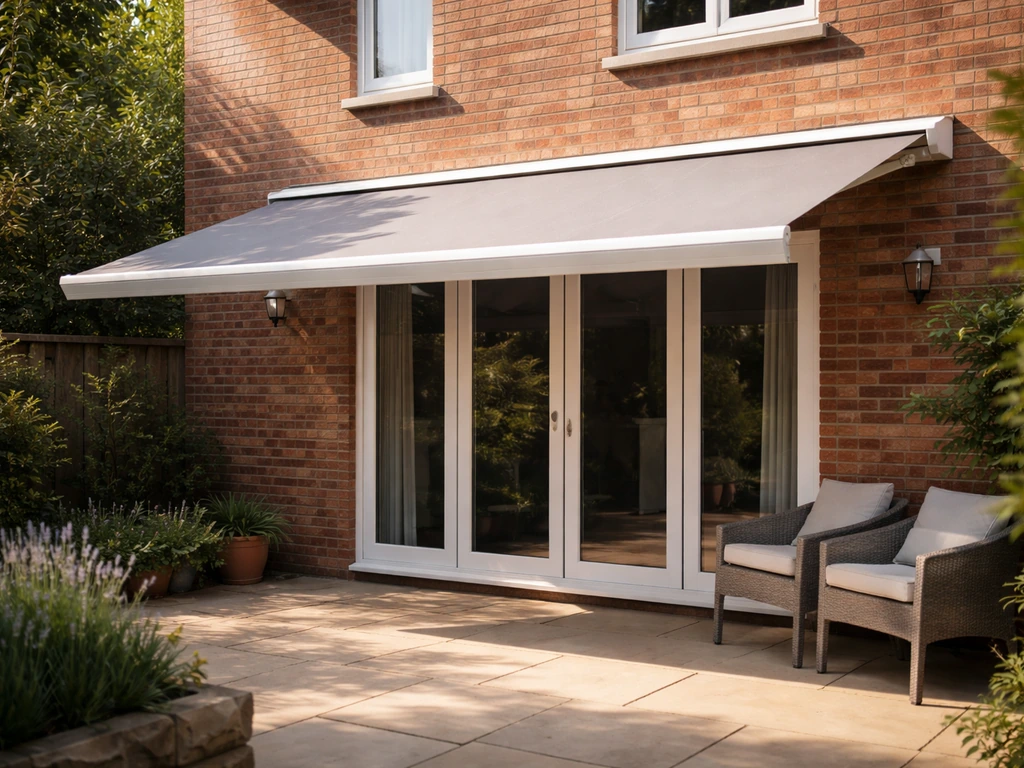
UK patio awning price ranges: budget to premium
The honest answer to 'how much does a patio awning cost in the UK' depends heavily on whether you're buying off-the-shelf or going bespoke, and whether installation is included in the price. Here's how the market actually breaks down right now.
| Awning Type | Typical Product Price | Installed Price (approx) | Notes |
|---|---|---|---|
| Basic manual, off-the-shelf | £300–£500 | £450–£1,000 | Smaller sizes (3m x 2.5m), simple open-arm style |
| Mid-range manual cassette | £600–£1,200 | £1,200–£2,000 | Made-to-measure, aluminium frame, decent fabric |
| Electric cassette (mid-range) | £1,200–£2,000 | £1,800–£3,000 | Motor included, remote control, 4m+ widths |
| Premium bespoke electric cassette | £2,500–£4,000+ | £3,500–£5,500+ | Full cassette, top-grade fabric, sensors, warranty |
| Full supply-and-install (Caribbean Blinds style) | N/A (bundled) | From £3,995 inc VAT | Bespoke, installation and 5-year guarantee included |
To give you some concrete anchors: Awning Man sells a manual 3.0m x 2.5m standard awning for £380 including UK delivery (installation not included). A full cassette electric 4m x 3m model from the same supplier is £1,490 for the product alone. At the premium end, a Markilux 990 cassette awning from Roché starts from £2,599 for the product, with installation on top. Caribbean Blinds bundles everything from £3,995 including VAT, installation, and a 5-year guarantee. So yes, you really can spend £380 or £4,000-plus, and both can be perfectly reasonable choices depending on what you need.
What actually drives the cost up (and down)
When a quote comes back higher than you expected, it's usually one of four things: size, awning type and design, frame material, or fabric grade. Understanding each one helps you push back on a quote or justify a higher spend.
Size and projection
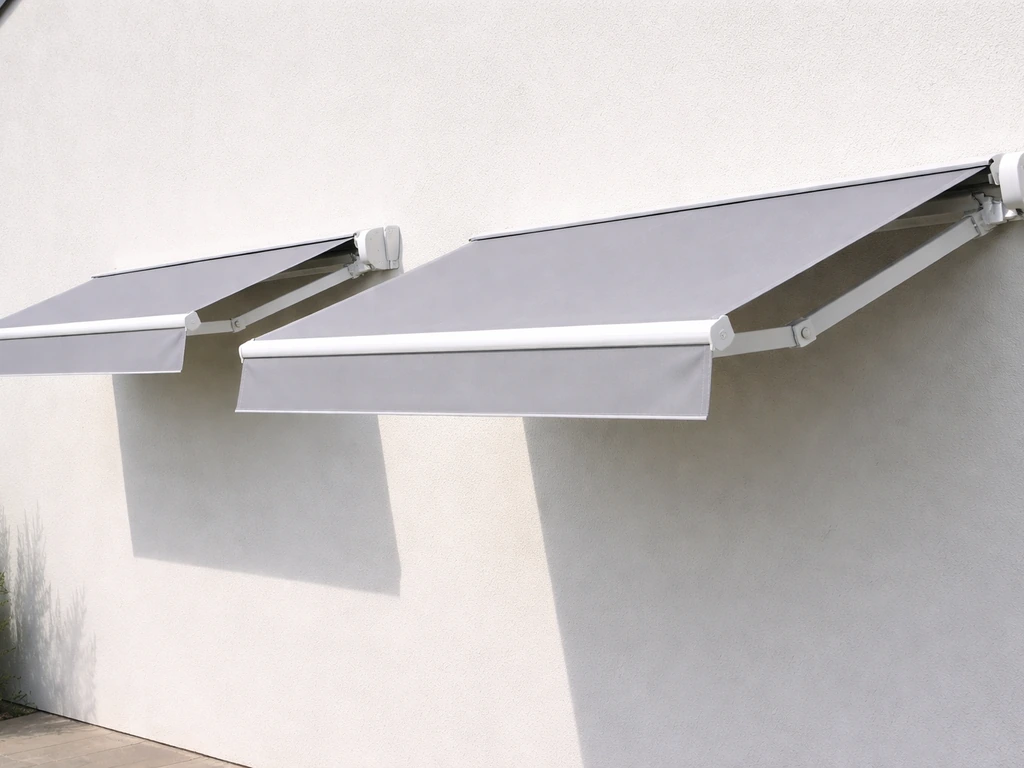
Width and projection (how far the awning extends outward from the wall) are the two dimensions that drive fabric and frame costs. If you’re comparing may awning and patio portland options, use these dimensions to keep quotes consistent across different suppliers Width and projection. Most standard retractable awnings in the UK run from about 2.5m to 5m wide, with a projection of 2m to 3m. Every step up in size increases the frame specification required, the fabric area, and often the number of mounting fixings needed. A 6m wide awning doesn't cost twice as much as a 3m model, but it's easily 50 to 70 percent more.
Awning type: open, cassette, or full cassette
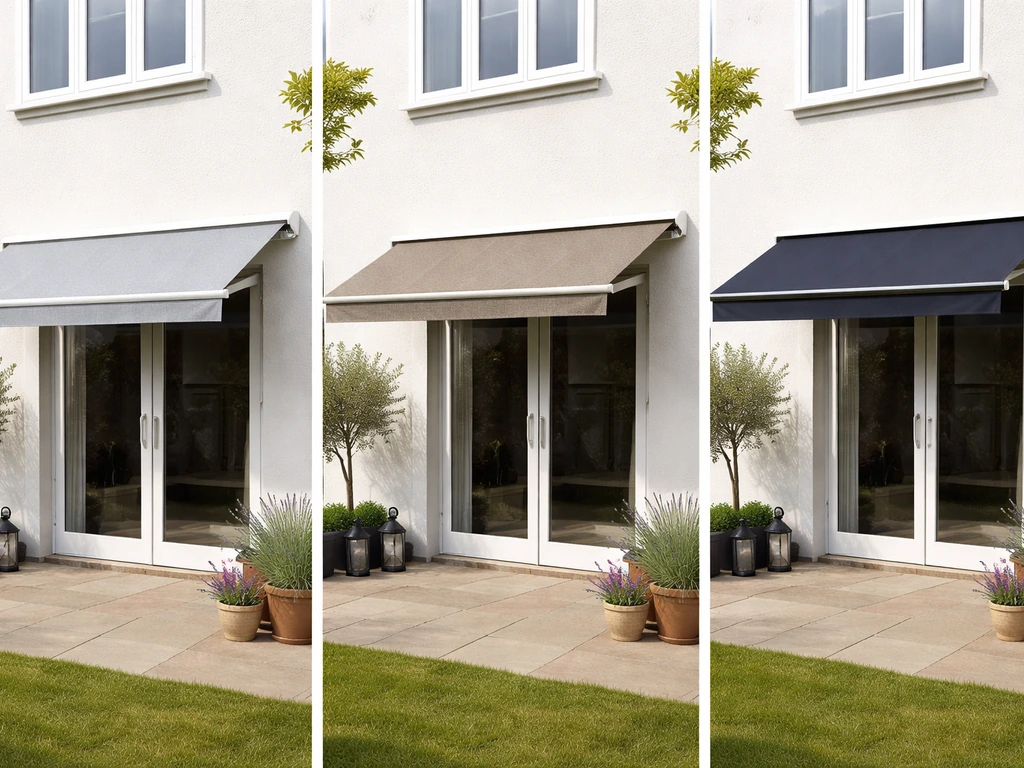
Open-arm awnings (where the fabric and arms are exposed when retracted) are the cheapest option. Cassette awnings partially enclose the mechanism, while full cassette designs close up entirely, protecting the fabric and motor when not in use. In the UK climate, a full cassette is genuinely worth the extra money because it keeps rain and debris off the fabric, extending its life considerably. Expect to pay roughly 30 to 50 percent more for a full cassette versus an open design of the same size.
Frame material
Most quality UK patio awnings use powder-coated aluminium frames, which are lightweight, corrosion-resistant, and long-lasting. Steel frames exist at the budget end but are heavier and more prone to rust over time. If a quote doesn't specify aluminium, ask directly. The frame finish (powder coat colour options) can add a small premium too, usually £50 to £150 for non-standard RAL colours.
Fabric grade and performance
Fabric is where the real quality difference hides. If you want to compare quality awnings and patios side-by-side, look at fabric grade, frame material, and wind resistance as well as price. Entry-level polyester fabrics do the job for a season or two but fade and degrade quickly in UV. Mid-grade solution-dyed acrylic (brands like Sunbrella or Dickson) is far more durable and typically carries a 5-year fabric guarantee. Premium awnings like the Markilux 990 use acrylic fabric rated water-resistant, dirt-proof, and UPF 50+. That spec matters in the UK where you'll get both strong sun in summer and rain the rest of the year. Fabric upgrades typically add £100 to £400 to a mid-range awning depending on size.
Motorised vs manual: what the upgrade really costs
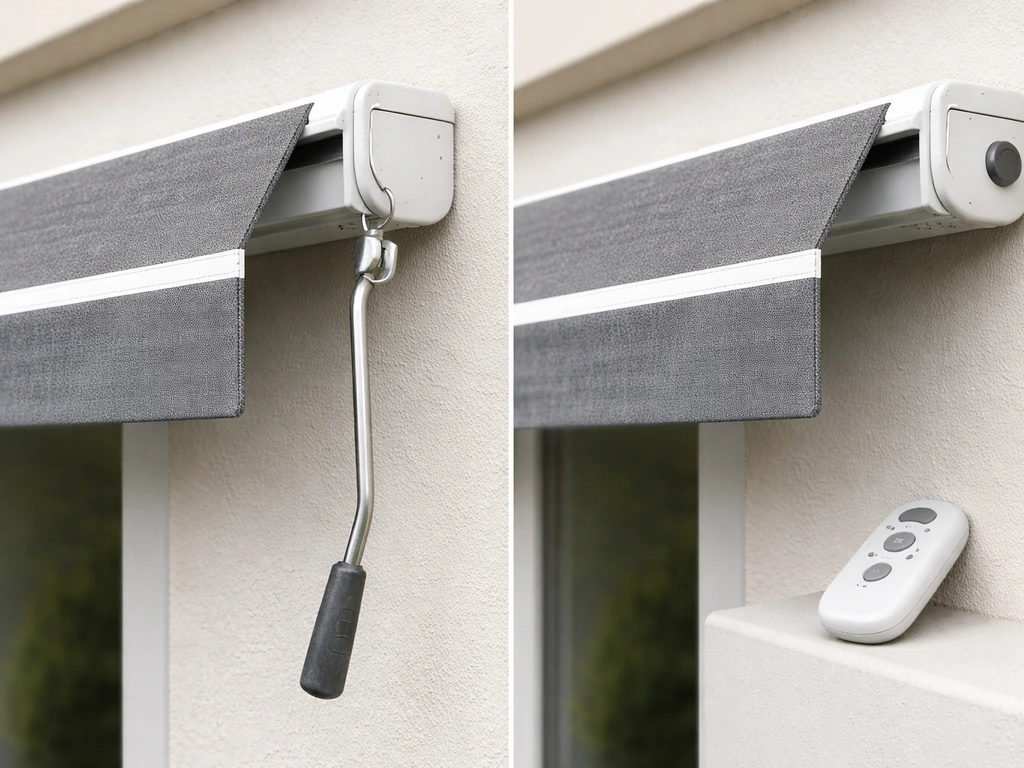
Going electric adds roughly £300 to £700 to the product price over an equivalent manual awning. For comparison: Awning Man's manual 3m x 2.5m is £380, while their electric full cassette in a larger 4m x 3m configuration is £1,490. The size difference accounts for some of that gap, but the motor and control system alone adds a meaningful chunk. For premium suppliers, electric operation with remote control is often the default on domestic ranges, with manual offered only where there's no convenient power supply.
Whether the upgrade is worth it depends on how you'll actually use the awning. If you want to extend and retract it multiple times a day, a motor makes it happen with a button press rather than a handle. For a large or heavy awning (anything over 4m wide), manual operation is genuinely hard work and motorisation is the practical choice. Electric awnings also open the door to smart add-ons like sun sensors and wind sensors (more on those below). On the other hand, if budget is tight and the awning will mostly stay out from April to September and come in for winter, a quality manual cassette is perfectly practical.
It's worth noting that wind sensors (such as the Somfy Eolis 3D RTS Wirefree) can automatically retract an electric awning when wind picks up, which is genuinely useful in the UK. However, these sensors don't protect against sudden squalls, so they're a helpful safeguard rather than a guarantee. Adding a wind sensor typically costs £100 to £200 on top of the motorised setup.
Installation and labour costs: hiring a pro vs DIY
Installation in the UK typically costs between £600 and £1,200 for a professionally fitted awning, depending on the product and the complexity of the job. If you're also considering an offset patio umbrella, the installation details can affect both the overall cost and the time it takes to set up safely installation in the UK. Roché quotes this range explicitly, and it aligns with broader market data showing installer day rates of around £500 or more for an awning fitter and a labourer together. Homehow's UK cost guide puts the typical fitting cost at £550 to £1,100 for off-the-shelf awnings, with bespoke installations running higher.
What makes one installation more expensive than another usually comes down to three factors: the mounting surface, access, and whether structural anchors are needed. Solid brick walls are the ideal mounting surface and straightforward to work with. Timber-framed walls, cavity walls, rendered surfaces, or any situation where the fitter needs to locate structural timbers or use specialist fixings will add time and cost. Bungalows can be a particular case: without a first floor above the patio, the awning often needs bespoke load-bearing brackets rather than standard wall fixings, which Caribbean Blinds specifically calls out as a cost driver. If you're in a bungalow, get this confirmed in your quote before you commit.
Should you DIY?
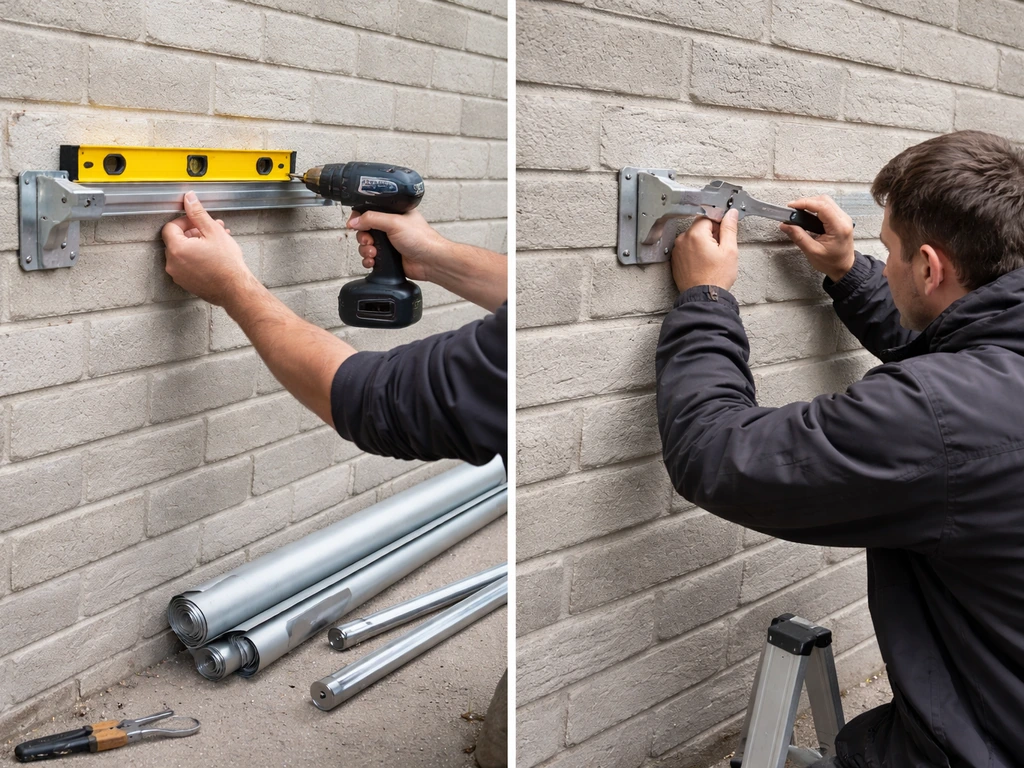
For a small, lightweight manual awning on a solid brick wall, a competent DIYer can handle the installation. The challenge is that awnings are heavier and more awkward than they look. A 4m wide retractable awning can easily need two people just to hold it in position while you fasten the brackets, and if you get the fixing positions slightly wrong, you're dealing with serious re-work. UK homeowners on forums like r/DIYUK regularly report that getting the installation right is harder than expected, and that the manufacturer warranty is often voided if professional installation isn't used. For any electric awning, cassette awning over 3m wide, or mounting on anything other than solid masonry, I'd recommend hiring a professional. The installation cost is real, but so is the risk of a poorly-fixed awning coming loose in autumn winds.
Add-ons and extras worth knowing about
The base awning price rarely tells the whole story. Here are the most common add-ons and roughly what they add to your total.
- Side screens or side panels: These extend sun and wind protection to the sides of your patio. Typically £150 to £400 per panel depending on size and whether they're fixed or retractable.
- Valance (front pelmet): A decorative fabric drop at the front of the awning that also provides a bit of extra shading. Usually included on mid-range and premium awnings, or a £50 to £150 upgrade on entry-level models.
- LED lighting strips: Integrated into the cassette or arms, useful for evening use. Expect £150 to £350 depending on the system.
- Sun sensor: Automatically extends the awning when sunlight reaches a set level. Around £100 to £200 fitted.
- Wind sensor (e.g., Somfy Eolis 3D): Triggers automatic retraction in strong wind. Around £100 to £200 fitted. Useful for UK conditions but won't protect against sudden gusts.
- Heating compatibility: Some awning arms are designed to accommodate patio heaters or infrared heaters mounted beneath. This is typically a design choice at quote stage rather than a direct add-on cost.
- Remote control upgrade or app connectivity: Often included with higher-end motors; standalone remote upgrades are usually £50 to £150.
- Extended warranty: Some suppliers offer 7 or 10-year warranty extensions. Worth asking about at quote stage.
It's also worth thinking about wind resistance class when comparing quotes, especially in exposed UK locations. Look for awnings tested to blank" rel="noopener noreferrer">EN 13561: Class 2 corresponds to Beaufort 5 (around 38 km/h) and Class 3 to Beaufort 6. A supplier who simply says 'wind resistant' without quoting an EN 13561 class isn't giving you a like-for-like comparison point. Ask for it explicitly.
How to get an accurate quote (and know if it's fair)
Getting an accurate quote starts with accurate measurements and a bit of preparation before the supplier visits. Here's how to approach it.
Measure before they arrive
Measure the width of the area you want to shade (the wall space available for mounting) and the depth of your patio from the wall outward. Note the height from the ground to where the awning will be mounted, as this affects the drop angle and usable headroom underneath. You'll also want to note the wall construction (brick, render, timber frame) and check whether there's a roof overhang above the mounting point. A roof overhang can actually be a benefit, offering the awning some natural weather protection and potentially reducing the need for a full cassette. Caribbean Blinds ask for a property photo before they even provide a budget estimate, which is a good indicator of how much mounting bracket choices affect the price.
Questions to ask every supplier
- Is installation included in this price, or is it quoted separately?
- What is the EN 13561 wind resistance class for this awning?
- What type of mounting brackets are included, and are bespoke brackets needed for my wall or property type?
- What fabric grade is used, and what is the fabric warranty?
- Is the motor (if electric) by a recognised brand like Somfy, and what is the motor warranty?
- What does the overall warranty cover, and is it parts and labour or parts only?
- Does the price include VAT?
- What is the lead time from order to installation?
- Is a site survey included before a final price is confirmed?
Comparing quotes like-for-like
The most common mistake when comparing awning quotes is not realising that one quote includes installation and the other doesn't. Always separate product price from installed price. A £1,800 supply-and-fit quote can be better value than a £1,200 product-only price once you add £600 to £1,000 for a fitter. Also check whether VAT is included (some trade-facing suppliers quote ex-VAT), what warranty is attached and whether it covers labour, and whether the fabric spec is equivalent. If one quote specifies acrylic fabric and another just says 'polyester,' those are not the same product at the same price.
A quick checklist for the UK climate
- Choose a full cassette design if your patio is exposed to rain and wind for most of the year (which is most of the UK).
- Check EN 13561 wind class is Class 2 minimum; Class 3 if you're in an exposed coastal or elevated location.
- Opt for solution-dyed acrylic fabric rather than polyester for durability and fade resistance.
- For anything over 3.5m wide, seriously consider motorisation to make daily use practical.
- If you're in a bungalow or have a non-standard wall, confirm bracket type before signing.
- Ask whether a free site survey is offered before the final price is fixed. Most reputable UK suppliers include this.
- Factor in ongoing costs: fabric panels typically last 8 to 15 years depending on quality and care, and replacement fabric for a mid-size awning runs roughly £200 to £600.
Planning permission is rarely needed for a wall-mounted patio awning, but it's worth confirming with your supplier if you're in a conservation area or have a listed building. Some suppliers will flag this during the site survey process, but it's better to check early so it doesn't delay your installation.
If you're still narrowing down your options, it's worth considering whether a manual awning would suit your needs before committing to electric, or whether an off-the-shelf model is enough versus a fully made-to-measure solution. The right awning for a compact urban patio is a different calculation from what suits a large south-facing terrace, and getting a couple of free site surveys from reputable UK suppliers is the fastest way to get from a budget range to an actual number you can plan around.
FAQ
How much are patio awnings in the UK if I only want a supply price (no installation)?
If you exclude fitting, you typically pay roughly £300 to £2,600 for the awning itself, but your exact number depends on cassette type and fabric grade. As a quick rule, manual open-arm models sit at the low end, while full cassette and higher wind-rating fabrics push the product-only price up, even before VAT and delivery.
What’s the typical total cost in the UK for a made-to-measure awning, supply and fit?
Most homeowners land around £1,500 to £3,500 for a quality made-to-measure setup with professional installation. Your total usually rises fastest when you go larger in width or projection, switch to a full cassette, and upgrade to solution-dyed acrylic with a formal fabric warranty.
Do I need a full cassette in the UK, or will a cheaper open-arm model be fine?
A full cassette is usually worth it in the UK because it keeps rain, debris, and leaves off the fabric between uses, which helps it last longer. If you mostly use the awning in good weather and retract it promptly, an open-arm or partial cassette can be adequate, but you should still confirm the fabric’s water resistance and UV durability.
How much extra should I budget for an electric motor and controls?
For most comparable sizes, electric operation commonly adds about £300 to £700 to the awning price, with larger or premium ranges potentially going higher. If power is not available near the mounting point, request an electrician quote too, because some installs assume a suitable supply location already exists.
Will a wind sensor fully protect my awning in storms?
It reduces risk by retracting automatically when wind reaches the sensor’s trigger, but it is not a guarantee against sudden squalls or extreme weather. Ask what system it’s compatible with and the sensor trigger logic, and still plan to manually retract or keep the awning under control for forecasted severe conditions.
What wind rating should I ask for, and why does it affect price?
Ask for an EN 13561 wind resistance class (for example, Class 2 or Class 3). Higher classes require stronger frames, better hardware, and sometimes different fabric tensioning, so expect noticeable price movement, especially on exposed sites.
How do mounting surfaces and access change the installation cost?
Installation cost often increases if the wall is not solid brick, if access requires scaffold or ladder work, or if structural anchors and special brackets are needed. If you’re on cavity walls, timber-framed walls, or rendered surfaces, ask the installer to specify the fixing type and anchor method in writing before you accept the quote.
Are bungalows more expensive for patio awning installation?
They often are, because there may be a need for bespoke load-bearing brackets instead of standard wall fixings when there is limited structure above the patio area. If you live in a bungalow, get confirmation during the survey that the proposed bracket solution is appropriate for your specific wall build-up.
Is DIY installation ever a good idea to save money?
For small, light manual awnings on solid masonry, DIY may be possible, but installation is still awkward and error-prone. DIY is more likely to go wrong with heavy cassettes, wider awnings (for example around 4m), or any non-standard wall, and it can affect warranty validity if the manufacturer requires professional fitting.
What are the biggest quote comparisons I should do to avoid paying for the wrong product?
Compare product and installed totals separately, confirm VAT inclusion, and match like-for-like specifications. Specifically ask for frame material (aluminium vs steel), fabric type (for example solution-dyed acrylic vs basic polyester), and the wind resistance class, because similar-looking awnings can be fundamentally different.
Does planning permission usually matter for patio awnings in the UK?
It is usually not required for a standard wall-mounted patio awning, but you should still confirm early if your property is in a conservation area or is listed. If permission is potentially needed, delays can affect your installation timeline even if the awning itself is otherwise straightforward.
What information should I prepare before booking site surveys to get a more accurate price?
Have the measured width and projection, the mounting height, and the wall material ready. Also note whether there is an overhang above the mounting point, because it can influence bracket choices and whether a full cassette is necessary. Photos of the patio area and wall construction help suppliers assess fixings quickly.