
Electric patio awnings typically cost between $2,500 and $6,000 installed for most homeowners, but the full range runs from about $1,500 on the low end to $8,000 or more for large, premium setups. If you're buying the awning product only and handling installation yourself, you're looking at roughly $600 to $1,800 depending on size and fabric. The installed price adds labor ($300 to $1,500), and often an electrical component ($150 to $800) on top of that.
How Much Are Electric Patio Awnings? Price Guide

Elise Prescott
24 Jun 2026
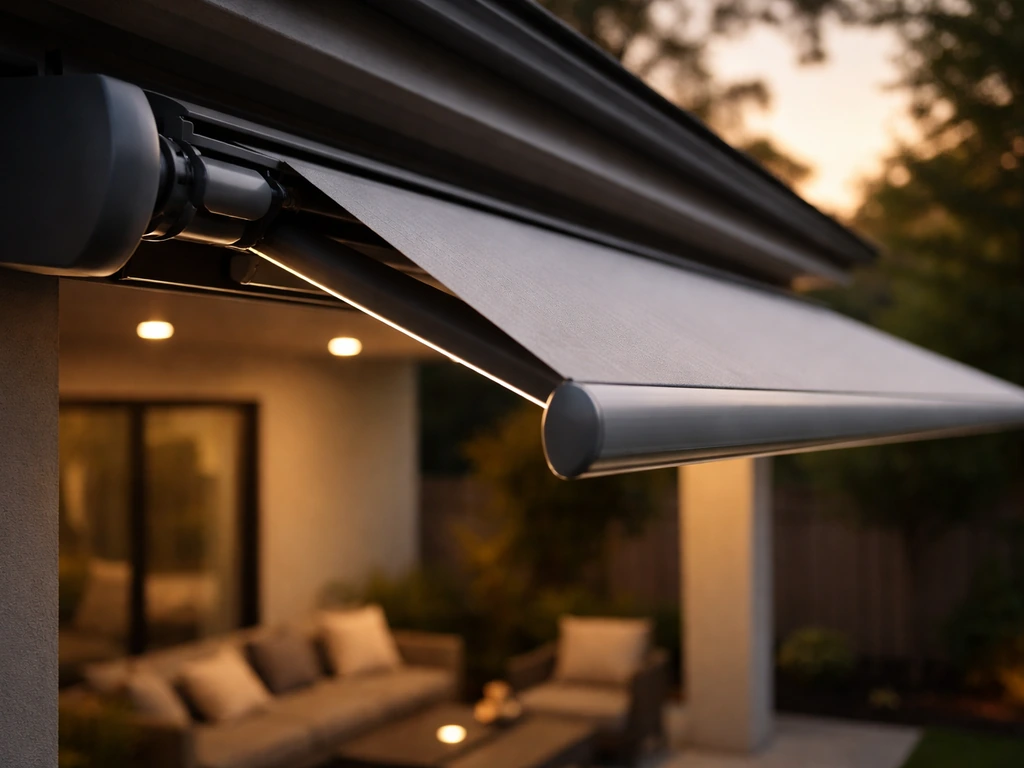
So the number you actually pay depends heavily on how wide your patio is, what features you want, and whether you need an electrician to run a new circuit. Many may awning and patio setups include optional accessories like wind and rain sensors for more reliable coverage.
Quick price ranges: product-only vs. fully installed
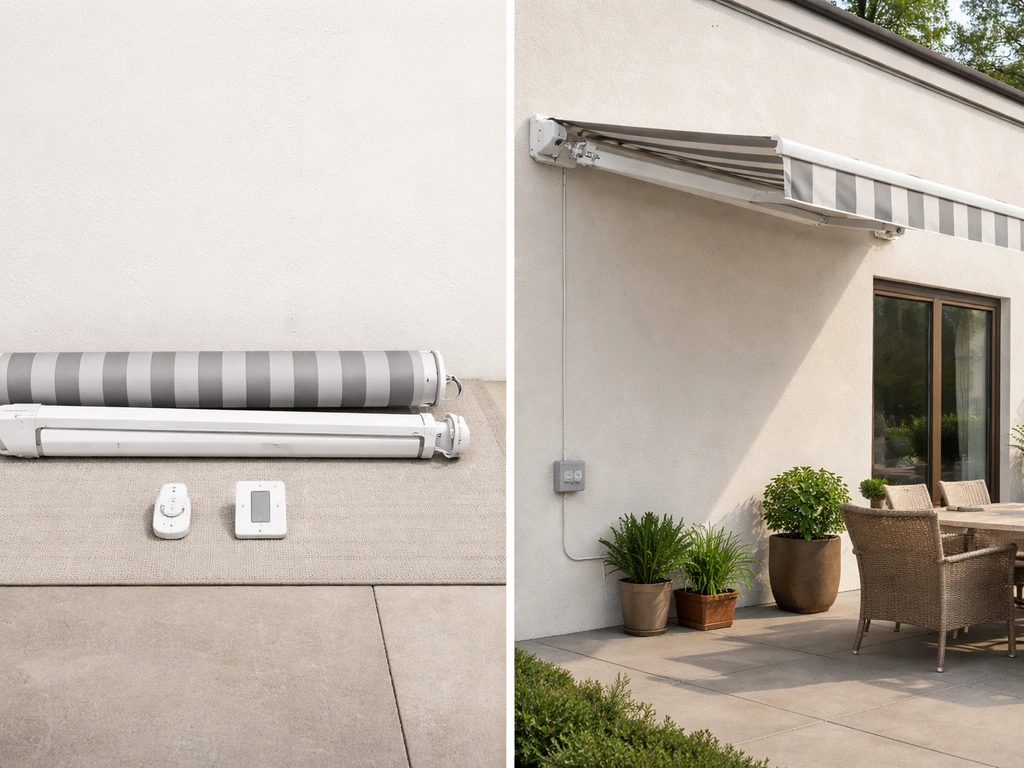
There are two very different numbers floating around when you search for electric awning prices: the product cost and the installed cost. They're not the same, and a lot of homeowners get surprised by the gap. Here's how both break down today.
| Awning Width | Product-Only (approx.) | Installed Total (approx.) |
|---|---|---|
| 10 ft | $600–$800 | $1,500–$2,800 |
| 12 ft | $800–$1,100 | $2,000–$3,500 |
| 16 ft | $1,100–$1,500 | $2,800–$5,000 |
| 20 ft | $1,400–$1,800 | $3,500–$6,500+ |
These numbers are based on mid-tier motorized retractable awnings with standard fabric. The installed totals use a professional labor range of $300 to $1,500 (most homeowners land around $600 to $800 for a standard mount) plus a typical electrical add-on. HomeAdvisor's 2025 data puts the national average installed cost at $3,038, with a range of $1,455 to $4,646. Angi prices the work at $15 to $30 per square foot installed, which lines up closely. Premium brands, cassette-style enclosures, or complex mounting situations push you toward the top of those ranges fast.
What actually drives the cost
Once you understand what makes prices move, you can make smarter decisions about where to spend and where to save. There are five main levers.
Size: width and projection
Width is the biggest cost driver. A 10-foot motorized awning and a 20-foot version are not twice the price; they're closer to three times the price when you factor in the larger frame, more fabric, and heavier motor. Projection (how far out the awning extends) also affects price. A 9-foot projection covers more of your patio than a 6-foot one and costs more to manufacture. A high-quality awning and patio setup can also improve comfort and shade coverage for everyday use quality awnings and patios. The 2026 SunSetter dealer price sheets show Solar Pro fabric running from about $605 at 10 feet wide to $1,385 at 20 feet wide, just for the product itself before any installation.
Fabric and frame material
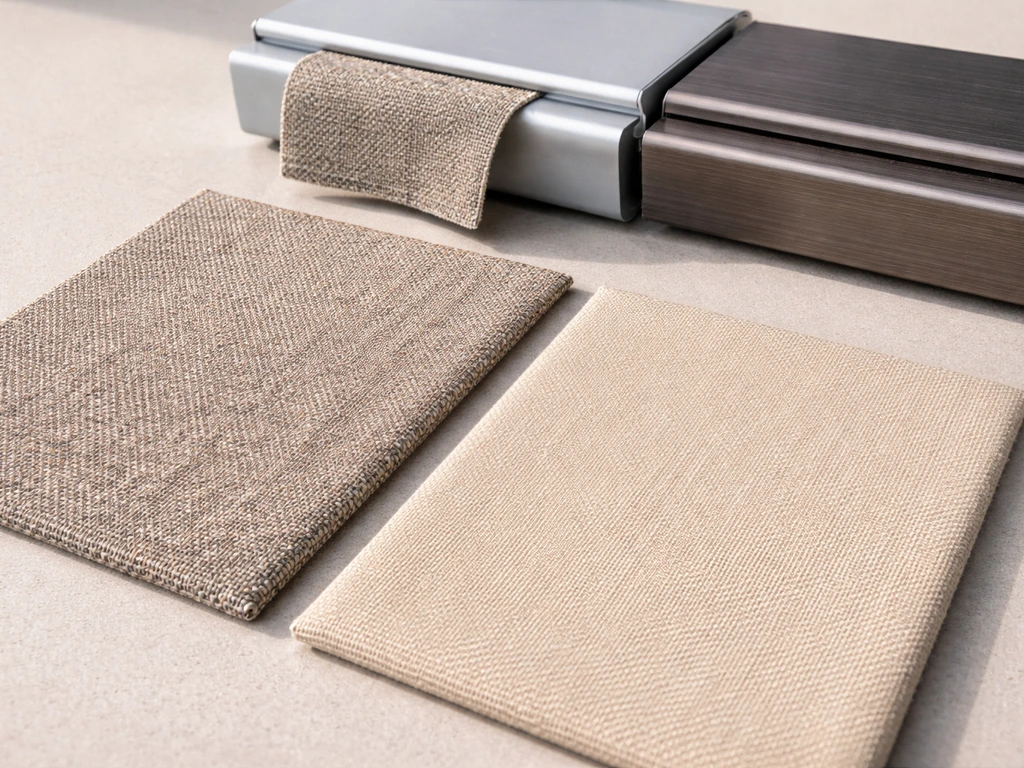
Fabric choice makes a real difference. Sunbrella fabric (acrylic, solution-dyed, fade-resistant) consistently prices 25 to 35 percent higher than standard polyester options. On a 12-foot SunSetter, that's the difference between $812 and $1,062 for the fabric alone. If you're in a high-sun region like Florida, Arizona, or Southern California, premium fabric pays for itself in longevity. In less intense climates you can often get away with mid-tier fabric without much sacrifice.
Motor type and control features
A basic motorized awning with a wall switch or remote costs significantly less than one with weather automation. The standard SunSetter motorized line uses a Somfy motor with a wireless remote. Upgrading to a wireless wind sensor, a rain sensor, or a Somfy TaHoma smart switch (for app and HomeKit control) adds cost per accessory, plus potential configuration labor. Smart home integration through Somfy's io-homecontrol protocol can get your awning working with Apple HomeKit, but only certain motors support it and compatibility requires validation. Budget an extra $100 to $400 for smart add-ons if you want full automation.
Cassette vs. open-roll design
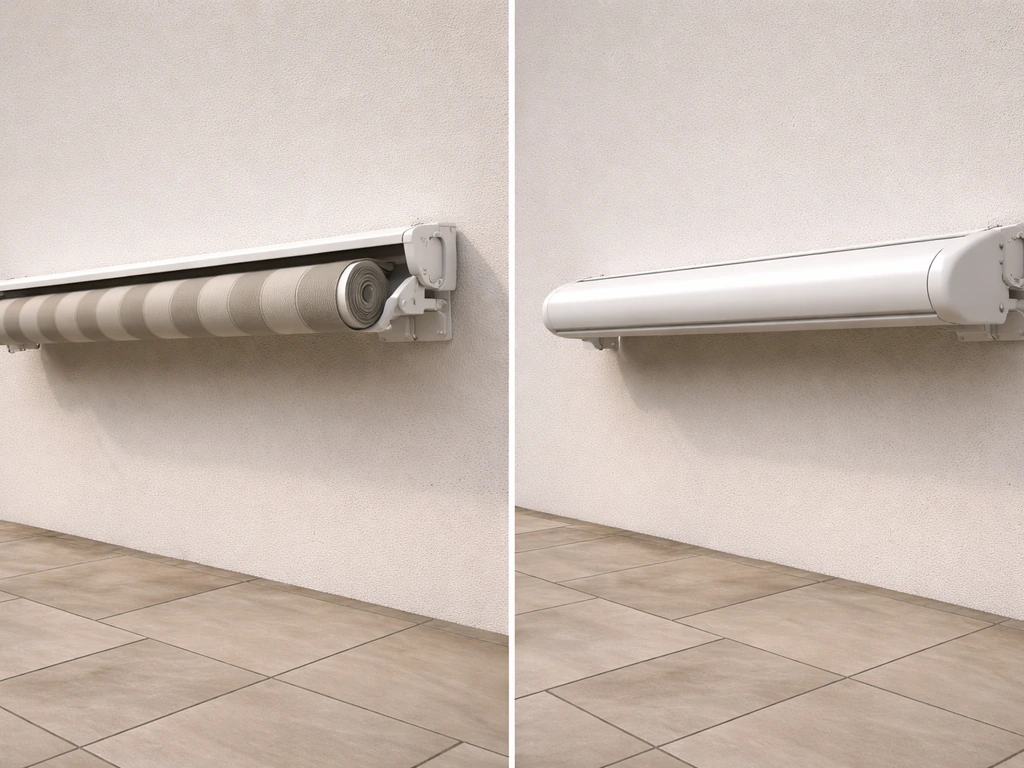
A standard retractable awning leaves the rolled fabric exposed when retracted. A semi-cassette or full-cassette model (like SunSetter's Platinum Plus) encloses the fabric in a housing when retracted, protecting it from UV, birds, and debris year-round. If you want to be sure your patio awnings are waterproof, look for fabric and seams rated to repel rain and confirm the drainage design for your specific model protecting it from UV, birds, and debris year-round. Cassette models cost more up front but often extend fabric life meaningfully. If you plan to leave the awning up most of the year, this upgrade is worth pricing out.
Brand tier
Budget-tier brands sell motorized awnings for under $1,000 product-only at smaller sizes. Mid-tier brands like SunSetter and Solera by Lippert sit in the $800 to $2,000 product range for common sizes. Premium brands (Markilux, Weinor, Somfy-native products, custom fabricators) can run $3,000 to $5,000 product-only before installation. The premium jump usually buys you heavier frame engineering, better wind ratings, longer warranties, and more customization options for color and fabric.
DIY vs. professional installation
This is where a lot of homeowners try to save money and some succeed, but there are real traps to watch for. The physical mounting of the awning bracket to a masonry or wood-framed wall is doable for a confident DIYer, especially with a helper. The electrical part is where it gets complicated.
Most motorized awnings need either a standard outdoor GFCI outlet nearby or a hardwired connection. If you are installing a SunSetter rain sensor, SunSetter’s installation instructions specify plugging the awning into a [working GFCI outlet](https://support. sunsetter. com/SunSetterData/SUNSETTERTECHNICALSUPPORT/6OasisFreestandingAwning/2AccessoriesInstallationInstructionsandProcedures/Rain_Sensor.
pdf). Plug-in models (like blank" rel="noopener noreferrer">Solera's Lumina line) avoid electrician costs entirely if you already have an outdoor outlet in the right spot. If you are comparing may awning and patio portland options, plug-in electric models are often an easier place to start because they can avoid hardwiring Plug-in models. Hardwired connections can add $300 to $800 for an electrician, and some states require that a licensed electrician pull the electrical permit even if you do everything else yourself.
Ohio, for example, has specific guidance requiring a licensed electrician to obtain the permit when new outlet wiring is involved. Florida's Miramar building division requires a separate electrical application for motorized awnings as part of the permit package.
If your wall surface is tricky (stucco over concrete block, EIFS/Dryvit, or older brick), structural reinforcement may be needed before mounting, which can add labor cost. A Reddit thread on motorized awning quotes highlighted exactly this: one homeowner got wildly different quotes, largely because contractors were pricing in different levels of wall prep and electrical scope. Getting multiple quotes and asking each contractor to itemize the wall prep and electrical scope separately will make those comparisons apples-to-apples.
| Installation Approach | Typical Cost | Best For |
|---|---|---|
| DIY (plug-in model, existing outlet) | $0–$100 | Handy homeowners with outlet nearby |
| DIY (new outlet needed) | $150–$300 for electrician | DIYers willing to sub out electrical only |
| Pro install, standard mount | $300–$800 labor | Most homeowners, straightforward wall |
| Pro install + hardwired electrical | $600–$1,500+ total labor/electrical | Masonry walls, no existing outlet, complex runs |
| Pro install + structural reinforcement | $800–$2,000+ add-on | Older homes, EIFS, brick, stucco |
Real-world budgets for common patio sizes
Here's how the numbers come together for three realistic scenarios. These are honest mid-range estimates, not best-case or worst-case.
Small patio (10–12 ft wide)
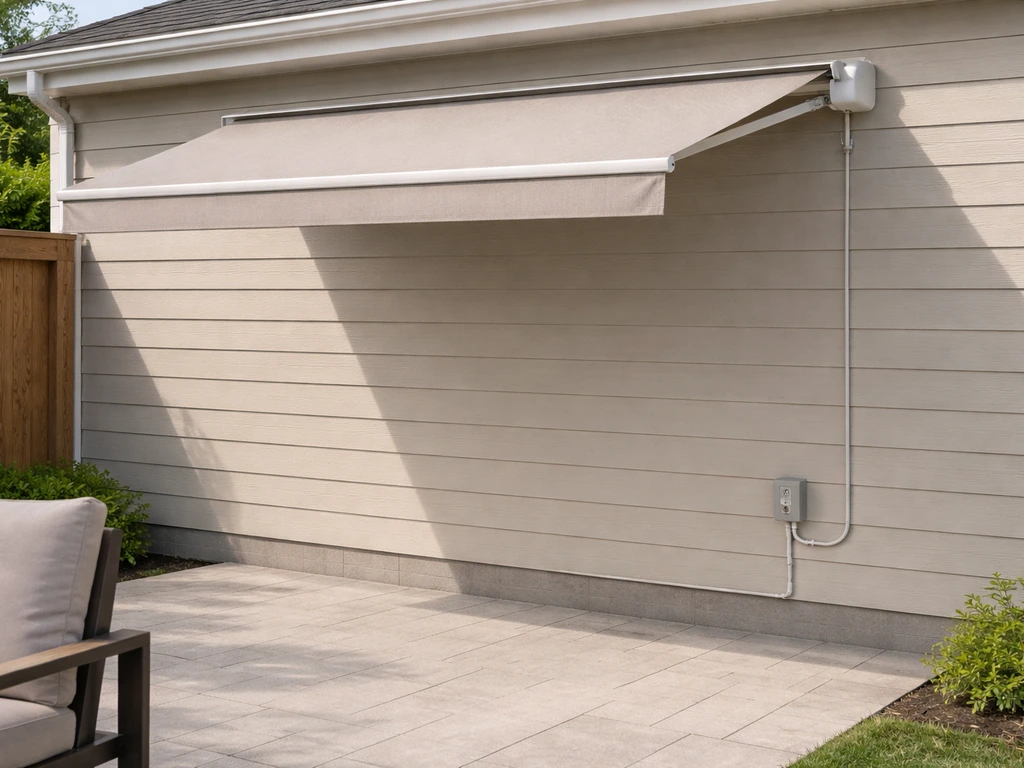
A 12-foot motorized awning with standard fabric, a plug-in motor, and professional installation on a wood-framed wall: roughly $800 to $1,100 for the product, $400 to $600 for labor, and $150 to $200 for an outdoor GFCI outlet if you don't have one. Total: approximately $1,350 to $1,900. A real installed example from a Connecticut homeowner on Reddit came in at $4,900 for a 13x10 motorized setup, which reflects a higher-end model or more complex install, showing how quickly it climbs when you step up in brand or scope.
Mid-size patio (14–16 ft wide)
A 16-foot Sunbrella-fabric motorized awning with remote control and professional installation: roughly $1,445 product-only, $600 to $800 labor, and $200 to $400 for electrical. Total: approximately $2,200 to $2,700. Add a wind and rain sensor package and you're closer to $2,800 to $3,200. This range lines up well with the national average installed cost of $3,038 that HomeAdvisor reports.
Wide or premium patio (18–20 ft wide)
A 20-foot motorized awning with premium fabric, cassette enclosure, smart sensors, and hardwired professional installation: product could run $2,000 to $3,500 depending on brand and series, labor and electrical $800 to $1,500. Total installed: $3,500 to $6,500+. Florida-specific data puts motorized awnings in the $2,500 to $7,000 range with a 12-foot example hitting $3,000 to $5,500 installed, which suggests regional labor costs push numbers up meaningfully in certain markets.
Smart features, warranties, and what maintenance costs over time
Automation features are genuinely useful, not just nice-to-have. A wireless wind sensor (battery-powered, mounts on the lateral arm) sends a close signal when wind picks up, which can prevent a $2,000 awning from becoming a projectile during an unexpected storm. A rain sensor does the same for moisture. Both are available as accessories on SunSetter's Platinum Series.
SunSetter’s Platinum Series lists optional automation features including a Wireless Wind Sensor, Rain Sensor, blank" rel="noopener noreferrer">Wireless Wall Switch, and a Somfy TaHoma switch Platinum Series Retractable Awnings. Choosing the right top patio awnings setup, including enclosure and controls, can also affect how well it handles weather and wear over time.
The Somfy TaHoma switch adds app-based smart home control including, on compatible io-homecontrol motors, Apple HomeKit integration.
On warranties: SunSetter's Platinum Series carries a 10-year limited warranty; their standard SunSetter series is 5 years. Mid-tier brand warranties typically run 3 to 5 years on fabric and motors. Premium European brands often offer 5 to 10 years. A longer warranty matters most for motors and fabric, since those are the two things that wear out. Budget models with 1 to 2 year warranties can look attractive up front but may cost more over five years in repairs.
For ongoing maintenance, plan on cleaning the fabric once or twice a year with mild soap and water. Retracting the awning in high winds (even if you have a sensor, don't rely on it exclusively in severe weather) extends fabric and arm life significantly. Sensor batteries need replacing periodically. Motors are generally reliable but can need servicing at the 8 to 12 year mark. Fabric replacement, when it comes, typically runs $300 to $700 depending on size and material. Power usage for the motor is minimal, usually under 100 watts for the few seconds it takes to extend or retract.
How to measure, get accurate quotes, and avoid hidden fees
Before you call anyone for a quote, measure your patio wall span and how far out you want coverage. If you are trying to plan coverage for seating, the offset patio umbrella is another option worth considering alongside a wall-mounted awning what is an offset patio umbrella. Measure the wall width where the awning will mount (this is your frame width), and decide on your desired projection (how far out from the wall). Most patio awnings offer projections between 7 and 12 feet. Write down the wall surface material (wood siding, stucco, brick, etc.) and note where your nearest outdoor outlet is and whether it's GFCI-protected.
When getting quotes, ask each contractor to break the quote into four line items: product cost, labor for mounting, electrical work (outlet or hardwired), and any structural prep or permits. This makes comparisons real. If a quote bundles everything into one number, ask them to separate it. Hidden fees most commonly appear in three places: permit fees (which vary by city but can run $75 to $300), electrical permit fees when a hardwired connection is required, and wall patching or structural blocking if the mounting surface needs reinforcement.
It's also worth asking about regional factors for your climate. If you're in a high-wind coastal area, ask about the awning's wind rating in mph. If you're in an intense sun climate, ask specifically about UV-stabilized fabric and whether the frame finish is powder-coated for corrosion resistance. These questions will also signal to the contractor that you know what you're doing, which tends to result in more accurate and honest quotes.
Your pre-quote checklist
- Measure your wall span (frame width needed) and desired projection distance
- Note your wall material (wood frame, masonry, stucco, etc.)
- Locate the nearest outdoor GFCI outlet and measure how far it is from the mounting spot
- Decide whether you want plug-in or hardwired (plug-in saves money if you already have an outdoor outlet)
- Choose your must-have features: basic remote only, wind/rain sensors, or full smart home integration
- Set your fabric priority: standard polyester, solar-screen, or premium Sunbrella-type acrylic
- Ask each quote to itemize: product, labor, electrical, permits, and any structural work separately
- Compare warranties: look for at least 5 years on motor and fabric for mid-tier models
- Ask about lead time, since custom sizes can take 4 to 8 weeks from some manufacturers
- Get at least three quotes and ask if they can show you a completed local installation
If you're also considering adding misting systems or patio fans at the same time, bundling those installations with your awning project can reduce total labor costs, since the contractor is already on-site with a ladder and tools. It's a practical way to stretch the budget. And if you're still comparing electric vs. manual options, it's worth knowing that manual retractable awnings are significantly cheaper up front but add daily friction, especially for larger spans where cranking gets old fast. For most homeowners with a 14-foot or wider patio, the motor is well worth the extra cost.
FAQ
Do electric patio awnings cost more to run than manual ones?
Operating costs are usually low, the motor typically draws under about 100 watts for the short time it extends or retracts. The bigger ongoing costs are maintenance, like cleaning the fabric and replacing sensor batteries (if installed).
What makes an “installed” price jump beyond the product sticker price?
The install number usually changes most based on labor complexity and electrical scope, specifically whether you already have a correctly located outdoor GFCI outlet or whether new wiring and a permit are required. Wall reinforcement for stucco, EIFS/Dryvit, or older brick can also add substantial labor.
If I buy a plug-in electric awning, do I still need an electrician?
Often you do not, if a weather-rated outdoor GFCI outlet is already in the correct spot and meets electrical code requirements for the connection type. If the outlet is missing, not GFCI, poorly located, or requires new run wiring, you may still need an electrician and possibly an electrical permit.
How far does the awning need to extend to justify the higher cost of a longer projection?
A longer projection tends to cost more because it needs more fabric and heavier arm components, but it only helps if it actually reaches the seating area you want shaded. Measure from the planned wall mounting point to your target area, and compare that distance to common projection options (often around 7 to 12 feet).
Are cassette awnings worth the extra money versus standard retractable models?
Cassette enclosures generally cost more up front, but they better protect rolled fabric from UV, debris, and bird droppings when retracted, which can extend fabric life. If you plan to leave the awning retracted for long periods or year-round, the upgrade is more likely to pay off.
What should I check for wind performance so I do not end up paying for the wrong awning?
Ask for a specific wind rating (in mph) for the model you are considering, and confirm whether the rating applies to the fully retracted and extended positions. Also plan behavior in storms, do not rely on wind sensors as a substitute for retracting during severe weather.
How do I prevent getting an unfair quote because of wall condition issues?
Request itemized line items for wall prep and electrical work separately from the awning product and basic mounting. If the wall needs reinforcement, older surfaces vary widely, and two contractors may price different levels of backing, blocking, or patching.
What permits or inspections might be required for electric awnings?
It varies by city and state, but electrical permitting is a common surprise when new hardwired connections or outlet wiring are involved. When permits are needed, they may include separate electrical approvals even if the awning install itself is handled by a contractor.
Do smart features add a lot of cost, and are they always compatible?
Smart add-ons can add roughly $100 to $400 for typical automation accessories, plus potential setup labor. Compatibility is not universal, only certain motors support app control and specific protocols, so confirm model and control-system support before buying.
How do warranties affect the real cost over five to ten years?
A longer warranty matters most for the motor and fabric, since those are the parts most likely to wear. Budget models with short warranties may look cheaper, but if repairs or replacements are needed sooner, your total cost can rise quickly.
How often should I replace parts like sensor batteries or the fabric?
Expect periodic sensor battery replacement if you choose wind or rain sensors, and plan for fabric cleaning one to two times per year with mild soap and water. Fabric replacement timing depends on sun exposure and enclosure type, but many homeowners budget for a future refresh (often a few hundred dollars depending on size and material).
Can I bundle a patio awning with other projects to lower total installation cost?
Yes, if you are also adding things like a misting system or patio fans, ask about bundling labor since the installer is already on-site with ladders and power tools. Bundling can reduce mobilization and coordination costs, but still request separate line items so you can compare properly.