
For most UK patios, a manual retractable folding-arm awning made from solution-dyed acrylic fabric on an aluminium frame is the right call. A may awning and patio can be a practical way to add shade to the space while keeping the look consistent with the rest of your outdoor setup. Mounted to a solid brick or concrete wall at the correct height, a mid-range model 3–4 metres wide with a 2.5–3 metre projection will cover a standard dining or seating area, costs between £800 and £2,500 supplied and fitted, and will last well over a decade if you retract it in strong winds and clean it twice a year. Everything below helps you nail down the exact size, spec, and setup for your specific patio.
Manual Patio Awnings UK Guide: Types, Sizing, Costs

Elise Prescott
2 Jul 2026
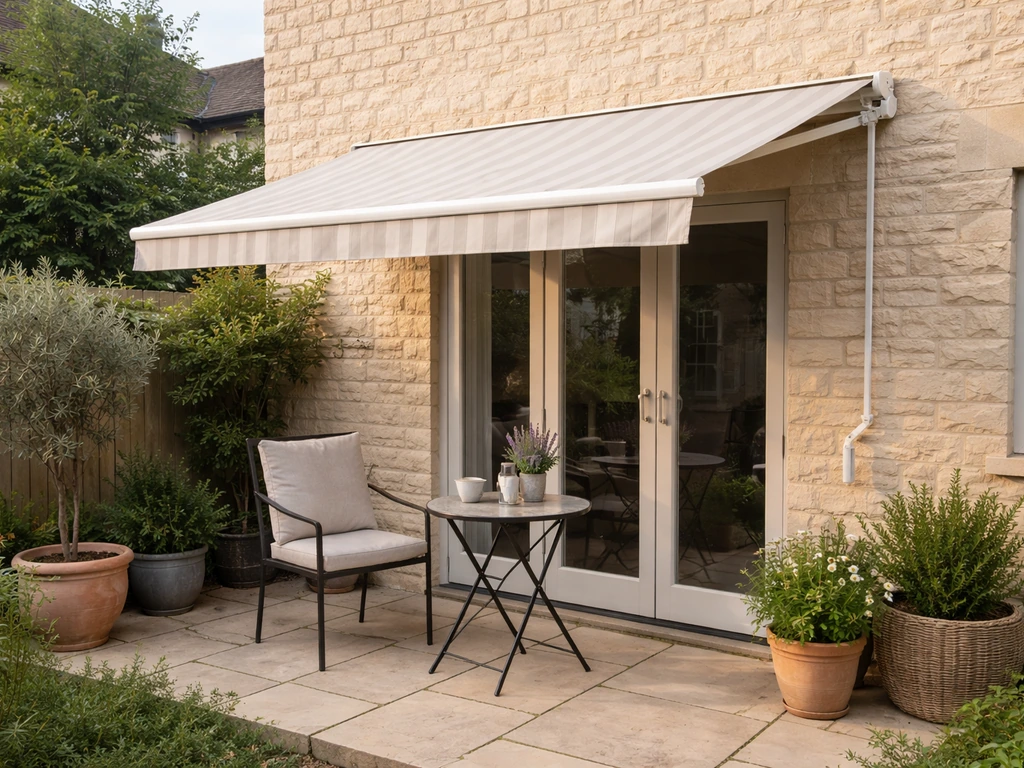
What a manual patio awning actually is (and the main UK types)
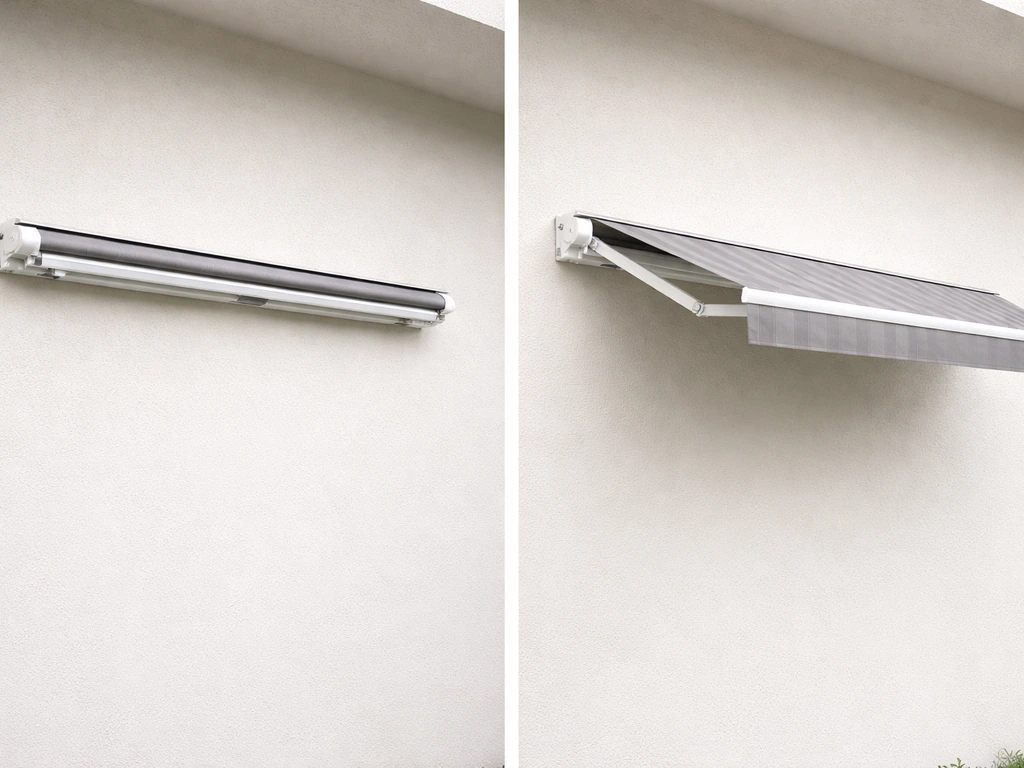
A manual patio awning is a fabric canopy that you open and close by hand rather than by a motor. In the UK market, the vast majority are wall-mounted folding-arm awnings: a horizontal tube fixed to the wall holds a rolled-up fabric and two articulated arms that unfold as you extend the awning out over your patio. You retract it the same way, and the whole thing folds back neatly against the wall. The 'manual' part usually means a detachable hand crank, though some smaller or simpler models use a pull-cord or sliding mechanism.
Within that broad category, there are a few configurations worth knowing about before you start shopping.
Open-cassette vs full-cassette awnings
An open-cassette (or semi-cassette) awning has the roller tube partially exposed when retracted. A full-cassette awning houses the entire mechanism, fabric, and arms inside a protective box when closed. The cassette version costs more, but it keeps UV, rain, and bird mess off the fabric when you are not using it. For any UK patio that is not under a porch, a full cassette is worth the extra spend. The cassette also looks much tidier on the wall when closed, which matters if it is on the back of the house.
Fixed canopies vs retractable awnings
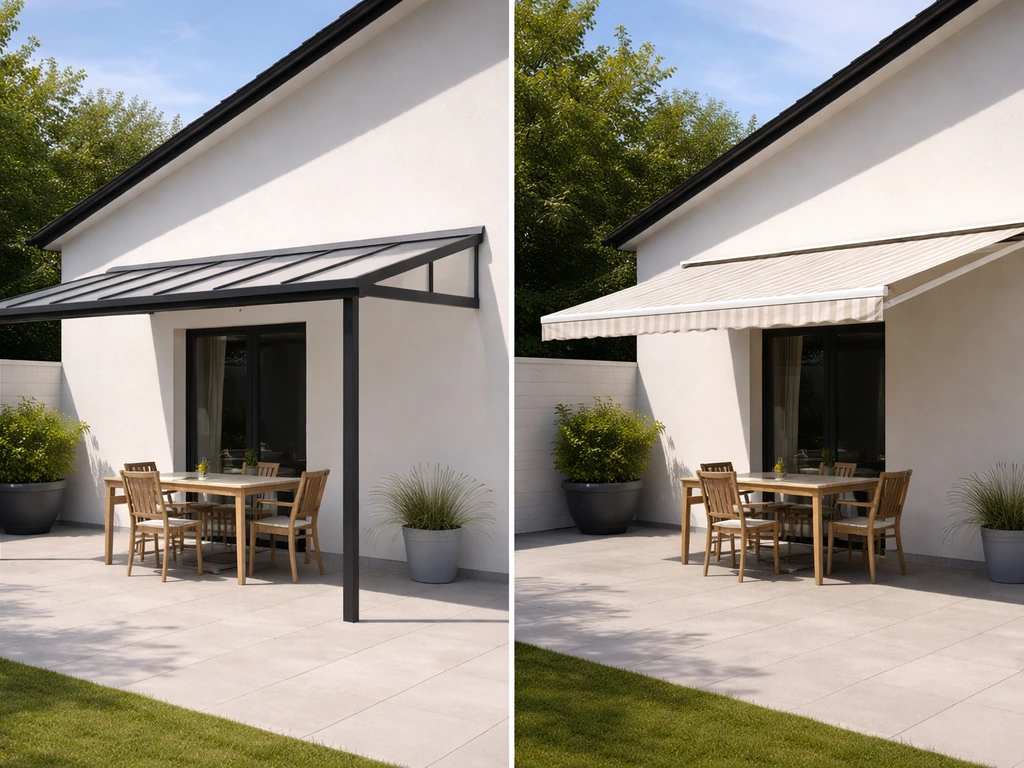
Fixed canopies (lean-to polycarbonate or glass structures, fixed fabric canopies with no retraction) are a different product from retractable awnings. An offset patio umbrella is a different style of shade that has the support pole set to one side, keeping the centre of your patio area more open than many wall-mounted awnings. They offer permanent cover and tend to be more robust in heavy rain, but you lose the flexibility of opening up to the sky on a nice day. Retractable awnings give you the best of both: full sun when you want it, shade or rain cover when you need it. Most homeowners searching for a manual patio awning in the UK are after the retractable type, and that is what this guide focuses on.
Side-supported and freestanding options
If you do not have a suitable wall to mount to, side-supported or freestanding awning structures exist, but they are less common, more expensive, and need solid ground fixings. For 90% of UK patio setups, wall-mounting to the back of the house is the right approach and gives you the most secure base. If you are searching for may awning and patio portland specifically, focus on local installers who can match the awning type to your wall, wind exposure, and patio size.
How to choose the right size and mounting position
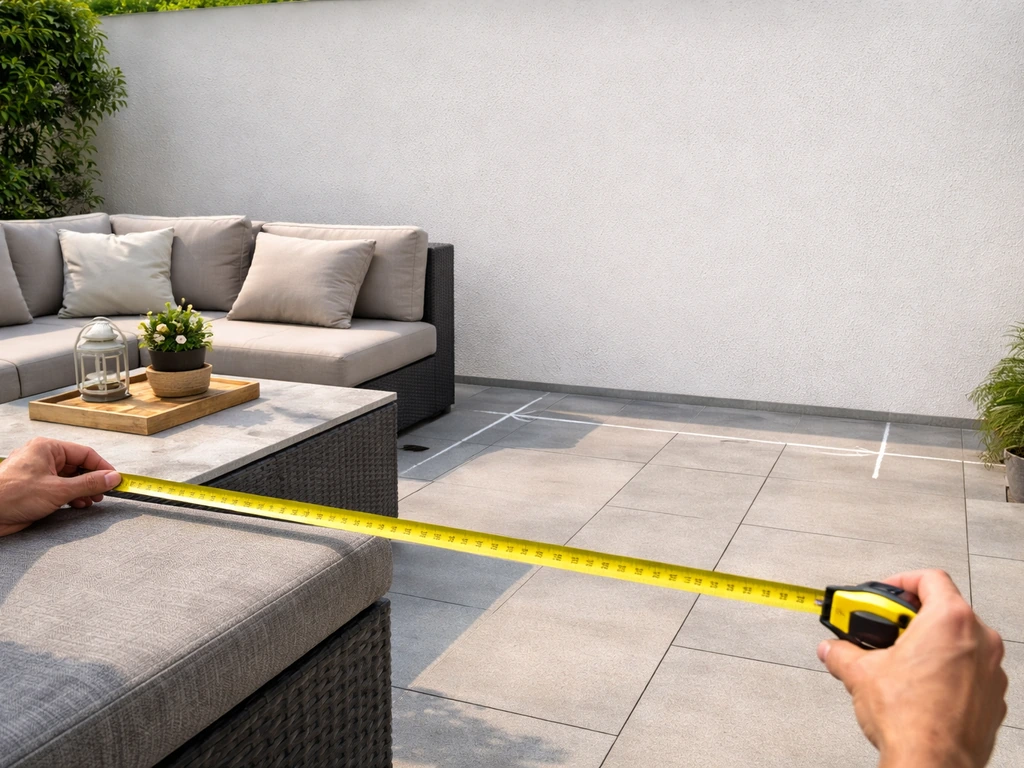
Getting the dimensions right is where most people go wrong, either by ordering too small (and finding it barely covers the table) or by not checking their wall has the clearance needed. Here is what to measure before you contact any supplier.
Width
Measure the area you want to shade, then add at least 200–300mm either side for coverage overhang. A 4-metre-wide awning is a common UK reference size and will cover a standard six-seat garden dining set with room to spare. Check there are no obstacles (downpipes, windows that open outward) at either end of the planned width.
Projection
Projection is how far the awning extends out from the wall. Note that projection is measured along the slope of the fabric, not as a flat horizontal distance, so a 3-metre projection on a 15-degree pitched awning will cover slightly less than 3 metres of ground. Most UK patios work well with a 2.5–3.5 metre projection. A deeper projection gives more cover but puts more load on the arms and wall fixings, so going beyond 3.5 metres on a manual awning usually means stepping up to a higher-specification arm system.
Mounting height and drop
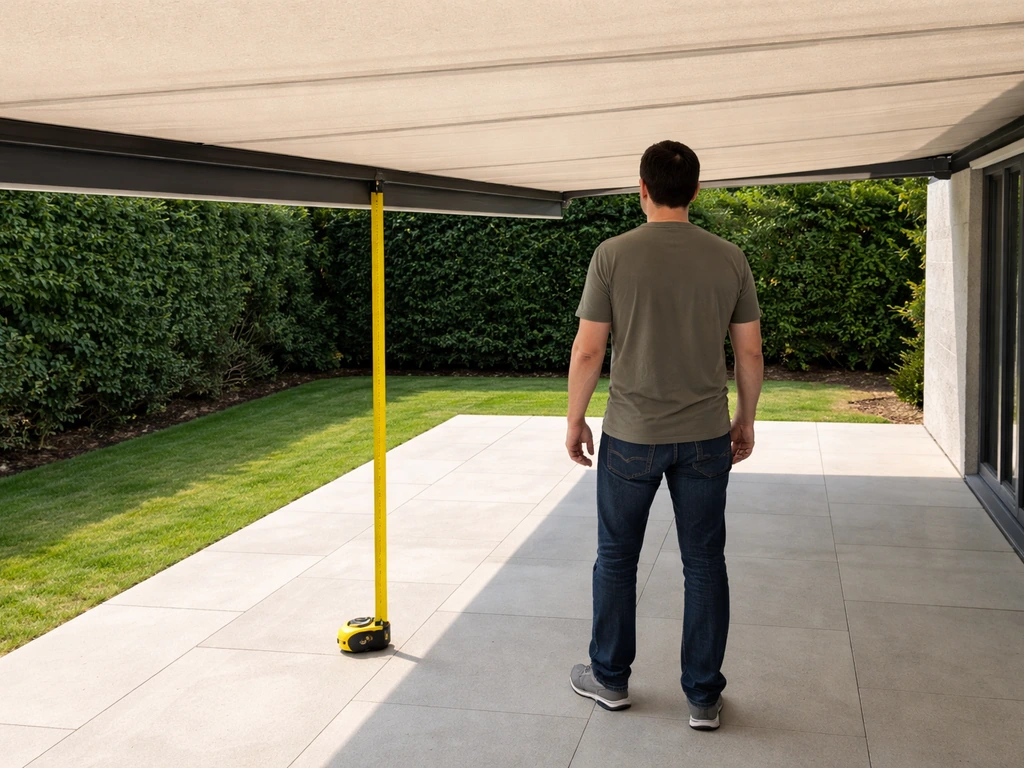
The mounting height determines how high the front bar sits above your patio when the awning is open. You need enough clearance for people to walk underneath without ducking, typically at least 200mm above head height, so around 2.1–2.2 metres minimum at the front bar. Check your wall height and gutter/fascia positions before deciding where to fix the brackets. Many UK houses have gutters that sit awkwardly right where you want to mount the awning; there are specialist rafter brackets and gutter-projection brackets that solve this, but they add a bit to the cost and complexity.
Pitch
UK awnings are installed with a slight downward pitch, typically 10–15 degrees, so that light rain runs off the fabric toward the front bar rather than pooling. This is not optional in the UK climate; a completely flat awning will sag and stain within a season. The pitch is usually set during installation by adjusting the arm brackets.
Other clearances to check
- Doors or windows that open outward into the awning's path when extended
- Distance from the wall to any existing furniture, steps, or raised beds that could conflict with the arms when open
- Whether the awning, when retracted, will sit above or clash with any existing window frames or security lights
- Wall space needed for the bracket spread (typically the awning width plus a few centimetres either side for the end brackets)
UK weather: what it means for your awning choice
The UK is not a high-sun climate, but it is a high-variability one. You get sun, drizzle, sudden downpours, and gusts all in the same afternoon, and your awning needs to handle all of it.
Wind
Wind is the main threat to any retractable awning in the UK. The rule is simple: retract in strong winds. Samson Awnings and most UK manufacturers recommend at least a wind class 2 rating (Beaufort 5, roughly 17–23 mph) as a minimum for a fixed, correctly installed awning. Beyond that, the arms can distort, the fabric can tear, and in a worst case the bracket fixings can pull out of the wall. If you live in an exposed location, on a hillside, near the coast, or in the Scottish Highlands, go one wind class higher and make sure your installer uses suitably heavy-duty wall anchors. There are wind sensors available that will trigger automatic retraction (normally paired with motorised awnings), but for a manual awning the simple rule is: when it gusts, bring it in.
Rain
A good awning fabric will shed light rain, and the pitch of the installation helps it drain off the front. However, heavy or wind-driven rain can force water to pool on the fabric, causing it to stretch and eventually stain. Retract the awning in prolonged or heavy rain, even if the fabric is nominally waterproof. That said, you should still expect good quality patio awnings to be waterproof or highly water-resistant, especially when fully closed in a cassette fabric is nominally waterproof. A full cassette awning protects the rolled-up fabric between uses, which makes a real difference over several UK winters.
Sun and UV
UK summers have fewer intense UV hours than southern Europe, but cumulative UV exposure over the years still fades lower-grade fabrics. This is the main argument for solution-dyed acrylic over cheaper polyester: the colour goes through the fibre rather than being applied to the surface, so UV cannot bleach it in the same way. If you want your awning to still look good in 2031, pay for the better fabric now.
Coastal and high-wind locations
Salt air accelerates corrosion on mild steel components. If you are within a few miles of the coast, insist on a powder-coated aluminium frame rather than anything with steel parts that are not fully protected. Check that the bracket fixings are stainless steel or galvanised, not bare zinc. This applies to brackets, bolts, and any exposed hardware.
Materials and build quality: what to look for
Fabric
Solution-dyed acrylic is the gold standard for UK patio awning fabric and what the British Blind and Shutter Association (BBSA) considers typical for quality folding-arm awnings. It has a canvas-like feel, resists fading, repels water, and resists mildew growth. Polyester fabrics cost less but are thinner, tend to have a flatter matt look, and unless they are coated with a vinyl or PVC laminate they do not perform as well in sustained rain. A PVC-coated polyester is an acceptable budget choice for occasional use, but solution-dyed acrylic is what you want if the awning is going to be out most of the summer.
| Fabric type | Water resistance | UV/fade resistance | Look and feel | Typical use case |
|---|---|---|---|---|
| Solution-dyed acrylic | Good (sheds light rain) | Excellent | Canvas-like, premium | Main patio awning, daily use |
| PVC-coated polyester | Very good (near waterproof) | Moderate | Flat, commercial look | Budget awnings, occasional use |
| Uncoated polyester | Poor | Low | Thin, lightweight | Temporary or seasonal use only |
Frame and arms
Powder-coated aluminium is the right frame material for almost every UK patio awning. It does not rust, it is light enough that the awning does not put excessive load on the wall, and it looks good. Cheaper awnings sometimes use steel arms with a painted finish; these will eventually rust at scratched or chipped points, particularly in wetter regions. The arm mechanism itself should feel solid and spring-loaded, with no wobble or slop when you extend the awning. Folding-arm awnings are designed with a slight flex in the arms to absorb wind load, but that is different from a poorly made arm that rattles loose after a season.
Cassette and roller quality
On a full cassette awning, check that the cassette closes fully and seats cleanly. Gaps in the cassette let water and debris in and defeat the point of having one. The roller tube should be aluminium and thick enough not to flex under the tension of the fabric; a thin-walled roller is a common cost-cutting measure on budget awnings and usually shows up as uneven rolling or a twisting front bar after a year or two.
Installation: DIY vs professional, and why your wall substrate matters
This is the section where a lot of people underestimate the complexity. A manual retractable awning is not a shelf bracket; a 4-metre awning with arms extended can exert significant downward and outward force on its wall fixings, especially in a gust. Getting the fixings wrong is not just an awning problem, it can pull out brickwork or damage a fascia board.
What substrate are you fixing into?
Solid brick or concrete block is ideal and the easiest substrate to work with. You drill, insert resin anchors or heavy-duty rawl bolts, and the brackets seat firmly. Most UK houses built before the 1990s have solid external brickwork at the back and are straightforward to fix to. Cavity wall construction is more complex; you need fixings rated for cavity walls and should confirm the outer leaf is thick enough to carry the load. Timber fascia boards, UPVC boards, and rendered surfaces all require a different approach, and some are genuinely unsuitable without an intermediary spreader bracket or steel plate to distribute the load. According to LoadBear, roughly 60% of retractable awning installations in the UK require some kind of dedicated bracket or adaptor rather than a simple direct face-fix, so this is not an edge case.
DIY installation
A confident DIYer with a good drill, the right fixings, and a helper can install a smaller manual cassette awning (up to about 3 metres wide) on a solid brick wall. The main risks are getting the bracket alignment wrong (which causes the awning to roll unevenly) and underspecifying the fixings. Full cassette awnings are heavy, often 30–50kg or more for a larger unit, and you genuinely need two people and a way to hold the awning in position while you tighten the brackets. Read the manufacturer's installation instructions carefully; Primrose and other UK suppliers provide detailed step-by-step guides and specify the exact fixing type and spacing required.
Professional installation
For anything wider than 3.5 metres, any installation on a non-standard substrate, or if you are not comfortable working at height with heavy equipment, get a professional installer. A good awning installer will do a site survey, confirm the substrate is adequate, use the correct fixings, and set the pitch and arm tension correctly. BBSA-member installers are a reasonable starting point for finding someone reputable in the UK. Professional installation typically adds £200–£500 to the cost on top of the product, depending on complexity and your region.
Planning permission
In most cases, a wall-mounted retractable awning on the back of a house in England and Wales is permitted development and does not require planning permission. If you are looking for top patio awnings, it helps to consider how they mount to your house and what the local rules allow wall-mounted retractable awning. If you are in a conservation area, a listed building, or Scotland/Northern Ireland (which have different rules), check with your local planning authority first. It takes five minutes and can save a lot of hassle.
Operating and maintaining your manual awning
Everyday operation
The hand crank on a manual awning should turn smoothly with moderate effort. If you are straining to turn it, something is wrong: the fabric may be wet and heavy, an arm may be catching, or the mechanism needs lubrication. Do not force it. When extending the awning, extend it fully to its designed stop point rather than leaving it half-out; a partly extended awning puts uneven tension on the arms and fabric. Similarly, do not over-extend beyond the marked limit as the fabric can sag and the arms lose their spring tension.
There are pinch points in the arm mechanism during opening and closing. Keep children and pets clear of the arms while operating the awning, and do not put your hands near the hinge points. Birkdale’s awning operation and warranty instructions also warn to keep blank" rel="noopener noreferrer">hands clear during retracting and deploying because of pinch points. This is standard safety guidance from most UK manufacturers.
When to retract
- Any time wind is gusting above roughly 20 mph or feels strong enough to make the awning flap
- During heavy or prolonged rain, even if the fabric is rated as water-resistant
- Overnight during autumn and winter to prevent frost, damp, and debris accumulation
- When leaving the property for more than a few hours in uncertain weather
Cleaning the fabric
For routine cleaning, brush off loose dirt and debris with a soft brush, then wipe down with a damp cloth or sponge and mild soapy water. Avoid pressure washers on the fabric as they can damage the weave or coating. Before putting the awning away for winter, give it a proper clean with a brush nozzle vacuum to remove leaf debris and then a wipe-down, and make sure it is completely dry before retracting it into the cassette. Before putting the awning away for winter, Isabella advises vacuuming the awning roof with a brush nozzle and then wiping it with a damp cloth, and stresses that cleaning the roof is especially important in the run-up to winter. Storing a damp awning in a closed cassette through winter is one of the fastest ways to get mildew staining that is almost impossible to remove.
Annual maintenance checks
- Check all wall bracket bolts and tighten if any have worked loose
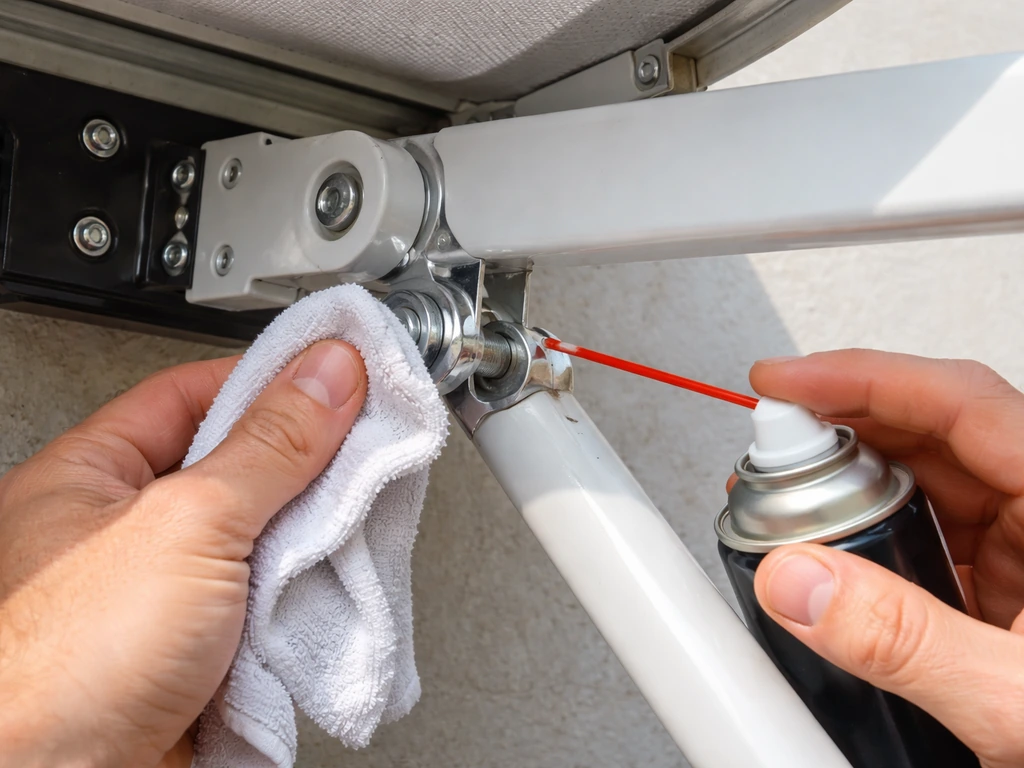
- Inspect the arm hinges and pivot points for corrosion or cracking; apply a light silicone-based lubricant if they feel stiff
- Check the front bar for alignment; it should be level and parallel to the wall
- Inspect the fabric for small tears, fraying at the front bar hem, or mildew spots; small tears caught early can be patched
- Check the cassette seal (if full cassette) to make sure it closes cleanly with no gaps
- Test the crank mechanism through a full extend and retract to make sure it operates smoothly
When to replace
A quality solution-dyed acrylic fabric on a well-maintained aluminium frame should last 10–15 years in UK conditions. Signs you need to replace the fabric (rather than the whole awning) include significant colour fading, mildew staining that will not clean off, or visible porosity where the fabric soaks through rather than shedding water. Many UK awning suppliers will replace the fabric on an existing frame, which is much cheaper than a whole new awning if the cassette and mechanism are still sound.
What does a manual patio awning cost in the UK?
Prices vary widely depending on size, fabric quality, cassette type, and whether you include professional installation. Here is a realistic breakdown based on current UK market pricing. If you are also trying to budget, the next step is to compare typical UK prices, including how much are patio awnings UK, for the size and projection you plan.
| Budget tier | Product cost (supply only) | Typical spec | With professional installation |
|---|---|---|---|
| Entry level | £300–£800 | Open cassette or semi-cassette, polyester fabric, standard brackets, up to ~3m wide | £500–£1,200 |
| Mid-range | £800–£2,000 | Full cassette, solution-dyed acrylic, aluminium frame, 3–5m wide | £1,200–£2,500 |
| Premium / made-to-measure | £2,000–£5,000+ | Custom dimensions, premium acrylic, heavy-duty arms, powder-coated cassette, specialist brackets | £2,500–£8,000+ |
The main cost drivers in the UK are width and projection (bigger awnings cost disproportionately more because the arms and roller tube scale up in weight and engineering), fabric grade, cassette type (full cassette adds roughly 20–30% over an open system), and whether you need specialist brackets for a non-standard substrate. Made-to-measure awnings from established UK brands like Samson or Roché start around £2,000 installed and are the right choice if you want a bespoke fit and a long-term product. Off-the-shelf awnings from suppliers like Primrose or Awnings Online sit in the mid-range and offer good value if you measure carefully and get a standard size.
If you are comparing costs with a motorised awning, manual versions are typically £300–£800 cheaper on the same base model, which is relevant if you are weighing up the convenience of motorisation versus keeping things simple and reliable. Worth knowing if you are also looking at electric patio awning options.
Your buying checklist before you order
Before you commit to any awning, run through this checklist to make sure the product will actually work for your patio.
- Measure your required width, projection, and mounting height, and check you have sufficient wall space with no obstructions at bracket positions
- Confirm your wall substrate (solid brick, cavity wall, timber, rendered) and check the supplier's installation notes to see if standard brackets will work
- Decide between open cassette and full cassette based on your exposure level and how much you care about protecting the fabric when retracted
- Check the fabric specification: insist on solution-dyed acrylic for any awning you plan to use regularly or leave in place through UK summers
- Check the wind resistance class against your site exposure (minimum wind class 2 for a sheltered garden; go higher for exposed or coastal locations)
- Confirm the frame and fixings material (powder-coated aluminium frame, stainless or galvanised fixings especially if near the coast)
- Ask the supplier or installer whether the pitch is adjustable and what they recommend for your specific installation height
- Get at least two quotes for professional installation if you are going that route, and check whether the installer is BBSA-registered
- Ask about fabric replacement options for when the time comes: a supplier who supports this saves you money in 10 years
- Check the warranty: a quality manual awning should carry at least 2 years on the mechanism and 5 years on the frame as standard
Questions to ask UK suppliers and installers
- What wind resistance class is this awning rated to, and is that rating based on a correctly fixed installation to solid masonry?
- What fixing type and size do you specify for my wall substrate, and can you provide load calculations if my wall is non-standard?
- Is the fabric solution-dyed acrylic, and which brand or grade is it? (Dickson, Sunbrella, and Serge Ferrari are well-known EU/UK-market acrylic fabric producers)
- Can I get a fabric-only replacement down the line without replacing the whole cassette?
- What is the maximum projection available at this width, and does it require upgraded arms?
- Does your installation include setting the pitch and arm tension, or do I need to adjust that myself?
- What aftercare or service do you offer if there is a problem within the first 12 months?
A supplier who cannot or will not answer these questions clearly is one to be cautious about. The UK awning market has plenty of good installers and reputable online retailers, but it also has a number of cheap import products that look fine in the brochure and fall apart after two UK winters. Stick to suppliers with clear UK contact details, readable installation documentation, and verifiable customer reviews, and you will be in good shape.
FAQ
What wind rating should I look for when buying a manual patio awning in the UK?
Aim for a wind class 2 minimum, then go up a class if your patio is exposed (coastal, hilltop, open countryside). Also confirm the installer uses heavy-duty wall anchors for your specific wall type, because the rating only matters if the fixings are correctly specified.
Can I install a manual patio awning on a cavity wall, or do I need solid brick?
You can, but you must use cavity wall rated fixings and verify the outer leaf thickness can take the load. In many cases a spreader plate or adaptor bracket is needed to distribute forces, so ask the supplier to recommend the exact fixing method for cavity construction.
How do I measure the projection correctly if my roofline or awning has a pitched fabric angle?
Projection is measured along the slope of the awning fabric, not as a flat ground distance. If you are measuring to cover a target area on the ground, allow for a small reduction when the awning is pitched (for example, a 3 m rated projection on a pitched setup may cover slightly less straight-line distance).
What mounting height should I choose if I have a low fence or people sit close to the front bar?
Use at least 2.1 to 2.2 m at the front bar for typical head clearance, then check reach and leg room for seated positions. If you have a low hedge or you are placing the awning above outdoor furniture cushions, sit the furniture in its final position and confirm clearance from the seat backs to the awning bar.
Is a full cassette manual awning always worth the extra cost in the UK?
Not always, but it is often worth it if you want cleaner operation over winter and better protection from bird droppings and rain on the rolled fabric. If your awning is not under a porch and you retract it less frequently, the cassette’s protection becomes a bigger advantage.
Should I retract the awning in light rain, or only in heavy rain?
For light drizzle, many solution-dyed fabrics cope well, but prolonged or wind-driven rain can still cause pooling and stretching. A practical rule is to retract during sustained rain spells, especially if the forecast mentions gusts or the patio drains poorly.
Can I use a pressure washer to clean my manual patio awning fabric?
Avoid pressure washers on the fabric. Use a soft brush and mild soapy water, and if you need to remove leaf debris, use a brush nozzle vacuum before retracting into the cassette so you do not trap damp organic material.
What should I do if the manual crank is hard to turn?
Do not force it. Common causes are wet fabric adding weight, an arm catching due to misalignment, or the mechanism needing lubrication. Retract fully, visually check for obstruction at the arms, then request servicing if it remains stiff after the awning is dry and correctly aligned.
How do I avoid uneven rolling or the awning rolling to one side?
Uneven tracking usually points to bracket alignment or an installation that is not level and properly pitched. Before tightening everything, confirm arm symmetry and set the required downward pitch during installation, then extend fully to the stop point and test smooth rolling before the installer leaves.
Are manual patio awnings suitable for narrow patios or small spaces?
They can be, but you still need side clearance for end frames, and you must check obstacles like downpipes and outward-opening windows at both ends. If your effective width is tight, a smaller awning with appropriate projection is usually safer than trying to stretch coverage by overextending.
How do I confirm whether I need planning permission for a wall-mounted manual awning in the UK?
In many cases, wall-mounted retractable awnings on the back of the house fall under permitted development in England and Wales, but exceptions apply for conservation areas, listed buildings, and Scotland or Northern Ireland. Before ordering, check with your local planning authority and provide the planned dimensions and fixing position.
Can the fabric be replaced later instead of buying a whole new awning?
Often yes. If the frame, arms, and cassette are still in good condition, many UK suppliers can replace the fabric only, which can significantly reduce cost. Ask specifically whether your chosen system offers fabric replacement and whether compatible fabric grades are available long term.