
For most outdoor patios, porcelain tile rated with a DCOF above 0.42 and a water absorption rate of 0.5% or less is the safest, most durable choice. It handles freeze/thaw cycles, resists staining without sealing, and stays slip-resistant when wet. Natural stone is beautiful but needs more upkeep. Ceramic mostly belongs indoors. The right pick, though, depends on your specific climate, whether your patio is covered, and how much maintenance you're actually willing to do.
Best Outdoor Patio Floor Tiles: Buyer Guide by Climate

Elise Prescott
29 Apr 2026
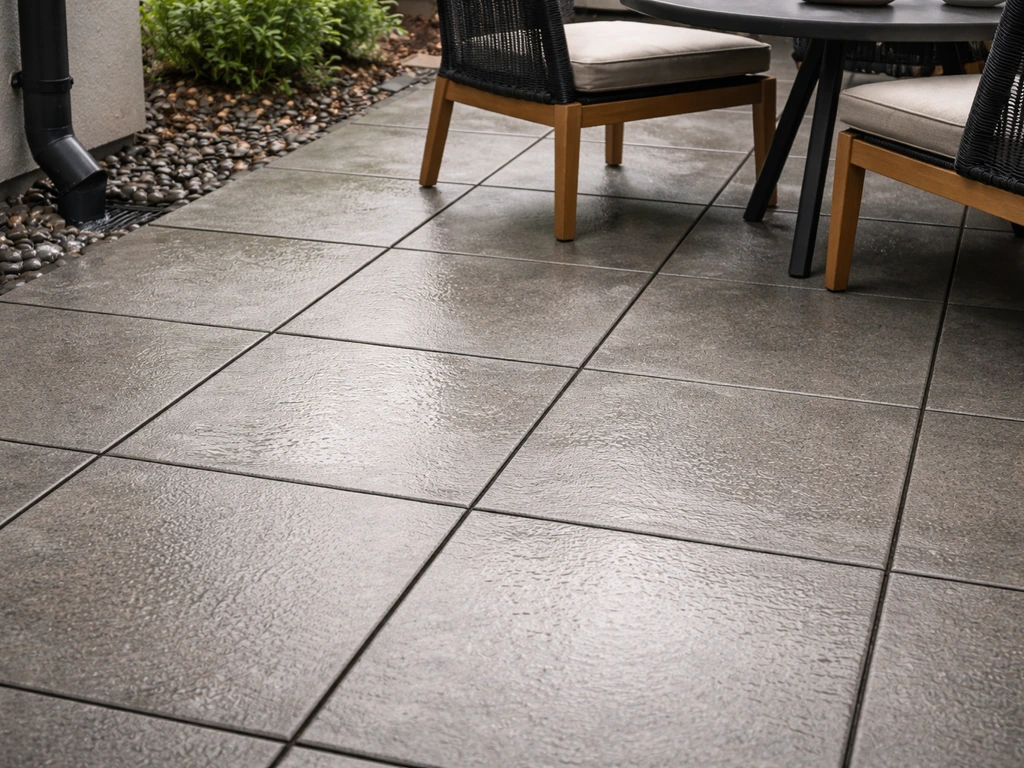
Match your tile to your climate and how you use the patio
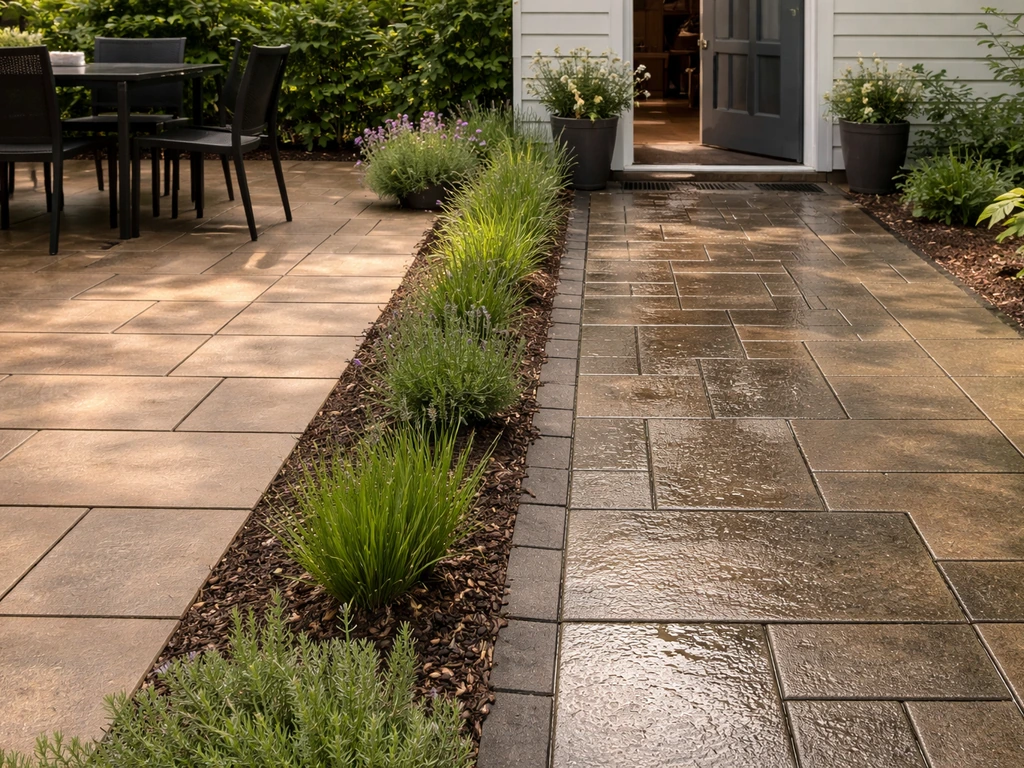
Before you look at a single tile sample, think about where you live and how your patio gets used. These two factors will eliminate most of your options before you even get to aesthetics. A tile that's perfect in Phoenix can crack apart in Minneapolis after one winter, and a gorgeous polished stone that works beautifully in a covered Houston patio becomes a liability on an uncovered deck in Seattle.
Start with freeze/thaw. If your area sees consistent freezing temperatures, you need a tile with very low water absorption, typically 0.5% or less by weight as defined under ANSI A137.1 and tested per ASTM C373. Water gets into porous tile, freezes, expands, and fractures the tile or pops it off its bed. Porcelain meets this threshold reliably. Most natural stone and unglazed ceramic does not.
Next, think covered versus uncovered. An uncovered patio bakes in direct UV, stays wet after rain, and collects debris constantly. You need a tile that won't fade, won't stay slippery when wet, and drains well. A covered patio has more latitude. You can use slightly more porous tile, polished finishes in low-traffic corners, and you'll spend less time on sealing and cleaning.
Finally, think about your use case. Heavy furniture, a grill area, and kids or dogs are hard on grout lines and softer stone. Light entertaining with occasional foot traffic opens up options like slate or travertine if you're willing to seal them. High heat climates like Arizona and Texas also mean tile surface temperatures can reach 150°F or more in full sun, so color and material both matter for barefoot comfort.
| Climate/Condition | Best Tile Match | Avoid |
|---|---|---|
| Freeze/thaw (Midwest, Northeast, Mountain West) | Porcelain (0.5% absorption or less) | Natural stone, standard ceramic |
| Hot, sunny, uncovered (Southwest, South) | Porcelain (light colors), slate | Dark polished stone, glazed ceramic |
| Wet/rainy, uncovered (Pacific Northwest, Gulf Coast) | Textured porcelain, slate | Smooth glazed tile, polished marble |
| Covered patio, mild climate | Porcelain, travertine, slate | Very few restrictions with proper install |
| Pool surround or splash zone | Textured porcelain, bullnose-edged stone | Polished tile, unsealed marble |
The main outdoor tile types and where each one actually wins
Porcelain: the workhorse for most situations
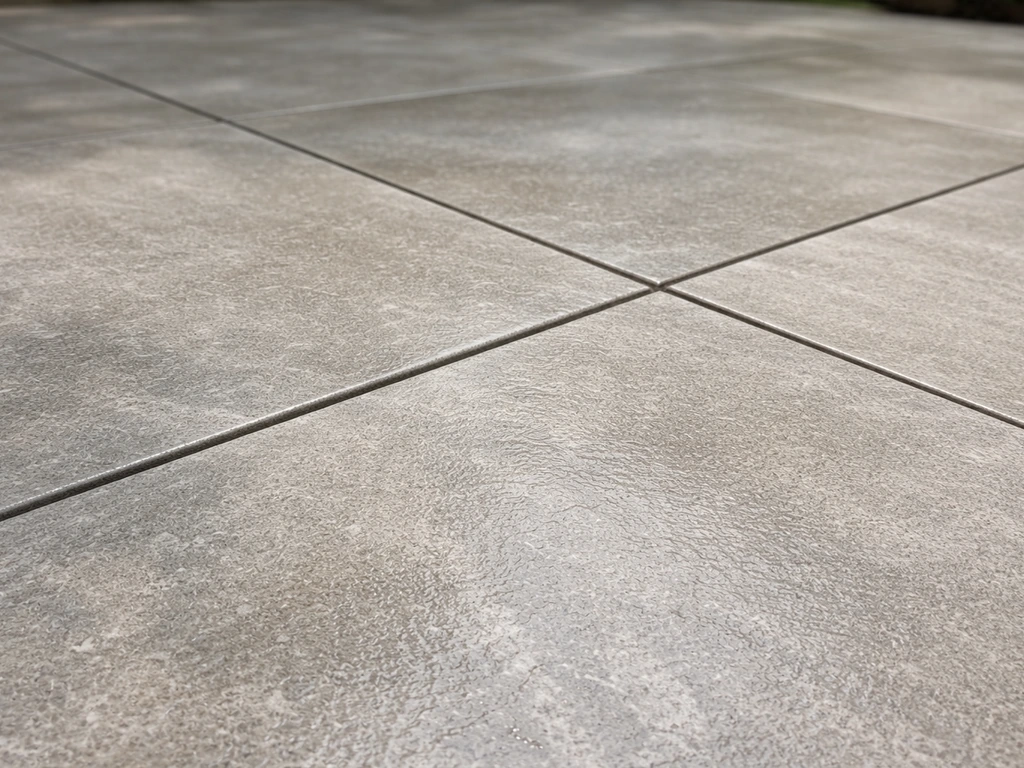
Porcelain is the default recommendation for outdoor patios for good reason. It's fired at higher temperatures than standard ceramic, which makes it denser, harder, and far less porous. That 0.5% or below water absorption threshold is what allows it to survive freeze/thaw cycles without cracking. It also doesn't need sealing, resists stains and fading well, and comes in every conceivable look including wood-grain planks, stone looks, concrete-style large formats, and more. The downside is that glossy or polished porcelain is genuinely dangerous when wet, so you need to pay attention to finish. Stick with matte, textured, or satin finishes for any uncovered outdoor use.
Natural stone: beautiful but demanding
Slate, travertine, bluestone, and granite are all used on patios, and they look incredible. But they require more planning and upkeep than porcelain. Slate is naturally textured and slip-resistant, drains well, and holds up reasonably in cold climates if you choose a dense variety. Travertine is porous and must be sealed every one to two years outdoors, and it's not a good call in freeze/thaw climates. Bluestone is a solid mid-tier option with good durability. Marble outdoors is a mistake for most homeowners: it scratches, stains, and gets slippery when wet. Granite is the most durable natural stone option but still needs occasional sealing.
Ceramic: mostly for covered, mild climates only
Standard glazed ceramic tile is usually a bad call for outdoor patios unless you're in a mild climate with a covered space. It's more porous than porcelain, absorbs more water, and can crack in freezing weather. It also chips more easily under furniture movement and dropped items. That said, some thicker, frost-rated ceramic tiles exist, so if you're on a tight budget in a mild zone, check the spec sheet for frost resistance. If it's not explicitly rated for exterior freeze/thaw use, don't put it outdoors.
Concrete and cement tile: a niche but viable option
Encaustic cement tiles and concrete-look porcelain are two different things. Actual cement tile is porous and requires sealing and careful maintenance outdoors. It's best in covered patios in mild climates and gives a striking, artisan look. Concrete-look porcelain, on the other hand, gives you almost all the same aesthetics with far less maintenance, and is one of the most popular large-format outdoor tile choices right now. If you love the industrial concrete look, porcelain with that finish is almost always the smarter outdoor choice over actual cement tile.
Slip resistance and drainage: what the ratings actually mean
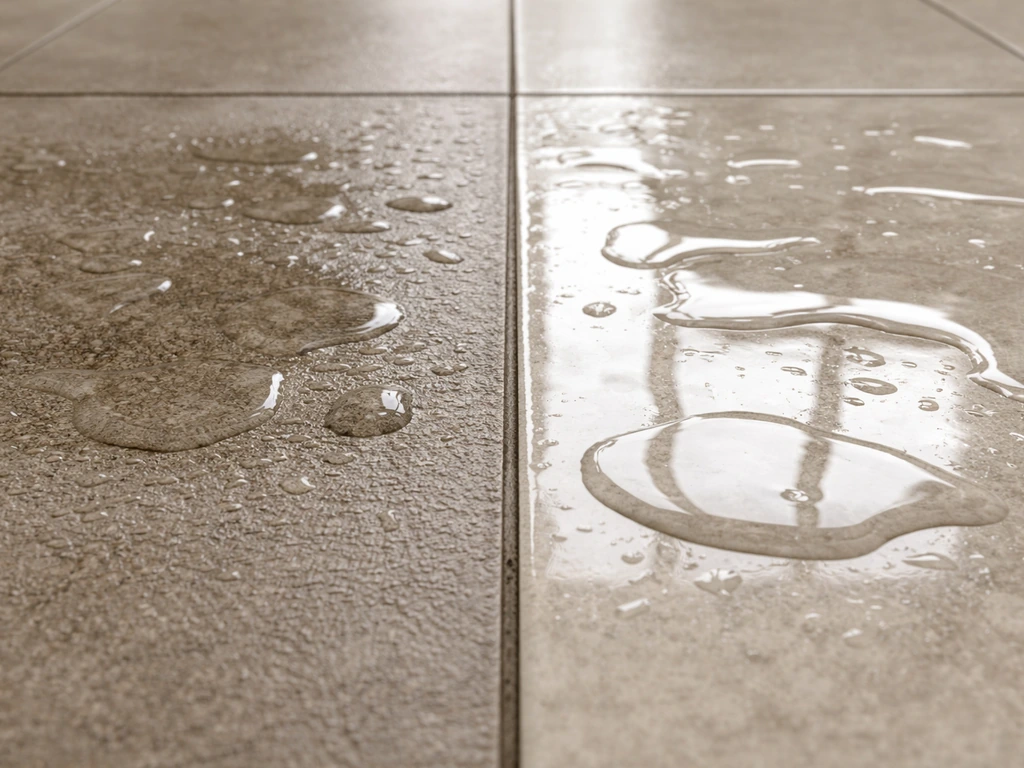
Slip resistance on tile is measured by a metric called DCOF (Dynamic Coefficient of Friction). blank" rel="noopener noreferrer">For wet areas and exterior use, you generally want a DCOF value of 0.42 or higher. But here's the thing: the Tile Council of North America (TCNA) is explicit that a DCOF value above 0.42 alone doesn't guarantee safety in wet conditions. It's a comparative lab metric, not a pass/fail guarantee. Other factors including proper tile selection, installation quality, and maintenance all affect real-world slip performance. So use DCOF as a filter, not a finish line.
In practical terms, this means avoiding polished, honed, or glossy tile surfaces for any uncovered patio. Textured, matte, and slip-resistant finishes are what actually prevent falls when tile is wet from rain or a hose. Look for tile labeled specifically for exterior or wet use, not just a DCOF number.
Drainage matters just as much as slip resistance. Outdoor tile should be installed with a slight slope, typically 1/8 inch per foot, to direct water away from the house and prevent pooling. Standing water on a patio does two things: it creates a slip hazard and, in freeze/thaw climates, it works its way under tiles and into grout lines where it can cause cracking and heaving. Drainage is an installation issue as much as a tile choice issue, which is why substrate prep matters so much (more on that below).
How much maintenance you'll actually do (be honest with yourself)
The biggest source of regret I see from homeowners who chose natural stone for their patio is maintenance. They picked travertine or marble because it looked beautiful in the showroom, and two years later it's stained, the seal has worn off, and it's become a slip hazard. Here's the honest breakdown by material.
| Tile Type | Sealing Required? | Sealing Frequency | Stain Risk | Cleaning Difficulty |
|---|---|---|---|---|
| Porcelain (matte/textured) | No | None | Low | Easy (hose, mild cleaner) |
| Slate | Optional but recommended | Every 2–3 years | Low-Medium | Easy to moderate |
| Travertine | Yes | Every 1–2 years outdoors | High if unsealed | Moderate |
| Bluestone | Recommended | Every 2–3 years | Medium | Moderate |
| Granite | Recommended | Every 3–5 years | Low-Medium | Easy to moderate |
| Ceramic (frost-rated) | No | None | Low-Medium | Easy |
| Cement tile | Yes | Every 1–2 years | High if unsealed | Moderate to high |
Porcelain is genuinely low maintenance. A periodic sweep and occasional hose-down is usually all it needs. Natural stone requires you to stay on a sealing schedule or accept that it will absorb stains from cooking oil, wine, and general grime. If you grill on your patio or have kids and pets, factor that into your choice. Grout maintenance is a separate issue: wide, light-colored grout joints in high-traffic areas show dirt fast and require more scrubbing.
Installation basics that determine whether outdoor tiles survive
More outdoor tile fails because of bad installation than because of the wrong tile. Getting the substrate, setting materials, and grout right is where the real work happens.
Substrate and slope
Outdoor tile needs a solid, stable, non-flexing base. A concrete slab is the most common substrate. If you're tiling over an existing slab, check it for cracks, heaving, or soft spots first. Small cracks can be filled, but a seriously compromised slab needs repair before tiling. If you're building from scratch, a minimum 4-inch reinforced concrete slab is standard. Remember that slope: 1/8 inch of fall per linear foot directed away from the house or toward a drain.
Uncoupling membranes and waterproofing
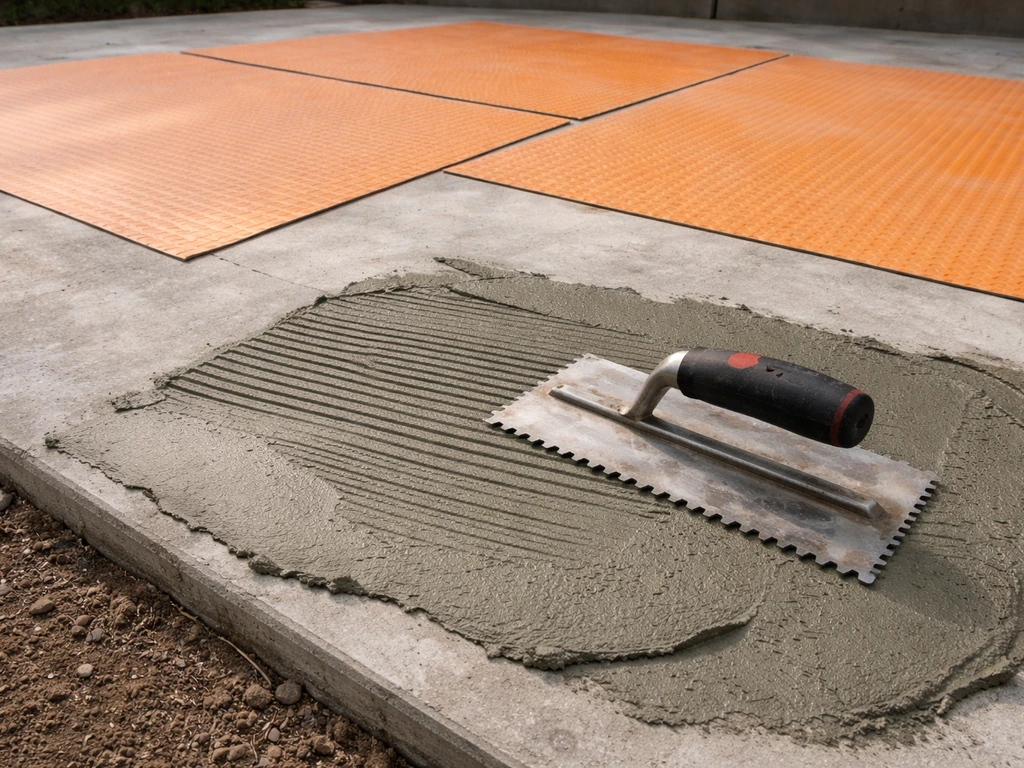
An uncoupling membrane (products like Schluter DITRA are common) installed between the slab and tile does two important things: it isolates minor slab movement from the tile above, reducing crack transmission, and it allows moisture drainage underneath the tile. One real-world discussion on r/HomeImprovement includes user experiences with Ditra adhesion and whether it flexes during installation, which can help set expectations Schluter DITRA. In freeze/thaw climates or anywhere you get significant rain, an uncoupling membrane is worth the extra cost. For covered patios over wood-framed subfloors or decking, a waterproofing membrane is essential to prevent water from reaching the structure below.
Thinset and adhesive selection
Not all thinsets are created equal for outdoor use. Use a polymer-modified thinset rated for exterior applications. Large-format tiles (anything over 15 inches) need medium-bed mortar to maintain proper coverage without lippage. Coverage matters: you want at least 95% back-coverage on outdoor tile to prevent hollow spots where water can collect and freeze. Do not use mastic or organic adhesives outdoors; they break down with moisture and temperature changes.
Grout and expansion joints
Use sanded grout for joints wider than 1/8 inch, which most outdoor tile installations will have. Epoxy grout is highly stain- and moisture-resistant and worth considering for patios where spills are common. Unsanded grout is too weak for outdoor joints. Equally important: expansion joints. Outdoor tile expands and contracts with temperature, and without proper expansion joints (typically at perimeters, transitions, and every 8 to 12 feet in large installations), your tile will crack or pop up no matter how good your thinset is. These joints get filled with flexible sealant, not grout.
Size, layout, and design choices that actually matter
Tile size has a real impact on how your patio looks and functions. Large-format tiles (24x24 or even 36x36 inches) are extremely popular right now and look clean and modern. They work well on large open patios and have fewer grout lines, which means less dirt accumulation. But they're harder to install (you need very flat substrate and medium-bed mortar), and on small patios they can feel overwhelming or create awkward cuts. On small or irregularly shaped patios, 12x24 or 16x16 tiles are often more practical.
Color affects heat absorption and barefoot comfort. Dark tiles in full-sun patios in hot climates get extremely hot. Light grey, beige, or white porcelain tiles stay noticeably cooler underfoot. In shaded or northern patios, dark tile can look rich and grounded without the heat penalty. If you're in Phoenix or similar climates and want dark tile, at minimum keep it for shaded zones.
Texture is a two-edged choice. More texture means better slip resistance and a more natural stone feel, but it also traps dirt, debris, and mold in outdoor conditions. Lightly textured matte surfaces hit the sweet spot for most patios: they pass the slip test, are easy to clean with a stiff brush, and look great. Very rough textures (some slate and tumbled stone) can be hard to clean if you're in a zone with lots of tree debris or pollen.
Grout color is often an afterthought but it changes the whole look of the floor. Light grout with light tile reads as seamless and airy. Dark grout creates a grid that highlights each tile individually. Medium grey grout is the most forgiving for outdoor patios because it hides dirt between cleanings and works with almost any tile color. Avoid bright white grout outdoors unless you want to clean it constantly.
- Large-format tiles (24x24+): best for big open patios, modern aesthetic, fewer grout lines to clean
- Medium tiles (12x24, 16x16): versatile, easier to install yourself, work on small and irregular spaces
- Staggered (brick) layout adds visual interest but creates more complex cuts at edges
- Running bond or straight grid layouts are DIY-friendliest and look clean
- Light colors: cooler in sun, show less dirt in shade
- Dark colors: rich look, dramatically hotter in full sun
- Medium grey grout: the most practical choice for most outdoor patios
What to measure and check before you buy anything
Before you go tile shopping or start getting quotes, spend 30 minutes in your backyard with a tape measure and a notepad. This is where most homeowners skip steps and then over-order or under-order tile.
- Measure your patio area accurately in square feet, including any irregular shapes. Divide complex shapes into rectangles and add them together.
- Add 10% to your square footage for cuts and waste. If your layout is diagonal or complex, add 15%.
- Check your existing slab (if applicable): look for visible cracks, soft spots, or areas that have heaved. Press firmly on any suspect areas.
- Measure the slope of your current slab with a level. If water pools on the patio now, note where.
- Identify any transitions to adjacent surfaces (lawn, concrete steps, door thresholds) where you'll need edge tile or bullnose.
- Check sun exposure: note which areas are in full sun vs. shade at midday to guide your color choices.
- Count the number of obstacles: drain locations, post footings, outdoor kitchen pads. These all affect layout complexity.
Budget breakdown: what outdoor patio tile actually costs
Costs vary quite a bit depending on your region, tile choice, and whether you DIY or hire out. Here's a realistic breakdown for a 400-square-foot patio as a baseline.
| Cost Item | Budget Range | Mid-Range | Premium |
|---|---|---|---|
| Porcelain tile (materials) | $1–$3/sq ft | $3–$6/sq ft | $6–$15+/sq ft |
| Natural stone tile (materials) | $3–$6/sq ft | $6–$12/sq ft | $12–$25+/sq ft |
| Polymer-modified thinset | $0.50–$0.75/sq ft | $0.75–$1/sq ft | $1–$1.50/sq ft |
| Uncoupling membrane | Optional: $1–$1.50/sq ft | $1.50–$2/sq ft | $2–$3/sq ft |
| Grout and sealants | $0.25–$0.50/sq ft | $0.50–$1/sq ft | $1–$2/sq ft |
| Professional labor (if hired) | $8–$12/sq ft | $12–$18/sq ft | $18–$30+/sq ft |
| DIY tool rental/purchase | $150–$400 total | $400–$800 total | N/A |
For a 400-square-foot patio, a mid-range DIY install with porcelain tile and an uncoupling membrane typically runs $2,000 to $4,000 in materials. Hiring a professional for the same project typically adds $4,800 to $7,200 in labor, bringing total installed cost to roughly $7,000 to $11,000 at mid-range. Premium natural stone with professional installation on a large patio can easily exceed $15,000 to $20,000.
DIY vs hiring a pro: where the line really is
Outdoor tile is a step up from indoor tile in complexity. The substrate work, slope management, membrane installation, and expansion joint placement all require more precision than most bathroom or kitchen tile jobs. That said, a DIYer who's comfortable with tools, is willing to take their time on substrate prep, and uses proper outdoor materials can absolutely pull this off on a straightforward rectangular patio with a solid existing slab.
Hire a professional if any of these apply: your slab is in rough shape and needs significant repair or grinding, you're dealing with drainage issues that require slope corrections, your patio is large (over 500 square feet) or has a lot of obstacles, you're using large-format tile over 24 inches, or you're tiling a pool surround or elevated deck over a living space. If you are tiling a pool surround, choosing the best pool patio surfaces with strong slip resistance and proper drainage helps prevent issues around standing water. These are situations where a bad DIY job costs more to fix than the labor savings were worth.
- DIY-friendly: rectangular patio, solid existing slab, mid-size tile (12x12 to 16x16), porcelain or ceramic
- Hire a pro: cracked or uneven slab, drainage problems, large-format tile, elevated surfaces or pool surrounds
- Get at least three contractor quotes and ask specifically about outdoor experience, not just general tile work
- Ask contractors how they handle expansion joints and what membrane system they use—vague answers are a red flag
- If you're connecting with vetted local contractors, ask for references from outdoor patio projects in your climate specifically
Your decision checklist before pulling the trigger
Before you finalize your tile choice and start ordering, run through this quick checklist. It covers the decisions that matter most and catches the mistakes that lead to regret.
- Is your tile frost-rated for your climate? (If freeze/thaw is a factor, confirm absorption rate of 0.5% or less.)
- Is the finish matte or textured for wet/outdoor use? (Avoid polished or glazed smooth finishes for uncovered patios.)
- Does the DCOF value meet or exceed 0.42, and is it explicitly rated for exterior wet use?
- Have you planned for expansion joints every 8–12 feet and at all perimeter edges?
- Is your substrate flat, solid, and sloped correctly? (1/8 inch per foot minimum.)
- Are you using polymer-modified exterior thinset and exterior-rated grout?
- Have you accounted for 10–15% overage in your tile order for cuts and waste?
- Do you have a maintenance plan? (Sealing schedule if natural stone, cleaning routine for grout.)
- Have you considered surface temperature in full-sun zones if you go barefoot?
If you're still comparing tile to other outdoor flooring options, it's worth knowing that tile competes directly with composite decking, concrete overlays, and pavers depending on your patio setup. Tile gives you the most design flexibility and the best combination of durability and low maintenance when you go porcelain, but it's not the only path. If you're specifically trying to land on the best surface for an outdoor patio, porcelain tile is often the most reliable option when you match the finish to wet conditions best surface for outdoor patio. Porcelain tile is often the best patio floor covering when you match the finish to wet conditions and focus on slip resistance porcelain tile is often the most reliable option. The broader decisions around flooring type, pool surrounds, and alternative materials are worth exploring alongside this guide as you finalize your patio plan. If you're comparing alternatives to standard tile, alternative patio flooring options like pavers, composite decking, or overlays may fit your climate and maintenance preferences.
FAQ
Can I use the same tile I see in indoor tile stores for an outdoor patio if it has a DCOF above 0.42?
Don’t rely on DCOF alone. Outdoor performance also depends on water absorption, freeze-thaw rating, and the finish type. For uncovered patios in cold regions, confirm the tile is rated for exterior use and has very low water absorption (around 0.5% or less), and avoid polished or glossy finishes because they can still be dangerously slick when wet.
What tile finish is safest for a wet or rain-prone outdoor patio?
Look for matte, textured, or satin finishes labeled for exterior or wet use. Even porcelain can become slippery if it’s too glossy or highly polished. If your patio gets frequent hose-down, sprinklers, or coastal salt spray, prioritize higher traction textures and test samples in a “wet” condition.
Do I need to seal porcelain tiles or porcelain grout outdoors?
Most properly selected exterior porcelain does not need sealing. The maintenance focus is usually grout and joint care instead. If you’re using a grout type that calls for sealing (some sanded grouts or specific natural-stone products), follow that product’s schedule, but porcelain itself is typically a no-seal choice.
How can I tell whether a natural stone tile is too porous for my climate?
Ask for the stone’s water absorption or sealing requirements in writing and match it to your conditions. Travertine and many softer stones generally need frequent sealing and are a problem in freeze-thaw areas. If you cannot commit to an ongoing sealing routine, porcelain with a stone look is usually the safer long-term decision.
What happens if I install tile without proper expansion joints?
Without perimeter and intermediate expansion joints, temperature movement can crack tiles, pop edges, or stress grout until it fails. Even when thinset and substrate are correct, expansion joints are what prevent movement from transferring into the tile field. In large patios, joints are typically needed at regular intervals, often every 8 to 12 feet, plus transitions and edges.
Is an uncoupling membrane always required for outdoor tile?
It’s strongly recommended for most outdoor installs, especially over any slab that may crack or shift, and in freeze-thaw or heavy rainfall areas. If you’re installing over a solid, well-prepped slab in a mild climate, it may be possible to proceed without it, but membrane benefits are usually worth the cost because they help reduce crack transmission and support moisture management.
Can I install outdoor patio tile over an existing slab or existing tile?
Only if the substrate is stable and well bonded. Check for cracks, heaving, soft spots, hollow areas, and any movement. Small issues can sometimes be repaired or leveled, but seriously compromised slabs should be fixed first. If the existing surface is not sound, tiles over it can fail because the movement will transfer upward.
What’s the safest grout choice if I grill outdoors or expect lots of spills?
Epoxy grout is often the best fit for spill-heavy patios because it resists staining and moisture better than typical cement grouts. If you choose cement grout, plan for more regular cleaning, and consider darker or medium grey grout to hide routine dirt at the joint edges.
What tile size should I choose for a small patio to avoid awkward cuts and lippage?
For small or irregular spaces, smaller formats like 12x24 or 16x16 usually reduce awkward trimming and make it easier to maintain consistent flatness. Large-format tiles can look modern and reduce grout lines, but they require a very flat substrate and more skill to avoid lippage.
How much slope do I actually need, and what if my yard drains toward the house?
A common target is about 1/8 inch of fall per linear foot, directed away from the house or toward a designed drain. If your yard naturally drains toward the home, you may need drainage corrections before tiling, otherwise water can pool under tiles and create slip and freeze-thaw risks.
Is concrete-look porcelain always better than real cement tiles for outdoors?
In most outdoor situations, yes. Real cement tiles are porous and typically need sealing and careful upkeep, which can be a mismatch for freeze-thaw climates or patios that stay wet. Concrete-look porcelain offers a similar visual with far less maintenance and typically better freeze-thaw durability when you choose the right exterior-rated product and finish.
Should I worry about tile surface temperature in hot climates?
Yes. Dark tiles can become extremely hot in full sun, which affects barefoot comfort and can increase discomfort around grills. If you want darker colors in high-heat regions, keep them in shaded zones, and consider lighter greys, beiges, or whites for the main walking and seating areas.
Do I need to worry about mold and algae on outdoor textured tile?
Textured finishes can trap debris and moisture, which can encourage algae growth in damp climates. Choosing a lightly textured matte surface, staying disciplined with sweeping, and ensuring good drainage all reduce the risk. If you’re surrounded by trees or pollen sources, opt for textures that are easy to brush clean.
How do I estimate how much tile and grout to order for an outdoor patio?
Plan for overage due to cuts, layout complexity, and breakage. A practical approach is to order extra beyond the math for square footage, and the overage should increase for small patios with lots of obstacles or for large-format tiles with tighter tolerances. Also account for grout usage based on joint width, not just tile area.
When should I hire a pro instead of DIY for patio tile?
Hire help if you need slope correction, your slab is badly damaged, you’re working over an elevated deck or pool surround, or you’re using large-format tiles over about 24 inches. Pro installation also matters when expansion joint planning and waterproofing details are critical, because fixing a failed outdoor installation is usually more expensive than doing it right the first time.