
For most Atlanta backyards, the best outdoor patio setup is a concrete or porcelain-tile slab covered by a solid or louvered pergola, paired with at least one high-velocity outdoor ceiling fan and a misting system. That combination handles the heat (Atlanta averages highs above 88°F from June through August), sheds the serious afternoon thunderstorms that roll through spring and summer, and gives you a space that's genuinely usable from March through November. Everything beyond that, string lights, a sound system, privacy screens, is layering comfort onto a foundation that actually works for this climate.
Best Outdoor Patio Atlanta Guide for Hot, Stormy Summers

Elise Prescott
19 May 2026
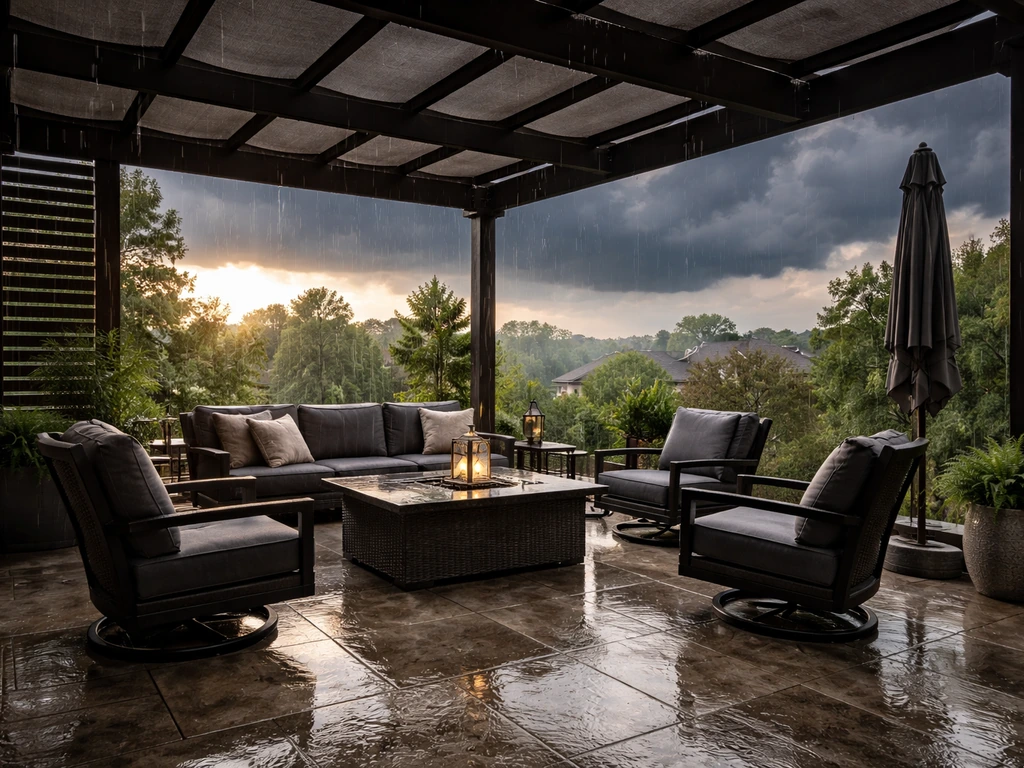
How to choose the best patio for Atlanta's specific conditions
Atlanta is hot, humid, rainy, and occasionally violent with the weather. The NOAA 1991–2020 climate normals put Atlanta's July average high at about 89°F with humidity that makes it feel hotter. NOAA/NCEI also publishes downloadable “Summary of Monthly Normals” PDFs for Atlanta Hartsfield Int’l (station USW00013874, 1991, 2020) that include the mean monthly conditions you can use to estimate typical summer and winter exposure. You get around 50 inches of rain per year spread fairly evenly across the calendar, which means there's no real dry season to count on. The National Weather Service also documents that the Atlanta area gets damaging thunderstorm winds, large hail, and tornadoes every single year, with the worst window being spring and summer afternoons. That last point matters for structure selection in a way that most patio guides skip entirely.
So the four filters for picking the right patio here are: shade capacity (not just aesthetics), drainage and water resistance, structural anchoring that can handle storm winds, and surface material that doesn't turn into a slip hazard when wet. Get those four right and you'll be using your patio far more than the average Atlanta homeowner who just dropped pavers and called it done. To find the best outdoor patio looks without sacrificing comfort, focus on shade capacity, drainage, and a slip-resistant surface best patio.
Before you buy anything, step outside at noon in June and note where the sun hits. Check where water pools after a heavy rain. Measure your usable space in feet, that's what determines what styles and cover structures are realistic for your lot. A 10x12 slab covered by a pergola lives very differently than a 20x24 open patio, and your decisions about shade, fans, and furniture flow from that number.
Patio styles that actually work in Atlanta
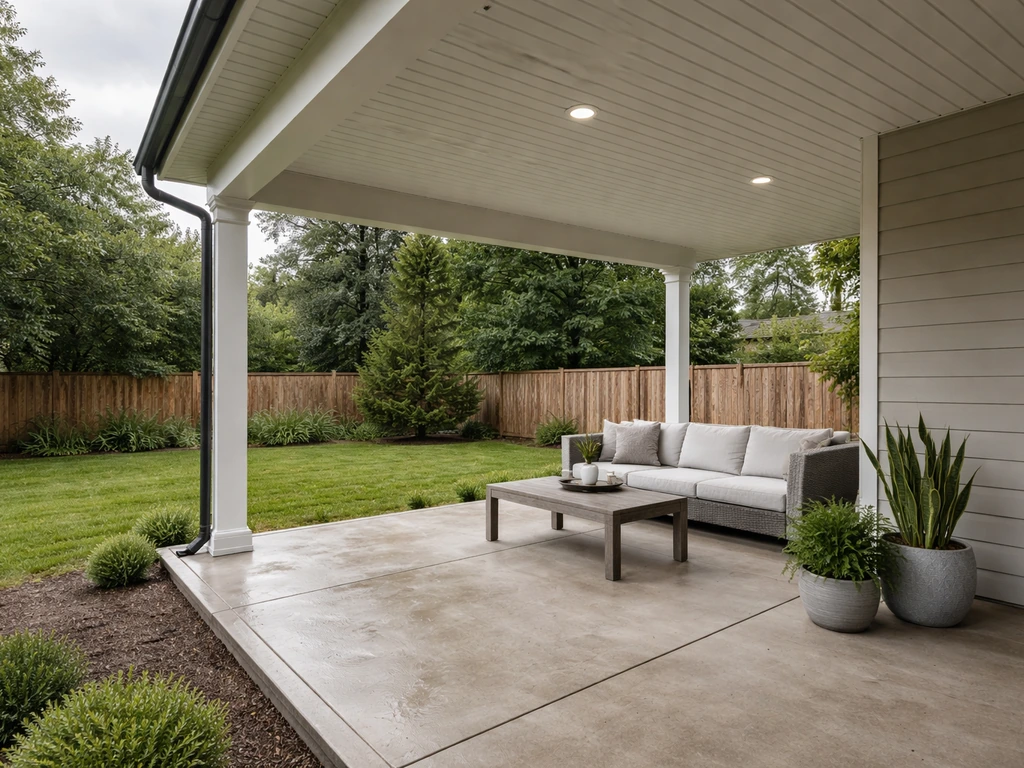
Not every patio style translates well to the Southeast. Open flagstone patios look beautiful in magazine photos but cook you in July. Here are the styles that consistently perform well for Atlanta homeowners.
Covered concrete slab
This is the workhorse of Atlanta patios. A poured concrete slab (4 inches minimum, 6 inches if you plan to put heavy furniture or a hot tub on it) with a pergola, attached roof, or solid patio cover overhead gives you year-round usability. Concrete is cheap per square foot, drains well when sloped correctly (1/4 inch per foot away from the house), and handles Atlanta's occasional freeze-thaw cycles better than most people expect. Stamp it or apply a micro-topping if plain gray isn't your thing.
Screened porch or three-season room
Screened enclosures are extremely popular in Atlanta for a reason: they block insects (and Atlanta has plenty), filter some sun, and let you stay outside during light rain. A basic screen enclosure built on an existing slab is one of the better value-adds you can do for comfort. The tradeoff is that they don't stop the real heat, you'll still want a fan or misting system inside a screened porch during July and August.
Covered deck
Composite or pressure-treated wood decks with overhead pergola or shade sail coverage work well if your yard is sloped and a grade-level slab isn't practical. Composite decking (like Trex or Fiberon) is strongly recommended over natural wood here because Atlanta's humidity and rain will deteriorate untreated or poorly maintained wood quickly. A composite deck costs more upfront but saves real money on annual staining and repairs.
Open paver or flagstone patio (with caveats)
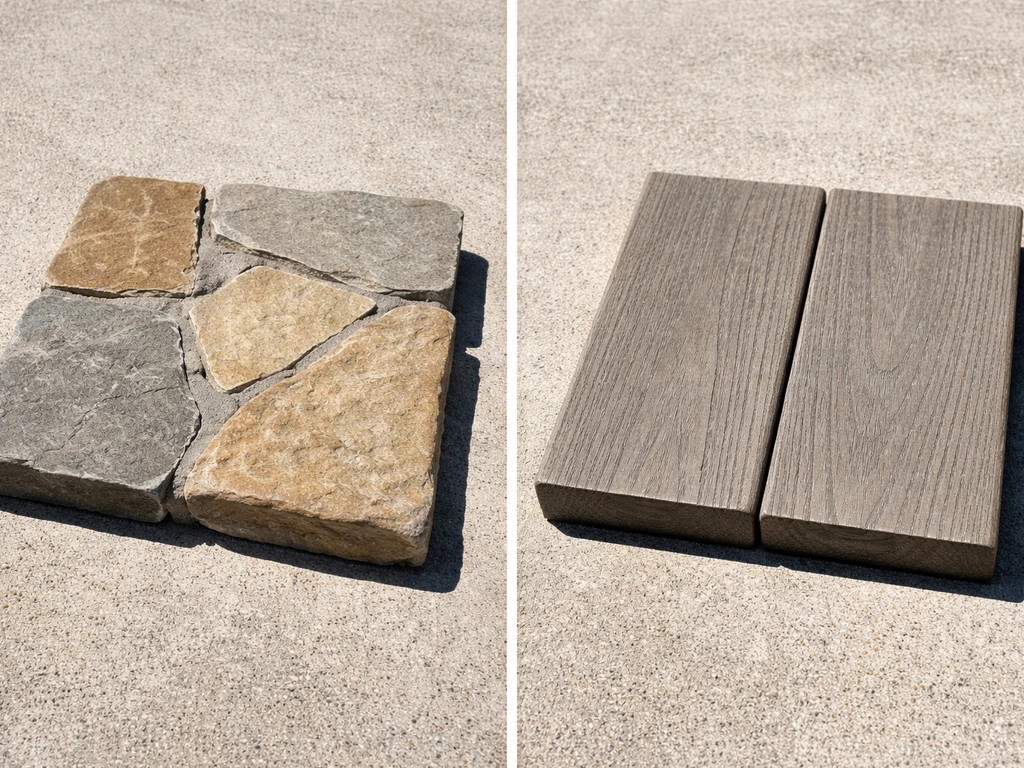
Pavers and natural flagstone are popular for their look, and they work fine as a surface. The problem in Atlanta is that without overhead shade, you're limited to morning and evening use for about five months of the year. If you go this route, plan the shade structure first and let the paver layout follow it. If you want ideas to match Atlanta’s heat and storms, review these outdoor patio examples before choosing your layout and cover. Also budget for professional installation with proper sand-set base and edging, a DIY paver job that settles unevenly will need to be reset within two to three seasons in Atlanta's clay-heavy soil.
Best patio materials for Atlanta weather
Atlanta's combination of heat, humidity, heavy rain, and the occasional hard freeze creates a surprisingly demanding environment for outdoor materials. Here's how the main options stack up.
| Material | Durability in ATL Climate | Maintenance Level | Typical Cost (installed, per sq ft) | Best For |
|---|---|---|---|---|
| Concrete (broom or stamped) | Excellent | Low | $6–$18 | Covered patios, budget builds |
| Porcelain tile (outdoor rated) | Excellent | Low-Medium | $12–$22 | Modern look, covered slabs |
| Composite decking | Very Good | Low | $25–$45 | Elevated/sloped yards |
| Concrete pavers | Good | Medium | $15–$30 | Open patios, DIY-friendly |
| Natural flagstone | Good | Medium-High | $20–$40 | Irregular, organic layouts |
| Pressure-treated wood | Fair | High | $15–$25 | Budget decks (short-term) |
| Brick | Very Good | Low-Medium | $18–$35 | Traditional homes, walkways |
Porcelain tile rated for outdoor use (look for PEI rating of 4 or 5 and a COF of 0.6 or higher for slip resistance) is genuinely one of the best surfaces you can put down for a covered Atlanta patio. It handles heat, doesn't stain, and cleans up in minutes. The catch is that it needs a solid, level substrate and professional installation, tile over a poorly prepared slab will crack. For open, uncovered patios where you want a DIY-friendly option, concrete pavers on a compacted gravel base are hard to beat.
Patio covers and shade: pergolas, awnings, and solid roofs
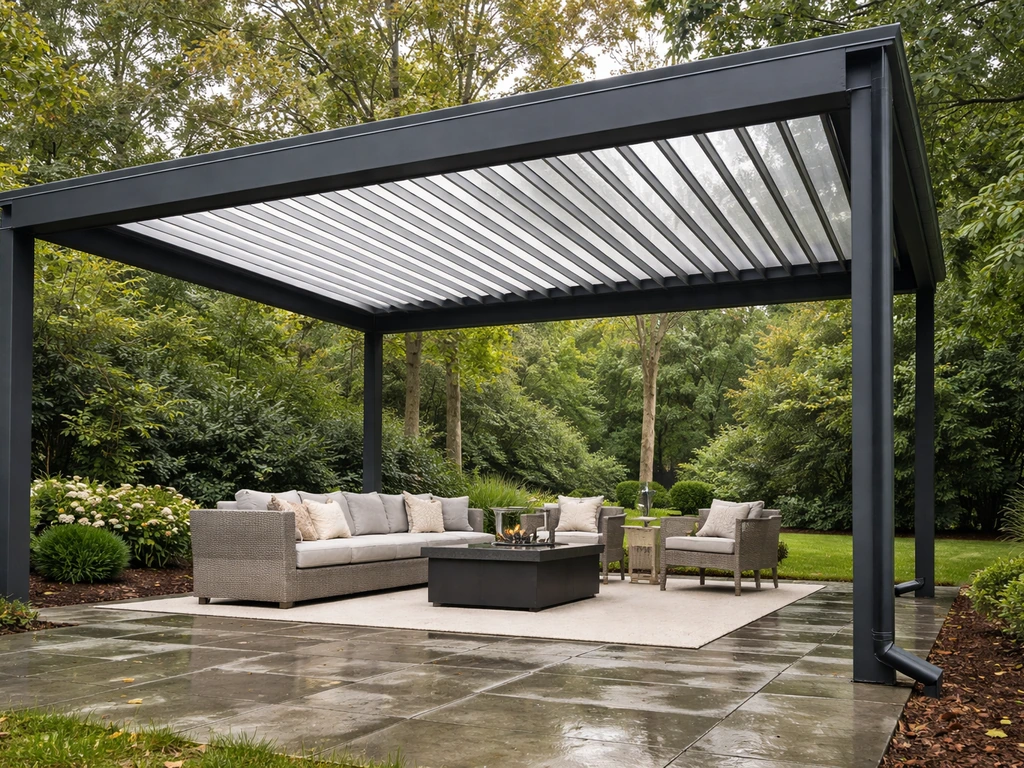
Shade is not optional in Atlanta. If you want the best patio setup for Atlanta weather, focus on shade, drainage, and materials that hold up to humidity and storms. It's the single biggest factor in whether you use your patio or not. The question is which cover structure makes sense for your budget, your home's architecture, and how much wind protection you need.
Louvered pergolas
Motorized louvered pergolas (brands like Struxure, Four Seasons, and Azenco are common in the Atlanta market) are the premium choice and honestly worth the cost if budget allows. The motorized louvers open for airflow on cool days and close when rain starts or the sun gets brutal. They handle moderate wind loads well and look great attached to the house or freestanding. Expect to pay $15,000 to $40,000 installed for a quality motorized louvered pergola, depending on size. That sounds like a lot until you compare it to what you'd spend on a screened room addition.
Solid patio covers (attached roof extension)
A solid insulated patio cover or a full roof extension off the back of your house is the most protective option. It handles any storm, blocks full sun, and can support ceiling fans and lighting easily. The downside is cost and the need for permits in most Atlanta-area municipalities. A solid attached patio cover typically runs $10,000 to $25,000 depending on span and materials. This is also the option most likely to require a licensed contractor and structural review, which matters given the wind and tornado risk GEMA highlights for the region. FEMA defines a “high tornado risk” jurisdiction as one that has a shelter design wind speed of 250 mph for tornadoes, based on ICC 500 Figure 304.2(1) wind and tornado risk GEMA highlights for the region.
Traditional open pergolas
A freestanding or attached open-beam pergola (wood, aluminum, or vinyl) in the $3,000 to $12,000 range gives partial shade and a finished look but won't protect you from Atlanta afternoon thunderstorms. If this is your budget, plan to add a shade sail, retractable canopy, or polycarbonate roof panels to make it genuinely functional in rain. Anchor posts in concrete footings at least 36 inches deep, given the storm-wind history in this area, a pergola anchored with surface-mount post bases alone is a liability.
Retractable awnings
Retractable awnings are a reasonable middle-ground option for homes where a full structure isn't feasible (think HOA restrictions or rental properties). They provide good shade and retract to avoid wind damage. The honest downside in Atlanta is that the weather changes fast, if you're not home to retract the awning when a storm rolls in, you risk damage. Motor-operated awnings with wind sensors solve this and are worth the extra $500 to $1,000. Budget $2,500 to $8,000 installed for a quality retractable awning on a typical 16- to 20-foot span.
Keeping cool: fans, misters, and heaters for Atlanta patios
A covered patio without active cooling in Atlanta is tolerable in September and May. In July and August it's just an expensive hot box. These are the upgrades that actually move the needle on comfort.
Outdoor ceiling fans
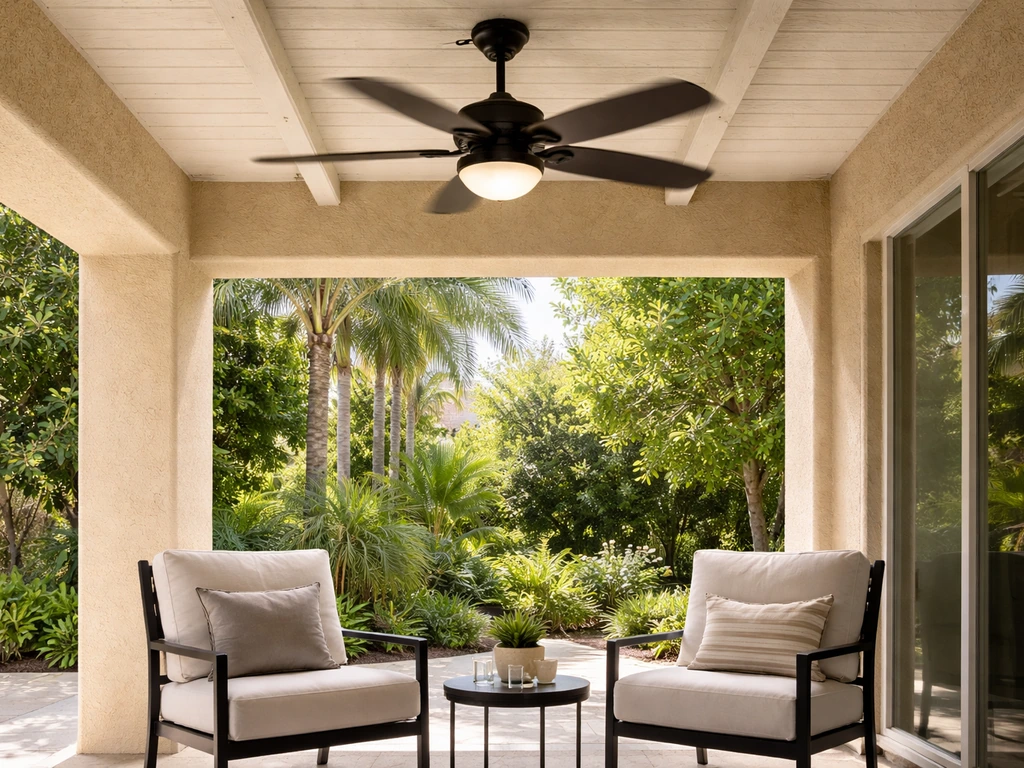
Install at least one outdoor-rated (UL listed for wet or damp locations) ceiling fan per 150 to 200 square feet of covered patio. For Atlanta, look for fans with blade spans of 52 inches or larger and a CFM (cubic feet per minute) rating above 5,000. Brands like Big Ass Fans (their Haiku Outdoor is excellent), Hunter, and Minka-Aire make fans built for humid, outdoor environments. A good outdoor fan in a covered space can lower the perceived temperature by 4 to 8 degrees, which makes a real difference at 90°F and 70% humidity.
Misting systems
High-pressure misting systems (1,000 PSI and above) are legitimately effective in Atlanta's climate, even with the humidity. The fine mist evaporates quickly enough that you don't end up soaked, and the evaporative cooling effect can drop ambient temperature by 10 to 20°F in direct use. Mid-pressure systems (100 to 250 PSI) are cheaper and easier to install but leave surfaces wetter. A basic mid-pressure misting kit runs $100 to $400 DIY; a professionally installed high-pressure system costs $1,500 to $3,500. For a permanent patio, the high-pressure system is the better long-term investment.
Patio heaters
Atlanta winters are mild enough that a patio heater extends your season from November through February rather than replacing a usable season entirely. Electric infrared heaters mounted overhead are cleaner and easier to live with than propane towers, no tanks to swap, no fumes, and they can be wired into your existing outdoor electrical circuit. Budget $200 to $600 per heater unit installed in a covered patio. If you already have a gas line nearby, a natural gas fire pit or heater eliminates propane logistics entirely.
Lighting, sound, privacy, and layout, the details that make it feel finished
Lighting
Layer your lighting rather than relying on one overhead fixture. A combination of recessed LED ceiling lights (for task and safety), string lights (for ambiance), and low-voltage path or step lighting gives you flexibility for any evening. All fixtures need to be rated for wet or damp outdoor locations. Smart-switch dimmers make a big difference in livability, being able to set the mood without replacing bulbs or fixtures is worth the small premium. Budget around $500 to $1,500 for a complete DIY lighting setup; professional electrical work for a fully wired system runs $1,500 to $4,000 depending on circuit complexity.
Outdoor speakers
Dedicated outdoor speakers mounted in the ceiling or on posts sound dramatically better than a Bluetooth speaker sitting on a table. Brands like Polk Audio, Sonance, and Klipsch make weatherproof speakers designed for covered outdoor spaces. A basic 4-speaker setup with an outdoor-rated amplifier costs $600 to $1,500 installed. If you're already running electrical for fans and lighting, adding speaker wire at the same time costs almost nothing incremental.
Privacy screens
Privacy matters more than most people account for when planning a patio, especially in Atlanta's subdivisions where lots are often narrow. Options include privacy screens on the pergola structure (fabric panels, cedar lattice, or aluminum slats), planted privacy hedges (Nellie Stevens Holly and Leyland Cypress grow fast in Georgia), or hardscape walls. For immediate results with a budget under $1,000, stretch-fabric privacy screens attached to pergola posts are the fastest path. For a permanent, low-maintenance solution, aluminum slat privacy panels ($800 to $2,500 installed) hold up well against humidity and require no painting.
Layout and traffic flow
A patio that doesn't flow from your house naturally gets used less. The door from your kitchen or living room should open directly onto the main seating zone, not onto a side path or dead end. Keep at least 36 inches of clearance between chairs and any wall or railing, and 48 inches minimum for the primary traffic lane through the space. Designate zones before you buy furniture: a dining area, a lounging area, and a grill station typically need to be 8 to 10 feet apart to feel comfortable. Sketch this on paper before you commit to a slab size.
What this actually costs: DIY vs hiring a contractor
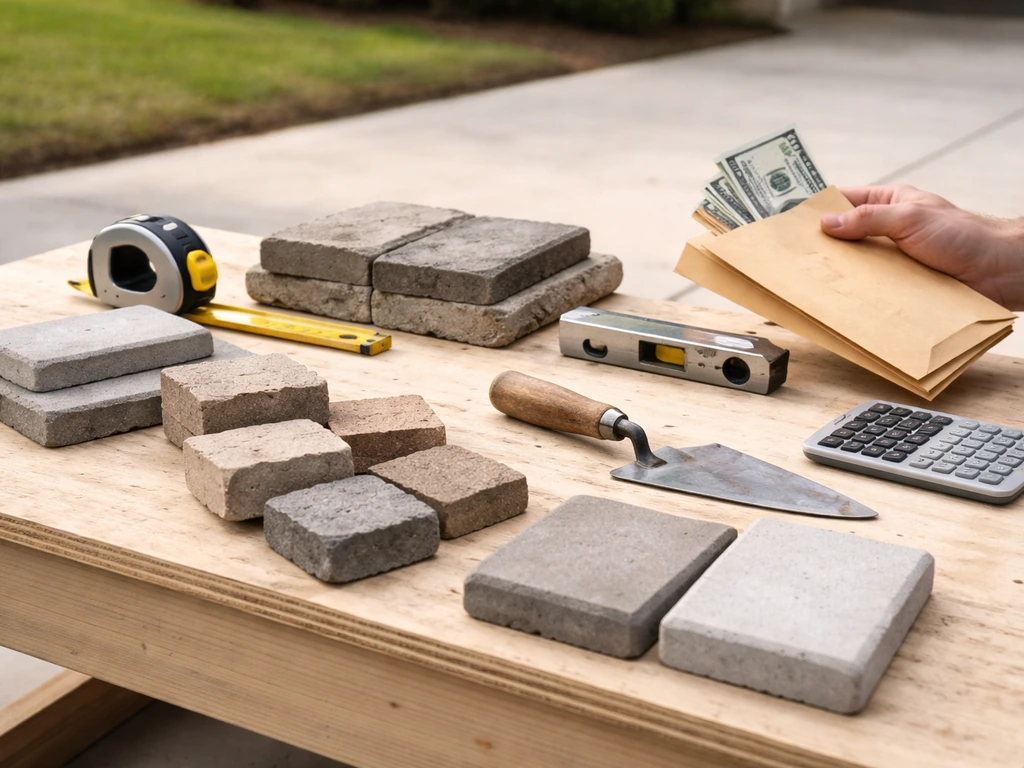
Here's the honest budget breakdown for common Atlanta patio setups. These ranges reflect current material and labor costs in the Atlanta metro area as of mid-2026 and assume average lot complexity. Simple lots (flat, easy access, no demolition) land at the lower end.
| Setup | DIY Cost Estimate | Contractor Cost Estimate | Notes |
|---|---|---|---|
| Basic concrete slab (12x16) | $800–$1,400 materials | $2,500–$5,000 | DIY requires form-setting and concrete pour experience |
| Concrete slab + basic open pergola | $2,500–$4,500 | $7,000–$14,000 | Pergola anchoring requires care in storm-prone ATL |
| Paver patio (16x20) | $1,800–$3,500 materials | $6,000–$14,000 | Base prep is critical; DIY failures are common |
| Covered patio (solid roof, attached) | Not recommended DIY | $12,000–$28,000 | Requires permits and structural engineering in most jurisdictions |
| Louvered motorized pergola | Not available DIY | $15,000–$40,000 | Manufacturer often requires certified installer |
| Screened enclosure (on existing slab) | $2,500–$5,000 materials | $6,000–$15,000 | Semi-DIY possible with kit systems |
| Full comfort package (fans, misters, lights, speakers) | $1,500–$4,000 DIY | $4,000–$10,000 pro-installed | Add-on to any covered patio |
DIY makes the most sense for pavers, basic open pergolas, and all the comfort add-ons (fans, misters, lighting). It gets riskier with concrete pours and anything structural that attaches to the house. If you're in doubt about whether your county requires a permit for a patio cover, and in most of metro Atlanta you do for anything over 200 square feet or attached to the structure, call the county building department before you start. An unpermitted structure can create real problems when you sell the home.
How to find and vet a local contractor
For Atlanta-specific patio work, ask any contractor you're considering for their Georgia State Contractor License number and verify it at the Georgia Secretary of State's website. Get at least three bids, and ask each bidder specifically how they anchor their post footings (you want concrete-footed posts at 36 inches or deeper for structural covers given the storm risk in this area). Check Google reviews and the BBB, but also ask for references from jobs done in the last 12 months in similar neighborhoods, Atlanta's clay soil and lot conditions vary enough that recent local experience matters.
Your pre-build checklist
Before you spend a dollar or call a contractor, run through this list. It'll save you from the most common Atlanta patio mistakes.
- Measure your usable backyard space in feet, noting any slope, drainage issues, or low-lying areas that flood after rain.
- Stand outside at noon in summer and identify where full sun, partial shade, and deep shade fall — this determines where your covered zone should go.
- Check your HOA rules and your county's building permit requirements for patio covers and structures before choosing a style.
- Decide your primary use case: dining and entertaining, lounging, or both — this drives the zone layout and minimum square footage.
- Set a realistic budget for the base structure first, then layer in comfort upgrades (shade, fans, lighting) by priority.
- If hiring out, collect three bids with written scope, and verify Georgia contractor licenses before signing anything.
- Plan electrical access early: fans, misters, lights, and heaters all need circuits, and retrofitting electrical into a finished patio costs significantly more than running it during construction.
The best Atlanta patio isn't a single product or style, it's a setup that fits your specific yard, handles the heat and storms that come with living here, and actually gets used. Start with a solid surface, add real shade, wire it for comfort, and build from there. That's the approach that holds up, season after season, in this climate.
FAQ
What’s the minimum roof or pergola coverage I need for an Atlanta patio to feel comfortable in summer?
Aim for coverage that shades the main seating area for at least 6 to 8 hours around peak sun (roughly late morning through mid-afternoon). Even a strong fan and misting won’t fully compensate if your lounge zone gets direct sun all day.
Should I choose porcelain tile or concrete pavers if I want the lowest long-term maintenance in Atlanta?
If you want the lowest ongoing effort and fast cleanups, outdoor-rated porcelain tile can be excellent, but only if the installer prepares a proper substrate. If your priority is repairability and cost control, concrete pavers on a correctly compacted base are often easier to re-level after settling.
How do I prevent standing water on a patio during heavy Atlanta thunderstorms?
Start with a slope plan, then verify it on-site. A target slope of about 1/4 inch per foot away from the house helps, but you should also confirm that you are not creating low spots behind planters, grills, or stepdowns that can trap water.
Are screened porches enough, or do I still need misting or a ceiling fan inside?
Screens improve insects and light rain tolerance, but they do not block radiant heat from direct sun. In July and August, most setups still need a high-velocity outdoor ceiling fan and, if you want true comfort during long afternoons, a misting system sized for the covered area.
What’s the most common anchoring mistake for pergolas and open-beam covers in Atlanta?
Relying on surface-mount post bases instead of concrete-footed posts. For storm exposure, posts should typically be set into concrete footings (commonly at least 36 inches deep in this region), and footings should match the wind and snow load assumptions in your permit documents.
If I install a retractable awning, what’s the smart way to manage storms when I’m not home?
Use a motorized awning with wind sensors and automatic retraction, and consider adding rain sensing if your model supports it. Also choose a fabric rated for outdoor UV and moisture, since awning materials can degrade faster in Atlanta’s humidity if they’re not designed for wet conditions.
Is it better to cool the patio with fans, misting, or heaters for extending the season?
For summer comfort, ceiling fans and misting are the biggest impact, fans for air movement and high-pressure misting for evaporative cooling. For season extension, infrared electric heaters are the practical switch in late fall and winter, because they add comfort without humidifying the space further.
What outdoor electrical upgrades should I plan for before contractors start building?
Plan electrical routes early for ceiling fan power, outdoor lighting, and any audio system wiring. Running conduit and wiring during construction usually costs less and avoids cutting into finished surfaces later, especially when you also need wet-location rated fixtures.
How much clearance do I need between furniture and walls on a covered patio?
At minimum, keep about 36 inches of clearance between seating and any wall or railing, and plan a wider primary traffic lane of around 48 inches if multiple people move through the space. This matters most when you add a dining table plus grill access.
Can I install porcelain tile over an existing patio to save money?
Sometimes, but only if the existing surface is flat, structurally sound, and prepared for tile. If the slab is old, uneven, or poorly bonded, tile can crack. Ask your installer to evaluate substrate flatness and whether a leveling system or appropriate membranes are required before committing.
Do pavers really settle in Atlanta clay soil, and how can I reduce the risk?
Yes, settling can happen in clay-heavy areas if the base and sand setting layers are not compacted and edged correctly. Reducing risk means using a proper compacted base, correct sand-set thickness, and strong edging so joint material doesn’t wash out over time.
What type of privacy solution works best if I want it to look good quickly?
For fast visual results under $1,000, fabric privacy screens attached to pergola posts are typically the quickest. If you want long-term low maintenance and consistent appearance, aluminum slat panels can be more durable against humidity than wood-based options.
How do I know what patio size is realistic for my yard layout?
Use your doorway and circulation first, then size the seating zone. Measure from the main door to the likely lounge and dining positions, then check how furniture will fit with required clearance. A patio that is large on paper can still feel cramped if traffic paths cut through seating.
Do I need a permit for a patio cover or screened enclosure in the Atlanta area?
Often yes, especially for structures over a certain size and for anything attached to the home. Before you buy materials, call your county building department and ask specifically about patios covers, screened enclosures, and any roof additions, since requirements can vary by municipality and lot conditions.