
For most covered patios, a damp-rated ceiling fan in the 52–60 inch range hits the sweet spot. If you’re searching for the best outdoor patio Atlanta setup, start by matching the right wet or damp-rated ceiling fan to how exposed your space is. For open or uncovered spaces, you need a wet-rated fan, full stop. When buying for outdoor moisture exposure, look for blank" rel="noopener noreferrer">“UL Damp” or “UL Wet” listings, and only use fans or fixtures marked “Suitable for Wet Locations” in wet locations. The fan type that actually works for you depends on three things: how exposed your patio is to weather, how large the space is, and whether you have a ceiling to mount to. Get those three right and you'll be comfortable outside even on a sweltering afternoon.
Best Fans for Outdoor Patio: Buyer Guide and Picks

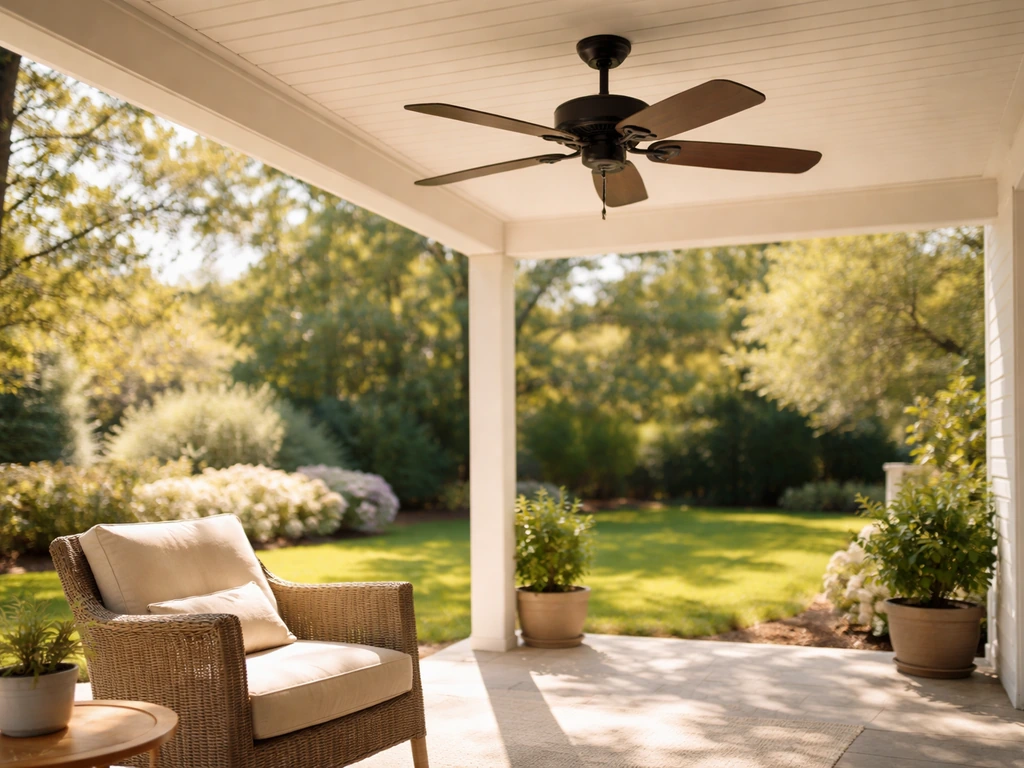
What makes a patio fan truly "outdoor-rated"
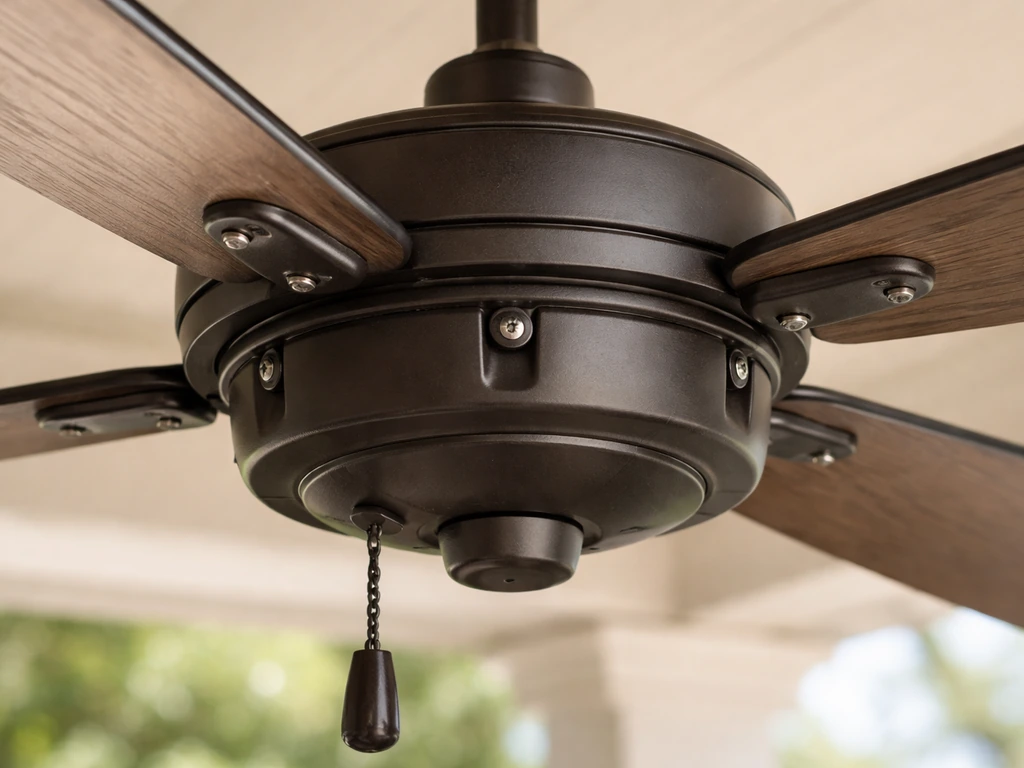
This is the part most buyers gloss over, and it's where things go wrong fast. There's a meaningful difference between a fan that looks rugged and one that's actually certified to handle outdoor conditions. The two ratings that matter in the US are "damp-rated" and "wet-rated," and they are not interchangeable.
Damp-rated fans are built for covered outdoor areas where moisture is present in the air but the fan itself won't get rained on directly. Think a patio with a solid roof, a pergola with a weatherproof cover, or a screened porch. These fans can handle humidity and indirect water exposure, but they're not meant to get soaked.
Wet-rated fans are engineered for direct water contact, meaning rain can hit them and they'll keep running safely. If your patio is open-air, partially covered, or in a climate where rain blows sideways, you need wet-rated. No exceptions.
You'll also see IP ratings listed on product pages (IP44, IP65, etc.). Those ratings measure housing resistance to water jets, which is useful context, but in North America the certification that actually determines code and safety compliance is the full UL or ETL wet/damp location listing on the fan, not just an IP number on the motor housing. When you're shopping, look for the words "wet location listed" or "damp location listed" on the spec sheet, not just an IP rating.
- Damp-rated: covered, protected patios with indirect moisture exposure
- Wet-rated: open patios, uncovered decks, or anywhere rain can directly hit the fan
- UL or ETL wet/damp location listing is what matters for safety compliance in North America
- IP ratings (IP44, IP65) indicate housing water resistance but don't substitute for a full wet-location listing
- Blades on outdoor fans should be ABS plastic, treated aluminum, or teak/marine-grade wood, not standard wood or MDF
Choose the right fan type for your patio layout
Once you know your exposure level, the next question is where the fan is actually going. If you're planning an outdoor patio setup, start by matching the fan rating and mounting type to your specific exposure level and layout. There are four main mount types, and each one fits a different kind of patio setup.
Ceiling fans
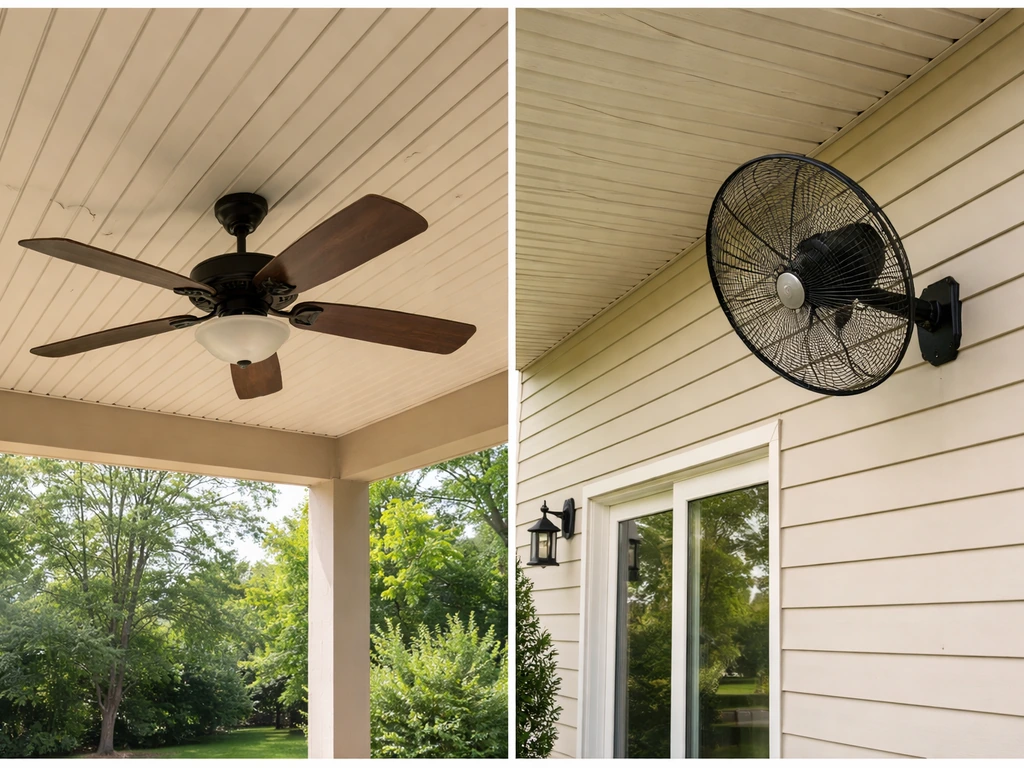
These are the gold standard for covered patios. They move a lot of air efficiently, stay out of the way, and look good. The catch is obvious: you need a ceiling. If you have a pergola, covered porch, or patio cover overhead, a ceiling fan almost always beats every other option for sheer airflow volume. Mount them at least 7 feet above the floor and 18 inches from the nearest wall for safe clearance.
Wall-mount fans
Wall-mount fans are excellent when you have a solid exterior wall but no overhead ceiling on the patio. They keep floor space clear, can be angled to direct airflow, and many wet-rated models handle full outdoor exposure well. They're a strong choice for narrow patios, side yards, or anywhere a ceiling mount isn't possible.
Pedestal and tower fans
Portable pedestal and tower fans need no mounting at all, which makes them ideal for renters, flexible patio setups, or anyone who doesn't want to hardwire anything. The downside is that they take up floor space, they can tip in wind, and most consume more energy than ceiling fans for similar airflow. Look for wet-rated models if you're using them anywhere rain exposure is possible.
Tabletop and misting fans
Tabletop fans are best for small, intimate seating areas, like a bistro table or a single lounger. Misting fans combine a fan with a fine water spray and can drop the perceived temperature by 10 to 20 degrees Fahrenheit in dry climates (think Arizona or West Texas). In humid climates like Florida or the Gulf Coast, a misting fan just makes you feel more clammy, so skip it there.
| Fan Type | Best For | Requires Ceiling? | Wet-Rated Options? | Portability |
|---|---|---|---|---|
| Ceiling fan | Covered patios, pergolas, screened porches | Yes | Yes | No |
| Wall-mount fan | Open walls, no ceiling overhead, narrow spaces | No | Yes | No |
| Pedestal fan | Flexible setups, renters, large open areas | No | Some models | High |
| Tabletop fan | Small seating zones, bistro tables | No | Some models | Very high |
| Misting fan | Dry climates, open patios, hot afternoons | No | Yes | Medium |
Sizing airflow: matching fan coverage to patio size
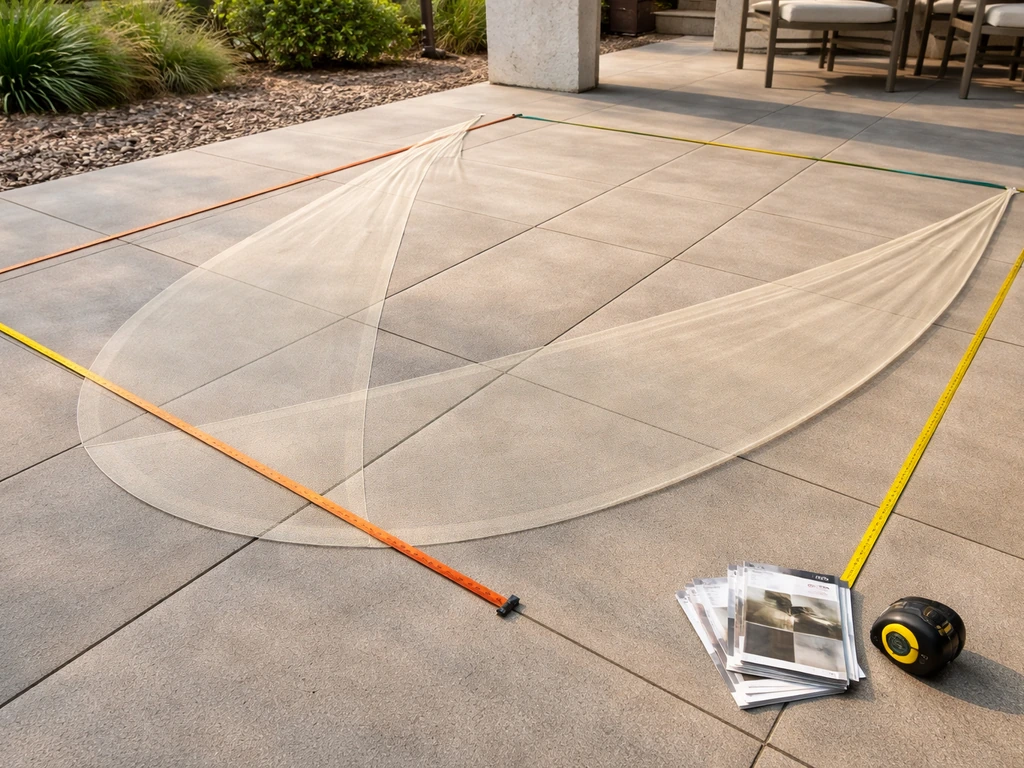
Airflow for fans is measured in CFM (cubic feet per minute). Bigger patio means you need more CFM, a larger blade span, or multiple fans. Here's a practical starting point for ceiling fans, which tend to be the most efficient option.
| Patio Size | Recommended Blade Span | Target CFM Range | Fan Count |
|---|---|---|---|
| Up to 75 sq ft | 36–44 inches | 1,500–3,000 CFM | 1 |
| 75–150 sq ft | 44–52 inches | 3,000–5,000 CFM | 1 |
| 150–300 sq ft | 52–60 inches | 5,000–8,000 CFM | 1–2 |
| 300–500 sq ft | 60–72 inches or dual fans | 8,000–12,000 CFM | 2 |
| 500+ sq ft / multiple zones | Multiple fans or large commercial fans | 12,000+ CFM | 3+ |
For patios with multiple distinct seating areas, like a dining zone plus a lounge area, it's almost always better to use two correctly sized fans than one oversized one. One large fan creates dead spots at the edges and an uncomfortable blast directly underneath. Two mid-size fans spaced evenly give consistent, comfortable airflow across the whole space.
Outdoor spaces are less efficient than indoor ones because the air isn't contained. As a rule, size up one category from what you'd use indoors. A 52-inch fan that handles a 175 sq ft bedroom will feel underwhelming on a 175 sq ft patio. Go to 60 inches or plan on two fans.
Power and controls: plug-in vs solar/battery vs hardwired options
How you power the fan shapes your installation options and your long-term experience more than almost any other factor.
Hardwired ceiling fans
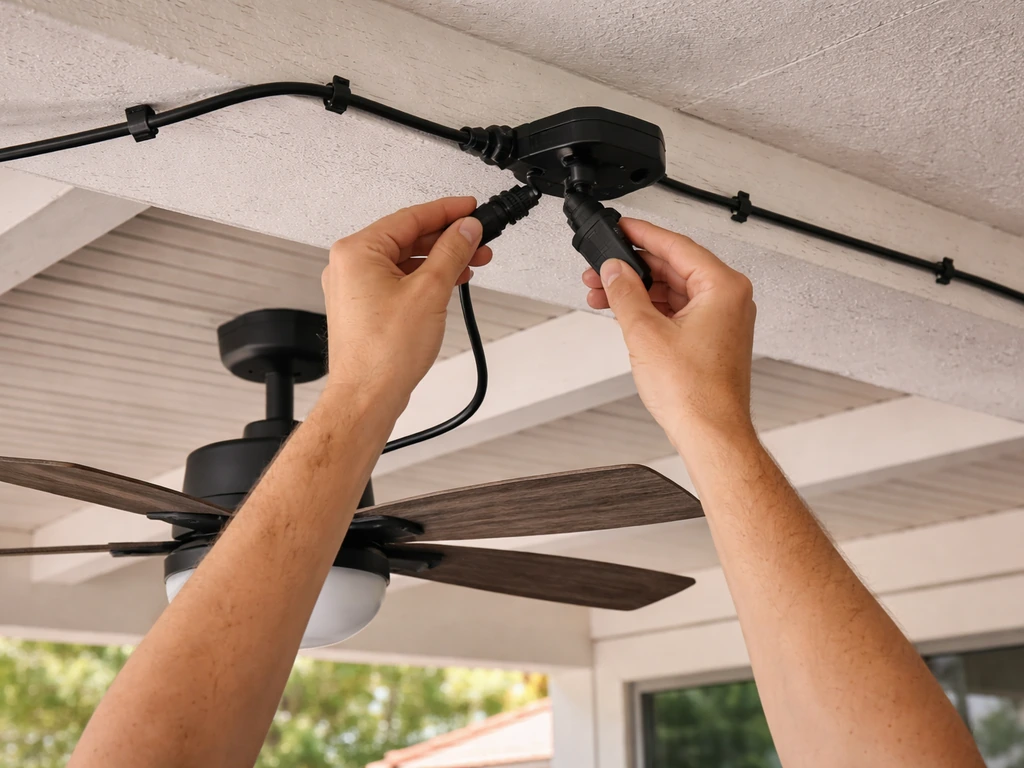
Hardwired ceiling fans are the cleanest, most reliable option if you're mounting to a covered patio ceiling. No cords, no batteries to swap, and they can run for hours without any drop in performance. The trade-off is installation complexity. You need an outdoor-rated junction box rated for fan weight (most standard boxes are not), proper wiring, and if you're in a jurisdiction that requires a permit for new electrical work, you may need one. If you're not comfortable with electrical work, this is one of those jobs worth paying a licensed electrician for an hour of their time.
Plug-in fans
Plug-in fans (ceiling, wall-mount, pedestal, or tabletop) are the easiest to set up and the most flexible to move. The catch is cord management. An outdoor extension cord running across a patio is a trip hazard and looks messy. Use a weatherproof outdoor-rated extension cord and keep it out of foot traffic paths. Many plug-in ceiling fans can be converted to hardwired later if you decide to commit to the setup.
Solar and battery-powered fans
Solar-powered fans sound appealing, and for small tabletop or wall-mount applications in bright climates, they can work decently. The honest reality for 2025 and 2026 is that most solar fans max out around 20–30W of power generation, which limits them to small, low-speed fans. They're fine for a gentle breeze at a bistro table but won't move meaningful air across a large patio. Battery-powered fans using 20V or 40V lithium platforms (compatible with brands like DeWalt, EGO, or Greenworks tool batteries) are more practical for portability because the batteries are high-capacity, but runtime is still limited to 2–6 hours at high speed depending on battery size.
Controls: remote, smart, and wall switch
Most quality outdoor fans now come with remote controls, which is genuinely useful when the fan is mounted overhead. If you want smart home integration, brands like Hunter and Big Ass Fans offer Wi-Fi enabled models compatible with Alexa, Google Home, and Apple HomeKit. For a basic setup, a simple RF remote is perfectly fine and more reliable than Wi-Fi in areas with spotty signal.
Top picks by scenario
Rather than a single "best" fan (which doesn't exist across every patio type), here are practical recommendations broken down by the most common real-world scenarios. These reflect the best-available options as of mid-2026.
Best for small covered patios (under 150 sq ft)
A 44–52 inch damp-rated ceiling fan is ideal here. The Hunter Dempsey 44" Indoor/Outdoor ceiling fan consistently earns high marks for build quality, quiet motor, and LED light kit included. It's damp-rated, works on a remote, and installs on a standard ceiling or angled mount. At around $150–180, it's the move for a small covered porch or screened-in patio.
Best for large covered patios (150–400 sq ft)
Step up to a 60–72 inch wet or damp-rated ceiling fan, or two 52-inch fans spaced evenly. The Minka-Aire Concept II 60" is a solid choice, wet-rated and available in finishes that hold up outdoors. For a premium option with exceptional airflow, the Big Ass Fans Haiku Outdoor (available in 52" and 60") is hard to beat on quiet performance and efficiency, though the price tag ($700–$1,100) reflects that. If the budget is tighter, the Harbor Breeze Bluffton 60" wet-rated fan delivers solid performance under $200.
Best for open, uncovered patios
Without a ceiling, a wet-rated wall-mount fan or a sturdy pedestal fan is the practical path. If you want the best outdoor patio looks, match the fan rating to your exposure level so you get a clean, durable setup that stays attractive Wet-rated. The Comfort Zone CZWF18B 18" wall-mount fan is a budget-friendly wet-rated option for smaller open spaces. For larger open patios, the Lasko Cyclone Outdoor 20" pedestal fan handles direct weather exposure and moves serious air. If you want more help visualizing what to buy for your space, these outdoor patio examples make it easier to match fan types to real layouts. If you're in a hot, dry climate, pair any of these with a standalone misting system rather than a combo misting fan for more efficient cooling.
Best for patios in humid or rainy climates
Wet-rated is non-negotiable in places like Florida, Louisiana, or the Pacific Northwest. Look for fans with sealed motor housings, ABS or aluminum blades, and stainless steel hardware (not just "rust-resistant" coated steel). The Emerson Fans CF985 Mazon 84" is a wet-rated commercial-style ceiling fan built for harsh humidity and available in a brushed steel finish that won't corrode. For something mid-range, the Monte Carlo Yacht Star II 52" wet-rated ceiling fan holds up well in coastal and high-humidity environments.
Best portable/no-install option
If you're renting, don't want to commit to installation, or need something you can move around, the Rowenta Turbo Silence Extreme outdoor pedestal fan or any EGO Power+ battery-powered outdoor fan (compatible with the EGO 56V platform) gives you flexibility with real airflow. The EGO option is particularly useful if you already own EGO outdoor power equipment and have spare batteries.
Installation tips and ideal placement for maximum cooling
Even the best fan underperforms if it's mounted wrong or placed in the wrong spot. Here's what actually makes a difference.
- Mount ceiling fans at 8–9 feet above the floor for ideal airflow. Below 7 feet is a safety clearance issue; above 10 feet reduces the cooling effect significantly.
- Use a downrod to achieve the right height if your patio ceiling is high. Most ceiling fans ship with a short downrod (3–6 inches) that assumes a standard ceiling height. For a 10-foot ceiling, use a 12-inch downrod. For 12 feet, use an 18–24 inch downrod.
- Center the fan over the primary seating or activity zone, not over the geometric center of the patio. People are what need cooling.
- For multiple fans on a long or irregularly shaped patio, space them so their blade spans don't overlap and each fan covers its own zone.
- Position wall-mount fans 7–8 feet high and angle them slightly downward at 15–20 degrees toward the seating area.
- Pedestal fans work best when placed at the edge of the seating area aimed inward, not directly behind or above anyone, which can feel uncomfortably intense.
- Avoid placing fans directly opposite to prevailing wind direction on open patios. Wind fighting the fan reduces effective airflow. Position fans to work with natural air movement when possible.
- Use an outdoor-rated junction box rated for at least 35 lbs for ceiling fan installation. A standard light fixture box is not adequate and is a genuine safety risk.
- Run the fan in reverse (clockwise from below) on cooler evenings to recirculate warm air pooled at the ceiling height and reduce that chilly draft effect.
If you're running new wiring to support a ceiling fan, factor in whether you also want a dedicated circuit for outdoor lighting or a future misting system. Running conduit once for multiple future upgrades is much smarter than doing it twice. This is the kind of thing worth discussing with an electrician if you're already opening walls or running wire.
Maintenance, weather protection, and longevity
Outdoor fans live a hard life. Sun, rain, pollen, dust, and insects all take a toll. The good news is that a well-chosen, well-maintained outdoor fan can last 10–15 years. Here's how to get the most out of yours.
Regular cleaning
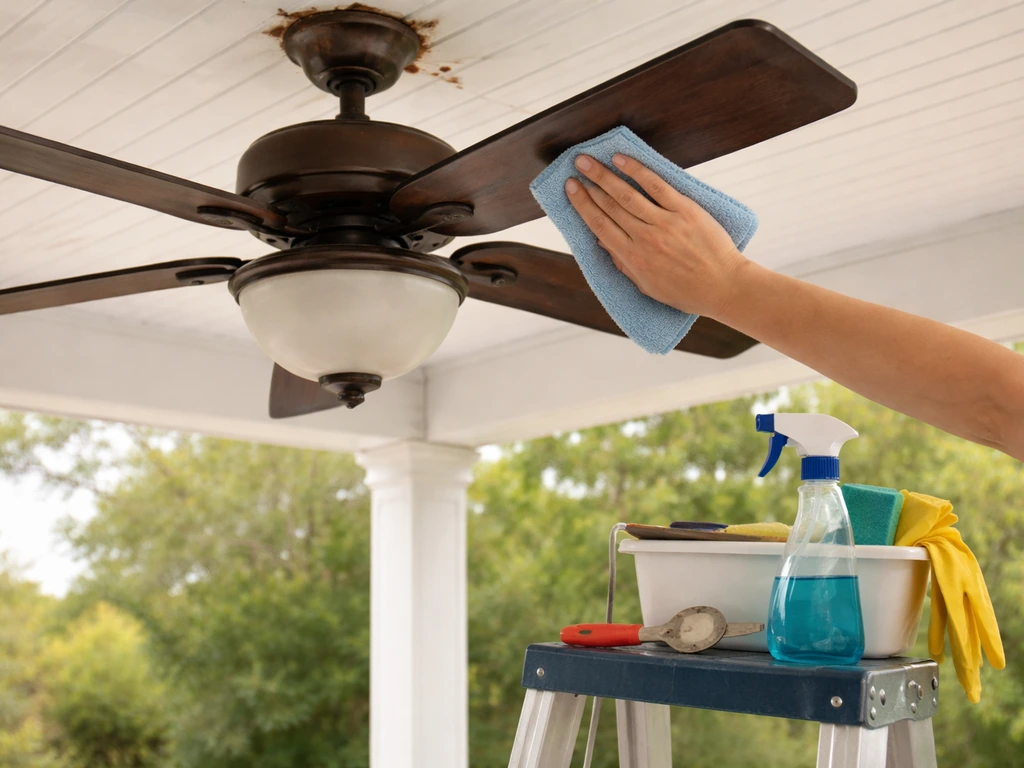
Wipe down fan blades every 4–6 weeks during active use. Outdoor blades accumulate pollen and grime faster than indoor blades, and buildup throws off blade balance, which creates wobble and strains the motor. Use a damp cloth and mild soap, never a pressure washer, even on wet-rated fans.
Motor and bearing care
Most modern outdoor fans use sealed bearings that don't require lubrication, but check your owner's manual. Older or budget models may have oil ports on the motor housing that benefit from a few drops of fan oil (not WD-40) once per season.
Off-season storage and covers
In climates with harsh winters, the best thing you can do for a ceiling fan is install a quality outdoor fan cover over it when it's not in use. These run $20–40 and dramatically extend motor and finish life by blocking ice, snow, and debris. For pedestal and tabletop fans, bring them inside during winter or store them in a weatherproof bag.
Checking hardware seasonally
Once a season, check the mounting screws, canopy, blade brackets, and downrod for any sign of rust or corrosion. Tighten any loose screws. Outdoor vibration and thermal cycling work fasteners loose faster than indoor environments. A ceiling fan that's wobbling from a loose blade bracket is putting unnecessary stress on the mounting box above.
When to consider additional climate upgrades
A fan alone moves air but doesn't remove heat. On days above 100°F or in direct sun, a fan makes a hot space feel slightly less miserable but won't make it genuinely comfortable. If you're in a consistently hot, dry climate, pairing a fan with a patio misting system is a significant upgrade. If you're in a consistently hot, dry climate, pairing a fan with a patio misting system is a significant upgrade best outdoor patio. If you're in a humid climate, a shade structure (like a pergola with a solid or louvered cover) reduces radiant heat load dramatically and makes the fan far more effective. Getting the right patio setup dialed in, whether that's the cover, the fan, or both, makes a bigger difference than chasing the perfect fan spec on its own.
FAQ
Is a damp-rated outdoor patio ceiling fan always enough under a pergola or roof?
Use the fan rating and the mounting point to decide, not the patio label. If the ceiling fan is under a roof that blocks direct rain, a damp-rated unit is usually appropriate. If rain can directly hit the fan (open air, partial cover, or exposed edges where water blows in), you need a wet-rated model.
Can I control an outdoor ceiling fan with a wall switch if it comes with a remote?
Plan for electrical control and switch placement. Many outdoor ceiling fans have remotes, but you still need correct wiring and a fan-rated wall control or appropriate switch for power. If you want wall control instead of (or in addition to) a remote, confirm the fan supports it before buying.
What should I check before installing a ceiling fan on a patio cover instead of a standard roof ceiling?
Yes, but only if you match the fan to the ceiling type and weight. When mounting to a patio cover, verify you have a solid structural member (or rated ceiling box) and that the fan can be installed on that surface. Don’t mount to light-gauge decorative beams or just the underside sheathing.
How do I avoid problems with low ceilings or nearby posts when choosing blade size?
It depends on the clearance to walls, not the blade size alone. Follow the installation minimums in the manual, and as a rule keep the fan high enough that blades won’t interfere with seating traffic or nearby posts. For low-clearance areas, a smaller blade span or an angled-mount model can be safer than forcing a standard mount.
If two fans list similar CFM, how do I choose the one that will feel better on a patio?
Don’t assume CFM numbers will translate outdoors the same way as indoors. For outdoor comfort you typically need better circulation across seating, so prioritize either higher airflow plus wider coverage (bigger span or multiple fans) or better placement relative to the seating zones.
Why do I feel “dead spots” even with a strong patio fan, and how can I fix it?
Two common mistakes are oversized one-fan installs and ignoring airflow direction. If your patio has a dining area and a lounge area, use two fans or reposition so airflow lands where people sit. Also check that the fan can be angled or that downrod length puts the airflow at the right height over seating.
Can a wet-rated fan fail early if it is near sprinklers or constant wash-down?
Wet-rated does not mean you can skip weather protection for all components. Even wet-rated fans can fail early if constantly hit by sprinklers or if water pools around the electrical connections. Keep jets away from the fan and use proper weatherproof covers on any junctions.
What maintenance steps most affect lifespan, and what can I ignore?
Look for sealed bearings and an explicitly stated outdoor service life in the manual (or warranty terms for outdoor use). Even high-quality outdoor fans need periodic tightening of mounting hardware and blade cleaning, and some cheaper models corrode faster at screws, brackets, and downrods.
When should I choose a misting system over a misting fan for outdoor comfort?
If you use a misting fan in humid climates, expect reduced effectiveness because evaporation is slower and humidity can make you feel stickier. In humid areas, a shade structure plus airflow usually performs better than relying on mist alone.
Is a solar outdoor patio fan worth it if I want it for nighttime cooling?
Solar is generally best for very small, low-speed comfort needs where you have consistent bright sun. For larger patios or evening use, solar often won’t sustain enough airflow. If nighttime comfort matters, a plug-in, hardwired, or battery option is usually the more reliable route.
Are plug-in outdoor fans safe, and how should I run the extension cord?
Yes, but use caution. Corded fans can be safe when using outdoor-rated extension cords and keeping connections off wet surfaces. The real issue is trip risk and tangling, so secure the cord along a route outside foot traffic and verify the cord’s amp rating matches the fan’s draw.
What changes if my outdoor patio is very windy?
In windy or exposed locations, ceiling fans should be rated for wet location and properly balanced at installation, wall fans should be stable and securely anchored, and pedestal fans need placement where gusts won’t tip them. If your patio is frequently gusty, consider multiple smaller ceiling fans rather than a single tall fan that can wobble.
Are battery-powered outdoor patio fans realistic, and what limits should I expect?
If you already have a battery ecosystem, battery-powered fans can be practical for portability, but check runtime expectations at high speed and whether replacement batteries are affordable. Also confirm it is designed for outdoor wet conditions, not just “outdoor use,” before using it in rain-prone areas.