
The best patio decorations for your space are the ones that survive your actual weather, fit your layout, and work together as a system rather than a random collection of stuff you liked at the store. If you want the best patio games, start by setting up comfortable seating and an easy-to-reach space where players can see and move around. Start with your foundation (rug, furniture arrangement, overhead cover), layer in lighting and privacy next, then add greenery and seasonal accents last. That order matters more than any single product you choose.
Best Patio Decorations: Choose Weatherproof Decor Step by Step

Elise Prescott
19 May 2026
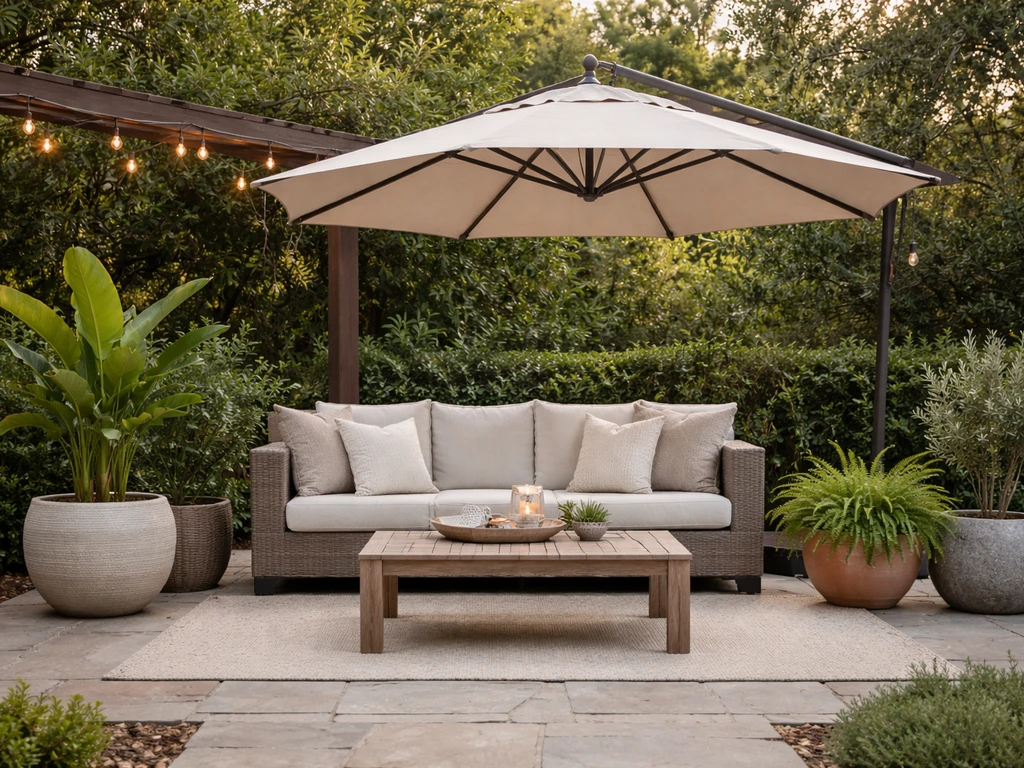
Quick way to choose the best patio decor for your space
Before you buy anything, answer four questions about your patio: How big is it? How much direct sun does it get and from which direction? Is wind or rain a regular problem? And how much visibility do you have from neighbors or the street? Your answers eliminate about half the options instantly and point you toward a short list that actually works.
For sizing, measure your usable patio floor area and mentally divide it into zones: dining, seating, and transition space. A rug anchors each zone and is usually the fastest way to make a patio feel intentional instead of scattered. For a dining zone, an 8x10 rug (with front furniture legs on the rug) is a solid starting point for most mid-size patios. Step up to a 9x12 if you want all legs on the rug and a more generous feel. Rugs Direct recommends leaving at least 18 inches between the rug edge and the patio perimeter when you want full coverage, which is a useful sanity check before you order.
Once you have your zone map sketched out, rank your needs: comfort and shade first, privacy second, aesthetics third. Most people do it backwards, buying decorative accents before they have a functional overhead cover or seating layout, and then the decor looks like it's floating in an uncomfortable space. If you want to avoid the biggest missteps, use this checklist of the 5 worst patio decorating mistakes as your starting point. Solve comfort and structure first, then decorate into that framework.
- Measure your patio and sketch basic zones (dining, lounging, transition)
- Identify your sun direction, peak heat hours, and prevailing wind side
- Note privacy gaps (neighbor sightlines, street visibility, second-story windows nearby)
- Set a realistic budget range split between structural/functional and purely decorative spending
- Choose a color palette of two to three anchoring colors before buying any individual piece
Weatherproof materials and finishes that last outdoors
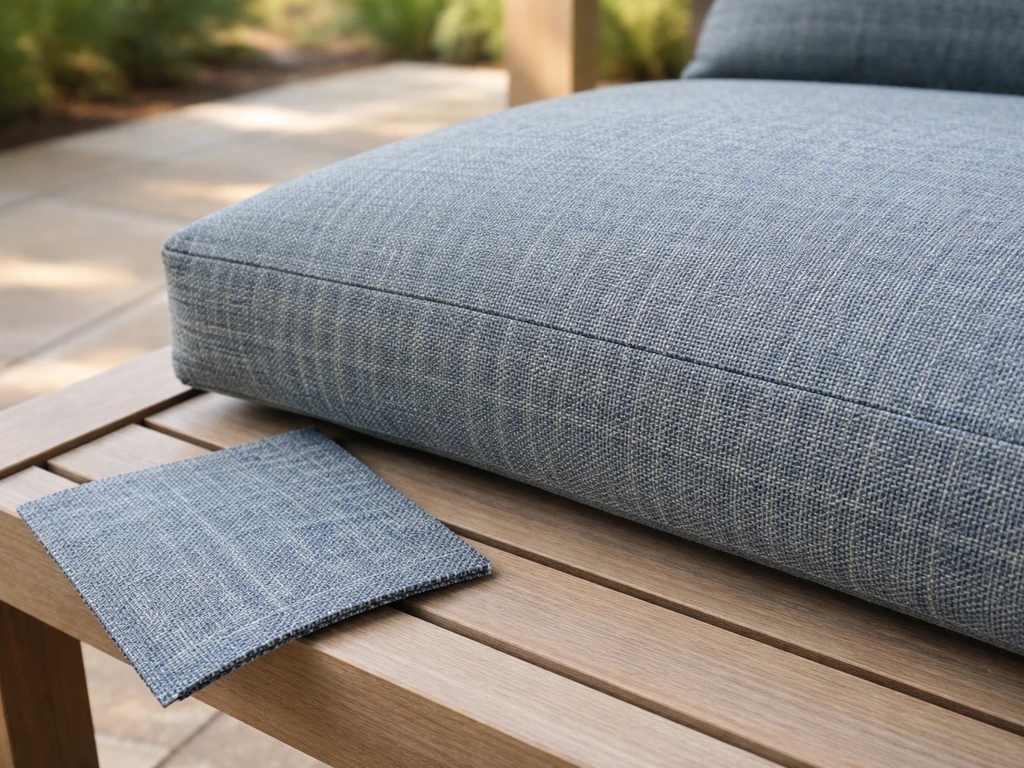
This is where most patio decoration money gets wasted. Someone buys beautiful cushions, leaves them out through a humid summer, and throws them away by fall. The fix is knowing which materials genuinely hold up and which ones are just marketed as outdoor-friendly.
Fabrics and cushions
Solution-dyed acrylic (Sunbrella is the most recognized brand) is the standard worth paying for in hot or sunny climates. The dye is baked into the fiber during manufacturing rather than applied on top, which is why it can handle 2,000-plus hours of direct sunlight without significant fading. In wet climates, look for fabrics rated for mildew resistance in addition to UV resistance. Polyester outdoor fabrics are cheaper but fade noticeably faster. If you're in a consistently shaded patio environment, the gap between solution-dyed acrylic and quality polyester narrows considerably.
Frames, furniture, and hard decor
| Material | Best climate fit | Key weakness | Maintenance level |
|---|---|---|---|
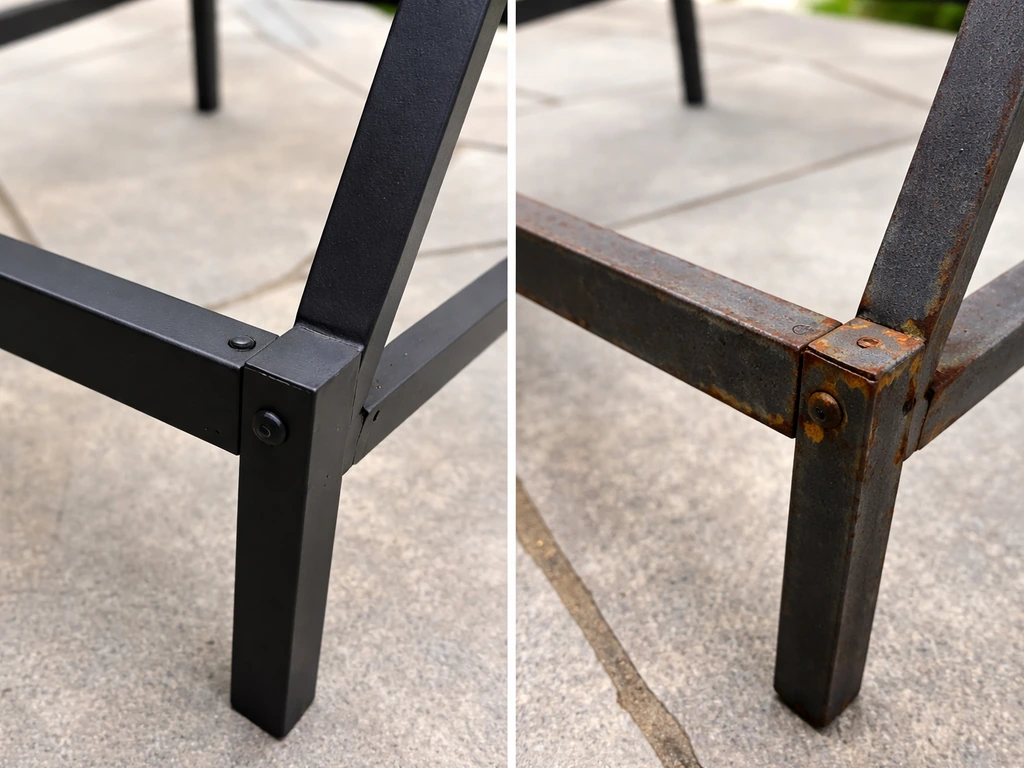
| Powder-coated steel | Most climates | Can chip and rust at chip points in coastal/humid areas | Low if coating is intact |
| Powder-coated aluminum | All climates including coastal | Less rigid than steel, can dent | Very low |
| Teak (sealed) | Humid, rainy, or sunny climates | Expensive; needs periodic oiling if you want honey color | Low to medium |
| Acacia (sealed) | Mild to moderate climates | Cracks in very dry or cold climates without sealing | Medium |
| Resin wicker over aluminum frame | Most climates | UV degradation over many years in desert sun | Low |
| Concrete and sealed stone | All climates | Heavy and expensive to move or replace | Very low |
| Untreated wood | Covered patios only | Warps, cracks, and rots when exposed to moisture | High |
For decorative accents like lanterns, planters, and wall art, powder-coated metal and UV-stabilized resin are the two most practical choices across most North American climates. Galvanized steel works well if the coating is undamaged. Avoid anything with raw iron hardware, unsealed MDF, or indoor-rated paint finishes, they look fine in the store and dissolve outdoors within one season.
Furniture and layout upgrades that make decor look finished
Good decor on a poorly arranged patio still looks off. The layout is what makes everything else cohere. The most common mistake is pushing all the furniture against the walls, which makes a patio feel like a waiting room. Pull seating inward, float it around a central anchor (a coffee table, a fire pit, a large rug), and leave clear walking paths of at least 36 inches.
For a dining zone, the rug should extend at least 24 inches beyond the table edge on all sides so chairs stay on the rug when pulled out. For a lounge zone, the coffee table should be reachable from every seat without leaning forward uncomfortably, roughly 16 to 18 inches from the sofa edge is the usual sweet spot. Once your furniture is arranged correctly, the decorative layering (throw pillows, a side table, a lantern, a planter) has a framework to attach to and reads as intentional rather than cluttered.
Matching furniture style matters less than matching scale. A chunky sectional paired with a delicate bistro side table looks awkward regardless of color. Stick within one scale category: all substantial and solid, or all lighter and airy. Within that, mixing materials (teak top, aluminum frame, resin wicker accent chair) actually adds visual interest and is perfectly fine.
Lighting, privacy, and shade elements
These three categories do more decorative work than almost any accent piece you can buy. A well-lit patio with good privacy screening looks designed even with basic furniture. An exposed, harshly lit patio with expensive furniture looks uncomfortable.
Shade and overhead structure
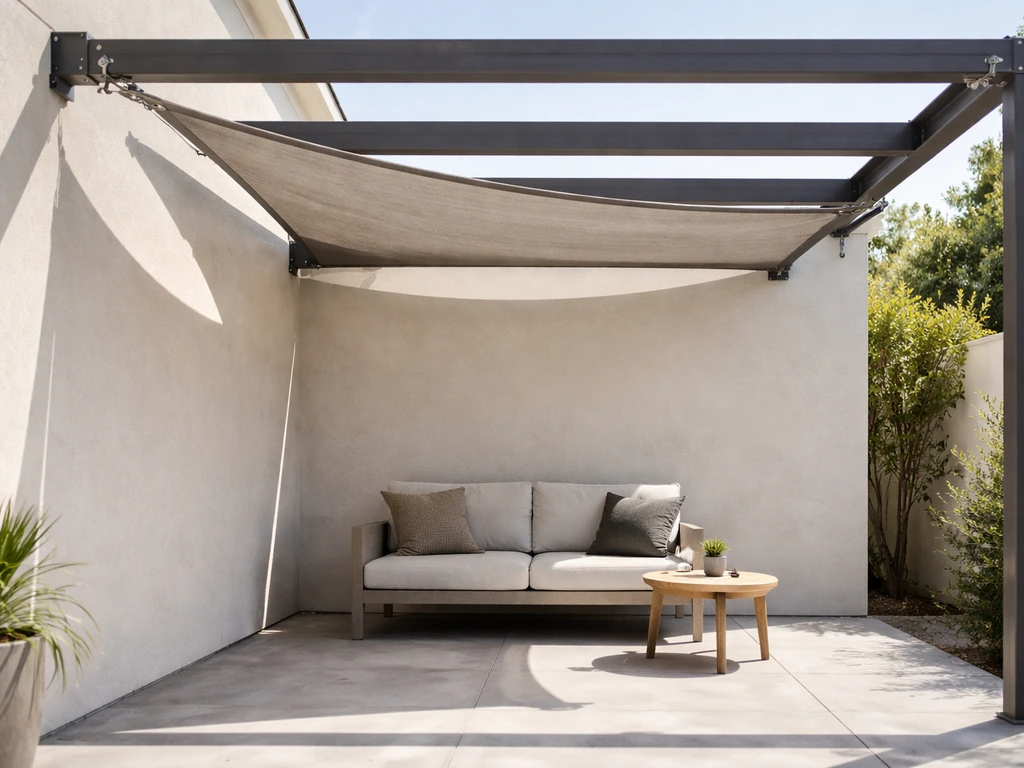
Your patio cover is both a functional upgrade and a major aesthetic element. A pergola, attached aluminum patio cover, or sail shade changes the entire character of the space and gives you a structure to hang lighting, fans, and misting lines from. In hot climates especially, solving shade is what makes everything else usable. If you want the best patio gadgets to make day-to-day use easier, focus on weatherproof, practical upgrades like shade tools, cooling accessories, and outdoor lighting. Ceiling-mounted outdoor fans on a covered patio drop perceived temperature noticeably and extend comfortable outdoor hours well into summer evenings. Misting systems (either a line kit mounted along a pergola beam or a portable misting fan) add another layer of cooling in dry or desert climates. In humid climates, misting is less useful since it adds moisture to air that's already saturated.
Patio lighting
String lights are the most accessible starting point and genuinely look good when mounted with proper catenary tension between anchor points rather than drooping loosely. For anything hardwired, path lights, post lights, in-ground uplights, NEC code requires GFCI protection on all outdoor outlets, and any transformer or power supply installed outdoors must be rated for wet locations. That's not optional, and it matters for both safety and insurance purposes. blank" rel="noopener noreferrer">If you're running low-voltage landscape lighting yourself, a 12V transformer with wattage capacity at least 20 percent above your total fixture load is the standard planning rule.
If you're hiring out a full outdoor lighting installation, expect to spend $2,000 to $6,000 depending on fixture count, wire runs, and complexity. A mid-scope patio lighting project with six to ten fixtures typically lands around $2,000 to $4,000. That range includes professional-grade fixtures, GFCI-compliant outlets, transformer, and installation labor. DIY low-voltage kits from home improvement stores can get basic path and accent lighting done for a few hundred dollars if you're comfortable with the layout planning.
Privacy screening
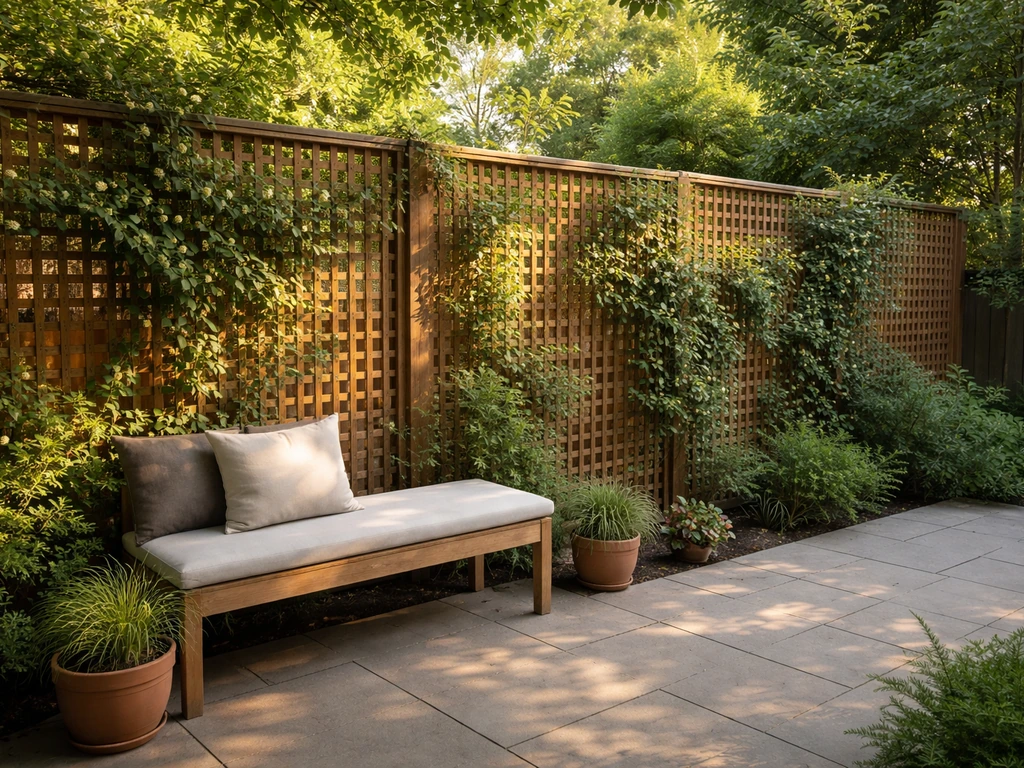
Privacy screens pull double duty as both a functional barrier and a significant visual backdrop. Options include lattice panels with climbing plants, outdoor curtain panels hung from a pergola, bamboo or reed fencing rolls, horizontal wood slat screens, and living walls or tall container plants. The right choice depends on your wind exposure. A solid fence panel in a high-wind zone becomes a sail and either damages the structure or your neighbor's property. The RHS and DOE both note that semi-permeable windbreaks (ones that filter rather than block wind entirely) actually provide better leeward protection over a longer distance than solid barriers. A lattice with climbing vines or a slatted screen handles wind better than a solid privacy fence panel on an exposed patio.
Plants, containers, and seasonal styling that fit your climate
Container plants are the most flexible decor element on any patio because you can move, swap, and rearrange them seasonally. The key is matching plant selection to your USDA hardiness zone (which reflects average annual extreme minimum temperatures over 30 years) and your specific patio microclimate. A south-facing patio in full sun needs drought-tolerant plants in large containers, not shade lovers in small pots.
Container size matters for plant survival, especially in cold climates. Large containers act as thermal mass, staying warmer longer during frost events and cooler during summer heat spikes. For evergreen containers you plan to keep through winter, the Missouri Botanical Garden's guidance is clear: root protection from freeze-thaw cycles is the critical variable. Terra cotta cracks when frozen. Fiberglass, thick-walled resin, or glazed ceramic handles freeze-thaw better. In cold climates, wrapping containers with pine straw bales or non-woven polyester fabric (burlap works too) gives roots meaningful cold protection.
Be realistic about winter container greenery. NC State Extension research confirms that lower winter light intensity and shorter days slow growth significantly and reduce the lushness of most container plants. That's normal and not a failure. Plan for seasonal swaps: late summer annuals and ornamental grasses in fall, evergreen boughs and winterberry branches in winter, early bulbs and pansies in early spring, heat-tolerant tropicals and succulents in summer. Each swap refreshes the patio's look and keeps plants thriving in their actual conditions.
- Hot, dry climates (Southwest, desert): agave, lavender, ornamental grasses, succulents in unglazed resin or concrete pots
- Hot, humid climates (Gulf Coast, Southeast): tropicals like elephant ear, caladium, bird of paradise, in large glazed or resin containers
- Temperate climates (Pacific Northwest, Mid-Atlantic): boxwood, Japanese maple, ferns, heuchera — nearly year-round interest with seasonal swaps
- Cold climates (Upper Midwest, Mountain states): annuals in summer, evergreen boughs and winterberry in winter, all containers wrapped or moved to shelter before hard freezes
- Coastal/salt-spray climates: sea thrift, ornamental cabbage, agapanthus — choose salt-tolerant species and avoid decorative pots with metal hardware
For a cohesive look, cluster containers in odd numbers (three or five) at varied heights using pot risers or plant stands. A tall thriller plant, a medium filler plant, and a trailing spiller plant in one large container gives instant visual structure. Repeat one plant variety or one pot color across multiple groupings to tie the whole patio together without making it feel rigid.
Budget vs premium patio decoration plans
You don't need to spend a lot to get a finished-looking patio, but you do need to spend strategically. If you are shopping for the best patio gifts, use the same finished-feeling framework to pick practical items that hold up outdoors finished-looking patio. The biggest budget mistake is spreading money thinly across many cheap items. It almost always looks cheap. A better approach is concentrating your budget on two or three high-visibility items (the rug, the lighting, the main seating) and keeping accent pieces simple and inexpensive. If you are choosing best outdoor patio games too, budget for a sturdy outdoor setup first, then add the pieces that make gameplay easy and comfortable rug, lighting, and the main seating.
DIY budget plan (under $1,000)
- One 8x10 or 9x12 polypropylene outdoor rug in a neutral or pattern that ties your palette together ($80 to $200)
- A string light kit with solar or low-voltage transformer and 25 to 50 feet of warm-white bulbs ($40 to $100)
- Two to four weather-resistant lanterns or pillar candle holders in powder-coated metal or resin ($15 to $40 each)
- A set of solution-dyed acrylic throw pillows in two coordinating patterns ($20 to $50 each)
- Three to five container plants in matching or complementary glazed resin pots ($25 to $60 per planted container)
- A bamboo or reed privacy screen roll for a single exposed side ($30 to $80)
Total DIY budget spend: roughly $400 to $900, with the biggest impact coming from the rug and lighting. This approach works well for renters, seasonal patios, or homeowners who want to test a design direction before committing to anything permanent.
Premium plan (hiring pros and investing in lasting upgrades)
- Professional outdoor lighting installation with hardwired path lights, post lights, and string lights: $2,000 to $4,000
- Aluminum patio cover or pergola installed by a contractor: $3,000 to $10,000+ depending on size and style
- Ceiling fan or misting system installed on covered patio: $300 to $800 for fans, $500 to $1,500 for a misting line system with professional installation
- Custom outdoor cushions in solution-dyed acrylic: $200 to $600 per piece
- Hardscaped privacy screen or slatted wood wall: $1,500 to $5,000 depending on linear footage
- Landscape design and seasonal container planting by a professional: $500 to $2,000 for initial install, less for seasonal refreshes
For the premium path, the best sequence is to hire for structural and electrical work first (cover, hardwired lighting, fan), then do your own furnishing and plant selection, and finally bring in a landscape designer for the container and greenery layer if your budget allows. Professionals add the most value on anything involving electrical code compliance, structural attachment to your home, or projects where mistakes are expensive to fix. Decor accents, container planting, and styling are genuinely DIY-friendly for most homeowners.
One thing worth watching as you decorate: the most common patio decorating mistakes tend to involve scale mismatches, weather-inappropriate materials, and ignoring the structural layer in favor of accessories. Getting the sequence right (structure, then comfort, then aesthetics) saves you from those pitfalls and makes the budget stretch much further, whether you're spending $500 or $15,000. If you're shopping for the best patio gifts for mom, use this same sequence so the gift fits her space and actually gets used all season the best sequence.
Your next steps, in order
- Measure your patio and sketch your zone layout before buying anything
- Identify your primary problem to solve first: too hot, too exposed, too dark, or no privacy
- Choose your rug size and color palette anchor — this sets every other decision
- Address shade and overhead cover before spending on accent decor
- Add GFCI-compliant lighting (DIY string lights or professional hardwired fixtures depending on budget)
- Install privacy screening on your most exposed side
- Plant and style containers matched to your climate zone and seasonal plan
- Layer in accent pieces (lanterns, pillows, art) last, within what your structural setup can support
FAQ
What’s the best patio decoration plan for a small or narrow patio?
For a small patio, focus on one “anchor” rug and one vertical element (privacy screen, tall planter group, or a pergola-mounted light). Keep side decor to pieces that repeat the same material family (for example, powder-coated metal and UV-stabilized resin) to avoid visual clutter.
Can I decorate my patio with fabrics if it doesn’t have a cover?
If you do not have overhead cover, treat textiles as the seasonal layer, bring them inside or store them during storms, and choose outdoor-rated covers for cushions and rugs. Your lights and privacy screening should still be weatherproof because they are the elements you want to keep installed year-round.
Is it okay to mix furniture styles on the patio if the colors don’t match?
Yes, but pick one scale rule and stick to it. Use the same “weight” across key furniture pieces (solid sectional plus substantial side table, or lightweight bistro set plus slim lanterns) and then add small contrasting textures with pillows or planters.
What patio decorations are safest for renters who cannot drill or hardwire?
For renters or short-term setups, prioritize non-permanent anchors like weighted umbrella bases, freestanding privacy screens, and modular planters. For lighting, use plug-in outdoor fixtures on GFCI-protected outlets or low-voltage kits, avoid hardwiring to keep future move-out easy.
How do I choose privacy screens if my patio gets strong wind?
Match the privacy choice to wind conditions: in windy areas, choose lattice, slatted screens, or semi-permeable windbreaks, not a fully solid panel. If you already bought a solid fence section, keep it aligned, secure it correctly, and add a secondary softer screen to reduce “sail” effect.
What should I do if my patio is partly shaded and I’m unsure which plants will survive?
If you can’t guarantee daily sun, avoid heavy, full-sun container plants for a mostly shaded patio. Use your microclimate assessment (morning versus afternoon sun, reflected heat from walls) to decide between drought-tolerant plants, shade-tolerant foliage, and mixed groupings.
Are “outdoor” lanterns and wall art automatically weatherproof enough for all climates?
Before buying decorative lanterns or wall art, check whether they are intended for direct outdoor exposure. A good rule is to confirm UV resistance and weather rating, and keep any decorative pieces with exposed hardware away from sprinkler spray zones.
How can I keep my patio looking cohesive without buying lots of decorative items?
If your goal is “decorated but not busy,” limit repeating accents to two or three categories (for example, lighting style, planter material, and one metal finish). Repeat those across zones instead of adding a new accent type to each area.
What’s the most common lighting mistake when hanging string lights on a patio?
String lights look best when you use proper tension and clear anchor spacing, and you should plan a pathway for cords so they don’t become trip hazards. If you’re near a wet area, confirm the system is rated for outdoor wet locations and uses GFCI protection.
How should I plan a DIY low-voltage lighting setup so it doesn’t dim later?
With low-voltage landscape lighting, don’t oversize the transformer and assume it will power everything. Use the total fixture wattage, leave at least a 20 percent headroom for future additions, and group fixtures on sensible circuit runs to reduce voltage drop over long distances.
What’s the easiest way to keep patio containers looking good in winter?
If you want a winter-survivable look, plan staged seasonal swaps and choose container materials that tolerate freeze-thaw (fiberglass thick resin or glazed ceramic are safer than terra cotta). Also, protect roots during freeze events and expect plants to look less lush when winter light is low.
How do I combine comfort, shade, and privacy without making the patio feel cramped?
If you’re balancing comfort and privacy, decide which matters more in each zone. Put your most seating-comfort-forward arrangement where shade and wind protection are strongest, then place privacy screens or tall planters at the edges of that zone so they block views without narrowing walking paths.