The best outdoor patio games right now are cornhole, bocce ball, ladder toss, giant Jenga, and lawn bowling, but which one you should actually buy depends on your patio size, surface type, typical group size, and how much setup you want to deal with. A 10x12 concrete patio calls for very different choices than a wide open backyard with grass. This guide walks through exactly how to match games to your space, what to spend, and how to make the whole setup more comfortable with the right patio upgrades.
Best Outdoor Patio Games: Buyer Guide and Setup Tips

Elise Prescott
8 Jul 2026
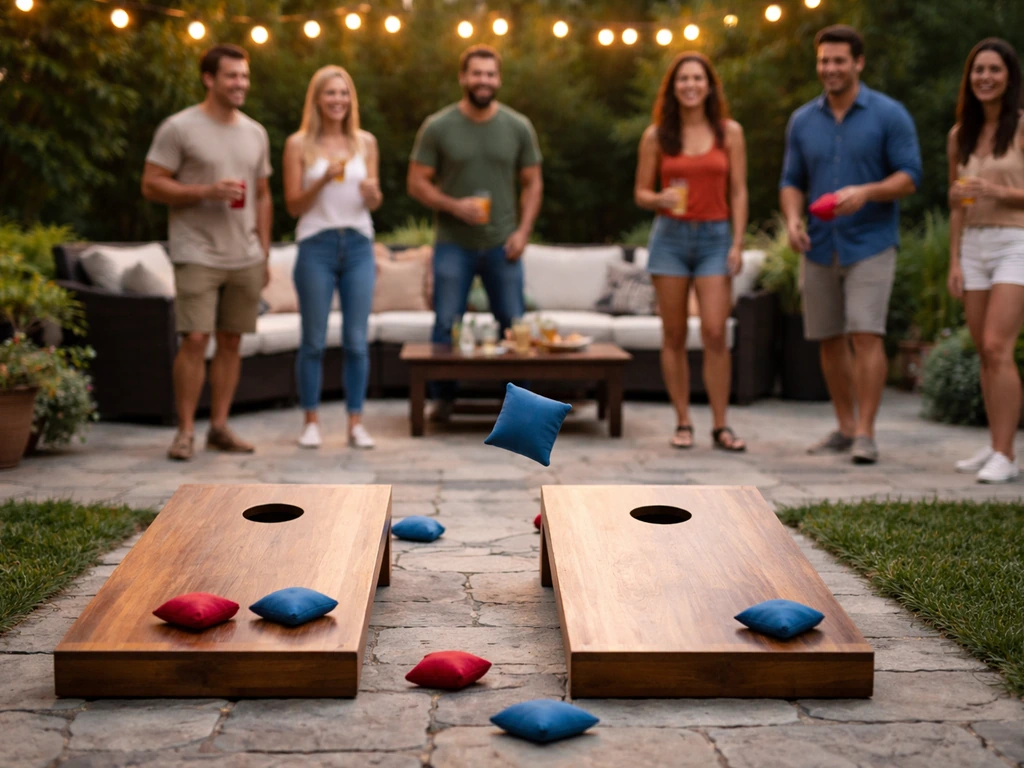
How to choose patio games for your space and crowd
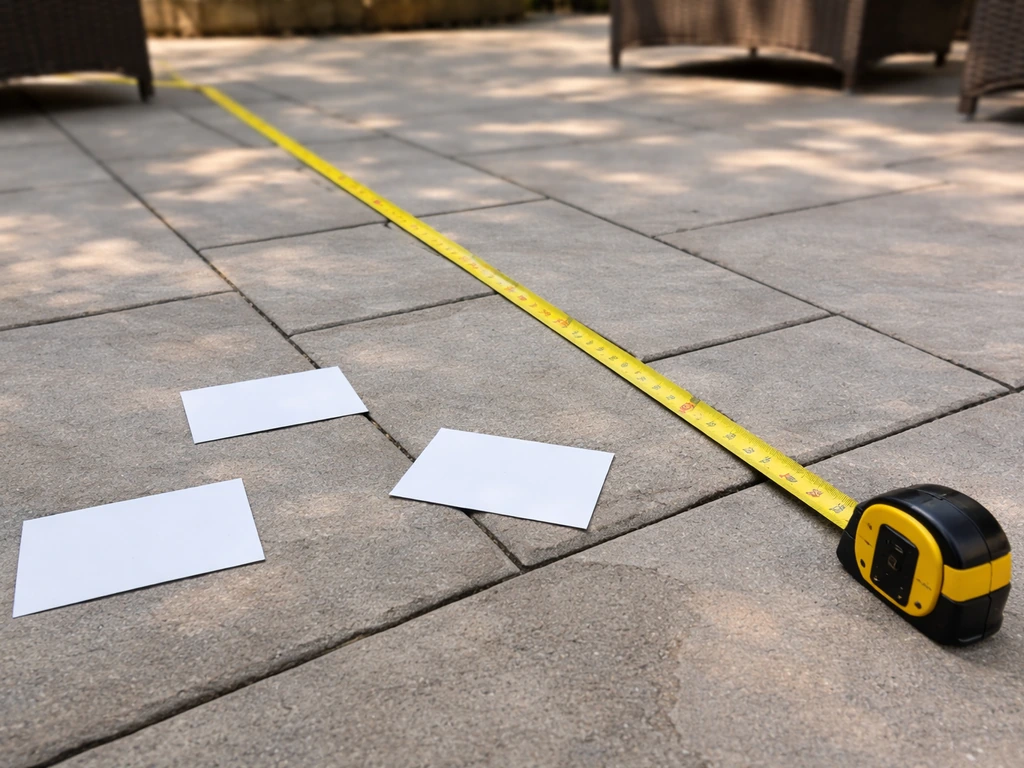
Before you buy anything, take five minutes to measure your patio and think honestly about who is going to use it. Avoid these 5 worst patio decorating mistakes so your patio looks great and works well for guests. Regulation cornhole, for example, requires 27 feet between board front edges, that's a long run that many patios simply don't have. Bocce courts range from 60 to 91 feet in length at official dimensions, though backyard versions scale down to whatever fits. Ladder toss sets up in 15 feet between targets. If your usable outdoor space is under 20 feet in any direction, you're mostly shopping from the compact or tabletop game category.
Surface matters too. Grass is forgiving for most lawn games and gives bocce balls a good roll with some resistance. Concrete and pavers are great for cornhole boards and shuffleboard tables because they're level and stable. Gravel is tough, bocce balls roll unpredictably on it, cornhole boards wobble, and some players find it uncomfortable to stand on during longer sessions. If you have a mixed space (patio slab plus adjacent lawn), you actually have the most flexibility.
Think about your crowd honestly. If you're mostly hosting families with kids under 10, lean toward low-skill, low-frustration games like ring toss, giant tic-tac-toe, or beginner cornhole. For adult parties where friendly competition is the point, cornhole, bocce, and ladder toss all work well because they have short round times and don't require everyone to play at once. For couples or smaller groups, a quality shuffleboard table or giant chess set keeps things going without needing a full team.
| Game | Min. Space Needed | Best Surface | Group Size | Skill Level | Approx. Cost |
|---|---|---|---|---|---|
| Cornhole | 27+ ft x 6 ft | Flat lawn or concrete | 2–8 players | Beginner–Intermediate | $50–$200 |
| Bocce Ball | 30–60 ft x 8 ft | Packed dirt, short grass | 2–8 players | Beginner–Intermediate | $30–$150 |
| Ladder Toss | 15 ft x 6 ft | Any flat surface | 2–8 players | Beginner | $30–$80 |
| Giant Jenga | 8 ft x 8 ft | Flat, stable surface | 2–10 players | Beginner | $40–$120 |
| Giant Tic-Tac-Toe | 9 ft x 9 ft | Grass or pavers | 2–4 players | Beginner | $30–$80 |
| Lawn Bowling | 40+ ft x 10 ft | Short grass or turf | 2–8 players | Beginner–Intermediate | $50–$200 |
| Shuffleboard Table | 12 ft x 4 ft footprint | Level concrete or patio | 2–4 players | Intermediate | $300–$2,000+ |
| Kubb | 26 ft x 13 ft | Grass or sand | 2–12 players | Beginner | $40–$100 |
Top low-maintenance outdoor games (beginner-friendly)
These are the games you pull out without thinking twice, hand to someone who has never played, and still get a great time out of. They're the backbone of casual patio entertaining.
Cornhole
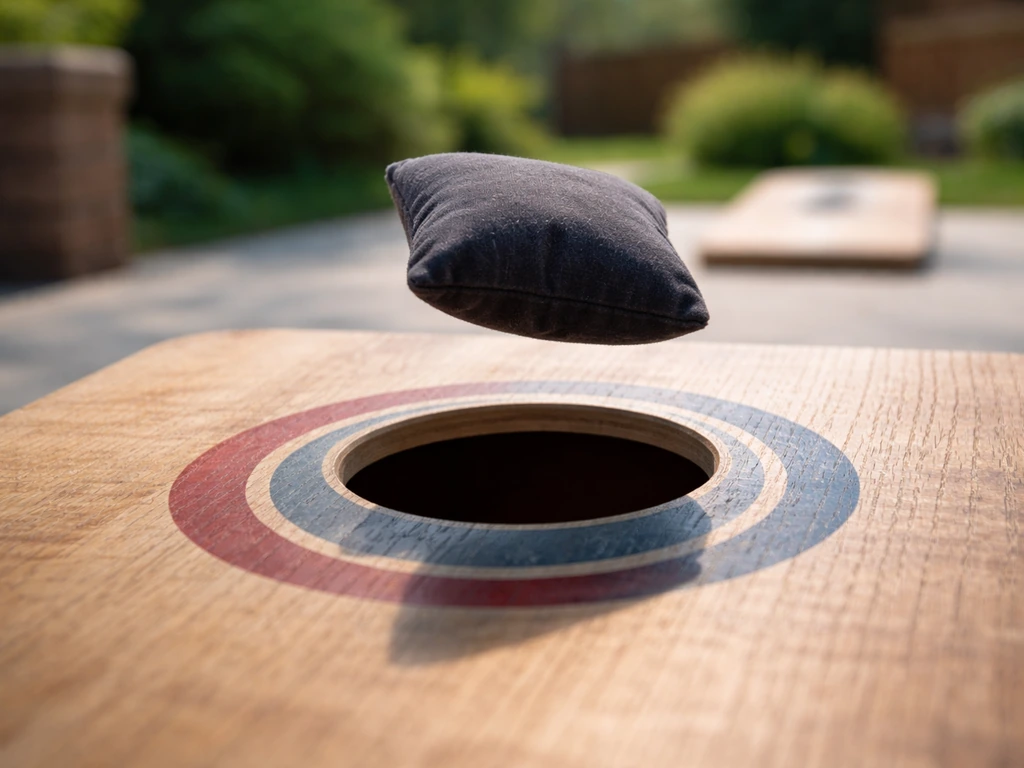
Cornhole is the easiest to learn, the most popular, and still genuinely fun after a hundred games. Each board has a 6-inch diameter hole, and you place the boards 27 feet apart front-to-front for regulation play (you can shorten it to 15–20 feet for casual backyard games or younger players). Bags land on the board for 1 point and go through the hole for 3 points. Games play to 21. A decent set runs $50–$150, and better sets come with all-weather bags and UV-resistant boards. If you buy only one game, make it cornhole.
Bocce Ball
Bocce is slower-paced, social, and works beautifully on short grass or compacted soil. You throw a small target ball (the pallino) then take turns rolling or tossing bocce balls toward it. Points go to the team with balls closest to the pallino at the end of each frame, and matches typically run 7 to 13 points depending on your house rules. Full sets with 8 balls run $30–$80 for recreational quality. For a permanent court, the South Dakota Parks design standard notes widths of 8 to 14 feet and lengths of 60 to 91 feet, but a 30-foot backyard version is totally playable.
Ladder Toss
Ladder toss (also called ladder golf or bolas) sets up in about 5 minutes. Place the two ladder frames 15 feet apart and toss sets of two bolas (balls connected by a rope) at the rungs. Top rung scores 3, middle scores 2, bottom scores 1. It's lightweight, packs into a carrying bag, and handles well on any flat surface including concrete. Sets typically cost $30–$60 and most come with a carry bag. Ladder toss is particularly good for mixed-age groups because younger kids can stand closer without it feeling like cheating.
Giant Jenga
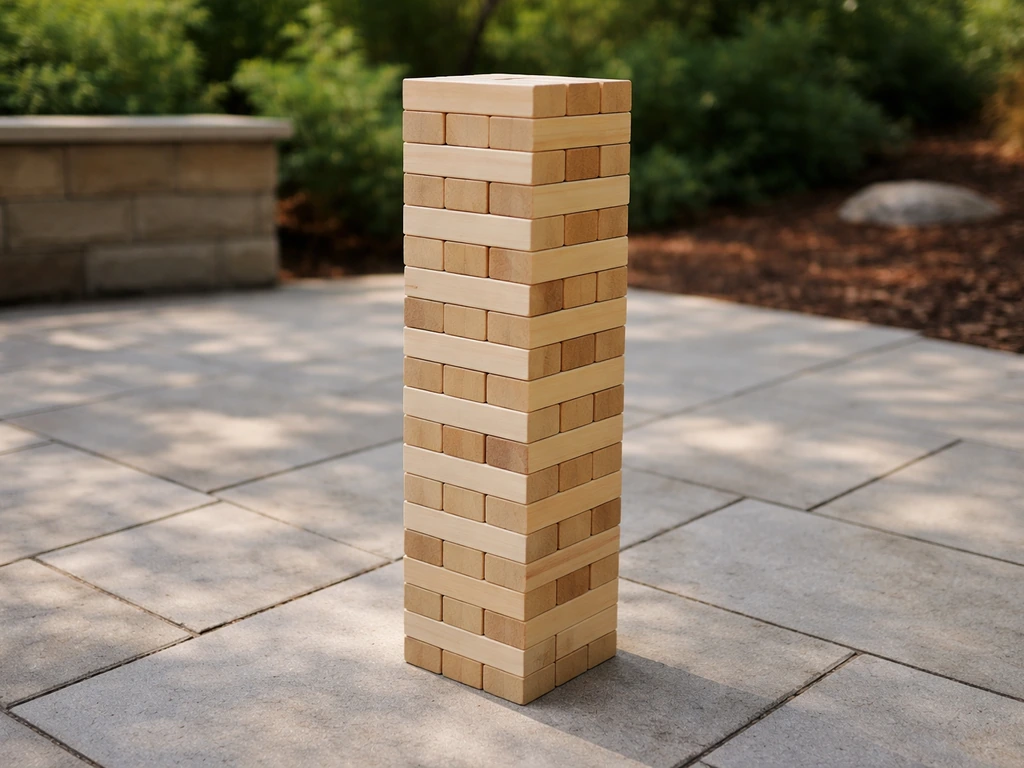
Giant Jenga (or tumbling towers) needs about an 8x8 foot area and is endlessly crowd-pleasing because everyone laughs when the tower falls. Solid pine sets hold up outdoors reasonably well, though they'll need occasional re-sanding over time. For durability in humid climates, look for sets made from HDPE or weather-treated hardwood. Prices run $40–$120. It's a great compact choice when you don't have room for anything requiring distance throws.
Giant Tic-Tac-Toe and Giant Checkers
These are genuinely underrated for patios with limited space. Giant tic-tac-toe sets take up roughly a 9x9 foot footprint, and reversible giant checkers/tic-tac-toe combo boards from brands like Ledge Lounger come in around 31.5 inches (80 cm) on the board side. They're perfect for younger kids, older guests, and anyone who wants to relax and play rather than compete athletically. Cost is typically $30–$80.
Competitive crowd-pleasers for larger patios and parties
If you have the space and want games that keep a party buzzing all evening, these options have enough depth to stay interesting through multiple rounds.
Kubb (Viking Chess)
Kubb is a Swedish game where you throw wooden batons at sets of wooden blocks and then try to knock over the king block. It plays up to 12 people in team format, fits in a 26x13 foot space, and has enough strategic depth that repeat players start getting genuinely competitive. A quality set costs $40–$100 and holds up well on grass. It's a sleeper hit that people who have never heard of it consistently love.
Spikeball
Spikeball is fast, athletic, and great for groups in their 20s–40s who want something more physical. It uses a small circular net placed on the ground with teams of two playing around it. You need roughly a 20-foot diameter open area. Sets run $60–$80 and include everything you need. It's not the best choice if you have older guests or uneven ground, but for an active backyard party it's a strong pick.
Outdoor Shuffleboard Table
A dedicated outdoor shuffleboard table elevates a patio from a backyard to a real entertainment space. Players push weighted pucks down a long surface (the playing surface uses silicone bead wax to reduce friction) and score points by landing in scoring zones. Tables designed specifically for outdoor use cost $300 on the low end and go well past $2,000 for premium builds. Be careful here: standard wooden shuffleboard tables are not weatherproof and shouldn't be left outside long-term without a proper cover. Look explicitly for tables rated for outdoor UV and moisture exposure.
Ring Toss and Horseshoes
Classic horseshoes needs about 40 feet between stakes and works best in a dedicated sandy pit, but rubber horseshoe sets eliminate the pit requirement and work on grass. Ring toss is even more flexible spatially, costs $20–$50, and works well as a secondary game running alongside a bigger setup. Both are good choices for parties where you want multiple game stations running simultaneously.
Games that work great in small spaces or with limited equipment
Not every patio is a sprawling backyard. If you're working with a 10x16 deck, a balcony, or a narrow side patio, you still have good options, you just need to shop specifically for compact formats.
- Giant Tic-Tac-Toe or Giant Checkers: 9x9 feet max footprint, completely self-contained, no throwing distance needed.
- Giant Jenga: Fits in a corner, needs no throwing lanes, and works on any flat hard surface including decking.
- Card and dice games in weatherproof formats: Waterproof playing card sets and dice game sets (like Farkle or Yahtzee in outdoor editions) pack away to almost nothing.
- Mini ring toss: Wall-mount versions or standalone sets under 4 feet take up almost no space and work great on a covered porch.
- Tabletop shuffleboard: Much smaller than a full outdoor table, plays on any patio table surface, costs $20–$60 for a set.
- Magnetic dart boards: Designed for outdoor use, mount to a fence or post, and eliminate any safety risk from steel-tipped darts around kids.
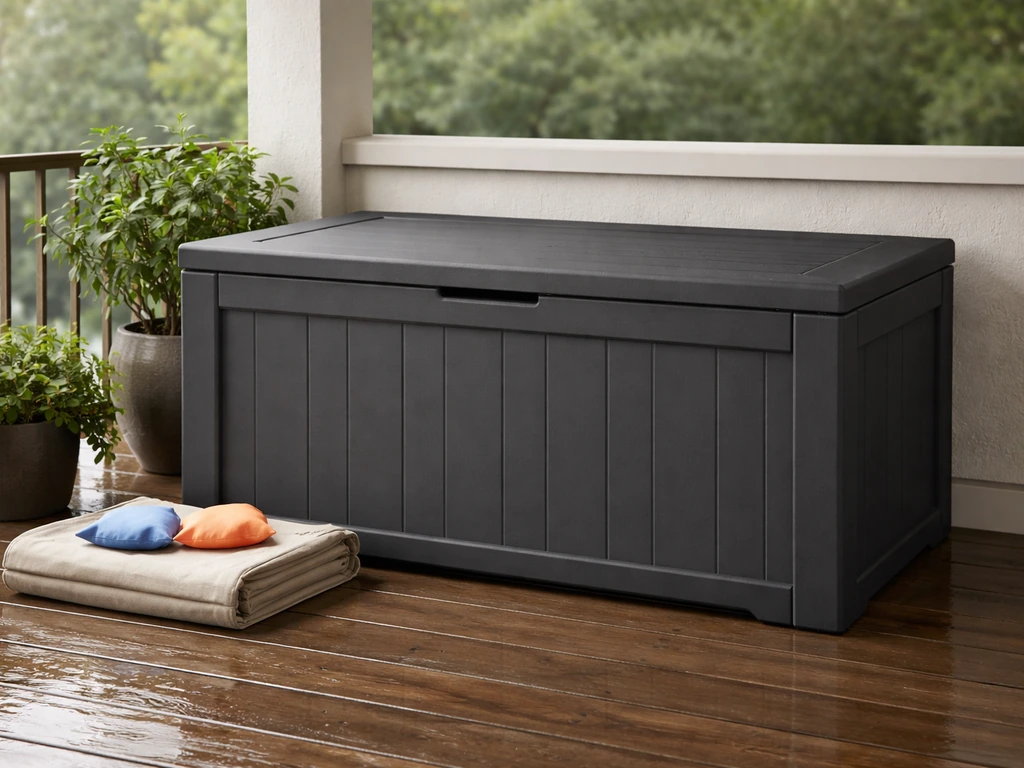
One approach that works really well on small patios is rotating two or three compact games rather than committing to one large permanent setup. A storage bench or deck box keeps everything accessible without taking up extra footprint. If your patio doubles as a dining or seating space, games that fold flat or pack into a bag are worth prioritizing over anything with a permanent footprint.
Weatherproofing, storage, and safety for year-round use
Most outdoor game sets are built for occasional summer use, not year-round outdoor storage, and that gap causes a lot of disappointment. Here's how to extend the life of your games and keep everything safe.
Material choices that actually hold up
Wood is beautiful but demands maintenance. Untreated pine or birch cornhole boards and Jenga sets will warp, crack, or discolor after a wet season if left outside. Marine-grade HDPE is a far better choice for anything staying outdoors long-term, it includes UV absorbers and HALS stabilizers that give it 10-plus years of outdoor service life compared to standard HDPE, which degrades through photooxidative breakdown in direct sun. For bags, ropes, and fabric components, look for UV-stabilized polyester or PVC-coated materials that resist fading and moisture damage. Avoid anything described simply as "weather-resistant" without specifying UV treatment.
Covers and storage
Outdoor shuffleboard tables specifically should never be left uncovered, moisture causes the playing surface to warp and standard wooden boards are not designed for temperature swings or rain exposure. Use a breathable cover that doesn't trap condensation against the surface. For covers in general, common failure points include sagging under pooled water, wind displacement, and UV gaps at poorly fitted seams, so fit matters more than price. PVC-coated polyester tarps offer the best combination of waterproofing, tear resistance, and UV protection for covering larger game equipment. For smaller items like bocce sets and cornhole bags, a lidded storage bin or deck box keeps moisture and insects out between sessions.
Safety on the patio
The biggest safety issue with patio games isn't the games themselves, it's tripping hazards created by equipment placed in traffic paths. Keep game equipment (boards, frames, stakes) outside the main paved walking path. The CPSC notes that ground-level game equipment doesn't require the same protective fall surfacing that elevated play equipment does, but trip hazard management from CNA's outdoor walking surface guidance is still relevant: obstructions narrowing a walking path create real fall risk for guests not watching where they're going. Set up game lanes parallel to, not crossing through, main seating and access areas. Also use rubber feet or anti-skid pads under any boards or frames on hard surfaces to prevent them shifting during play.
For games involving flying objects like cornhole bags, bolas, or bocce balls, establish a clear throwing zone that doesn't overlap with seating. This matters more at night, which is when the best game sessions often happen.
Game setup tips and pairing with patio comfort upgrades
The best outdoor patio games get played more often when the patio itself is comfortable. If you want the best patio gifts for mom, start with comfort upgrades like shade and fans, then pair them with an easy-to-play game set. In most of the U.S., that means solving the heat, glare, and bug problems before worrying about which game set to buy, because even the most fun game gets abandoned after 20 minutes in direct afternoon sun at 95 degrees.
Shade first, then games
Orient your game setup so players aren't staring into the late afternoon sun. A pergola, patio cover, or shade sail over the central gathering area keeps spectators comfortable and extends playing time into earlier evening hours. One of the easiest ways to avoid worst patio decorating mistakes is to start with shade and then place games where people can enjoy them comfortably. If your patio cover extends far enough, cornhole boards and ladder toss frames can be set up partially under coverage, you don't need both ends covered, just the primary gathering and spectator area.
Fans and misting systems
An ENERGY STAR-rated outdoor ceiling fan (look for the wet-rated or damp-rated designation depending on your coverage) makes an enormous difference in patio comfort during summer game sessions. Position fans over seating areas rather than over playing zones to avoid disrupting lighter game components like bags and bolas. If you're in a hot, dry climate like Arizona or Nevada, a patio misting system paired with a fan drops the perceived temperature significantly. In humid climates, misters add moisture you don't need, stick with fans and shade there.
Lighting for evening play
Evening game sessions are some of the best, cooler temperatures, good lighting, relaxed crowd. Use warm-toned lighting in the 2700K to 3000K range for patio ambiance and avoid mixing color temperatures, which creates an uneven, commercial-feeling space. String lights along the perimeter and path lighting along the game lane edges do double duty: they look great and mark boundaries for guests. Lighting is just one piece of creating a welcoming patio, and the best patio decorations can tie the whole look together. For dedicated cornhole setups, LED glow-in-the-dark bags and board lighting kits are genuinely popular and add a fun visual element without requiring any electrical work.
Audio and seating arrangements
Outdoor speakers placed at the perimeter of the patio (rather than pointed directly at players) create background music without overwhelming conversation during game play. Arrange seating in an L-shape or U-shape along one edge of the game area so spectators have a clear line of sight without blocking play. Avoid placing chairs or benches at the end of a throw lane, a cornhole bag or bola that doesn't make it to the target shouldn't be landing near a guest.
Your pre-purchase checklist
Before you place an order, run through these quick checks to make sure you're buying something that actually fits your space and lifestyle. If you want to level up your patio vibe, look for the best patio gadgets that make games easier and more comfortable.
- Measure your available play space in both directions and compare it against the minimum dimensions in the table above.
- Identify your primary surface (concrete, pavers, grass, gravel) and cross-check it against your shortlisted games.
- Estimate your typical group size — 2 to 4 people, 4 to 8, or larger party crowds.
- Decide whether you need a game that packs away completely or can live on the patio semi-permanently.
- Check your local climate: if you're in a high-humidity or heavy-rain region, prioritize weather-resistant materials and plan a storage solution before you buy.
- Confirm you have or plan to install shade, fan, or lighting upgrades if you want to use the games in summer afternoons or after dark.
- Set a budget and prioritize: one quality game set beats three cheaply made ones that won't survive a season.
If you're still building out the broader patio space, pairing game choices with your overall patio design makes everything feel more intentional and cohesive. Games are one piece of what makes a patio a destination, the same thought you'd put into patio decorations, seating, and accessories applies here too. If you're also shopping for gifts, consider the best patio gifts that match your space and the kinds of guests you host. Get the space comfortable first, pick games that fit your real layout, and you'll actually use them.
FAQ
If my patio games run long, how do I shorten sessions without ruining the fun?
For short, casual backyard play, you can run fewer frames (for example, race to 11 or play a set number of rounds) since round time is typically the main limiter on patios. For cornhole specifically, aim for a bag cap per person per round or rotate teams every game, so you are not waiting on one slow player to finish, especially with mixed ages.
What is the best way to prevent trip hazards and shifting equipment on a hard patio surface?
Even on concrete or pavers, aim to keep each game station on a single “lane” that is not blocking foot traffic. Use anti-skid pads (or rubber feet) under frames and boards, then mark the lane edges with outdoor tape or low-profile flags so guests know where not to stand during throws.
Can I play outdoor games near a fence or wall, and how do I keep it safe?
Yes, but treat it as a different setup problem. If your patio is near a wall, rail, or furniture, keep a clear throwing buffer behind the player and place targets far enough from edges that a miss still lands on a safe surface. For cornhole and ladder toss, that usually means turning the lane so the “miss zone” points toward open lawn rather than into seating or doors.
How should I set up throwing zones for night play so misses do not hit guests?
For cornhole bags and bolas, keep at least one step of clearance behind the target and use bright marker dots or a low-contrast line so players can see the landing zone at night. At minimum, avoid playing when lighting makes the target hole or rung hard to judge, because misthrows increase the chance of landing near guests.
What do I do if my ground is uneven, especially for bocce or bocce-like games?
If your patio is mostly level but the surrounding lawn dips or rises, you can still play, but score outcomes may swing. For bocce, use house rules for “near miss” disputes (for example, balls are measured from where they come to rest, not where they would roll) and consider using a small sand or gravel-free patch for the court area.
How should I store patio games between uses if I cannot keep them indoors?
For concrete patios, add protection between games and furniture. Use a breathable cover for large items like shuffleboard, then for smaller pieces store in lidded bins. For wood-based games, bring them inside after use or commit to maintenance (light sanding and re-sealing) because damp overnight conditions cause warping faster than sun alone.
What games work best if I can only leave equipment out for a short time?
Yes, and it is worth it when you have limited space. Choose games that can be packed into bags or fold flat (ladder toss, ring toss, giant tic-tac-toe) and rotate them by occasion, for example daytime cornhole alternatives versus an evening game that requires less running.
How can I tell if an outdoor game is truly built for long-term sun and moisture?
Common mistake is assuming “outdoor” means “outdoor year-round.” A lot of sets are only built for seasonal use, so check whether the materials are UV-stabilized and whether the seller specifies moisture resistance. If a product only says “weather-resistant” without UV details, plan on covering it and storing it after each season.
What adjustments should I make for children to play adult patio games safely and comfortably?
If you have kids under 10, reduce the distance and use scoring that does not require instant teamwork. For cornhole, shorten the board distance (for example, 15 to 20 feet) and consider playing to fewer points. For ladder toss, position targets so younger kids can stand closer without reaching with awkward body angles.
How do I set up multiple game stations so people can rotate without interrupting active play?
For party flow, run a primary game with one station and a quick second option that people can jump into while waiting, such as ring toss or giant tic-tac-toe. Keep the second game physically near seating but not in the throw lane, so guests can rotate without walking through active play.
What are the most important maintenance and setup rules for outdoor shuffleboard tables?
For shuffleboard, the biggest issue is temperature and moisture, not gameplay skill. Use only outdoor-rated tables with proper UV and moisture protection, keep the surface covered (breathable cover that does not trap condensation), and avoid setup on nights with heavy dew unless you can cover between sessions.
How do I confirm the real play footprint for a game before I buy?
If you buy a big set and it turns out to be too large, the fix is usually spacing, not replacing the game. Measure from the throw start position to the target and then add one extra “no-guest” step beyond the target for safe misses. Many purchases fail because the buyer only measures the equipment footprint, not the active throw lane.