
The best outdoor carpet for most patios is a UV-stabilized, solution-dyed polypropylene with a marine-grade or open-weave rubber backing. It resists fading, drains fast, won't rot, and handles everything from Florida humidity to a Colorado hailstorm without turning into a soggy mildew mat. That said, the right pick depends on how exposed your patio is, what climate you're in, and whether you want a wall-to-wall carpet look or a rug you can roll up and store. This guide walks through every decision so you can buy with confidence today.
Best Outdoor Carpet for Patio: Buyer Guide and Tips

Elise Prescott
29 Apr 2026
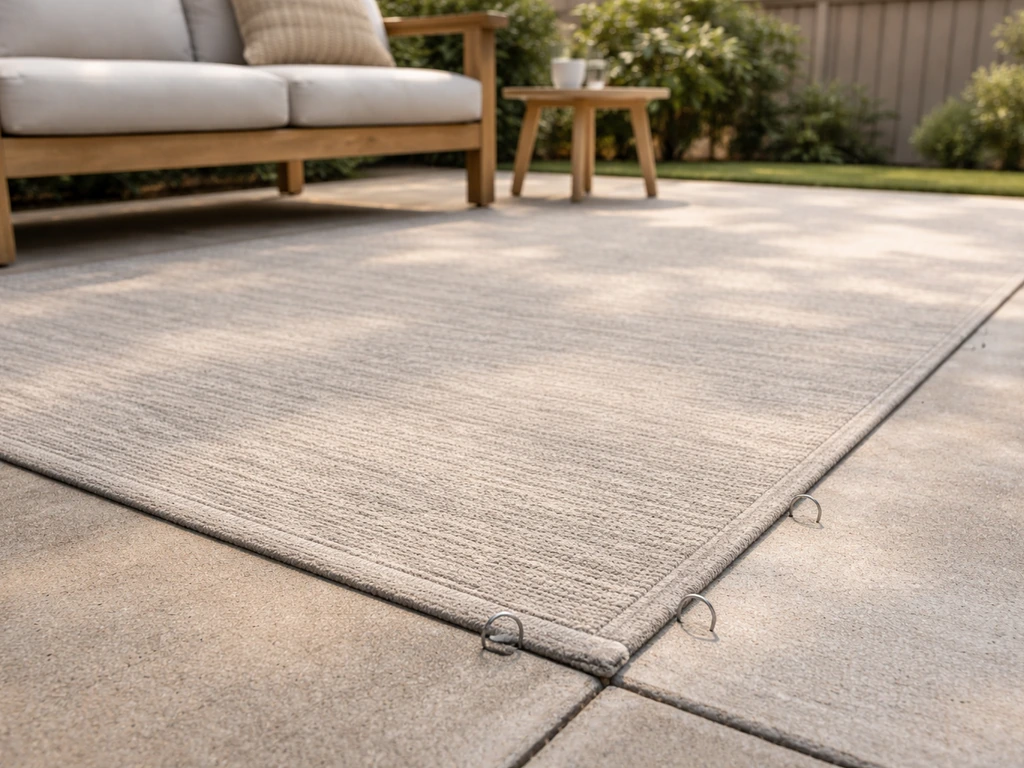
How to Choose the Right Material and Backing
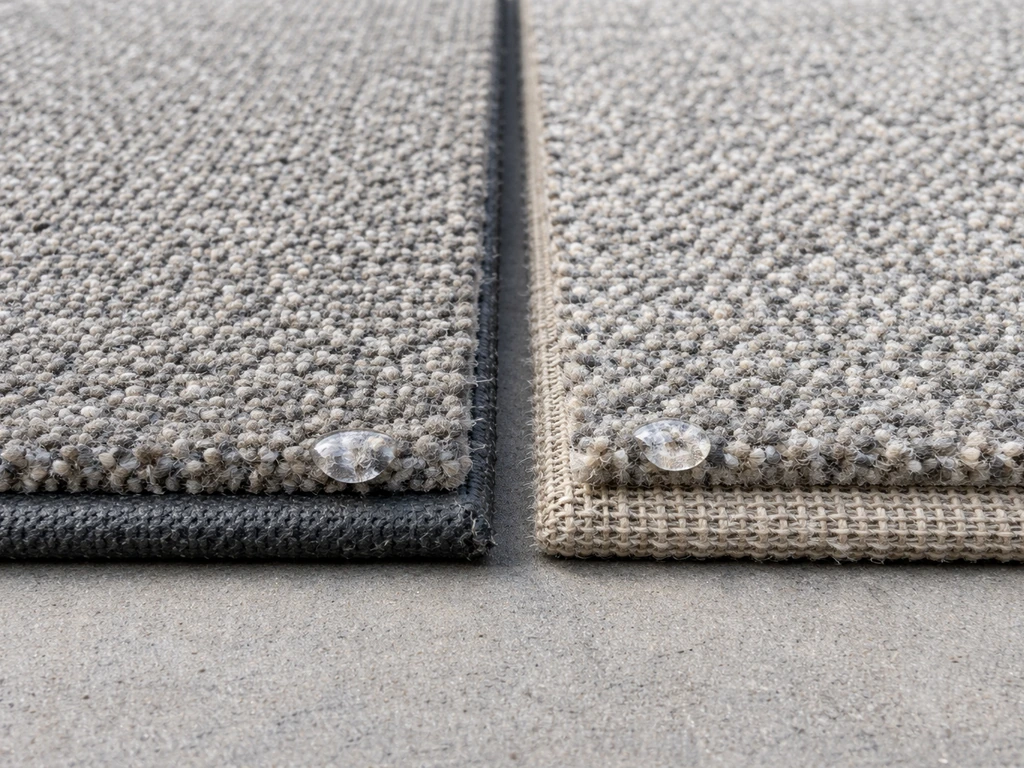
Material and backing are the two things that determine whether your outdoor carpet survives its first season or ends up in a dumpster by August. For the face fiber, [polypropylene (also called olefin)](https://home. howstuffworks. com/home-improvement/home-diy/flooring/choose-right-carpet-fiber2.
htm) is the go-to for good reason. It's inherently hydrophobic, meaning it doesn't absorb water, and when it's solution-dyed the color is locked into the yarn itself rather than applied to the surface. That means UV exposure won't bleach it out the way it does surface-dyed alternatives. Solution-dyed polyester is a solid second choice: slightly softer underfoot, still fade-resistant, but a little slower to dry.
Avoid nylon outdoors unless it's explicitly rated for exterior use, and skip natural fibers like jute, sisal, or wool entirely. Those materials drink moisture and grow mildew fast.
Backing matters just as much as the face fiber and often gets skipped in the buying process. There are two categories: solid rubber or latex backings, and open-weave or perforated backings. Solid latex grips the floor well but can trap moisture underneath if your patio doesn't drain perfectly. Marine-grade polypropylene backings (the type used on boat decks) are specifically developed to handle wet environments and resist mildew from below.
For roll-out carpet tiles or glue-down installations, look for adhesives that are formulated with fungicides and bactericides, like resin-rubber indoor-outdoor adhesives, which are designed to stay bonded in wet conditions without promoting mold growth at the seam. For area-rug style pieces you plan to roll up seasonally, an open-weave rubber rug pad underneath gives you both grip and airflow to prevent moisture from pooling.
Match Your Carpet to Your Climate
Where you live changes what specs matter most. In humid coastal climates (think Gulf Coast, Pacific Northwest, or Florida), mildew resistance is the single most important feature. Look for products that explicitly market mold and mildew resistance, and choose a low-pile or flat-weave style so water doesn't get trapped in the fibers. The faster it dries, the less chance mildew has to take hold.
In the desert Southwest, UV resistance is the priority. Full afternoon sun in Phoenix or Albuquerque will bleach a surface-dyed rug in one summer. Solution-dyed polypropylene or polyester rated for high UV exposure is non-negotiable. In contrast, if you're in a freeze-thaw climate like Minnesota or the Rockies, focus on how the carpet handles temperature swings. Polypropylene stays flexible at low temperatures, whereas some adhesives and latex backings can crack when frozen. For glue-down installations in cold climates, confirm the adhesive's temperature range before buying. If you get regular freeze-thaw cycles, a removable tile system or a roll-up rug is often smarter than a permanent glue-down installation.
Porch vs. Fully Exposed Patio: Placement Changes Everything
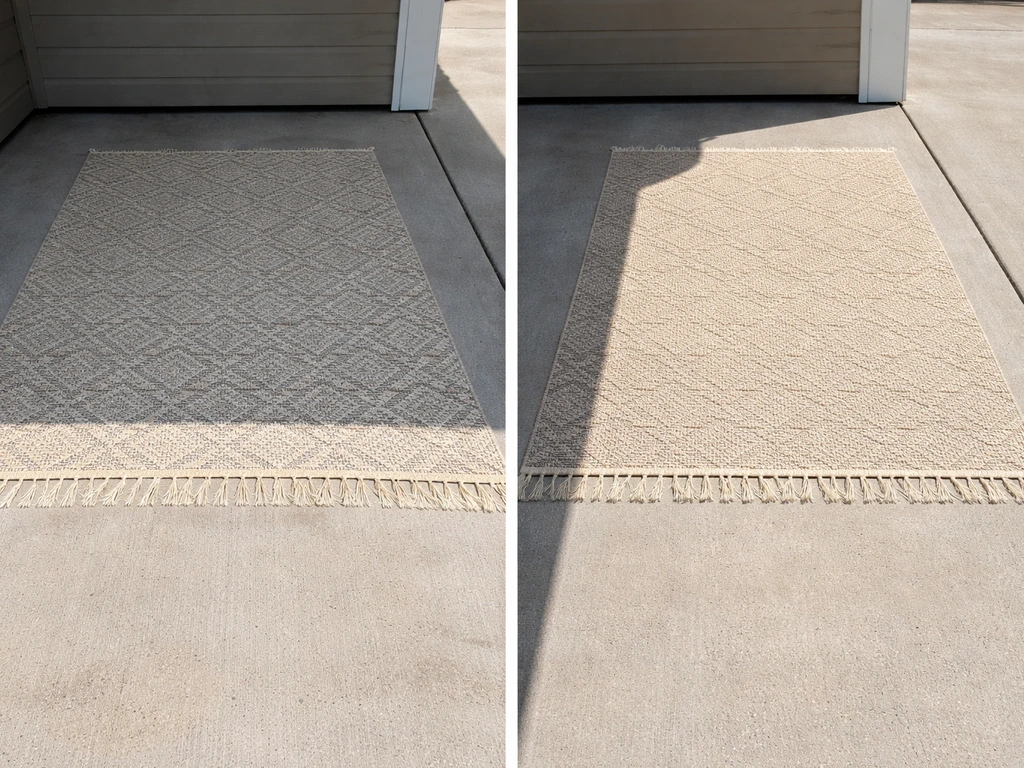
A covered porch and a fully exposed concrete patio have completely different performance demands. On a covered porch, you're mostly dealing with tracked-in dirt, occasional splash from rain blowing in, and temperature variation. Here you have more latitude with pile height, backing type, and even color, since UV exposure is limited. A medium-pile polypropylene rug with a solid rubber backing works great here, and you can afford to prioritize aesthetics more than raw durability.
A fully open patio is a different story. That surface gets direct rain, direct sun, standing water, and possibly snow or freezing temps depending on your region. You want a flat-weave or low-pile carpet (under 0.5 inches) so water doesn't pool in the pile. Drainage is essential: choose a product with a perforated or open-weave backing, or lay it over a surface that allows water to run off naturally. If you're covering a wood deck rather than concrete, airflow underneath is even more critical, since trapped moisture accelerates wood rot. In that case, skip the solid-backed options entirely and use a perforated or marine-style backing with an open-weave pad.
Sizing, Installation, and Keeping It Secure
Measuring and sizing right
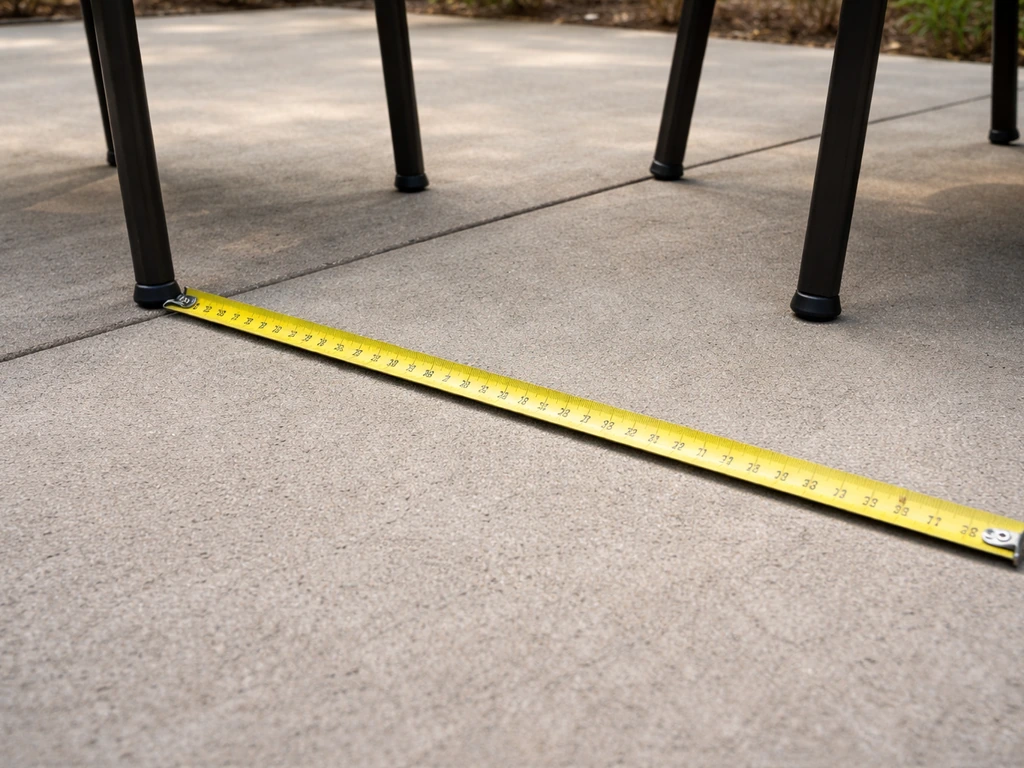
Measure your patio before you look at a single product. For a seating area, the standard approach is to size the carpet so all four legs of your furniture land on it, or at least the front two legs. A good rule of thumb: leave 12 to 18 inches of bare floor between the carpet edge and the patio perimeter if space allows. For a wall-to-wall carpet installation, measure the total square footage and add 10 percent for trimming and fitting around obstacles. If you're using interlocking carpet tiles, the math is simpler since you can cut tiles to fit edges without wasting a full roll.
Roll carpet vs. carpet tiles
Roll carpet gives a seamless, clean look and tends to be more cost-effective for larger areas. It's the better choice if you want a permanent or semi-permanent installation. Carpet tiles are easier for DIY installs, allow you to replace damaged sections individually, and are ideal for irregular-shaped patios or spaces with drainage grates and obstacles. The trade-off is that tile seams can catch dirt and lift over time if not properly adhered.
Securing the carpet so it won't shift
For a permanent glue-down installation on concrete, use a highly water-resistant indoor-outdoor adhesive. Apply it according to the manufacturer's instructions, fold the carpet back carefully onto the adhesive, and work out air bubbles from the center toward the edges. For lighter-duty or temporary installs, double-sided carpet tape rated for outdoor use works well on clean, dry surfaces. Cut the tape into strips along the perimeter and at seams, remove the protective paper, and press the carpet firmly into place.
For roll-up area rugs, an open-weave rubber pad with a polyester scrim layer (around 16 oz per square yard is a solid weight) gives you grip and airflow without trapping moisture underneath. Avoid foam pads outdoors: they absorb water and break down quickly.
Cleaning and Preventing Mildew
The maintenance routine for outdoor carpet is simpler than most people expect, but you do have to stay on top of it. For regular cleaning, a quick hose-off with fresh water handles most surface dirt and debris. Avoid prolonged soaking: a fast rinse and then let it drain is the right approach. For stains, a mild soap and soft brush work for most organic stains. The key after any wet cleaning is blank" rel="noopener noreferrer">getting the carpet fully dry before moisture has time to sit.
Mildew prevention comes down to airflow and drying time. If you want patio rugs that handle wet weather, look for options that are inherently water-resistant and designed to dry quickly instead of staying soaked are patio rugs waterproof. If your outdoor carpet stays wet for more than 24 to 48 hours regularly, you'll eventually get mildew growth on the backing or the surface underneath it.
After heavy rain, if you can flip the rug or carpet up to expose the underside to air and sun, that dramatically reduces mildew risk. For area rugs specifically, Consumer Reports recommends air-drying in a sunny spot with good air circulation as the most effective way to prevent mold and mildew from taking hold.
If you store your carpet or rug seasonally, always roll it (never fold, since folding creases and stresses the fibers) and make sure it's completely dry before storing.
If you do get mildew on the surface, mix one part white vinegar with two parts water and scrub with a stiff brush, then rinse thoroughly and dry in the sun. For severe mildew that's penetrated the backing, it's usually more practical to replace the carpet than to try to salvage it, especially if the backing has delaminated.
Top Picks by Style and Budget
There's no single brand that wins every category, but the following breakdown covers the most practical options across different budgets and looks.
| Type | Best For | Pile Height | Budget Range | Key Strength |
|---|---|---|---|---|
| Solution-dyed polypropylene area rug (indoor/outdoor) | Covered porches, partial shade, seasonal use | Low to medium (0.25–0.5 in) | $30–$200+ | Fade resistance, easy to roll up and store |
| Flat-weave polypropylene rug | Fully exposed patios, high-traffic areas | Flat (under 0.25 in) | $25–$150+ | Fastest drying, easiest to clean |
| Marine-grade polypropylene roll carpet | Permanent or semi-permanent installs, boat docks, exposed patios | Low (0.25–0.375 in) | $1–$4 per sq ft | Mold/mildew/chlorine resistance, durable backing |
| Interlocking carpet tiles | DIY installs, irregular shapes, deck surfaces | Low to medium | $1.50–$5 per sq ft | Replace individual damaged tiles, no adhesive needed |
| Premium outdoor rug (solution-dyed polyester) | Covered porch, comfort-focused | Medium to high (0.5 in+) | $100–$500+ | Softer underfoot, good color depth, UV stable |
For most homeowners with a fully exposed concrete patio, a flat-weave or low-pile solution-dyed polypropylene rug in the $50 to $150 range is the sweet spot. It covers the look, handles weather without drama, and is easy to maintain or replace. For a permanent deck or covered porch install, marine-grade roll carpet glued down with a water-resistant indoor-outdoor adhesive is the most durable long-term option and costs less per square foot than most area rugs.
If you're also comparing standard patio rugs or patio mats against a full outdoor carpet, the core material and backing principles are the same. Patio mats tend to be thinner and more portable, while carpet tiles sit in the middle: more coverage than a mat, more flexibility than a full roll. The right format really comes down to how permanent you want the installation to be.
Mistakes to Avoid and Your Pre-Purchase Checklist
The most common mistakes I see are buying a carpet that's only rated for indoor use (it will fall apart outdoors within one season), choosing a pile that's too high for an exposed location, and skipping the underlayment entirely on wood decks. Another big one: not confirming the warranty covers outdoor use. Some manufacturers offer delamination warranties that specifically exclude outdoor conditions, moisture exposure, or installation errors. Read the fine print before you buy, especially if you're spending over $100 on a product.
- Confirm the product is explicitly rated for outdoor or indoor/outdoor use (not just 'weather resistant')
- Check that the face fiber is solution-dyed polypropylene or solution-dyed polyester for UV and fade resistance
- Verify the backing is perforated, open-weave, or marine-grade if the area gets direct rain or sits on a wood deck
- Check the pile height: 0.5 inches or under for fully exposed areas, more flexibility for covered porches
- Look for explicit mold and mildew resistance claims in the product specs, not just marketing language
- Confirm the adhesive or tape you plan to use is rated for outdoor/wet conditions and includes fungicide protection
- Check the warranty: does it cover delamination under outdoor conditions, and what voids it?
- Measure twice before ordering, and add 10 percent for roll carpet installations
- For cold climates, verify the backing and adhesive remain flexible at freezing temperatures
- Make sure your patio surface drains properly before laying any carpet — pooling water under any carpet accelerates failure
Your Next Step Based on Your Situation
If you have a covered porch with light weather exposure: go with a medium-pile solution-dyed polypropylene area rug, add an open-weave rubber pad for grip and airflow, and you're done. If you’re wondering are outdoor patio rugs a good idea, the answer is yes when you choose the right material, backing, and drying routine for your exposure level.
If you have a fully exposed concrete patio: choose flat-weave polypropylene, either a roll-out rug or glue-down roll carpet, and use an outdoor-rated adhesive with fungicide protection. If you have a wood deck: skip solid-backed products, use a perforated or marine-grade backing, and never glue directly to wood. If you're in a freeze-thaw climate: stick with removable rugs or tile systems rather than permanent adhesive installs.
And if you're in a high-humidity coastal area: prioritize mildew resistance over everything else, keep pile height low, and build a habit of rinsing and drying after every significant rain event.
FAQ
Can I use an indoor rug on my patio if I just put it on top of a mat?
It’s usually a bad idea. Even if the face fiber looks fine, indoor rugs often lack UV stabilization and exterior backing design, so they can fade, delaminate, or hold moisture. If you want a temporary setup, choose an outdoor-rated rug plus an airflow-friendly pad, but don’t rely on indoor materials for season-long outdoor use.
What pile height is safest for a fully exposed patio?
For rain pooling and freeze-thaw risk, aim for low pile, roughly under 0.5 inches. Higher pile can trap water between fibers, slowing drying and increasing mildew risk, especially with solid backings.
Is a solid rubber or marine-style backing better for humid climates?
In humid areas, marine-style or open-weave/perforated systems tend to perform better because they reduce moisture trapped beneath. Solid latex can be fine on well-draining concrete, but if your patio has frequent standing water or poor runoff, prioritize airflow and quick drainage.
How do I prevent seams from lifting on patio carpet tiles?
Use outdoor-rated adhesives or tape systems designed for wet conditions, and pay attention to edge prep. Tiles lift fastest when the sub-surface is dusty, uneven, or regularly wet. For areas near drainage grates, leave a small expansion gap at edges so tiles can move slightly without popping seams.
Can I glue outdoor carpet to a wood deck?
Avoid direct glue to wood. Wood moves with moisture and temperature, which can crack adhesives or trap water at the interface. Use removable rugs, or if you’re installing permanently, choose systems that keep airflow underneath (perforated or marine-style backing) and do not seal the underside against the deck.
What’s the best way to clean outdoor carpet without damaging the backing?
Rinse quickly with fresh water and avoid prolonged soaking, especially with high-humidity areas. After cleaning, dry time matters more than the cleaner itself, so use the hose to remove residue, then let it fully air-dry. If you use a brush for stains, keep scrubbing gentle to avoid separating backing bonds.
Is vinegar safe for all outdoor carpet materials if mildew appears?
White vinegar mixed with water is generally a reasonable spot treatment for surface mildew, but test in an inconspicuous area first. If mildew has delaminated into the backing, cleaning won’t fix the underlying moisture damage, and replacement is often the more reliable outcome.
How often should I flip or move my outdoor rug after heavy rain?
If your patio design allows it, flip or lift it as soon as rain stops, or at least within a few hours. The goal is to prevent the underside from staying damp beyond roughly 24 to 48 hours. If you can’t flip it, increase airflow around it (fans, uncovered drying area) and choose low-pile options.
What should I look for in the warranty when buying outdoor carpet?
Confirm that outdoor use and moisture exposure are included, and read for exclusions related to delamination and installation. Some warranties cover product defects only under specific temperature and humidity ranges, and they may deny coverage if the wrong adhesive or backing system was used.
How do I store an outdoor carpet or rug between seasons to avoid damage?
Roll it only, never fold, and store it completely dry. Moisture trapped in creases or between layers can restart mildew. If possible, store in a breathable area with airflow so trapped humidity can escape instead of condensing.
Do I need a rug pad under outdoor carpet on concrete?
It depends on the backing. If your carpet already uses an open-weave or marine-style backing, you may not need an extra pad. If you use a flatter rug style, an open-weave rubber pad can improve grip and airflow, but avoid foam pads outdoors because they absorb water and break down faster.