
Most patio rugs are not truly waterproof. What you'll actually find on the market are rugs that are water-resistant, quick-drying, or designed to let water pass through rather than trap it underneath. A fully waterproof rug would need to be sealed so thoroughly that it becomes stiff, non-breathable, and uncomfortable to walk on. What matters more for your patio is whether the rug handles rain, sprinklers, and puddles without soaking through to your deck, staying wet for days, or turning into a mold factory underneath. In that Reddit thread, users discuss which outdoor balcony rug materials handle rain better and how to avoid dampness and lingering odors Outdoor balcony rugs that actually survive rain without turning gross?.
Are Patio Rugs Waterproof? How to Choose the Right Rug

Elise Prescott
29 Apr 2026
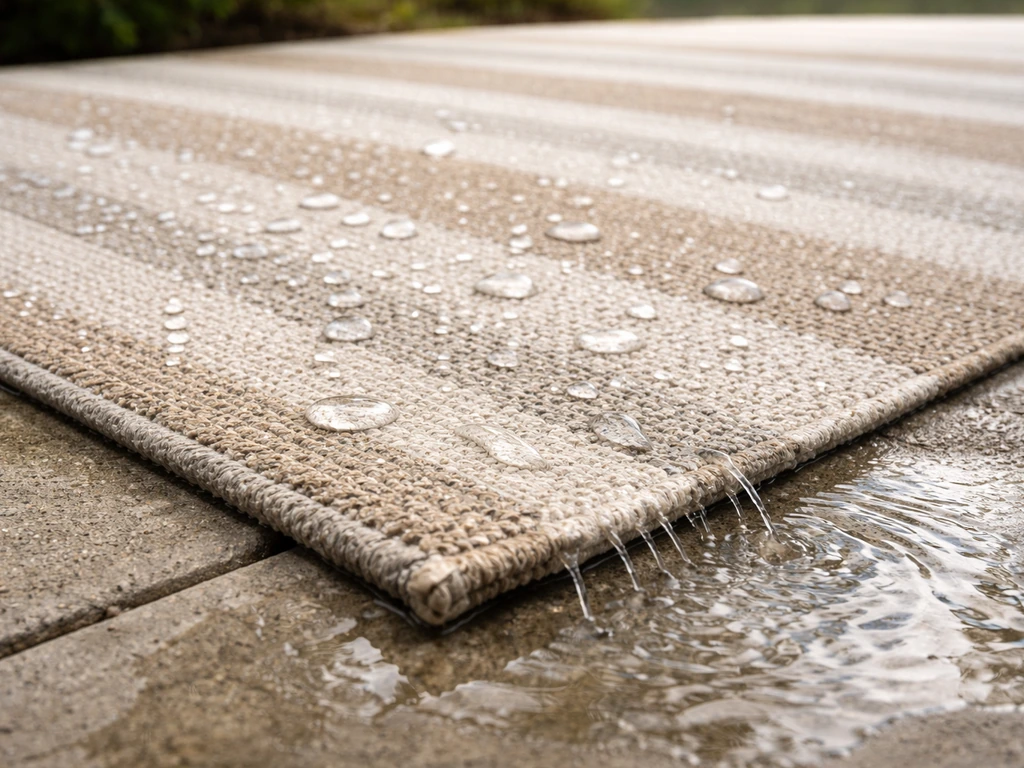
What 'waterproof' actually means for a patio rug
When a rug is truly waterproof, water cannot pass through it in any direction. Think of a rubber mat or a vinyl shower floor: water beads and runs off, nothing soaks in. For a fabric-based rug to achieve that, it would need to be specially treated and sealed all the way through, and that sealing process does real damage to the feel and breathability of the material. You'd end up with something closer to a plastic tarp than a rug you'd want on your patio.
For outdoor rugs, the more honest and useful distinction is whether water soaks into the fibers and stays there, or moves through and dries quickly. A good patio rug manages water by resisting absorption at the fiber level, draining through the backing, or both. That keeps your deck or concrete dry underneath and cuts down on mold risk. Truly waterproof rugs are rare and mostly unnecessary for typical patio use.
Water-resistant vs quick-dry vs truly waterproof: what you'll actually notice
These three terms get used interchangeably in product listings, but they describe genuinely different behaviors. Here's how they play out in real conditions on your patio.
| Type | How it handles rain/spills | Drying time | Risk of water pooling underneath | Common examples |
|---|---|---|---|---|
| Water-resistant | Fibers resist soaking but moisture can eventually penetrate with sustained exposure | Moderate, hours to a day | Moderate if backing is sealed | Polypropylene flatweaves with coated backing, some indoor/outdoor rugs |
| Quick-dry / drainage design | Water passes through open weave or perforated backing, doesn't pool | Fast, often under an hour in sun | Low, water drains away | Open-weave polypropylene, most performance outdoor rugs |
| Truly waterproof | Water beads off completely, nothing passes through | Very fast (surface only) | Can be high if edges trap water | Solid vinyl mats, rubber-backed utility mats |
| Not rated / natural fibers | Fibers absorb moisture readily | Slow, can take 24-48 hours | High | Jute, sisal, cotton-blend rugs used outdoors |
The quick-dry drainage design is often the best performer for an exposed patio. When water can't pass through a rug, it pools beneath and stays there, which means your decking, pavers, or concrete stay wet longer and you're setting up ideal conditions for mold and mildew on both the rug and the surface below. A rug that lets water drain through but dries fast is doing its job better than one that's technically more water-resistant at the surface.
One thing worth noting: some popular washable rug brands like Ruggable market their covers as water-resistant, with an internal polyurethane barrier that prevents liquid from seeping through the bottom layer. Ruggable also states that its polyester fiber does not absorb liquid and that some of its rug systems include a water-resistant polyurethane barrier to help prevent liquid from seeping to the bottom layer. That's useful for indoor spills but it also means water can pool beneath the rug on an outdoor surface if it can't drain anywhere. Those rugs work fine on a covered patio but I'd be cautious using them in a spot that gets direct rain regularly.
Materials and rug types: what actually holds up outdoors
Polypropylene (the gold standard for most patios)
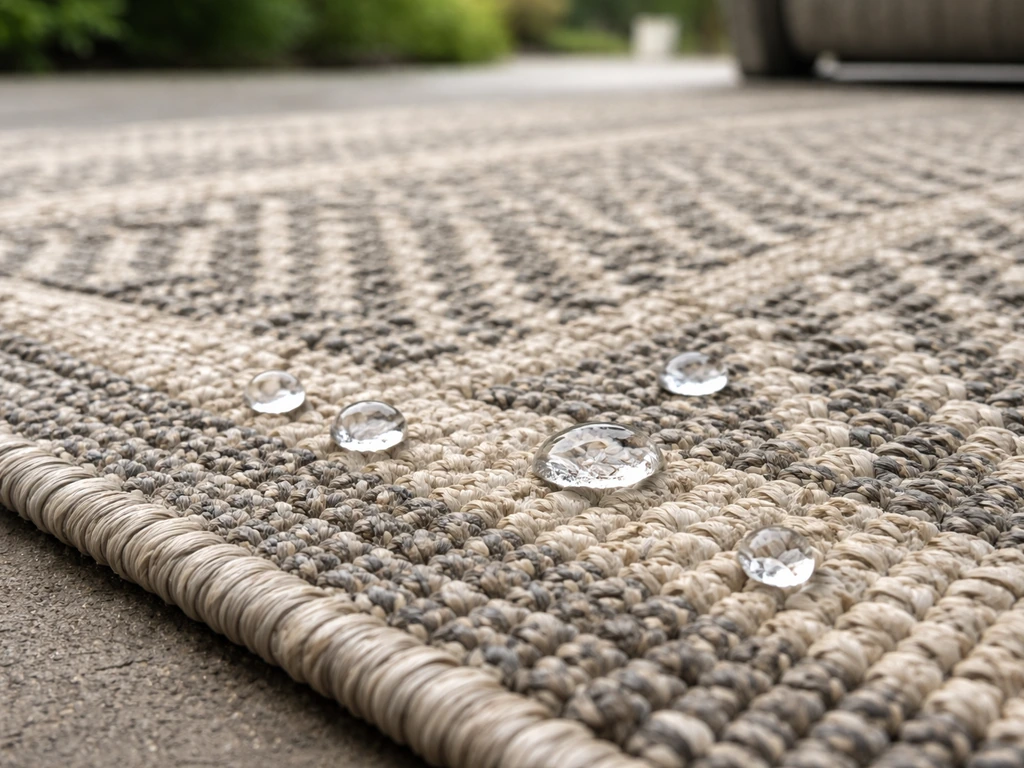
Polypropylene is the material you'll see recommended most often for outdoor rugs, and for good reason. It has exceptional moisture resistance at the fiber level, meaning water doesn't soak into the yarn itself. Most quality polypropylene outdoor rugs are also UV-stabilized and treated for mold and mildew resistance, so they hold up through repeated wet-dry cycles without breaking down or fading badly. Flatwoven polypropylene rugs with an open or perforated backing drain efficiently and dry quickly, often within an hour in direct sun. This is what I'd recommend as the baseline choice for most homeowners.
Recycled plastic and PET fiber rugs
Rugs made from recycled plastic bottles (often labeled PET or recycled plastic fiber) behave similarly to polypropylene. The fibers don't absorb water, they feel surprisingly soft underfoot, and they hold up well in rain. These are a solid choice if sustainability is part of your buying criteria. Check that the backing matches the fiber quality because some recycled-fiber rugs use a dense latex or rubber backing that blocks drainage.
Vinyl and rubber mats
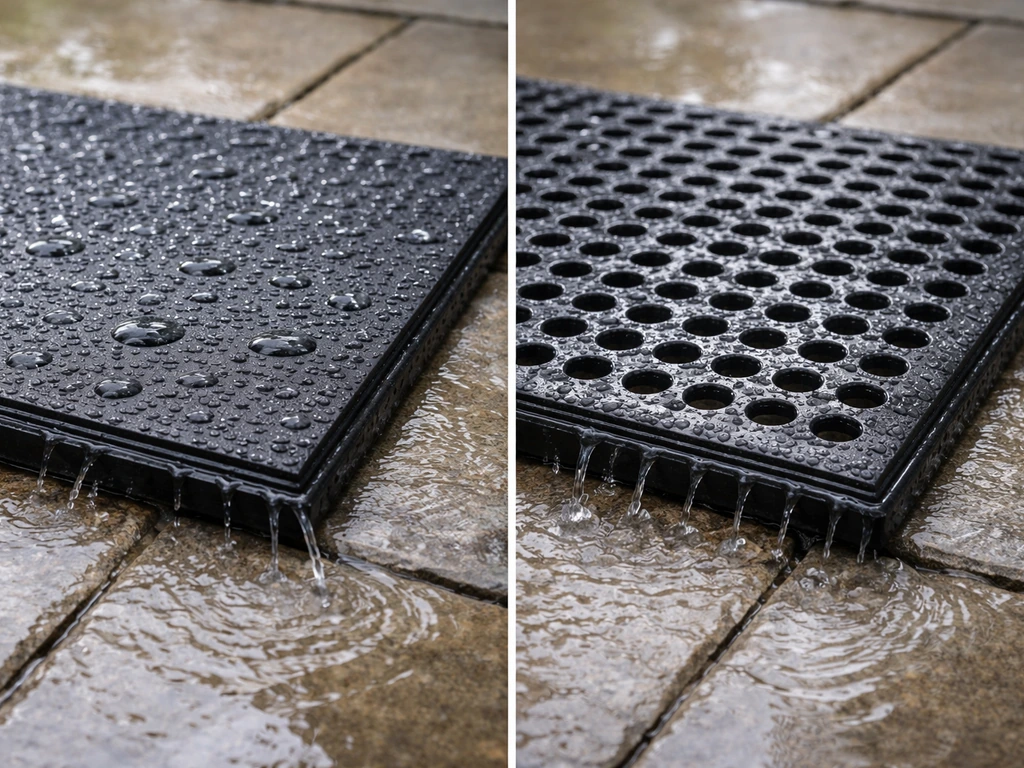
If you genuinely need something waterproof rather than water-resistant, a solid vinyl mat or perforated rubber mat is your answer. These are closer to what you'd see in a commercial kitchen or outdoor shower. They bead water completely, are easy to rinse clean, and dry almost instantly. The trade-off is comfort and aesthetics: they don't look or feel like a traditional rug. For high-exposure spots like right outside a pool or in front of an outdoor kitchen, they can be a smarter pick than a fiber rug.
Natural fibers: jute, sisal, seagrass, and cotton blends
I'll be direct here: these materials don't belong on an exposed outdoor patio where they'll get rained on. blank" rel="noopener noreferrer">Jute, sisal, seagrass, and cotton all absorb moisture, dry slowly, and are prone to mold, mildew, and fiber breakdown outdoors. Some products are marketed as jute-look alternatives made from synthetic fibers, which are fine, but actual natural-fiber rugs should stay indoors or under a fully covered patio where they won't get wet. If you're looking at best patio carpet or outdoor carpet options that try to blend aesthetics with durability, the synthetic versions of natural-look textures are a much safer bet.
Backing matters as much as the fiber
A rug can have water-resistant fibers on top and still trap moisture underneath if the backing is wrong. Open-weave or perforated backing lets water pass through and drain away from your patio surface. Dense latex, rubber, or foam backing blocks drainage and keeps moisture trapped between the rug and the floor. For uncovered outdoor patios, always look for open or perforated backing. For covered patios, a denser backing is more acceptable since direct rain isn't the issue.
How to check specs and do a simple at-home test
Product listings and marketing copy are inconsistent about these terms, so knowing what to look for in the fine print saves frustration later. Here's what to check before you buy, and how to test a rug you already own.
What to look for in product specs
- Material: polypropylene, PET/recycled plastic, or synthetic fiber is what you want for wet exposure
- Backing type: look for 'open weave,' 'perforated,' or 'drainage backing' for uncovered patios; avoid dense latex or rubber backing if drainage matters
- UV resistance or UV-stabilized yarns: this affects color and fiber integrity over time, not just water performance
- Mold and mildew resistance: look for this explicitly in the product description, not just implied by material type
- Indoor/outdoor rating: a rug labeled only 'indoor/outdoor' may have a sealed backing appropriate for light splashes but not standing rain
- Waterproof vs water-resistant: if a brand says 'waterproof,' read the fine print. Most mean water-resistant or surface-treated
The at-home test
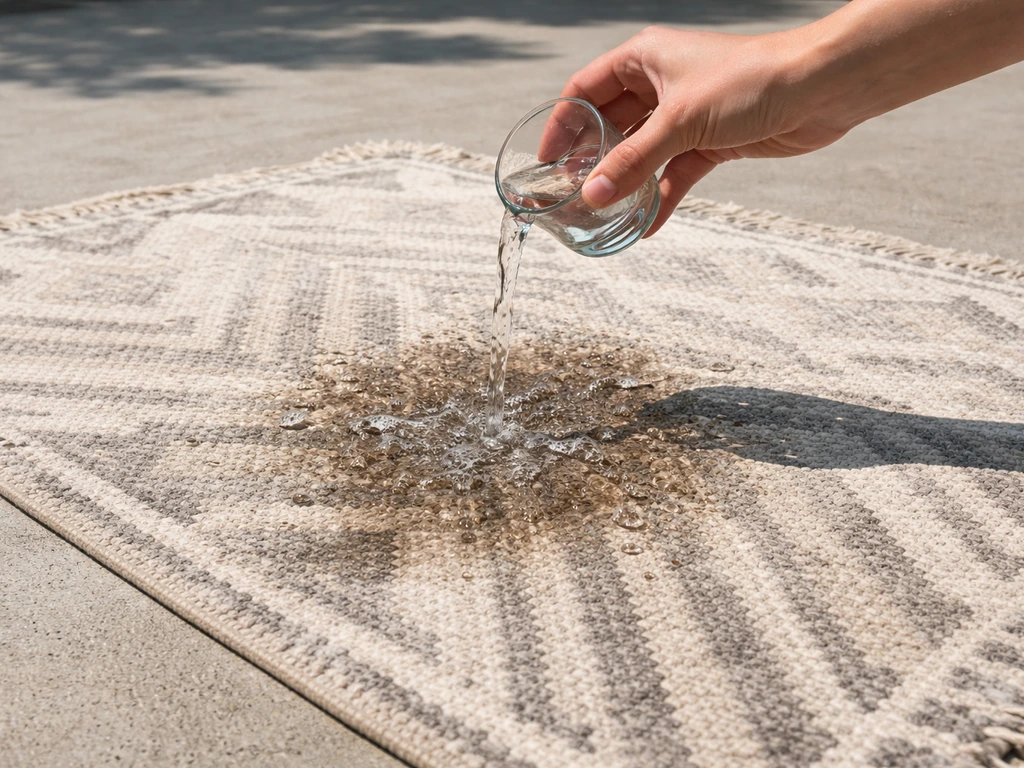
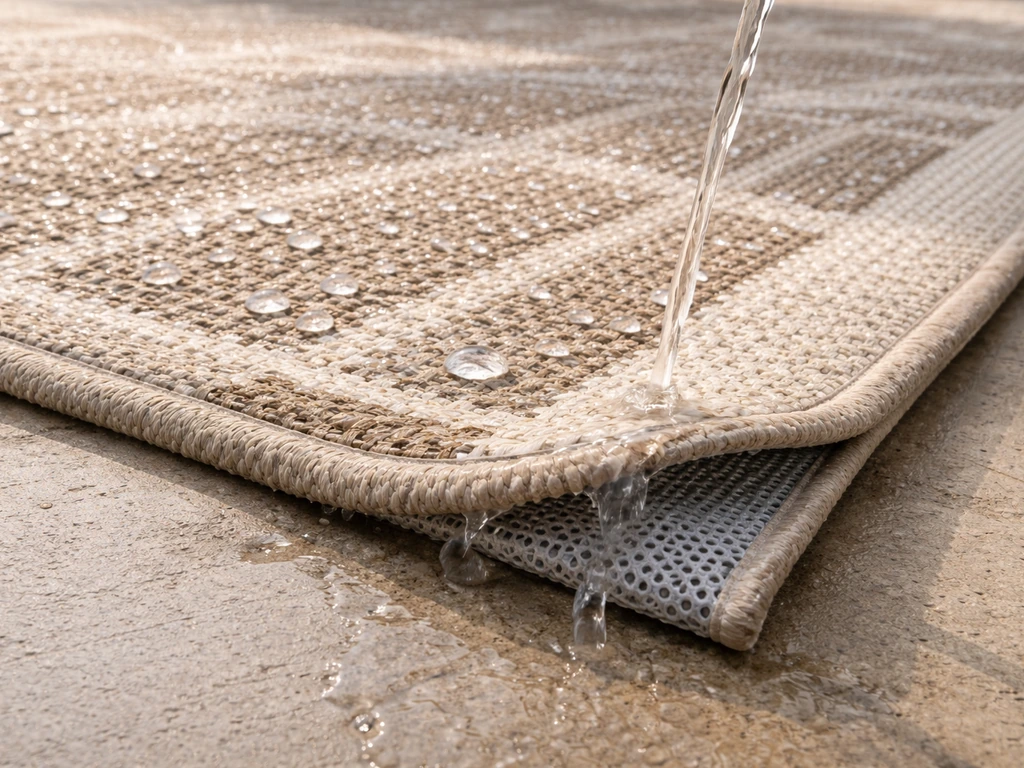
Lay the rug flat on a clean hard surface outside. Pour a cup of water on top and watch what happens over 30 seconds. Does it bead and run off? Does it soak in? Flip the rug and look at the underside. If the backing is dry, the rug is at least water-resistant. If it's already damp, you have absorption happening at the backing level. Then check how long the rug takes to dry completely in sun: under an hour for a flatwoven polypropylene is normal. Several hours or overnight means it's holding moisture and will need more management in wet conditions.
Placement and setup: covered vs uncovered, underlayment, drainage, and cold weather
Covered vs uncovered patios
Where you're placing the rug changes everything. On a covered patio, you're mainly dealing with humidity, tracked-in moisture, and occasional splashes, not direct rain. That opens up more rug options and you can use a denser backing without worrying about drainage. On an uncovered patio, you need a rug that can handle full rain events and dry out completely between them. Open-weave polypropylene with perforated backing is the right call here. If you've invested in a quality patio cover, pergola, or shade structure, you've already expanded your rug options significantly.
Underlayment and spacing
On an uncovered patio, skip the thick non-slip pad under the rug unless it has drainage holes. A solid foam or rubber pad blocks water from draining away and keeps moisture trapped between the pad and the patio surface, which is exactly the environment mold needs. A thin, perforated or mesh-style rug pad is a better choice. It prevents slipping, adds a little cushion, and still lets water drain. On a covered patio where drainage is less critical, a standard non-slip pad is fine.
Drainage and water flow
Check that your patio surface has adequate slope and drainage before laying a rug. Even the best outdoor rug will have problems if it's sitting in a spot where water pools and doesn't drain. If your patio floods or holds standing water after rain, the rug is the wrong fix. Solving drainage at the surface level first, whether that's adjusting slope, adding French drains, or pairing with a patio cover to redirect water, will extend the life of whatever rug you choose.
Freeze-thaw cycles and cold climates
If you're in Minnesota, Colorado, or anywhere that gets hard freezes, a wet rug that freezes in place becomes a real problem. Moisture in the fibers expands when it freezes, which degrades the rug faster, and a frozen rug can bond to your deck or pavers and cause surface damage when you try to move it. In freeze-thaw climates, bring your rug in before the first hard freeze, or at minimum make sure it's completely dry before temperatures drop.
Coastal and salt-air environments
Salt air accelerates fiber and backing degradation more than rain does. In coastal climates, UV-stabilized polypropylene rugs still hold up well, but natural fibers and some backing adhesives will deteriorate faster. Rinsing your rug more frequently (monthly during peak season) to remove salt residue helps significantly. This is also where a patio cover adds real value, cutting direct UV and salt exposure at the same time.
Care, cleaning, and keeping mold away
The care routine for a quality outdoor rug is genuinely simple, which is part of the appeal. Most spills and dirt can be handled with a garden hose rinse followed by air drying. For deeper cleaning, a mild dish soap diluted in water, scrubbed in with a soft brush and then rinsed thoroughly, handles most stains without damaging the fibers. Avoid bleach on colored rugs unless the manufacturer specifically says it's safe, and skip harsh solvents.
The most important part of the routine is making sure the rug dries completely after any cleaning or heavy rain event. Elevate one edge or flip the rug over to expose both sides. Rolling up a damp rug creates exactly the dark, trapped moisture environment that bacteria and mold need. If the rug won't dry in a reasonable time on its own because of shade or humidity, lean it against a fence or wall so air can circulate around both sides.
Mold and mildew prevention comes down to two things: fiber choice and drying time. A polypropylene rug with mold-resistant treatment and good drainage dries fast enough that mold rarely gets a foothold. A natural-fiber rug on an uncovered patio in a humid climate is a mold problem waiting to happen. If you notice any musty smell from your outdoor rug, address it immediately with a diluted white vinegar rinse, rinse again with water, and dry fully in direct sun before putting it back down.
When to store vs leave out year-round, by climate
A well-made polypropylene outdoor rug in a mild climate can live outside year-round without much issue. In harsher climates, bringing it in during the off-season makes a real difference in how long it lasts. Consumer Reports recommends thoroughly drying your rug before rolling it up, then storing it in a dry, enclosed space. Rolling it tightly and securing it with straps or rope keeps it from unraveling and collecting moisture in storage. Never store a damp rug in a closed space, it will come out smelling like a problem.
| Climate type | Leave out year-round? | Key risks | Recommended action |
|---|---|---|---|
| Mild/dry (Southern California, Arizona) | Yes, generally fine | UV fading over years | Rinse monthly, flip occasionally to even sun exposure |
| Hot/humid (Florida, Gulf Coast, Southeast) | Possible but monitor closely | Mold, mildew, salt air degradation | Rinse and dry frequently, store during peak hurricane season |
| Temperate (Mid-Atlantic, Pacific Northwest) | Store in off-season | Extended wet periods, slow drying | Dry thoroughly, roll up, store before winter rains |
| Freeze-thaw (Midwest, Colorado, Northeast) | No, bring in before first freeze | Fiber damage from freezing moisture, surface bonding | Store indoors from late fall through early spring |
| Coastal/salt air (any coast) | Possible with more maintenance | Salt accelerates fiber and backing breakdown | Rinse monthly with fresh water, UV-stabilized materials required |
In hot, sunny climates where UV is the bigger enemy, the storage calculus flips: you might actually want to bring a rug in during peak summer months or put it under a covered patio during the hottest part of the day to preserve color and fiber integrity. If you've already got a patio cover or pergola with a UV-blocking roof, that protection extends the life of everything underneath it, including your rug.
Picking the right option for your setup
For most homeowners on an uncovered patio in a climate that sees real rain, a flatwoven polypropylene rug with open or perforated backing is the practical choice. If you're wondering, “are outdoor patio rugs a good idea,” the answer is yes, as long as you pick water-resistant designs with drainage that can dry quickly. It handles rain without pooling underneath, dries fast, and resists mold. Look for UV-stabilized yarns and an explicit mold-resistance rating on the label.
If you want a truly waterproof surface, skip the fiber rug and go with a perforated vinyl or rubber mat, especially for high-splash zones like pool surrounds or outdoor kitchens. These aren't as decorative but they're genuinely impervious to water and nearly zero-maintenance.
For a covered patio where rain is largely a non-issue, you have more flexibility. Indoor/outdoor rugs with denser construction, more texture, or even washable cover-style rugs work well here. This is also where you can stretch into better aesthetics, softer textures, and more design options without sacrificing durability. If you're also comparing patio carpet or outdoor carpet options, those tend to work best in covered or semi-covered settings where extended drying time is less of a concern. If you're specifically shopping for the best outdoor carpet for patio, those patio carpet or outdoor carpet options tend to be the most forgiving when drying time matters less than drainage. If you are specifically shopping for the best patio carpet, prioritize quick-drying materials and a backing that allows water to drain away rather than pool underneath. Similarly, if you're weighing a patio mat versus a full rug, the mat format often wins on drainage and ease of cleaning in high-exposure spots.
Whatever you choose, the setup matters as much as the rug itself. Good drainage underneath, the right underlayment for the conditions, and a simple drying routine after major rain events will keep a mid-range rug looking good for years. Pair that with a patio cover if your budget allows, and you remove most of the weather stress entirely.
FAQ
How can I tell if a patio rug is truly waterproof or just water-resistant?
Do the two-sided “30-second pour” test. Pour a cup of water on the top surface and watch whether it beads and runs off, then flip the rug and check if the backing feels damp. If the underside gets wet, it is absorbing at the backing level, which can still cause trapped moisture underneath.
Can I use a rug outdoors if it says “washable” or “water-resistant” on the label?
Sometimes, but not in the same way everywhere. “Washable” often refers to the cover layer, and “water-resistant” may only block liquid from reaching the lower backing briefly. On an uncovered patio with direct rain, prioritize rugs with open or perforated backing so water has somewhere to go besides pooling under the rug.
What’s the biggest mistake that causes mold under outdoor rugs?
Using the wrong pad or underlayment. Thick foam or solid non-slip pads can block drainage and keep moisture trapped between the rug and the patio surface. If you need a pad on an uncovered patio, use a thin, mesh or perforated pad that lets water drain away.
Will a polypropylene outdoor rug stay dry enough if it gets heavy rain?
Usually, if the backing drains and the rug dries between storms. Look for flatwoven polypropylene with open or perforated backing, then check real drying time in your conditions. If it routinely takes many hours to dry, you may need better patio slope or a placement with more sun and airflow.
How should I dry an outdoor rug after a storm?
Avoid rolling it while damp. Flip the rug or elevate one edge so both sides get airflow, and if shade prevents drying, lean it against a wall or fence to expose the underside. Rolling damp rugs increases the chance of mildew developing from trapped moisture.
What should I do if my rug smells musty?
Treat it as an active moisture problem. Rinse with a diluted white vinegar solution, rinse again with clean water, then dry fully in direct sun before placing it back down. If the smell returns quickly, the rug is likely staying damp due to backing or pad choices.
Are indoor-outdoor rugs safe for uncovered patios?
Only if their construction matches uncovered conditions. Many indoor-outdoor rugs are not designed for direct, repeated rain, especially if they have dense solid backing. Confirm the underside drains (open or perforated backing) and plan for complete drying time after storms.
Do I need to remove outdoor rugs during freeze-thaw weather?
Often yes, especially if your rug stays wet. In freeze climates, moisture in fibers can expand and degrade the rug, and a frozen rug can adhere to pavers or decking. Bring it inside before the first hard freeze, or at minimum place it so it does not remain wet and freezes in place.
Is salt air harder on patio rugs than rain?
Yes, salt air accelerates breakdown of fibers and some backings more than typical rainfall. If you live near the coast, rinse your rug more frequently, and consider extra protection from a patio cover to reduce UV and salt exposure at the same time.
What type of rug is best if I need maximum water protection?
If you need a truly waterproof surface for high-splash areas, choose a perforated vinyl or rubber mat. It beads water and is easy to rinse, but it will not feel or look like a traditional fabric rug, so reserve it for pool surrounds, outdoor kitchens, or similar wet zones.