
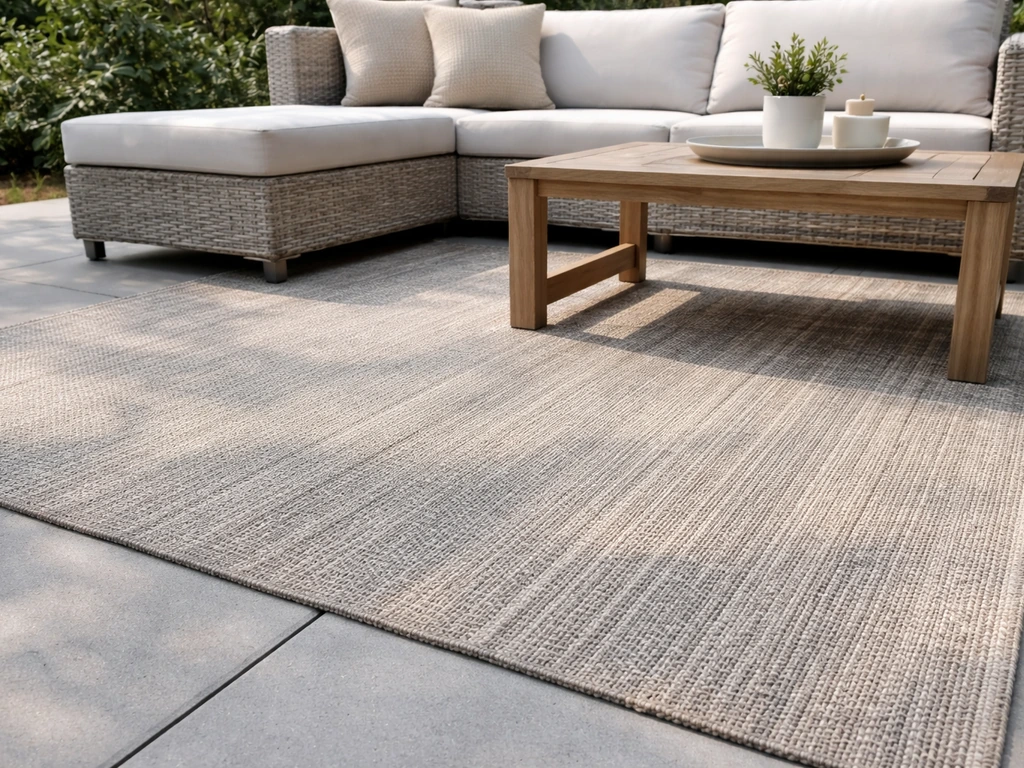
Yes, outdoor patio rugs are a genuinely good idea for most homeowners, they add warmth, define a seating area, and make a bare concrete slab or wood deck feel like an actual room. The catch is that not every rug holds up equally well, and the wrong material or placement can create mildew, slip hazards, or a faded mess within a single season. Get those two things right, material and placement, and an outdoor rug is one of the cheapest, easiest upgrades you can make to a patio.
Are Outdoor Patio Rugs a Good Idea? Costs, Materials, Tips

Elise Prescott
29 Apr 2026
Quick verdict: when outdoor patio rugs are worth it
Outdoor rugs earn their keep in almost every climate when you choose the right fiber and maintain them minimally. They're especially worth it if your patio has an ugly or mismatched surface underneath, if you want to anchor a furniture grouping visually, or if bare concrete gets uncomfortably hot underfoot in summer. They're a tougher sell if your patio has zero shade and sits in standing water after rain, if you're in a climate with harsh winters and have nowhere to store the rug off-season, or if the surface underneath stays damp for days at a time. In those edge cases, alternatives like interlocking deck tiles or permeable mat systems (covered below) may serve you better.
- Great fit: covered or semi-covered patios, dry climates, shaded decks, spaces where you want a defined seating zone
- Good fit with some maintenance: humid climates, occasionally wet patios, sunny exposed decks (with UV-resistant fiber)
- Tougher fit: freeze-thaw climates without storage space, patios that pool water, full-sun with no UV protection on the rug
The key mindset shift: no outdoor rug is truly weatherproof. Consumer Reports puts it plainly, even the most weather-resistant outdoor rug is built for weather exposure, not permanent weather submersion. Even so, if you’re wondering are patio rugs waterproof, most outdoor options are only water-resistant and need proper placement to avoid pooling. Think of it as weather-tolerant, not indestructible, and your expectations will be right-sized.
Best rug materials for different climates
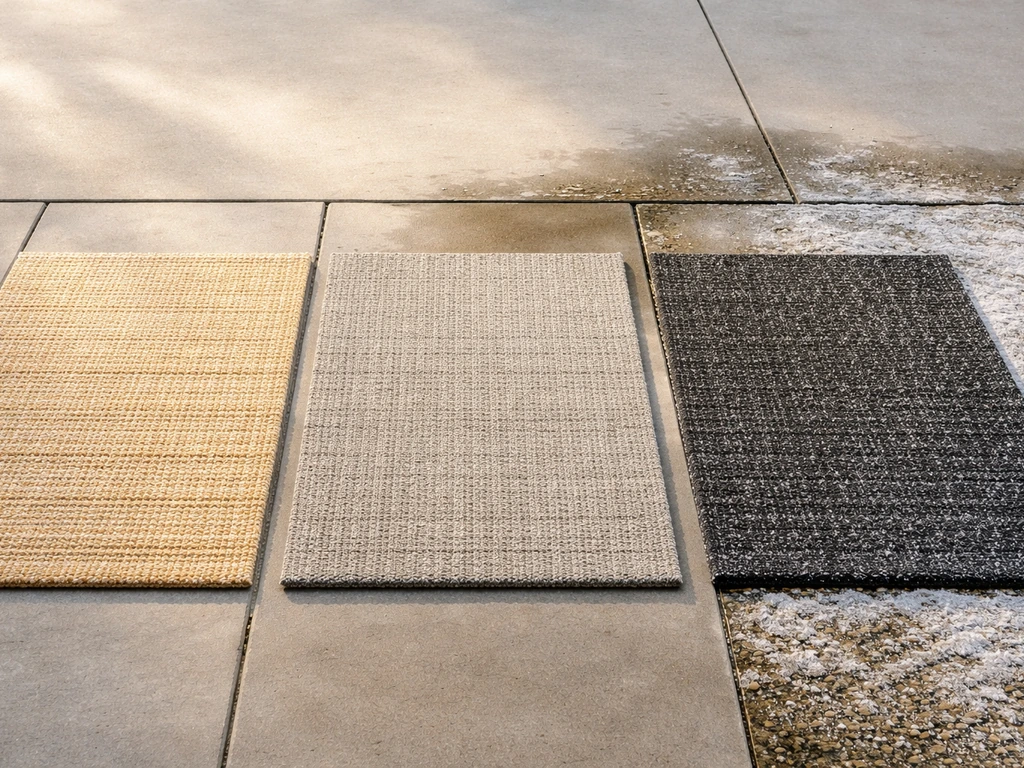
Material selection is the single most important decision you'll make, and it should be driven by your local weather. Here's how the main options stack up across the conditions that matter most.
Polypropylene (the workhorse choice)
If you're not sure what to buy, buy polypropylene. A merchandise buyer at Ballard Designs called it the "best all-around choice" for outdoor rugs, and that tracks with real-world experience. UV-treated polypropylene resists fading, won't mold on its own, cleans up with a hose, and costs a fraction of premium alternatives. It handles sun, rain, and humidity well. For freeze-thaw climates (think Colorado or Minnesota), polypropylene is also your best bet, just plan to bring it inside or store it rolled in a garage once hard freezes arrive. Leaving any rug out through a full northern winter shortens its life significantly.
Solution-dyed acrylic (the premium pick)
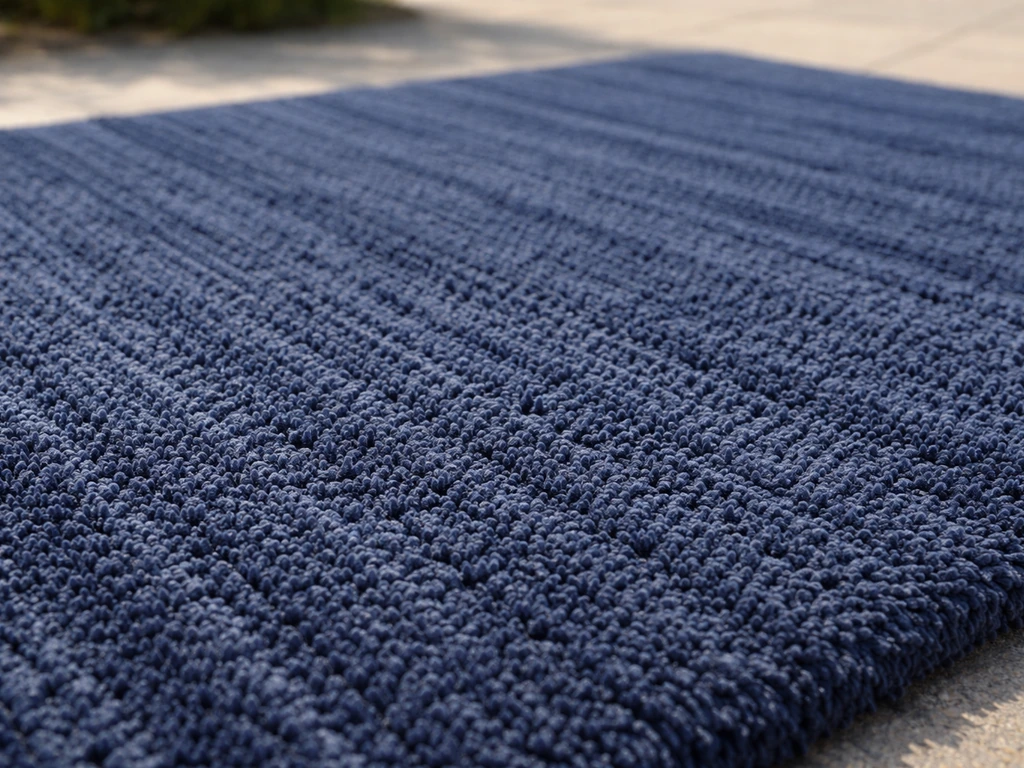
Solution-dyed acrylic is the step up from polypropylene. The color is baked into the fiber at the manufacturing stage rather than applied as a surface dye, which means it holds up remarkably well under intense sun. Brands like Gloster use it specifically for outdoor applications. It's also worth knowing that solution-dyed acrylic fiber itself doesn't promote mildew growth, though mildew can still grow on surface dirt and debris sitting on the rug, so cleaning still matters. The downside is cost: you're paying noticeably more than for polypropylene. For a high-sun climate like Arizona or Texas, that premium is often worth it.
Natural fibers (jute, sisal): leave them indoors
Jute and sisal look beautiful but are genuinely not suitable for outdoor use in most conditions. Both are susceptible to mold and mildew when exposed to moisture, and neither thrives in humid or rainy climates. Consumer Reports notes that in humid or subtropical climates, outdoor rugs tend to have shorter life spans because mold and mildew are more likely to be an issue humid or rainy climates. Rugs Direct and Sisal Rugs Direct are both explicit about this, keep natural fiber rugs inside. If you love the look, use a synthetic rug that mimics the texture outdoors, and save the real jute for the living room.
| Material | Sun/Fade Resistance | Rain/Moisture | Humidity/Mildew | Freeze-Thaw | Cost Range |
|---|---|---|---|---|---|
| Polypropylene (UV-treated) | Excellent | Excellent | Excellent | Good (store off-season) | Budget to mid-range |
| Solution-dyed acrylic | Excellent | Good | Good (fiber won't mold) | Good (store off-season) | Mid to premium |
| Jute / Sisal | Fair | Poor | Very poor | Poor | Low to mid-range |
| Recycled PET / polyester | Good | Good | Good | Good (store off-season) | Budget to mid-range |
Non-slip safety, wind resistance, and placement tips
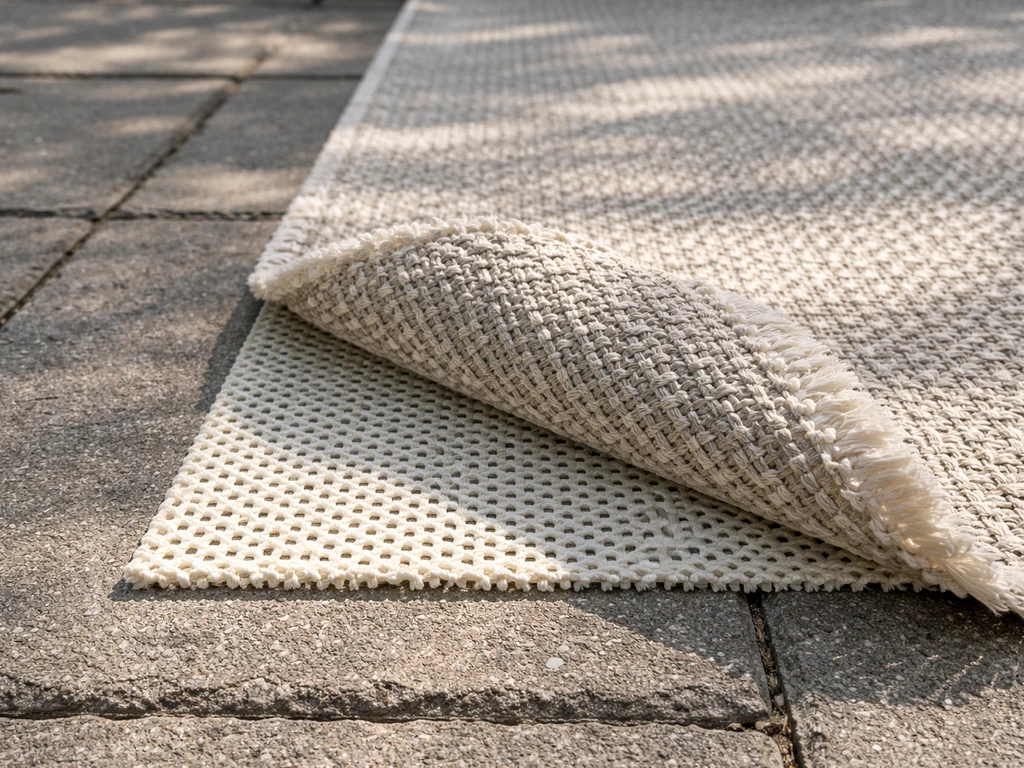
An outdoor rug that slides, bunches, or blows off the patio is a trip hazard and an annoyance. Getting this right requires a little thought depending on your surface.
Rug pads and grip on hard surfaces
On concrete or pavers, use an outdoor-rated rug pad specifically designed for hard surfaces. Standard indoor rug pads break down fast outdoors and can stain concrete. Retailers like RugPadUSA make pads built for outdoor concrete use that grip without adhesive. One critical note: spray-on rug-lock products like RugLock are explicitly not approved for outdoor use, the manufacturer states the anti-slip properties decrease when wet, which is exactly when you need them most on a patio. Stick to a proper pad instead.
Wind lifting and edge hazards
Wind is a real problem for lighter flat-weave rugs, especially in exposed patios without a cover or windbreak. Heavy furniture placed on the rug corners is the simplest fix, a sofa leg or planter does the job. For patios where furniture doesn't cover the corners, outdoor carpet tape along the edges helps prevent lifting and the tripping hazard that comes with a curled rug edge. The NIOSH/CDC fall-prevention guidance specifically calls out unsecured mat edges as a trip risk, and that applies here. On a deck with gaps between boards, opt for a rug with a tighter weave so it doesn't catch on the boards or trap debris underneath.
Placement for drainage and airflow
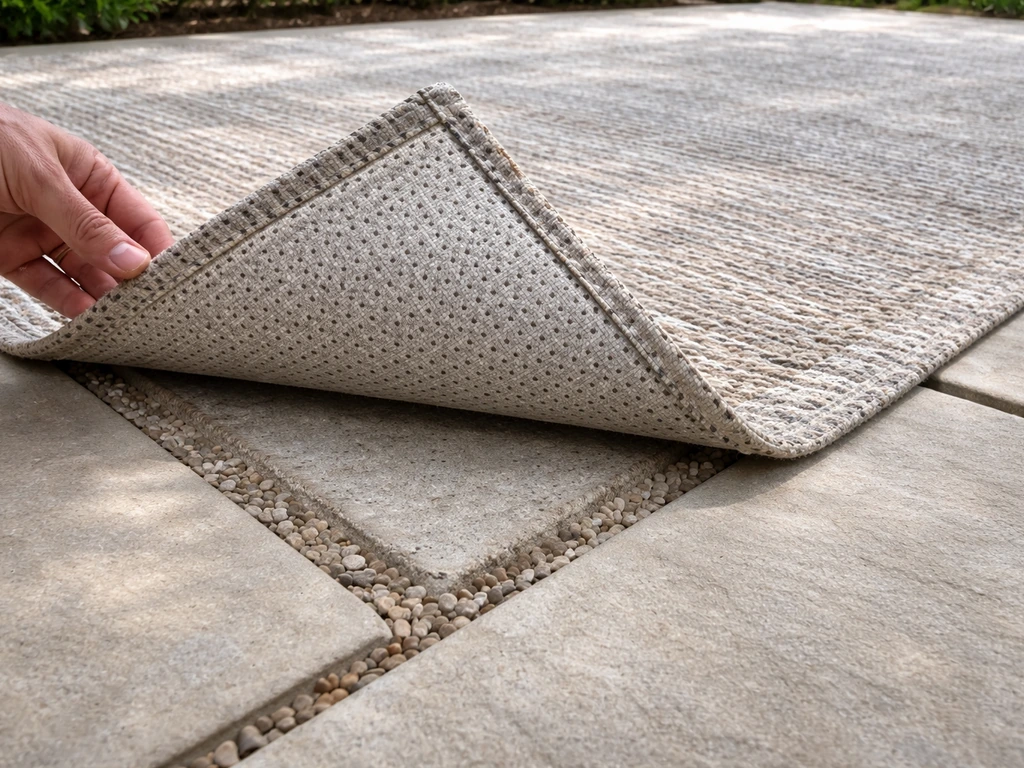
Lift the rug and check underneath every few weeks, especially in humid climates. Moisture trapped between the rug backing and the surface below is where mildew actually starts. On patios with poor drainage, consider leaving the rug off that zone entirely or choosing an open-weave style that lets water pass through. On wood decks, rotate the rug periodically so the deck surface can breathe and dry out evenly, leaving a rug in one spot through a full wet season can stain or discolor the deck boards underneath.
Cleaning, maintenance, and how long they last
Outdoor rug maintenance is genuinely low-effort compared to indoor rugs, but there are a few habits that separate a rug that lasts three to five years from one that looks rough after a single season.
Routine cleaning
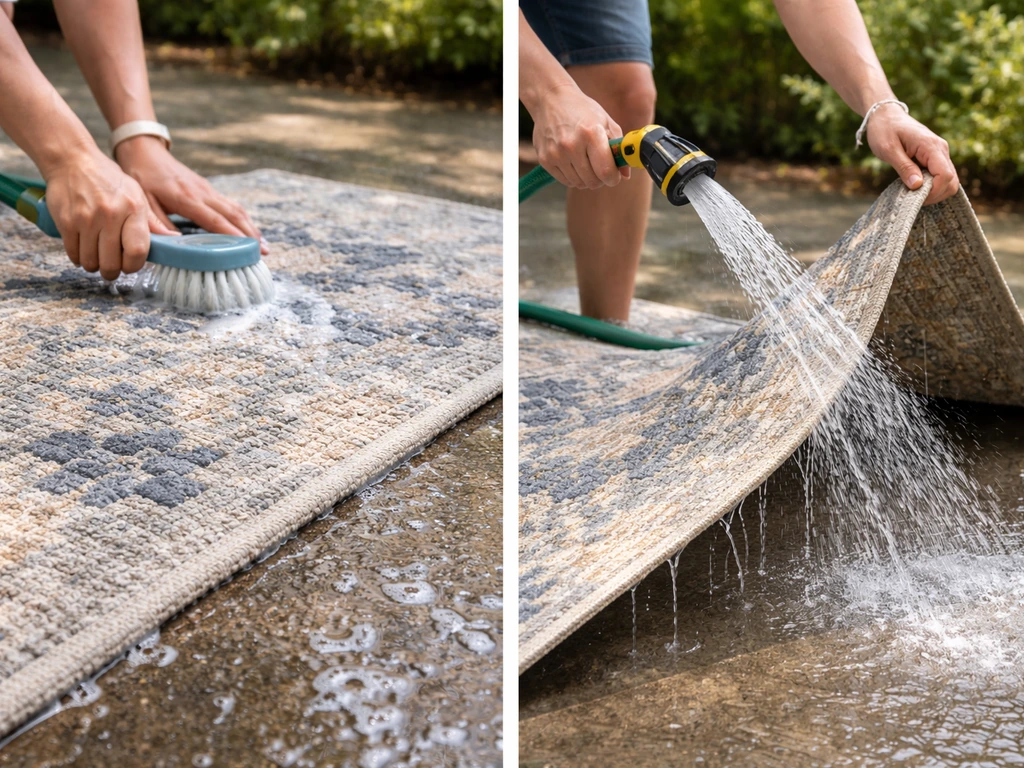
A garden hose and a soft-bristle brush handle most outdoor rug cleaning. Hose off both sides, not just the top, to flush out trapped grit and moisture from the backing. Skip the pressure washer: high-pressure spray can fray edges, lift the backing, and drive water into the rug pile where it struggles to dry. Woman & Home's cleaning guidance recommends choosing a warm, dry day specifically so the rug can fully air-dry before you put it back down. This matters more than people realize, a rug that gets rolled up or replaced while still damp is a mildew incubator.
Dealing with mildew
If you spot mildew (usually shows as dark spots or a musty smell), a diluted solution of mild soap and water scrubbed in with a brush typically handles it. Allow the rug to dry completely in the sun before putting it back. The fiber itself on a polypropylene or solution-dyed acrylic rug won't feed mildew, but surface dirt and organic debris will. Regular cleaning every few weeks during peak use season prevents most mildew issues entirely.
Seasonal storage and lifespan
For climates with real winters, rolling the rug and storing it in a garage or shed once you're done using the patio for the season dramatically extends its life. Consumer Reports recommends exactly this. A quality polypropylene or acrylic rug that gets stored off-season can realistically last five or more years. A similar rug left outside through freeze-thaw cycles year-round may look rough after two. The math on storage is easy, roll it, wrap it in something breathable, and stick it in a corner.
Style and design: sizing and matching your patio layout
Getting the size right matters more than the pattern or color. An undersized rug makes a patio seating area look awkward and cramped, while an oversized one can look like you're trying to carpet the entire patio.
Sizing rules that actually work
For a dining setup, the rug should extend at least 24 inches beyond the edge of the table on all sides, that way, chair legs stay on the rug even when chairs are pulled out. A common mistake is sizing only for the table footprint and then watching chairs scrape off the rug edge every time someone sits down. For a lounge grouping (sofa, chairs, coffee table), all four legs of major furniture pieces should sit on the rug.
Wayfair's sizing guidance reinforces this "all four legs" rule as the standard for a grounded, proportional look. In larger patio spaces, leaving 18 to 24 inches of visible flooring around the rug perimeter keeps the rug from looking undersized relative to the space.
Color, pattern, and your patio cover
Light neutrals and cool-toned patterns work well under pergolas and covered patios where the overhead structure is already a visual anchor. In exposed sunny spaces, darker rugs absorb more heat underfoot (relevant if you're barefoot) and also tend to fade faster even with UV-treated fibers. Geometric patterns and stripes hold their visual appeal longer than busy florals as the rug ages and the colors soften slightly. If your patio has a cover, shade sail, or pergola, coordinate the rug to complement those tones rather than match them exactly, contrast reads better outdoors than matching sets.
Layering and zoning
On a large patio with multiple use zones, a dining area, a lounge area, maybe a grilling zone, separate rugs for each zone actually work better than one massive rug. Each rug defines its zone, and it's easier to clean and store individual pieces. This approach also lets you swap out one worn rug without replacing everything.
Alternatives to rugs and when they make more sense
Outdoor rugs aren't the right answer for every patio situation. A few alternatives are worth knowing about before you commit.
Interlocking deck tiles
Interlocking rubber or composite deck tiles (like RubberCal's Eco-Drain tiles) snap together and sit directly on a concrete or deck surface. They have drainage holes built in so water passes through rather than pooling underneath, a significant advantage over any flat rug in a wet climate. They're more durable long-term, don't lift in wind, and some are rated for freeze-thaw conditions. The trade-off is cost (higher per square foot than most rugs), less variety in aesthetic options, and the fact that they're heavier and less portable. If your patio has persistent drainage issues or you're in a climate where standing water is common, tiles often outperform rugs on a pure durability basis.
Outdoor carpet systems
Outdoor carpet goes wider and can be cut to fit an irregular shape or permanently installed around a pool deck, screened porch, or full-patio coverage. It comes in loop-pile and flat-weave options and can be glued down (eliminating any lift or slip risk). If you're covering a large area and want something that stays put entirely, outdoor carpet is worth comparing to a rug setup. It's a more permanent solution and often benefits from professional installation for larger areas or if you're dealing with transitions at doorways or steps, those edges need to be treated properly to avoid trip hazards.
Patio mats and drainage mats
Patio mats, often made from recycled plastic or open-weave materials, sit in the middle ground between a rug and a deck tile. They allow drainage, pack down flat for storage, and are usually the cheapest option per square foot. The aesthetic is more utilitarian, but for a functional zone like under an outdoor shower or near a pool, a quality patio mat beats a rug handily.
| Option | Best For | Drainage | Wind Resistance | Portability | Cost |
|---|---|---|---|---|---|
| Outdoor rug | Aesthetics, defining zones, most patios | Poor to fair | Low (needs anchoring) | High | Low to premium |
| Interlocking deck tiles | Wet climates, pool areas, freeze-thaw zones | Excellent | High | Medium | Mid to high |
| Outdoor carpet (installed) | Large areas, screened porches, permanent installs | Fair | High | Low | Mid to high |
| Patio mat (open-weave) | High-drainage zones, utility areas, budget setups | Good | Medium | High | Very low to low |
Budget, buying guide, and placement checklist
What to expect to spend
Polypropylene outdoor rugs are widely available at major retailers like Home Depot in common sizes like 5x7 and 8x10, with pricing that spans a wide range depending on construction quality and brand. Budget polypropylene rugs start under $50 for smaller sizes and can run several hundred dollars for larger, thicker constructions. At the premium end, brands like Frontgate offer solution-dyed acrylic or high-construction rugs that can exceed a few hundred dollars easily for a mid-size rug.
For most homeowners, a mid-range UV-treated polypropylene rug in the $80 to $200 range for a 5x8 or similar size hits the best balance of durability and cost. If you want a quick shortcut, compare options in our guide to the best patio carpet based on durability, drainage, and how well it dries.
If you decide to go with carpet instead of a rug, use our checklist to find the best outdoor carpet for patio coverage that drains and dries well. Add $20 to $40 for an outdoor-rated rug pad and you're set.
What to look for when buying
- Material: UV-treated polypropylene or solution-dyed acrylic for most climates — avoid natural fibers for outdoor use
- Backing: look for a latex-free or PVC backing designed for outdoor surfaces; avoid foam backings meant for indoor use
- Construction: flat-weave or low-pile rugs dry faster and clean more easily than thick pile styles
- UV rating: check that the product description explicitly mentions UV resistance or UV-stable dyes, not just "outdoor use"
- Size: measure your furniture grouping first, add at least 24 inches on dining table sides and confirm all main furniture legs will sit on the rug in lounge setups
- Certifications or care info: a rug with a published care guide from the manufacturer is a sign it was actually designed for outdoor use
Placement checklist before you lay it down
- Clean and dry the patio surface completely before placing the rug — trapped moisture underneath from day one accelerates mildew
- Place an outdoor-rated rug pad underneath on hard surfaces (concrete, pavers, composite decking)
- Position the rug so furniture legs anchor the corners — heavy furniture is your best wind defense
- For exposed or windy patios, secure rug edges with outdoor carpet tape to prevent lift and edge-curling trip hazards
- Leave the rug lifted and drying for several hours after any significant rain or cleaning session
- Flip and clean the underside at least once per month during peak use season
- Rotate the rug 180 degrees every few weeks if one side receives significantly more sun than the other
- At the end of the outdoor season (or before hard freeze in cold climates), clean and fully dry the rug before rolling and storing it
DIY vs. calling in help
Placing an outdoor rug is a total DIY job, no tools, no expertise needed. Where you might want a contractor's input is if your rug placement plans are tied to a larger patio project: installing a pergola or patio cover that will shade the rug zone, adding drainage to a problem surface, or permanently installing outdoor carpet around steps or thresholds. Those structural or transition details are worth getting right the first time. For a straight rug-on-patio setup, just buy it, pad it, anchor it, and clean it regularly, it's about as low-barrier as outdoor upgrades get.
FAQ
Are outdoor patio rugs a good idea if my patio gets wet after rain?
Yes, but only if you manage pooling and airflow. Choose polypropylene or solution-dyed acrylic, use an outdoor-rated hard-surface rug pad, and avoid leaving it in standing water. If rain leaves dampness under the rug for more than a day, consider deck tiles or an open-weave patio mat instead.
If I buy an outdoor rug, will it survive being exposed to rain most of the year?
Not permanently, even the most weather-tolerant rugs. Treat “outdoor” as water-resistant, not waterproof. If your patio experiences heavy storms or runoff, prioritize drainage (rug off the worst zone, open-weave styles, or tiles) and plan to lift and dry after wet stretches.
Are outdoor patio rugs a good idea for areas where people walk barefoot?
If you want barefoot comfort and less fading, size and placement matter. Lighter colors can show dirt quickly and often look rough sooner, while very dark rugs can feel hotter. In full sun, use UV-treated fibers and aim for a shaded or partially covered seating zone when possible.
What’s the best way to use an outdoor rug on a deck with board gaps?
For wood decks with gaps, pick a tighter weave rug so it doesn’t catch on boards. Also rotate the rug periodically so boards can dry evenly, because mildew usually forms from moisture trapped between the rug backing and the deck surface.
How do I prevent outdoor patio rugs from slipping or becoming a trip hazard?
A rug can be safe if it is secured, but loose edges are the common failure point. Use a proper outdoor rug pad on concrete or pavers, anchor corners for wind-prone areas (tape along edges only as needed), and re-check the fit every few weeks.
Is there a non-slip spray or glue I can use instead of a rug pad?
You can, but avoid rug-lock products that are not rated for outdoor wet conditions, since their anti-slip performance can drop when damp. In outdoor settings, the most reliable approach is an outdoor-rated rug pad made for the specific surface type (hard patio vs. grass).
Should I store my outdoor rug during winter, and what’s the best method?
It depends on storage and timing. Roll and store the rug off-season in a breathable bag or wrap, ideally in a garage or shed, and move it again before damp weather sets in. Leaving a cold, wet rug outside through freeze-thaw seasons usually shortens lifespan.
How should I clean an outdoor patio rug to prevent mildew?
More often than people expect. Hose both sides, not just the top, and choose a warm, dry day so it can fully air-dry before you put it back down. Skipping full drying is a fast track to mildew odor and dark spots.
What if my outdoor rug develops mildew spots?
Yes, for mildew you usually want surface-focused cleaning. Use mild soap and water, scrub lightly, then dry completely in sun. If you see mildew repeatedly in the same spot, it usually means trapped moisture underneath, so adjust placement or switch to an open-weave option.
What size outdoor patio rug should I buy for a dining area?
For most dining sets, measure for chair movement. A good rule is the rug should extend at least 24 inches beyond the table edge in every direction so chair legs stay on the rug when pulled out.
How do I choose rug placement size for a lounge furniture group?
For a lounge layout, aim for the grounded look by coverage under the main pieces. Place the rug so all four legs of major furniture sit on it, then leave a visible perimeter of flooring in larger spaces so the rug does not feel like it shrank.
Is it better to use one large patio rug or multiple smaller ones?
You can mix rugs, and it often works better than one large piece. Use separate rugs for dining, lounging, and grilling zones, because you can remove and store only the worn or dirtier section and you’ll clean smaller surfaces faster.
When should I choose deck tiles or patio mats instead of outdoor rugs?
Yes, in some climates and layouts alternatives outperform rugs. If you have persistent standing water or drainage problems, interlocking deck tiles or open-drain patio mats can be more durable and won’t trap moisture like flat rugs can.