
For most standard patio chair cushions, you need a deck box with interior dimensions of at least 45 inches wide, 20 inches deep, and 22 inches tall to store four to six cushions lying flat with the lid closing comfortably. But the exact size depends on your specific cushion dimensions and how many you're stacking, so the real answer starts with a tape measure, not a gallon rating.
What Size Deck Box for Patio Cushions Choose Right Fit

Elise Prescott
18 Jun 2026
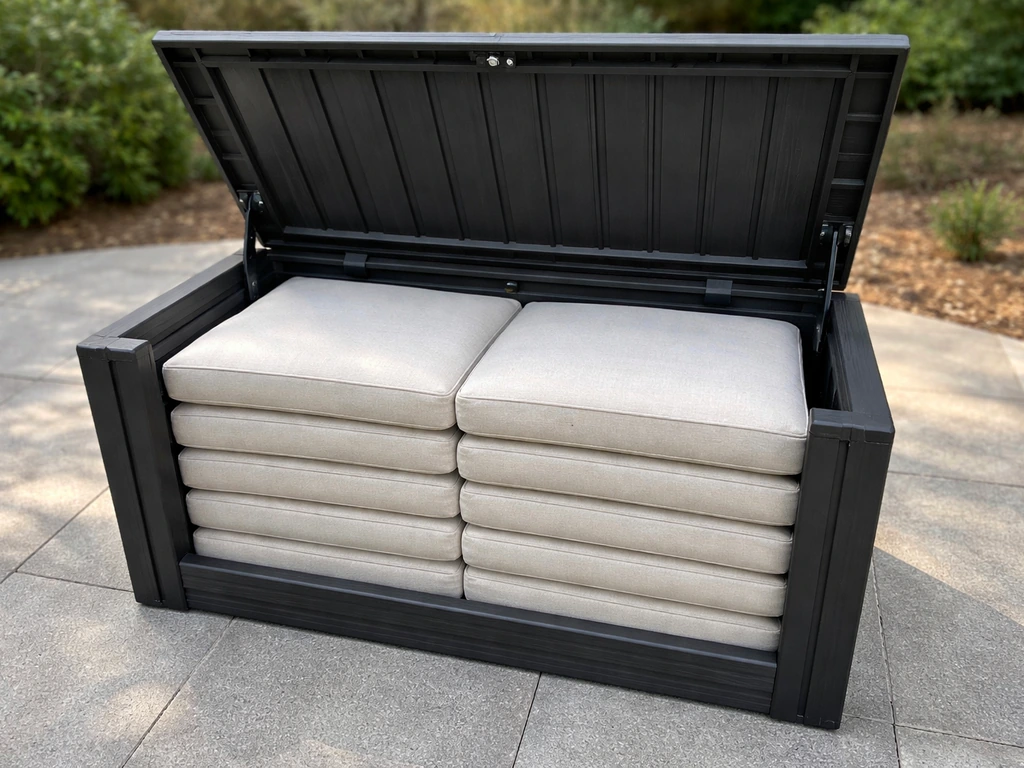
Measure your cushions the right way first
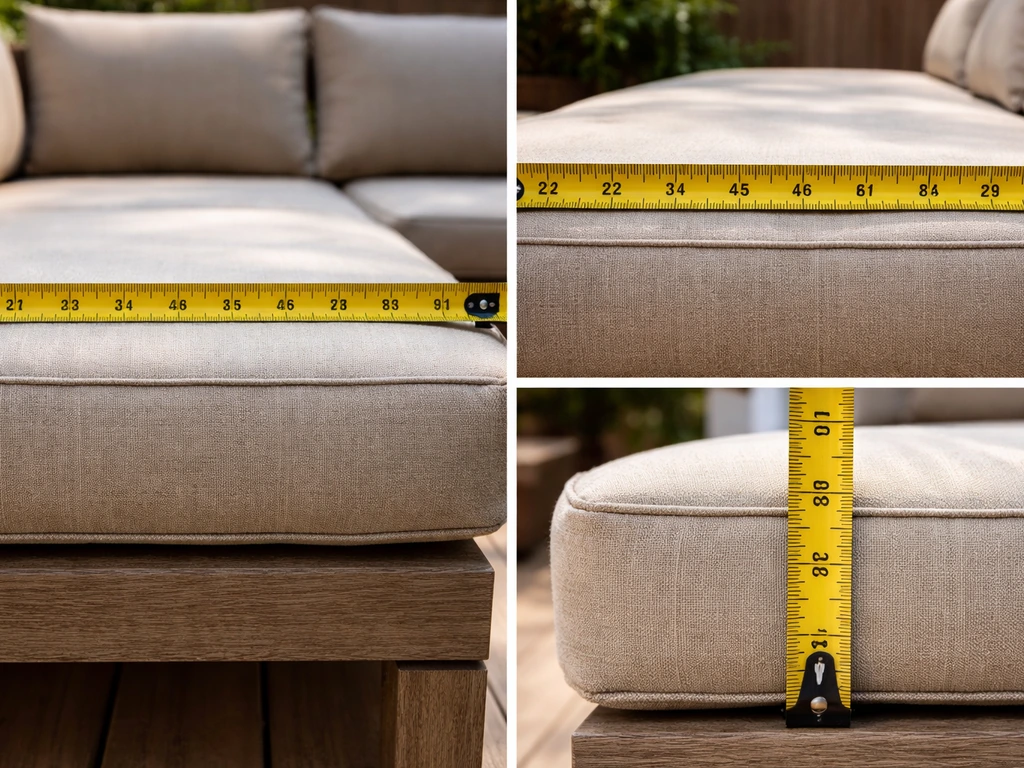
Before you look at a single deck box listing, grab a rigid tape measure and take three measurements on each of your cushions: width (side-to-side across the widest point, usually the front), length (front-to-back, or top-to-bottom if it's a back cushion), and thickness (top-to-bottom at the thickest point when the cushion is lying flat). Measure cushion dimensions using three orthogonal measurements: width (side-to-side), length (front-to-back or top-to-bottom), and thickness (top-to-bottom at the thickest point) three orthogonal measurements: width, length, and thickness. Don't use a flexible sewing tape for this because it follows curves and will undercount. A stiff metal tape or a ruler pressed across the cushion gives you a number you can actually trust.
Thickness is the measurement most people skip, and it's the one that kills them at checkout. Most standard outdoor seat cushions run between 3.5 and 4.5 inches thick, but boxed cushions with piping or memory foam cores can push 5 to 6 inches. That half-inch difference gets multiplied by every cushion in the stack, which adds up fast. If your cushion has a hinge or fold seam, like a chaise lounge pad, measure each section separately and note whether it folds in storage.
Write all three numbers down for each individual cushion type you own. A loveseat cushion and a dining chair cushion are not the same size, and you need to plan the stack around the biggest piece.
Converting cushion dimensions into the deck box size you actually need
Here's the critical thing: deck boxes are marketed by gallon capacity or overall outside dimensions, but neither of those tells you what fits inside. Always find the interior (usable) dimensions before you buy. The gap between outside and inside measurements is real and significant. The Suncast 73-gallon DB7500, for example, has an overall height of 25.5 inches but an interior height of only 21 inches. That's a 4.5-inch difference that would completely change your stacking math.
Once you have the interior dimensions of a box you're considering, compare them directly to your stacked cushion measurements. Add 1 to 2 inches to each of your cushion stack measurements as buffer for box walls and lid clearance. If your stack of six chair cushions measures 44 inches wide, 18 inches deep, and 27 inches tall when piled up, you need a box with interior dimensions of at least 46 inches wide, 20 inches deep, and 29 inches tall. Without that buffer, the lid won't close cleanly, or you'll be forcing cushions in at an angle every time.
Plan for how cushions actually stack, not how you wish they would
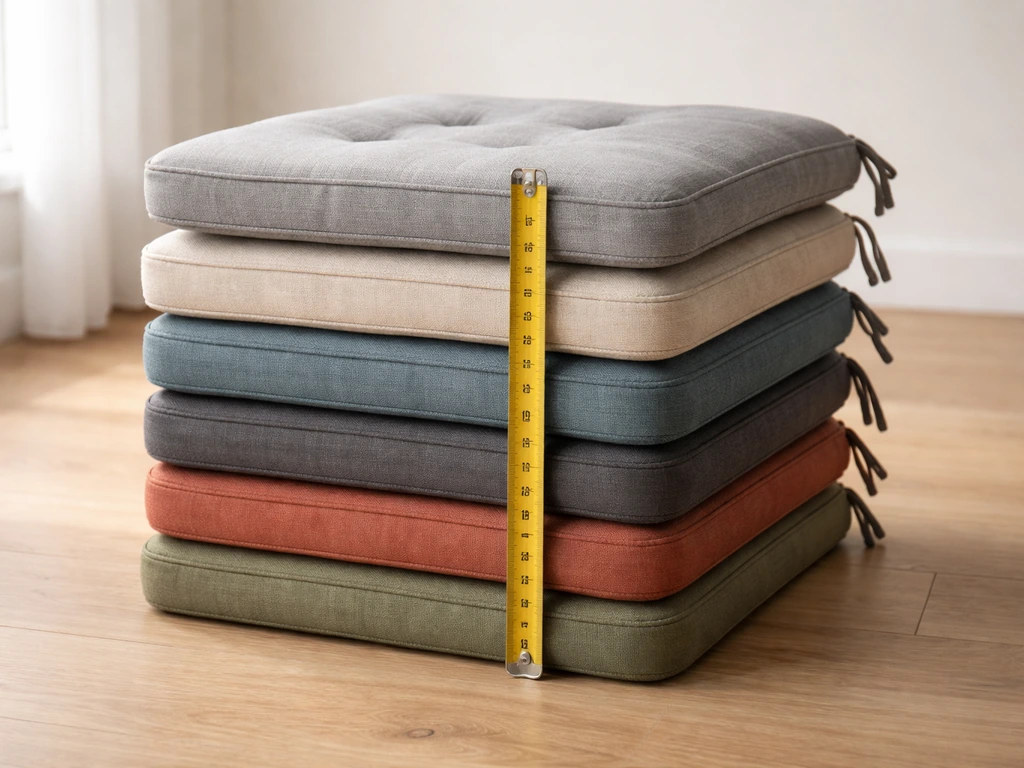
The best way to figure out your true storage height is to physically stack your cushions on the ground exactly the way they'll sit in the box, then measure that pile. This sounds obvious but almost nobody does it before buying, and it's the advice that matters most. Some cushions stack neatly flat. Others, especially those with piping trim or shaped backs, want to tilt or nest unevenly. Measure the actual pile, not a theoretical calculation. For choosing the best patio box for your space, match the interior dimensions and lid clearance to your cushion stack.
Seat cushions almost always store flat and stack cleanly. Back cushions are often taller than they are wide, so you may be better off standing them upright along one side of the box rather than stacking them horizontally. If you have a mix of seat and back cushions, plan the layout before choosing box dimensions: one orientation may let you fit everything into a smaller (and cheaper) box.
If you want to store throw pillows, a patio furniture cover, or extra foam inserts in the same box, physically gather all of it and add that to your stack test. A waterproof inner liner, if you plan to use one, also takes up a small amount of interior space around the sides and bottom and adds to the height clearance you'll need at the lid.
Lid type and storage layout matter more than most people realize
Not all deck box lids open the same way, and the lid mechanism directly affects how much usable height you get. A lid with a soft-close pneumatic hinge requires the contents to sit below a certain height so the lid can swing open without hitting the stack. A lid with a simple rear hinge is more forgiving but can slam down in wind. Some boxes have lids that double as bench seating, which adds weight and structural constraints. If you're in a windy region or storing tall stacked cushions near the top of the box, look for a lid with a stay-open mechanism or a lockable closure so gusts don't slam it while you're loading.
For layout, think of the interior like a loading dock: widest cushions go in first and lie flat on the bottom. Narrow back cushions can stand upright against the far wall. Throw pillows and small accessories fill the gaps on top. If you plan the layout before buying, you might find a narrower but taller box works better than a wide and shallow one for your specific cushion mix.
Real sizing examples for common cushion sets
These examples use common cushion sizes and assume a clean flat stack with 1 to 2 inches of lid clearance built in. Use them as a starting reference, then adjust based on your own measurements.
| Cushion Set | Typical Cushion Size | Stack Height (4–6 pieces) | Minimum Interior Box Size Needed |
|---|---|---|---|
| 4 dining chair seat cushions | 18"W x 16"L x 4" thick | ~16–18" tall stacked | 20"W x 18"D x 20" interior height |
| 6 dining chair seat cushions | 18"W x 16"L x 4" thick | ~22–24" tall stacked | 20"W x 18"D x 26" interior height |
| Loveseat cushion (1 piece) | 45"W x 20"L x 5" thick | ~6–7" tall (1–2 pieces) | 47"W x 22"D x 10" interior height |
| 3-seat sofa cushion set (seat + back) | 55"W x 22"L seat + back cushions | ~24–28" tall stacked flat | 57"W x 24"D x 30" interior height |
| Sectional set (6–8 mixed pieces) | Varies: 20"–24"W, 4"–5" thick each | ~28–35" tall stacked | 26"W x 26"D x 37"+ interior height |
| Chaise lounge pad (1–2 pieces) | 24"W x 72"L folded to ~36" | ~8–10" tall per pad | 26"W x 38"D x 22" interior height |
For a standard 4-piece dining set, a 73-gallon deck box with interior dimensions around 42 inches wide, 19 inches deep, and 21 inches tall (like the Suncast DB7500) will work if your cushions are on the thinner side. If you have 6 or more cushions, or thicker outdoor foam, step up to a 100-gallon or larger box and verify the interior height is at least 26 inches. Sectional cushion sets almost always need a 150-gallon or larger box, and for full sofa-length cushions, something like the Baginizer XXL (interior dimensions 62.2 inches long, 31.1 inches wide, 32.6 inches tall) or a comparable large box is a realistic option.
Weather, ventilation, and your buying checklist
The whole point of a deck box for cushions is keeping them dry and ready to use. That means moisture management is just as important as size. Choosing the right outdoor patio ceiling fan size helps you move air effectively without overpowering the space ceiling fan size for outdoor patio. A box that fits your cushions perfectly but traps condensation inside will leave you with mildew-smelling foam by midsummer. blank" rel="noopener noreferrer">Look for a box with ventilation panels or small air gaps built into the design. These allow airflow without letting rain in, and they make a real difference in humid climates like the Southeast or Pacific Northwest. In drier climates like Arizona or Colorado, ventilation matters less, but UV-resistant materials matter more since high-sun environments degrade plastic and fabric storage bins faster.
If you're in a region with heavy rainfall or coastal salt air, a box with a waterproof seal around the lid is worth prioritizing. Just be aware that a fully sealed box with no airflow will trap whatever humidity is already inside when you close it, so always store cushions dry if possible.
Before you buy: the practical checklist
- Measure each cushion's width, length, and thickness with a rigid tape measure.
- Stack all cushions on the ground exactly as they'll be stored and measure the pile's total height, width, and depth.
- Add 1 to 2 inches to each stack measurement to account for box walls and lid clearance.
- Find the interior (usable) dimensions on the product listing, not just the overall outside size or gallon rating.
- Confirm the interior width is at least as wide as your widest single cushion plus 1 inch.
- Confirm the interior height exceeds your stacked pile height by at least 1 to 2 inches so the lid closes freely.
- Check the lid mechanism: does it stay open on its own, and can it close fully with your stack inside?
- Look for ventilation panels if you're in a humid or coastal climate.
- Check that the box is made from UV-resistant, weather-rated materials if it will sit in direct sun.
- If storing accessories (covers, throw pillows, foam), add those to your stack test before locking in a size.
One last thing: if you're also thinking through the overall layout of your patio space, the deck box size can actually inform where it sits and how much floor area it takes up. Choosing a good size patio storage box also helps you plan clearance for chairs, pathways, and lids you open and close often. A large sectional cushion storage box is a significant footprint. It's worth thinking about your patio's total square footage alongside this decision, especially if space is tight.
FAQ
Can I go by the deck box “gallon” rating instead of measuring interior dimensions?
No. Gallon ratings are a marketing volume for the container, not the usable clearance for your stacked cushions. Even two boxes with similar gallons can have very different interior height once you account for lid geometry and wall thickness, so always match your stacked cushion dimensions to the interior width, depth, and height.
What buffer should I add if my cushions fit tightly and I’m worried the lid won’t close?
If your stack is close to the box’s interior height, add closer to 2 inches of lid clearance instead of 1. Also include a little extra for thicker foam or cushions with piping, since those materials compress less and can create pinch points near the lid.
How do I measure back cushions or chaise cushions that don’t store flat?
Measure each section and note the folded or hinged shape as it sits in storage. Then stack them in the same orientation you plan to use inside the box (horizontal stack versus standing upright). This prevents underestimating height caused by shaped backs or seams that force the cushion to sit at an angle.
Should I measure cushion thickness while it is compressed or “fluffed out”?
Measure thickness when the cushion is at its typical storage shape (not fully compressed). Compressing during measurement can make the stack look shorter than it will be once inside the box, which often leads to a lid that won’t close smoothly.
Do waterproof liners reduce the space I can store inside a deck box?
Yes, even thin liners typically take up some interior space along the sides and bottom. If you plan to use a liner, redo the pile test including everything inside (liner plus cushions) so your lid clearance and stacked height still work with the extra material.
Will a fully sealed deck box make cushions milder or more likely to mildew?
It can increase mildew risk if you store cushions when they are slightly damp and there is no airflow to dry them. If you choose a sealed box, prioritize drying cushions completely before storing, and consider checking for ventilation panels or indirect airflow features.
What if my deck box has a pneumatic or soft-close lid, and I can’t fit tall stacks?
Soft-close mechanisms often require the contents to sit below a functional clearance line so the lid can swing without hitting the stack. In that case, store tall items upright where possible, reduce the number of stacked cushions, or choose a box with a higher interior height and a lid design that is more forgiving.
How do I handle a mixed set of seat cushions and back cushions in the same box?
Do a layout test before buying: put the widest, flattest seat cushions on the bottom, then decide whether back cushions fit better standing along a side or lying on top. Planning the layout can let you use a narrower but taller box instead of forcing everything into a wide, shallow stack.
Is it better to store extra throw pillows in the same deck box or separately?
Either can work, but in the same box you must include pillows in the physical pile test because they raise the top clearance requirement. Pillows also change how cushions nest, especially if they have removable covers or loftier fill, so measure with the actual items you intend to store.
How can I estimate interior size if the listing only shows outside dimensions?
Look for the product spec sheet that lists interior dimensions. If you cannot find them, outside dimensions alone are not enough because wall thickness and lid depth vary by model. Your safest option is to contact the seller or choose a listing that explicitly states interior width, depth, and height.
What should I do if my stacked cushions fit in width and depth but not height?
Rework the storage orientation first. Stand shaped backs upright, reduce layering (store fewer cushions if needed), or switch to a larger capacity box where the interior height is meaningfully higher, not just the overall footprint. If ventilation is important, avoid shrinking the stack so much that you remove space needed for airflow if the box design relies on it.
Does climate change how much ventilation I should prioritize?
Yes. In humid or rainy regions, ventilation panels or small air gaps can help reduce condensation buildup. In drier climates, ventilation matters less for moisture, but UV-resistant materials and proper cover quality matter more to prevent plastic and fabric degradation over time.