
A good size patio for most homeowners falls between 144 and 300 square feet, which works out to roughly 12x12 for a modest dining setup or 15x20 for a comfortable mixed-use space. If you're hosting more than four people regularly, aim for at least 16x16 (256 sq. ft.). But the honest answer is that "good" depends entirely on what you're putting on it, how many people you're planning for, and what upgrades like a cover, fans, or misting system you want to add later. This guide will walk you through the whole decision so you land on a number that actually works for your yard.
Good Size Patio: Best Dimensions for Seating and Dining

Elise Prescott
11 May 2026
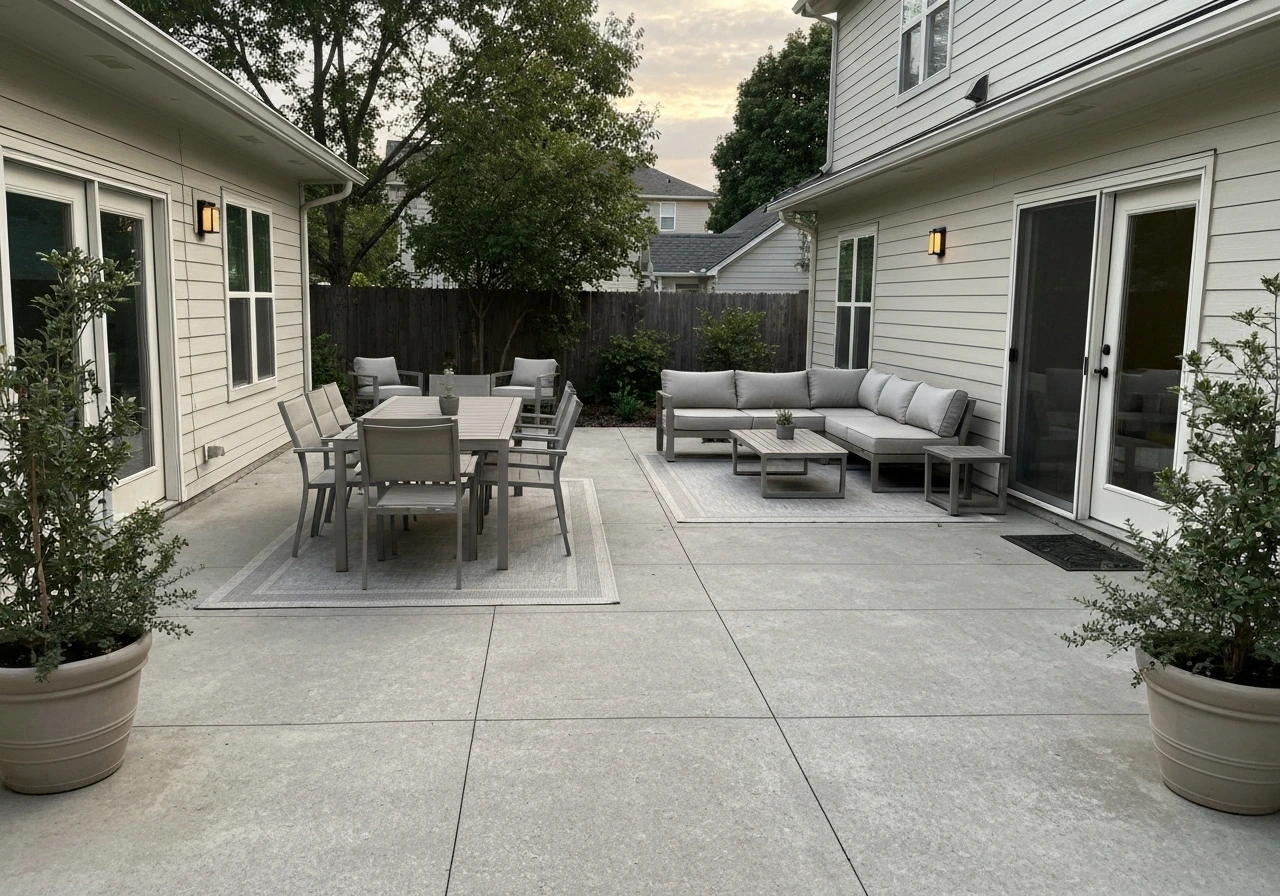
Measure your space first, then define your purpose
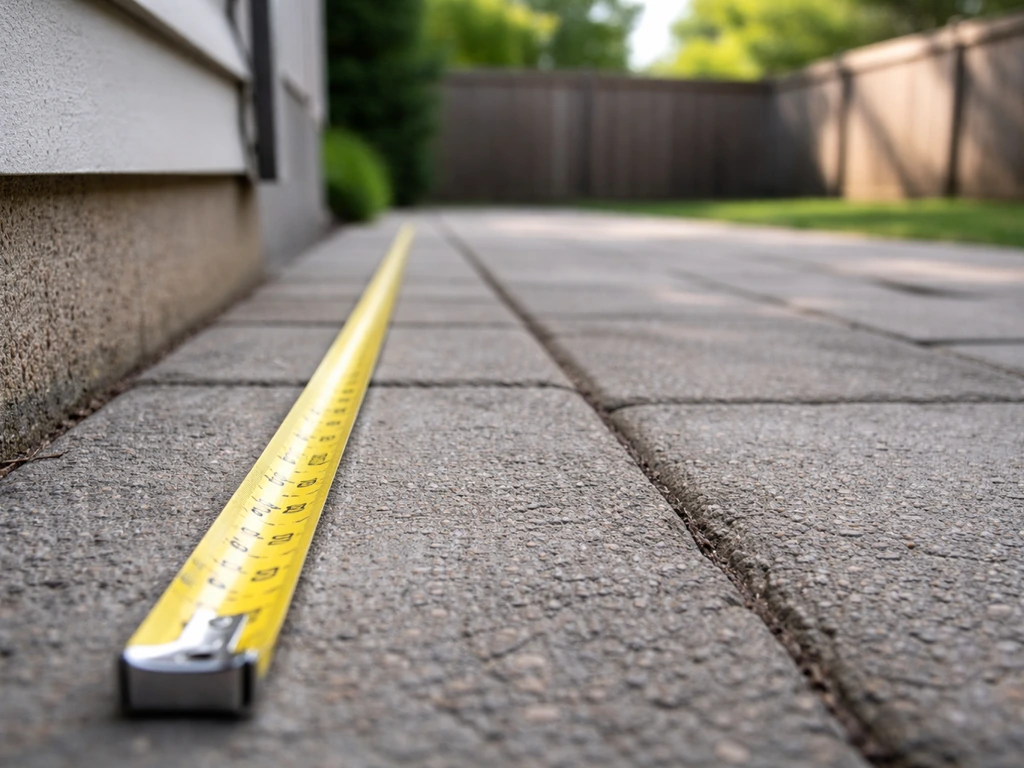
Before you pick any dimensions, grab a tape measure and map out your backyard. Measure the full usable area from the back of your house to the property line or fence, and note the width along the house. Mark any obstacles: AC units, downspouts, gas lines, slopes, and existing trees. These aren't dealbreakers, but they'll eat into your usable footprint fast if you ignore them.
Next, get specific about what the patio is for. This sounds obvious but most people skip it and end up with a slab that's either too small to entertain on or so large it's hard to furnish well. Ask yourself: Am I primarily dining outside? Lounging with a sofa set? Grilling and hosting larger groups? Doing a combination? A dedicated dining patio has completely different size requirements than a lounge-focused one, and mixing both uses means you need to plan zones, which pushes your square footage up.
- Lounging only (sofa, chairs, side tables): 12x12 to 14x14 is comfortable
- Dining only (table for 4-6): 12x14 to 14x16 works well
- Dining plus a separate lounge zone: plan for at least 16x20 or 320 sq. ft.
- Full entertaining space with grill, bar, and seating: 20x20 or larger
- Transition patio (just a landing outside the door): 8x10 minimum
Write down your purpose before you start sketching sizes. It'll save you from going back and forth later and it's the single most important input into everything else in this guide.
Minimum vs. ideal sizes: small, medium, and large patios
Here's a practical breakdown of patio size ranges and what each one realistically supports. These aren't arbitrary numbers. They come from actual furniture dimensions, recommended clearances, and real-world layouts that feel comfortable to use daily.
| Size Category | Dimensions | Square Footage | Best For |
|---|---|---|---|
| Small | 10x10 to 12x12 | 100–144 sq. ft. | Bistro table, 2 chairs, minimal lounge seating |
| Small-Medium | 12x14 to 14x14 | 168–196 sq. ft. | Dining table for 4, or a modest sofa set |
| Medium | 14x16 to 16x16 | 224–256 sq. ft. | Dining table for 6, or lounge plus grill zone |
| Medium-Large | 16x20 to 18x20 | 320–360 sq. ft. | Dining plus lounge, or entertaining with a cover |
| Large | 20x20 and up | 400+ sq. ft. | Full outdoor room: dining, lounge, grill, bar |
The 12x12 is often cited as the minimum for a "functional" patio, but honestly it feels cramped for anything beyond two people unless you're really intentional about furniture selection. If your budget allows even a small bump to 12x16 or 14x14, you'll feel the difference immediately. The sweet spot for most families of three to five is the 16x16 to 16x20 range. It gives you room to move, space to add a few pieces, and enough square footage to put a proper cover over it without things feeling tight.
Seating, dining, and the clearances that actually matter
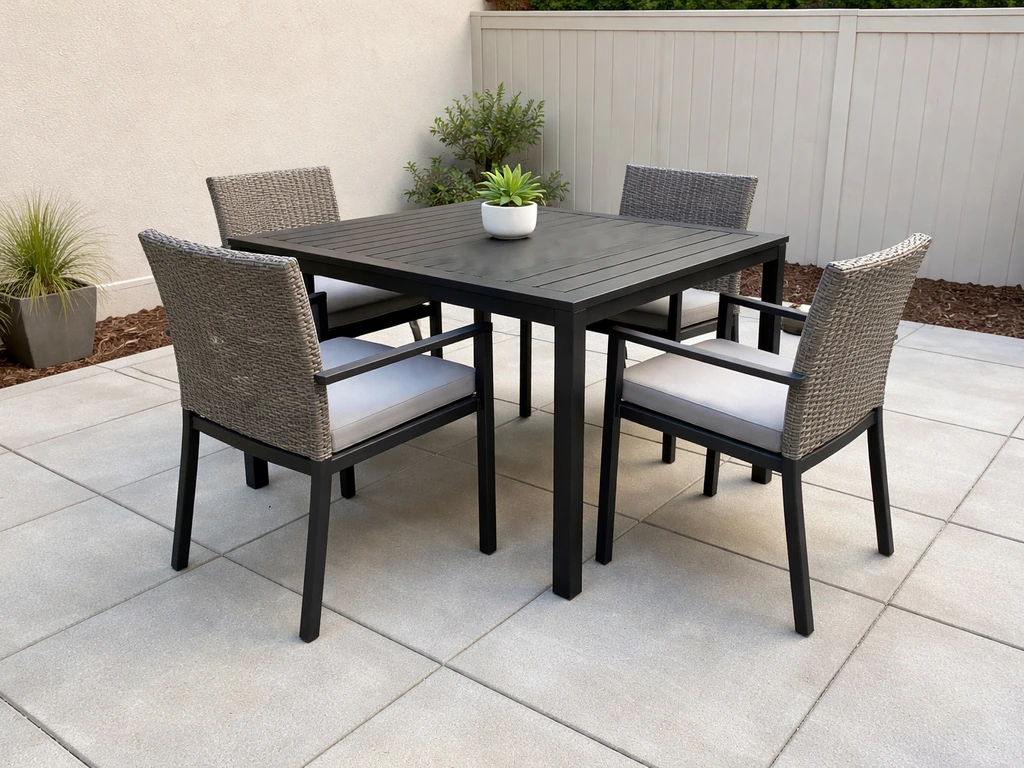
Furniture dimensions are where most DIY patio plans go wrong. People eyeball it, order a set they like, and then realize there's no room to pull chairs out or walk around the table. Here are the clearances that matter most.
Dining setups
A standard outdoor dining table for four runs about 36x60 inches. Add 36 inches on each side where people sit to allow a chair to pull out fully and someone to walk behind. For example, Edward Martin notes that allowing about [36 inches of clearance from the table edge](https://www. edwardmartin.
com/blogs/information/outdoor-dining-table-guide-materials-sizes-and-styling-tips) to nearby walls, railings, planters, or other furniture enables basic chair movement, with more space often better for entertaining (up to around 60 inches in some scenarios). That puts you at a minimum 9-foot width for a table with chairs on two sides, meaning a 10-foot-wide slab is the realistic minimum for a 4-person dining setup. A 6-person table (typically 36x72 to 36x84 inches) needs at least 11 to 12 feet of width.
On length, the same 36-inch clearance rule applies at both ends.
Lounge and sofa configurations
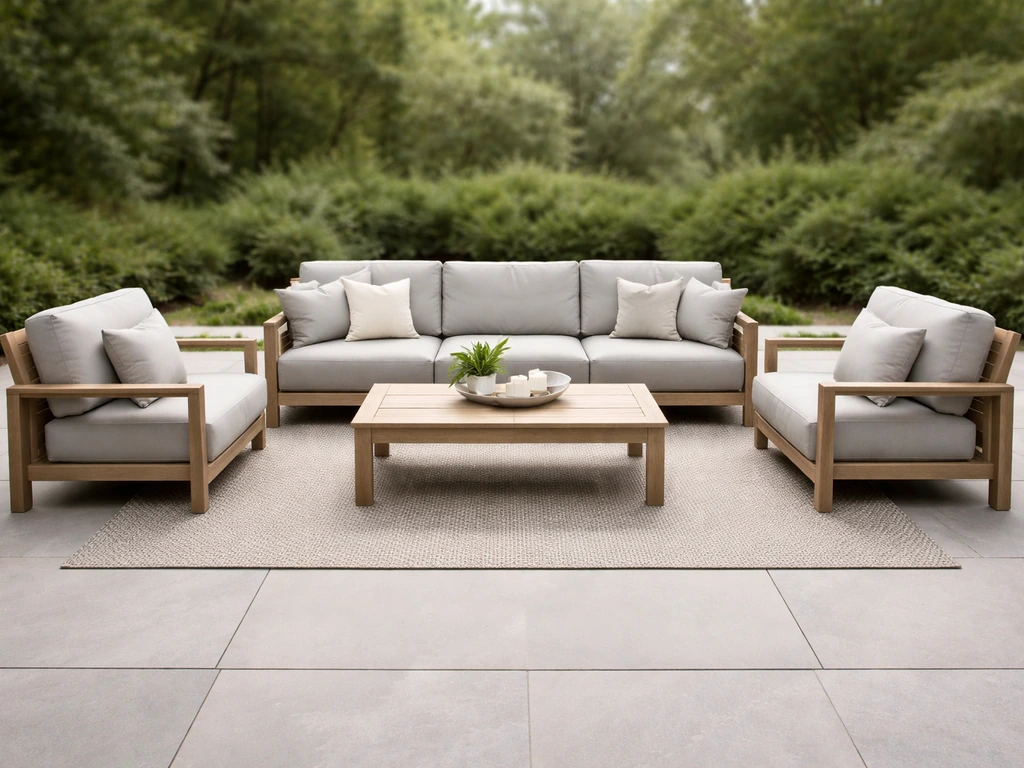
A typical outdoor sectional or three-piece sofa set (sofa plus two chairs with a coffee table) occupies a footprint of roughly 10x12 to 12x12 feet by itself. When you’re planning cushions for your patio deck, make sure you match the deck box size to the seating layout so everything fits neatly sofa set. You want at least 18 inches of clearance between the sofa and the coffee table, and at least 24 to 30 inches between the furniture grouping and any wall, railing, or planter. So even a simple lounge arrangement eats up 14x14 feet once clearances are included.
Key clearance numbers to keep in mind
- 36 inches: clearance behind dining chairs for comfortable movement
- 24–30 inches: walkway between furniture and edge of patio or wall
- 18 inches: minimum between sofa/chair and coffee table
- 36–48 inches: clearance in front of and beside a grill for safe use
- 24 inches: minimum side clearance around any built-in feature (bar, planter, fire pit)
Traffic flow and making sure the patio actually works day to day
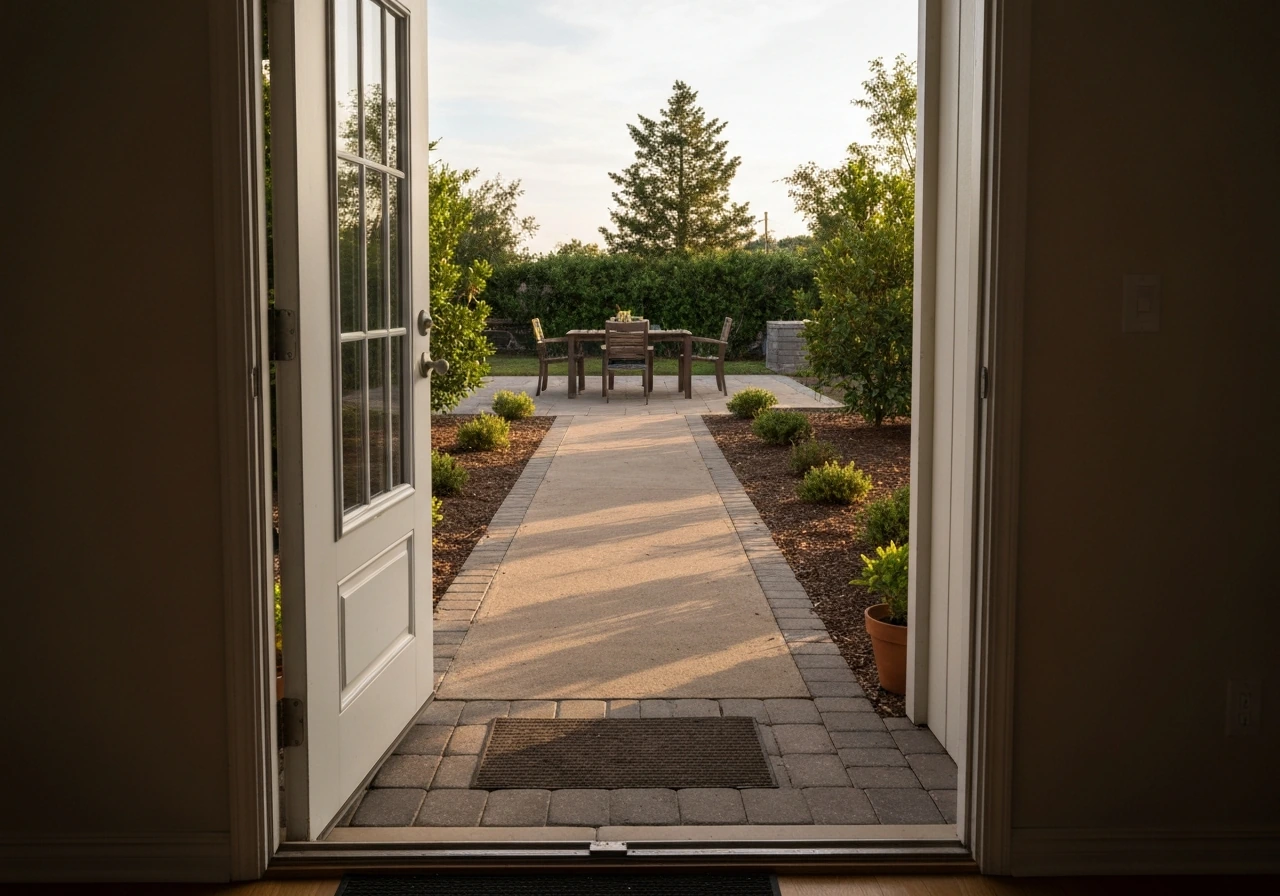
A patio that looks great on paper can still feel frustrating if you didn't plan for how people move through it. Traffic flow is one of those things you don't notice when it's right, but it drives you crazy when it's wrong.
Start at the door. Your main exterior door or sliding glass door is the natural entry point, and you need at least 36 inches of clear space from the door swing to any furniture. If you have a door that swings outward, that's a full 3-foot arc you need to protect. French doors or double sliders need even more. A lot of homeowners place furniture too close to the door and then spend years awkwardly squeezing past a chair every time they go inside.
Beyond the door, think about how people circulate. A main path through the patio to a yard, garden, or gate should be at least 36 inches wide, ideally 42 to 48 inches if it sees regular foot traffic. Secondary paths between furniture zones can be 24 to 30 inches. If you have a grill, give it its own dedicated zone that isn't in anyone's walking path, with 36 to 48 inches of open space on the cooking side and back.
Think about the gate or side yard access too. If people regularly walk through to reach a driveway or backyard, that path needs to stay clear on your patio plan. Many homeowners design around a door and forget there's a gate at the corner of the house that also gets heavy use.
Shape and layout: fitting the dimensions to your yard
Square and rectangular patios are easiest to build, cheapest per square foot, and the most furniture-friendly. Most outdoor furniture is designed around right angles, so a rectangular slab makes layout simpler. If your yard is wide but shallow, go wide and short. If it's deep and narrow, a long rectangular shape usually works better than trying to fill corner space with an L-shape.
L-shaped patios are a great option when you're trying to wrap a corner of the house or define two separate zones, like a dining area off the kitchen door and a lounge area off the living room door. The tradeoff is that L-shapes cost more to build (more cuts, more labor) and you need to be thoughtful about how the two zones connect so traffic flows naturally. An L-shape typically needs each leg to be at least 10 to 12 feet wide to be functional.
Freeform or curved patios look beautiful and can work well around pools or in landscaped yards, but they tend to waste square footage at the edges and create awkward furniture placement. If your primary concern is usable space and budget efficiency, stick with a rectangle. Save curves for accent work like a curved edge along a garden bed.
One layout principle worth following: try to keep the longest dimension running parallel to the back of the house. It makes the patio feel connected to the home, keeps the space from feeling like it's floating in the yard, and makes it easier to run a patio cover or pergola across the span.
Plan the size around your upgrades, not after them
This is the part most people skip, and it's the one they most regret. If you're even thinking about adding a patio cover, ceiling fan, misting system, or outdoor speakers at any point in the future, you need to factor those dimensions into your initial slab size. It's much cheaper to pour a few extra square feet now than to extend a slab later.
Patio covers and pergolas
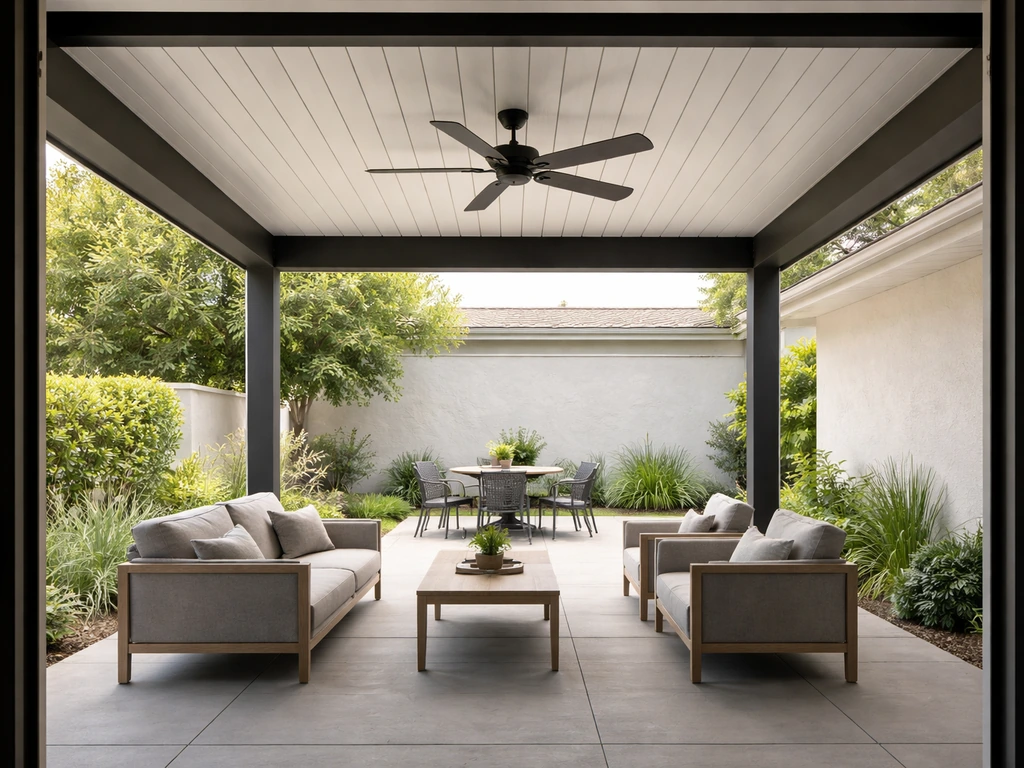
A standard attached pergola or solid patio cover typically comes in widths of 10, 12, 14, or 16 feet and projects 10 to 20 feet out from the house. For a cover to feel proportional and useful, the patio should match or slightly exceed the cover's footprint.
If you want a 16x20 covered area, plan a slab of at least that size, and ideally add an uncovered border of 2 to 3 feet around the edges for planters, lighting, or transition space. Choosing the best patio box size makes it easier to plan a covered patio that matches your furniture and upgrades without feeling cramped. Structural patio covers also require post footings, so you'll need to plan where those posts land on the slab.
Ceiling fans
An outdoor ceiling fan needs at least 7 feet of clearance from blade to floor and at least 18 inches from blade tip to any wall, column, or post. Fan blade spans for outdoor use typically range from 44 to 72 inches. A 52-inch fan (a popular mid-size) comfortably covers about a 12x12 area. For a 16x16 patio, you'd want a 60 to 72-inch fan or plan for two fans. This affects where your electrical rough-in and ceiling structure go, which is another reason to design the cover and slab together from the start.
Misting systems
A high-pressure misting system runs along the perimeter of the covered area, typically mounted to the cover's beam or fascia. The misting line itself doesn't take up floor space, but the pump unit (usually a small box about the size of a briefcase) needs a home nearby, and the layout needs to account for water drainage so the ground directly under the mist line doesn't stay perpetually wet. If your patio is in an enclosed or partially enclosed space, factor in that misting is most effective in areas with some air movement. A patio under 100 square feet can feel overly damp with a full misting setup.
Outdoor speakers
Outdoor speakers work best when planned into the structural layout of the space. Ceiling- or wall-mounted speakers on a covered patio deliver much better sound than freestanding units because the cover acts as a natural amplifier of the sound field. For a 16x20 covered patio, a pair of 6.5 to 8-inch in-ceiling outdoor speakers typically covers the space well. If your patio extends beyond the cover, you may want a secondary zone. Running speaker wire through a cover structure before it's enclosed is trivially easy. Running it after is a real hassle.
What size costs what, and where to spend more wisely
Patio construction costs scale pretty directly with square footage, so getting your size right before you build saves real money. A basic concrete slab typically runs about $4 to $8 per square foot installed for a plain finish. That means a 12x12 slab (144 sq. ft.) runs roughly $575 to $1,150, while a 16x20 (320 sq. ft.) runs $1,280 to $2,560. Step up to concrete pavers and you're looking at $10 to $17 per square foot installed, which puts the same 16x20 at $3,200 to $5,440. Brick and high-end paver options from some contractors come in at up to $25 per square foot.
The cost-per-square-foot usually drops slightly as the slab gets larger because setup and labor costs are spread over more area. Going from a 12x12 to a 14x14 (from 144 to 196 sq. ft.) adds only about 52 square feet, which at $6 per square foot is roughly $312 extra for concrete. That's almost always worth it. Going from a 16x20 to a 20x20 adds 80 square feet, which costs $480 to $800 more in concrete alone, but at that jump you're also getting into cover and fan sizing territory that typically requires that extra space.
Where it's worth spending more: material quality on the visible surface (pavers age much better than plain concrete in climates with freeze-thaw cycles), proper drainage slope (non-negotiable, get it right at pour time), and any electrical conduit you can run now while the slab is being poured. Pulling wire through an empty conduit later is simple. Cutting channels in existing concrete is expensive and messy.
Where it's worth hiring a professional: anything structural. A freestanding pergola or attached patio cover needs to be engineered and anchored correctly, especially in areas with high wind, snow loads, or HOA requirements. Structural covers almost always require a permit, and a permitted, inspected installation protects your home's resale value in a way that a DIY install won't. The slab itself can be a confident DIY project for someone with concrete experience, but most first-timers benefit from at least having a contractor grade and form the area before the pour.
As a general next step: sketch your space at scale on graph paper (1 square = 1 foot), drop in your furniture footprints with clearances, then check whether a cover, fan, and any other add-ons fit within that outline. If things feel tight on paper, they'll feel tight in real life. Add the square footage needed to make it feel right, price out the material cost difference, and you'll almost always find the upgrade is worth it.
FAQ
Can a good size patio be long and narrow and still feel comfortable?
Yes, but only if you design around furniture clearances. A “good size patio” for dining usually needs extra width so chairs can pull out and people can pass behind, even if the length is adequate. If you prefer a narrow slab, consider a bench layout (one long bench plus side seating) to reduce how far chairs need to extend into the traffic path.
If I want a covered patio, should I choose the slab size based on the cover size or my seating needs?
A cover can change the effective usable space, even though it does not add flooring area. If you plan an attached pergola or solid cover, align the slab size so the covered footprint fully covers your main seating zone. Also plan for post locations on structural covers, since posts can create “blind spots” where you cannot place a dining chair or grill without awkward corner gaps.
Should I include flower beds, planters, or railings when sizing a good size patio?
Do not count only the surface area you like visually. If you have large planters, raised beds, or a low wall along one side, those reduce where people can comfortably walk and where chairs or sofas can sit without blocking access. A practical rule is to treat at least 24 to 30 inches from a wall, railing, planter, or edge as “not furniture space” when laying out zones.
What size should I choose if I entertain differently throughout the year?
If you expect seasonal hosting, plan your patio as if you will sometimes add “one extra person per side.” That means you may need closer to the next size up from your base plan, especially for dining where chair pull-out matters. For example, if you normally host four but occasionally six, you may be happier with a 16x20 style footprint rather than barely meeting minimums.
Can I fit both dining and lounging on a patio that’s only in the smaller “good size patio” range?
Yes, but the layout matters more than the total square footage. For a small patio, choose either a tight dining setup or a lounge setup, then keep the other area “light” (small side table, two chairs, or a loveseat). If you try to fit both fully with strong clearance rules, you will often lose the very comfort you are trying to buy.
Does wind or sun exposure affect the dimensions for a good size patio?
Not exactly. Wind exposure changes how far you should keep seating from the edge and may influence where you place grills and any misting lines. Also, outdoor fans and covers often perform best when they are positioned over the main seating zone, not just the center of the slab. If your yard is windy, prioritize a layout that creates shelter on the side of prevailing wind.
What are the most common misting mistakes when the patio is around 100 square feet?
For misting, the floor space is less of the issue than drainage and wetness control. Keep the mist line within the covered footprint so you are not relying on water drift outside the shelter, and ensure the slab slope directs runoff away from doorways and toward your drainage plan. If your patio is under 100 square feet, even a well-aimed system can feel damp rather than refreshing.
How do I size a good size patio if I have multiple doors opening onto it?
It can be a problem if the patio abuts a door swing or a frequently used entry route. If you have a sliding door with a long travel arc, you may need more clear space than a single chair footprint suggests. Plan the patio outline and furniture placement together so the main door path never forces people to squeeze between a chair and the slab edge.
Should patio size change if my yard has trees, sprinklers, or heavy debris?
If your patio is partially shaded or under trees, you may want to add buffer space for maintenance access. Leaves, debris, and irrigation overspray can accumulate around planters and furniture edges, so allow extra clearance at the side where you will clean and where hoses and tools will be stored temporarily. In practice, the “good size patio” you choose may need one dimension increased if you will be constantly maintaining the perimeter.
Does choosing pavers instead of concrete change how I should plan the dimensions or edges?
Yes. Pavers and brick can raise the overall height of the finished surface compared with a plain slab, which can affect transitions at the house door thresholds and drainage at joints. Before finalizing dimensions, check how you will build the edge, whether you need a ramp or threshold adjustment, and that drainage still remains consistent across the full patio area.