
For most patios, a 52-inch ceiling fan is the go-to size, and it works well for spaces up to about 400 square feet. Smaller patios in the 100–200 sq ft range do fine with a 44–48 inch fan, while large covered patios over 400 sq ft benefit from a 54–60 inch fan or even two fans placed strategically.
What Size Ceiling Fan for Outdoor Patio: Exact Guide

Elise Prescott
19 May 2026
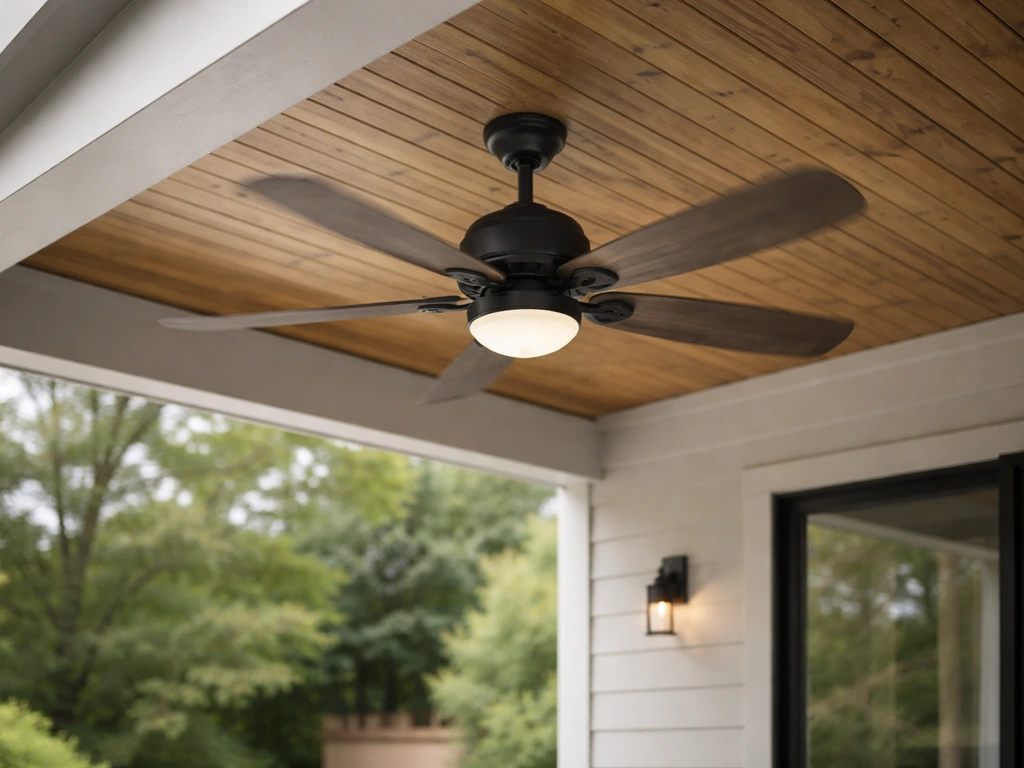
The exact right size depends on four things: your patio's square footage, whether it's covered or open-air, your ceiling height, and your local climate. To figure out what is a good size for an outdoor patio, start with your patio’s square footage and whether it’s covered or open-air depends on four things. Work through each of those factors and you'll land on the right fan without second-guessing yourself.
How to measure your outdoor patio for fan sizing
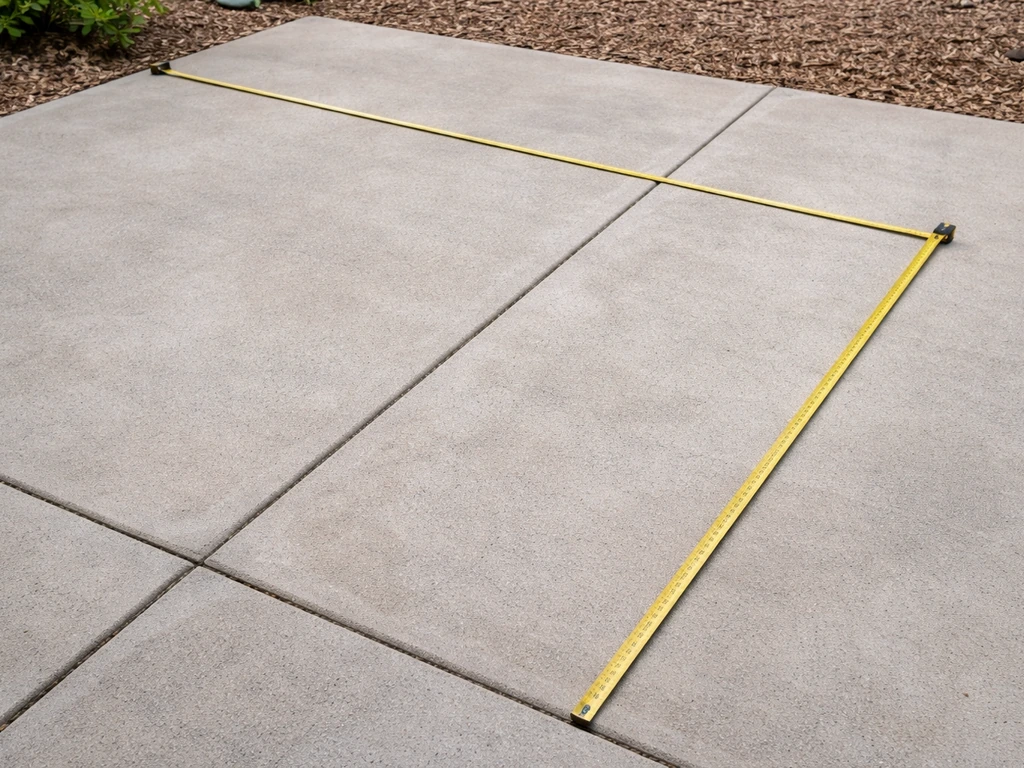
Grab a tape measure and get the length and width of your patio in feet, then multiply them together to get the square footage. A 12 x 16 foot patio is 192 sq ft. A 20 x 25 foot covered porch is 500 sq ft. Simple so far.
But here's where people get tripped up outdoors: don't just measure the total slab or deck area. Focus on the zone you actually want to cool, which is usually the seating or dining area, not the full footprint. If your patio is 600 sq ft but you only use 300 sq ft for outdoor living, size the fan for that active zone.
If you're trying to pick the right size for a good size patio, start by measuring the active seating or dining zone you actually plan to cool patio is 600 sq ft but you only use 300 sq ft for outdoor living. One well-placed fan over a 300 sq ft seating area beats an oversized fan awkwardly centered over empty concrete.
Also account for clearance. A ceiling fan needs at least 18 inches of horizontal clearance from any wall, post, or obstruction to spin freely and move air efficiently. If your covered patio has a beam running down the center, measure the open space between structures, not just the outer walls. For very long, narrow patios (say, 10 x 40 feet), you'll likely want two smaller fans running in a line rather than one big fan at the center.
Fan size basics: blade span vs room coverage
Ceiling fans are sized by blade span, which is the diameter of the circle the blades make as they spin. A 52-inch fan sweeps a 52-inch circle. That's the number you'll see on every product listing, and it's the number you use for sizing decisions. Hunter also provides an example blank" rel="noopener noreferrer">blade-span sizing table for indoor rooms that links room size to specific blade spans. blank" rel="noopener noreferrer">ENERGY STAR notes that blade spans commonly range from 29 to 54 inches, with 52 inches being the most popular size sold. Some outdoor-specific fans go up to 60 or even 72 inches for large covered patios and pavilions.
The general coverage guideline works like this: a fan's effective airflow covers roughly the area directly beneath and slightly beyond the blade sweep. You're not trying to cool the entire patio equally like a central air system. You're creating a wind-chill effect in the space where people actually sit. Bigger blade span means more air moved per revolution, which matters more outdoors where there's no contained airspace to recirculate.
| Patio Size (sq ft) | Recommended Blade Span | Fan Count |
|---|---|---|
| Up to 75 sq ft | 29–36 inches | 1 fan |
| 75–175 sq ft | 36–44 inches | 1 fan |
| 175–350 sq ft | 44–52 inches | 1 fan |
| 350–500 sq ft | 52–60 inches | 1 fan |
| 500+ sq ft | 52–60 inches | 2 or more fans |
Choosing ceiling fan size for covered vs uncovered outdoor spaces
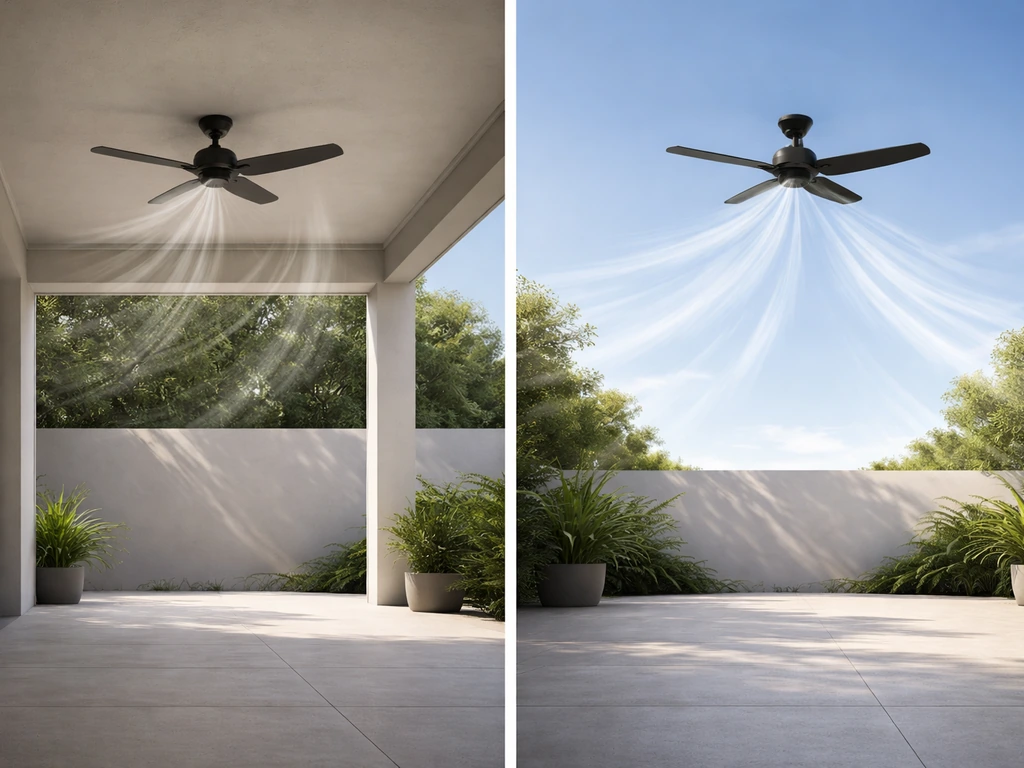
This is the part that changes the math. A covered patio behaves somewhat like an indoor room because the roof traps some of the air movement and gives the fan a ceiling to work from. An uncovered or open-air patio has no ceiling, which usually means no fan at all, since ceiling fans require a mounting surface overhead. If you're shopping for an uncovered patio, you're really looking at a pergola or patio cover as the mounting structure, not the sky. The size of your patio cover structure determines where the fan goes and what blade span actually clears the space.
For fully covered patios, you can size more aggressively. The containment of the roof structure means air circulates back through the space rather than immediately escaping. A 52-inch fan on a covered 300 sq ft patio will feel noticeably more effective than the same fan on an open-air pergola of the same footprint. On an open pergola or louvered patio cover, go one size up from what you'd choose for a similarly sized covered space to compensate for the air that escapes upward and sideways.
If you're still in the planning phase and deciding on the actual patio footprint itself, the size of your outdoor space affects more than just the fan. Getting the overall layout right first makes all these sizing decisions simpler.
Ceiling height, airflow, and mounting considerations for patios
Ceiling height is one of the biggest factors people overlook. For comfortable, effective airflow, the fan blades should hang 8 to 10 feet above the floor. Most standard covered patios have 8 to 9 foot ceilings, which is right in the sweet spot. If your patio ceiling is higher, say 10 to 12 feet, you'll need a downrod to bring the fan lower. For vaulted or sloped patio ceilings, make sure the fan you buy comes with an angled mounting kit or is compatible with one.
Blade clearance from the floor is a safety requirement, not just a comfort suggestion. The minimum blade-to-floor clearance for any fan is 7 feet. Most building codes require it, and frankly, nobody wants to walk into a spinning blade. On patios with very high ceilings (12+ feet), you might need a longer downrod to get the blades down to the right operational height, which means the fan motor housing rises into dead air space above while the blades work where the people are.
Mounting location matters as much as size. Center the fan over your primary seating or dining zone, not the geometric center of the patio. To size outdoor accessories like a deck box for patio cushions, start by measuring the cushion storage footprint you need and match the box dimensions to the available space center the fan over your primary seating or dining zone.
If your outdoor dining table is offset from center on your covered patio, that's where the fan goes. On a narrow covered porch (under 8 feet wide), a standard 52-inch fan will be too close to the walls. Drop down to a 36 or 44-inch fan to maintain the required 18-inch clearance from posts and walls on each side.
Climate and wet-rated requirements for outdoor patio fans
This is non-negotiable: any fan used outdoors needs the right moisture rating for its specific location. There are two outdoor-rated categories. Damp-rated fans can handle covered patios where the fan won't be directly hit by rain, like a fully roofed porch or pergola with a solid cover. Wet-rated fans can tolerate direct rain and moisture and are required for any fan that might get rained on, whether that's an open pergola, a semi-covered patio, or anywhere in a climate with heavy wind-driven rain.
If you're in the Gulf Coast, Southeast, or Pacific Northwest, wet-rated is almost always the safer call, even on covered patios, because blowing rain and humidity levels make damp-rated fans borderline risky. In drier climates like the Southwest desert, damp-rated fans on a covered patio are typically fine. Never use an indoor fan outdoors, even in a covered space. The motor housing and blade materials on indoor fans aren't built for temperature swings, humidity, or the occasional wind gust, and they'll fail faster than you'd expect.
- Damp-rated: for covered patios, screened porches, and protected outdoor ceilings with no direct rain exposure
- Wet-rated: for open pergolas, semi-covered patios, or any location in a high-humidity or heavy-rain climate
- Indoor fans: never appropriate for any outdoor use, covered or not
- Look for UL Wet Listed or UL Damp Listed certification on the product specs before buying
Blade material also matters in wet environments. Plastic, ABS, and weather-treated composite blades hold up much better than wood in humid or rainy conditions. Metal blades can work but check for rust-resistant coatings. This isn't just about longevity. Warped blades cause wobble, wobble causes noise, and noise ruins the whole reason you built the patio in the first place.
Sizing examples by patio dimensions

Here's how this plays out in real patio scenarios so you can match your situation to a specific recommendation.
| Patio Scenario | Dimensions | Recommended Fan Size | Rating Needed | Notes |
|---|---|---|---|---|
| Small covered porch | 8 x 10 ft (80 sq ft) | 36-inch | Damp or Wet | Keep it compact; use flush-mount if ceiling is under 8 ft |
| Standard covered patio | 12 x 16 ft (192 sq ft) | 48–52-inch | Damp or Wet | 52-inch is ideal if walls/posts allow 18-inch clearance |
| Large covered patio | 20 x 20 ft (400 sq ft) | 52–56-inch | Damp or Wet | One fan works; consider two for elongated spaces |
| Open pergola or louvered cover | 16 x 20 ft (320 sq ft) | 52–60-inch | Wet-rated only | Size up to compensate for open air escape |
| Oversized covered patio or pavilion | 25 x 30 ft (750 sq ft) | Two 52-inch fans | Wet-rated | Space fans evenly over seating zones, not edges |
If your patio is narrow, like a long covered walkway porch at 8 x 30 feet, you'll get better results from two or three smaller fans (36–44 inch) evenly spaced along the length than from one oversized fan at center. Airflow on narrow spaces stagnates at the ends when there's only one fan, and you'll always be sitting in the dead zone.
Your next steps before you buy
Once you've worked out the sizing, use this quick checklist to confirm you've covered everything before placing an order or heading to the hardware store. A similar checklist can help you zero in on the best patio box setup for your specific outdoor space.
- Measure your active seating zone (not just total patio sq ft) and match it to the blade span sizing table above
- Check your ceiling height and calculate the downrod length needed to get blades between 8 and 10 feet from the floor
- Measure from your planned mounting point to the nearest wall or post and confirm you have at least 18 inches of clearance on each side of the blade span
- Decide between damp-rated and wet-rated based on your cover type and local climate, and verify the UL listing on any fan you're considering
- Check blade material for moisture and UV resistance, especially if you're in a humid or sunny region
- Confirm your electrical box is rated for ceiling fan support (many standard junction boxes are not) before installation, or hire an electrician to handle it
Getting the fan size right is honestly the easiest part of this whole decision. The trickier calls are the mounting height, the moisture rating for your specific setup, and whether your patio cover structure can actually support a fan. Nail those three things and the size almost picks itself based on your square footage.
FAQ
If my outdoor patio is open to the sky, can I still use a ceiling fan, and what size would I need?
You generally cannot use a standard ceiling fan on an uncovered, open-air patio because there is no overhead mounting surface. In that case, focus on adding a pergola or patio cover with beams that can support a fan, then size based on the covered zone and your available blade clearance. If you are effectively moving from open-air to covered, a size that matches your seating area is usually enough, but you may need to step up a blade span on louvered or open pergola covers.
How do I choose fan size when my patio is irregular, like an L-shape or has a cutout?
Measure and add only the active cooling zone where people actually sit or dine, rather than the total footprint. If the shape is divided into two obvious zones, plan for one fan per zone and size each fan to that zone’s area, keeping clearance from the nearest wall, post, or beam.
Should I size the fan to the entire covered porch or just the seating area under the roof?
Size it to the seating or dining zone you want to feel wind-chill in. If your porch is large but you only use one half, an oversized fan centered over the unused area often leaves the seats under-moved. Use the length and width of the active zone, then choose blade span for that area.
What clearance rules matter most besides the 18 inches from walls and posts?
Two clearances are critical: horizontal clearance so blades do not brush structures, and vertical blade-to-floor clearance. Many codes require at least 7 feet from the floor, and comfortable airflow typically comes from hanging blades about 8 to 10 feet high. If you cannot hit both, choose a different mounting height or a smaller fan.
Can I use a downrod to get the right blade height, and how does that affect the fan choice?
Yes, but downrod length changes where the motor sits and how much sway clearance you have around beams. If your ceiling is 10 to 12 feet, a downrod can bring blades into the 8 to 10 foot range. If you need an unusually long downrod, consider a smaller fan or a different mounting point to avoid operating the motor in dead air above the covered space.
What if my patio cover has a center beam, and I cannot get the fan to sit in the exact middle?
Mount the fan over the primary seating or dining zone, not the geometric center, and measure the open space between structures for horizontal clearance. On beam-run areas, a fan can still work if the blade span clears the beam and nearby walls by at least 18 inches. If there is not enough lateral clearance, use two smaller fans aligned with the seating zones instead.
How many fans should I use if the patio is long, narrow, or has different seating zones?
For very long, narrow areas, two or three smaller fans spaced along the length usually outperform one large fan because airflow does not distribute evenly at the far ends. A practical rule is to split the active seating area into sections, then place one fan per section, keeping each fan centered over where people sit or eat.
Are outdoor wet-rated fans always better than damp-rated fans, especially in humid areas?
Wet-rated is the safest option when there is any chance of direct rain or wind-driven moisture. Even on covered patios, coastal and high-humidity regions often experience enough spray and humidity to make damp-rated borderline. If you are unsure, choose wet-rated, and confirm the model is marked for outdoor installation.
Can I install an indoor ceiling fan outdoors under a porch if it stays dry?
No. Even if it is under a roof, indoor fans are not built for humidity, temperature swings, and occasional wind gusts outdoors, and they tend to fail sooner. Use a fan specifically labeled for outdoor use, with the correct damp or wet rating for your exposure.
Do blade materials really change performance outdoors, or is it only about durability?
Blade materials mostly affect longevity and stability, but that matters for performance too. Warped blades cause wobble, wobble increases noise, and noise reduces comfort. In wet or humid climates, choose plastic, composite, or properly coated blades designed for outdoor conditions, and avoid untreated wood unless the product is explicitly rated for exterior use.
What wattage or motor features should I look for beyond fan size?
Prioritize control and airflow features that suit outdoor use. A fan with good speed control (or a compatible outdoor-rated remote or wall control) helps you dial comfort seasonally. Also check that the fan includes the right mounting hardware for outdoor ceilings and that the electrical box and wiring method are rated for damp or wet locations as required by your setup.
If I’m between two sizes, how should I decide?
Default to the active zone measurement and your exposure. For a covered patio, you can often go with the fan size that matches the zone area. For louvered covers, semi-covered setups, or open pergolas, stepping up one blade span can compensate for air escaping upward and sideways, but only if you can maintain the required 18 inches of horizontal clearance.