
If you're choosing between the Polk Audio Atrium 6 and the Patio 200 for your outdoor patio, here's the direct answer: go with the Atrium 6 if you have a larger patio, host gatherings, or want more dynamic outdoor sound with deeper bass. Go with the Patio 200 if you have a smaller covered patio, prefer relaxed background listening, and want a very straightforward install with a fully sealed, weather-tough cabinet. Both are 8-ohm, 90 dB speakers that will work with almost any standard receiver or outdoor amp, so the decision really comes down to size, sound output goals, and how exposed your installation will be to the elements.
Polk Audio Patio 200 vs Atrium 6 for Outdoor Sound

Elise Prescott
16 Jun 2026
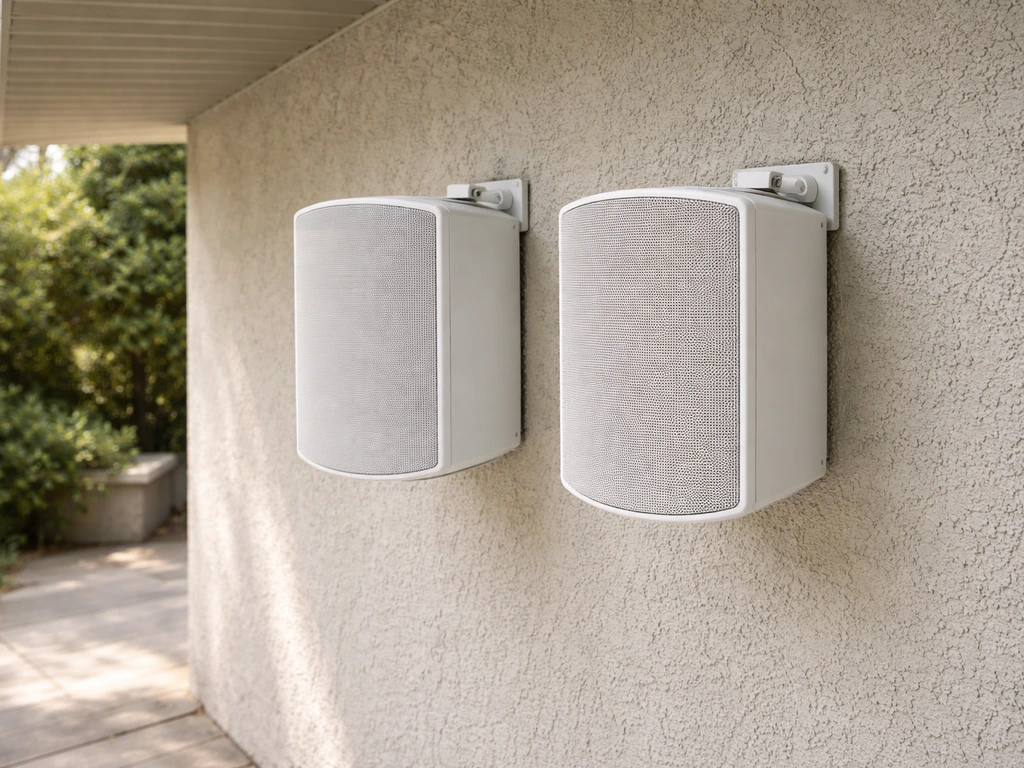
What these two Polk models actually are
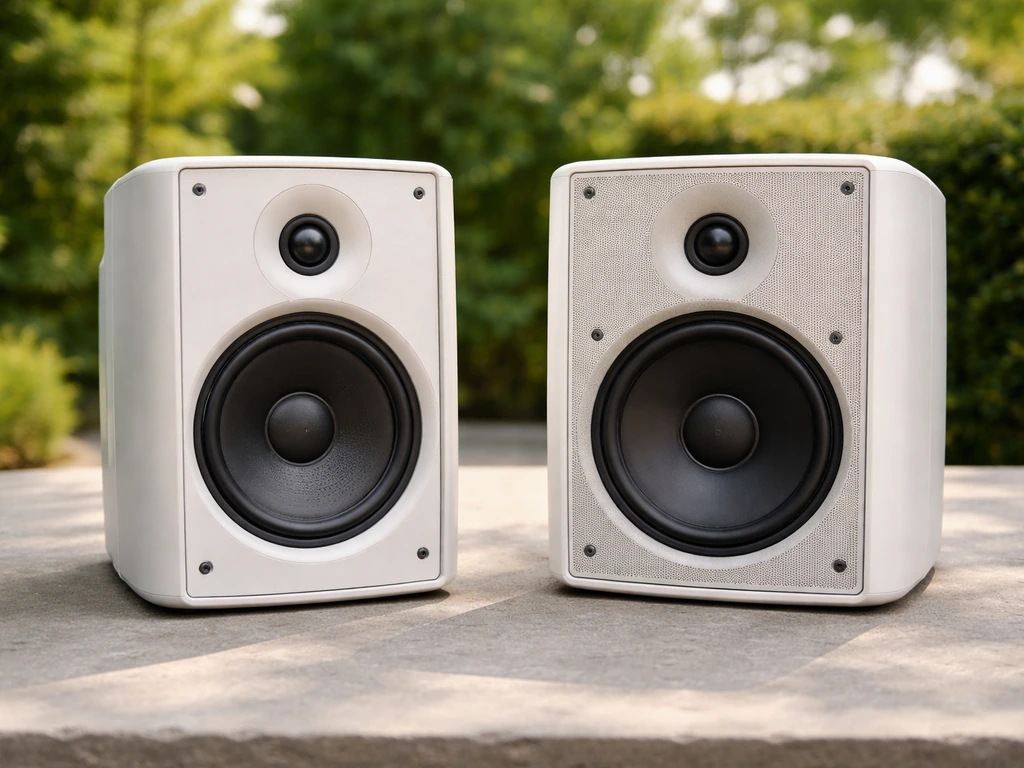
The Polk Audio Atrium 6 is a purpose-built outdoor passive speaker from Polk's dedicated Atrium line. It uses a 5.25-inch woofer paired with a 1-inch dome tweeter, and it runs a vented enclosure design using Polk's PowerPort bass venting technology. The whole package with mounting bracket measures roughly 11-11/16 inches tall by 7-11/16 inches wide by 8-3/4 inches deep and weighs about 5.4 pounds per speaker. It's a legitimately substantial outdoor speaker designed to move air and fill open spaces.
The Polk Patio 200 is positioned as an indoor/outdoor speaker, which tells you something right away. It uses a 5-inch mineral-filled polymer woofer and a 3/4-inch anodized aluminum dome tweeter inside a sealed, mineral-filled enclosure. It's physically smaller and lighter than the Atrium 6, and it leans toward versatility and weather resilience over raw outdoor performance. If you've also been comparing the Atrium 6 against smaller Polk options like the Atrium 4 or Atrium 5, the Patio 200 sits in a similar tier to those smaller Atrium variants in terms of output capability. If you are also considering the smaller Atrium 4, it helps to compare how its output and driver design stack up against the Patio 200.
Key differences that actually matter when you're shopping
| Spec / Feature | Polk Atrium 6 | Polk Patio 200 |
|---|---|---|
| Driver size | 5.25" woofer + 1" dome tweeter | 5" woofer + 3/4" aluminum dome tweeter |
| Enclosure type | Vented (PowerPort bass venting) | Sealed, mineral-filled |
| Nominal impedance | 8 ohms | 8 ohms |
| Sensitivity | 90 dB (1W @ 1m) | 90 dB |
| Recommended amp power | 10–100 watts/channel | Not published; similar range assumed |
| Frequency response | ~60 Hz – 20 kHz | ~60 Hz and up |
| Tweeter material | 1" soft dome | 3/4" anodized aluminum dome |
| Dimensions (w/ bracket) | ~11.7" H x 7.7" W x 8.75" D | Smaller footprint |
| Weight per speaker | ~5.4 lbs | Lighter |
| Intended use | Dedicated outdoor | Indoor/outdoor |
The enclosure difference is the most important technical distinction here. The Atrium 6's PowerPort venting is designed to extend low-frequency output, so it produces more perceived bass outdoors where sound pressure dissipates quickly. The Patio 200's sealed enclosure is tighter and more controlled, which means cleaner mid-bass but less extension at the bottom end. Neither speaker will shake the ground, but the Atrium 6 will sound fuller when you're sitting 15 to 20 feet away from it on a large open deck.
The tweeter difference is worth noting too. The Atrium 6 uses a soft dome tweeter, which is generally smoother and more forgiving on bright sources. The Patio 200 goes with an anodized aluminum dome, which is a little crisper and can sound slightly more detailed but can also be a touch brighter at higher volumes. For background music and casual listening, you probably won't care. For longer listening sessions at moderate volume, soft dome usually wins on listener fatigue.
Weather and water resistance: what the ratings actually mean
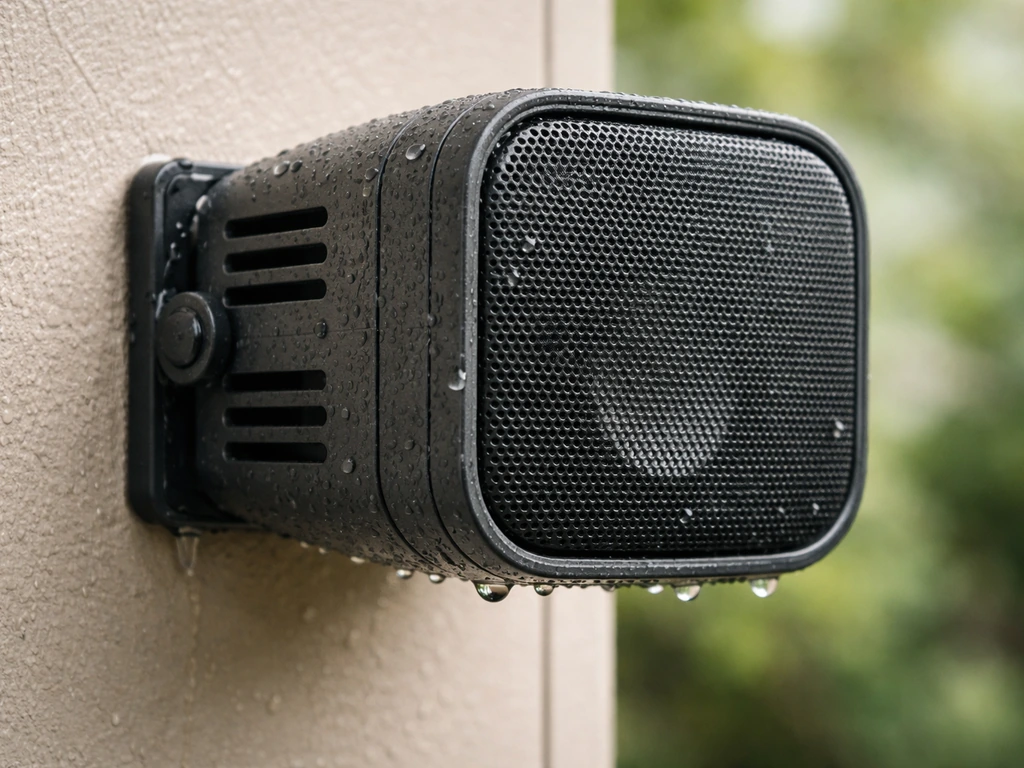
The Atrium 6 is certified to three serious standards: ASTM D5894-UV Salt Fog (UV and salt fog cycling), Mil Standard 810 Immersion (actual submersion testing), and Mil-Std 883 Method 1009.8 for salt and corrosion resistance. That's not marketing fluff. Those are real military and ASTM certifications, and they mean the Atrium 6 has been tested in conditions far worse than a Pacific Northwest rainy season or a Florida summer. For coastal homes, humid climates, or spots where the speakers will get rained on directly, the Atrium 6's certifications give you real peace of mind.
There's one nuance though: the Atrium 6 uses a vented enclosure. That means there are openings in the cabinet by design. Polk engineered those vents to resist water intrusion, but if you install the speakers in a position where standing water can pool inside the vent, you're asking for trouble. Mount them at the correct angle, ideally with the vent facing down or to the side, and you're fine. Don't mount them face-up on a post where rain falls directly into the port.
The Patio 200 takes a different approach. Its sealed, mineral-filled enclosure means there are no openings for moisture to enter the driver cavity. Combined with the rust-resistant aluminum grille and bracket plus stainless-steel hardware, this speaker is arguably simpler to waterproof because there's no vent to worry about. If your installation spot is fully exposed (no soffit, no overhang, no eave protection), or if you're in a high-humidity coastal zone, the sealed design of the Patio 200 has an inherent advantage in terms of moisture management, even if its formal certifications aren't as extensively documented in marketing materials.
Climate-specific reality check
- Coastal/salt air environments: Atrium 6's salt fog and corrosion certifications make it the better choice here, just mount the vents correctly.
- Hot, dry climates (Arizona, Nevada): Either speaker works well; UV resistance on the Atrium 6 is formally certified, which matters in intense direct sun.
- High-humidity/rainy climates (Pacific Northwest, Gulf Coast): Patio 200's sealed enclosure avoids any vent-intrusion risk; Atrium 6 works too if mounted properly.
- Freeze-thaw climates (Midwest, Northeast): Sealed enclosures handle temperature cycling better; Patio 200 has an edge here. If you go Atrium 6, bring the speakers in during extreme cold snaps or cover them.
What they'll actually sound like on your patio
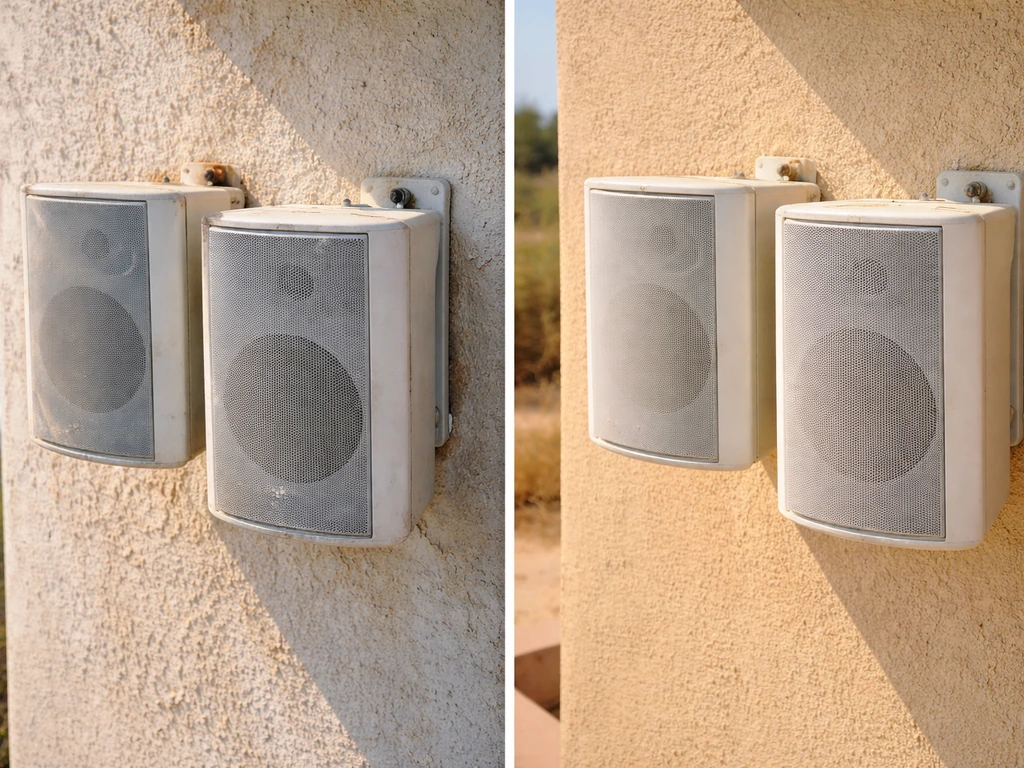
Both speakers share a 60 Hz lower frequency limit and 90 dB sensitivity on paper, so they look identical in a spec sheet comparison. In practice, they sound noticeably different outdoors. The Atrium 6's PowerPort venting delivers more usable bass energy in open-air environments. Outdoors, bass frequencies lose energy fast because there are no walls to create room gain, so any speaker that can push lower frequencies more efficiently wins at distance. The Atrium 6 handles this better. Sitting 20 feet away at a backyard gathering, you'll hear the difference between these two speakers.
The Patio 200 still sounds good. Owner reviews consistently mention solid bass response and good clarity for its size, and people report it handling a 30-foot patio spacing without needing to crank the volume. But its sealed design means it rolls off the low end more gradually and with less output than a vented speaker at similar power levels. For jazz, acoustic, podcasts, or ambient dinner music, it's completely satisfying. For hip-hop, rock, or any bass-heavy content at party volume outdoors, you'll notice it running out of steam before the Atrium 6 does.
On the high end, the Patio 200's aluminum dome tweeter gives it a slightly airier, more detailed top end in some listening situations. The Atrium 6's soft dome tweeter is a little warmer. Neither is wrong; it's genuinely a preference call. What isn't a preference call is coverage: the Atrium 6's larger driver and higher power handling make it the right tool for bigger, more open spaces. If your patio runs 400 square feet or more, or you entertain regularly with background music needing to compete with conversation, the Atrium 6 just does more work.
Will these speakers work with your amp or receiver?
Both the Atrium 6 and Patio 200 are blank" rel="noopener noreferrer">8-ohm nominal impedance speakers with 90 dB sensitivity. That combination is about as amp-friendly as outdoor speakers get. Any standard AV receiver, outdoor-rated stereo amp, or dedicated patio amp with 8-ohm speaker outputs will drive either of these without issue. The Atrium 6's published recommended power range is 10 to 100 watts per channel, so even a modest 30-watt-per-channel zone amp is enough to fill a medium-sized patio. Polk’s DB Plus Series owners manual explains how to interpret the “recommended amplifier power” and related impedance conventions so you can match your amp to the speakers’ stated requirements blank" rel="noopener noreferrer">published recommended power range is 10 to 100 watts per channel. The Patio 200 is similarly easy to drive; users have confirmed it works well with Sonos Amp, which puts out around 125 watts into 8 ohms.
The one real-world gotcha to watch for: if you're running a multi-speaker setup (two pairs on a single zone through a speaker selector), make sure your selector can handle the combined load. Running two pairs of 8-ohm speakers in parallel drops the load to 4 ohms, which some older receivers don't handle well. Use a quality impedance-matching speaker selector or run each pair from its own dedicated zone amp channel. There's a Reddit thread where an Atrium 6 owner ran six speakers through a selector into a single amp channel and got low volume because the impedance dip was starving the amp. Don't replicate that mistake.
For wiring, both speakers use standard 5-way binding post terminals, so banana plugs or spade lugs work fine. For outdoor runs, use at minimum 16-gauge direct-burial rated speaker wire for runs under 50 feet. For runs of 50 to 100 feet, step up to 14-gauge to avoid resistance losses that will reduce perceived volume and dampen bass. Seal any wire entry points into the wall or soffit with weatherproof sealant to prevent moisture migration.
Installation tips for a patio setup
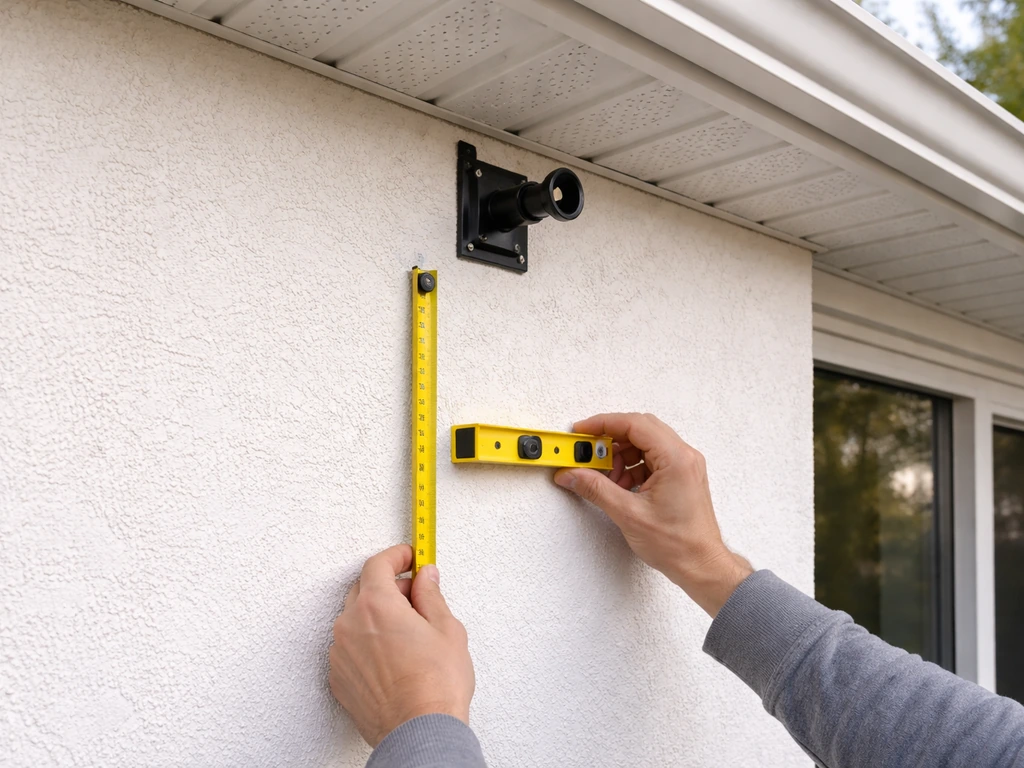
Mounting height matters more than most people expect. For both speakers, aim for about 8 to 10 feet off the ground when wall-mounting or bracket-mounting under a soffit. Any higher and you start losing high-frequency detail because tweeters are directional; too low and you create harsh reflections off hard patio surfaces. Angle the speakers down toward the listening area at roughly 15 to 30 degrees. The Atrium 6 includes Polk's Speed-Lock mounting system which makes bracket angle adjustment easier during installation.
Mounting location also affects longevity. Under a soffit or eave is always better than fully exposed, even for a certified outdoor speaker. Direct UV exposure day after day, combined with thermal cycling, adds up over years. Soffits protect the cabinet finish and grille and reduce thermal stress. If you have no overhang at all, the Atrium 6's formal UV certification is worth paying attention to, but both speakers benefit from at least partial shade.
Spacing the speakers correctly for your patio size makes a bigger difference than which model you pick. A common mistake is placing speakers too far apart, which creates a dead zone in the middle. For most residential patios, keep speaker pairs 10 to 14 feet apart and centered on the main seating area. If your patio is longer than 20 feet, consider a second pair rather than spreading one pair excessively. If you're running multiple pairs, plan wiring and impedance management before the first wire goes in the wall. This is one area where spending an hour with a contractor who does outdoor audio installs can save you a weekend of troubleshooting.
Which one to choose based on your actual situation
Here's how I'd break it down by scenario. If you have a small covered patio under 200 square feet, use it mostly for casual background music, and want the easiest possible install with bulletproof weather resistance, the Patio 200 is the right call. If you're comparing the Polk Audio Atrium 5 vs Patio 200, the Atrium-series models generally favor bigger, more open-space output, while the Patio lineup leans toward easier sealed-install simplicity. If you are comparing Polk’s Patio 200 versus Atrium 6 for a larger open space, the Atrium 6’s vented PowerPort design is usually the better fit polk patio 200 vs atrium. If you are comparing polar patio standard vs premium options, the Patio 200 is the standard choice for small covered spaces where simple sealed protection matters most. It's simpler, smaller, and its sealed design requires zero installation technique to protect the cabinet from moisture. Plenty of homeowners have had them for years on screened porches and small decks with zero issues.
If your patio is 300 square feet or larger, you host people regularly, or you want music that actually sounds like music when you're grilling 15 feet from the speakers, the Atrium 6 is the better investment. The larger driver, PowerPort bass extension, higher power headroom, and serious weather certifications all point in the same direction: it was built for this job. It costs more, but it sounds noticeably better at party volumes and covers more area confidently.
| Your Situation | Recommended Choice |
|---|---|
| Small covered patio, background music only | Patio 200 |
| Large open deck or patio (300+ sq ft) | Atrium 6 |
| Hosting gatherings, need volume headroom | Atrium 6 |
| Fully exposed install with no overhang | Patio 200 (sealed enclosure advantage) |
| Coastal or salt-air environment | Atrium 6 (certified salt/corrosion resistance) |
| Freeze-thaw climate, left outdoors year-round | Patio 200 (sealed handles thermal cycling better) |
| Tight budget, prioritize value over output | Patio 200 |
| Pairing with Sonos Amp or similar smart amp | Either; both work at 8 ohms |
Before you buy: things to check and measure
- Measure your patio square footage and note whether it's covered, partially covered, or fully open. This single factor drives most of the decision.
- Check your amp or receiver's output impedance rating. Both speakers need an 8-ohm capable output, which most modern receivers support. Confirm per-channel wattage is at least 20 watts for normal listening.
- Measure your wire run from the amp to each speaker location. Runs over 50 feet should use 14-gauge direct-burial rated outdoor speaker wire.
- Note your climate: coastal salt air, extreme UV, freeze-thaw cycling, or high humidity each tilts the recommendation slightly as described above.
- If you're planning a multi-speaker zone with more than one pair, decide whether you'll use an impedance-matching selector or a multi-channel amp before buying speakers.
- Check the mounting surface at your planned install location. Both speakers use standard wall/soffit brackets, but confirm you're mounting into solid wood framing or a proper anchor, not just drywall or vinyl siding.
If the wiring run is complex, you're mounting into a stucco or masonry exterior, or you're planning a multi-zone setup with in-wall wiring, this is genuinely worth hiring an outdoor audio installer or electrician for the rough-in work. The speakers themselves are DIY-friendly once the wire is in place, but getting wire through an exterior wall cleanly and waterproofing the entry points correctly is where most homeowner installs go sideways. A professional can also help you dial in speaker placement angles for your specific patio layout, which makes a real difference in how good the final system sounds.
FAQ
Which speaker is better if my patio seating is close versus far from the speakers?
If you mostly listen while standing 10 to 15 feet from the speakers, the Patio 200 can feel “enough” because its sealed design keeps mids tight. Once you sit farther out (around 20 feet or more), the Atrium 6’s vented bass tuning typically holds up better in open air, so it sounds fuller without needing to turn the volume as high.
Does the Atrium 6 need a special mounting orientation to avoid water issues?
The Atrium 6’s PowerPort vent means moisture management depends heavily on orientation. Even if the cabinet is built to resist intrusion, avoid spots where rainwater can pool near or into the port, and aim for an installation where water runs away (vent facing down or to the side is the safer default).
How should I choose speaker wire gauge for polk audio patio 200 vs atrium 6 installs?
Use the run distance to size wire by resistance, not just to “meet a spec.” For under 50 feet, 16-gauge is typically fine. For 50 to 100 feet, stepping up to 14-gauge helps prevent bass getting flatter at the listening position, because voltage drop steals current from the amp.
What’s the most common wiring mistake when running both speakers on one amp or selector?
Even though both are 8-ohm speakers, the real risk is when you combine multiple pairs on one selector or channel. If you wire two pairs in parallel on a single zone, the load can drop to 4 ohms, which can cause audible strain or reduced volume on some receivers. The safest approach is using a zone amp channel per pair or an impedance-matching selector designed for the combined load.
Can I add a subwoofer later, and does it change the choice between these two models?
If you plan to add a subwoofer later, the Patio 200 often pairs well for tighter mid-bass, but only if you choose a crossover point that avoids overlap. In practice, set the crossover so the sub handles the lowest frequencies and keep the Patio 200 doing vocals and midrange clarity. With the Atrium 6, you can still add a sub, but you may start with a higher crossover only if you want even more “wallop” at party volume.
How important is speaker aiming and height for these two models?
For angled outdoor listening, both benefit from aiming down, but the biggest win comes from consistency across the pair. A good rule is to angle them toward the main seating area (roughly 15 to 30 degrees) and keep left-right symmetry, so the center “sweet spot” stays put and dialogue or vocals don’t wander.
Which one is more comfortable for long listening sessions without sounding harsh?
Yes, and it often affects brightness perception more than people expect. The Atrium 6’s soft dome tends to feel smoother during long sessions at moderate volume, while the Patio 200’s aluminum dome can read slightly crisper and a bit brighter at higher levels. If you’re sensitive to treble, start with toe-in and volume discipline before deciding the speaker is “too bright.”
What decision shortcut should I use if my budget is tight but my patio size is medium?
Cost-wise, choose the Atrium 6 when you expect open-space distance and frequent gatherings, because you are buying usable bass and headroom rather than just “louder output.” Choose the Patio 200 when the system is for background music on a smaller covered patio, where clean sound at moderate levels matters more than low-end extension.
Which one is safer in highly exposed sun and rain conditions?
If your patio is under an overhang or soffit, both usually perform well, but shade still helps longevity. If there is little to no overhang and the speakers take direct sun and rain, the Atrium 6’s documented weather testing is an advantage, while the Patio 200’s sealed design is simpler to keep dry inside. In exposed locations, also consider adding a small protective eave if possible, because UV and thermal cycling add up over years for any outdoor speaker.