
If you're choosing between the Polk Patio 200 and the Polk Atrium 6 for your outdoor patio, the Atrium 6 is the stronger pick for most homeowners. Choosing between polar patio standard vs premium styles can help you align speaker durability and sound expectations with your outdoor setup.
Polk Patio 200 vs Atrium 6: Which Outdoor Speaker Fits Best

Elise Prescott
6 Jul 2026
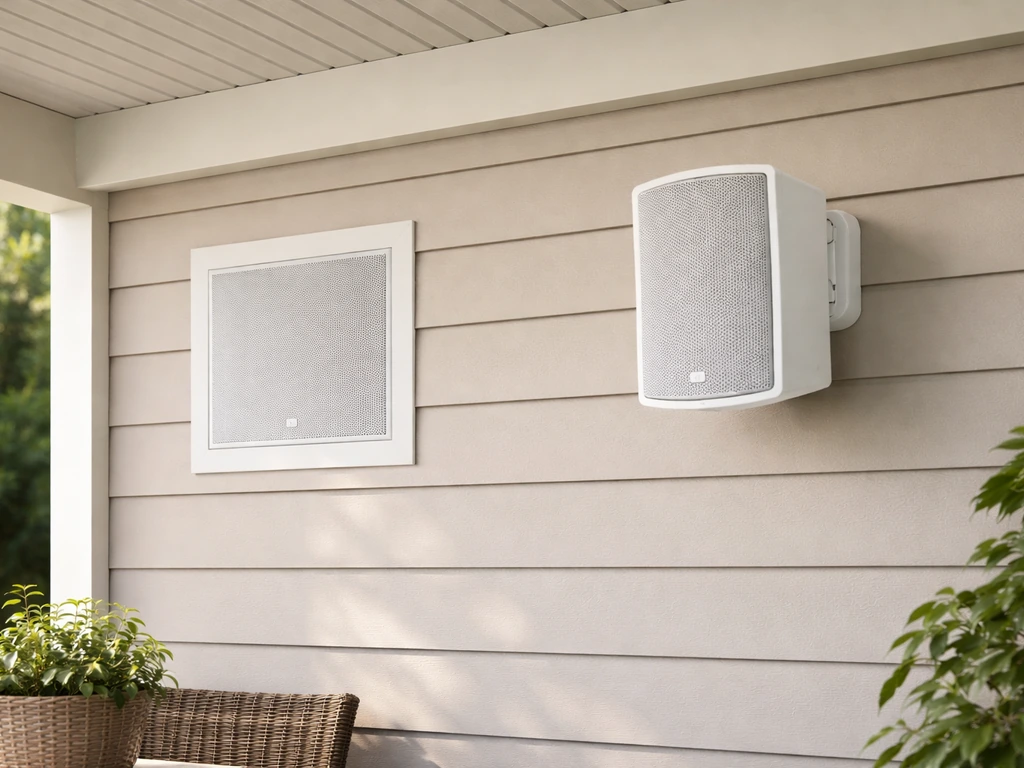
It reaches lower in the bass (50 Hz vs 60 Hz), carries a formal "All-Weather Certified" rating backed by military and ASTM environmental tests, uses a more flexible mounting system, and comes with a 5-year warranty on both cabinet and drivers. The Patio 200 is a solid, weather-resistant speaker that costs less and installs easily into walls, but it lacks the Atrium 6's documented durability credentials and bass extension.
Which one actually fits your setup comes down to a few specifics: how you're mounting, what climate you're in, and how serious you are about sound quality vs. budget.
Make Sure You're Looking at the Right Models
Polk's product naming can trip you up. The "Patio 200" is a specific 2-way indoor/outdoor speaker with a 5-inch woofer, sold as a pair, and classified as an in-wall speaker type even though it can handle outdoor exposure. The "Atrium 6" is a standalone outdoor all-weather speaker with a 5.25-inch woofer, sold individually or in pairs, and built specifically for full exterior mounting on walls, soffits, or eaves. Both are current Polk Audio products, but they live in different product families with different design intentions.
To confirm you have the right models: on the Patio 200 box or spec label, look for "5-inch Dynamic Balance polypropylene woofer," "3/4-inch anodized aluminum dome tweeter," and "8 ohms / 50W RMS / 90 dB." On the Atrium 6, look for "5.25-inch woofer," "1-inch tweeter," "Speed-Lock mounting," and the "Polk All-Weather Certified" mark. If you're shopping online, double-check that the listing shows those exact driver sizes and the Speed-Lock system for the Atrium 6, since Polk makes Atrium 4, 5, 6, 7, and 8 variants that can look very similar in photos. The Atrium 6 is notably deeper (8.75 inches deep vs 6.69 inches for the Patio 200), which is often the quickest visual tell.
Specs Side by Side
| Spec | Polk Patio 200 | Polk Atrium 6 |
|---|---|---|
| Woofer size | 5 inches | 5.25 inches |
| Tweeter | 3/4" anodized aluminum dome | 1" anodized aluminum dome |
| Frequency response | 60 Hz – 25 kHz | 50 Hz – 27 kHz |
| Sensitivity | 90 dB (1W @ 1m) | 90 dB (1W @ 1m) |
| Impedance | 8 ohms | 8 ohms |
| Power handling (RMS) | 50W | 10–100W continuous |
| Peak power | 100W | 100W |
| Dimensions (H x W x D) | 10.31" x 6.75" x 6.69" | 11.688" x 7.688" x 8.75" |
| Weight (each) | 4.6 lb | 5.4 lb |
| Mounting system | In-wall / surface (basic) | 180° Speed-Lock with Keyhole Slots |
| Weather rating | Weather-resistant (sealed enclosure) | Polk All-Weather Certified (ASTM D5894, Mil-Std 810/883) |
| Cabinet material | Sealed polypropylene | Mineral-filled polypropylene |
| Hardware | Stainless steel | Brass or stainless steel, gold-plated binding posts |
| Warranty | Not specified in research | 5 years (cabinet + drivers, original purchaser) |
A few things jump out from those numbers. First, both speakers are 8 ohms and 90 dB sensitive, which means they'll behave identically with whatever amp or receiver you're running. No compatibility surprises there. Second, the Atrium 6 goes 10 Hz lower at the bass end and 2 kHz higher at the top, which translates to a noticeably warmer, fuller sound outdoors where bass naturally dissipates. Third, the Atrium 6 is physically bulkier, especially in depth, so check your mounting surface before you buy.
Where Each Speaker Actually Belongs
The Patio 200 is designed as an in-wall speaker that can handle outdoor environments. That means it's best suited to situations where it's recessed or mounted flush against a wall surface with some overhead protection, like under a covered patio roof, inside a screened enclosure, or in a semi-exposed area where it won't take direct rain. It works fine indoors too, making it a versatile option if you're outfitting a sunroom, garage, or covered lanai. Its sealed enclosure keeps moisture out, but it wasn't engineered with the same level of full-exposure outdoor testing as the Atrium 6.
The Atrium 6 is purpose-built to live outside, exposed. It's meant to be surface-mounted on exterior walls, under eaves, on soffits, or on fence posts. The Speed-Lock bracket system supports both horizontal and vertical mounting orientations, and lets you dial in the speaker angle without tools once it's installed. Polk's manual recommends aiming the speaker about 45 degrees downward and placing it close under an eave when you want more bass, or farther from corners and eaves when you want a cleaner, more articulate sound. That kind of placement flexibility matters a lot for larger patios where you're trying to balance coverage against audio quality.
One practical installation note: the Atrium 6's Speed-Lock bracket uses keyhole slots as a template. You mark your wall, screw the bracket into a weight-bearing stud (or use #10 wall anchors if there's no stud), route your speaker wire through the bracket's wire hole, and lock the speaker in place one-handed. It's genuinely easier than most outdoor speaker installs. The Patio 200 is simpler still if you're going in-wall, but in-wall cuts require more prep and commitment.
How Climate Affects Long-Term Performance
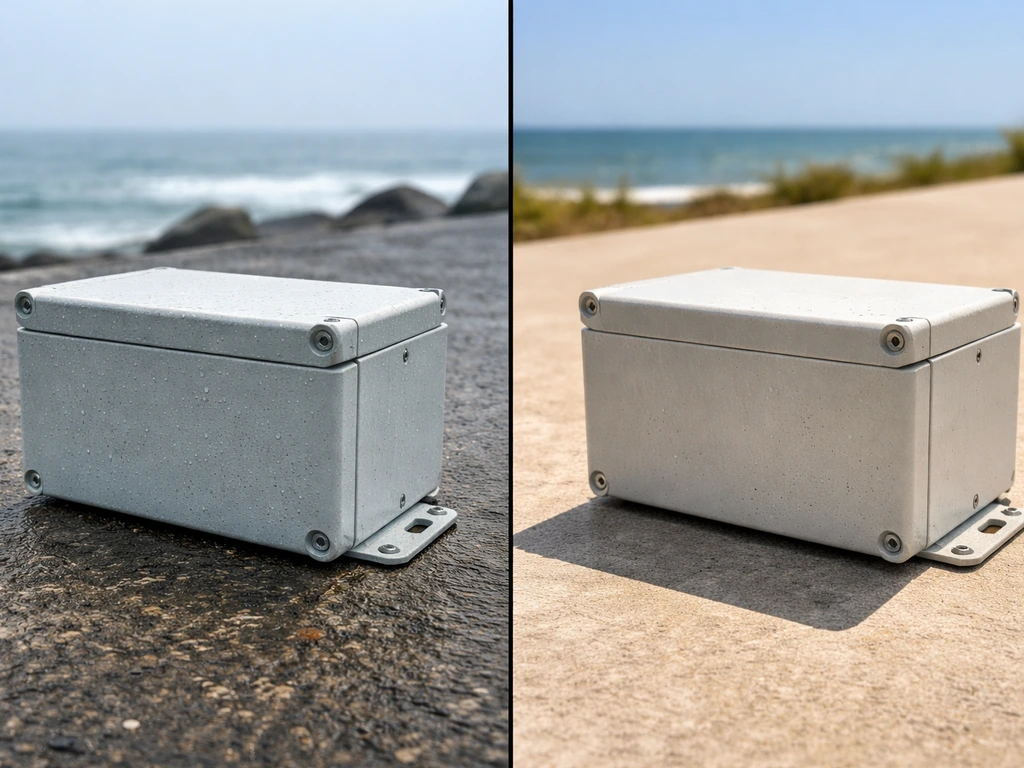
This is where the two speakers separate most clearly, and it matters depending on where you live. If you're in a coastal environment with salt air (Florida, the Carolinas, Southern California coastal), the Atrium 6's specific certifications are worth serious attention. It's tested to ASTM D5894 UV Salt Fog, Mil-Standard 810 Immersion, and Mil-Std 883 Method 1009. 8 for salt and corrosion.
Those aren't just marketing words; they're actual test protocols that simulate the kind of degradation salt air and UV exposure cause over years. The Patio 200 uses weather-resistant construction with stainless steel hardware, but Polk hasn't published equivalent environmental test certifications for it. The Polk Patio 200 analysis/review notes that its sealed, mineral-filled enclosure and rust-resistant materials are intended to protect against the elements, but that this is secondary reporting rather than an official Polk test rating.
In high-heat climates like Texas, Arizona, or the California Central Valley, UV exposure is the bigger concern. The Atrium 6's mineral-filled polypropylene cabinet and powder-coated aluminum grille are specifically chosen to resist UV breakdown. Both speakers use aluminum tweeter domes, which handle heat better than fabric or paper alternatives, but the Atrium 6's overall materials package is more robust for sustained sun exposure.
For humid climates without salt (Gulf Coast inland, Southeast, Pacific Northwest), sealed enclosures matter a lot. Both speakers use polypropylene cones that don't absorb moisture, and both have sealed or water-resistant designs. The Atrium 6's PowerPort bass vent is described as water-resistant, which is notable since ported enclosures are typically more vulnerable to moisture intrusion than sealed ones. The Patio 200's fully sealed enclosure is actually an advantage in theory, but in practice the Atrium 6's All-Weather certification covers immersion testing, which is a higher bar than "sealed."
One thing both speakers share: if you're in an area that gets severe weather (hail, heavy ice storms, extended freezing), Polk's manual for the Atrium series actually recommends storing the speakers indoors during extreme conditions. That's honest guidance from the manufacturer and worth taking seriously regardless of which model you choose.
What These Speakers Actually Sound Like on a Patio
Both speakers hit 90 dB sensitivity, which means they're equally efficient and will get similarly loud from the same amplifier. The real difference is in how they fill a space and how music or speech sounds at listening distances. If you want a quick baseline before choosing, compare the Polk Audio Atrium 5 versus Patio 200 on key specs like mounting style and outdoor sound performance polk audio atrium 5 vs patio 200.
The Atrium 6's extra bass extension (down to 50 Hz vs 60 Hz) makes a meaningful difference for background music outdoors. Patios are acoustically dead environments, meaning bass frequencies dissipate fast with nothing to reflect off. Starting 10 Hz lower gives the Atrium 6 noticeably more warmth and body when you're playing music at moderate volumes, like the kind you'd have going during a cookout. The Patio 200 sounds clean and accurate but can feel slightly thin outdoors at the same volume, especially with genres that rely on bass presence.
For speech clarity and conversation, the difference is smaller. Both speakers have similar midrange performance and the Atrium 6's wider frequency response at the high end (up to 27 kHz vs 25 kHz) adds a bit more air and presence to voices. If you're primarily using outdoor speakers for background ambiance while people talk, either speaker handles that well. If you're listening critically to music or watching outdoor TV audio, the Atrium 6 edges ahead.
For multi-speaker zone setups, both speakers are 8 ohms, which makes them straightforward to wire in parallel or with a speaker selector switch. Running four Atrium 6 speakers in two stereo pairs, each wired to a separate amplifier channel (as some Atrium 6 owners do with dedicated outdoor amps), gives you excellent patio coverage without impedance complications.
In one Polk Atrium 6 owner report on Reddit, the buyer wired each speaker individually to a separate channel on an Episode EA-AMP-2D-150A amp while troubleshooting outdoor volume issues each wired to a separate amplifier channel. The Patio 200 works equally well in that topology.
The practical comparison to the Atrium 4 and Atrium 5 is worth noting here: the Atrium 6's 5. If you're deciding between the Polk Audio Patio 200 and the Atrium 4, the same outdoor mounting and climate factors also apply Atrium 4 and Atrium 5.
25-inch woofer gives it more output in larger open patio areas than its smaller siblings, making it the better choice when you want a single pair to cover a deck of 400 square feet or more.
Which One to Buy Based on Your Budget
The Patio 200 typically costs less than the Atrium 6, and that price difference matters if you're outfitting multiple zones or working with a tighter budget. If you want the most direct side-by-side comparison, see how the Polk Audio Patio 200 stacks up against the Atrium 6 for outdoor use polk audio patio 200 vs atrium 6. Here's how to think through it:
- Buy the Patio 200 if your speaker location is covered, sheltered, or semi-indoor (garage, enclosed porch, covered lanai), you're on a tight budget and need multiple pairs, or your climate is mild without salt air or extreme UV.
- Buy the Atrium 6 if you're mounting speakers in a fully exposed outdoor location, you're in a coastal, high-UV, or high-humidity climate, you want the best bass performance from a single pair for a larger patio, or you want the documented 5-year warranty and certified weather protection backing your investment.
- The Atrium 6 is the better long-term value in harsh climates because replacing degraded speakers costs more than the upfront price difference.
- If you're building a multi-zone patio system and cost is a factor, consider Patio 200 pairs for sheltered indoor/covered zones and Atrium 6 pairs for the fully exposed exterior positions.
One thing to watch with either speaker: if your receiver or amp outputs 100 watts per channel at 8 ohms, you're right at the peak limit of the Patio 200 (100W peak, 50W RMS). Running it consistently near that ceiling can cause clipping distortion, and there are owner reports of garbled bass when the Patio 200 is pushed hard from a 100W receiver. The Atrium 6's recommended range of 10–100W continuous gives you the same ceiling but is rated for continuous use at that level, not just peaks. Keep your receiver at moderate listening levels with either speaker to avoid distortion issues.
Before You Install: A Practical Checklist
Run through these steps before you commit to either speaker and before you drill anything into your patio wall.
- Confirm your amplifier or receiver outputs at 8 ohms. Both speakers are 8-ohm nominal, so any standard home audio amp or AV receiver works. If you're using an outdoor dedicated amp, check its per-channel wattage stays between 10W and 100W for the Atrium 6, or 50W RMS for the Patio 200.
- Measure your mounting surface. The Atrium 6 is 8.75 inches deep and 11.688 inches tall. Make sure you have clearance under the eave or soffit and that the wall or surface can support 5.4 lbs per speaker.
- Check for studs or plan for wall anchors. For the Atrium 6, Polk specifies #10 wall anchors if there's no stud at your desired mount location. Don't skip this; a 5+ lb speaker vibrating with bass frequencies will pull out of drywall anchors over time.
- Plan your wire routing before mounting. Feed speaker wire through the bracket's wire hole during installation, not after. Use at least 16-gauge outdoor-rated speaker wire for runs up to 50 feet, or 14-gauge for longer runs.
- Decide on horizontal vs vertical orientation for the Atrium 6. Horizontal mounting is typical for under-eave placement; vertical works for wall surfaces. The Speed-Lock bracket supports both.
- Consider bass placement intentionally. Mounting the Atrium 6 close under an eave adds bass reinforcement. Moving it away from corners and eaves gives a flatter, more articulate sound. For music-heavy use, eave mounting is better. For speech clarity or TV audio, open placement works better.
- If you're in a coastal or salt-air environment, choose the Atrium 6 and confirm you're buying a current production unit with the All-Weather Certified rating on the box.
- For extreme weather seasons (hurricanes, ice storms), plan to bring either speaker inside or cover them. Polk's own manual recommends this even for the Atrium series.
Troubleshooting Common Issues After Installation
If you're getting distorted or garbled bass from either speaker after installation, the first thing to check is amp power levels. This is the most common issue reported by Patio 200 owners, and it typically shows up when a receiver rated at 100W per channel is pushed past 50% volume. For a deeper comparison, the Polk Patio 200 vs Atrium 4 guide walks through the key differences by drivers, design, and outdoor performance Patio 200 owners. Back off the gain, check whether your receiver has a bass boost or EQ that's pushing extra low-frequency energy, and make sure both speakers are wired in phase (positive to positive, negative to negative on both channels).
If one speaker sounds louder than the other in a stereo pair, check that both channels of your amplifier are delivering equal output and that speaker polarity isn't reversed on one side. With the Atrium 6's gold-plated 5-way binding posts, it's easy to confirm a solid, low-resistance connection. Loose connections are a frequent cause of uneven volume or channel dropout in outdoor setups where wires run longer distances.
If you're running multiple Atrium 6 or Patio 200 pairs off a single amplifier using a speaker selector switch, make sure the total impedance load stays at or above 8 ohms as seen by the amp. Running two pairs of 8-ohm speakers in parallel drops the load to 4 ohms, which can overheat or damage receivers not rated for 4-ohm loads. Use a speaker selector with impedance protection, or run each pair off a dedicated amplifier channel.
If sound quality degrades after a season outdoors, inspect the tweeter dome for corrosion or physical damage first. Aluminum dome tweeters are durable but can oxidize in salt-air environments over several years. On the Atrium 6, the formally tested salt/corrosion certifications make this less likely, but no speaker is completely immune after years of exposure. On the Patio 200, if the location has been getting direct weather exposure beyond what the sealed design was intended for, tweeter degradation is a realistic failure mode to check.
FAQ
Can I mount the Polk Patio 200 outdoors even if it’s not fully covered?
Yes. If your Patio 200 install is “in-wall” but also in a spot that gets direct rain or constant splashback (open eaves, exposed corners, under no overhang), the Atrium 6 is the safer long-term choice because it is intended for full exterior exposure rather than mostly protected wall mounting.
How do I prevent volume loss when running long speaker cables outdoors?
Use a single run length estimate first, then buy appropriately gauged cable. Long wire runs increase resistance, which can reduce bass impact and make the system sound quieter than expected even at 90 dB sensitivity. If you are using speaker selector switches, confirm voltage drop at your planned cable length.
Where should I aim or place the Atrium 6 to get fuller bass?
If you want maximum bass outdoors, treat placement like an EQ setting. For the Atrium 6, moving closer under an eave and aiming downward generally increases bass, while pulling away from corners tends to tighten the low end and reduce “boominess.”
Can I use the same cutout or wall opening plan for both speakers?
In most cases you can, but check how “in-wall” and “surface” mounting changes your wall strength and wiring path. Atrium 6 uses a mounting bracket that needs a weight-bearing stud or proper anchors, while the Patio 200 requires careful cutout prep and a flush fit. If you share wiring with other loads, ensure you keep the speaker wire routing separate from electrical wiring.
What’s the safest way to wire multiple pairs if I’m using an outdoor amplifier?
Do not assume “8 ohms” means any amp will be safe in every wiring pattern. Two 8-ohm pairs in parallel can present a 4-ohm load to the amplifier, which may trigger overheating or protection shutdown on amps not rated for 4-ohm operation.
What are the most common installation mistakes with outdoor mounting brackets?
For the Atrium 6, the bracket alignment affects both sound and weather sealing. Install the bracket level, lock in the desired tilt before final tightening, and route the wire through the bracket opening so water cannot wick into the connection at the wall.
If I mostly play speech and light background music, do I still need the Atrium 6?
It depends on your use case. If you will run background music at moderate volumes in a larger open patio, the Atrium 6’s lower bass extension can sound fuller. If your goal is clear speech and occasional listening with smaller swings in volume, the Patio 200 can be sufficient, especially under a covered area.
My outdoor setup sounds distorted after tuning, how can I troubleshoot quickly?
Yes, and it’s a useful check before blaming the speakers. Start by turning off any bass boost or loudness mode, set EQ to flat, then increase gain gradually until you hear distortion. Also confirm wiring polarity is consistent on both channels (positive to positive).
If the sound gets worse after a year, what parts should I inspect first?
Seasonal degradation can happen even with all-weather speakers. A practical first step is to inspect the tweeter dome and grille for corrosion, then check cable ends for looseness or moisture intrusion, especially where wire exits the wall. Salt-air areas can accelerate aluminum dome oxidation over time.
Do I need to buy multiple pairs to get good coverage on a large patio?
Yes. Even if both are sold as pairs or singles depending on model, your coverage can change dramatically with spacing. For wider patios, add speakers and use a consistent stereo layout, or plan multiple zones so you can avoid blasting one corner and leaving the far end underpowered.
How do I know whether my receiver will overpower the Patio 200?
A mismatch matters. Both speakers have similar sensitivity, but the amp’s continuous output and your listening level matter, especially for the Patio 200 near its 50W RMS rating. If your receiver is rated high per channel at 8 ohms, keep volume conservative to avoid clipping-related “garbled bass.”
Are there any “wall construction” issues that can affect sound or reliability?
Power and impedance are the key, but also ventilation around the speaker wall opening. For in-wall installs like the Patio 200, avoid cramming cables or insulation in a way that blocks airflow where the speaker back needs space for the enclosure and wiring path. When in doubt, follow the cutout and mounting instructions exactly.