
If your budget is tight and you have a covered or semi-shaded patio, the Polk Audio Patio 200 is a solid, affordable pick with a 5-inch driver, 90 dB sensitivity, and a sealed mineral-filled enclosure that handles everyday weather just fine. If you're trying to decide between the Polk Patio 200 and the Polk Atrium 4, the key difference is how each one handles harsh weather polk patio 200 vs atrium. If you're mounting speakers somewhere with direct sun, coastal humidity, salt air, or regular rain exposure, the Polk Audio Atrium 4 is the smarter choice because it carries formal all-weather certification tested against ASTM UV salt fog and military-grade immersion and corrosion standards that the Patio 200 simply doesn't claim. Both are 8-ohm speakers that will work with almost any receiver or outdoor amp you already own, but they're aimed at slightly different patio environments and listening budgets.
Polk Audio Patio 200 vs Atrium 4: Which Outdoor Speaker

What these two speakers actually are (and the naming confusion worth clearing up)
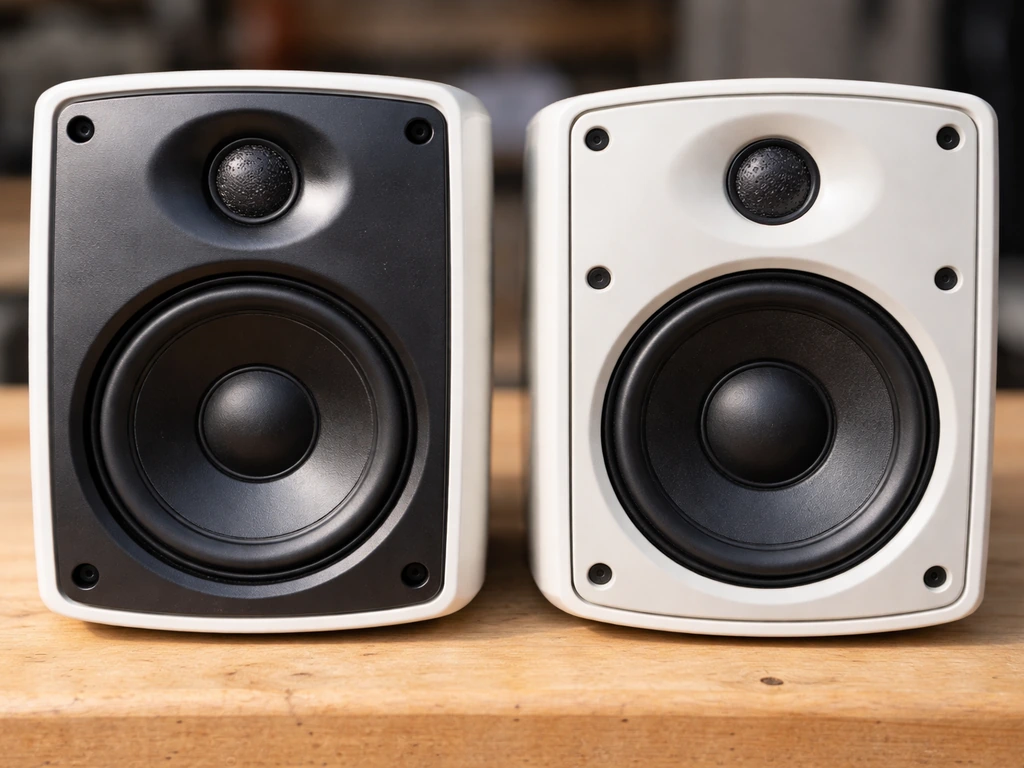
Polk Audio has a long line of outdoor speaker models, and the naming gets confusing fast. The Patio 200 is a 2-way indoor/outdoor speaker pair built around a 5-inch midwoofer. It's positioned as a weather-resistant option, meaning it's designed to handle the outdoors, but Polk markets it with "weather-resistant" language rather than formal all-weather certification. The Atrium 4 is part of Polk's dedicated Atrium outdoor series and uses a 4.5-inch driver. Polk officially calls the Atrium line "All-Weather Certified" and backs that up with real environmental endurance testing.
The naming confusion usually comes from two places. First, Polk sells multiple Atrium models, including the Atrium 4, Atrium 5, Atrium 6, and others, so buyers sometimes land on the wrong comparison. If you're specifically comparing the Polk Audio Atrium 5 vs Patio 200, the Atrium 5's positioning in the Atrium lineup is where the weather-readiness benefits show up.
If you've been cross-shopping the Atrium 5 or Atrium 6 alongside the Patio 200, those are genuinely different conversations because the driver sizes, power handling, and price tiers shift meaningfully between models. If you're comparing Polk Patio 200 vs Atrium 5, focus on how that model’s specs and intended all-weather build align with your patio’s exposure and coverage needs.
Second, some older listings and archive pages use slightly different product names or bundle configurations, so double-check that you're looking at the current Atrium 4 (the 4. 5-inch driver, 8-ohm model on Polk's live product page) rather than a discontinued variant.
Key outdoor specs that actually matter on your patio
| Spec | Patio 200 | Atrium 4 |
|---|---|---|
| Driver size | 5-inch midwoofer | 4.5-inch midwoofer |
| Impedance | 8 ohms | 8 ohms |
| Sensitivity | 90 dB | ~89 dB |
| Frequency response | 60 Hz – 25 kHz | Not officially published (typical ~55–20 kHz based on driver class) |
| Peak power handling | 100 W | 10–80 W continuous |
| Weather rating | Weather-resistant (sealed enclosure) | All-Weather Certified (ASTM/Mil-Std tested) |
| Enclosure type | Sealed, mineral-filled | All-weather certified enclosure |
| Mounting system | Rust-resistant bracket, stainless hardware | Speed-Lock mounting system |
The 1 dB sensitivity difference between 90 dB (Patio 200) and 89 dB (Atrium 4) is essentially inaudible in real listening conditions, so don't let that drive your decision. The bigger practical difference is the Patio 200's slightly larger driver giving it a bit more low-end body, and the Atrium 4's certified weather durability giving it a clear edge in harsh environments. Both run at 8 ohms, which is the most common impedance for outdoor receivers and amps, so compatibility is a non-issue for either speaker.
Sound quality and coverage for different patio sizes
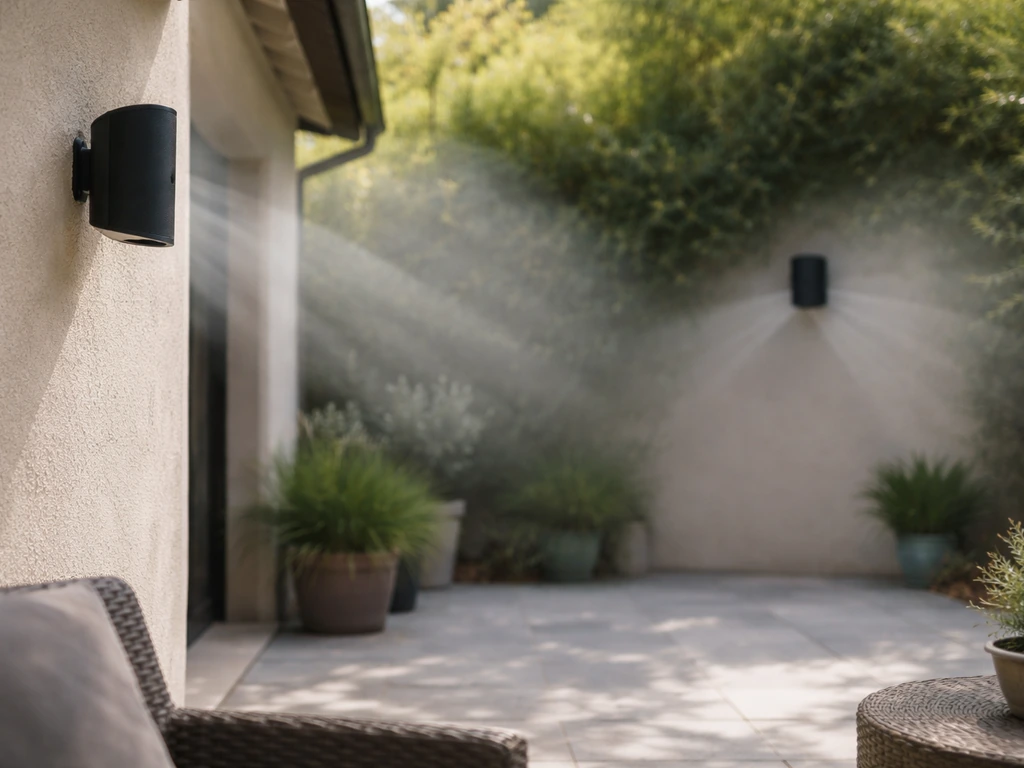
Outdoors, sound dissipates fast. You lose roughly 6 dB every time you double your distance from the speaker, which is why sensitivity and placement matter so much more on a patio than in a living room. The Patio 200's 90 dB sensitivity and 5-inch driver give it enough output to comfortably fill a mid-size patio, roughly 200 to 400 square feet, when you position the pair about 25 to 30 feet apart.
User reports back this up, with buyers consistently noting that the Patio 200 delivers "pretty good" sound at around 30-foot spacing without needing to push the volume uncomfortably high. AlaTest review snippets also reflect this kind of typical patio listening behavior, with users mentioning “pretty good” sound around 30 feet and bass that’s adequate without needing full volume.
The Atrium 4 with its 4.5-inch driver is best suited for smaller patio spaces, think a covered dining area, a side porch, or a deck up to around 150 to 200 square feet. It's not trying to fill a large open yard. If you have a big open patio or want background music that covers multiple seating areas, the Atrium 6 is worth a look instead. For a focused listening zone under a pergola or on a smaller deck, the Atrium 4 handles it well.
Bass extension is worth discussing honestly here. The Patio 200's spec sheet lists a low frequency limit of 60 Hz, and in practice the 5-inch driver starts rolling off before that point. Forum feedback from Patio 200 owners confirms the bass feels limited for music that relies heavily on deep low-end, like hip-hop or EDM. The Atrium 4 is in the same general territory given its smaller driver. Neither of these speakers is going to give you thumping bass outdoors without a subwoofer. If bass matters to you, budget for an outdoor-rated sub and treat these satellites as the mid/high-frequency workhorses they're designed to be.
Weather resistance: which speaker holds up where
This is where the Atrium 4 genuinely earns its price premium over the Patio 200, depending on your environment. Polk's Atrium series goes through a serious certification process: ASTM D5894 UV salt fog testing, Mil Standard 810 immersion testing, and Mil-Std 883 Method 1009. B&H’s listing for the Polk Audio Atrium 4 also confirms it is all-weather and specifically cites blank" rel="noopener noreferrer">ASTM D5894-UV salt fog testing and Mil-Std 810 immersion for weather-resistance support. 8 salt and corrosion testing. That's not marketing fluff. Those tests simulate years of coastal humidity, standing water exposure, and UV degradation. If you're in Florida, the Gulf Coast, coastal California, or anywhere with salt air and intense sun, the Atrium 4 is the more defensible choice.
The Patio 200 is not unprotected. Polk builds it with a sealed, mineral-filled enclosure, rust-resistant metal components, stainless-steel hardware, and an aluminum grille. It will hold up well on a covered patio or in a climate with mild winters and moderate humidity, like much of the Pacific Northwest or inland Texas. Where it may struggle over time is prolonged direct sun exposure (UV breaks down plastics and grille materials faster without formal UV certification) and environments with regular moisture contact or salt air. If your patio is fully covered and you're in a temperate climate, the Patio 200's weather-resistant build is likely more than enough and you'll never notice the difference.
| Patio Type / Climate | Better Choice | Reasoning |
|---|---|---|
| Covered patio, moderate climate (Midwest, inland) | Patio 200 | Sealed enclosure is sufficient; save money |
| Fully exposed patio, direct UV, no overhang | Atrium 4 | UV salt fog certification matters here |
| Coastal/humid environment (Florida, Gulf, Pacific coast) | Atrium 4 | Mil-Std corrosion and immersion testing is a real advantage |
| Covered pergola or screened porch, any climate | Either, slight edge to Patio 200 for value | Overhead cover reduces weather stress on both |
| Harsh sun + occasional rain (Arizona, Texas) | Atrium 4 | UV rating and sealed all-weather housing handle heat cycles better |
Amplifier and receiver compatibility
Good news: both speakers run at 8 ohms, which is the standard impedance that virtually every AV receiver, stereo amplifier, and dedicated outdoor amp is designed to handle. You won't need anything exotic or special. The Patio 200 handles up to 100 W peak, while the Atrium 4 is rated for 10 to 80 W continuous. In practical terms, both are comfortable with a receiver or amp putting out 20 to 80 watts per channel, which covers almost everything in the Sonos Amp, Denon, Yamaha, and Polk/Polk-compatible outdoor amp range.
One thing to be careful about: don't confuse peak power ratings with continuous power. The Patio 200's 100 W peak doesn't mean you need a 100 W amp. A 40 to 60 W per channel receiver drives either speaker to very comfortable outdoor listening levels. If you're running a long wire run from an interior amp to exterior speakers, keep the run reasonable (under 50 feet if you can) and you'll avoid any resistance-related power loss.
Installation: placement, mounting, and wiring
Where to put them for even coverage
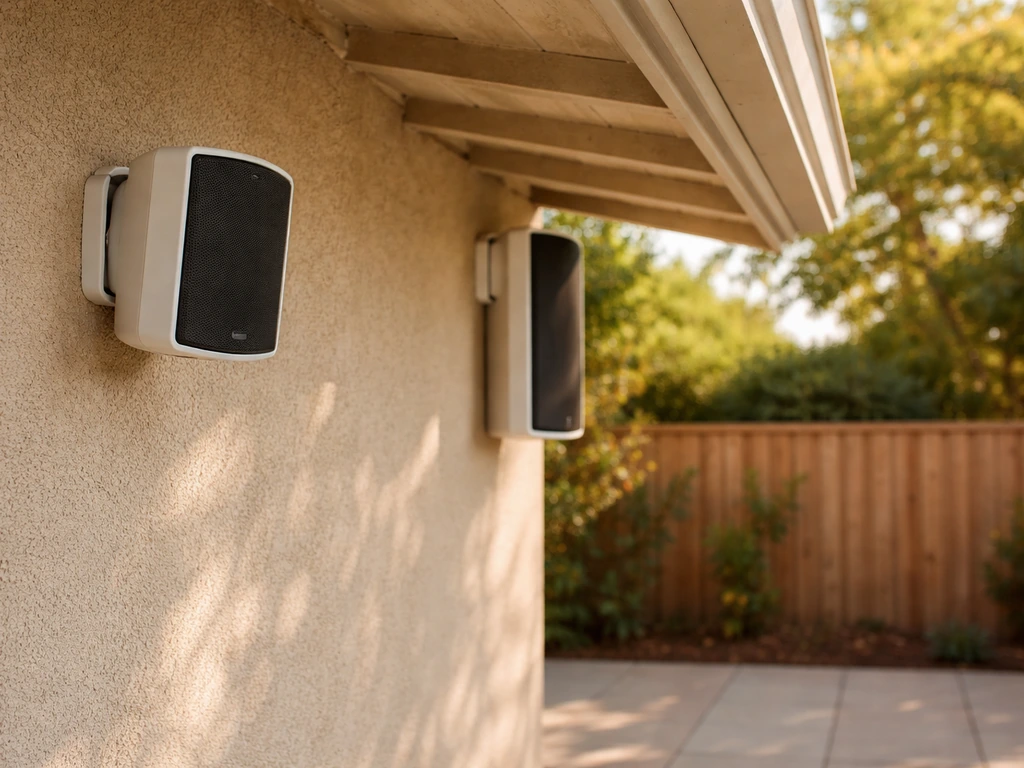
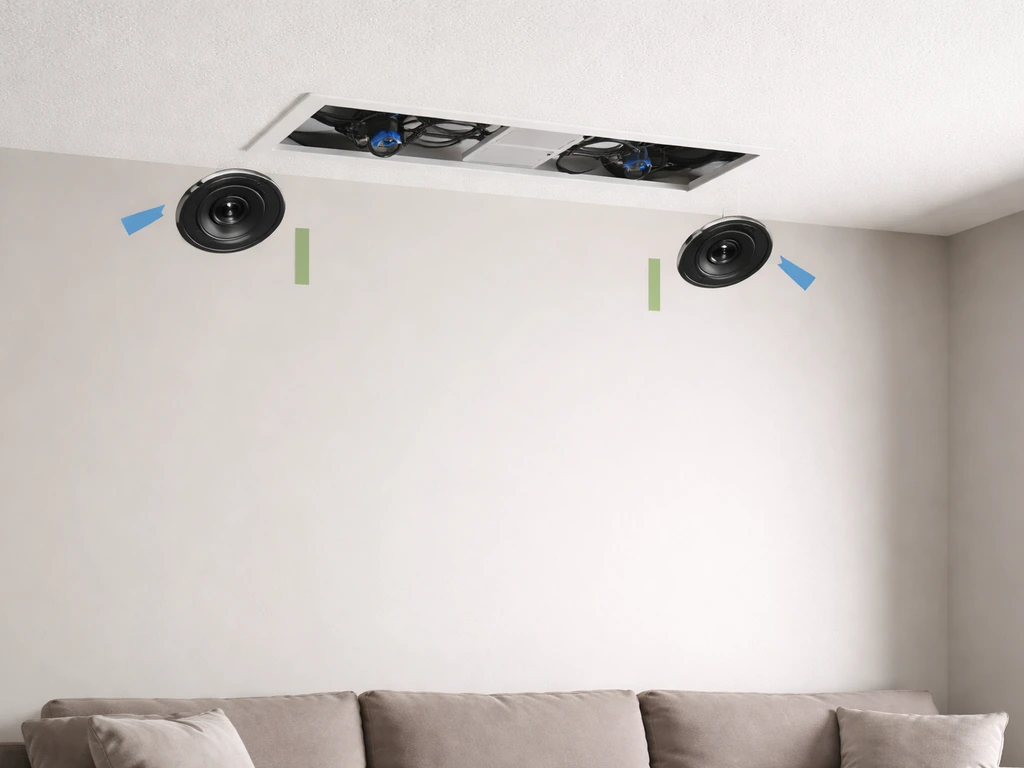
For either speaker, the goal is to aim the drivers toward the primary listening area at a downward angle, roughly 10 to 15 degrees. Mount them high enough (8 to 10 feet off the ground is typical) so the sound disperses across the seating zone rather than firing directly into someone's head at ear level. For a rectangular patio, place the pair in opposing corners or along the same eave facing the seating area.
The Atrium 4 manual specifically notes that mounting under an eave increases bass output because the boundary reinforcement from the nearby surface adds low-end energy. This is a useful trick for either speaker if you want a bit more warmth in your sound without adding a subwoofer.
Mounting hardware
The Atrium 4 uses Polk's Speed-Lock mounting system, which makes bracket positioning and angle adjustment pretty simple even for a first-time installer. The Patio 200 comes with a rust-resistant bracket and stainless-steel hardware. Both mounting systems are designed for wood siding, stucco, or masonry with the right anchors. If you're mounting into concrete or brick, pick up the appropriate masonry anchors before you start. Budget around 30 to 60 minutes per speaker for a clean install including wire routing.
Wire gauge and outdoor cable
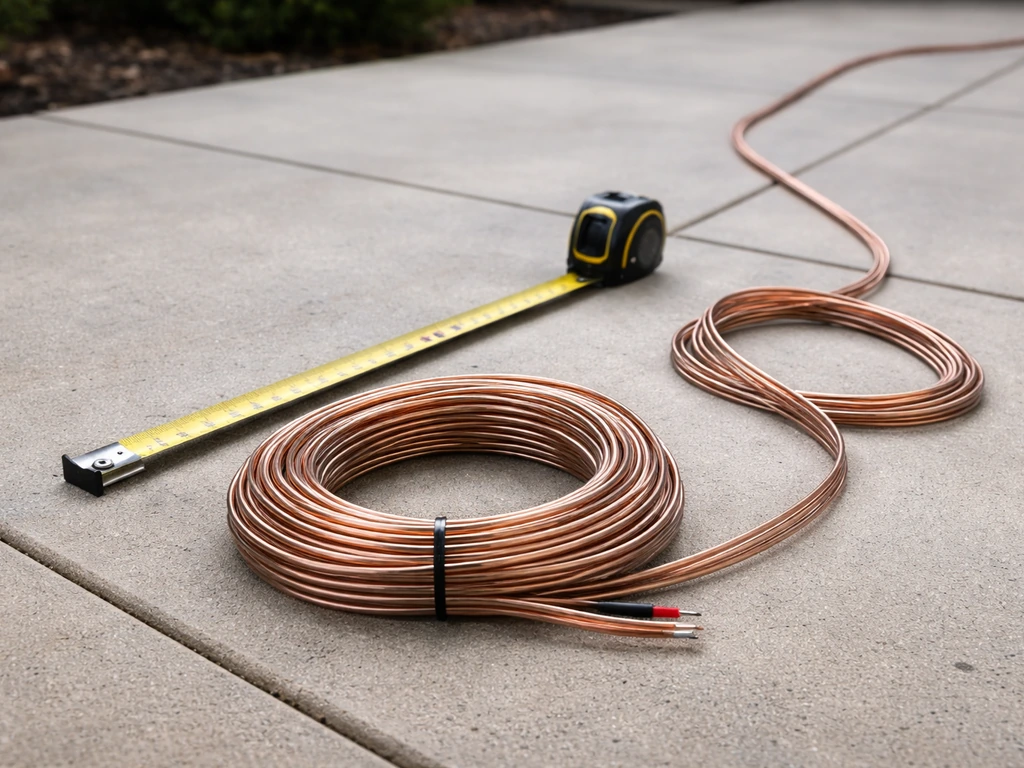
Both Polk's own guidance and third-party install recommendations point to the same wire sizing rules. For the Patio 200, Polk's documentation recommends 18-gauge wire for runs up to 20 feet, 16-gauge for runs between 20 and 50 feet, and 14-gauge for anything over 50 feet. The Atrium 4 manual similarly recommends 16-gauge weatherproof speaker wire for runs up to 50 feet. The pattern is consistent: shorter runs are forgiving, longer runs need heavier gauge to keep resistance low and preserve your amplifier's output. Always use outdoor-rated or direct-burial speaker wire, not standard indoor wire, even for covered patios. UV and moisture degrade standard wire insulation faster than you'd expect outdoors.
- Measure your wire run from the amp to each speaker location before buying wire, and add 10 to 15% for slack and routing.
- Pick the right gauge based on run length: 18 AWG under 20 ft, 16 AWG 20–50 ft, 14 AWG over 50 ft.
- Use weatherproof or direct-burial rated speaker wire for all outdoor runs.
- Route wire through conduit or behind trim wherever it's exposed to weather or direct sun.
- Label each wire run at both ends before you button everything up, because troubleshooting outdoors later is miserable.
Which one should you buy, and what to do next
Here's a plain decision framework. Buy the Patio 200 if you have a covered patio or pergola, you're in a climate without extreme UV exposure or salt air, and you want the most speaker for the money at this price point. Its 5-inch driver, 90 dB sensitivity, and sealed enclosure make it a strong performer for the money in protected environments. The slightly larger driver also gives it a bit more warmth and body compared to the Atrium 4 in side-by-side listening.
Buy the Atrium 4 if your patio is fully or partially exposed to the elements, you're near the coast or in a high-UV climate, or you just want the peace of mind that comes from Polk's formal all-weather certification. The Atrium 4's Speed-Lock mounting system is also genuinely easier to work with for DIY installs.
If you're in a harsh environment and the Atrium 4's smaller driver feels limiting for your space size, consider stepping up to the Atrium 6, which is a natural next comparison in this series. If you are comparing the Polk Patio 200 vs Atrium 6, the key difference is how much coverage you need and how exposed your patio is to UV and salt air. For a closer comparison, check out Polk Audio Patio 200 vs Atrium 6.
- Pick Patio 200 if: covered patio, moderate climate, value-focused budget, medium-sized space (up to ~400 sq ft).
- Pick Atrium 4 if: exposed patio, coastal or high-UV environment, smaller focused listening zone, or you prioritize certified weather durability.
- Pick neither if: you need to cover a large open yard or want real bass output without a subwoofer, in which case look at larger Atrium models or dedicated outdoor subwoofer/satellite systems.
Quick troubleshooting and upgrade paths
If you install either speaker and sound feels thin or lacks bass, try repositioning closer to a wall or under an eave before assuming the speaker is at fault. Boundary reinforcement adds surprising low-end warmth for free. If volume feels low at your listening distance, check your wire gauge and run length first. Excess resistance from undersized wire is a common silent killer of outdoor speaker performance.
If you outgrow the Patio 200's coverage or the Atrium 4's size after a season, adding a second pair is almost always easier than swapping to a different model entirely, since both speakers run at 8 ohms and most amps handle 4-ohm loads (two 8-ohm pairs wired in parallel) without complaint. Check your amp's minimum impedance spec before doing that, but it's a realistic upgrade path that keeps your existing hardware.
Whatever you choose, get the wire routing and mounting hardware sorted before the speakers arrive. The actual speaker connection takes 10 minutes. The prep work, measuring, drilling, routing conduit, is where installs stall out. Do that part first and the rest is easy.
FAQ
Do I need an outdoor-rated receiver or special amp to use Polk Audio Patio 200 or Atrium 4?
No special model is required since both are 8-ohm speakers. What matters is that your amp or receiver is suitable for the way you install it (some people place amps in weather-protected enclosures), and that speaker wire is outdoor-rated. If the amp will sit on a covered patio but near humidity, use proper ventilation and avoid leaving it uncovered.
How do I handle installation if I cannot mount the speakers under an eave or near a wall?
Without boundary reinforcement, both will sound a bit leaner. For the Patio 200 and Atrium 4, raise them higher and angle them toward the seating zone, then experiment with toe-in toward the primary listeners. If you want more warmth without a sub, place the speakers closer together (within your mounting constraints) to improve coverage overlap.
What happens if my patio distance is much larger than 30 feet, will I be disappointed with either speaker?
At longer distances, sound drops quickly, and small outdoor speakers start to feel thin. The simplest fix is adding a second pair rather than swapping models, since both are 8-ohm. Before adding speakers, confirm your amp can handle the lower impedance load (two pairs wired in parallel often create a 4-ohm total load).
Can I wire the Atrium 4 and Patio 200 together on the same channel?
Usually yes, because both are 8-ohm, but do not assume it will always be perfectly matched in loudness. Even with similar sensitivity, the different driver sizes can make blends uneven in the low end. If you mix them, try to keep listening positions consistent and consider using the same mounting height and angle for both pairs.
Is the Patio 200 still a good choice in a humid coastal area if the patio is covered?
It can be, but “covered” needs to mean truly protected from direct rainfall and salt spray. If wind-driven salt or regular condensation reaches the speakers, the Patio 200’s lack of formal all-weather UV and immersion certification becomes the risk factor. In that case, Atrium 4 is the safer buy, or add physical protection such as sheltered mounting locations.
What’s the practical difference between “weather-resistant” and “all-weather certified” here?
Weather-resistant typically means it will survive everyday exposure but may not be validated against extreme UV, salt fog, or immersion testing. All-weather certified implies Polk tested it under defined conditions intended to simulate long-term environmental stress. For buyers in high-UV or salt air, that testing matters more than nominal construction details.
Should I buy thicker speaker wire than the recommended gauge to be safe?
Often yes, but don’t go overboard without checking feasibility. Thicker wire (lower resistance) can slightly improve output over long runs, but it can be harder to route and may require larger conduit. If you already plan to exceed the upper recommended run length, upsizing to the next gauge up is a good approach.
Can I reduce volume issues by changing how I mount them instead of adding a sub?
Yes, sometimes. Mounting closer to a wall or under an eave increases low-end energy through boundary reinforcement. Also ensure correct downward angle (around 10 to 15 degrees) and mounting height (roughly 8 to 10 feet) so you are not sending sound into open sky or directly into heads.
Do the sensitivity and driver-size differences mean one will always be louder?
Not in real use. A 1 dB sensitivity difference is typically negligible, and outdoor performance is dominated by distance, placement, and reflections. The driver size can affect perceived body and mid-bass, but if you mount both correctly and use similar wire runs, loudness differences are usually smaller than people expect.
How do I choose between Patio 200 and Atrium 4 for a small, narrow porch?
For smaller spaces, Atrium 4 is often the better fit because it is designed for harsher conditions and is meant to cover tighter areas without pushing huge distances. If your porch is fully covered and not near salt air, Patio 200 can still work well, but you should prioritize correct aiming so the sound reaches the seating zone without excessive losses.
If bass is weak, what’s the best upgrade path for these two-speaker setups?
First, try relocation under an eave or closer to a boundary to recover some low-end. If bass still feels lacking, add an outdoor-rated subwoofer and keep the Patio 200 or Atrium 4 as satellites. This is usually more effective than swapping to a different small satellite model, since both speakers naturally roll off earlier outdoors.
Will adding a second pair ever be a problem with my amp or outdoor amp?
It can be if your amp’s minimum impedance is too high. Two 8-ohm pairs wired in parallel commonly result in a 4-ohm load. Check your amplifier’s minimum impedance specification before wiring another pair, and consider using impedance-matched outdoor amp channels if your system supports it.