
For most dog owners, bermudagrass is the best live grass for a patio or backyard setup because it handles heavy paw traffic, recovers fast from wear and urine spots, and thrives in warm, sunny conditions. If you're in a shadier or cooler climate, tall fescue and zoysia are your next best options. And if you're dealing with a hardscape patio (concrete, pavers, or a deck) rather than soil, high-quality artificial turf designed specifically for pets is the most practical and durable answer, as long as you install it with proper drainage and commit to a cleaning routine.
Best Patio Grass for Dogs: Live vs Artificial Guide

Elise Prescott
6 Jul 2026
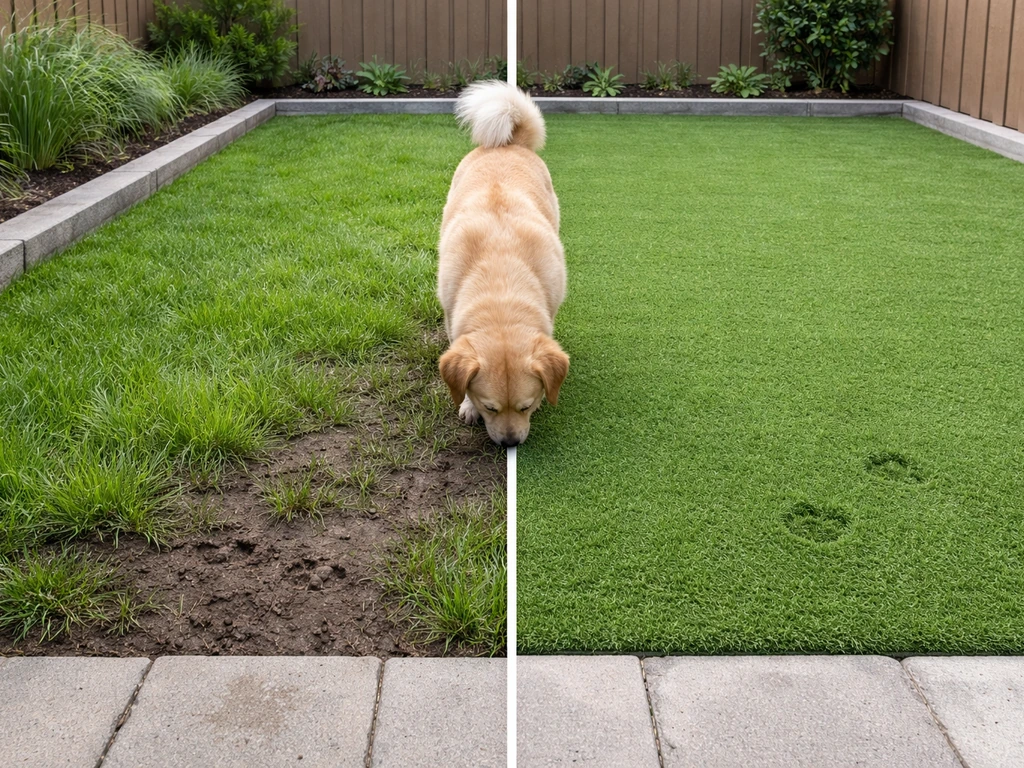
What dogs actually do to grass (and what your setup needs to handle)
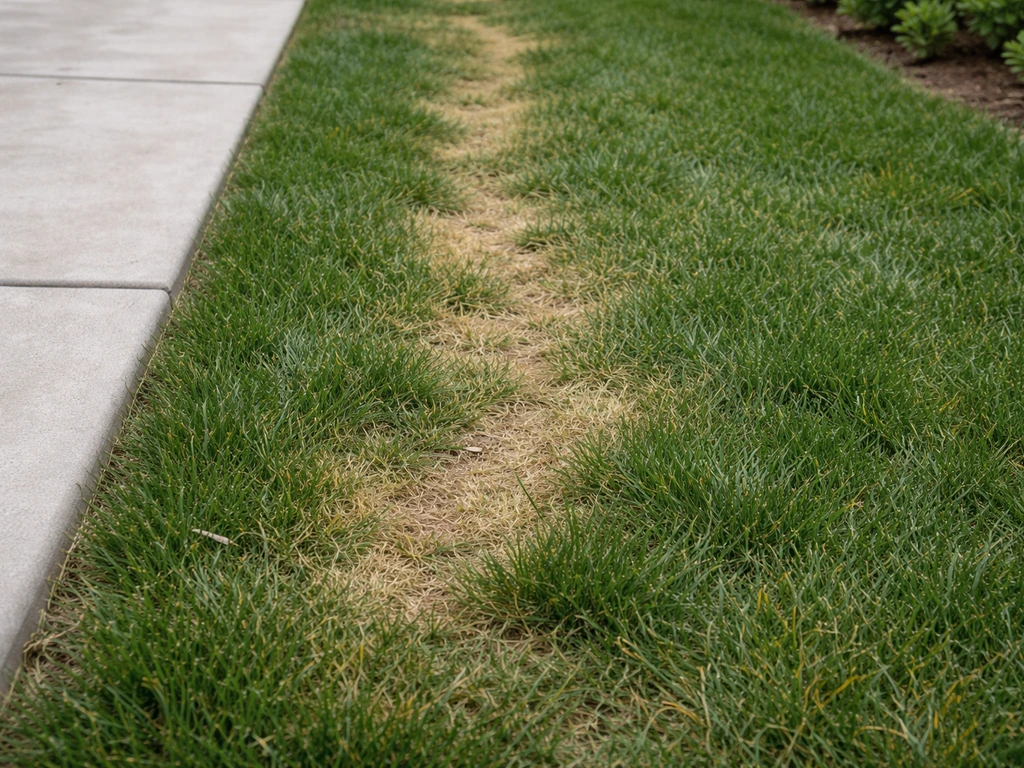
Before picking a grass type, it helps to understand what you're really up against. Dog urine is concentrated with nitrogen compounds and salts. In small doses, nitrogen is actually a fertilizer. But when a dog repeatedly urinates in the same spot, you get salt overload and localized burn, that's the yellow or dead patch you've probably already seen. It's not a specific species problem either. According to Purdue Extension, urine damage can occur on any turfgrass species in any climate. That means no grass variety is truly immune, and your strategy has to be about system design and management, not just picking the "right" cultivar.
Beyond urine, dogs dig, run patterns (the same path every day), and generally apply concentrated wear to specific zones. On a patio, that wear is often focused because the space is smaller than a full backyard. You also have to deal with drainage, either through the turf itself or off the patio edge. If water and urine pool, you get odor, mold risk, and accelerated turf degradation. So the requirements are: fast recovery from wear, good drainage, and a maintenance system that prevents salt buildup.
Dog-specific requirements: what to look for before you buy
When evaluating any grass option for a dog-heavy patio, run it through these criteria before you commit to anything.
- Wear tolerance and recovery speed: Dogs run the same routes every day. You need a grass that rebounds quickly or you'll have permanent dirt tracks within weeks.
- Drainage capacity: Urine and water need to move through or off the surface fast. Standing liquid accelerates both odor and turf damage.
- Urine salt resistance: No grass is immune, but some recover faster than others after a salt hit. Recovery speed is more useful than resistance.
- Mud control: After rain or irrigation, will your patio turn into a muddy mess your dog tracks inside? Drainage design matters here more than grass species.
- Chew and dig resistance: Live grass doesn't really resist digging, but dense-rooted varieties (bermuda, zoysia) are much harder for dogs to tear up. Artificial turf with a strong backing holds up better against persistent diggers.
- Safety: Avoid grass treated with persistent herbicides or pesticides if your dog grazes. For artificial turf, choose products explicitly labeled as lead-free and non-toxic.
Live grass vs. artificial turf: the honest comparison
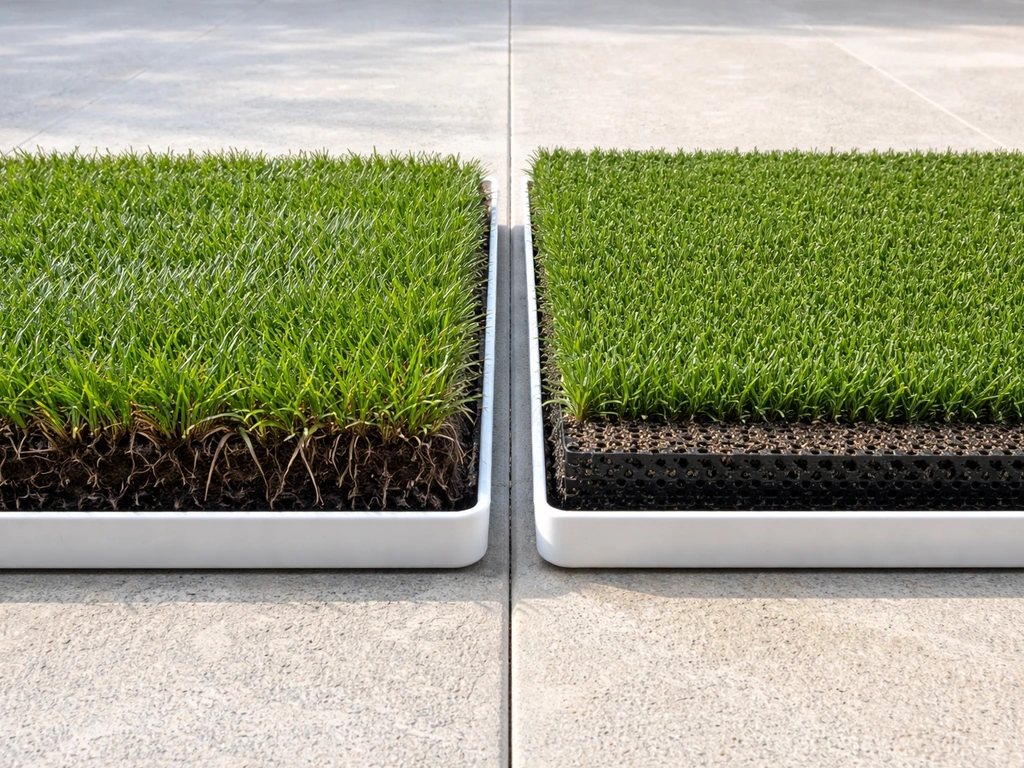
This is the decision most people struggle with, and the answer genuinely depends on your setup. If you have soil access and a warm, sunny climate, live grass can absolutely work and it offers a natural feel, cooler surface temperatures, and lower upfront cost. If you're putting grass on a concrete patio, a deck, or a rooftop, artificial turf is almost always the better fit because it can be installed directly over hardscape with a proper drainage layer.
| Factor | Live Grass | Artificial Turf (Pet-Grade) |
|---|---|---|
| Upfront cost | $0.10–$0.65/sq ft (seed) or $0.30–$0.80/sq ft (sod) | $3–$8/sq ft installed (DIY saves labor) |
| Urine damage | Yellowing/dead spots possible; recoverable with water and overseeding | No yellowing; odor builds up in infill if not cleaned regularly |
| Recovery from wear | Fast for bermuda/zoysia (2–4 weeks in season); slow for fescue | No recovery needed; backing holds shape |
| Surface temperature | Stays cooler; evaporative cooling effect | Can get very hot in direct sun (130–150°F on dark turf) |
| Drainage | Soil absorbs naturally; needs slope for patio installs | Requires perforated base or drainage layer over hardscape |
| Maintenance | Watering, mowing, fertilizing, overseeding | Rinsing, brushing, enzyme cleaner for odor, infill refresh every 2–3 years |
| Lifespan | Ongoing (seasonal replanting for cool-season grass) | 8–15 years depending on quality and UV exposure |
| Best for | Sunny backyard with soil, mild to warm climate | Hardscape patios, heavy dog traffic, low-maintenance preference |
My recommendation: if you have real soil, start with bermudagrass or tall fescue (depending on your region) and manage it correctly. If you're on concrete or pavers, go straight to pet-grade artificial turf with a built-in drainage backing. Don't try to compromise by laying sod over a patio slab without a proper base, you'll have a waterlogged, dead mess within a season.
For a detailed look at the artificial turf side of this decision, the guide on best fake grass for patio goes deep on pile heights, backing types, and what to look for in pet-specific products. If you want to compare options side by side, check the guide on the best fake grass for patio for pile height, backing, and pet-specific features.
Best grass types by climate and sun exposure
Climate is the single biggest factor in which live grass will actually work for you. Planting bermudagrass in Minnesota is a waste of money. Planting Kentucky bluegrass in Phoenix is setting yourself up for failure. Here's a practical breakdown.
Hot and sunny (Southeast, Southwest, Texas, Gulf Coast)
Bermudagrass is the top pick here. [NC State Extension describes it as widely used on athletic fields specifically because of its high wear tolerance and rapid recuperative potential. ](https://www. turffiles.
ncsu. edu/grasses/bermudagrass) It spreads aggressively via stolons and rhizomes, meaning bare spots fill in fast during the growing season. It needs full sun (at least 6 hours direct) and goes dormant and turns brown in winter in cooler parts of its range, which some owners don't like aesthetically. Zoysia is a great second choice if you want a denser, slower-growing lawn that looks more polished.
It's more shade-tolerant than bermuda, slightly softer underfoot, and still recovers well from dog traffic. Centipede and St. Augustine both handle heat and humidity but have lower wear tolerance, so they're better suited to lighter dog use.
Transition zone (Mid-Atlantic, Midwest, Carolinas, Northern Texas)
This is the hardest climate zone to work in. Bermudagrass might survive but goes dormant long stretches. Cool-season grasses like tall fescue struggle through summer heat. Tall fescue is still the most practical choice here because it's the toughest cool-season option under dog traffic and it has decent drought tolerance compared to bluegrass or ryegrass. Look for improved tall fescue blends labeled for high traffic, varieties like 'Bullseye,' 'Rebel Supreme,' or blends sold specifically for athletic or pet use. Overseeding in fall every year is often necessary to keep density up after a season of dog wear.
Cool and cold climates (Pacific Northwest, Northern Midwest, Mountain West)
Tall fescue blends and perennial ryegrass are your primary options. Perennial ryegrass establishes faster than fescue and handles moderate traffic, but it doesn't tolerate drought well and thins out under consistent dog pressure. A blend of 70% tall fescue and 30% perennial ryegrass gives you fast establishment and solid durability. Kentucky bluegrass is beautiful but slow to recover from urine damage and heavy traffic, so use it only as a minor component in a blend rather than a standalone. In very cold climates (Minnesota, Colorado mountains, Montana), artificial turf actually becomes more appealing because live grass has such a short growing season that recovery from dog damage barely happens before dormancy sets in.
Shady patios
Shade is a serious challenge for any grass under dog traffic. Bermudagrass essentially gives up under shade. Your best options are fine fescue blends (creeping red, chewings, or hard fescue) for cool climates, or zoysia for warm climates. Zoysia tolerates partial shade better than bermuda but still needs at least 3–4 hours of direct sun. If your patio is mostly shaded, this is honestly one of the strongest cases for switching to pet-grade artificial turf, which performs consistently regardless of light levels.
How to install grass on a patio (base prep, drainage, and weed control)
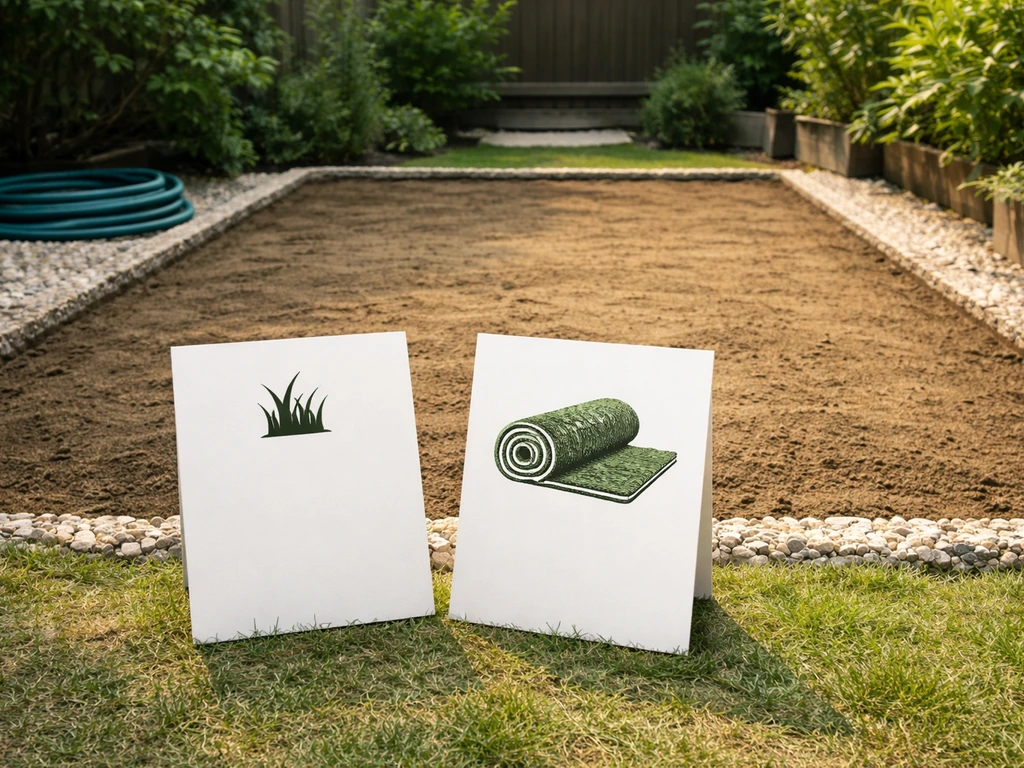
Installation is where most homeowners either set themselves up for long-term success or create a problem they'll spend years fighting. Whether you're installing live sod or artificial turf, the substrate and drainage work matters more than the grass product itself.
Installing live sod or seeding in a patio-adjacent area
If your patio connects to a lawn area rather than sitting entirely on hardscape, you have soil to work with. Before laying sod or seeding, kill any existing weeds (glyphosate works, or solarize the area for 4–6 weeks under clear plastic in summer). Till the top 4–6 inches, work in compost if your soil is compacted or sandy, and grade so water drains away from the house at a minimum 1–2% slope.
A weed barrier fabric under sod is generally not recommended for live grass because it restricts root development. For sod, lay it tight with staggered seams, tamp it down firmly to eliminate air pockets, and water daily for the first two weeks. Keep dogs off for at least 3–4 weeks while roots establish.
Installing artificial turf over hardscape (concrete, pavers, or compacted base)
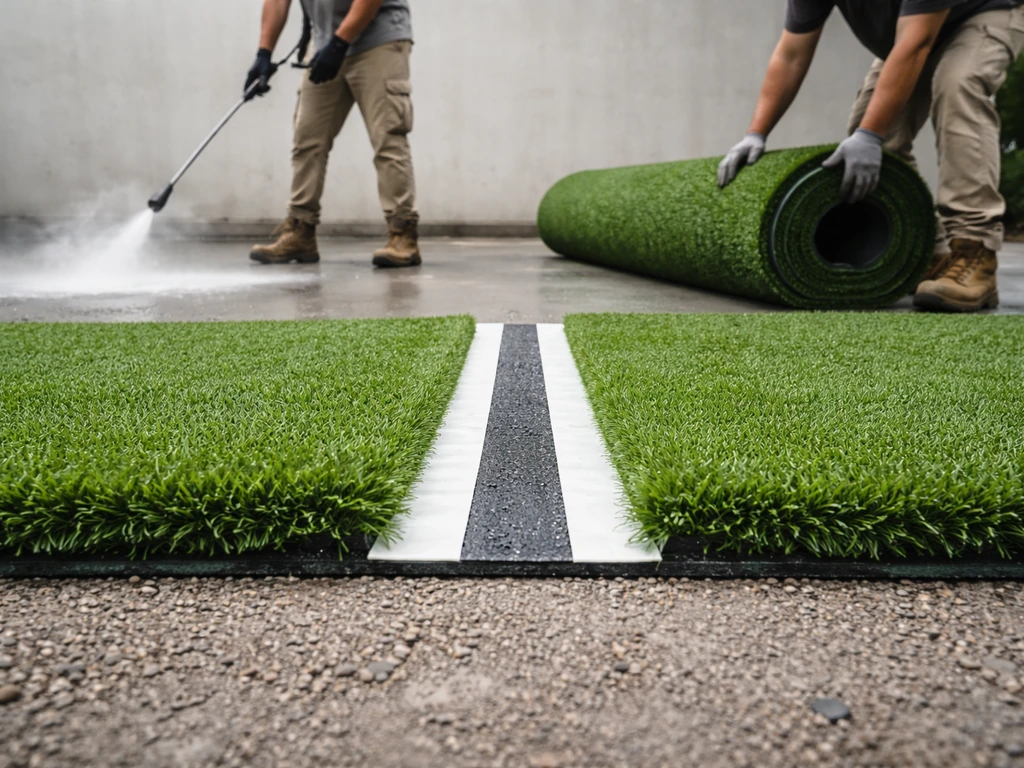
- Clean the surface thoroughly. Pressure wash concrete or pavers and let dry completely. Any existing algae or mold should be treated with a diluted bleach solution first.
- Install a drainage layer if needed. On flat or low-slope concrete, a 3/8-inch crushed aggregate base or a dedicated drainage mat (like FieldTurf Drain or similar products) allows urine and water to pass through and run off the edge rather than pooling.
- Lay a weed barrier. On soil or decomposed granite bases, use a commercial-grade geotextile fabric to prevent weed intrusion. On solid concrete, this step can be skipped.
- Roll out and cut the turf. Use a sharp utility knife and measure twice. Seams should run in the same direction as the pile (blade direction) and be joined with turf seaming tape and adhesive.
- Secure the edges. On concrete, use landscape adhesive or turf glue along the perimeter. On soil or DG, galvanized nails or staples every 6 inches work well. Add aluminum or plastic bender board for clean edge definition.
- Apply infill. For pet turf, use a zeolite-based infill (like ZeoFill) rather than crumb rubber. Zeolite is specifically designed to absorb ammonia and reduce odor. Apply at the manufacturer's recommended rate (typically 1–2 lbs per square foot) and brush into the pile with a stiff-bristle broom.
- Brush the pile. Use a power broom or stiff brush to stand the fibers upright and distribute infill evenly.
If you're not comfortable with any of these steps, especially drainage design on an existing patio, this is a good place to get a quote from a turf installer. Many will do the install for $5–$9 per square foot total, which includes materials and labor. For a dedicated dog potty area on a patio, a smaller pre-made solution can work as a starter option before committing to a full install. If you want the best patio dog potty setup, focus on a dedicated, easy-to-clean zone with dependable drainage and a turf or surface that handles repeated urine without odor.
Maintenance plan for a dog-friendly lawn or turf area
Live grass maintenance
The single most effective thing you can do to prevent urine damage on live grass is water. CSU Extension is clear on this: diluting urine salts with adequate irrigation significantly reduces turf burn, and drought conditions make salt injury dramatically worse. If you can train your dog to use one specific area and you hose that area down after each visit, you'll eliminate most urine spot problems before they start. Beyond that, mow at the right height for your species (bermuda at 1–2 inches, tall fescue at 3–4 inches), fertilize conservatively so you're not adding extra nitrogen on top of what the dog is already depositing, and overseed any thin areas each fall (cool-season) or late spring (warm-season).
Artificial turf maintenance
Artificial turf requires less routine work than live grass but it is not zero-maintenance with dogs. The primary enemy is ammonia buildup from urine in the infill layer. A basic routine: rinse the turf with a hose at least once a week (more often in summer or hot climates), apply a diluted enzyme cleaner like Simple Green Outdoor Odor Eliminator or a turf-specific product monthly, and do a deep clean with a garden hose and enzyme spray quarterly.
Brush the pile every few weeks with a stiff nylon or polypropylene brush to keep fibers upright and redistribute infill. If you used zeolite infill, it benefits from occasional watering to recharge its ammonia-absorption capacity. Expect to replenish or replace infill every 2–3 years depending on dog use intensity.
Fixing common problems: urine spots, bald patches, and odor
Urine spots on live grass
If you already have yellow or dead spots, the fix is straightforward: flush the area with water (a slow, deep soak to push salts down past the root zone), rake out dead material, topdress with a thin layer of compost, and overseed with the same species or a quick-establishing perennial ryegrass blend. In active growing season, bermudagrass can fill back in on its own without reseeding if you give it 2–4 weeks. Some homeowners use gypsum (calcium sulfate) as a soil amendment to help displace sodium salts. It's inexpensive and worth trying, though it's not a substitute for flushing.
Bald spots and worn paths on live grass
Worn paths are a dog traffic problem, not a urine problem. The fix is to break the pattern if possible (temporary fencing or barriers can redirect a dog's route while grass recovers) and use a fast-establishing grass for the repair. Perennial ryegrass germinates in 5–7 days and can buy you time while slower species like tall fescue or bermuda fill back in. Sod plugs are even faster than seeding for spot repairs in warm-season lawns.
Odor on artificial turf
Odor is the most common complaint with pet turf and it's almost always a drainage or infill problem. If urine isn't draining off properly, it pools in the backing and infill layer and creates persistent ammonia smell. Check that your drainage slope is working and that the infill isn't compacted. A one-time deep clean with a commercial enzyme product (not just a deodorizer, but a product that actually breaks down organic compounds) can reset things. If the smell returns within days of cleaning, your infill is likely saturated and needs replacement.
Traction and tracking mud
Live grass with good drainage rarely causes traction issues for dogs. If you're getting mud near the patio edge, it usually means the area is compacted and not draining well. Aerating and topdressing with coarse sand can help. On artificial turf, traction is generally excellent and there's no mud problem at all, which is one of the most underappreciated benefits for owners who are tired of cleaning paw prints off floors.
Cost, durability, and how to pick the right option right now
Here's the practical breakdown to help you decide today. If your budget is under $500 for a modest patio-adjacent lawn area, live grass is the clear winner on upfront cost. Bermudagrass sod typically runs $0.30–$0.80 per square foot, and seeding is even cheaper. If you're willing to invest $1,500–$5,000+ for a 200–500 sq ft patio area and you want a 10-year solution that doesn't require mowing or seasonal replanting, pet-grade artificial turf is worth every penny. The math changes the longer you hold the property. If you’re ready to switch, the next step is finding reliable retailers with pet-grade options, including where to buy fake grass for a patio.
| Option | Upfront Cost (200 sq ft) | Annual Maintenance Cost (est.) | Realistic Lifespan | Best Use Case |
|---|---|---|---|---|
| Bermudagrass sod | $60–$160 | $50–$150 (water, fert) | Ongoing (warm season) | Sunny, warm climate; soil access |
| Tall fescue sod/seed | $80–$200 | $80–$200 (water, overseed) | Ongoing (cool season) | Transition/cool zones; partial shade |
| Zoysia sod | $150–$400 | $40–$120 (water, fert) | Ongoing (warm season) | Warm climate; partial shade; lower traffic |
| Pet-grade artificial turf (DIY) | $600–$1,200 | $30–$80 (cleaner, infill refresh) | 10–15 years | Hardscape patios; heavy dog use; low maintenance |
| Pet-grade artificial turf (pro install) | $1,000–$1,800 | $30–$80 (cleaner, infill refresh) | 10–15 years | Same as above; complex installs or drainage work |
When talking to a contractor, ask specifically: what drainage solution are you including for pet use, what infill product do you recommend and why, and what's the pile height and face weight of the turf (look for at least 50 oz face weight for heavy dog use). A contractor who skips the drainage conversation is a red flag.
For live grass, ask about pet-safe pre-emergent herbicides and whether their fertilization program accounts for the nitrogen your dogs are already adding. Over-fertilizing a dog lawn is a common mistake that makes urine damage worse.
Quick decision checklist
- Do you have soil access and at least 4–6 hours of direct sun? Yes: live grass is viable. No: go artificial turf.
- Are you in a warm climate (Zone 7 or warmer)? Yes: start with bermudagrass or zoysia. No: use a performance tall fescue blend.
- Do you have one or more large, active dogs? More than one large dog on a small patio area tilts the decision toward artificial turf regardless of climate.
- Is mud tracking a major problem? Artificial turf eliminates it entirely.
- Is your patio surface concrete or pavers? Artificial turf with a drainage layer is the only practical choice.
- Are you in a very cold climate with a short growing season? Artificial turf is worth the higher upfront cost because live grass recovery is too slow.
- Is upfront cost the binding constraint? Start with sod and a solid irrigation/rinse routine, and revisit turf later.
Whichever direction you go, the secret is in the system: good drainage, a consistent rinse-after-use habit, and choosing a product matched to your actual climate and sun conditions rather than just whatever looks best in a photo. If you are wondering where to buy patio turf for dogs, look for reputable local garden centers or flooring and landscaping suppliers that stock pet-grade options patio grass. Get those three things right and your patio grass will hold up to your dog's daily routine for years.
FAQ
Is bermudagrass always the best choice for dogs, even if my patio gets some shade?
Not necessarily. Even the most wear-tolerant grass can burn if urine keeps collecting in one area due to poor runoff. The “best patio grass for dogs” usually comes down to your ability to get water through and away from the dog zone (slope, drainage layer, or a rinse routine), not just the grass species.
If I choose a warm-season grass like bermudagrass, how do I handle winter dormancy on a dog patio?
Yes, but timing matters. Expect bermuda to stay dormant and thin out visually in winter in cooler regions, so use an overseeding plan (typically fall for cool-season grasses, late spring for warm-season touch-ups) to maintain density during the period recovery is slow.
Can I put sod over an existing concrete patio slab to make it easier for my dog?
Choose the option that matches your physical base. Laying sod or seed directly over a slab without a proper soil build and drainage layer traps salts and water, leading to dead zones and odor. If you have only hardscape, pet-grade turf with a drainage backing and correct substrate is usually the safer long-term route.
What should I do if I cannot rinse the grass after every dog potty break?
Aim for consistency. If you cannot rinse at least daily (or after frequent visits), live grass will struggle more with salt buildup. A practical workaround is to train your dog to a smaller dedicated potty patch and hose that patch, not the whole patio, to reduce total water demand.
Does mowing height affect urine damage on dog turf?
For live grass, correct mowing height helps both root health and recovery after wear. If you cut too short, the turf gets stressed and recovers slower, which increases the chance of yellowing from repeated urine exposure.
Are grass blends better than planting one type for a dog patio?
Mixing grasses can help you hedge risk, but it can also complicate recovery if one component fails your conditions (sun, heat, or shade). Use a blend only when the species all fit your climate and maintenance schedule, otherwise you may end up patchy areas that dogs repeatedly target.
My pet turf smells again soon after I clean it, what does that usually mean?
On pet turf, ammonia smell is often a sign the infill layer is holding urine rather than draining and releasing it to rinsing. If odors return within days after enzyme cleaning, the infill is likely saturated and you may need infill replacement rather than repeated “deodorizing.”
If my turf uses zeolite infill, how often should I water it for dogs?
Infill type affects maintenance. If you used zeolite infill, occasional watering helps “recharge” its odor and ammonia-absorption capacity. Without that periodic moisture, you can get stronger smell buildup and more frequent deep-clean cycles.
Will gypsum stop urine burn on live grass?
Yes, but use it as part of the soil system. Gypsum can help with displacing sodium in some cases, but it does not replace flushing and irrigation. If you still have pooling or repeated concentrated spots, gypsum alone will not prevent turf burn.
How do I repair dead patches without my dog turning them back into a repeat potty spot?
Do it early and correctly. Spot repairs usually work best when the turf is actively growing, using fast-establishing seed or sod plugs to close bare spots quickly, since dogs prefer to reuse worn paths if they remain open.
If my dog tracks mud on live grass near the patio, is that a grass choice problem or a drainage problem?
Traction is usually fine on properly drained live grass. If you see frequent mud near the patio edge, that points to compaction or drainage failure, not a “bad grass” problem. Aeration and coarse topdressing can improve water movement and reduce mud.
What questions should I ask a turf installer to make sure it is truly dog-ready?
For contractor vetting, ask specifically about the drainage system for pet use, the infill product and why, and turf specs like pile height and face weight. Skipping drainage, offering generic infill, or refusing to discuss pet-related design details are common warning signs.
Should I fertilize a dog patio lawn more often to help it recover?
Watch fertilizer plans closely. If you apply extra nitrogen on top of dog urine, you can worsen salt injury and speed up yellowing. The safest approach is conservative fertilization tied to the turf type and your local schedule.