
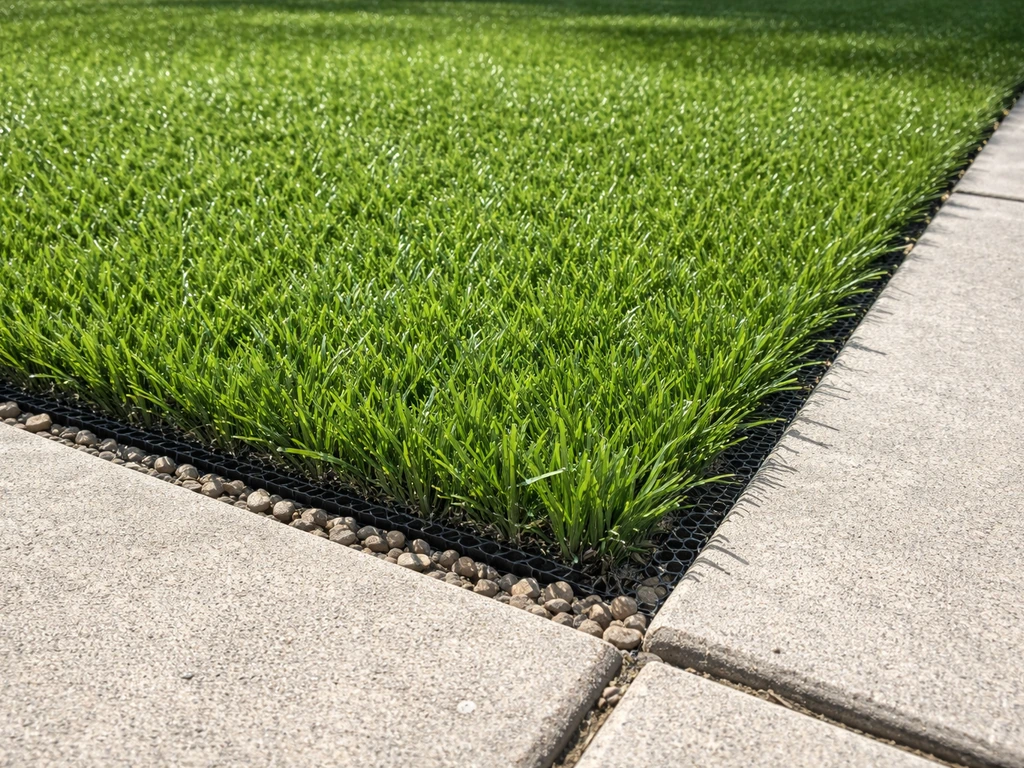
For most patios, a mid-pile artificial turf with a face weight of 50–80 oz/sq. yd., a pile height of 1.25–2 inches, a fully perforated backing, and ASTM F1551-rated drainage of at least 30 inches per hour is the sweet spot in 2026. If you have pets, bump drainage up to 400+ inches per hour and drop pile height to 1–1.5 inches. If you want a lush, decorative look and foot traffic is light, go up to 2 inches and 70–80 oz face weight. The product matters, but so does the base you put it on, and plenty of people buy great turf and ruin it with a bad install. Penn State’s Department of Plant Science also notes that there are currently no standard specifications for drainage gravel beneath the backing in infill systems, which helps explain why sub-base expectations can vary blank" rel="noopener noreferrer">why a bad install can ruin even great turf. If you want to get it right the first time, you can also compare prices and options in our guide on where to buy patio turf buy great turf.
Best Fake Grass for Patio: Top Picks and Buying Guide

What 'best' actually means for patio fake grass
Best is not one product. It's the right combination of pile specs, backing performance, and system build for your specific patio. A decorative courtyard in San Diego has completely different needs than a backyard patio in Minnesota that freezes solid every winter, or a Houston slab that bakes in 100-degree heat with a dog running on it all day.
The Synthetic Turf Council frames this clearly: synthetic turf performance is system-based, meaning the essential elements of the full installation (backing, drainage base, seaming, edging, and infill) determine how the product actually performs, not the pile alone. That's the right way to think about it. A $4/sq. ft. turf on a properly drained, compacted base with a good weed barrier will outperform a $9/sq. ft. premium product thrown directly onto a poorly graded concrete patio.
So when you're comparing products, you're really asking: does this turf's drainage, fiber durability, UV resistance, and pile weight match the actual use this patio will see? And then, can I (or a contractor) install the right base system to back it up?
Key specs to compare before you buy
Pile height
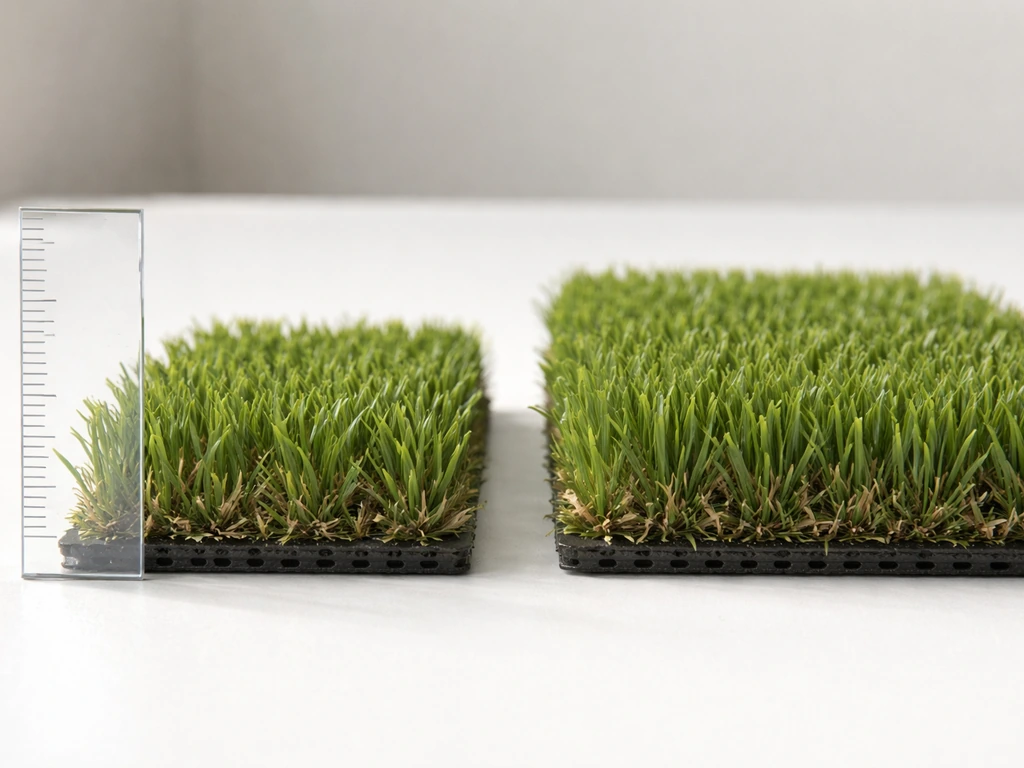
Pile height is measured by ASTM D5823 and refers to the length of the fiber blades above the backing. For patios, 1–1.5 inches is practical and pet-friendly. It drains well, stays cleaner, and doesn't mat down as quickly under foot traffic. Heights of 1.75–2 inches look more realistic and lush, which matters if your patio is highly visible, but they tend to flatten more over time under chairs, tables, and heavy use. Anything above 2 inches is really more of a landscape aesthetic product and not ideal for a hard-surface patio install.
Face weight and density
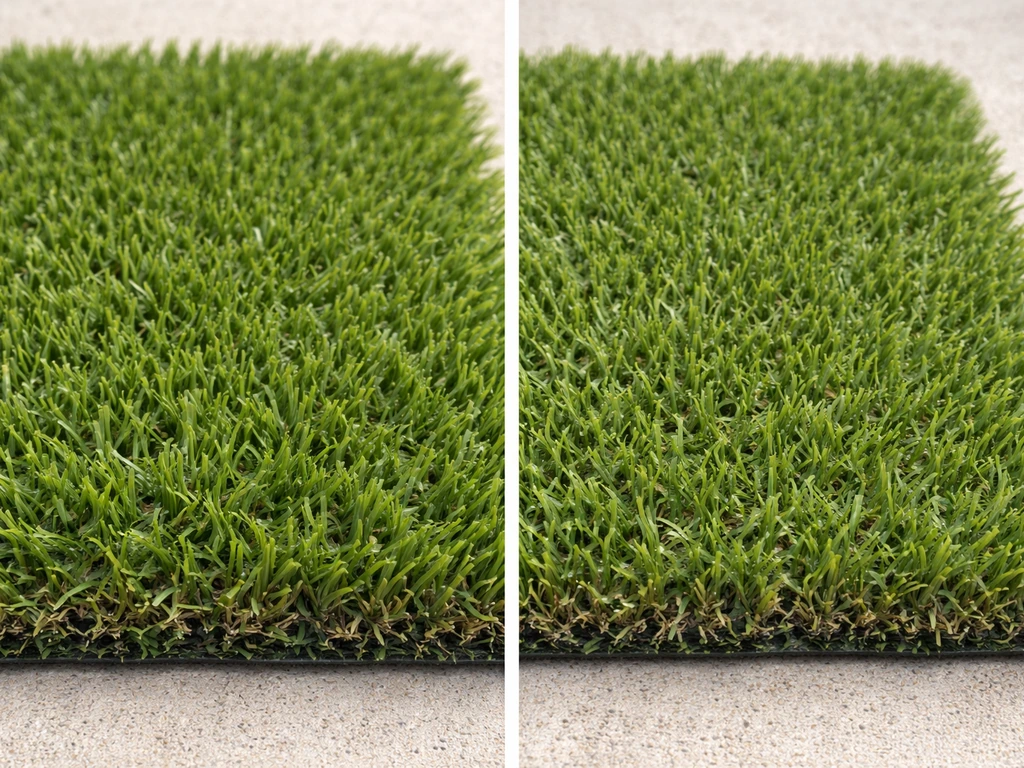
Face weight is the weight of the fiber (not the backing) per square yard, measured in ounces. Density refers to how many tufts are packed into the surface, which can be measured by tufts per unit area (ISO 1763) or mass per unit area (ISO 8543). For a patio, 40–50 oz is budget-friendly and serviceable for light use. 60–80 oz is the premium zone: firmer underfoot, more realistic, and more resistant to matting. The AGL Saratoga 80, for example, lists 80 oz/sq. yd. with 100% PE monofilament construction, which is a high-density build that holds up well under chairs and furniture. Higher face weight also generally means better tuft bind scores under ASTM D1335 testing, which tells you how hard it is to pull a tuft out of the backing under repeated stress.
Drainage and backing
This is the spec that trips people up most. Drainage rate is tested under ASTM F1551 (which covers comprehensive characterization of synthetic turf systems, including water permeability) and expressed in inches per hour. For a standard decorative patio with no pets, 30+ inches per hour is fine. The AGL Saratoga 80 lists around 30 inches per hour, which handles heavy rain without pooling. For pet areas, you want 400–1,000+ inches per hour, meaning a fully perforated backing with evenly distributed holes rather than a solid or lightly perforated sheet. Products like PETMAXX 75 and SYNLawn's SYNPro PET are specifically engineered for this, with the SYNPro PET claiming over 1,000 inches per hour. The difference matters enormously for odor control: urine needs to exit vertically and fast.
Infill: do you need it on a patio?
Infill (usually silica sand, crumb rubber, or a hybrid) adds weight, helps blades stand upright, and cushions underfoot. On a patio install, it's often skipped for low-traffic decorative use, and that's fine. But for heavy-foot-traffic areas or pet runs, a light layer of silica sand infill (about 1–2 lbs per sq. ft.) improves blade recovery and extends the life of the turf. Avoid crumb rubber on residential patios in hot climates because it absorbs and radiates heat aggressively. Some premium turf comes with heat-reducing infill options or coated fibers that stay cooler, which is worth considering in Phoenix, Austin, or anywhere the patio sits in direct afternoon sun.
Best picks by patio use case
| Use Case | Recommended Pile Height | Face Weight Target | Drainage Target | Example Products |
|---|---|---|---|---|
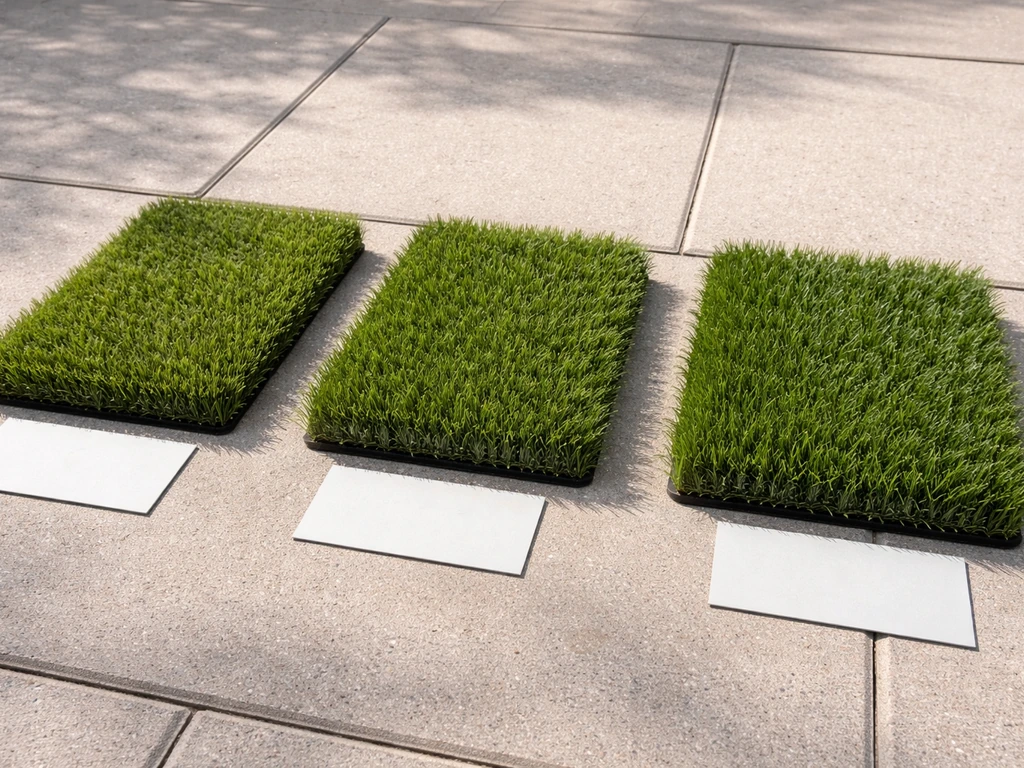
| Budget / light decorative use | 1.5–1.75 in | 40–50 oz/sq. yd. | 30+ in/hr | GV Lush (2 in, 15-yr warranty), entry-level PE turf rolls |
| Heavy foot traffic / furniture | 1–1.5 in | 60–80 oz/sq. yd. | 30–100 in/hr | AGL Saratoga 80 (80 oz, PE monofilament) |
| Pets (dogs/cats) | 1–1.5 in | 50–70 oz/sq. yd. | 400–1,000+ in/hr | PETMAXX 75 (1.875 in, 400–1,000 in/hr), SYNPro PET (1 in, >1,000 in/hr) |
| High-visibility / premium look | 1.75–2 in | 65–80 oz/sq. yd. | 30+ in/hr | AGL Saratoga 80, GV Lush, multi-tone PE/PP blends |
| DIY budget install | 1.25–1.5 in | 40–55 oz/sq. yd. | 30+ in/hr | Big-box store PE turf rolls, pre-cut pieces |
| Professional premium install | 1.5–2 in | 65–80 oz/sq. yd. | 100–1,000+ in/hr | SYNLawn SYNPro line, AGL, custom-specified systems |
If you have dogs and want the patio to also look good, the PETMAXX 75 at roughly 1.875 inches is a solid middle-ground pick: it gets you the pet drainage performance while still looking lush. If the pet area is separate from your main entertaining space, consider using a shorter, ultra-permeable turf there and a more decorative product in the visible seating zone. That's actually a common setup, and it's worth knowing there are great options specifically for patio dog potty areas if that's part of your plan. If you are choosing for the best patio dog potty setup, prioritize high drainage, pet-safe backing, and a base that won’t trap urine patio dog potty areas.
Climate and sun exposure: what actually changes by region
Heat is the biggest concern in the South and Southwest. Dark-colored artificial turf in full sun can surface-temperature to 150–180°F on a hot day, which is genuinely uncomfortable barefoot. If your patio gets full afternoon sun in Texas, California, or Arizona, look for products with heat-reducing technology (some use coated fibers or lighter color blends), and think hard about your infill choice. Silica sand stays cooler than crumb rubber. Adding shade overhead (a pergola, patio cover, or shade sail) makes a bigger difference than any product feature, but it's worth knowing which turf runs cooler if you can't add shade.
In cold climates like Colorado, Minnesota, or the upper Midwest, freeze-thaw cycles are the main issue. The turf itself tolerates freezing just fine, but a poorly drained base will heave, shift, and buckle when groundwater freezes beneath it. The fix is system-level: a properly graded, well-compacted base with clear drainage outlets means thaw water exits the system instead of sitting under the turf and freezing again. FusionTurf's guidance confirms this directly: persistent puddles after thaw are a base-drainage failure, not a turf failure. Use a base material like decomposed granite or crushed aggregate that drains freely, and make sure your edging doesn't trap water.
High humidity and heavy rain regions (the Gulf Coast, Pacific Northwest, Southeast) mean mold and organic debris accumulation are your main enemies. Go with a lighter pile height that dries faster, a high-permeability backing, and commit to regular rinsing. Shade-heavy patios under trees are especially prone to debris buildup and damp conditions, which can lead to mold growth if organic matter (leaves, food, pet waste) sits in the pile. Lighter-colored or mid-green turf also shows grime less than very dark blends.
Installation requirements for patio surfaces
Concrete and pavers: the easiest base case
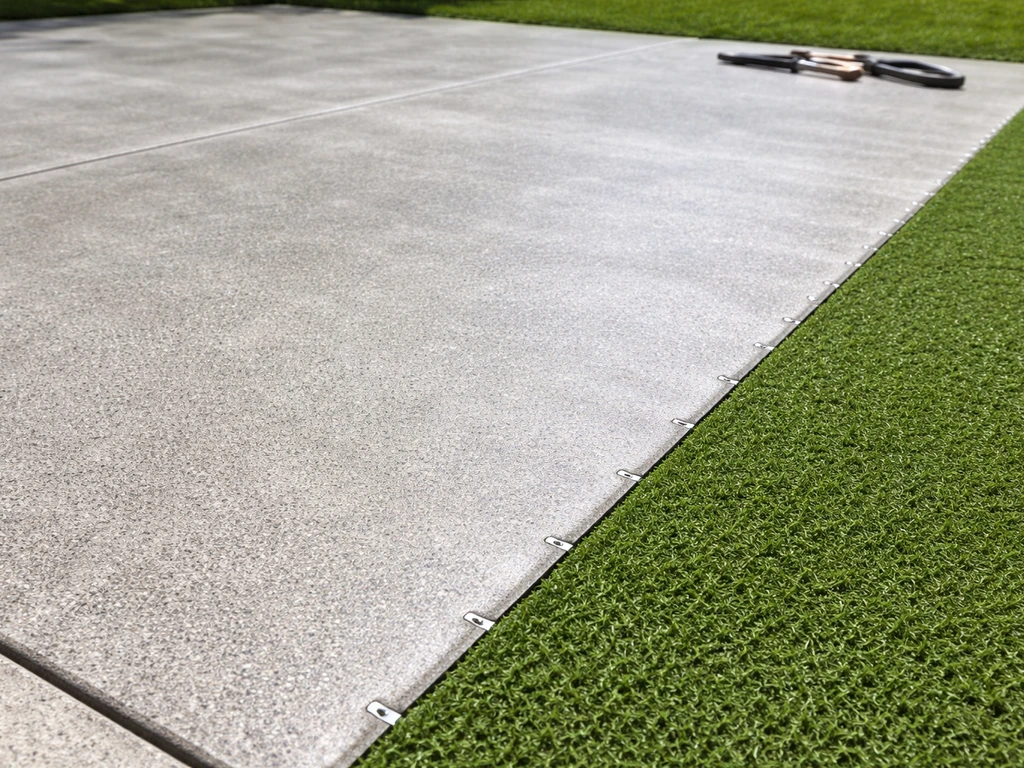
If your patio is already concrete or paved, you have the simplest install scenario. Clean the surface thoroughly, verify it drains (no standing water after rain), and glue or staple the turf directly down. Use a perimeter adhesive designed for synthetic turf and double-sided tape at seams. Drainage still matters here: if the concrete doesn't have a slope (minimum 1% grade is a common recommendation) or drain holes, urine and rain will pool under the turf and cause odor and mold over time. On a sealed concrete patio with no drainage, drill holes or use a drainage matting layer between the concrete and the turf backing.
Dirt or gravel base: the full prep job
For patios built on a dirt or gravel base, proper preparation is the whole ballgame. Excavate 3–4 inches, add a compacted aggregate base (crushed rock or decomposed granite), target 90% compaction, and grade to at least 1% slope for drainage. Lay a weed barrier over the base before the turf goes down, both to suppress growth and to keep the aggregate from migrating into the turf backing. Skipping the weed barrier is one of the most common DIY mistakes and leads to weeds pushing up through the pile within a season or two.
Seams, edging, and direction
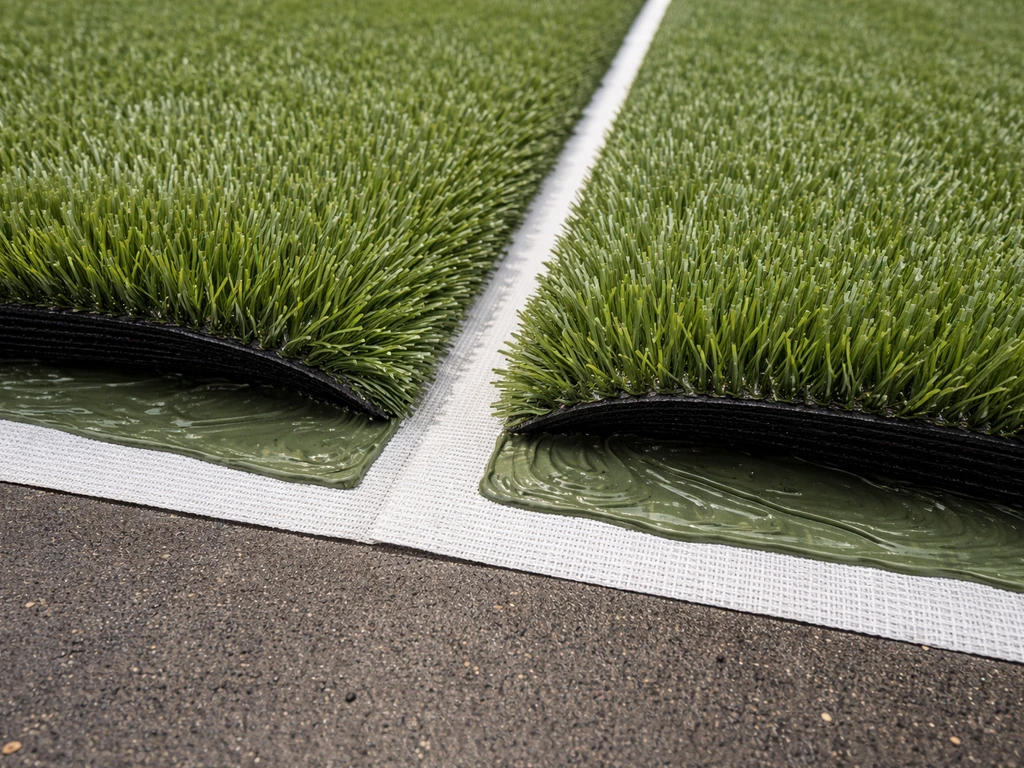
All seams should run in the same pile direction, with blades leaning away from the main viewing angle. Seam tape and adhesive (not just tape alone) is the standard for outdoor installs. For edging, bender board or aluminum edging nailed into the base holds the perimeter flat and prevents edge lifting, which is cosmetically the first thing that ages a turf install. If you're cutting around furniture legs, planters, or fixed features, take your time with the layout before cutting, because turf doesn't stretch.
DIY vs. hiring a pro
A straightforward rectangular patio under 300 sq. ft. on a concrete base is genuinely doable as a DIY project with some patience. Irregular shapes, large areas, full soil excavation, multiple seams, or a pet-optimized drainage system are all situations where hiring a landscape or turf contractor pays off. Pros bring compaction equipment, turf cutters, and seaming experience that makes a real difference in how the finished surface looks and holds up. If you're on the fence, get one quote, because the labor cost on a small patio might surprise you in a good direction.
Maintenance and longevity
Fake grass is low maintenance, not no maintenance. Here's what actually matters for keeping it looking good and lasting the full 10–15 years a quality product should deliver.
- Rinse the turf weekly with a hose to flush debris and keep drainage channels clear. This is the single highest-impact habit.
- Brush the pile with a stiff-bristle broom or power brush every month or two to prevent matting, especially in high-traffic zones like seating areas.
- Remove organic debris (leaves, food, pet waste) promptly. Damp organic matter sitting in the pile is what causes mold, not the turf itself.
- For pet areas, rinse immediately after use and apply a turf deodorizer (enzyme-based products work best) weekly or as needed. This is a drainage and maintenance issue together.
- Spot clean stains with a mild dish soap and water solution. Avoid bleach, which breaks down fiber UV coatings and backing materials over time.
- In shaded or humid climates, check the backing seams and edging zones twice a year for mold or edge lifting.
- In climates with hard freezes, brush away compacted snow and ice rather than shoveling aggressively, which can damage tufts and seams.
Longevity also comes back to the base. A well-drained, properly compacted base means the turf stays flat, drains fast, and doesn't shift. Products like the GV Lush carry 15-year manufacturer warranties, and those are achievable in real use if the install and maintenance are sound.
How to measure, shop smart, and avoid common mistakes
Measuring correctly
Measure your patio length and width, then add 4–6 inches on all sides for trimming and seam overlap. Turf is typically sold in 12- or 15-foot-wide rolls, so sketch your layout to minimize seams and waste. For an irregular patio (L-shaped, curved edges, cutouts), draw it on paper first and figure out how many strips you need before ordering. Most suppliers will help you lay out a cutting diagram if you give them dimensions. If you are wondering where to buy fake grass for your patio, start by asking local turf suppliers about availability and delivery options Most suppliers will help you lay out a cutting diagram if you give them dimensions..
What to check on a product label or spec sheet
- Face weight in oz/sq. yd. (not total weight, which includes the backing)
- Pile height in inches (ASTM D5823 test method cited ideally)
- Drainage rate in inches per hour with an ASTM F1551 or F2898 test reference
- Fiber material: PE (polyethylene) monofilament is the softest and most realistic; PP (polypropylene) is stiffer and better for texture/thatch layers
- Tuft bind rating (ASTM D1335) if available, especially for heavy traffic
- UV warranty period: 8 years minimum, 15 years for premium
- Backing type: perforated vs. solid, and number/distribution of drain holes
Common mistakes to avoid
- Buying on pile height alone. A 2-inch pile that mats down in 6 months because of low face weight is a bad deal. Check face weight and fiber type together.
- Skipping the weed barrier. It takes 20 minutes and prevents years of frustration.
- Ignoring drainage on a concrete patio. If the slab doesn't drain, the turf won't either. Drill holes or add a drainage mat.
- Buying one size too small. Order with trim allowance built in. Running short mid-install and needing a second order creates visible seams.
- Choosing dark turf for a full-sun patio in a hot climate without considering heat. Mid-green or lighter blends stay meaningfully cooler.
- Using crumb rubber infill in a hot climate. Silica sand or an organic infill like cork is cooler and easier to maintain.
- Neglecting pile direction at seams. All blades should lean the same way across a seam or the joint will be visible.
The bottom line on shopping: buy from a supplier who publishes actual test data on their product pages (ASTM F1551 drainage, face weight, pile height, tuft bind). If a product page lists none of these and just says 'ultra-realistic' and 'easy install,' move on. Real quality turf from brands like AGL, SYNLawn, or verified products from specialty retailers is backed by spec sheets you can actually read. Once you have specs in hand and your patio dimensions measured, you're ready to order with confidence.
FAQ
What should I do if my fake grass patio pools water after rain?
You can usually fix light pooling by adjusting slope, adding a drainage mat layer over sealed concrete, or improving base grading and outlets. If you already installed and see puddles after rain or after melt in winter, the issue is almost always base drainage, not the turf fiber.
Is any pet turf enough for dog urine odor control?
Don’t assume “pet-friendly” automatically means “odor-safe.” Look specifically for a fully perforated backing with very high drainage (the article cites the pet range as 400 to 1,000+ inches per hour), and confirm the system includes a base that won’t trap urine beneath the backing.
Can I install fake grass directly on sealed concrete without drains?
If you’re installing on sealed concrete with no slope or drain holes, you generally need a way for water to get out. The article suggests drilling for drainage or adding a drainage mat layer between the concrete and turf backing, so plan for that before ordering the turf.
How do I choose pile height for my patio versus my pet potty zone?
The “best” pile height depends on how visible and how trafficked the area is. For hard patio use the article recommends about 1 to 1.5 inches for pet areas, while 1.75 to 2 inches can look more lush but tends to flatten faster under chairs and frequent movement.
Is crumb rubber infill ever a good idea for a patio in Phoenix or Texas heat?
In hot climates, silica sand generally stays cooler than crumb rubber because it does not trap and radiate heat the same way. If you want cushion, consider a light silica layer, and if your product offers heat-reducing fiber or coated options, that can help when you cannot add shade.
What turf specs help prevent flattening under chairs and outdoor furniture?
If the space sees heavy furniture, you’ll notice matting sooner than people expect. A good decision aid is aiming for firmer builds, roughly 60 to 80 oz face weight (as discussed), and keeping pile closer to the 1 to 1.5 inch range if pets or frequent foot traffic are involved.
What are the most common seam mistakes that ruin the look of a patio turf install?
Do a seam plan before you cut, because turf does not stretch. Keep blade direction consistent across strips, use seam tape plus outdoor adhesive (tape alone is a common failure point), and run seams away from the main viewing angle when possible.
When should I hire a turf installer instead of doing it myself?
Yes, but not always. The article notes DIY is realistic for straightforward rectangular patios under about 300 square feet on a concrete base, while larger irregular shapes, multiple seams, or a pet-optimized drainage system are cases where hiring a contractor is usually worth the cost.
How do I reduce mold and debris buildup if my patio stays damp?
If there’s visible debris in the pile or the patio is under heavy shade, you’ll likely need more than occasional hosing. The article specifically calls out regular rinsing in humid, rainy regions and using a lighter pile that dries faster to reduce mold risk.
How can I tell if a turf listing is marketing hype or real performance data?
Aim to select turf where the product page lists real performance test data, like ASTM F1551 drainage and tuft bind, not just marketing terms. If those specs are missing, it’s a strong signal to keep shopping even if the photos look great.
What maintenance tasks actually matter after installation for a patio?
You should still plan for maintenance. The article frames fake grass as low maintenance, not no maintenance, and the base and drainage determine whether it stays flat and easy to clean over the full 10 to 15 year lifespan of quality turf.
How much extra turf should I order, especially for an L-shaped or curved patio?
Measure and order with extra material for trimming and overlap, the article suggests adding 4 to 6 inches on all sides. For irregular layouts, drawing a cutting diagram first usually prevents under-ordering, especially when your design creates multiple strips and seams.