
The best patio mister for most homeowners is a mid-pressure overhead kit mounted at 8 to 12 feet, fed by your garden hose and running at 40 to 80 PSI. It evaporates mist before it hits you, keeps the floor dry, and covers a typical 200 to 400 square foot patio without a pump or electrician. If you're in a hot, dry climate like Arizona or west Texas, you can step up to a high-pressure pump system (1000+ PSI) for near-invisible fog. If you're in Florida or the Gulf Coast, any mister will add humidity you don't want, so you'll get more bang from a fan combo. Start with what matches your climate, then size up from there.
Best Misters for Patio: Choose, Install, and Maintain

Elise Prescott
16 May 2026
Why patio misting matters (and when it won't help)
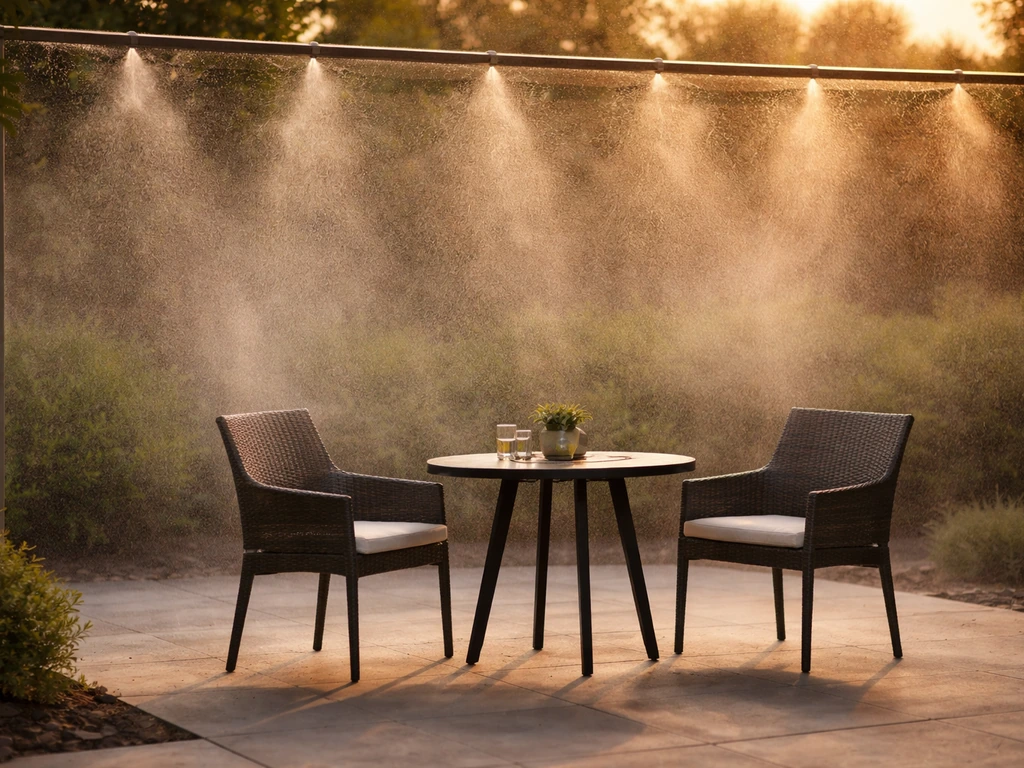
Misting systems work on one principle: evaporative cooling. When fine water droplets evaporate in the air around you, they pull heat out of that air and drop the temperature. The drier the air, the more evaporation happens, and the bigger the cooling effect. In a place like Phoenix or Albuquerque, a good misting system can knock 20 to 30 degrees off the felt temperature in the shade. That's a real, usable difference.
The catch is humidity. Evaporative cooling adds moisture to the air as it cools it. A Building America Solution Center code compliance brief explains that evaporative cooling performance depends on the “dryness” of incoming air (wet-bulb temperature), making it best suited to hot, dry climates, with lower supply-air temperature but higher humidity in the process [Evaporative cooling adds moisture to the air as it cools it. ](https://basc.
pnnl. gov/code-compliance/evaporative-cooling-code-compliance-brief). The blank" rel="noopener noreferrer">wet-bulb temperature of the incoming air sets a hard ceiling on how much cooling you can get. At 100% relative humidity, wet-bulb equals dry-bulb, meaning there's zero evaporative potential left.
In practice, that means if you're already sitting at 80% humidity and 90 degrees in Houston, a misting system is mostly going to make you feel sticky, not cool. The cooling effect shrinks dramatically as humidity climbs. If you're in a high-humidity region, misters aren't useless, but you need to pair them with a fan to push the mist away quickly, and you should set your expectations accordingly.
In general, patio misters do work best when the air is dry enough for evaporation to cool you do patio misters work. For humid climates, a quality outdoor fan often delivers more comfort per dollar than a misting system alone.
For hot, dry climates, though, misters are one of the best outdoor cooling tools available. They're quieter than fans, require less infrastructure than a full outdoor HVAC setup, and can be installed by a motivated DIYer in an afternoon. The key is matching the system type to your space and climate from the start.
Types of patio misters: portable vs hose-fed vs pressurized overhead systems
There are three main categories of patio misters, and they are not interchangeable. Each has a different pressure range, installation requirement, and performance ceiling.
Portable misting fans and towers
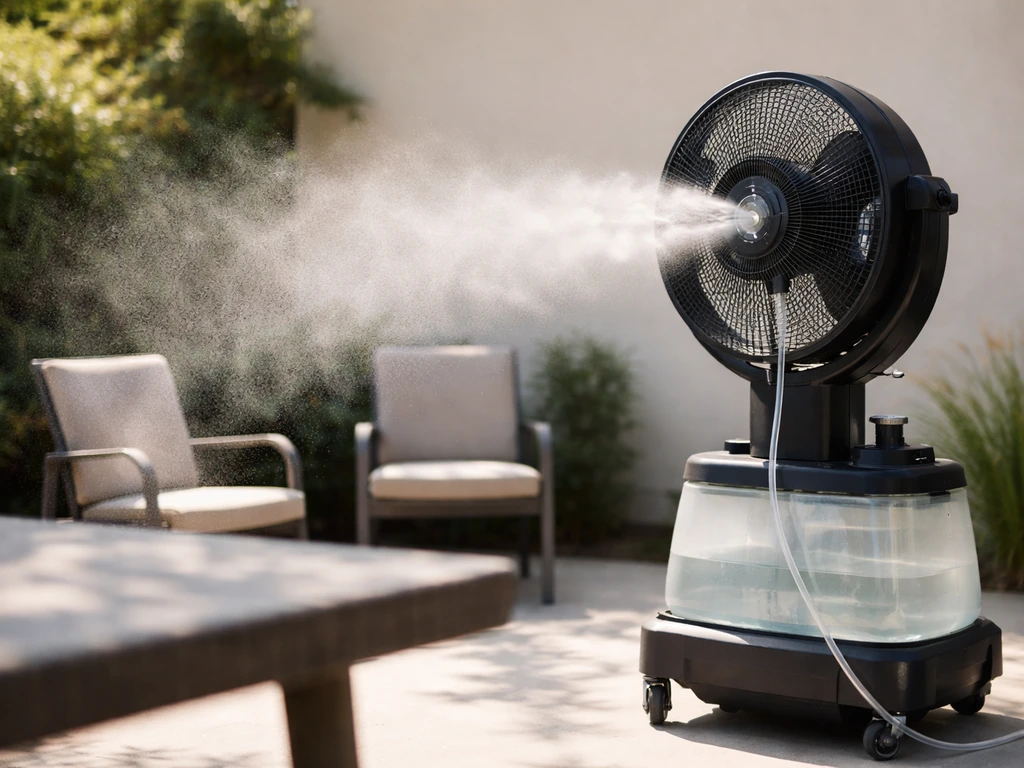
These are the standalone units you roll out, plug in, and point at yourself. They have a built-in water reservoir or a small hose connection, and they spray mist through a fan. They're the easiest to set up and the easiest to disappoint you. Operating pressure is typically low (under 40 PSI), which means larger droplets and a wetter experience.
They work reasonably well for one or two people sitting directly in front of them, but they don't cool a whole patio. They're also the right call if you rent, move seasonally, or just want something to pull out for a party without any permanent installation. Maintenance is simple: clean the nozzles, flush the reservoir, use an inline sediment filter accessory if your water is hard.
Hose-fed low-pressure misting kits
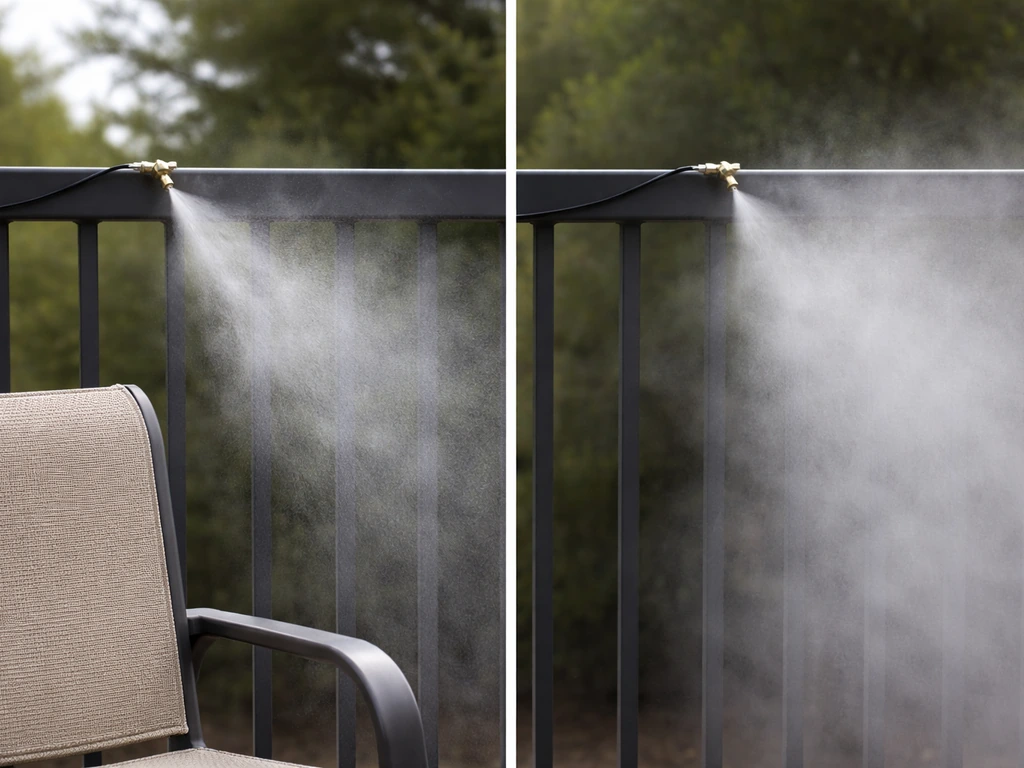
These are the most popular DIY option. You connect a kit to your garden hose bib, run a flexible misting line along your patio edge or pergola beam, and space nozzles every few feet. No pump required. Standard residential water pressure runs 40 to 60 PSI, which sits right in the 40 to 80 PSI operating range for these kits.
At that pressure, nozzles typically produce a spray pattern with a 2 to 3 foot diameter. The droplets are larger than a high-pressure system, which means some mist may reach surfaces or people nearby. Mounting height and nozzle angle matter a lot here (more on that in the placement section). A well-designed hose-fed kit on a covered patio in a dry climate does a genuinely good job.
These kits often come in 25 to 50 foot runs and can cover 100 to 200 square feet depending on nozzle spacing.
High-pressure pump systems
These are the premium option and the closest thing to commercial-grade cooling for a residential patio. A pump unit (often 1/3 HP or larger) pressurizes water to 200 to 1000+ PSI and pushes it through brass nozzles with very small orifices. At those pressures, water is atomized into droplets as fine as 10 microns, which is so small the mist evaporates almost instantly and feels completely dry.
Standard residential water pressure (40 to 60 PSI) is enough to supply the pump; the pump does the pressurization. These systems require a dedicated line run, proper filtration, electrical hookup for the pump, and some planning around nozzle spacing and layout. They're the right choice for large patios, hot climates, open (uncovered) spaces where mist needs to evaporate fast, and anyone who wants the most comfortable, professional-grade result.
| Type | Pressure Range | Droplet Size | Coverage | DIY Friendly | Best For |
|---|---|---|---|---|---|
| Portable fan/tower | Under 40 PSI | Large (visible spray) | 1 to 2 people | Yes, plug and play | Renters, small spots, occasional use |
| Hose-fed low-pressure kit | 40 to 80 PSI | Medium (50 to 70 microns) | 100 to 300 sq ft | Yes, garden hose connect | Covered patios, dry climates, DIY install |
| High-pressure pump system | 200 to 1000+ PSI | Very fine (10 to 30 microns) | 400+ sq ft | Moderate, needs electrical | Large patios, open spaces, hot/dry climates |
What to look for in the best patio mister
Once you know which category fits your situation, these are the specs that separate a system that performs from one that frustrates you.
Pressure and droplet size
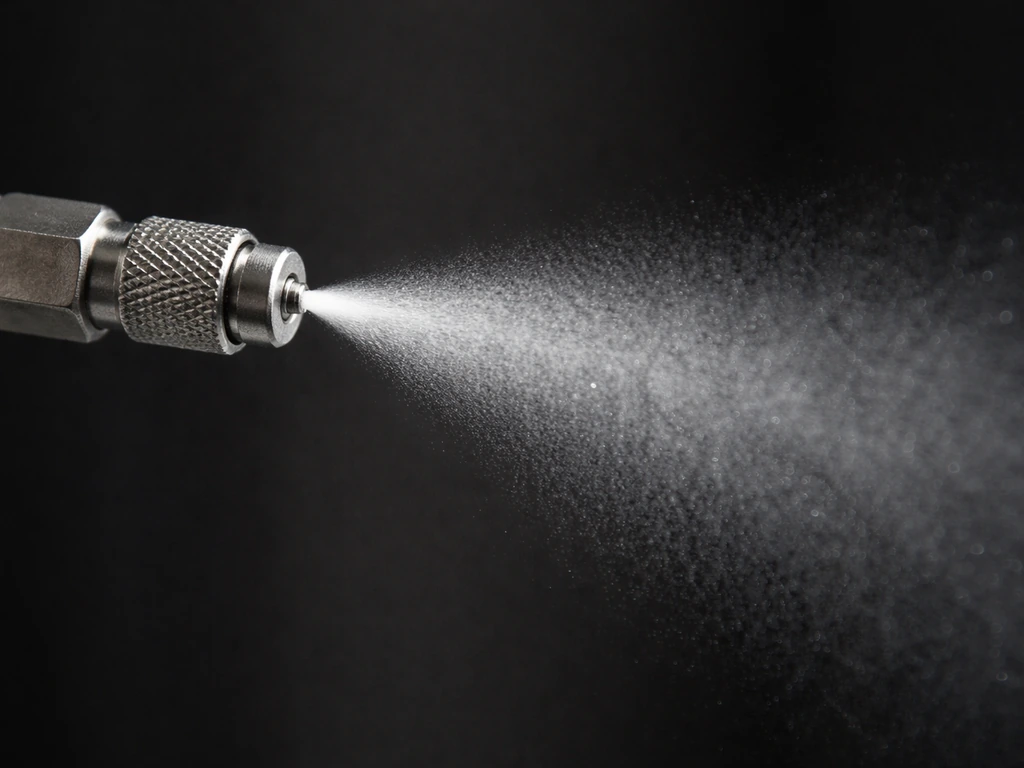
Pressure and droplet size are directly linked. Higher pressure through a correctly sized nozzle orifice produces finer droplets. Finer droplets evaporate faster and reach you as cool air rather than wet spray. If you want a dry misting experience, you need either a high-pressure pump pushing 200 to 1000 PSI, or at minimum a well-matched hose-fed kit running at 60 to 80 PSI with small-orifice nozzles.
Drip Depot’s fogger and mister buying guide provides example operating pressure bands by product type, including ranges that commonly fall around the mid-pressure 35 to 80 PSI level for certain cooling fogger or mister categories operating at 60 to 80 PSI with small-orifice nozzles. Running nozzles outside their designed pressure range, either too high or too low, causes poor atomization or dripping.
Match the pump (or hose pressure) to the nozzle specs on the box.
Coverage and number of nozzles
Each nozzle covers a spray pattern roughly 2 to 3 feet in diameter at low-to-mid pressure. Nozzle count and spacing determine whether your whole patio gets cooled or just a strip along the edge. A 50-foot misting line with nozzles every 18 to 24 inches will cover considerably more area than one with nozzles every 36 inches. For large patios, you may need multiple parallel lines. The general rule: keep parallel misting lines spaced 8 to 12 feet apart for even coverage across the full area.
Filtration
This is the most overlooked spec and the number one cause of clogged nozzles. Fine-mist and fogging systems require at minimum a 200-mesh inline filter to keep sediment and mineral particles from plugging the tiny nozzle orifices. High-pressure systems often add a 0.5-micron filter for even finer protection. If your water is hard (high mineral content), plan for more frequent filter cleaning, at least once a season, and consider a descaling routine for your nozzles. Some pressure-regulating Y-filter assemblies combine a 200-mesh filter and pressure regulator in one unit, which simplifies installation considerably.
Adjustability and materials
Look for kits with adjustable or capped nozzle ports so you can close off sections you don't need and maintain consistent pressure across active nozzles. Brass nozzles last longer and resist mineral buildup better than plastic. UV-resistant tubing matters too, since cheaper tubing cracks and discolors quickly in direct sun. For pump systems, check that the pump housing and fittings are rated for outdoor use and that the motor has thermal overload protection.
Placement and setup: height, direction, and avoiding wet zones
Where and how you mount your misting line makes the difference between a system you love and one that soaks your floor, fogs your furniture, or just misses the seating area entirely.
Mounting height
Mount your misting line between 8 and 12 feet above the patio surface. Lower than 8 feet and the mist doesn't have enough air travel time to evaporate before it reaches people or the floor, which leads to wet furniture and slippery surfaces. Above 12 feet and you're losing mist to the sky before it does any cooling work. For high-pressure fine-mist systems, the lower end of that range (8 to 9 feet) is fine since the droplets are so small they evaporate almost immediately. For low-pressure hose-fed systems, aim for 10 to 12 feet to give the larger droplets enough travel distance.
Nozzle angle
Mount the misting line along the lower outside edge of the patio fascia or pergola beam, with nozzles angled outward at roughly 20 to 45 degrees downward. This throws the mist into the space above and around the seating area rather than straight down onto it. Pointing nozzles directly down is a common mistake that concentrates mist in one spot and leads to puddling.
Avoiding slippery floors and wet zones
Wet-patio syndrome (the technical term people in the misting industry actually use) is almost always caused by one of these factors: nozzles mounted too low, orifices that are too large for the available pressure, too many nozzles running simultaneously, or wind pushing mist back toward the floor. Fix mounting height first. Then check that your nozzle orifice size matches the pump pressure spec. If you're using a hose-fed kit and still getting wet floors, cap every other nozzle to reduce total flow and see if pressure per nozzle improves atomization. Keep nozzles away from overhead fans or vents that could push mist downward, and keep the line away from door thresholds and steps where wet surfaces create a safety hazard.
Near seating vs perimeter
Run your misting line around the perimeter of the patio rather than directly over seating. Perimeter placement creates a cooling curtain effect where mist evaporates as it drifts inward. Running a line directly over a dining table or lounge chairs almost always results in mist landing on people and food, which nobody wants.
Installation basics and maintenance
Installing a hose-fed kit
Most hose-fed low-pressure kits install in under two hours with no special tools. To find the right one, start by checking where to buy patio misters that match your pressure needs and climate. Connect the filter/pressure regulator assembly to your outdoor hose bib, run the flexible misting tubing along the fascia or beam using the included clips, snap in the nozzles at your chosen spacing, and cap the end. Turn on the water slowly to check for leaks at each connection. If your home water pressure runs above 80 PSI, add a pressure regulator before the kit inlet to protect the tubing and nozzles.
Installing a high-pressure pump system
High-pressure systems need a dedicated water line to the pump, an electrical outlet (with GFCI protection, required by NEC 210.8(F) for outdoor circuits near wet areas), and a properly sized misting line with brass nozzles. The pump pulls from your standard supply line, so 40 to 60 PSI supply pressure is fine. Run the high-pressure misting line from the pump outlet along your patio perimeter. Nozzle count and spacing determine flow demand, so follow the manufacturer's nozzle-pump flow chart to ensure you're not overtaxing the pump or starving nozzles of pressure.
Ongoing maintenance
- Clean or replace your inline filter at least once a season, more often if you have hard water
- Flush the misting line at the start and end of each season to clear sediment
- Inspect nozzles for mineral buildup; soak clogged nozzles in white vinegar overnight to dissolve deposits
- Check tubing connections and end caps for drips or cracks, especially after winter
- For fine-mist systems with 0.5-micron filters, replace the filter cartridge per manufacturer schedule
Winterizing your misting system
If you're in a climate that sees freezing temperatures (and that includes most of the country outside the deep South and Desert Southwest), winterizing your misting system is not optional. Water left in the lines will freeze, expand, and crack tubing, nozzle bodies, and pump components. The process is straightforward: shut off the water supply, run the system briefly to relieve pressure, then blow out the remaining water with compressed air or drain by gravity. Disconnect and store portable or hose-fed kits indoors. For permanent pump systems, flush and drain the pump body and all lines, and follow the manufacturer's winterization procedure specifically. Do a full cleaning inspection when you reinstall in spring.
Best picks by patio situation
No single mister is best for every patio. Here's how to match the setup to your specific situation.
Small patio (under 150 sq ft) or occasional use
A portable misting fan or a short hose-fed kit (25 feet or less) is all you need. Portable towers are plug-and-play, take up minimal space, and can be moved or stored easily. If you have a hose bib within reach, a basic hose-fed kit with 6 to 10 nozzles gives better all-around coverage. Budget range: $30 to $80 for a kit, $80 to $200 for a quality portable tower.
Large patio (200 to 500+ sq ft)
You need a 50-foot or longer misting kit, or potentially two parallel lines, to cover the full space. At this scale, a mid-pressure hose-fed kit starts to struggle because available water pressure gets divided across more nozzles. This is where a high-pressure pump system earns its cost. Even a mid-range 1/3 HP pump running at 300 to 400 PSI will produce noticeably finer mist and more consistent coverage across a large footprint than any hose-fed kit. Budget range: $200 to $600 for a quality pump system.
Covered patio or pergola
A hose-fed kit mounted along the perimeter beams is the sweet spot here. The cover provides shade, which helps evaporated mist stay cool rather than being reheated by direct sun. Mount at the fascia line, angle nozzles outward and slightly downward, and you'll create a cooling perimeter that works well even at moderate pressure. If the cover is solid (not open-lattice), make sure mist doesn't accumulate underneath and drip back down.
Open patio (no cover)
Open patios are harder to mist effectively because there's nothing to contain the cooled air. Wind disperses the mist before it evaporates close to seating areas. High-pressure systems with very fine (10 to 30 micron) droplets work much better here because the mist evaporates almost instantly and doesn't rely on a contained space. Low-pressure kits in open, windy locations often just blow mist sideways and leave you with a wet patio surface. If you have an open patio, prioritize a high-pressure system or consider adding a partial privacy screen or shade sail to create a semi-enclosed zone.
Hot and dry climates (Arizona, Nevada, inland California, New Mexico, west Texas)
This is where misters shine brightest. Even a basic hose-fed kit delivers meaningful cooling. A high-pressure pump system is worth every penny here and can make a patio genuinely usable during summer afternoons that would otherwise be off-limits. Prioritize fine droplets, proper mounting height, and a good filter. You'll use this system daily for six-plus months a year, so spend a little more on quality components.
Hot and humid climates (Florida, Gulf Coast, Southeast)
Be honest with yourself: in a climate where humidity regularly sits above 70 to 80%, a mister adds humidity you don't need and the cooling effect is minimal. A misting fan on low can still provide some relief if you're sitting directly in front of it, but it's not going to transform your patio experience. Pair any misting with strong air movement (a high-CFM outdoor ceiling fan or pedestal fan), and accept that some days the mist just isn't worth running. A shade structure and a quality fan will do more for comfort in humid climates than any misting system.
Budget pick vs premium pick
| Scenario | Budget Pick | Premium Pick |
|---|---|---|
| Small covered patio, dry climate | Hose-fed kit, 25 ft, 40 PSI, $30 to $60 | Hose-fed kit with brass nozzles + pressure regulator, $80 to $130 |
| Large covered patio, dry climate | Hose-fed kit, 50 ft run, $60 to $100 | 1/3 HP high-pressure pump system, $300 to $600 |
| Open patio, very hot/dry climate | Hose-fed kit at max height with small orifice nozzles, $80 to $120 | High-pressure pump system, 300 to 1000 PSI, $400 to $800 |
| Humid climate | Portable misting fan near seating, $80 to $150 | Outdoor fan + short misting kit perimeter, $200 to $400 |
When to call a contractor
Most hose-fed kits are genuinely DIY-friendly. But there are several situations where hiring a professional isn't just convenient, it's the smarter and sometimes legally required move.
Mounting and structural attachment
If you're mounting a misting line to a structure you didn't build yourself (a wood pergola, a solid patio cover, an attached patio roof), confirm the structure can handle the hardware before you drill. A contractor can assess load capacity and use the right anchors for the material.
Plumbing connections and backflow prevention
If you're tapping into a dedicated outdoor water line rather than a garden hose bib, or if your municipality requires a backflow preventer on the connection (many do), you're in licensed plumbing territory. Backflow prevention assemblies fall under plumbing code and local water authority jurisdiction, and improper installation can contaminate your drinking water supply. Codes in many states specifically require approved backflow preventer devices (not just simple check valves) for irrigation and misting connections. A licensed plumber handles this correctly and pulls any required permits.
Electrical for pump systems
High-pressure pump systems need a properly wired outdoor outlet with GFCI protection. If you don't already have a GFCI-protected outdoor circuit near the pump location, have a licensed electrician add one. Running an outdoor pump from an indoor extension cord or a non-GFCI outlet creates a genuine shock hazard near wet surfaces.
Permits
New electrical circuits and plumbing connections typically require permits in most jurisdictions. It's worth a quick call to your local building department before starting a pump system installation. Unpermitted work can create headaches at resale and may void your homeowner's insurance coverage for related damage.
If you're not sure where the DIY line is for your project, the decision tree is simple: garden hose connection, no new wiring, and surface-mounted hardware? Do it yourself. New electrical circuit, dedicated plumbing line, or structural attachment to a load-bearing element? Call a contractor. The upfront cost of a pro install on a pump system is typically $200 to $500 in labor, and it gets done right the first time.
FAQ
What should I do if my patio mister feels weak or starts dripping instead of producing a fine mist?
In most cases, the supply line needs to be turned down and the misting line needs to be rebalanced. If you cannot match the pump output to the nozzle spec, use fewer active nozzles at first (cap sections) so each nozzle gets enough pressure to form fine droplets instead of large wet sprays.
Will a misting line under a solid patio cover make the area more humid or cause moisture problems?
Yes, but only if you manage wetness risk. A misting system can add moisture that can trigger mold under solid patio covers, especially if the mist accumulates underneath. Use perimeter mounting with downward-outward nozzle angles, ensure runoff drains away from the cover area, and plan a seasonal cleaning and inspection of the underside.
How can I tell if my water hardness is hurting performance, and what’s the fix?
Hard water increases clogging and “minerals on surfaces.” If you see white residue, reduce runtime, flush the system more often, and consider a higher-grade filtration stage (still sized for fine-orifice systems) plus periodic descaling. If residue is heavy even with cleaning, the water quality may require a dedicated treatment approach.
If I know the humidity is high sometimes, how do I decide whether a mister will still be worth it?
You do not want to guess using relative humidity alone. Look at the wet-bulb and your daily comfort pattern, if your area runs “hot and humid” most afternoons, plan on fans and shade first. As a practical test, run the system for 10 to 15 minutes during peak heat, if you feel sticky rather than refreshed, the humidity threshold is likely too high.
Can I run a patio mister near concrete steps or walkways without creating a slipping hazard?
You can, but only with careful design. Use the system along the perimeter for a cooling curtain and avoid aiming across walkways. If you must protect surfaces, install a barrier or reposition the line higher within the 8 to 12 foot range so droplets evaporate before they land.
Why does performance drop when I turn on more nozzles (or after extending the line)?
For hose-fed kits, the most common culprit is too many nozzles running at once, which divides available pressure. Cap alternate nozzles to reduce total flow, then confirm the kit’s nozzle spacing matches the pressure your hose delivers. If you repeatedly need to cap, upgrade to a mid-pressure-to-high-pressure approach rather than extending hose runs.
Can ceiling fans or outdoor fans interfere with a misting system?
Overhead fans can reduce cooling effectiveness if they push mist downward onto people or furniture. Keep mist lines away from vents and direct fan airflow, and rely on fan placement to create circulation after evaporation, not to blow mist onto surfaces.
What’s the correct way to winterize a patio mister in freezing climates?
Yes, but “winterizing” depends on the system type. Hose-fed kits should be disconnected and stored indoors, and lines should be drained or blown out to remove trapped water. For pump systems, you need a documented drain and flush procedure for the pump body and all lines to avoid freeze cracking.
How long should I run a patio mister each time, and should I run it all day?
Turn it on when people are present, not continuously. Short, repeated cycles during peak heat often feel better than long runs that add humidity. Also, avoid running in very humid or rainy conditions, and monitor for residue or wet floors, both are signs to reduce nozzle count or runtime.
How often should I clean nozzles and replace filters?
Typically, adjust maintenance based on your water. For hard water, flush more frequently and clean nozzles at least once per season, in some areas every few weeks during summer. If using a fine-mist system, replace or clean inline filters on schedule because a partially clogged nozzle can shift droplet size and coverage.
If I want near-invisible fog, is high pressure alone enough, or are there other requirements?
Fogging effect is not only about pressure. Droplet size, nozzle orifice design, and correct operating pressure range all matter, plus sufficient run time and warm air conditions for rapid evaporation. If you want a near-invisible feel, prioritize a system designed for fine droplets and do not exceed or fall below the nozzle pressure spec.