
Yes, patio misters genuinely work, and on a hot, dry afternoon they can drop the perceived temperature around your seating area by 20 to 30 degrees Fahrenheit. In humid climates the drop is smaller, sometimes only 5 to 10 degrees, but there is still a real cooling effect. The catch is that the result depends heavily on your local humidity, the quality of the system you install, and where you position the nozzles. Get those three things right and a misting system is one of the most cost-effective ways to make a patio usable during a summer heat wave.
Do Patio Misters Work? Real Results, Costs, and Tips

Elise Prescott
4 Jul 2026
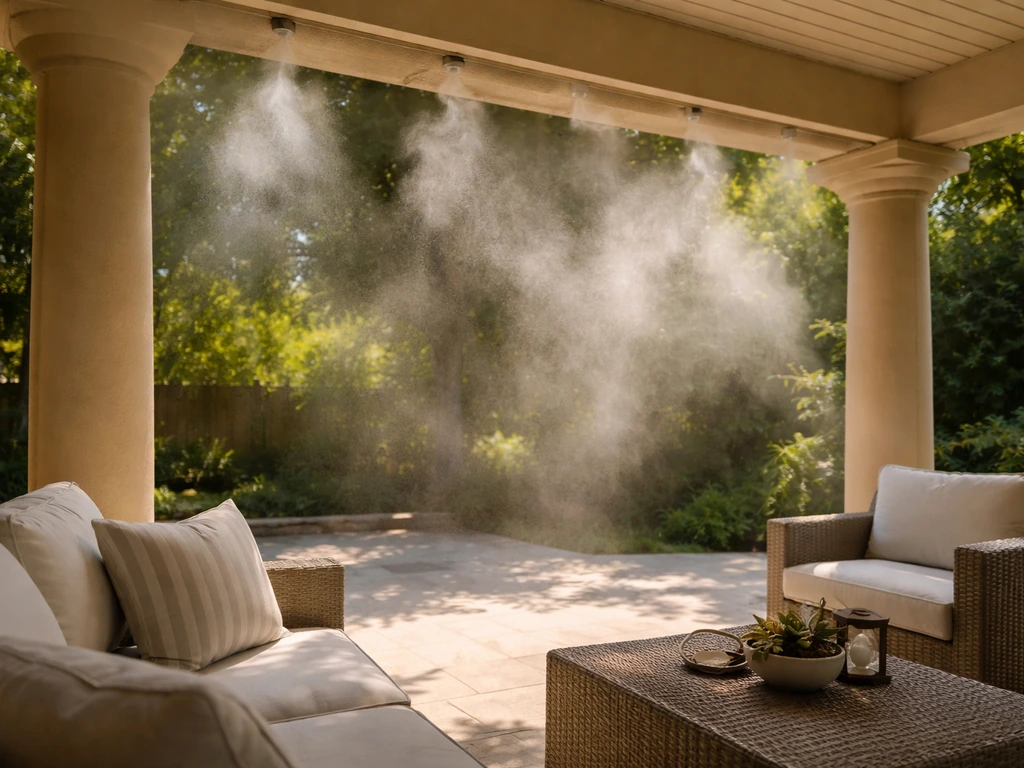
How patio misting systems actually work
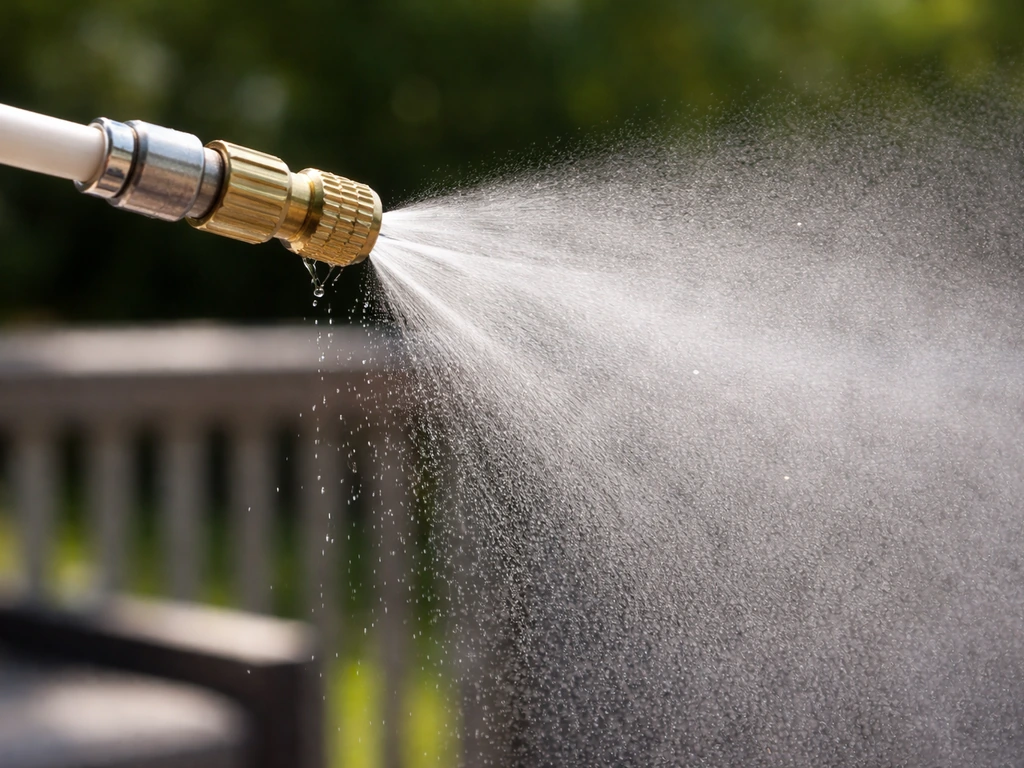
The science behind a misting system is straightforward: water absorbs heat as it evaporates. A misting system forces water through tiny nozzles at pressure, breaking it into microscopic droplets. Those droplets hang in the air just long enough to pull heat out of the surrounding air and evaporate before they hit you or your furniture. The result is cooler, slightly more humid air in the immediate zone around your seating area.
Droplet size is everything here. Evaporative cooling nozzles are designed to produce ultra-fine droplets in roughly the 5 to 50 micron range. To give you a sense of scale, a human hair is around 70 microns wide. At 20 microns, a droplet evaporates almost instantly on a warm day, which means you feel the cooling effect without feeling wet. Some nozzle spec sheets, like those from Aeromist, list a target of around 20 microns at their recommended operating pressure. Larger droplets, say above 100 microns, fall to the ground before fully evaporating and that is when patios get wet and slippery.
Pressure is the other key variable. Systems are generally grouped into three tiers. Low-pressure systems run off a standard garden hose connection (around 40 to 60 PSI). Mid-pressure systems use a small pump to reach 160 to 250 PSI. High-pressure systems run at 1,000 PSI or more. Higher pressure produces finer droplets, faster evaporation, and a drier feel. Low-pressure systems are cheap and easy to set up, but they tend to produce larger droplets that wet the patio surface, especially if there is not much airflow.
| System Type | Typical Pressure | Droplet Quality | Cooling Power | Wet Patio Risk | Rough Cost (DIY kit) |
|---|---|---|---|---|---|
| Low-pressure | 40–60 PSI (hose-fed) | Larger droplets, some fall-out | Moderate | Higher | $20–$80 |
| Mid-pressure | 160–250 PSI (pump) | Fine droplets, mostly evaporate | Good | Low to moderate | $150–$400 |
| High-pressure | 800–1,000+ PSI (pump) | Ultra-fine, evaporate quickly | Excellent | Very low | $500–$2,500+ |
Real-world cooling: how much and how fast?
The maximum possible temperature drop from evaporative cooling is defined by blank" rel="noopener noreferrer">the gap between the dry-bulb temperature (what your thermometer reads) and the wet-bulb temperature (which factors in humidity). Studies of evaporative mist cooling evaluate cooling power and efficiency by using measured outdoor dry-bulb and wet-bulb temperature and relative humidity under controlled outdoor conditions. According to ASHRAE guidance on evaporative cooling, the absolute best you can do is close that gap entirely, meaning the cooler and drier the air, the more room there is for a dramatic drop. In Phoenix on a 110-degree day with 10 percent humidity, that gap can be 40 degrees or more. In New Orleans on a 95-degree day with 80 percent humidity, it might only be 8 to 10 degrees.
In practice, a well-installed high-pressure system in a dry climate like Phoenix, Las Vegas, or inland Texas will bring a shaded patio from brutal to genuinely comfortable within about 5 minutes of the system running. The cooling effect is most noticeable in the immediate zone under the misting line, typically within 8 to 12 feet of the nozzles. Move 15 feet away and the effect is much weaker. In more moderate climates like California coastal areas or the Pacific Northwest, the same system produces a pleasant but less dramatic difference.
One thing that surprises people is how fast the system responds. Unlike a swamp cooler that takes time to saturate a pad, a misting nozzle creates cooling the moment water hits the air. You will feel the temperature shift within seconds of the system turning on. That said, the effect is localized, so you need to be positioned under or very near the misting zone to get the full benefit.
Do patio misters work in humid climates?
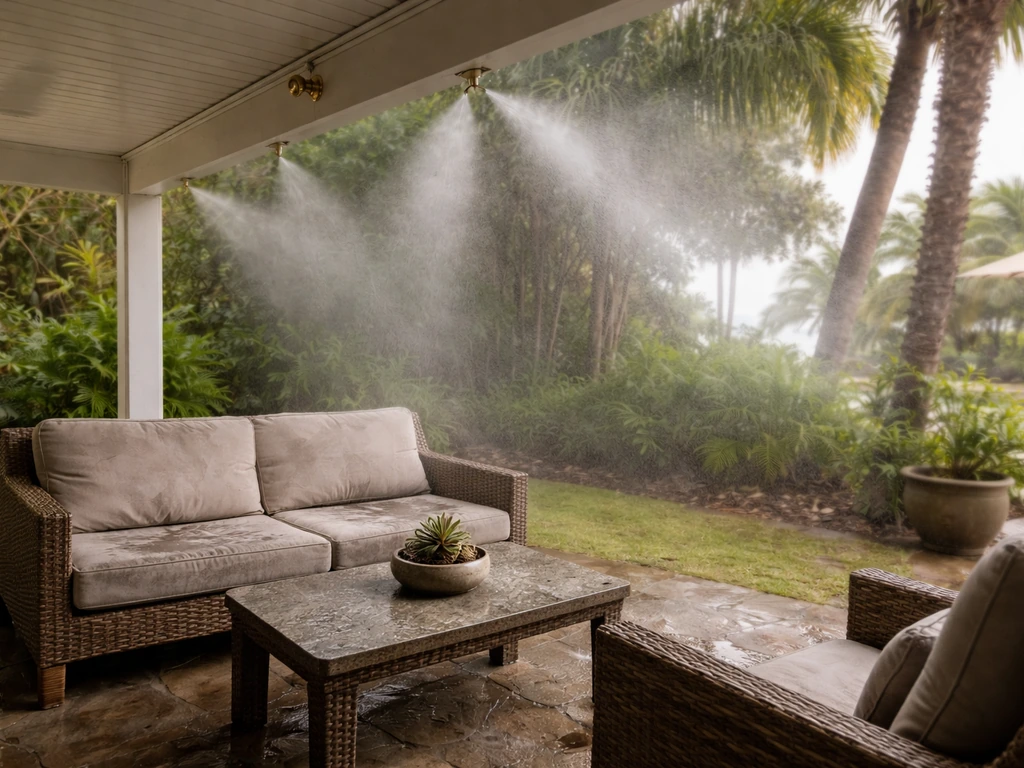
This is the question I get most often from homeowners in Florida, the Gulf Coast, the mid-Atlantic, and the Southeast, and the honest answer is: less well, but not useless. When humidity is already high, the air has less capacity to absorb more moisture, which slows evaporation and shrinks that temperature-drop window. If you are sitting at 85 percent relative humidity, a misting system might only drop the perceived air temperature by 5 to 8 degrees Fahrenheit instead of 20 to 30.
That said, 5 to 8 degrees still matters when you are trying to extend time outdoors on a muggy afternoon. The bigger risk in humid climates is that low-pressure systems end up wetting your patio surface without providing enough evaporative benefit to justify it, which creates slip hazards and can encourage mold or mildew on cushions and decking. In humid regions, if you are going to invest in a misting system, a high-pressure setup is much more justified because the finer droplets are more likely to evaporate even in thicker air before reaching surfaces.
Another smart move in humid climates is pairing a misting system with a patio fan. Moving air accelerates evaporation from the skin and from the mist droplets themselves, meaningfully boosting the perceived cooling effect even when the ambient humidity is working against you.
Are patio misters worth the cost?
Whether a misting system is worth it depends on how often you actually use your patio during hot weather and what you are comparing it to. A basic low-pressure DIY kit costs $20 to $80 and clips onto a pergola or railing in an afternoon. How much you pay is also influenced by the system type and how much area you want it to cover DIY kit. A mid-pressure pump system runs $150 to $400 for the kit plus installation time. A professionally installed high-pressure system with a dedicated pump, stainless steel tubing, and automatic controls can run $500 to $2,500 or more depending on the coverage area and features.
Water usage is modest. A typical residential misting system running six to eight nozzles uses roughly 1 to 1.5 gallons per hour per nozzle, so a full patio setup might use 8 to 12 gallons per hour. Running it for three hours a day during summer adds maybe $5 to $15 to your monthly water bill depending on your local rates. That is genuinely cheap comfort.
The tradeoffs to be honest about: low-pressure systems can wet outdoor furniture, create slippery surfaces, and encourage mold on wood or fabric if overused. Nozzles clog over time, especially in areas with hard water, and a clogged nozzle drips instead of misting, which makes the wet-surface problem worse. The pump on mid- and high-pressure systems adds a maintenance item. And in high-humidity climates, the comfort gain may not justify a premium installation. But for anyone in a dry to moderately dry climate who spends regular time outdoors between May and September, the cost-to-comfort ratio is hard to beat compared to other outdoor cooling options.
What to look for when choosing a system
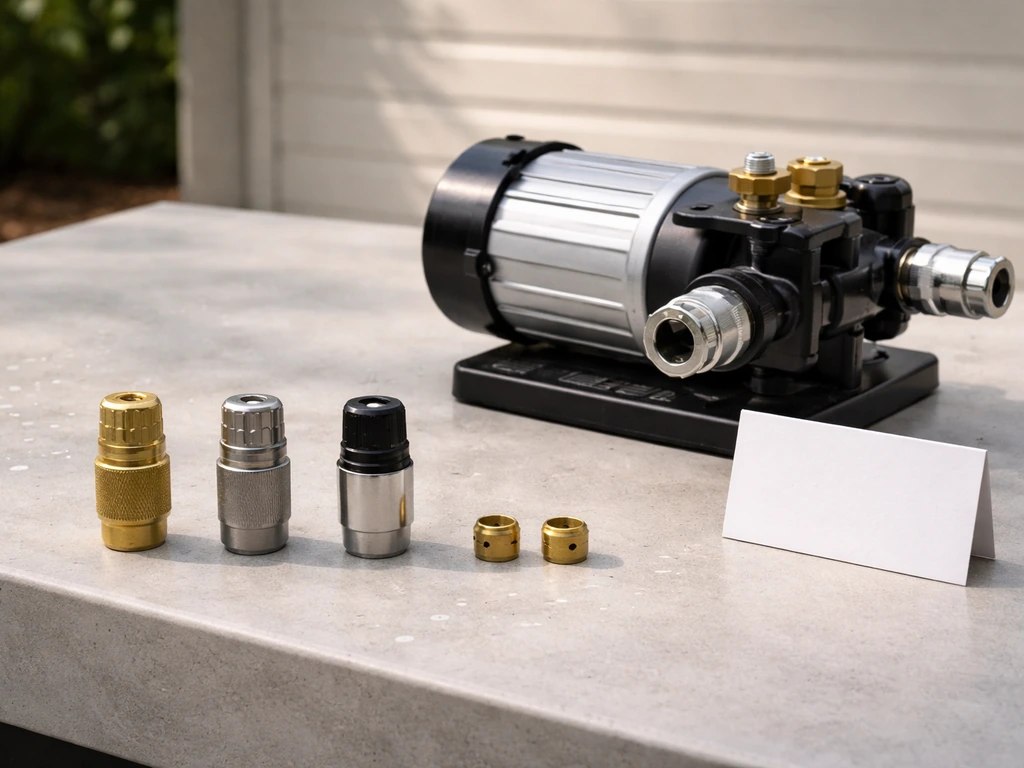
Start with your climate. If you are in a dry region, almost any system works well and a mid-pressure pump kit is the sweet spot for most homeowners. If you are trying to narrow it down, the best misters for patio are the ones matched to your climate, droplet size, and pressure tier. If you are in a humid region, go high-pressure or pair a mid-pressure system with fans. Do not bother with a low-pressure hose-fed system in the Southeast unless you just want the occasional cooling mist and do not mind the wet floor.
- Nozzle orifice size and droplet rating: Look for nozzles rated to produce droplets in the 20 to 50 micron range at the system's operating pressure. Finer droplets mean faster evaporation and a drier experience.
- Pump pressure: Low-pressure (hose-fed) for budget setups in dry climates, mid-pressure (160 to 250 PSI) for most homeowners, high-pressure (800 to 1,000+ PSI) for humid climates or premium installs.
- Nozzle material: Brass or stainless steel nozzles last far longer than plastic and resist clogging better. Avoid all-plastic nozzle sets for permanent installations.
- Filtration: Any pump-based system should include an inline filter to catch sediment and minerals before they reach the nozzles. In hard-water areas, consider an additional sediment pre-filter.
- Timer and auto shutoff: A programmable timer prevents the system from running when no one is outside and reduces water waste and over-saturation of surfaces.
- Coverage radius and nozzle spacing: Nozzles are typically spaced 18 to 24 inches apart along a misting line for even coverage. Calculate your linear footage before buying a kit.
- Tubing material: High-density polyethylene (HDPE) tubing is fine for low-pressure systems. Mid- and high-pressure systems should use reinforced tubing or stainless steel line.
Placement matters as much as the system itself
Mount misting lines at 8 to 10 feet above ground for best results. Too low (under 7 feet) and the mist hits people before it fully evaporates, leaving everyone damp. Too high and the droplets disperse before reaching the seating zone. Position nozzles around the perimeter of your seating area so the mist drifts inward over the space, rather than pointing them directly at chairs. If your patio has a pergola, the crossbeam structure is ideal for routing tubing and hiding it cleanly.
Best practices and troubleshooting for better results
Once your system is installed, a few habits make a big difference in how well it performs and how long it lasts. If you are also wondering where to buy patio misters, compare models by pressure level, nozzle droplet size, and included installation components.
- Run the system on a timer during peak heat hours (typically 11 a.m. to 6 p.m.) rather than all day. This prevents over-saturation of cushions, wood surfaces, and decking.
- Check nozzles monthly during the season. A nozzle that drips instead of producing a fine mist is partially clogged. Soak it overnight in white vinegar to dissolve mineral scale, then rinse and reinstall.
- Flush the tubing at the start of each season. Sediment and mineral buildup in the lines can clog multiple nozzles at once. Most systems have an end cap you can remove for a quick flush.
- Use a water softener or inline filter in hard-water areas. Mineral deposits are the number one cause of nozzle clogging and reduced performance. A $15 to $30 sediment filter upstream of the pump extends nozzle life significantly.
- Account for wind. A consistent breeze above 10 to 15 mph will carry mist out of the seating zone before it cools the air. Use a windscreen, natural privacy plantings, or a patio cover to buffer wind and trap the cooled air near your seating.
- Winterize before the first freeze. Drain all lines and nozzles completely, remove and store plastic components, and blow out any remaining water with compressed air. Frozen water in nozzles and fittings will crack them.
- If the system seems underpowered, check pump pressure before assuming you need more nozzles. A pump running below its rated PSI (often due to a clogged filter or worn pump diaphragm) will degrade droplet quality across every nozzle in the system.
Dealing with a wet patio surface
If your patio surface is getting noticeably wet during operation, the fix is usually one of three things: you need to increase pump pressure to produce finer droplets, raise the mounting height of the nozzle line to give droplets more air time to evaporate, or reduce the run time per cycle. Using a timer to run the system in 10 to 15 minute bursts with breaks in between also prevents surface buildup. On wood or composite decking, any persistent moisture is a long-term problem, so it is worth solving rather than ignoring.
Ready to buy, install, or upgrade?
If you are shopping for your first system or upgrading from a low-pressure kit, the practical next steps are: decide on your pressure tier based on your climate (dry regions can use mid-pressure confidently; humid regions should go high-pressure), measure your patio perimeter to know how many nozzles and feet of tubing you need, and factor in a filter and a timer from the start rather than adding them later. If you want a deeper breakdown of specific brands and models, there are detailed comparisons of the best misting systems for patios and the best misters for patios worth reading before you finalize a purchase. For budget planning, a full guide to how much patio misters cost covers both DIY kit pricing and professional installation ranges so you can plan realistically. A well-chosen misting system, properly installed and maintained, genuinely transforms a hot patio into somewhere people actually want to spend time, and that is a worthwhile upgrade for most homeowners who deal with serious summer heat.
FAQ
How do I know if my patio mister is working, or if it is just making things wet?
A working setup produces a cooling sensation within seconds and clears airflow near your seating within minutes. If you see puddling, runoff on furniture, or wet footprints, that usually means droplets are too large, the nozzle height is too low, or the pressure tier is too low for your humidity, so you should adjust height and increase pressure or reduce run time.
Do patio misters help more if I run them continuously or in bursts?
In most cases, short cycles work better than long continuous runs because they reduce surface wetting and mineral buildup. Use a timer for 10 to 15 minute bursts with breaks between, especially on decking and in humid areas where evaporation is slower.
What is the best nozzle height if I have different seating levels (couch, loungers, and dining chairs)?
Keep the mist line in the 8 to 10 feet range for general seating, then aim the perimeter flow so it drifts inward rather than directly at faces. If people sit significantly lower or higher than average, you may need repositioning or angled heads so the mist reaches the occupied zone after it has time to evaporate.
Will patio misters increase mold or mildew on cushions and outdoor fabrics?
They can, especially with low-pressure systems in humid climates where droplets do not fully evaporate. If you notice recurring dampness after a cycle, switch to finer-droplet nozzles (higher pressure), shorten cycle time, add more airflow with a fan, and avoid letting cushions stay wet overnight.
Do I need a water filter, and what happens if I do not use one?
Yes, most homeowners benefit from a filter because nozzle clogging is one of the biggest failure modes, particularly with hard water. Without filtration, mineral deposits can turn a misting system into a dripper, which increases slippery surfaces and forces more frequent cleaning.
How often should I clean or descale patio mister nozzles?
A good rule is to inspect nozzles every season and descale when spray pattern degrades. Frequency depends on water hardness, but if the system starts to drip, sputter, or form larger droplets, cleaning is usually needed right away to prevent wet patio problems from worsening.
What pressure tier should I choose if I live in a coastal area with high humidity but also lots of wind?
Wind helps evaporation, so you might get away with mid-pressure in some coastal setups, but only if surfaces stay largely dry during operation. If you still see wet decking or extended dampness on furniture, step up to a higher-pressure system or add a fan to ensure droplets evaporate before contacting surfaces.
Will patio misters make my patio slippery, and how can I reduce that risk?
They can, mainly with low-pressure systems that produce larger droplets and do not evaporate fully. Reduce risk by using finer droplets (higher pressure), raising the mist line (staying within the recommended height), and limiting runtime with timed bursts so fewer droplets reach and accumulate on the ground and decking.
Can I use patio misters near food or drink service areas?
They are usually best kept adjacent to seating rather than directly over dining plates and beverage stations, because even fine mist adds slight humidity and can deposit contaminants if water quality is poor. If you must place them near dining, position nozzles so mist drifts across the space and avoid pointing directly at tables.
What is the simplest way to estimate how much area my system will actually cool?
Expect the strongest effect under and near the misting line, typically within about 8 to 12 feet of the nozzles. If your patio layout is larger than that, plan for more nozzles and a perimeter arrangement so multiple zones overlap rather than relying on a single line.