
AllFlor Porch and Patio Paint (officially the California Paints AllFlor Porch & Floor Enamel, 530 Series) is a solid choice for wood porches, concrete patios, steps, and masonry surfaces when you prep correctly and respect its cure time. It's a water-based acrylic enamel fortified with emulsified epoxy, which gives it more hardness and adhesion than a basic latex floor paint. Most negative reviews trace back to skipped prep steps, painting in the wrong weather, or putting furniture back too soon rather than any fundamental problem with the product itself. If you follow the manufacturer specs and give it a full 7 days before heavy use, it holds up well. If you're in a hurry or painting over a questionable surface, you'll be setting yourself up for peeling.
AllFlOR Porch and Patio Paint Reviews: Pros, Prep, Durability

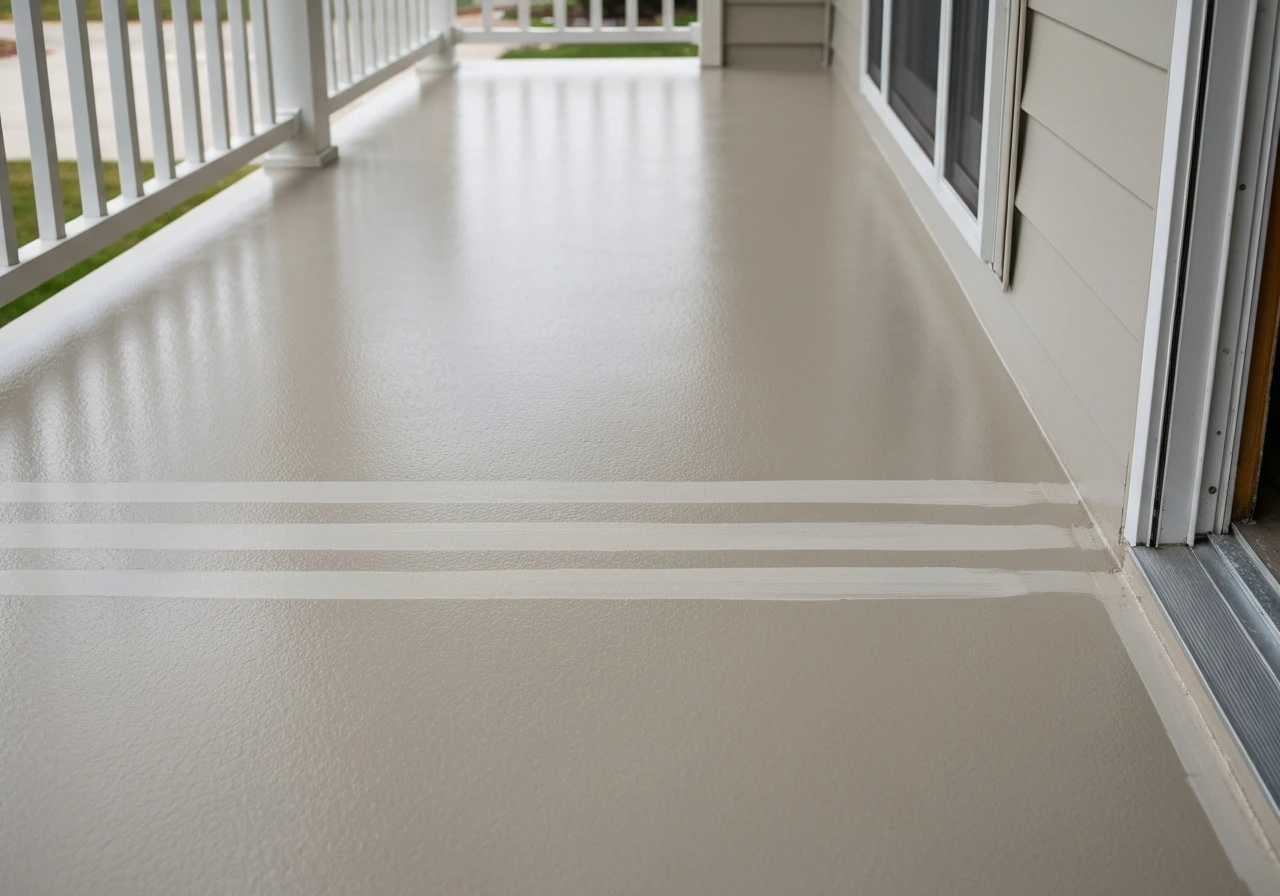
What AllFlor Porch & Patio Paint actually is
California Paints markets AllFlor as a specialty interior/exterior floor and trim finish. The epoxy fortification is the key differentiator from standard porch paints. It gives the dried film more resistance to scuffing, abrasion, and moisture than a regular water-based paint, without the full commitment or complexity of a two-part epoxy coating. The finish is described as low luster (sometimes called low-gloss or satin), which is a practical choice for porches because it hides surface imperfections and scuff marks better than a high-gloss finish would.
The manufacturer claims include maximum color retention, breathability, and resistance to alkali, water, and blistering. Those claims are realistic for a quality acrylic enamel, but breathability in particular matters if your surface has any moisture underneath it. A breathable coating can let vapor escape rather than trapping it and causing blisters. That said, no floor paint survives standing water or a chronically damp slab indefinitely, regardless of what the label says.
AllFlor is designed for floors, patios, porches, steps, decks, playrooms, and basements on wood, concrete, and masonry. It is explicitly not recommended for garage floors where hot tires or heavy vehicle loads are expected. The epoxy fortification helps, but it's not a true epoxy floor coating rated for that kind of stress.
Choosing the right version for your surface
The 530 Series comes in a White, Pastel Base, Medium Base, Deep Base, and Neutral Base, plus 8 stock colors including Deck Gray. You can get it in a quart for small porches or steps, or a gallon for larger projects. The base you choose depends on the color you're tinting to, which a paint counter staff member will handle for you. The bigger decision is whether to get a quart for a test patch first, especially on older surfaces where adhesion is uncertain.
For surface type, here's the practical breakdown:
- Wood porches and decks: AllFlor works well here and is self-priming over previously painted wood in good condition. New bare wood or heavily stained wood needs a dedicated primer first.
- Concrete patios, breezeways, and steps: AllFlor is appropriate, but concrete prep is more involved than wood. New concrete must cure for at least 30 days before you paint it.
- Masonry: Suitable, though porous masonry will consume significantly more paint per square foot and may need a masonry primer for best adhesion.
- Garage floors: The TDS explicitly warns against this use. Hot tires will cause adhesion failure. Look at a dedicated garage floor epoxy instead.
Climate matters too. If you're in a humid region like the Gulf Coast or Southeast, the breathability characteristic is genuinely useful. In the desert Southwest where surface temperatures regularly hit 100°F or more, you need to plan your painting window carefully because AllFlor's maximum application surface temperature is 90°F. In northern states, just watch your fall and spring temps: don't apply when air or surface temperature drops below 50°F, and don't let the product freeze.
How to prep, apply, and not ruin it
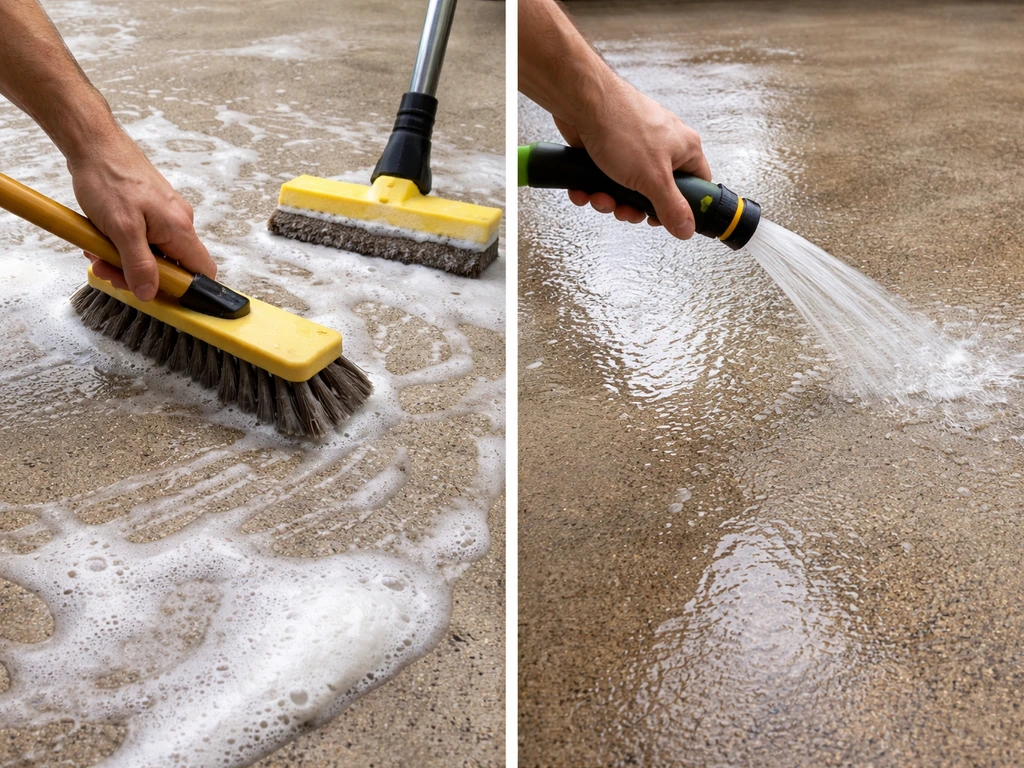
Surface prep (this is where most failures start)
Every bad review I've seen for porch floor paints, AllFlor included, comes down to one thing: people skipped or rushed prep. The manufacturer is explicit that AllFlor must go onto a properly prepared, sound surface. Here's what that actually means in practice.
- Clean thoroughly: Wash with a strong detergent, rinse well, and let the surface dry overnight. Grease, oil, or wax on the surface will kill adhesion. Use a solvent cleaner for any oily spots before you wash.
- Remove all failing paint: Loose, scaly, or flaking old paint has to go all the way back to a sound substrate. If you paint over peeling paint, the new paint peels with it. No exceptions.
- Concrete-specific: New concrete must cure for 30 full days minimum. If you have steel-troweled or sealed concrete, you need to mechanically abrade it or acid-etch it to create a surface profile the paint can bond to. Do the water-drop test: pour a few drops of water on the concrete. If they bead up, the surface is sealed and needs etching. If they soak in immediately, you're good to paint.
- Priming decisions: AllFlor is self-priming over most previously painted surfaces in sound condition. But for new bare wood, heavily stained surfaces, or unusual substrates, use a dedicated primer first. Don't skip this on raw wood just because the label says self-priming. That claim applies to already-painted surfaces.
Application: tools, coats, and timing
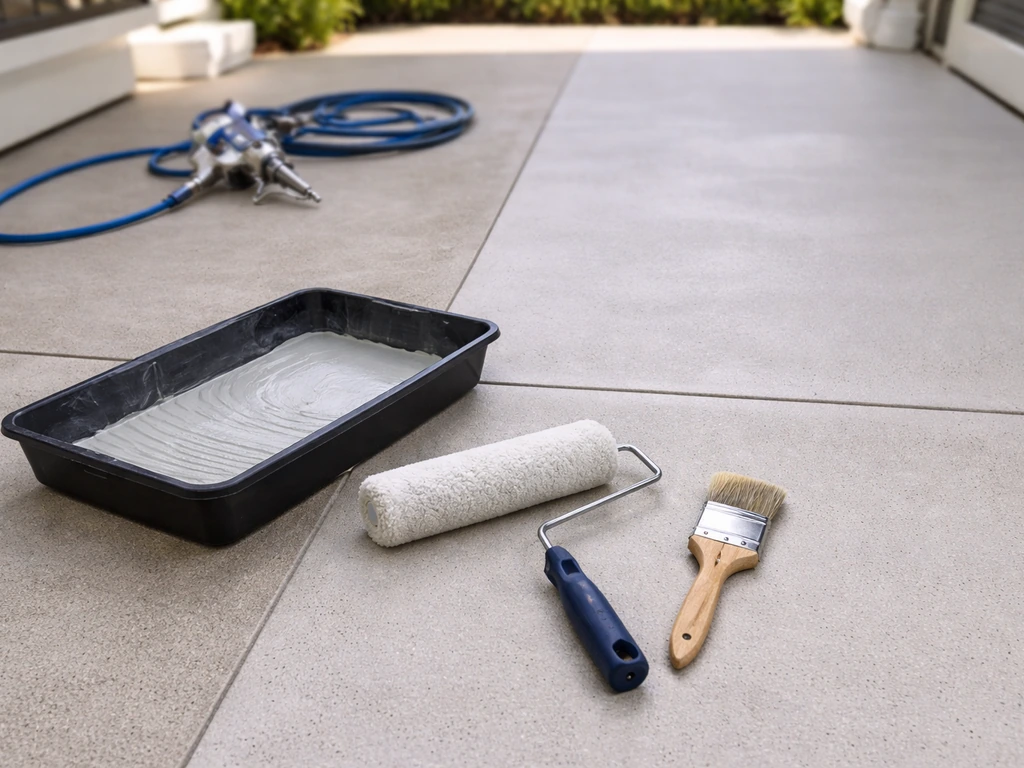
For tools, the TDS recommends a synthetic nylon or polyester brush, a 3/8-inch nap synthetic fiber roller, or airless spray with a .017 to .019 tip. For most homeowners doing a porch or patio, a roller with a brush for edges is the right call. Spray application cuts your effective coverage roughly in half due to overspray and material loss, so factor that into your material estimate.
For concrete, thin your first coat 10 to 20 percent with water. This helps the paint penetrate the surface and improves adhesion. Apply the second coat at full body without thinning. For wood floors, apply both coats at full body. Two coats is the standard recommendation for both wood and concrete.
Recoat window is 4 hours under ideal conditions (70 to 77°F, 50% relative humidity). In humid weather or cooler temps, wait longer. Touch-dry happens around 2 hours, but that doesn't mean it's ready for another coat. At 14 days the surface is ready to wash.
Here's the part people consistently ignore: cure time before heavy use. Light foot traffic is safe after 24 hours. But tables, chairs, and heavy foot traffic need to wait a full 7 days. Putting patio furniture back after a weekend? You're going to leave marks or cause adhesion problems. This is the most common cause of 1-star reviews.
Weather windows and common mistakes
- Don't apply below 50°F air or surface temperature. Cold slows curing and can compromise adhesion permanently.
- Don't apply above 90°F surface temperature. In direct summer sun, a concrete patio can easily exceed this even when air temps are in the low 80s. Paint in the early morning or on a cloudy day.
- Avoid high humidity days when possible. High RH extends dry and cure times and can cause blistering or poor film formation.
- Don't apply in direct strong sunlight on hot days. The paint can skin over before it bonds properly.
- Don't rush the second coat. Wait the full 4-hour recoat window, and longer in less-than-ideal conditions.
Real-world durability: what holds up and what doesn't
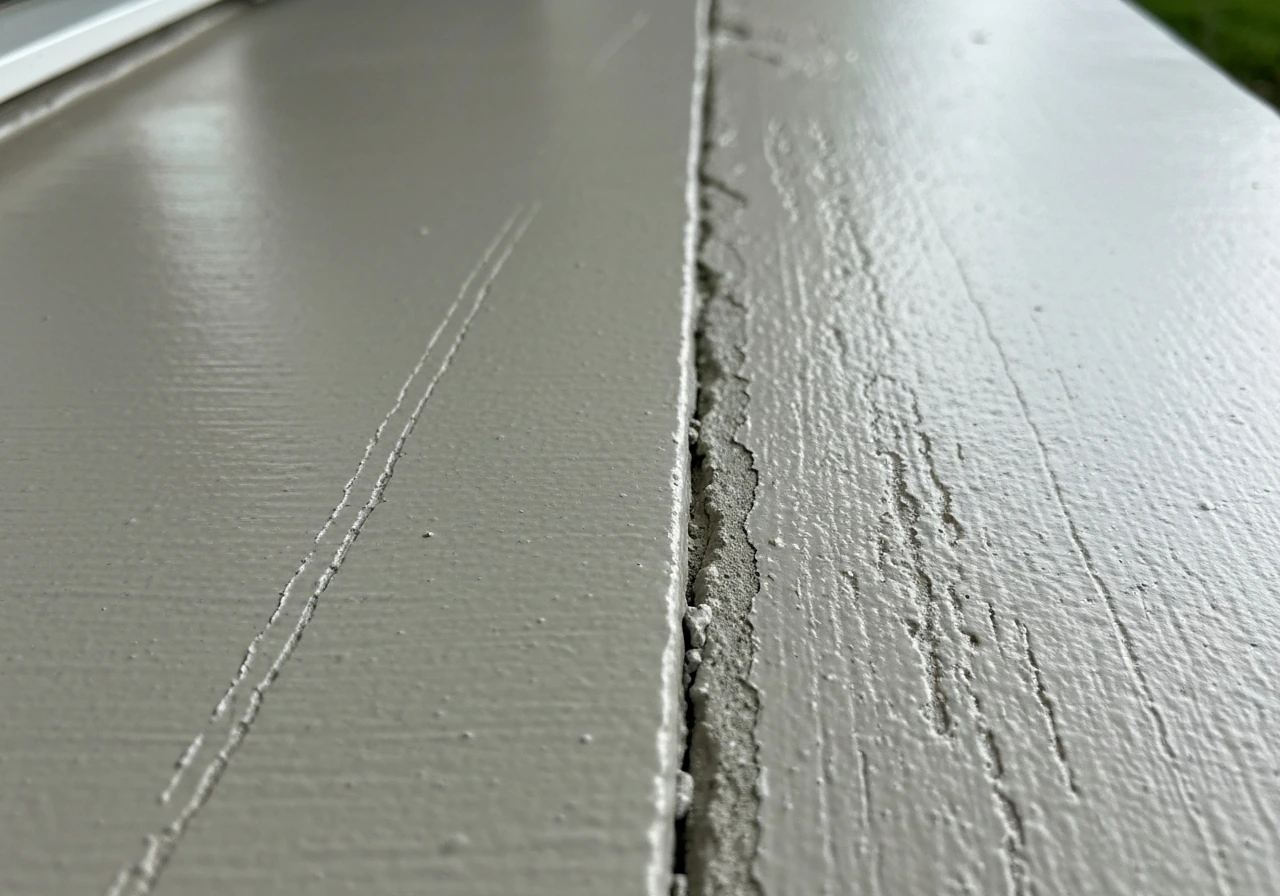
The epoxy fortification gives AllFlor better scuff and abrasion resistance than a basic latex porch paint, and that shows up in reviews from users who followed the prep and cure steps. On wood porches with proper prep, users generally report good performance through multiple seasons. On concrete patios, results are more mixed, largely because concrete prep is more demanding and easier to shortcut.
Peeling is the most commonly reported failure, and in the vast majority of cases it traces back to inadequate surface prep, painting over a sealed concrete surface that wasn't etched, or not allowing full cure before furniture contact. Users who report no peeling problems almost universally mention they spent time on prep. Users who had peeling issues within a few months or after the first wash typically mention they didn't do much prep or painted quickly over an old painted surface without checking its condition. Fakespot's review-quality and durability analysis for ALLFLOR Porch & Patio floor paint similarly flags that some buyers report peeling or chipping after a few months or after washing, while others report no wear issues users who had peeling issues within a few months or after the first wash.
Fading is less of a reported issue with AllFlor than with cheaper latex paints. The manufacturer's claim of maximum color retention has some backing in user experience, particularly in mid-tones and deeper colors. That said, south-facing concrete patios in high-UV climates (think Arizona, New Mexico, Texas) will see more fading than shaded porches in the Northeast, regardless of the paint brand.
Mildew resistance is adequate for most conditions but not exceptional. In very humid regions, keeping the surface clean and dry as much as possible matters more than the coating's inherent mildew resistance. The paint's breathability helps in damp conditions by not trapping moisture, but it's not a mold-prevention coating.
Slip resistance is worth mentioning specifically. Like all floor enamels, AllFlor gets noticeably more slippery when wet. If you have a shaded porch that stays damp, or steps that get morning dew, the manufacturer recommends adding the Slip Resistant Additive (product F09098) at 1 pint per gallon before application. Do this, especially on steps. It's cheap insurance.
Color, finish, and what it looks like after a year
Coverage is 350 to 400 square feet per gallon on smooth surfaces, and 250 to 300 square feet per gallon on porous surfaces. If you're spraying instead of rolling, plan for roughly half those numbers due to material loss. A 200-square-foot porch with moderately smooth concrete will use close to a full gallon for two coats, so don't try to stretch one gallon over a large area.
The low-luster finish sits between flat and satin. It's not shiny like an enamel trim paint, and it's not chalky-flat either. On a porch floor, that's the right call aesthetically. It looks intentional and clean rather than painted-over. The sheen level also means scuffs and minor wear are less visible than they'd be on a higher-gloss finish.
Touch-ups are the one area where I'd set realistic expectations. Like most floor paints, touch-ups on AllFlor can look slightly different in sheen and texture than the surrounding field, especially after the original coat has been exposed to UV and foot traffic for a season. Fresh paint tends to look shinier and more saturated than weathered paint. If you need to touch up a significant area, feather the edges out widely to blend. For small chips or worn spots, touch-ups work fine visually from a standing distance, but they probably won't be invisible up close.
Who tends to love it and who gets disappointed
Looking at the pattern across Home Depot reviews and aggregated sentiment analysis, AllFlor has a genuinely satisfied user base among homeowners who took prep seriously and gave it the cure time it needed. The product earns its fans when used correctly.
Users who tend to be happy with AllFlor:
- Homeowners painting previously painted wood porches in sound condition (no peeling, no rot)
- DIYers who etched or abraded their concrete first and thinned the first coat as instructed
- Buyers who planned around weather windows and didn't rush the cure
- People who added the slip-resistant additive and appreciated the safety improvement
- Those in moderate climates who don't see extreme temperature swings
Users who tend to be disappointed:
- Homeowners who painted over sealed or glossy concrete without etching first
- People who painted in summer heat when surface temps exceeded the 90°F limit
- Anyone who put furniture back within a day or two of painting
- DIYers who expected one coat to be sufficient on porous or older surfaces
- Buyers in the Southeast or Pacific Northwest who painted during high-humidity stretches
Value, cost, and how it compares to the alternatives

AllFlor is positioned as a mid-range specialty floor paint, not a budget option and not a premium coating. At typical retail pricing, a gallon runs in the range of $30 to $45 depending on the base and retailer. At 350 square feet per gallon on smooth surfaces, that works out to roughly $0.09 to $0.13 per square foot per coat, so about $0.18 to $0.26 per square foot for two coats. That's reasonable for a quality acrylic-epoxy enamel.
| Paint | Type | Approx. Coverage | Key Strength | Best For |
|---|---|---|---|---|
| AllFlor (California Paints) | Acrylic enamel + emulsified epoxy | 350–400 sq ft/gal (smooth) | Hardness, adhesion, breathability | Wood porches, concrete patios, steps, masonry |
| Behr Porch & Patio | Acrylic latex enamel | 400 sq ft/gal | Wide color range, easy availability | Wood and masonry porches, light traffic |
| Valspar Porch & Floor | Acrylic latex | 300–400 sq ft/gal | Good UV resistance | Covered porches, moderate climates |
| Olympic Patio Tones Deck Coating | Thick elastomeric coating | 75–100 sq ft/gal | Fills cracks, hides surface flaws | Rough or cracked concrete, heavy texture |
Compared to Behr Porch and Patio paint, AllFlor's epoxy fortification gives it a hardness edge on high-traffic surfaces. If you are comparing options, the Behr Porch and Patio paint reviews are worth checking for how it performs on similar high-traffic porches and patios. Behr has a broader retail footprint and more color options, which matters if you're color-matching. Valspar Porch & Floor is a solid competitor with good UV resistance. Olympic Patio Tones is a different category entirely: it's a thick coating meant to hide cracks and rough surfaces, not a finish paint for a smooth or moderately worn floor. If your concrete is heavily cracked or pitted, Olympic's thicker coating may be a better starting point.
AllFlor is worth it when you want a harder, more durable finish than standard latex porch paint and your surface is sound enough to take a penetrating coat properly. It's not worth it if your surface is severely damaged, cracked, or has persistent moisture problems from below, because no floor paint solves those underlying issues.
Where to buy it, and when to call a pro
AllFlor is available at Home Depot in gallon and quart sizes, listed within the porch and floor paint category. Home Depot’s Low-Lustre porch and floor paint listings include ALLFLOR gallon products, showing it’s carried through mainstream retail channels ALLFLOR is available at Home Depot in gallon and quart sizes. California Paints also has an independent dealer network, so local paint stores sometimes stock it or can order it. Buying from a local paint store has an advantage: the staff can often help you select the right base for your tint and give region-specific advice. If you're in a climate where surface temps regularly push against the 90°F limit, that conversation is worth having before you buy.
For most homeowners with a standard porch or patio in decent condition, this is a manageable DIY project. You need a weekend, patience during prep, and the discipline to wait on cure time. Where I'd recommend bringing in a pro:
- Your concrete has active moisture issues (efflorescence, damp spots, water coming up from below). A pro can assess whether a paint or a sealer/coating system is the right fix.
- You have large areas of peeling or failing paint that need to be removed over more than 100 to 200 square feet. Prep at that scale gets tedious and easy to shortcut.
- Your porch or patio surface has structural cracks, significant spalling, or needs patching before paint. A pro can assess whether those repairs are cosmetic or structural.
- You're considering spray application over a large area. Airless spray on a concrete patio is faster but requires proper masking, and coverage efficiency drops significantly.
Before you buy a gallon, do these checks: test the water-drop test on your concrete to determine if etching is needed, assess any old paint for peeling or adhesion failure, check your local 10-day forecast for a stretch of 50 to 90°F surface temps with low humidity, and decide if you need the slip-resistant additive (especially for steps or shaded porches). If all those boxes are checked, AllFlor is a well-regarded product that delivers on its claims when used as directed.
FAQ
How can I tell if my concrete needs etching before using allflor porch and patio paint reviews say it will hold?
Do a water-drop test. If the water beads up or sits on top, the surface is likely sealed and needs etching to create tooth, otherwise adhesion can fail and you get peeling. If it darkens and absorbs within a few minutes, you may still need a light prep to remove laitance, but etching is less likely to be required.
What’s the fastest safe way to move patio furniture back after painting with AllFlor?
Avoid the “dry to touch” trap. Even though light foot traffic can be safe around 24 hours, furniture contact should wait the full 7 days to prevent imprinting and to allow the coating to harden enough for good adhesion. If you must return items early, use protective glides and avoid sliding them across the surface.
Can I paint over a previously painted porch floor with AllFlor?
Only if the existing coating is sound. Check for peeling, flaking, soft spots, and glossy areas that resist scuffing. If adhesion looks questionable, you need to remove loose paint and roughen the remaining surface, otherwise the new layer can peel along the old failure plane.
What should I do if my porch gets dew in the morning after I paint?
Plan so the surface stays dry for curing windows, dew and persistent dampness can delay proper film formation and increase slip risk. If dew is common, consider adding the slip resistant additive and schedule application during a stretch where mornings are dry, not just where daytime temperatures look acceptable.
Is AllFlor safe for garage floors, or is that only a marketing warning in allflor porch and patio paint reviews?
It’s not recommended for garage floors, even if your garage is rarely used. Hot tire pickup, heavy vehicle loads, and higher abrasion exceed what this coating is intended to handle, so expect faster wear and potential adhesion issues.
Should I use a roller or spray for the best results with AllFlor coverage?
For most DIYers, rolling is more predictable because spray tends to waste more material and can lead to thinner, uneven film build. If you spray, compensate in your estimate using roughly half the stated coverage, and keep a consistent wet edge to reduce patchiness and sheen differences.
What’s the correct way to apply on concrete, thin the first coat, or thin both coats?
Thin only the first coat 10 to 20 percent with water to help penetration and bonding. Apply the second coat at full strength so you build the correct film thickness for durability.
Why do some AllFlor touch-ups look shinier or don’t blend well?
Fresh coating typically looks more saturated and slightly different in sheen because it hasn’t been UV- and traffic-weathered yet. Feathering edges widely helps for larger areas, but small touch-ups can still look different up close, especially on sun-exposed concrete where the surrounding film ages at different rates.
Does AllFlor hold up against mildew, or do I need additional treatment?
It’s adequate for normal conditions but not a dedicated mold-prevention coating. In very humid or shaded areas, the biggest performance driver is keeping the surface clean and drying quickly. Regular washing and good drainage matter more than relying on the paint alone.
What slip-resistance option should I use if my steps or porch stays wet?
Use the slip resistant additive (F09098) at 1 pint per gallon before application, especially on steps or shaded porches that get morning dew. Without it, the surface can get noticeably more slippery when wet even if the coating is otherwise durable.
How strict is the temperature limit of 90°F surface temperature for application?
It matters. If the surface is hotter than the stated limit, the paint can set too fast, which hurts leveling and film formation and can increase the risk of poor adhesion. If you’re in hot climates, paint early in the day and verify surface temperature, not just air temperature.
If I see mild peeling after washing, does that mean the paint is defective?
Most early peeling points to a surface issue, like inadequate prep, painting over sealed concrete without etching, or returning to heavy use too soon. Reassess prep steps and cure time first, because the product usually performs when film formation and bonding conditions were met.