
BEHR Porch & Patio Floor Paint is a solid mid-range choice for concrete and wood outdoor floors, especially if you prep the surface correctly. For more detailed all-floor porch and patio paint reviews, including how different products hold up over time, see the rest of the BEHR breakdown in this guide prepped. Homeowners consistently praise its durability on low-to-moderate traffic areas, its decent coverage, and how well it holds color through sun and rain cycles. Where reviews get mixed is on heavily used steps, scuff-prone areas, or when people skip the etching step on bare concrete. The short version: prep right, apply two coats, let it cure fully before foot traffic, and most people are happy with the result. Rush it or skip prep, and you'll be repainting within a season.
BEHR Porch and Patio Paint Reviews: Floor vs Paint+Primer

What 'porch and patio paint' vs 'porch and patio floor paint' actually means
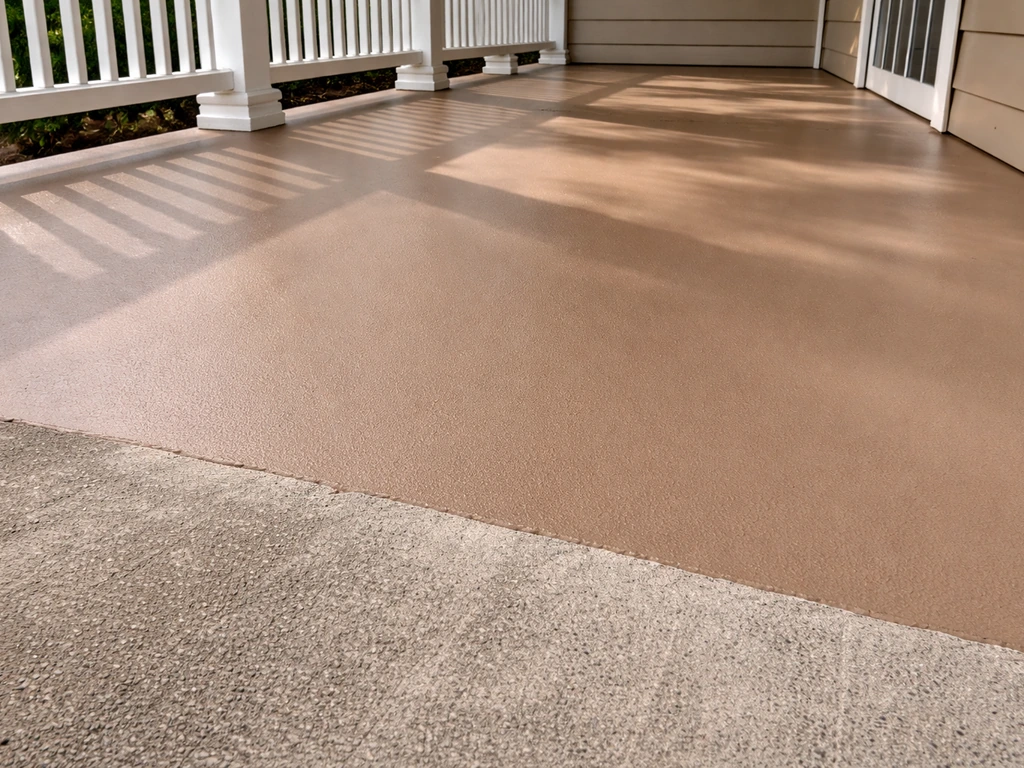
BEHR uses these names in a way that can confuse shoppers, so let's clear it up. The 'Porch & Patio Floor Paint' (like the Gloss Enamel, product 6705) is the heavier-duty, traffic-rated option formulated specifically for floors, steps, and horizontal surfaces that take foot traffic, UV exposure, and repeated wet/dry cycles. It's a 100% acrylic formula rated for both wood and concrete, and BEHR markets it for resisting scuffing, fading, cracking, and peeling. BEHR markets the Gloss Enamel (product 6705) for resisting scuffing, fading, cracking, and peeling on interior or exterior floors and horizontal surfaces. Then there's the 'Porch & Patio Paint & Primer in One Floor Paint' (product 6060, available in Low-Lustre Enamel), which is also 100% acrylic latex with a mildew-resistant finish and the same durability claims, but with the added angle of being self-priming.
The reviews this article covers span both the Gloss Enamel and the Paint & Primer in One Low-Lustre versions, plus the anti-slip textured low-lustre variant that shows up on The Home Depot's shelves for people who want grip on wet surfaces. If you've been searching 'behr porch and patio paint reviews' hoping to figure out which exact product to buy, you're in the right place. These are all variations on the same core line, and the real differences come down to sheen, self-priming convenience, and whether you need an anti-slip texture.
Paint + primer in one: when it's enough and when reviews say to add a real primer
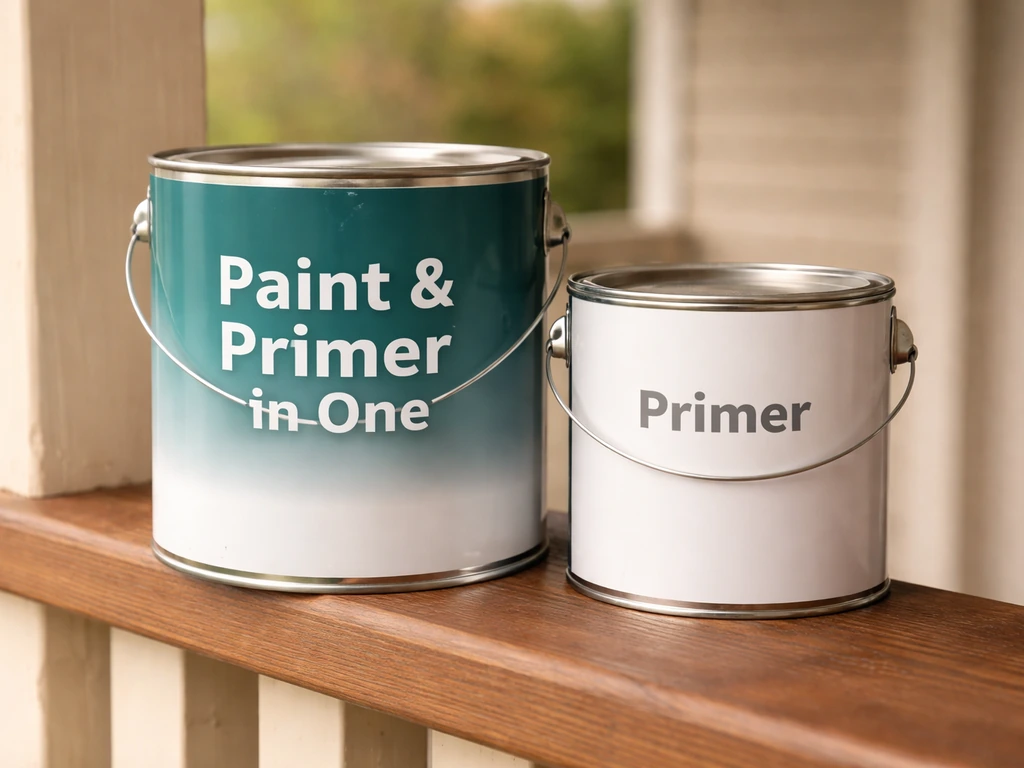
The 'Paint & Primer in One' label sounds like a shortcut, and sometimes it is. BEHR's own documentation frames it this way: the first coat acts as the primer, the second coat is the finish. That works reliably on properly prepared surfaces that are already painted or previously primed, and on sound, clean wood in good condition. It also works reasonably well on concrete that's been properly etched. But here's where reviews start to diverge from the marketing.
BEHR's own system recommendations by substrate (from the Canada product PDF for the Low-Lustre Enamel) make the real picture clear. For wood, you can self-prime with two coats of the floor enamel, or use one coat of BEHR Multi-Surface Stain-Blocking Primer & Sealer (No. 436) followed by two coats for optimum performance. For concrete, same deal: two coats self-priming, or one coat of BEHR Concrete & Masonry Bonding Primer (No. 880) or No. 436, then two finish coats. For composite surfaces, they actually recommend the dedicated primer plus two coats, period. So 'paint and primer in one' is really 'self-priming under ideal conditions.' If your surface is bare, porous, or in rough shape, a dedicated primer coat will almost always produce better adhesion and less chance of peeling.
Reviewers who skipped dedicated primer on bare, porous concrete and went straight to two coats of the self-priming product occasionally reported adhesion issues within a year, especially in climates with hard freeze-thaw cycles. If you're in Minnesota or Colorado, don't skip the bonding primer on bare concrete. If you're in a milder climate like the Southeast or Southwest and working over an already-primed or previously painted surface in solid condition, the paint-and-primer-in-one approach is usually fine.
What reviews actually say: the real pros and cons
Pulling together what homeowners consistently say across The Home Depot product reviews for the various BEHR Porch & Patio SKUs paints a pretty clear picture.
What people like
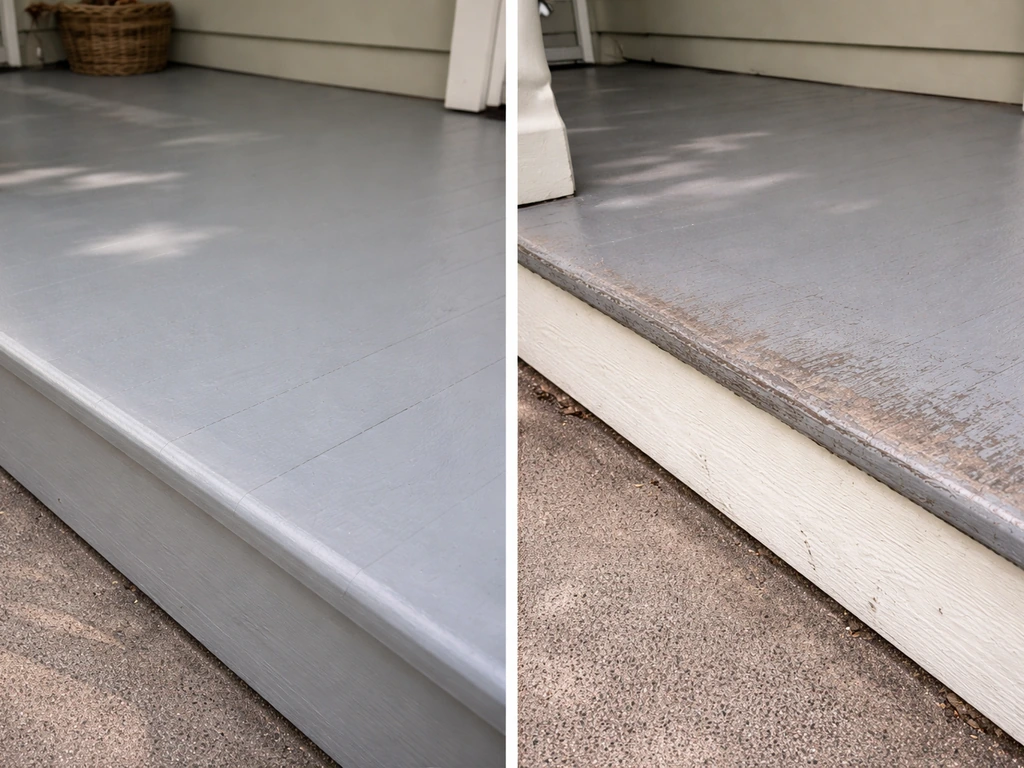
- Durability on moderate-traffic surfaces: reviewers on porches, patios, and covered entries report the paint holding up well through 2 to 3 seasons with minimal fading or cracking when applied correctly.
- Adhesion on prepared concrete: when people followed the cleaning and etching steps, adhesion complaints are rare. The 100% acrylic formula bonds well to concrete that's been properly profiled.
- Coverage: the listed 300 to 400 sq ft per gallon on smooth surfaces and 200 to 300 on rough surfaces tracks well with real-world reports. Most DIYers find one gallon gets a typical 200 to 250 sq ft porch done in two coats.
- Leveling and finish: the gloss enamel rolls out smoothly without heavy lap marks when applied with a 3/8-inch nap roller on concrete. The low-lustre version is more forgiving on uneven surfaces.
- Weather resistance: consistent positive feedback on sun and rain performance, especially in moderate climates. People in the Gulf Coast and Pacific Northwest both report good outcomes.
- Anti-slip textured option: reviewers specifically appreciate the textured low-lustre variant for steps and pool-adjacent surfaces where wet traction matters.
Common complaints
- Scuffing on high-traffic steps: the most frequent criticism. Reviewers with busy household steps, especially in homes with kids or pets, report visible scuff marks appearing within a few months.
- Peeling when prep was rushed: nearly every negative review traces back to skipping etching, painting over a dirty or damp surface, or applying in weather that was too hot or too cold.
- Slow cure vs dry to touch confusion: people walk on it after an hour because it feels dry, then get scuffs and marks in the paint. The 1-hour dry-to-touch time is not the cure time. More on this below.
- Not for garage floors or automotive tire areas: this is stated on both the Gloss Enamel and the Paint & Primer in One products, but reviewers who tried it in garage-adjacent areas or parking pads report it fails fast under tire contact.
- Color darkening on wet concrete: a few reviewers noted the paint looks noticeably darker when the concrete underneath is slightly damp. This is a curing issue, not a product defect, but it surprises people.
- Odor during application: it's a water-based latex so cleanup is soap and water, but there's still a noticeable odor during application. Plan for ventilation, especially on covered porches.
Best surfaces and conditions for this paint
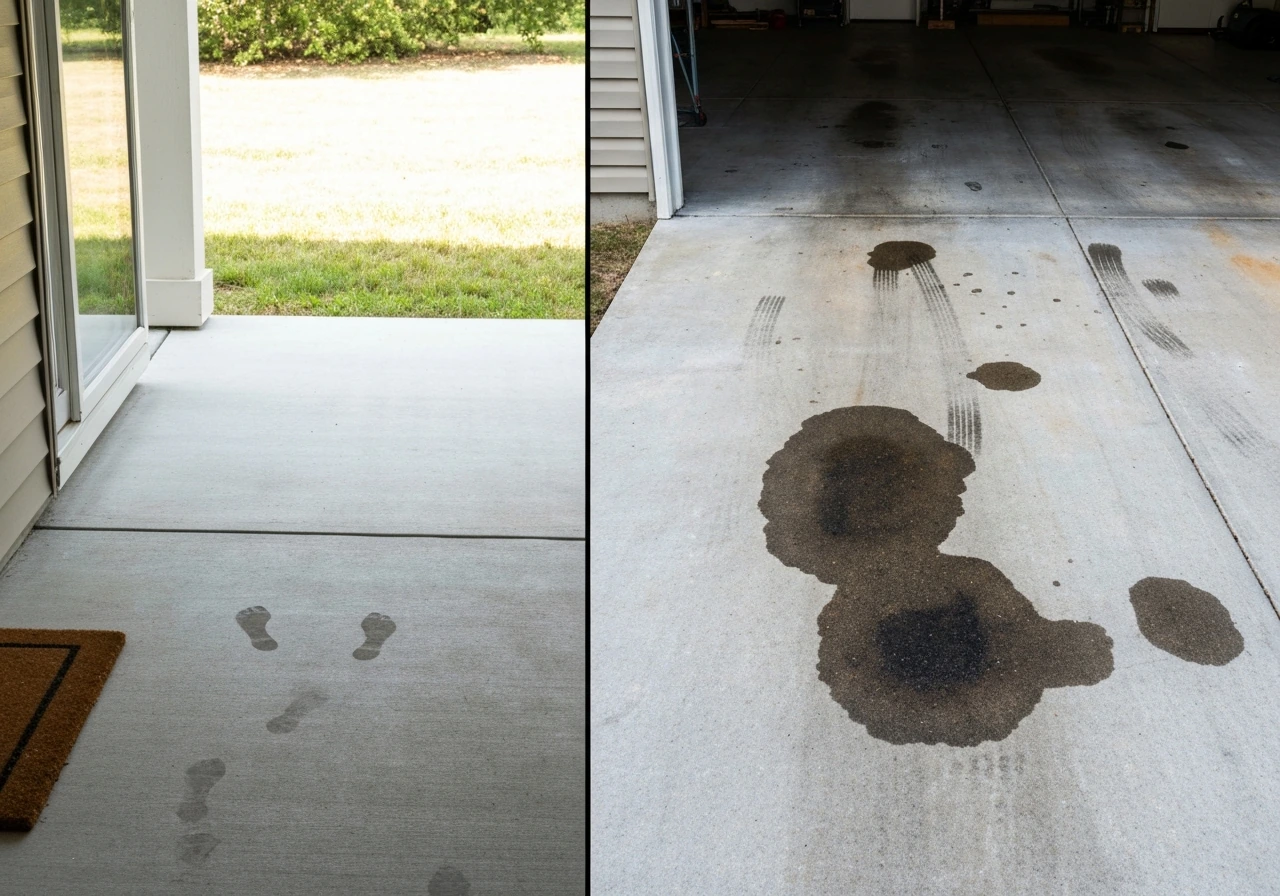
BEHR Porch & Patio Floor Paint works best on horizontal outdoor surfaces that get regular foot traffic but not vehicle traffic. Think covered porches, open patios, front entry stoops, exterior steps, and back patio slabs. It's rated for both concrete and wood, which makes it versatile if your porch has a wood deck surface leading into a concrete patio. It is not designed for garage floors, driveways, or any area where car or truck tires contact the surface.
| Surface Type | Works Well? | Notes |
|---|---|---|
| Concrete porch or patio slab | Yes | Etch bare concrete first. Two coats minimum. |
| Wood porch floor (painted or bare) | Yes | Sand glossy surfaces, use bonding primer on bare wood for best results. |
| Exterior steps (concrete or wood) | Yes | Consider anti-slip textured variant for safety on wet days. |
| Composite decking | Marginal | BEHR recommends dedicated primer first; adhesion can be inconsistent without it. |
| Garage floor or parking slab | No | Explicitly excluded by BEHR; fails under tire contact. |
| Pool deck or wet-area surfaces | Use textured version | Standard gloss can be slippery when wet; anti-slip variant is the right call here. |
Climate matters too. In hot-sun climates like Texas or Arizona, the gloss enamel can feel sticky or soft in peak summer heat if the underlying concrete gets very hot. The low-lustre finish holds up slightly better in intense heat because it's less prone to showing marks when the film softens. In freeze-thaw climates, the prep work (especially etching and bonding primer on bare concrete) is more critical because expansion and contraction will exploit any weak adhesion point.
Getting prep right: this is where most DIYers succeed or fail
I'll be direct: the majority of bad reviews for BEHR Porch & Patio paint come down to prep. The product performs well when the surface is right. It underperforms when someone applies it over a dirty, greasy, glossy, or unsound surface. BEHR's own prep guidance separates uncoated concrete from previously coated or weathered surfaces, because the approach genuinely differs.
For bare or uncoated concrete
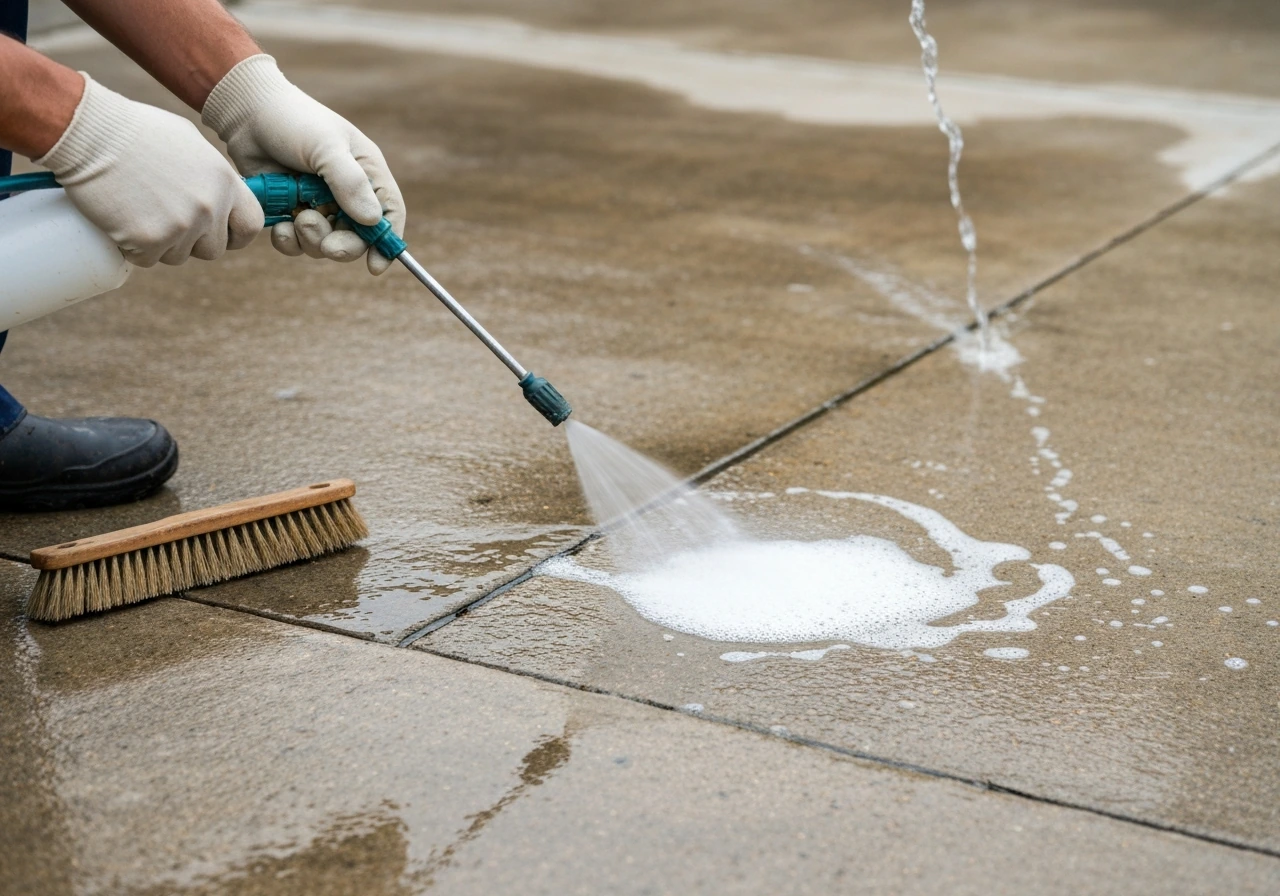
- Clean thoroughly: remove all dirt, oil, grease, mildew stains, and any efflorescence. A degreaser followed by a rinse is the minimum. For mildew, a diluted bleach solution works, but rinse fully.
- Etch the surface: BEHR's prep instructions specifically call for etching bare concrete using a product like BEHR PREMIUM Concrete & Masonry Cleaner & Etcher to create a surface profile similar to 150-grit sandpaper. This is what gives the paint something to grip. If you skip this on smooth or trowel-finished concrete, adhesion will be weak.
- Rinse and dry completely: this is not optional. Painting over damp concrete is one of the most common causes of adhesion failure and color inconsistency.
- Consider a bonding primer: on bare, porous, or previously unsealed concrete, a coat of BEHR Concrete & Masonry Bonding Primer (No. 880) before the floor paint gives you meaningfully better long-term adhesion, especially in freeze-thaw climates.
For previously painted or coated surfaces
- Check the existing coating: if it's peeling, flaking, or failing anywhere, you need to strip it or grind it back to a sound surface. Painting over failing paint just delays the problem.
- Scuff-sand glossy surfaces: existing gloss paint won't bond well. Scuff sand with 80 to 100 grit to give the new coat something to grip.
- Use paint stripper if needed: BEHR's guidance specifically mentions using a paint stripper if existing coatings are failing or peeling across larger areas. Don't try to paint over it.
- Clean and dry: same as bare concrete. No exceptions.
One thing reviewers don't always mention but contractors emphasize: patch cracks and spalls before painting. A floor paint is not a crack filler. Use a concrete patching compound for anything deeper than a hairline crack, let it cure fully, then proceed with your paint system.
How to apply it: rollers, coats, coverage, and the drying vs curing trap
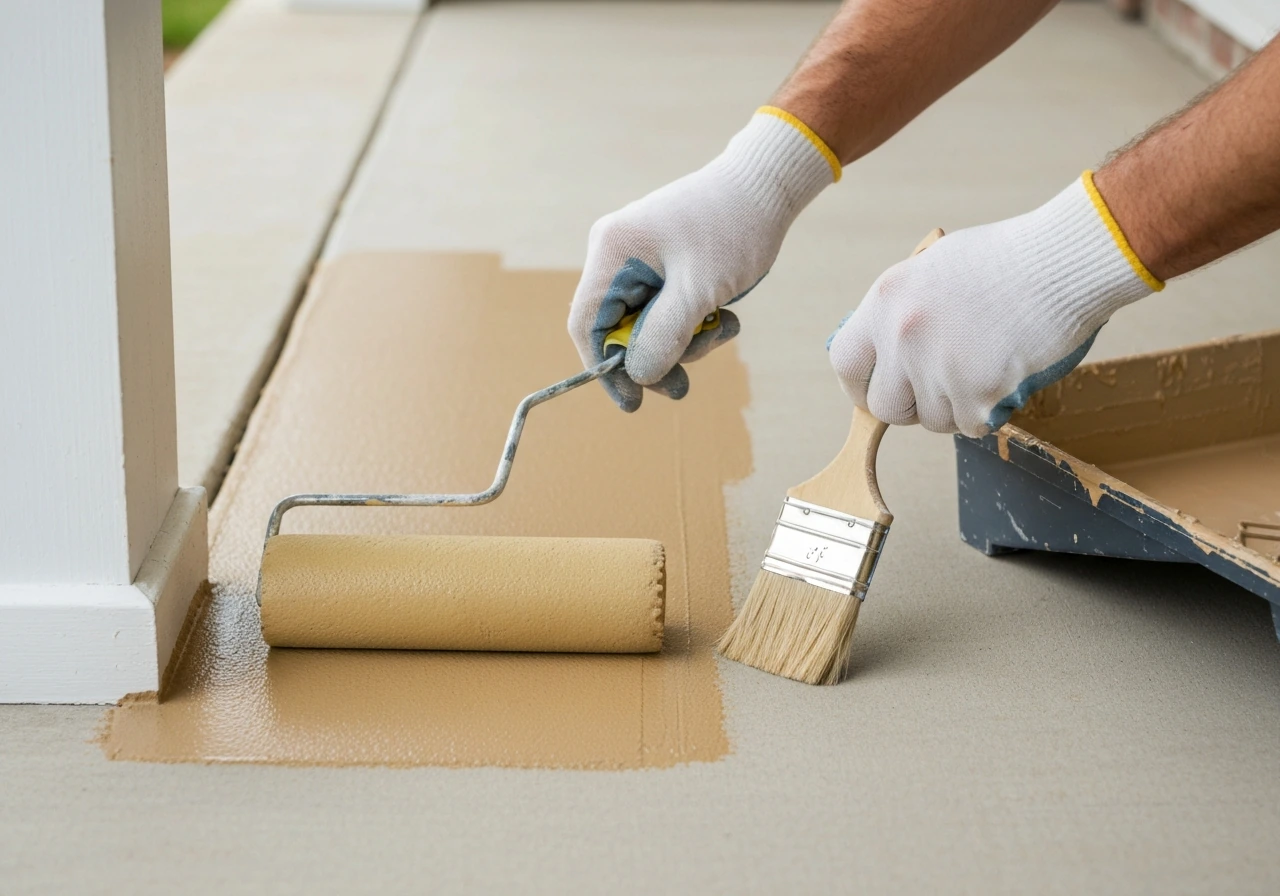
For most concrete or wood porch floors, a 9-inch roller with a 3/8-inch nap is the right tool. Use a brush to cut in around edges, posts, and any tight areas, then roll the field. The low-lustre formula is more forgiving of roller technique than the gloss enamel, which will show lap marks if you overwork it. Roll in one direction and keep a wet edge.
Plan on two coats. The first coat is absorbed more than you expect, especially on concrete, and one coat rarely gives you the coverage or durability you want. On smooth surfaces you'll get 300 to 400 sq ft per gallon; on rough or porous concrete it drops to 200 to 300. For a typical 200 sq ft porch in two coats, budget about 2 gallons.
Here's the timing trap that catches a lot of DIYers: the paint is dry to the touch in about 1 hour. That makes it tempting to walk on it, put furniture back, or apply the second coat too fast. BEHR's guidance is clear: wait 4 to 6 hours before recoating, and do not allow heavy foot traffic until the paint has fully cured. Full cure takes significantly longer than dry to touch, generally 24 to 72 hours depending on temperature and humidity. BEHR's Pro one-sheet for Porch & Patio Floor Paint lists a 4 to 6 hour recoat window blank" rel="noopener noreferrer">wait 4 to 6 hours before recoating. In cooler weather or high humidity, lean toward the longer end. Premature heavy traffic is one of the most direct causes of scuffing and paint failure mentioned in reviews.
Apply when temperatures are between 50°F and 90°F and humidity is below 85%. Hot concrete in direct afternoon sun in July is a bad painting surface, because the paint can skin over before it bonds properly. Early morning application in summer heat is your best bet. Cleanup is soap and water while wet.
Color, sheen, and the gotchas most people don't expect
BEHR offers the Porch & Patio line in a solid range of colors, and the color accuracy is generally good once cured. But a few things trip people up.
First, sheen choice matters more than people realize. The Gloss Enamel looks sharp on a clean, smooth surface, but it shows scuffs and marks more visibly than the Low-Lustre. It also gets slippery when wet. If your porch or patio gets rain or morning dew, or if you have kids or older family members using the space, the Low-Lustre finish is the safer, more practical choice. For steps or any surface near water, the anti-slip textured low-lustre version is worth the slight texture trade-off.
Second, color looks different wet vs dry, and different on concrete vs wood. Do a test patch if you're unsure. Darker colors absorb more heat on concrete in direct sun, which can soften the film slightly and make it more prone to showing impressions from furniture feet. Use felt pads under any outdoor furniture sitting on a freshly painted surface.
Third, temperature and humidity genuinely affect the finish. Painting in high humidity can cause a milky or hazy appearance as the paint cures. It usually clears up, but it's worth waiting for a drier day. Painting in very hot direct sun causes the paint to dry too fast on the surface before it levels properly, leaving a bumpy or stippled texture. Shade the surface if you can, or paint in the early morning.
Finally, traction: reviewers sometimes express surprise that a gloss floor paint is slick underfoot. It is. That's the trade-off for the smoother, more elegant finish. If traction is a concern, either choose the anti-slip variant or add a non-slip additive (like fine sand) to the final coat yourself.
How BEHR compares to other porch and patio paints
BEHR sits in a strong middle ground: it's more accessible and widely available than specialty floor coatings, and it performs better in real-world reviews than many budget alternatives. Valspar Porch, Floor, and Patio paint is a frequent comparison point and is similarly priced with a comparable acrylic formula. Valspar porch floor and patio paint reviews can also help you gauge how its acrylic formula holds up in sun, rain, and scuff-prone spots Valspar Porch, Floor, and Patio paint. Olympic Patio Tones deck coating targets a slightly different use case, skewing toward wood decks. If you're specifically evaluating which paint-and-primer-in-one formula does the best job on a concrete patio with moderate traffic, BEHR is a strong contender and easier to find in most markets. Other options in this category are worth comparing if you have specific surface or regional performance needs.
Bottom line: which version to buy, and your pre-paint checklist
Here's the direct recommendation: if you have a covered or partially covered porch, patio, or entry with moderate foot traffic, the BEHR Porch & Patio Paint & Primer in One Low-Lustre Enamel (No. 6060) is the best starting point. It's self-priming over previously painted or well-prepped surfaces, durable enough for daily use, and the low-lustre finish hides minor imperfections better than the gloss. If you want a sharper, more formal finish and your surface is very smooth and well-sheltered, the Gloss Enamel (No. 6705) is a good pick. For steps, pool surrounds, or anywhere that gets wet, go with the anti-slip textured low-lustre variant.
Skip BEHR Porch & Patio entirely for garage floors, driveways, and anywhere automotive tires contact the surface. It's not designed for that, and reviews from people who tried it in those areas confirm it fails fast.
Pre-paint checklist before you open the can
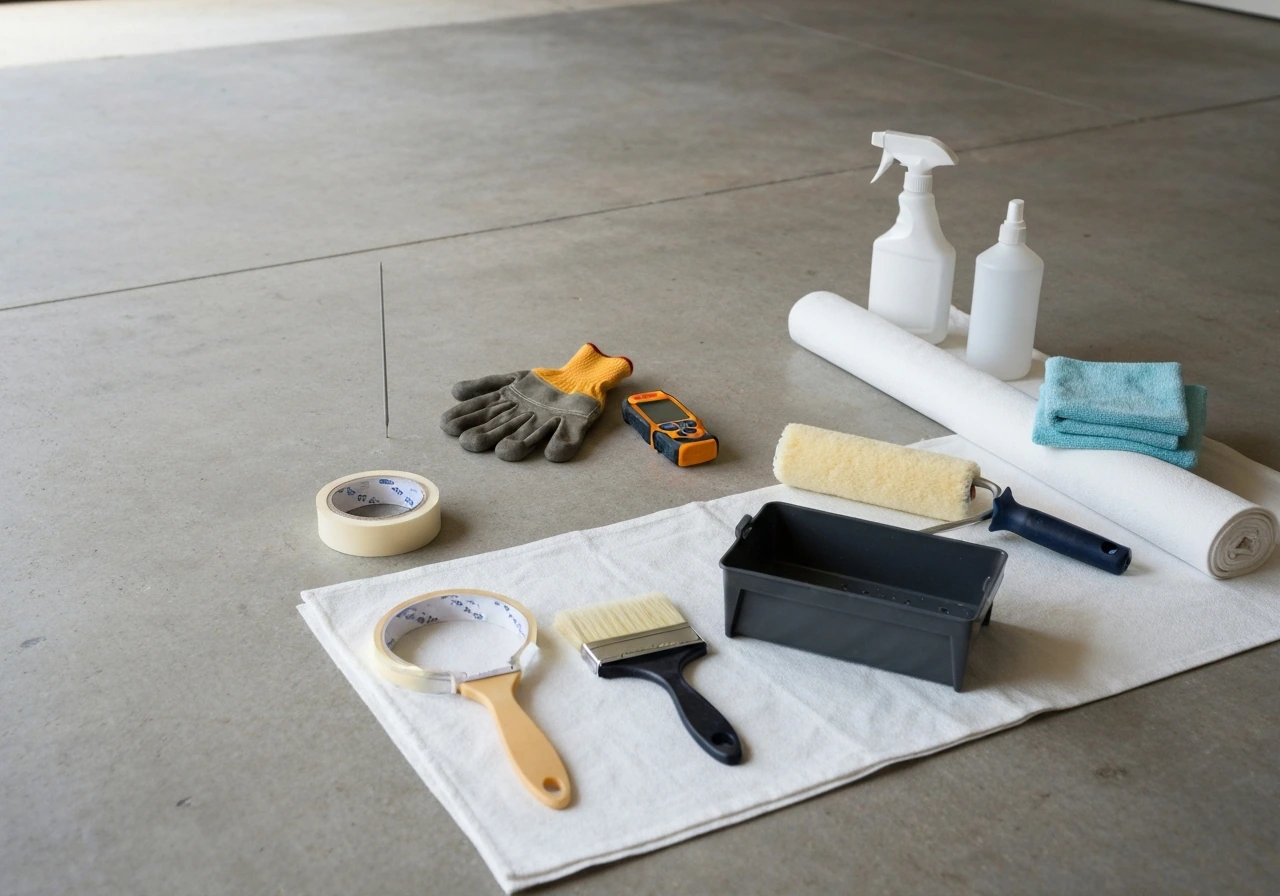
- Confirm the surface is concrete, wood, or composite (not a garage floor or automotive area).
- Clean the surface thoroughly: remove dirt, grease, oil, and mildew. Let it dry completely.
- Etch bare concrete with a concrete cleaner and etcher product to create a bonding profile.
- Patch any cracks or spalled areas with concrete patching compound and let it cure fully.
- Scuff-sand any glossy existing paint surfaces with 80 to 100 grit.
- If working over bare concrete in a freeze-thaw climate, apply a coat of concrete bonding primer (No. 880 or No. 436) before the floor paint.
- Check the weather forecast: no rain for at least 24 hours, temps between 50°F and 90°F, humidity below 85%.
- Buy a 3/8-inch nap roller, a brush for cut-in work, and calculate your square footage at 300 to 400 sq ft per gallon for smooth surfaces or 200 to 300 for rough.
- Apply two coats, waiting 4 to 6 hours between coats.
- Stay off the surface (light foot traffic only) for 24 hours. No heavy furniture or full traffic for 72 hours. No exceptions if you want it to last.
Do all of that and you're very likely to land in the satisfied majority of reviewers who get 2 to 3 seasons of solid performance from this paint. Skip the prep steps and rush the cure time, and you'll be in the frustrated minority writing a one-star review about peeling. The product holds up its end of the deal when you hold up yours.
FAQ
Can I use BEHR Porch and Patio paint on vertical surfaces like porch columns or the face of a step riser?
It is intended for horizontal, traffic-bearing outdoor surfaces. If you paint vertical areas, expect faster wear because water runs and scuffs differently there. For vertical trim, look for a wall or trim enamel made for that orientation, or plan on more frequent touch-ups.
What should I do if my concrete has old paint, but the surface is rough or peeling at the edges?
Do not assume the self-priming coat will “lock it down.” Scrape and remove all loose or lifting sections, feather the edges smooth, then follow with the appropriate primer step for concrete. If you leave failing paint in place, reviews often show peeling starting along those weak seams.
How do I decide between the gloss enamel and the low-lustre when I need both aesthetics and traction?
Gloss will look cleaner on smooth, sheltered floors but it is more prone to visible scuffs and it can be slick when wet. If rain, morning dew, or frequent footsteps are common, choose low-lustre or the anti-slip textured variant, then accept a slightly less shiny look for safer traction.
Is it okay to mix applications like using the anti-slip textured topcoat over a smoother gloss base coat?
Stick to one system when possible. If you want anti-slip, use the textured low-lustre variant for the finish coat sequence, and ensure the prior layer is fully cured and intact. If you change sheen or texture between coats, adhesion and uniform appearance can become inconsistent.
Can I apply BEHR Porch and Patio paint over pressure-treated wood or newly stained wood?
Wait until the wood is fully cured and dry, and verify the surface is sound. Pressure-treated lumber often needs a weathering period and proper preparation so the coating can bond. If the surface is still wet, oily, or inadequately cleaned, adhesion problems can show up within a season.
What’s the biggest mistake people make with the “in one” paint and primer option?
Using it like a filler or a bond-bridge over bare, porous, or poorly prepared concrete. The self-priming benefit works best when the surface is clean, properly etched if bare concrete, and already in good condition. For rough or bare porous areas, dedicated bonding primer generally reduces peeling risk.
Can I paint over a concrete surface that was sealed with a sealer or curing compound?
Often, you should not. Sealers and some curing compounds can block adhesion unless they are properly removed or mechanically abraded. If the surface feels slick or repels water after etching attempts, you likely need a different surface prep approach before painting.
How long should I wait before placing furniture, rugs, or heavy items on the painted porch?
Dry to the touch is not the same as cured. Plan for longer than you think, and protect the surface with felt pads for furniture. Heavy loads early can cause impressions and scuffing that may not disappear even after the paint fully hardens.
What’s the correct way to handle a hairline crack versus a spall or deeper crack?
Hairline cracks can sometimes be manageable with proper cleaning and coating over after prep, but spalls, missing concrete, or cracks deeper than a thin hairline need patching first. Patch with a concrete repair compound, let it cure fully, then paint. A floor paint is not meant to replace structural or repair work.
Why does my paint look milky or hazy after application, and should I repaint immediately?
Milky or hazy appearance is usually a curing issue from high humidity or cool damp conditions. Do not rush to scrape and repaint the same day. Give it adequate cure time, and only reassess if the finish remains permanently hazy or shows adhesion failure.
What should I do if I missed the recommended recoating window and the first coat has fully cured?
If the first coat is fully cured and still bonded, you can usually proceed with the finish coat after cleaning and lightly deglossing if needed. If it has failed or looks poorly bonded, you may need to redo prep, especially on bare concrete where adhesion is critical.
Is there a better roller choice if my porch has texture or pitting in concrete?
Yes, match the nap to the surface texture. A 3/8-inch nap is a common fit for many outdoor concrete floors, but very pitted or rough areas may need a slightly longer nap to avoid thin spots. Thin spots drive the “peeling within a season” complaints, especially on porous concrete.
Can I speed up cure by using fans or heaters?
Improving airflow can help, but avoid creating extreme heat that causes skin-over or uneven curing. If you use heaters, keep the environment stable and do not overheat the slab in direct sun. Follow temperature and humidity conditions as closely as possible for reliable bonding.
How do I add non-slip traction without ruining the finish?
Use the anti-slip textured variant when you can, because it is designed for traction. If you add a non-slip additive to the final coat, keep it controlled so it does not clump or create a gritty mess. Always do a small test area first and ensure the surface will feel safe but not abrasive.