
For most homeowners, the WORX WG509 Trivac is the best patio vacuum you can buy right now. It handles leaves, pine needles, light gravel dust, and pollen on wood decks, pavers, and concrete, it mulches at an 18:1 ratio to shrink your debris bag fast, and at 9.3 lb it won't wear you out on a 45-minute cleanup. If you need something cordless for a small or second-story patio, the WORX WG583 40V is the move. For wet messes, gritty sand, or post-storm sludge, a 6-gallon wet/dry shop-vac is the right tool entirely. The right pick depends on your patio surface, your climate, and how much debris you're actually dealing with, so below I'll break down each category with real specs and honest tradeoffs.
Best Patio Vacuum: Top Picks for Every Surface & Climate

Elise Prescott
12 Jul 2026
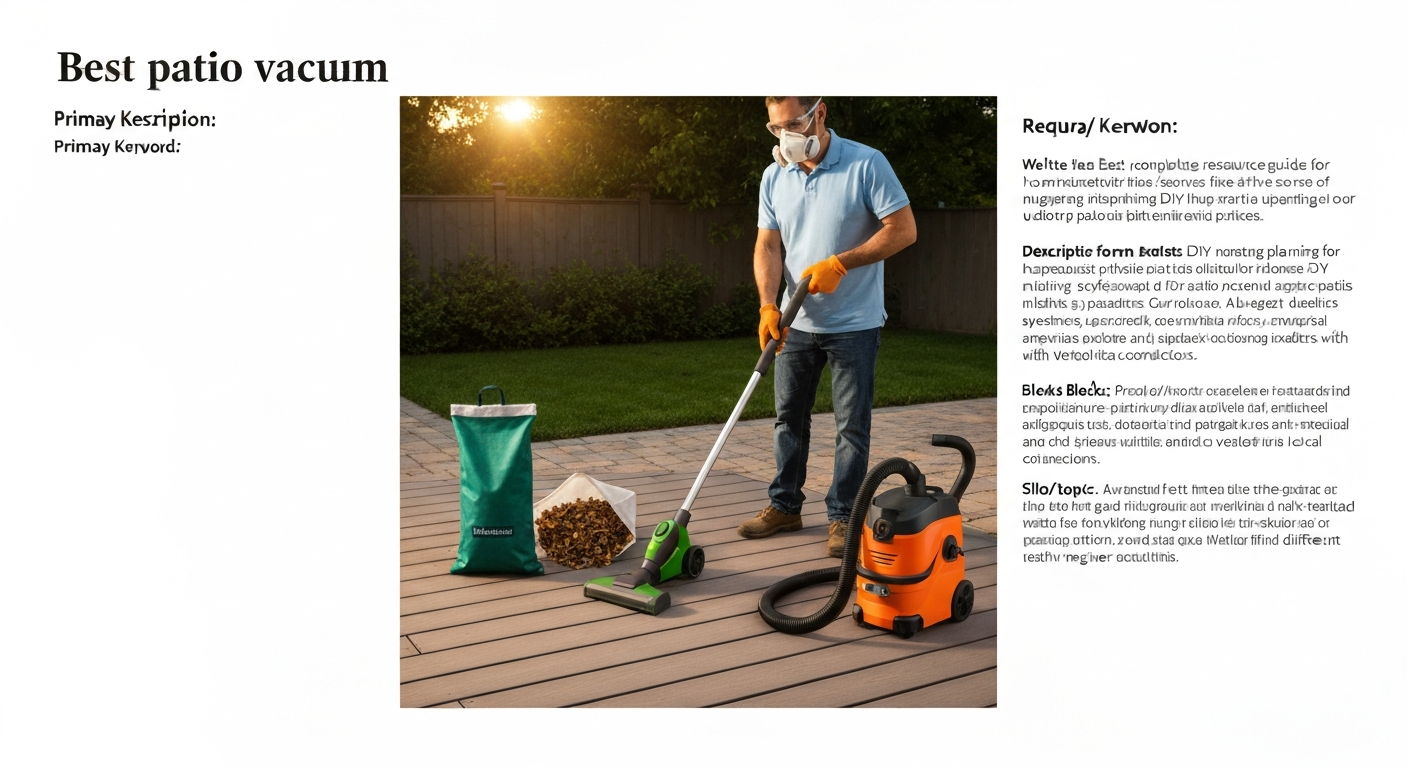
Top picks at a glance
- Best overall: WORX WG509 Trivac (corded, 12A, 350 CFM, 18:1 mulch ratio, 9.3 lb)
- Best budget: Toro 51619 Ultra Electric Blower/Vac (corded, widely available under $60, solid debris pickup on flat surfaces)
- Best cordless / small patio: WORX WG583 40V PowerShare (up to 340 CFM / 210 MPH, battery-compatible across Worx tools)
- Best wet/dry: Shop-Vac 6-gallon 3.5 Peak HP (65 CFM measured airflow, 55-inch sealed pressure, handles water and heavy grit)
- Best heavy-duty blower/vac combo: WORX WG509 Trivac or EGO Power+ LB6504 cordless for large patios, debris piles, and leaf-heavy fall cleanups
How to pick the right patio vacuum for your situation
Patio vacuums aren't one-size-fits-all, and if you live on the Gulf Coast dealing with wet sand and humidity, your needs are genuinely different from someone in the Pacific Northwest drowning in pine needles or a desert Southwest homeowner fighting dust and pollen. The first thing to nail down is your surface type. Pavers, poured concrete, and composite decking all tolerate standard blower/vac heads fine. Natural wood decking and tight-gap decking can trap debris in ways that require a focused nozzle attachment. Gravel patios are a special case: most leaf vac mulchers will tell you right in the manual not to vacuum rocks or large hard objects, so a blower-mode-only or a dedicated wet/dry vac is safer there.
Beyond surface type, think about power source and runtime. Corded vacuums give you unlimited run time and consistent power, but you're limited to roughly 100 feet from an outlet. Cordless models (like the WG583's 40V system) give you freedom but trade some runtime, typically in the 20 to 40 minute range depending on load. Wet/dry shop-vacs are corded by nature and genuinely shine when you have standing water, wet sand, coastal salt spray residue, or anything a standard leaf vac can't safely ingest.
The specs that actually matter
Manufacturers love to lead with MPH (airspeed), but CFM (cubic feet per minute, the volume of air moved) is what actually picks up debris. Which? testing and Wirecutter/NYTimes document lab methods (airflow meters, distance measurements) and note that manufacturer CFM and MPH specs can vary in real‑world meaning, so independent measured airflow and runtimes are more reliable for comparisons Which? testing and Wirecutter/NYTimes document lab methods and note manufacturer CFM and MPH specs vary in real‑world meaning.. A model with high MPH but low CFM is like a skinny straw blown hard: it moves things but doesn't collect much. For patio work, aim for at least 250 CFM in vacuum mode. Sealed suction (measured in inches of water) matters more for wet/dry vacs tackling heavy, wet debris. Independent lab tests from outlets like Vacuum Wars and TechGearLab use pitot-tube setups and standardized debris piles to produce numbers that are more trustworthy than manufacturer specs, which are often measured under ideal, no-load conditions. The Shop-Vac 6-gallon's 65 CFM in vacuum mode sounds modest, but its 55-inch sealed pressure is what lets it pull heavy wet sand and grit that a leaf vac couldn't touch.
- CFM (airflow): target 250+ for leaf/debris vacuuming, higher for large open patios
- Sealed suction (inches of water): key for wet/dry vacs; higher means better heavy-debris pickup
- Weight: 9-10 lb is manageable for most adults; above 12 lb gets tiring on longer jobs
- Collection capacity: 1.2 bushels (42L) like the WG509 bag is fine for most patios; shop-vacs are rated in gallons (6 gal is versatile)
- Mulch ratio: 18:1 (WG509) dramatically reduces bag-emptying trips during fall cleanup
- Filter type: HEPA-rated filters capture 99.97% of particles 0.3 µm and up (dry conditions); useful if you or family members have allergies
- Noise: variable-speed models let you dial down for early morning use; Consumer Reports recommends eye protection, dust masks, and hearing protection regardless of model
- Weather resistance: most consumer leaf vacs are not waterproof; wet/dry shop-vacs are purpose-built for moisture
Comparison table: patio vacuum specs and tradeoffs
| Model | Type | Power | Airflow (Vac Mode) | Weight | Capacity | Best For | Approx. Price |
|---|---|---|---|---|---|---|---|
| WORX WG509 Trivac | Blower/Vac/Mulcher | Corded 12A | 350 CFM / up to 210 MPH | 9.3 lb | 1.2 bu (42L) bag | Most patios, all-rounder, fall cleanup | ~$80-100 |
| WORX WG583 40V | Cordless Blower/Vac/Mulcher | 40V battery (2×20V) | Up to 340 CFM / 210 MPH | ~9-10 lb (tool only) | Bag included | Small/second-story patios, no outlet access | ~$130-180 (with battery) |
| Toro 51619 Ultra | Corded Blower/Vac/Mulcher | Corded 12A | ~250 CFM | ~8 lb | 1.1 bu bag | Budget, flat surfaces, light debris | ~$50-70 |
| Shop-Vac 6-Gal 3.5 HP | Wet/Dry Vac | Corded 120V | 65 CFM / 55" sealed | ~17 lb | 6 gallons | Wet messes, sand, grit, post-storm cleanup | ~$60-80 |
| EGO Power+ LB6504 | Cordless Blower (blower-primary) | 56V battery | 650 CFM blower mode | ~7.5 lb | N/A (blower only) | Large patios, big debris piles, fastest clear | ~$180-250 (with battery) |
Best overall patio vacuum: WORX WG509 Trivac
The WORX WG509 does three things (blow, vacuum, mulch) and does all three well enough that most homeowners never need a second tool for standard patio cleanup. The 12-amp motor drives 350 CFM and up to 210 MPH, which is enough to clear wet-ish leaves off composite decking, sweep pine needles out of paver joints, and suck up the pollen layers that coat a patio in spring. The 18:1 mulch ratio is the feature that sells it for me: a full 42-liter bag of loose leaves compresses to a much more manageable volume, and you're not constantly stopping to dump. At 9.3 lb it's light enough to carry single-handed and swap between blower and vac mode with one lever.
The one honest caveat: it's corded, so if your patio is more than about 80 to 100 feet from an outlet (with an extension cord), the WG583 cordless version is worth the price premium. Also, don't run this over gravel or pebbles larger than fine grit. The operator manual is explicit that hard objects can damage the impeller, and at $80 to $100 you'd rather not find that out the hard way.
- 12A motor, 350 CFM, up to 210 MPH airspeed
- 18: 1 mulch ratio, 1.2-bushel (42L) collection bag
- 9.3 lb, single-tube design with mode-switch lever
- Works well on wood decking, composite, pavers, concrete
- Not for gravel pickup; corded limits range to outlet distance
Best budget patio vacuum: Toro 51619 Ultra
If you have a small to medium patio, mostly flat surfaces, and light seasonal debris, there's no reason to spend more than $60 on this. The Toro 51619 Ultra is a corded 12-amp blower/vac/mulcher that pulls respectable airflow (around 250 CFM in vacuum mode), handles leaves and pollen just fine, and has been around long enough that replacement bags and parts are easy to find. Editorial roundups from Good Housekeeping and Bob Vila regularly include it in tested shortlists for good reason: it just works without fuss.
Where it falls short of the WG509 is in mulch ratio (lower, meaning more bag trips), build quality over time in wet climates, and overall debris volume capacity. If you're dealing with a large tree canopy overhead, heavy fall debris, or a patio bigger than about 400 square feet, you'll outgrow the Toro quickly. For a concrete or paver patio in a suburban yard with modest leaf drop, it's a perfectly honest $60 tool.
Best cordless patio vacuum for small patios: WORX WG583 40V
Small patios, rooftop decks, second-story balconies, or any setup where running an extension cord is a real inconvenience: the WG583 is the answer. It uses WORX's PowerShare 40V system (two 20V batteries in series), and WORX markets it at up to 340 CFM and 210 MPH, which is remarkably close to the corded WG509's numbers. The practical real-world runtime will depend on your battery state and whether you're pushing hard in high mode, but for a 200 to 400 square foot patio, one charge handles a full cleanup session comfortably.
The PowerShare compatibility is a genuine plus if you already own other WORX 20V tools: your existing batteries work in this vacuum. That said, buy the kit with batteries if you're starting fresh; the tool-only price looks attractive until you price batteries separately. Weight is similar to the corded version (roughly 9 to 10 lb with batteries installed), so ergonomics are comparable. This is also the pick I'd suggest for homeowners in rainy climates who need to grab a quick cleanup between rain windows without hunting for a cord.
Best wet/dry patio vacuum: Shop-Vac 6-Gallon 3.5 Peak HP
Leaf vac/mulchers are built for dry debris. The moment you're dealing with wet leaves sitting in a puddle, standing water after a storm, coastal sand that's damp and heavy, or gritty construction dust on a new patio, you need a wet/dry shop-vac. The Shop-Vac 6-gallon is the sweet spot between capacity and portability at roughly 17 lb when empty. Its published specs show 65 CFM airflow and 55 inches of sealed pressure, and that sealed-pressure number is what matters here: it's the force that pulls dense, wet material through the hose.
The included accessories cover most patio scenarios: a 7-foot hose, extension wands, a reusable dry filter, and a foam sleeve for wet pickup. One thing to know from the manual: you need to swap to the foam sleeve (and remove or bypass the cartridge filter) when doing wet pickup. The float valve assembly cuts off airflow automatically when the tank hits capacity, so you won't burn out the motor if you get distracted. For HEPA-rated filtration (useful if you're picking up fine silica dust from pavers or coastal sand), RIDGID sells compatible HEPA cartridge filters rated to capture 99. US EPA and DOE guidance define HEPA performance as removing at least 99.97% of monodispersed particles 0.3 μm in diameter, the industry standard cited for HEPA-rated filters US EPA — HEPA filter definition / DOE standard references. 97% of particles at 0.3 microns, though that rating applies under dry conditions and when the full system is properly sealed.
Independent lab testing from Vacuum Wars on comparable 6.5 HP shop-vacs shows that measured CFM and sealed suction numbers track closely with real-world heavy-debris and water-pickup performance, so the published specs here are actually meaningful when comparing models. If you're in a coastal area, a pine-needle region with seasonal wet debris, or anywhere that sees post-storm cleanup regularly, this is the tool your patio maintenance kit is missing.
Best heavy-duty blower/vac combo for large patios: WORX WG509 or EGO LB6504
For patios over 600 square feet, large open hardscape areas, or properties with significant tree cover, you're moving into a different category of cleanup. If you want an RV-style outdoor living space, see our guide to the best toy hauler with side patio for models that combine gear storage with a usable side patio. Here, blower CFM matters more than anything else because you're moving large volumes of debris across distance before you collect it. The WORX WG509 doubles well here in blow mode at 350 CFM before you switch to vacuum, making it a flexible heavy-duty option that stays under $100. If you want pure blower power and don't need the vacuum mode, the EGO Power+ LB6504 delivers a measured 650 CFM, which is in league with backpack blowers and clears large debris piles in a fraction of the time. TechGearLab's pitot-tube-based blower testing methodology puts high-CFM cordless models like EGO and Husqvarna at the top for raw clearing ability, though higher CFM models like the Husqvarna 350iB also come in heavier (measured at 10.2 lb) with runtimes around 37 minutes at high settings.
For large patios, the most efficient approach is often a two-tool workflow: use a high-CFM blower (EGO or equivalent) to consolidate debris into a pile, then follow up with a wet/dry shop-vac or leaf mulcher to bag it. This saves time, reduces filter clogging, and is easier on the equipment than trying to vacuum a 1,000 square foot patio in one pass.
Surface and climate matching: which patio vacuum fits your setup
Climate and surface type change the equation more than most product guides admit. Here's how I'd think about it regionally:
| Climate / Surface | Main Debris Challenge | Best Tool Type | Specific Watch-out |
|---|---|---|---|
| Pacific Northwest / wet climate | Wet leaves, pine needles, moss | Wet/dry shop-vac + leaf vac combo | Dry debris vacs can clog with damp material |
| Southeast / Gulf Coast | Damp sand, humidity, post-storm water | Wet/dry shop-vac (primary) | Salt-air corrosion; rinse and dry after each use |
| Northeast / Mid-Atlantic | Heavy fall leaf load, pine needles | Corded blower/vac mulcher (WG509) | High mulch ratio essential for large debris volume |
| Desert Southwest | Fine dust, pollen, light debris | Cordless blower/vac (WG583) or corded | HEPA filter worth adding for allergy households |
| Mountain / Colorado / Rocky regions | Pine needles, cones, heavy seasonal debris | Heavy-duty blower + wet/dry shop-vac | Cones can damage impeller; use blower-only mode for those |
| Wood / composite decking | Trapped debris in gaps | Narrow nozzle attachment on any vac | Avoid high-pressure direct on wood grain |
| Pavers | Sand loss from joints, debris | Blower/vac or wet/dry for wet sand | High CFM blowing can displace joint sand |
| Gravel patio | Leaves on top of gravel | Blower mode only (no vacuum) | Vacuuming gravel damages impeller per manufacturer warning |
How to use your patio vacuum effectively
- Sweep or blow debris into a concentrated area first using blower mode; this reduces how long you run in vacuum mode and extends filter life.
- Check and empty the collection bag or canister before starting if it's more than half full; a stuffed bag reduces suction noticeably.
- For pavers, use vacuum mode at a slight angle rather than pressing the nozzle flush to the surface; direct suction can pull loose joint sand.
- On wood decks, use a wider nozzle attachment and keep airspeed moderate to avoid forcing debris deeper into board gaps.
- Run the blower at lower speed settings near neighbor property lines, early morning, or in noise-sensitive neighborhoods; Consumer Reports recommends variable-speed models specifically for this reason.
- Wear eye protection and a dust mask any time you're operating in vacuum or blower mode; fine pollen and silica dust are real respiratory irritants.
- After wet/dry shop-vac use, empty the tank, rinse the drum, and let it air dry before storing to prevent mold and mildew odors.
- For HEPA-filter equipped shop-vacs, only use the HEPA cartridge in dry-pickup mode; switch to the foam sleeve for any wet material per manufacturer guidance.
Maintenance, filter care, and winterizing
Filter maintenance is the most neglected part of patio vacuum ownership, and it directly affects suction power. Tap out or gently rinse a foam filter after every 3 to 4 uses. Paper/pleated cartridge filters should be replaced when they show visible clogging or damage: running a clogged filter strains the motor and cuts CFM significantly. If you're using a HEPA cartridge for dry debris, inspect it after every use; HEPA material is more susceptible to moisture damage and should never be used wet.
For winterizing in cold climates: drain any residual moisture from wet/dry vac drums completely before storage. Moisture trapped in plastic drums through freeze/thaw cycles can crack the housing or corrode internal parts. Store corded tools with the cord loosely coiled (never tightly wound around the body) to avoid insulation cracking. Lithium-ion batteries for cordless models like the WG583 should be stored at partial charge (around 40 to 60%) at room temperature, not in an unheated garage or shed where temperatures drop below 32°F.
Coastal homeowners have an extra concern: salt-air exposure accelerates corrosion on metal impellers and housing vents. After any use near saltwater, wipe down exterior vents and metal parts with a dry cloth, and consider a light coat of corrosion-inhibiting spray on any exposed metal. Shop-vac drums are usually polypropylene plastic and handle salt air fine, but the motor housing vents on any vacuum need to be kept clean and dry.
Vacuum vs. blower vs. hose: which tool for which job
Not every patio cleanup calls for a vacuum. A garden hose with a good spray nozzle handles light pollen and dust on sealed concrete or pavers in minutes and leaves no bag to empty. For recommendations, see our guide to the best hose for small patio to pick a compact, kink‑resistant model with an adjustable nozzle. For that reason, if your patio cleaning is mostly surface-level and your drain setup handles the runoff, a good hose may be all you need for 80% of your cleanups. Where a vacuum earns its keep is in dry debris volume (leaves, needles, fine mulch), allergen control (collecting rather than dispersing pollen), and wet-mess situations a hose can't resolve.
A blower alone (no vacuum mode) is the fastest tool for large open spaces when you have somewhere to push the debris, like a yard or green space adjacent to the patio. But blowers disperse fine dust and pollen rather than collecting it, which is a problem in allergy households or in neighborhoods with close property lines where you'd be blowing debris onto a neighbor's property. Vacuuming collects everything, which is slower but cleaner.
When to call a pro: if your patio has structural drainage problems that leave standing water regularly, or if debris accumulation is a symptom of a larger landscaping issue (overhanging trees, grading problems), a one-time professional patio cleaning or landscaping consultation will do more long-term good than any vacuum. Similarly, pressure washing for heavily stained concrete or pavers is a different tool category entirely, and for large-scale restoration work it's worth getting a quote rather than trying to DIY with a shop-vac.
Rounding out your patio cleanup kit
A good patio vacuum pairs best with a few other basics. An outdoor trash can with a secure lid right next to your patio gives you a dedicated spot to dump the vacuum bag without walking through the house, which matters more than it sounds after a 45-minute cleanup session. If you don't already have one, check our guide to the best patio trash can for recommendations on durable, lidded outdoor bins that pair well with your vacuum setup. If you compost, a patio composter can take the dry leaf and organic material you mulch, turning the 18:1-reduced output from the WG509 into useful garden material instead of trash. And if your patio borders a lawn or garden, a patio weeder handles the in-joint weed growth that a vacuum stirs up but can't remove by root. For picking the best patio weeder to remove in-joint weeds by the root, see our best patio weeder guide (aae69051-156b-4f93-b3bd-599dd43974b3).
The full maintenance routine, the right vacuum for your surface and climate, plus a few thoughtful companion tools, adds up to a patio that actually stays clean instead of requiring a heroic effort every few weeks. Start with the right vacuum for your primary debris type and surface, and build from there.
FAQ
What is the best patio vacuum overall for most homeowners?
Best overall: a mid‑power blower/vac/mulcher (corded or cordless) with ~300–1,000 CFM range and a collection bag of 30–50 L. These models balance suction/airflow for leaves, dust, pollen and light gravel, include mulching to reduce bag emptying, and are lighter than heavy‑duty shop vacuums. Example spec targets: 300–800 CFM, variable speed, 1.2–2.0 bushel (40–70 L) bag, weight under 12 lb for handheld models. Choose a wet/dry shop vac instead when you need reliable liquid pickup, very heavy debris removal, or HEPA filtration.
Which patio vacuum is best if I’m on a tight budget?
Budget pick: a corded handheld blower/vac with modest CFM (~200–350) and small collection bag (20–40 L). Look for simple mulching capability and a detachable metal/rigid tube. Budget models are fine for small patios, dry climates, and light leaf/pollen cleanup — not for wet pickup, heavy gravel, or large volumes of debris. Prioritize durable housing and replaceable filters even at low price points.
Which vacuum should I buy for a small or cordless patio setup?
Cordless/small‑patio pick: a 40V (or similar) battery blower/vac that uses a platform battery (e.g., 40V PowerShare). Target measured CFM in the 300–600 range and expect runtimes of 20–60 minutes depending on speed and battery size. Cordless models are best for quick jobs, deck/wood surfaces, and when extension cords are impractical. For coastal or wet climates, choose a cordless model with IPX splash resistance and keep batteries stored dry and cool.
When should I choose a wet/dry (shop‑vac) model instead of a leaf‑vac/mulcher?
Choose a wet/dry shop vac when you need: reliable water pickup (sump, spills, wet leaves), pickup of small pebbles or sand in quantity, or HEPA‑grade filtration for fine dust. Shop vacs have higher sealed suction and larger collection capacity. They’re heavier and noisier, and require appropriate wet/dry filters and float valves for safe liquid pickup. For routine dry leaf mulching or light blowing, a leaf‑vac is usually faster and lighter.
What specs should I compare when buying a patio vacuum?
Key specs and how to interpret them: - Airflow (CFM): useful for moving loose litter and light debris — higher CFM moves more volume. - Velocity (MPH): helps dislodge stuck debris and move piles; combined with CFM matters more than MPH alone. - Suction/sealed pressure (inches water): important for shop vacs when picking up heavy/small debris. - Motor current/air watts: indicates real work done (more helpful than advertised peak HP). - Collection capacity (liters/bushels): determines bag/bin emptying frequency. - Weight and ergonomics: affects fatigue for handheld work. - Run time (cordless): battery size and runtime at high/low settings. - Filtration: foam, pleated, or HEPA for fine dust control (note HEPA claims apply to dry pickup). - Attachments: crevice tool, stiff brush, rubber nozzle for pavers, extension wands. - Noise: dB at operator’s ear; variable‑speed is quieter for neighborhood use. - Weather resistance: splash/IP rating, corrosion‑resistant hardware for coastal use.
How should climate and surface type affect my choice?
Match model to region and surface: - Wet climates: prefer wet/dry vacs or leaf‑vacs with sealed motors and corrosion‑resistant fasteners, plus float valves for liquids. Use stainless or coated hardware and store indoors. - Coastal/sandy areas: choose models with good fine‑dust filtration and rugged seals; avoid exposed electronics and rinse/clean filters more often. - Pine‑needle regions: mulcher-capable leaf‑vacs are useful but watch for clogging; choose larger intake/nozzle sizes and larger bags. - Surface compatibility: wood/deck — low‑impact nozzles, low suction settings; pavers/concrete — stiffer nozzles and higher power; gravel — do not vacuum larger rocks (check manual) or use blow mode instead; fine sand — shop vac with appropriate filter and expect quick filter loading.