
For most patios, a 30 to 33-gallon outdoor trash can with a latching or locking lid hits the sweet spot. It's big enough to handle a day of entertaining without overflow, small enough to tuck beside a door or fence, and a secure lid keeps out raccoons, squirrels, and the smell that brings them in the first place. The material (plastic or galvanized steel), the lid style, and where you place it matter more than the brand, and once you nail those three things, picking a specific model takes about five minutes. Once you understand size, lid type, and placement, choosing the best patio trash can becomes a quick match instead of a long search.
Outdoor Trash Can With Lid for Patio: Buying Guide

Elise Prescott
4 Jul 2026
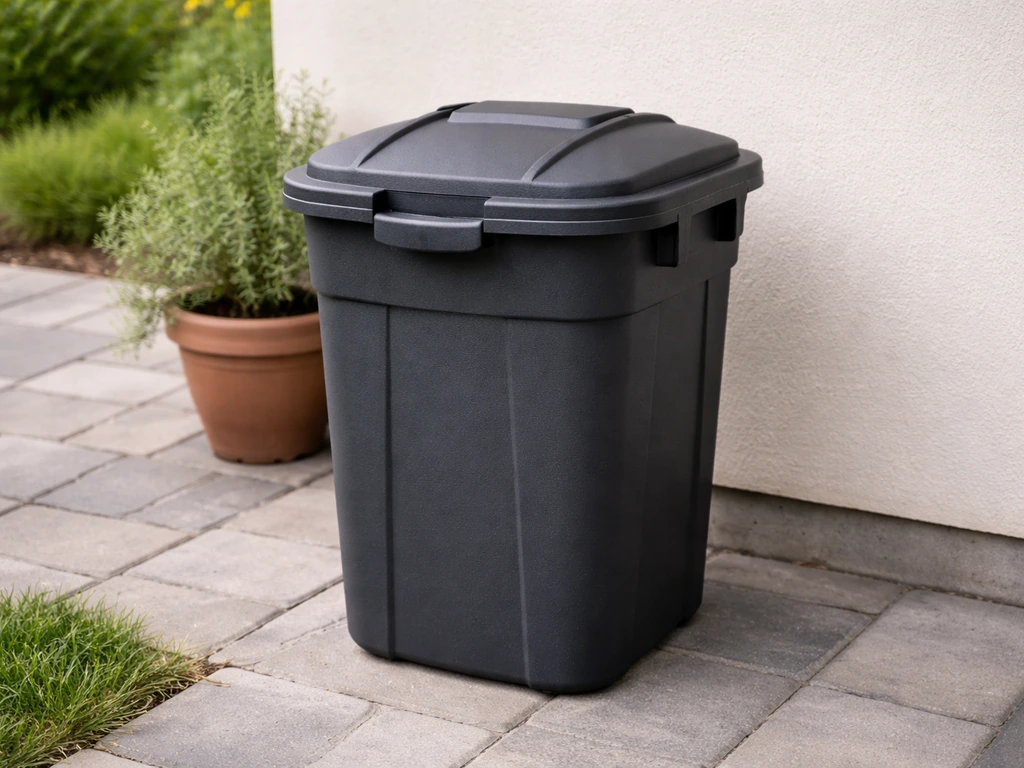
What you actually need in a patio trash can with a lid
A patio trash can is not the same animal as the giant rolling cart you put at the curb. You're looking for something that handles daily waste from cooking, drinks, and general outdoor use without turning your patio into a pest magnet or an eyesore. The lid is the most important feature, full stop. An unsecured or flimsy lid is basically an open invitation for every raccoon, squirrel, and neighborhood dog in the area. CDC guidance recommends a tight-fitting lid on a thick plastic or metal can with no holes as the baseline for rodent prevention, and that advice transfers perfectly to patio use.
Beyond the lid, think about liner compatibility. A can that fits standard 30 to 33-gallon bags (like the Suncast Trash Hideaway line) saves you from hunting specialty liners. Suncast Trash Hideaway GHW1732 is specified for compatibility with standard 30 to 33-gallon trash liners and includes a latching lid designed to help keep garbage in and unwanted critters out standard 30 to 33-gallon bags (like the Suncast Trash Hideaway line). You also want UV resistance, since a can that sits in direct afternoon sun will warp, crack, or fade fast without it. HDPE plastic cans are built with UV inhibitors specifically to hold up in direct sunlight without losing structural integrity or color. Finally, consider ease of use: if you're constantly opening the lid with food scraps in both hands, a foot pedal or easy-release latch is worth paying for.
- Tight-fitting or latching lid that resists wildlife and wind
- Compatible with standard 30 to 33-gallon trash liners
- UV-resistant material (HDPE plastic or powder-coated/galvanized metal)
- No cracks or gaps in the body that could harbor pests or trap moisture
- Foot pedal, handle, or easy-release latch for hands-free access
- Capacity that matches your actual weekly trash output (more on sizing below)
Choosing the right size and lid style for your patio
Size is the one thing people consistently get wrong. They either buy too small (have to empty it constantly during a cookout) or too large (it dominates the corner and never gets full enough to empty regularly, which creates odor problems). A general sizing rule from Portland's garbage service puts it this way: if you generate one tall 13-gallon kitchen bag of trash per week as a baseline, a 20-gallon bin is the minimum workable size. For a patio that sees regular grilling, entertaining, or kids playing outside, 30 to 33 gallons is more realistic and still compact enough to fit most spaces.
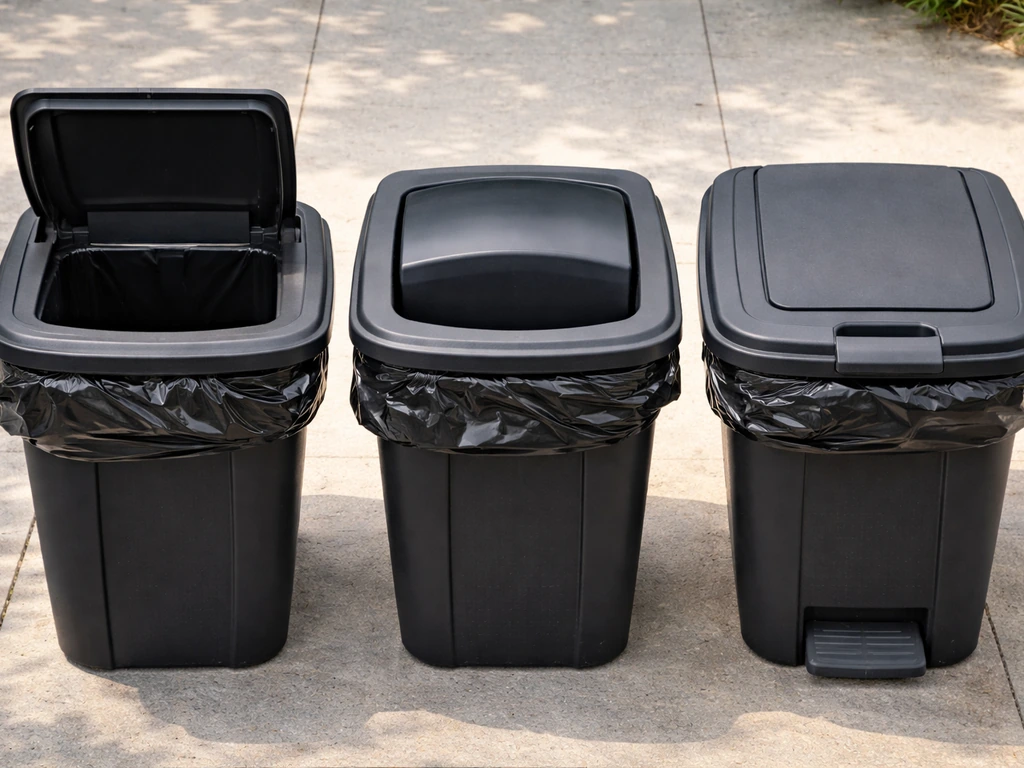
Lid style is your second key decision, and it comes down to how you use the can. Here are the main options and when each makes sense:
| Lid Type | Best For | Trade-Off |
|---|---|---|
| Latching/locking lid | Wildlife-prone areas, windy patios, homes with pets | Slightly slower to open; some require two hands |
| Foot pedal swing lid | High-traffic use, cooking areas, hands-free convenience | Less wildlife-secure; lighter lids can blow open in wind |
| Flip-top (no latch) | Low-traffic, protected patios with minimal pest pressure | Not suitable where raccoons or rodents are a concern |
| Hinged lid with lock | Patios where bears or strong wildlife are a real issue | Bulkier; more expensive; overkill in most suburban settings |
| Decorative enclosure lid | Visible patio areas where aesthetics matter most | Higher cost; less functional for heavy daily use |
If you're in a suburban or semi-rural area where raccoons are active, go straight for a latching lid. Models like the Suncast Trash Hideaway have a latching lid specifically designed to keep critters out, and that latch makes a real difference at 2 a.m. when something is nosing around your patio. If wildlife isn't a concern and aesthetics are the priority, a decorative enclosure style (like the wicker-finish versions Suncast makes) blends into patio furniture without looking like a trash can at all.
Weather, durability, and material recommendations by climate
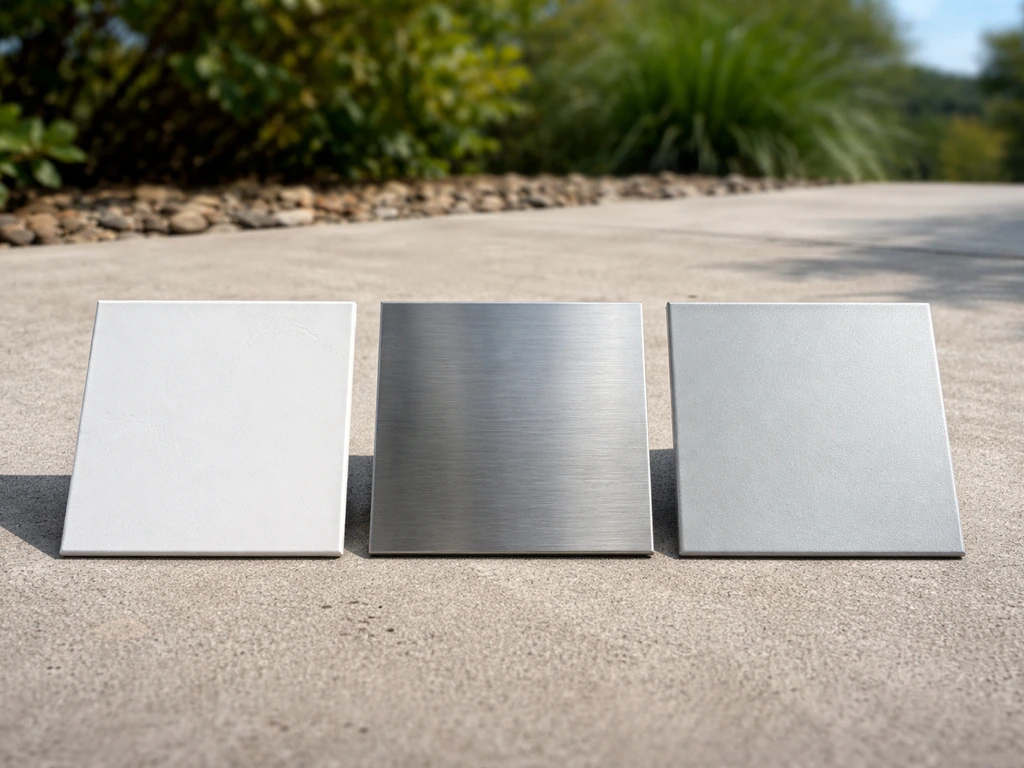
Your climate should drive your material choice more than anything else. What holds up beautifully on a shaded patio in the Pacific Northwest will crack, rust, or fade within a season in Phoenix. Here's how to match material to your conditions:
| Climate | Best Material | What to Avoid |
|---|---|---|
| Hot, sunny (Southwest, Texas, Florida) | HDPE plastic with UV inhibitor | Standard plastic without UV protection; it will warp and fade fast |
| Cold, snowy (Midwest, Mountain West) | Galvanized steel or heavy HDPE | Thin plastic that cracks in freeze-thaw cycles |
| Humid, rainy (Southeast, Pacific NW) | Powder-coated steel or galvanized steel; HDPE | Bare steel or cast iron; moisture will find any scratch and start rusting |
| Mild, temperate (coastal CA, PNW lowlands) | Any quality HDPE or powder-coated steel | Budget thin plastic; even mild weather breaks it down over time |
| Windy areas (plains, exposed decks) | Heavy steel (galvanized) or weighted-base HDPE | Lightweight plastic with flip-top lids; they blow over and open constantly |
Galvanized steel cans like the Behrens 20-gallon with the Infinity Lid are labeled rodent-proof and weather-resistant, and they genuinely hold up in harsh conditions better than most plastic. The trade-off is weight and the fact that any scratch in powder-coated steel can become a rust entry point over time, so keeping the coating intact matters. In wet climates, check that lid seams and body joints don't trap standing water, which accelerates corrosion even on galvanized finishes.
HDPE plastic is my practical recommendation for most homeowners because it's lighter, cheaper to replace, never rusts, and the good versions (with UV inhibitors built in) hold their structure and color for years even in direct sun. If you live somewhere with real wildlife pressure or extreme wind, upgrade to steel. Otherwise, quality HDPE does the job at a lower price point and less maintenance hassle.
Odor, pests, and cleanliness features to prioritize
Odor and pests are directly connected. The EPA's integrated pest management guidance makes it clear: pests need food, water, and shelter, and an outdoor trash can with a loose lid or leaking bag provides all three. A tight lid is your first line of defense. After that, how often you empty the can and how you clean it determines whether odors and pest attraction become a real problem.
For odor control, the single most effective habit is emptying the can before it becomes a problem, not after. Food scraps left in a warm outdoor can in summer can become genuinely foul within 24 to 48 hours. Rinsing the interior after each liner change, then letting the can dry completely before replacing the bag, prevents the bacterial buildup that causes persistent odor. Glad's cleaning guidance specifically calls out the dry step as critical since moisture trapped in the can is what accelerates mold and smell. A quick spray of diluted disinfectant a few times per season keeps things manageable.
On the pest side, the CDC is direct: use a thick plastic or metal can with no holes and a tight lid, and dispose of trash regularly. If you're in an area with raccoons, bears, or other determined wildlife, a latch alone may not be enough. Bungee cords added over the lid are a low-cost backup recommended by wildlife organizations when a secured lid isn't holding. For bear country specifically, look at cans with a designated bear-resistant certification rather than improvising.
- Use a liner every time—never throw loose food scraps directly into the can
- Empty the can at least twice a week in hot weather; daily if you're grilling regularly
- Rinse, disinfect, and fully dry the interior every one to two weeks
- Choose a can with a smooth interior (no ridges) so residue doesn't accumulate in corners
- Add a latch or bungee cord backup in wildlife-active areas
- Keep the can in shade when possible to slow bacterial activity and reduce odor
Placement, stability, and easy maintenance setup
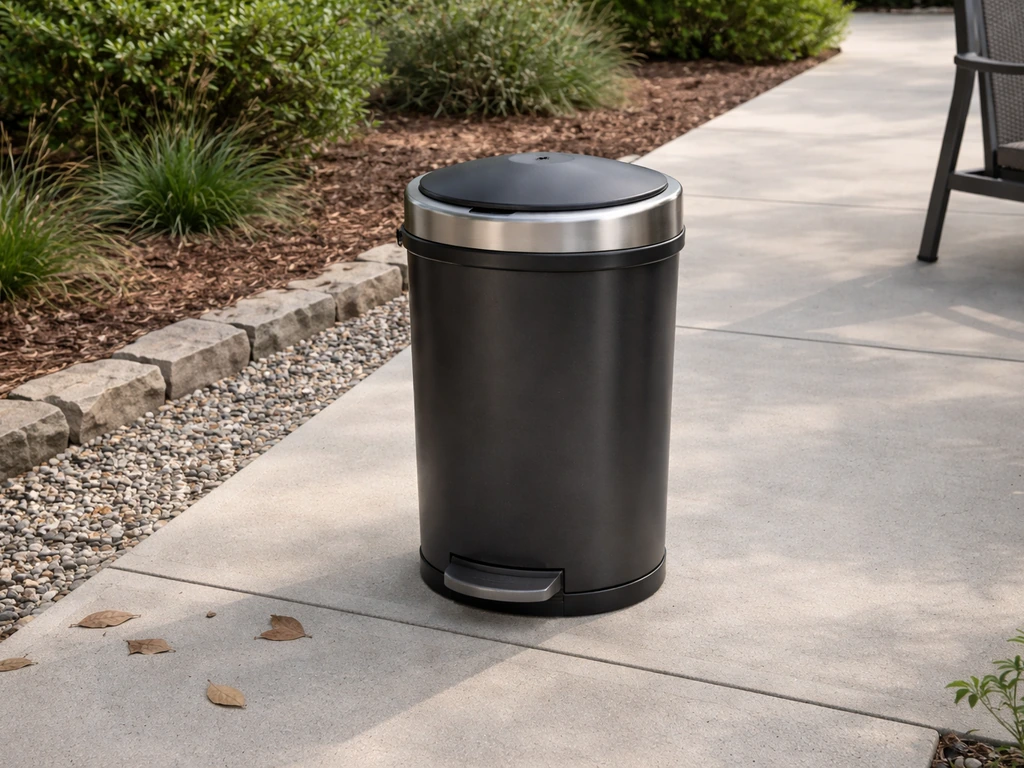
Where you put the can on your patio matters almost as much as which can you buy. The wrong placement creates drainage problems, blocks foot traffic, makes the can harder to use, and can actually increase pest pressure near your living and cooking areas. Start by measuring the spot before you buy, nothing worse than ordering a 33-gallon can and finding out your side gate is only 24 inches wide. If you are considering a toy hauler with a side patio, plan for a container that fits the space and drains cleanly so mess does not spread into your living area best toy hauler with side patio.
Keep the can at least four to six feet from your primary seating and cooking zones. This isn't just about odor; it's about keeping food-source smells away from where you actually spend time. Sacramento's curbside guidelines flag keeping containers away from storm drains as a drainage-related concern, and the same logic applies on patios: position the can so that if a bag leaks, liquid drains away from your patio surface rather than pooling or running toward your house foundation. A slightly elevated or slotted base helps with drainage in rainy climates.
Stability is a real issue on exposed patios and decks. A lightweight plastic can in a windy spot will tip over and scatter trash constantly. Options include choosing a heavier steel can, filling the base with sand or a weighted insert, or anchoring the can to a fence post or wall bracket. Madison, WI's cart guidance recommends at least four feet of clearance around carts for practical access, and that same principle helps on patios: don't wedge the can into a corner where you have to reach awkwardly to open the lid or swap the liner.
- Measure the intended spot (width, depth, and height clearance) before ordering
- Place the can at least four to six feet from seating and food prep zones
- Choose a spot with natural shade if possible to slow odor development
- Ensure the base sits on a level, draining surface—avoid low spots that collect water
- Leave enough clearance around the can to open the lid fully and swap liners easily
- In windy areas, anchor or weight the can rather than just hoping it stays put
How to compare options and pick your best match today
Here's a simple decision framework to cut through the noise. Answer these four questions and you'll have your answer in a few minutes rather than after hours of scrolling through listings.
- What's your wildlife and pest situation? If raccoons, bears, or rodents are active in your area, you need a latching or locking lid and a metal or heavy HDPE body. No exceptions. If pests aren't a real issue, you have more flexibility on lid style.
- What climate does your patio sit in? Hot and sunny means UV-stabilized HDPE is a must. Cold and snowy leans toward galvanized steel or heavy-duty HDPE. Humid and rainy means check that any metal option is galvanized or powder-coated, and inspect for drainage gaps.
- How visible is the can from your seating area? If it's in plain sight on a nice patio, a decorative enclosure style (like the wicker-finish Suncast models) is worth the extra cost. If it's tucked behind a gate or screen, a functional galvanized or standard HDPE can is the smarter spend.
- How much trash do you generate weekly on the patio? Light use (drinks and small snacks) can work fine with a 20-gallon can. Regular grilling and entertaining means 30 to 33 gallons is the right call, and it's worth confirming the model accepts standard-sized liners so you're not hunting specialty bags.
On budget: a solid HDPE 30-gallon can with a latching lid runs roughly $30 to $80 at most home improvement retailers. Step up to a galvanized steel option like the Behrens line and you're looking at $50 to $120 depending on size. Decorative enclosure-style cans can run $80 to $200-plus. For most patios, the mid-range HDPE option is genuinely the best value, especially since UV and HDPE quality have improved significantly. If you want the lowest-effort option, look for the best patio weeder to handle weeds without constantly scraping or bending over. Spend up on steel only if your climate or wildlife situation genuinely demands it.
If you're building out your full patio cleaning and waste setup, a trash can with a lid is one piece of the puzzle. Pairing it with a good patio composter for food scraps, for example, actually reduces the volume and smell going into your outdoor trash can significantly, which is worth thinking about if you grill or eat outdoors regularly. If you want to maximize odor control, choosing the best patio composter for your kitchen scraps can keep waste out of the trash for good. And if you're doing a broader patio refresh, it's worth considering how the trash can coordinates with other functional pieces you're adding to the space.
The bottom line: measure your space, match the material to your climate, and prioritize a secure lid over every other feature. A can that keeps wildlife out, stays stable in your weather, fits a standard liner, and doesn't dominate your patio visually is the right can. Everything else is secondary, and you can find exactly that in about five minutes once you know what you're looking for. If you're also shopping for cleaning convenience around your outdoor space, the best patio vacuum can help you handle dust, leaves, and debris between uses.
FAQ
Can I use a regular kitchen trash bag in an outdoor patio trash can with lid, or do I need special liners?
Most 30 to 33 gallon patio cans are designed around standard 30 to 33 gallon liners, but you still should check the bag size rating (and the can’s liner fit) before buying. If the bag is too narrow, it bunches at the rim and can tear when you pull it out, which leads to odors and spills. Buy one box first only if your can dimensions clearly match the liner size, otherwise confirm liner compatibility with the manufacturer.
What should I do if the lid doesn’t fully seal, even though it has a latch?
A small gap can undermine pest prevention. First, verify the can is level and not sitting on a wobbling surface, since tilt can prevent the lid from aligning. Next, check for warped lid panels from heat, and clean any debris along the lid gasket or sealing edge so it can close tightly. If the lid still won’t catch, switch to a thicker-lid model or add an intended strap or locking accessory designed for that can type (avoid DIY gaps that may weaken the hinge).
How often should I clean an outdoor trash can with lid to prevent odors and residue buildup?
For patio use in warm seasons, plan on a rinse after each liner change and a deeper clean every few weeks, sooner if you dispose of oily grill waste. After rinsing, let the can dry completely before bagging again, moisture left inside accelerates mold and sour smells. A seasonal wipe with a diluted disinfectant is usually enough, but skip harsh cleaners that can degrade plastic over time.
Is it okay to put food scraps directly into the trash, or should I freeze them first?
You can, but direct scraps (especially meat, sauce, and fruit) create odor faster in summer, even with a tight lid. If you grill frequently or have kids generating lots of scraps, freezing kitchen scraps in a sealed container until trash day reduces smell and leakage. It also makes liner changes quicker because the waste is less likely to smear or stick to the bottom of the can.
Do I really need a latching lid if I live somewhere without raccoons?
If you have no frequent wildlife visits, you may not need a latch for basic pest control. However, a locking or latching lid still helps with neighborhood dogs and wind-blown lid gaps, and it reduces odor escape. A practical compromise is a can with a tight, heavy lid (even if not “bear certified”) plus regular emptying, since many odor problems start when trash sits too long.
What’s the safest way to position an outdoor trash can near my patio without causing drainage or odor issues?
Place it so that if a liner leaks, liquid drains away from doors, walls, and your foundation. Avoid putting it directly downhill from the cooking or eating area where spills can run toward you. If your patio gets heavy rain, a slightly raised base, a slotted platform, or keeping it on a surface with natural runoff reduces pooling that can attract pests and accelerate corrosion for metal cans.
Can I anchor or weight down a lightweight plastic patio trash can to stop tipping in wind?
Yes, but do it in ways that don’t damage the can. Use a weighted insert designed for trash can bases, or anchor the can through the manufacturer-approved points if provided. Avoid drilling random holes or adding straps that stress the hinge area, since that can lead to lid misalignment and reduced sealing.
How can I tell if I bought the wrong size outdoor trash can with lid for my patio?
A size problem shows up quickly. If you’re emptying it multiple times per week or overflow is happening during parties, it’s too small. If it rarely reaches capacity and you’re leaving trash sitting for long stretches, it’s likely too large and will increase odor and pest risk because waste lingers. The best size is one that fills within a predictable cycle you can comfortably manage.
What should I look for if I’m in bear country, not just raccoon country?
In bear country, don’t rely on a latch alone. Look for a can with a designated bear-resistant certification and a lid system that prevents forced opening. Also plan for how you store it when not in use, and avoid keeping it near easily accessible food areas, since persistent food smells train wildlife to return.
Will galvanized steel or HDPE hold up better in hot, sunny climates?
For extreme sun, quality HDPE with UV inhibitors generally holds color and structural integrity better, and it won’t rust. Galvanized steel can last long too, but it may suffer more if the coating is scratched, because corrosion can start at exposed points over time. In both cases, keeping the can clean and ensuring the lid closes fully matters, since trapped moisture and grime can accelerate wear.
How do I reduce pest attraction beyond using a tight lid?
Two actions make a bigger difference than most people realize: dispose of trash regularly and remove food residues at the liner change. Rinsing the interior after each liner change and drying the can prevents sticky buildup that attracts insects and increases stink. If you notice persistent activity, consider adding a secondary security method designed for that use case, like an over-lid strap or bungee accessory recommended for securing lidded bins.