
There is no single "best patio store" for every project. The right store depends on what you are actually building or upgrading: a pergola and shade cover, a misting system, outdoor heaters and fans, or a whole backyard audio setup. Some stores do one category exceptionally well and fall flat on everything else. Your best move is to match the store to the specific product category you need, then evaluate them on inventory depth, warranty terms, pricing transparency, lead times, and whether they can support installation. If you are specifically hunting for the best patio mn for your space, start by matching the store to the product category driving your search, then compare warranty, pricing, and lead times. This guide walks you through exactly that.
Best Patio Store: How to Choose the Right Supplier

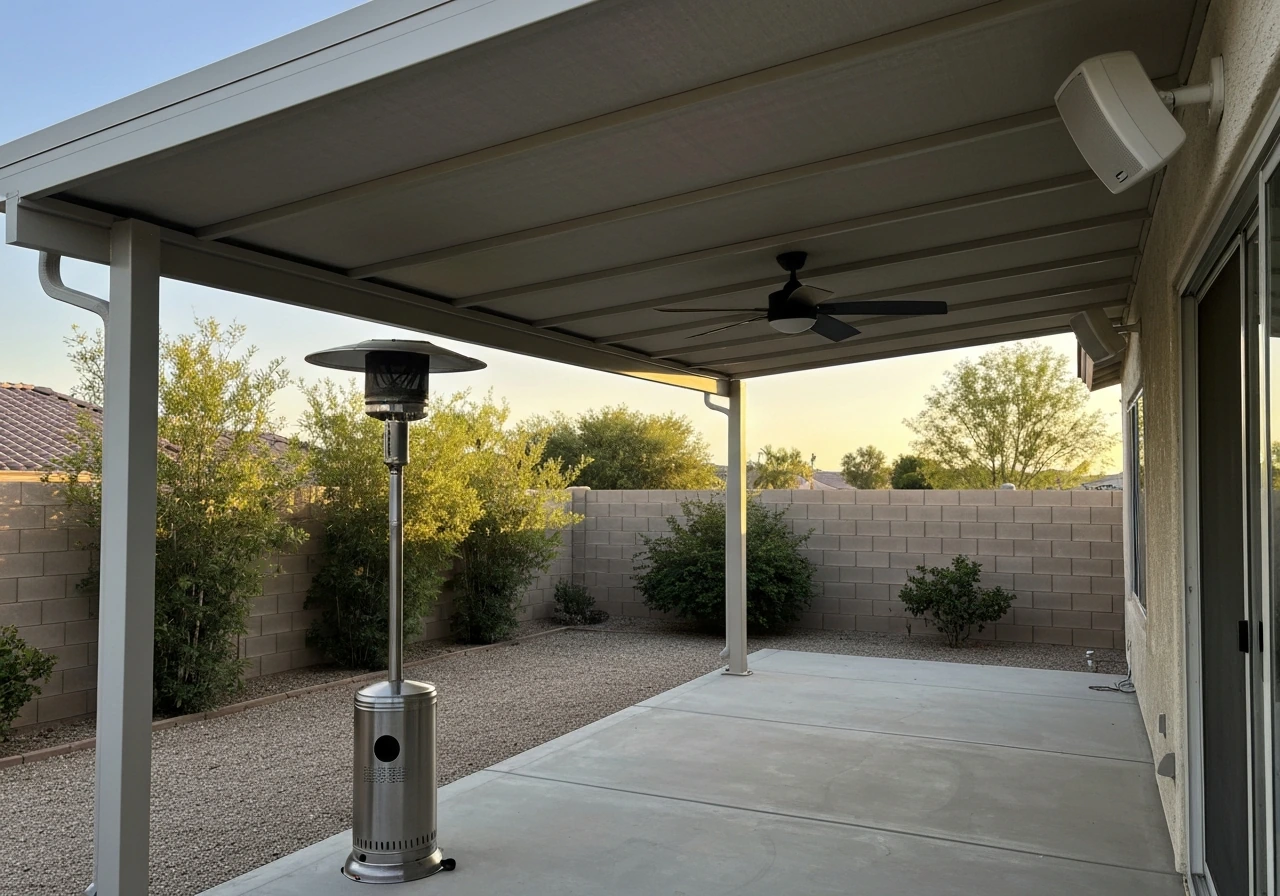
What 'best patio store' actually means for your project
When most people search for the best patio store, they are really asking one of three different questions. First: where can I browse and buy patio furniture and covers without getting burned on quality? Second: where do I find specialty equipment like misting systems, outdoor heaters, or patio fans that a big-box store does not carry in depth? Third: who can help me design and execute a complete outdoor space, not just sell me a box to assemble? All three are legitimate, and the answer is different for each.
A store like Patio.com tries to answer all three by combining online shopping with physical showrooms where you can see collections in person. That breadth is useful, but "one-stop" stores rarely go deep enough on specialty categories like high-pressure misting systems or architectural-grade outdoor audio. Specialty retailers such as Advanced Misting Systems or Outdoor Speaker Depot exist precisely because the generalists skip the technical nuance. So before you start comparing stores, be honest about which category is driving your search.
How to evaluate any patio store before you buy
Every patio store should be judged on the same core criteria, regardless of whether it is a local showroom or an online-only retailer. Here is what actually matters when the stakes are a $500 pergola cover or a $3,000 misting system.
Inventory depth for your specific need
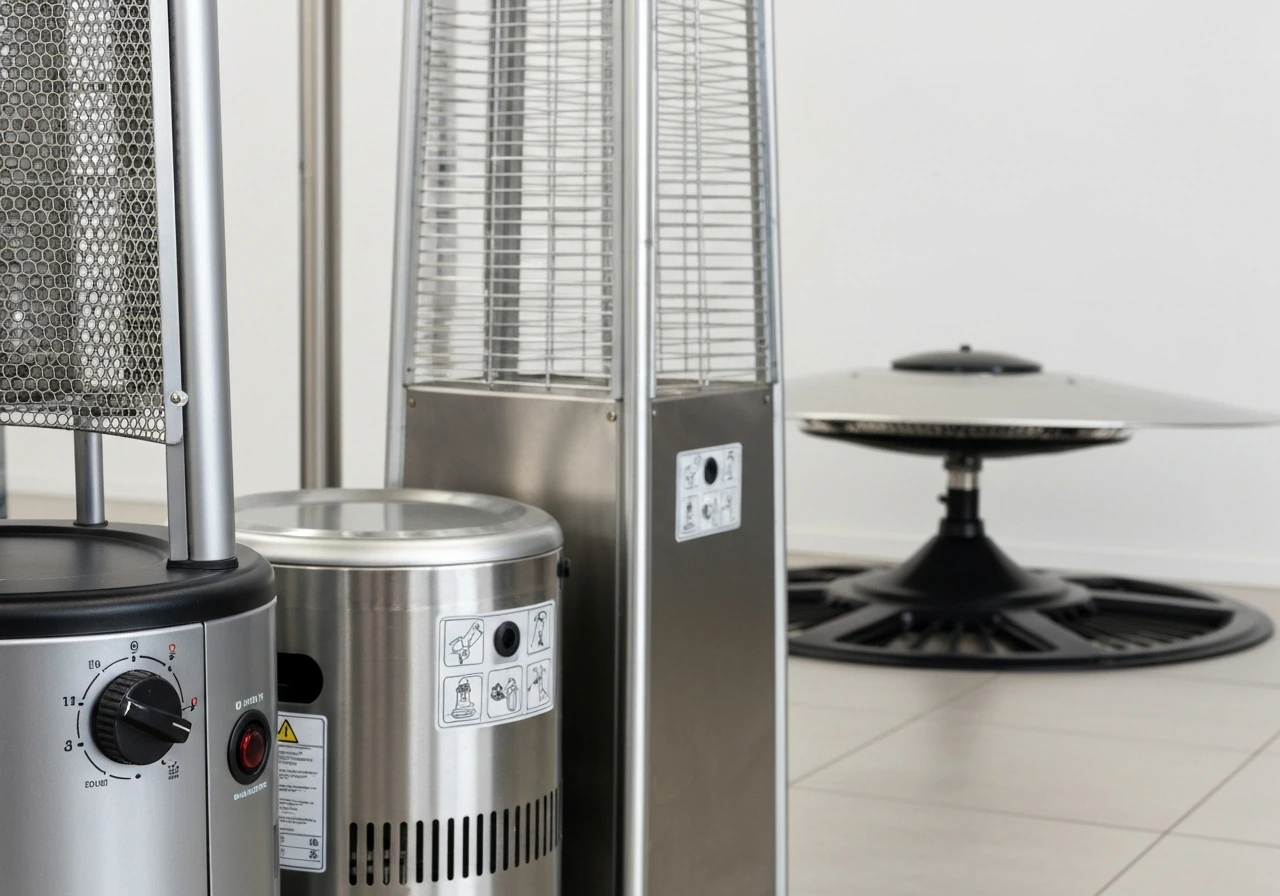
A store that carries twelve outdoor heater models will likely have the right BTU range, fuel type, and safety certifications for your covered patio. A store that carries two is guessing. Look for stores that show complete spec sheets: BTU ratings, UL or ANSI/CSA compliance (the relevant gas heater standard is ANSI Z83.26-2014/CSA 2.37-2014), tip-over switch inclusion, and ODS (Oxygen Depletion Sensor) for gas units. For speakers, you want IP ratings prominently listed. For misting systems, you want pump PSI and flow rate (GPM) on the product page, not buried in a downloadable manual.
Warranty terms and what they actually cover
Warranty language varies wildly in this category and it is worth reading carefully. Sunbrella Marine Upholstery marketing includes a “5-Year Limited Warranty” that covers loss of strength or color and includes limited labor-cost coverage language. Sunbrella shade fabrics carry a 10-year limited warranty covering loss of color and loss of strength, which is genuinely strong for an outdoor fabric. CFR Patio covers powder-coat finishes for 3 years from the order completion date. Cool Mist ATX offers a 3-year worry-free warranty on misting pumps and kits and will send a prepaid shipping label if you need to return something. Compare that to retailers like AquaMisters, which explicitly accepts no returns on misting systems, or Advanced Misting Systems, which flags that Final Sale and Custom items are non-returnable. National Patio Covers offers 30-day replacement windows for cushions and umbrellas from invoice date. The Home Depot posts "Free and Easy Returns" for many heater products, which is genuinely convenient if something arrives damaged. The lesson: always read the warranty page for the specific product, not the store's general policy.
Pricing transparency and lead times
Stores that hide pricing until you fill out a quote form are not necessarily dishonest, but they do slow down your decision-making. For budget planning purposes, prefer stores that show full pricing upfront. If price is your top priority, you can also use this same evaluation checklist to find the best patio deals on covers, heaters, and misting systems. Also ask about lead times before ordering: custom pergola covers and powder-coated structural pieces routinely take 4 to 8 weeks. If you are planning a summer project, ordering in late spring means you might be waiting into August. Online retailers with warehouse stock generally ship faster, but verify before you assume.
Support: design help, installation guidance, and contractor coordination
Local showrooms often offer something online stores cannot: a salesperson who can pull cut sheets, confirm clearances, and coordinate with your contractor. If you also need to find the best patio clearance deals without sacrificing clearances, ask the showroom team to verify fit and specs the same way they do for an outdoor heater installation. That is genuinely valuable for an outdoor kitchen or a gas heater installation where rough-in specs matter. Patio.com's White Glove Delivery (available for showroom-area purchases) includes delivery by appointment and product assembly with packaging removal, but it explicitly does not cover installation, gas line connection, or electrical hookups. Know that boundary going in so you are not surprised on delivery day.
| Criteria | Local Showroom | Specialty Online Retailer | Big-Box Retailer |
|---|---|---|---|
| Inventory depth (specialty) | Medium | High | Low |
| Pricing transparency | Medium (often quote-based) | High | High |
| Warranty support | Varies by brand | Often direct/faster | Varies by brand |
| Design/contractor coordination | Strong | Limited | None |
| Return policy ease | Varies | Often strict (no returns on installs) | Generally easy |
| Lead time for custom items | 4–8 weeks typical | Varies | Usually in stock |
Best patio store picks by product category
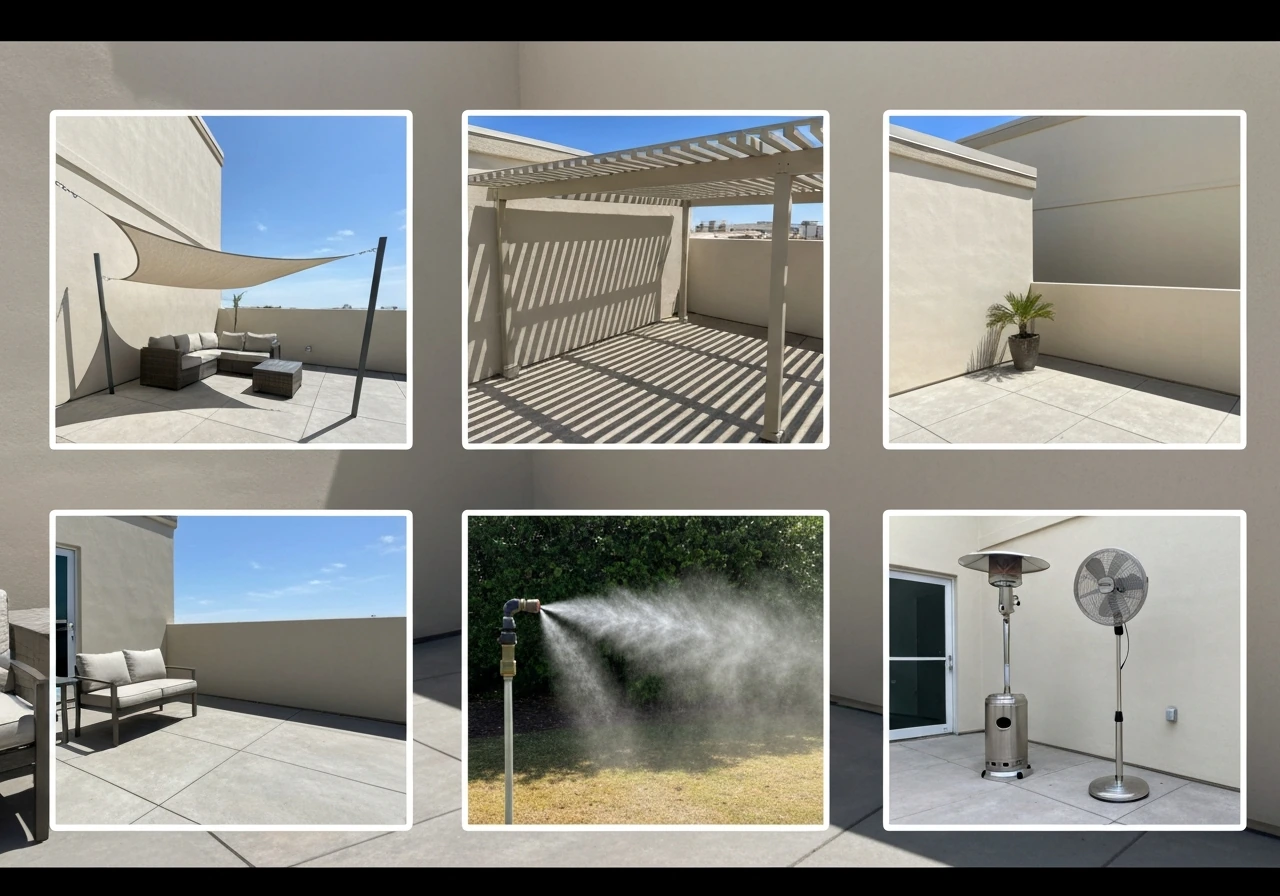
Rather than ranking one store above all others, here is how the landscape breaks down by what you are actually shopping for.
Patio covers, pergolas, and shade structures
For fabric-based shade, stores that carry Sunbrella material are worth prioritizing. The 10-year limited warranty on Sunbrella shade fabrics is the benchmark in this category, and retailers who stock it are signaling a commitment to quality materials. National Patio Covers is a solid specialty option for structure-and-fabric combinations, though pay attention to their specific cushion and umbrella replacement windows (30 days from invoice date). CFR Patio is worth a look if you need powder-coated aluminum structural pieces; their 3-year powder-coat warranty is reasonable for residential use. Local showrooms like Patio.com, which lets you visit a showroom to see collections in person, are especially useful here because seeing fabric texture and frame quality in person saves you a lot of guesswork.
Misting systems
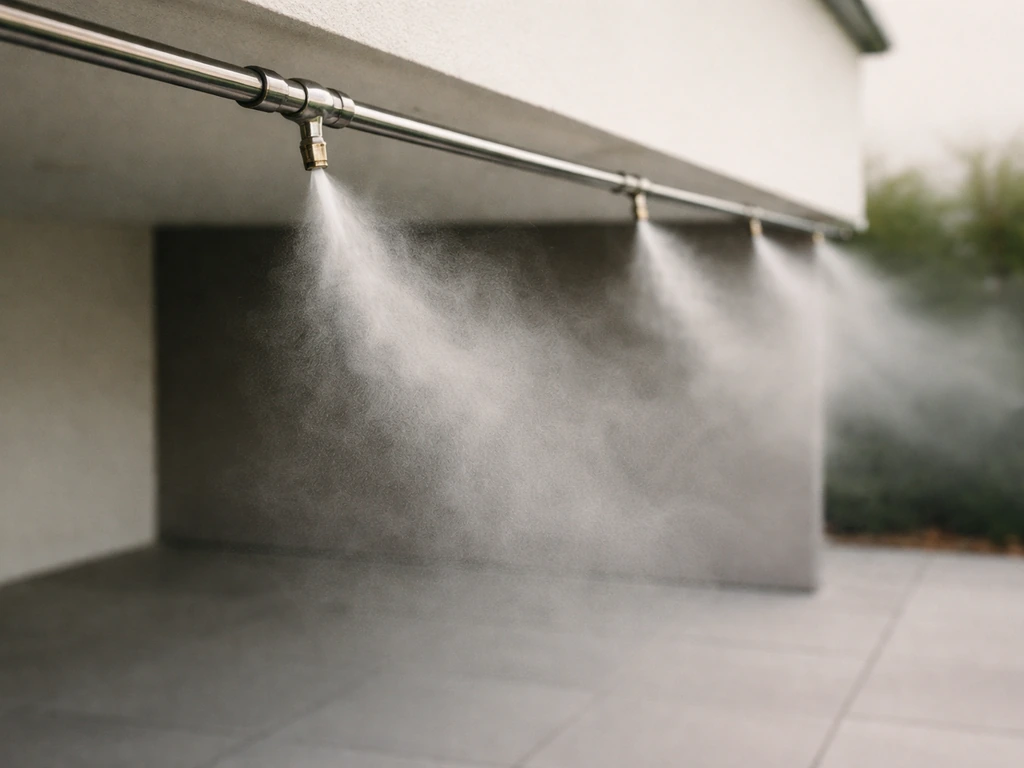
Misting is one of the most technically specific categories in the patio world, and you really do not want to buy from a generalist here. The system performance lives and dies by pump PSI and flow rate. Professional-grade high-pressure systems typically run 1,000 to 1,500 PSI. Even mid-range residential units like Advanced Misting Systems' WhisperFlow require inlet water pressure above 43.5 PSI (3 bar) and a minimum flow rate of 1.06 GPM (4.0 LPM). If your home's water supply does not meet those specs, the system will not perform. Advanced Misting Systems and AquaMisters are both recognized specialty retailers, but both have strict no-return or non-returnable policies on systems and custom builds. Cool Mist ATX stands out for its 3-year warranty and hands-on claim support, including prepaid return labels. If you are in Texas or the Southwest where misting is practically essential, Cool Mist ATX's warranty terms alone make them worth a serious look.
Outdoor fans and heaters
For heaters specifically, safety certification is non-negotiable. Look for UL listing and confirm the unit has a tip-over switch. A 2023 CPSC staff assessment flagged that some portable electric heater samples lacked tip-over switches, so this is not a hypothetical concern. NFPA guidance also notes that outdoor heaters should not be placed within 5 feet of occupants. For gas infrared heaters, Patio Comfort's infrared units serve as a good spec benchmark: 7,000 to 11,000 BTU range, UL-listed, ODS sensor, and tip-over switch included. The Home Depot is a genuinely good option for heaters and fans if you value easy returns and want to see stock availability today. Their in-store return policy removes a lot of the risk when you are not sure which model will work in your covered patio. For premium fans and heaters, local specialty showrooms that carry commercial-grade brands can get you into equipment that lasts a decade instead of two seasons.
Outdoor audio
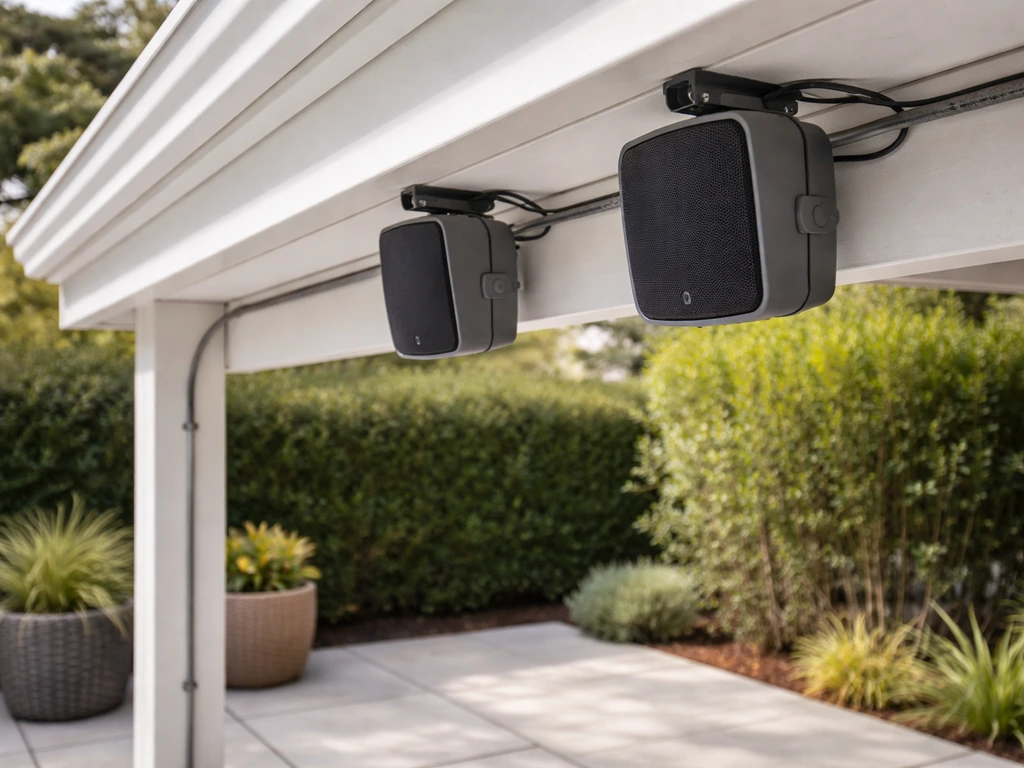
Outdoor audio has a surprisingly technical buying process once you move past Bluetooth speakers. For permanent, weather-resistant patio installations, IP ratings are the first filter. The IEC 60529 standard defines these: IP65 handles low-pressure jets and light rain, IP66 handles stronger jets, and IP67 covers temporary immersion. Klipsch's RSM-650 is rated IPX6, making it appropriate for most covered patio environments. The Sonance SGS 8.1 Outdoor System carries an IP66 rating and claims coverage of up to 3,500 square feet, which is relevant for large patios or multi-zone setups. Yamaha's NS-AW series and the OSD AP525 (IP54-rated, sold through Outdoor Speaker Depot) are solid mid-range options. Tom's Guide's 2026 outdoor speaker roundup confirmed that IP66-rated models hold up to real-world outdoor testing. For installation, Sonos by Sonance provides a detailed installation guide for speaker placement and wiring, and that complexity is worth noting: most homeowners will want a pro to handle permanent in-wall or in-ceiling outdoor speaker runs.
DIY shopping checklist before you order anything
Whether you are buying a patio cover kit or a misting pump, showing up without these details leads to returns, compatibility problems, and wasted weekends. Run through this list before you put anything in a cart.
- Measure your patio footprint precisely: length, width, and overhead clearance height. For heaters, note the ceiling height and whether the space is open, semi-enclosed, or fully covered.
- Check your home's water pressure (PSI) and flow rate (GPM) if you are buying a misting system. Most residential supplies run 40 to 80 PSI at the tap. Compare this to the product's minimum inlet requirement.
- Confirm the power supply available at the installation point: 120V or 240V for electric heaters and fans, and whether a dedicated circuit exists. Note that most White Glove Delivery services do not include electrical hookups.
- For speakers, note the impedance (ohms) and power handling of any existing amplifier you plan to use, and confirm the IP rating matches your exposure level (fully exposed roof deck vs. covered patio).
- For shade structures and covers, identify your frame material (wood, aluminum, vinyl) and whether attachment points already exist or need to be added.
- Check HOA rules and local permit requirements before ordering any permanent structure, shade sail hardware, or gas appliance.
- Note your climate zone: high-pressure misting systems work best in low-humidity regions (Southwest, Texas, parts of the Southeast). In the Midwest or Minnesota, you may want radiant heaters instead of evaporative cooling.
- Confirm return windows and warranty terms before you buy, especially for misting systems, which are often final-sale once shipped.
When to hire a pro and how stores fit into that picture
Some patio upgrades are genuinely DIY-friendly: hanging a shade sail, mounting an outdoor fan to an existing ceiling box, or running a low-pressure misting kit along a fence. Others really are not, and trying to DIY them costs more in mistakes than hiring someone would have.
- Hire a pro for gas line connections: no retailer's delivery service covers this, and it requires a licensed plumber or gas fitter in most jurisdictions.
- Hire a pro for new electrical circuits: a dedicated 240V circuit for a tower heater or a whole-patio audio system with amplifiers needs a licensed electrician.
- Hire a pro for structural pergola or patio cover installation, especially if it attaches to the house. This involves ledger-board attachment, load calculations, and often a permit.
- Hire a pro for high-pressure misting systems (1,000+ PSI) that require proper line sizing, nozzle placement, and pressure regulation.
- Hire a pro for in-wall or in-ceiling outdoor speaker runs, especially when the Sonance Patio Series or similar multi-zone systems are involved.
The best local showrooms understand this contractor relationship and can actually support it. A good showroom salesperson can pull cut sheets and rough-in specs for your contractor, confirm clearance requirements for a gas heater, and make sure the product you are ordering is compatible with your installation plan before you commit. That coordination is a real advantage over buying blind online and hoping for the best. When you find a local patio dealer who operates this way, they are worth paying a small premium for.
Budget vs premium: matching your spending to your climate and goals
Budget-first readers and premium-minded readers are both making rational choices, they just need different guidance. Here is how to think about the tradeoffs across the main patio categories.
| Category | Budget Approach | Premium Approach | Climate Consideration |
|---|---|---|---|
| Patio covers/shade | Polyester shade sails, basic aluminum pergola kits | Sunbrella fabric (10-yr warranty), powder-coated steel or aluminum structures | High UV regions (Southwest, TX) justify premium fabric; rainy climates (Pacific NW, MN) need waterproof, not just UV-resistant |
| Misting systems | Low-pressure garden hose kits ($50–$150), no pump needed | High-pressure pump systems (1,000–1,500 PSI) with stainless nozzles | Only useful in low-humidity climates; skip in humid Southeast or Midwest |
| Outdoor heaters | Big-box electric tower heaters (easy returns, low install cost) | Infrared gas heaters (UL-listed, ODS sensor, 7,000–11,000 BTU range) | Cold-climate patios (MN, CO) need higher BTU and weather-rated housing |
| Outdoor fans | Standard outdoor-rated ceiling fans from Home Depot or similar | Commercial-grade damp/wet-rated fans with DC motors for efficiency | Coastal climates need wet-rated (not just damp-rated) for salt air |
| Outdoor audio | Bluetooth weather-resistant speakers (IP54+), no installation | In-ground or in-wall speakers (IP66/IP67), multi-zone amplifier, pro install | All climates benefit from IP66+ in exposed locations; covered patios can use IP54 |
One general rule that holds across all categories: spending more on materials and less on a second replacement purchase is almost always the better financial decision for permanent installations. A $300 shade sail that fades in two seasons costs more over five years than a $700 Sunbrella cover that is still performing at year ten. Budget options make the most sense for temporary setups, rentals, or when you are not yet sure how you will use the space.
Regional context matters a lot here. If you are in St. If you are searching for the best patio stl options, use this same approach to prioritize heaters and misting based on how long your patio season actually lasts St. Louis. Louis or Minneapolis (markets where patio seasonality is real), you might invest more in a quality heater and less in misting, since the season is shorter and you want to extend it in both directions. If you are in Phoenix or Austin, the calculus flips: misting and shade are everything, and heaters are a secondary concern. Readers looking at specific regional patio markets will find that local climate really does dictate the product priority order.
Your next-step comparison plan
You should leave this article with a clear action sequence, not just a list of store names. Here is how to move from research to a confident order. If you are also comparing brand perspectives, What Patio Magazine can be a helpful starting point for editorial picks and seasonal trends.
- Identify your primary category first (covers, misting, heating/cooling, audio) and focus your store comparison there. Do not try to solve all four at once.
- Pull your measurements and specs using the DIY checklist above before opening any product page. Know your PSI, your square footage, your power supply, and your mounting constraints.
- For each shortlisted store, check three things on the product page: the full spec sheet (not just marketing copy), the warranty duration and what it covers (manufacturing defects only? fabric color loss? labor?), and the return policy window and exclusions.
- Ask the store directly (phone or chat) whether they can provide cut sheets or rough-in specs for your contractor. A store that can do this is worth more than one that cannot, even if the price is slightly higher.
- Compare at least two stores per category. Use pricing transparency as a filter: if a store will not show you pricing without a form submission, note that and factor it into your decision.
- For misting systems: confirm your home's inlet water pressure meets the product minimum (at least 43.5 PSI for most residential pump systems) before ordering anything. Do not assume.
- For heaters: confirm UL listing, tip-over switch, and for gas units, ODS sensor and ANSI/CSA compliance. These are safety checkboxes, not optional.
- For audio: confirm IP rating matches your installation environment, and decide before ordering whether you are doing a DIY Bluetooth setup or a wired permanent installation. The latter needs a pro.
- If you are buying through a local showroom, ask about lead times for custom or made-to-order items, and get the delivery scope in writing (what the delivery service includes and does not include, especially regarding electrical or gas hookups).
- Check for current deals and clearance pricing: end-of-season sales (late summer through fall) often bring 20 to 40 percent discounts on heaters, covers, and furniture. If your timeline is flexible, timing your purchase can matter.
The stores and brands that consistently earn trust in this category are the ones who are transparent about specs, honest about what their delivery or service covers, and back their products with real warranty terms. That combination, more than any single store name, is what makes a patio retailer genuinely worth your business. As you narrow the options, focus on the best patio sales that match your project category and timeline. Start with your specific project category, do the measurement homework, and then let the warranty and support terms make the final call for you.
FAQ
How do I figure out which patio store category fit I need before I start shopping?
Write down the exact product class you are buying (shade fabric, structural cover, misting, heater, fan, audio) and what is driving the decision (comfort, safety, water pressure compatibility, coverage area, or install complexity). Then match stores that publish category-specific specs for that class, like PSI and flow for misting or IP rating for outdoor speakers, instead of relying on general “patio” labels.
What measurements should I confirm so I do not buy the wrong patio cover or heater?
For covers, confirm opening dimensions, post or rail spacing (if included), and any required clearance for ventilation and mounting hardware. For gas heaters, confirm both the installation clearance to combustibles and safe placement distances from occupants, then verify the model’s recommended hang height or stand location on the product spec sheet.
If a store’s product page shows the specs, how can I tell if the warranty will still protect me?
Check whether coverage is tied to the exact component (example: fabric vs frame finish), whether the warranty starts on order date or installation/completion date, and whether the return or replacement process requires original packaging or proof of professional installation. Also look for exceptions like “custom” or “final sale” items that commonly shrink coverage.
Why do misting systems fail, even when the store claims compatibility?
Most performance issues come from mismatched water inlet pressure and insufficient flow rate to the pump. Before ordering, compare your supply pressure at the installation point to the system’s minimum inlet PSI and confirm the required GPM, then ask whether the store expects filtration, specific hose diameters, or add-on regulators for your water conditions.
What should I ask about returns for heaters and misting systems before placing an order?
Ask whether the item is returnable after it ships, whether “custom” means made-to-order only or also includes bundled kits and hoses, and who pays return shipping. For misting systems in particular, confirm whether they are treated as final sale once assembled or configured, and whether the store offers exchange options if parts do not match your setup.
Do I need a pro installer, or can I safely DIY my patio upgrade?
DIY can work for mounting fans to an existing ceiling-rated box or installing low-pressure misting along a fence, but permanent gas heater installs, in-ceiling or in-wall speaker runs, and any work affecting electrical or plumbing are where pro help usually prevents rework. A practical step is to ask the store if they can provide cut sheets or rough-in requirements that your contractor can sign off on.
What is the real limit of “White Glove Delivery” for patio furniture or equipment?
Delivery and assembly usually do not equal system hookup. Clarify whether assembly includes removal of packaging only, and whether any gas line connection or electrical hookup is explicitly excluded. If your project needs utilities to be connected, request a written list of what the delivery team will and will not do before the appointment.
How do IP ratings translate into choosing outdoor speakers for my patio?
Use IP ratings as a weather durability filter, but also consider your placement exposure. A speaker under a covered, protected overhang can tolerate lower exposure than one placed near sprinklers or exposed to wind-driven rain. If your design includes outdoor cleaning with a hose, ask whether the rated IP level supports direct spray at your expected jet intensity.
How do I avoid buying a heater that is technically safe but not right for my space?
Beyond certification, size the heater to your patio footprint and seating layout so you do not end up with uneven warming. Confirm BTU range for your specific model, check whether it is infrared or another heat type, and ask whether the retailer recommends a particular mounting height or placement to match your covered patio dimensions.
Is it smarter to buy upfront from a big-box store or a specialty retailer for patio equipment?
Big-box retailers are convenient when you need quick availability and simple return handling, especially for heaters. Specialty retailers can be worth the extra cost when your project needs technical matching, like misting pump performance, speaker integration, or structural-and-fabric combinations. The decision aid is to compare published compatibility specs first, then compare warranty language and return friction second.
How can I estimate total cost when factoring in replacement cycles and warranty terms?
Calculate expected lifespan based on warranty duration and real usage conditions like sun intensity, coastal salt exposure, and how often you run systems. If a budget option has a shorter warranty on the critical component (fabric fading, powder-coat failure, pump wear), it often costs more over five years even if the purchase price is lower.
What should I prioritize if I am shopping by season, not just by best price?
Ask about lead times for custom pieces and powder-coated structural parts, and confirm whether shipping delays push delivery into off-season. If you are planning a summer project, order earlier and request an installation-ready date, not just an “estimated ship” date, so your contractor can schedule work around delivery.