
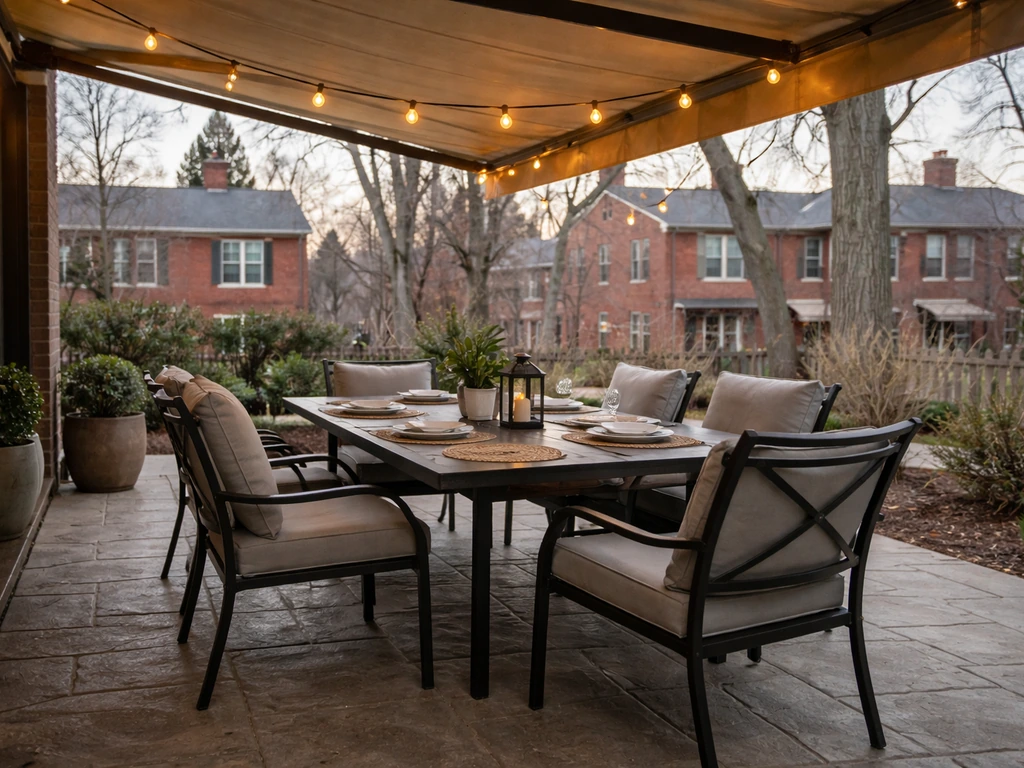
The best patio setup for St. Louis dining combines a durable, freeze-thaw-resistant surface, reliable overhead shade, some form of cooling (a wet-rated ceiling fan, a misting system, or both), warm ambient lighting, and enough layout space to move comfortably between seats and a grill or serving table. St. Louis summers are brutally humid and hot, winters bring real freeze-thaw cycles that crack cheap concrete, and spring storms roll through without much warning. A patio that earns the label 'best' here has to handle all of that while still feeling like a place you actually want to eat dinner. If you're still deciding who to work with or where to source materials, a quick look at the best patio store options can help you compare brands, pricing, and availability. If you also want to explore options outside Missouri, a quick guide to the best patio MN setups can help you compare materials, shade, and comfort upgrades.
Best Patio STL Guide for Dining, Covers, and Upgrades

How to define 'best' for your St. Louis patio
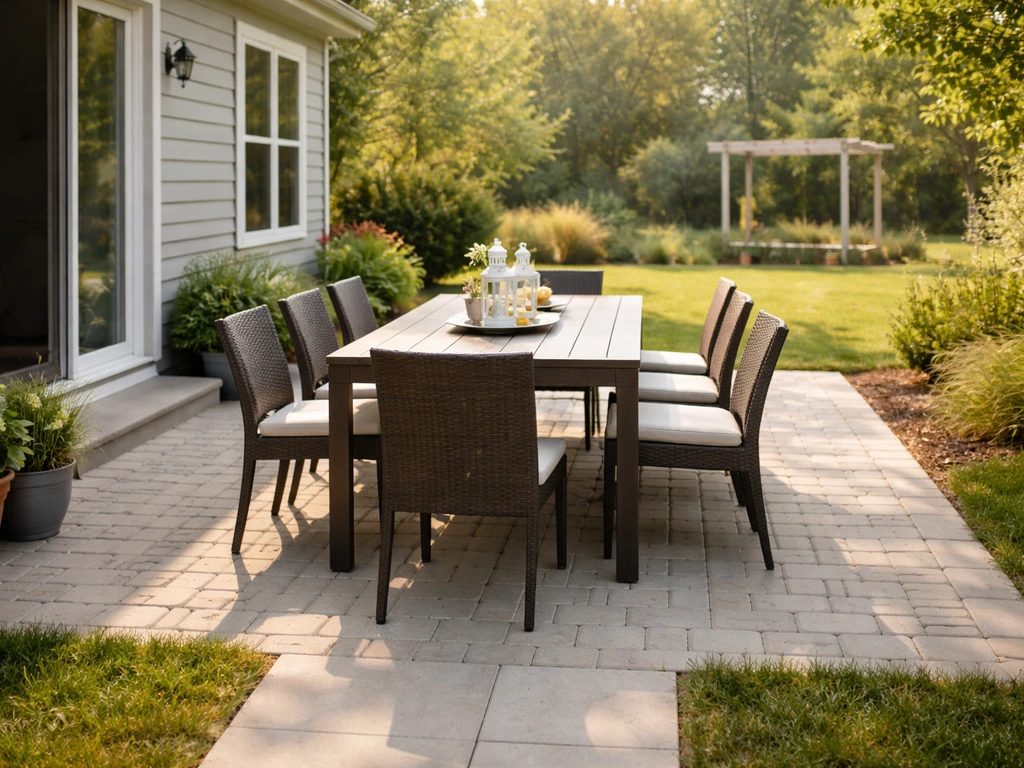
Before you start picking pavers or pricing pergolas, it helps to be honest about what you actually need. 'Best' means something different for a couple who wants a quiet breakfast nook than it does for a family hosting weekend cookouts for 20 people. There are four filters worth thinking through before you spend a dollar.
- Space and layout: How many people are you seating regularly? A six-person dining set needs at least a 12x16 foot surface to feel comfortable, with room to push chairs back. If you're working with a smaller yard, a 10x12 area can still work if you're thoughtful about furniture scale.
- Budget: Paver patios in the St. Louis area typically run $15–$25 per square foot installed. Concrete is cheaper upfront but carries higher long-term maintenance risk given local freeze-thaw cycles. A basic covered patio with a fan can add another $3,000–$8,000 depending on the cover type.
- Style and goals: Do you want a full outdoor dining room with speakers and string lights, or just a clean, low-maintenance surface where you can set a table? Be specific, because it changes every material and product decision downstream.
- Climate priority: In St. Louis, heat and humidity from June through September is the number one comfort problem. Shade and airflow aren't optional upgrades—they're what separates a patio you use from a patio you avoid from noon to 7pm.
It also helps to think about which season matters most to you. If you want spring and fall dining, your priorities will lean toward a simple open surface with good drainage. If you want to use the space from April through October, you need to invest in shade and cooling. The more honest you are about this up front, the less likely you are to over-build or under-build. To get the best patio clearance for St. Louis homes, prioritize generous, well-measured space for seating movement plus airflow and drainage underfoot.
Best patio dining in STL: neighborhoods, atmospheres, and what to look for
If you're researching 'best patios in STL' partly to get inspiration from what's already working in the city, there are a few neighborhoods worth paying attention to. St. Louis Magazine publishes a recurring roundup of the best restaurant patios in the city, and the same areas keep showing up for good reasons. For more inspiration, you can also look up features from what patio magazine, which often spotlights standout patio spaces and dining setups.
The Delmar Loop is one of the most walkable entertainment corridors in the region, and several spots there have built their identity around outdoor seating. The energy is lively and social, which makes it a good reference point if you want a patio that feels like a destination. Forest Park is another anchor, restaurants and cafes around the park benefit from the green backdrop and foot traffic, and many of them have dialed in covered or semi-covered seating to make the space usable even in peak summer heat. Clayton and parts of West County also show up in local 'best patio' roundups, with a more polished, neighborhood-dining feel.
When you're walking these spaces with a critical eye, notice what the better ones have in common: they almost always have overhead coverage of some kind, they use warm ambient lighting rather than harsh white light, they have airflow (natural or mechanical), and the surface underfoot is level and clean. That's your design checklist in real-world form. If you're building or upgrading your own patio for dining, those are exactly the features to prioritize.
What makes a patio actually good for meals and hosting comes down to a few practical factors. Flow matters: guests need to move from a chair to a serving area without bumping into furniture. Privacy matters at home more than it does at a restaurant. And surface choice matters because nobody wants to drag chairs across rough aggregate concrete every time someone sits down.
Patio materials and designs that actually hold up in St. Louis weather
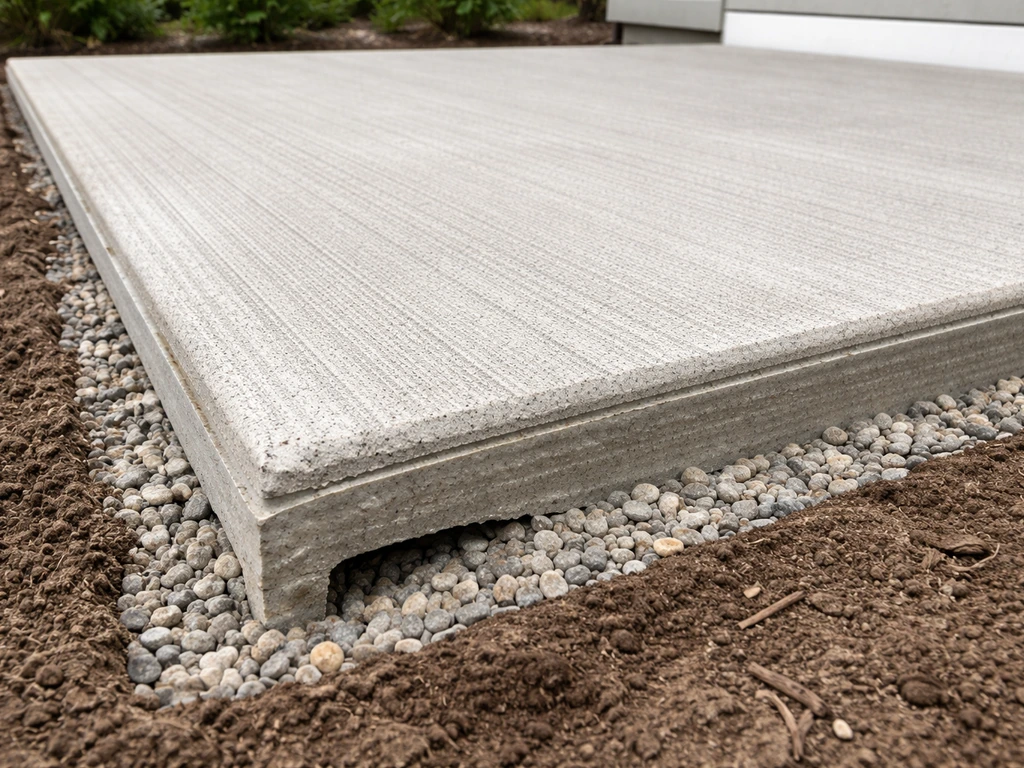
St. Louis gets real winters. The city logs multiple freeze-thaw cycles every season, and that's the single biggest threat to your patio surface over time. Water seeps into surface pores, freezes, expands, and slowly fractures whatever it's in. Cheap or improperly installed concrete is especially vulnerable. That's not a scare tactic, it's just what local contractors see every spring.
Concrete slabs
Poured concrete is the most common patio base in the area and it can work fine, but the details matter. Surface quality, proper curing, and sealing all affect how well it handles repeated freeze-thaw exposure. De-icing salts accelerate surface deterioration, so if you're using salt on or near your patio in winter, that's worth factoring into your maintenance plan. Concrete flatwork in STL typically needs resealing every two to three years and may need patching or resurfacing over a 10–15 year window depending on installation quality.
Interlocking concrete pavers
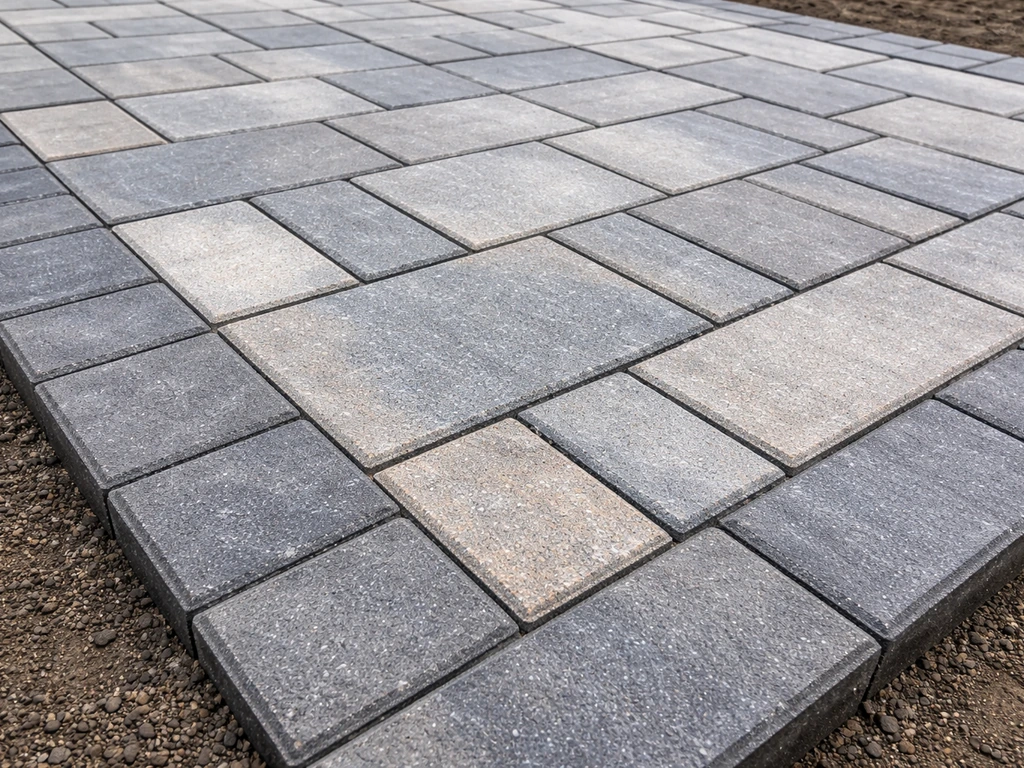
Pavers are generally the stronger choice for St. Louis conditions. Products meeting ASTM C936 (the standard for solid concrete interlocking paving units) and ASTM C1645 (freeze-thaw and de-icing salt durability) are specifically designed for climates like this. Look for pavers with maximum water absorption at or below 5%, lower absorption means less water penetrating the surface during freeze cycles. Beyond the product itself, installation is where paver patios succeed or fail. You need proper edge restraints (this keeps the field from spreading over time), a well-compacted gravel base, and a slope of roughly 1/4 inch per foot away from your home to prevent pooling and ice formation. ICPI guidelines put the acceptable slope range at 1/8 to 1/4 inch per foot, don't go flatter than that.
Natural stone
Flagstone and bluestone patios look great and can handle STL winters reasonably well when properly installed on a stable base. The cost is higher than pavers, and the surface texture can be uneven in ways that make moving furniture around a minor hassle. For dining-focused patios, a smoother, more consistent surface is usually more practical.
| Material | Freeze-Thaw Performance | Typical Cost (Installed) | Maintenance Level | Best For |
|---|---|---|---|---|
| Poured Concrete | Moderate (sealing required) | $8–$15/sq ft | Medium (seal every 2–3 yrs) | Budget builds, simple layouts |
| Interlocking Pavers | Strong (ASTM C936/C1645 rated) | $15–$25/sq ft | Low (occasional joint sand) | Dining patios, long-term performance |
| Natural Flagstone | Good (depends on install) | $20–$35/sq ft | Medium (re-grouting, sealing) | Aesthetic priority, informal layouts |
| Composite Decking | Good | $25–$40/sq ft | Low | Elevated or ground-level decks |
For a dining-focused patio in St. Louis, interlocking pavers on a proper base are the most reliable long-term choice. They're repairable (you can replace individual units), they handle freeze-thaw well when spec'd correctly, and they look sharp under an outdoor dining set.
Patio covers, shade, and climate control
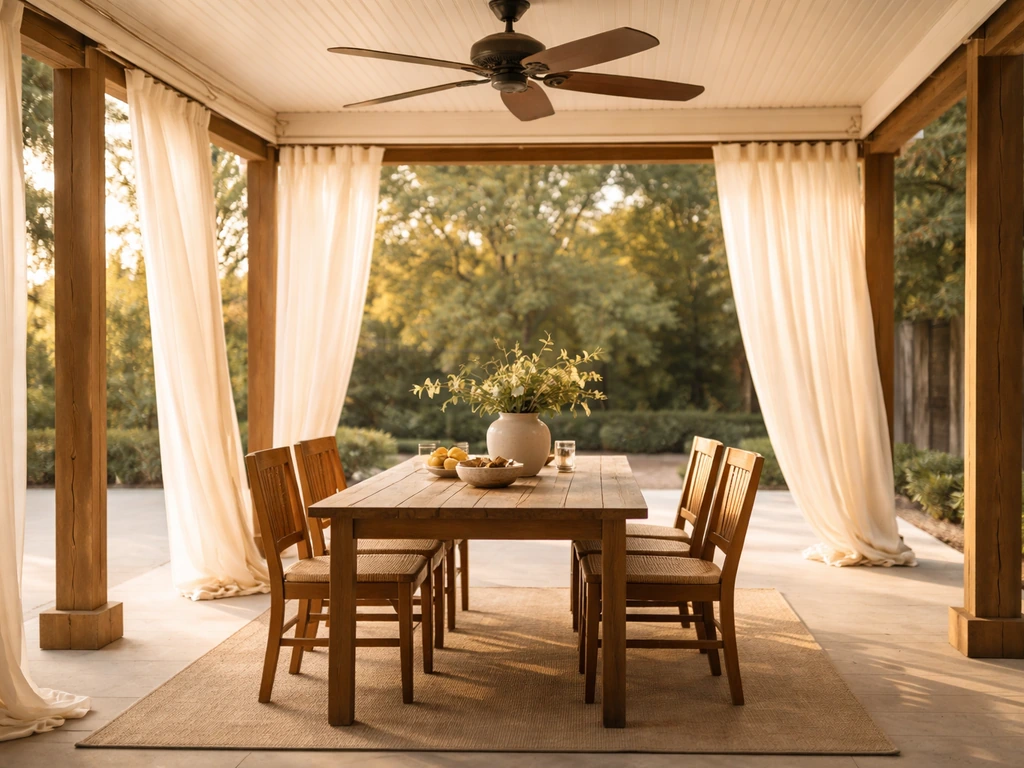
This is probably where the gap between a great STL patio and a miserable one is widest. Without shade and airflow, your patio is genuinely uncomfortable from late May through early September, and in St. Louis, that covers most of peak dining season. Getting this right isn't about luxury, it's about usability.
Overhead cover options
A solid roof attachment (either tied to your home's roofline or as a freestanding structure) gives you the most protection and the ability to add a ceiling fan or lighting overhead. Pergolas with shade sails or retractable canopies are a middle-ground option, lower cost, but less protection in heavy rain. Retractable awnings are a good choice for smaller spaces or when you want flexibility, though they're less useful for mounting fans or lights. If you want to host dinners through a St. Louis summer, a solid roof or louvered pergola system is worth the investment.
Fans and misting systems
Under a covered patio, a ceiling fan makes an immediate difference. Look for wet-rated fans with a UL listing for outdoor/wet locations, this isn't just a suggestion, it's a safety requirement for fans exposed to weather. A fan with a 52-inch or larger blade span is appropriate for most dining-sized patios (12x16 or similar). High-pressure misting systems can drop the perceived temperature by 10–20 degrees Fahrenheit in dry heat, though St. Louis is humid enough that ultra-fine misting nozzles (which evaporate more quickly) work better than low-pressure systems that just spray water on your food. Mid-pressure systems are usually the sweet spot here. A good contractor or HVAC/patio specialist can help you size the system appropriately.
Ventilation and airflow design
Even with a solid overhead cover, you want to design for airflow rather than against it. Avoid closing in all four sides of a covered patio with solid walls, open or louvered sides let breeze through. If you're enclosing a space partially for privacy, use lattice panels or a partial wall rather than full enclosure, so you don't turn your dining area into an oven.
Outdoor sound, lighting, and comfort upgrades that elevate dining
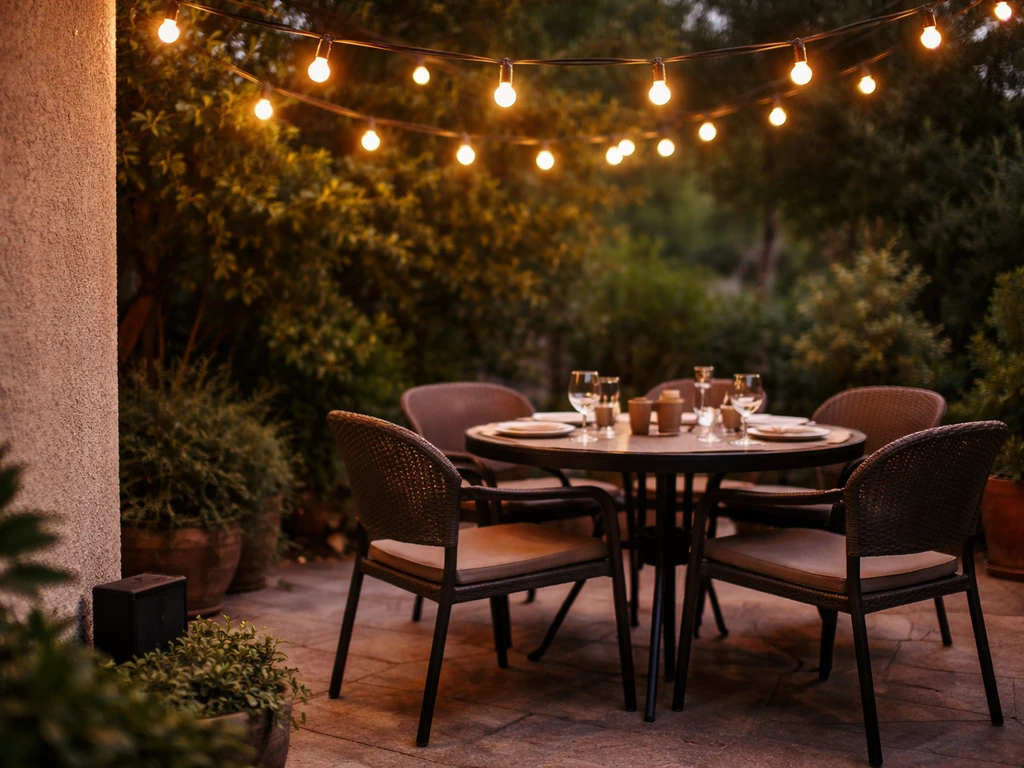
The difference between a patio that feels like a dining destination and one that just feels like a yard comes down to the finishing details. Lighting and sound do more for atmosphere than almost anything else, and both are very achievable at a range of budgets. If you're trying to stretch your budget, the best patio deals usually come from timing your purchase and choosing materials and covers that match your local freeze-thaw and shade needs.
Lighting
For dining atmosphere, warm white light in the 2700K–3000K range is the right call. Cool white or daylight LEDs above 4000K make outdoor spaces feel clinical rather than inviting, great for a work area, wrong for dinner. Use a layered approach: overhead fixtures or string lights for ambient light, directional fixtures or lanterns for accent, and maybe some low-level path lighting around the perimeter. For any fixtures exposed to rain or direct weather contact, look for an IP65 or higher rating, which means the fixture is protected against water jets from any direction. Wall-mounted fixtures and ceiling fixtures under a covered patio should meet this minimum.
Outdoor sound
In-ground or wall-mounted outdoor speakers are a significant upgrade over bringing a Bluetooth speaker outside. Dedicated outdoor speaker systems (brands like Polk Audio Atrium, Klipsch AW series, or Sonance) are weatherproofed and designed to handle temperature swings. For a dining patio, two speakers positioned to cover the seating area at moderate volume is plenty, you're not building a stage. If you're wiring permanent outdoor speakers, that wiring typically needs to be run through conduit or rated for direct burial, and depending on the scope, may require an electrical permit (more on that below).
Other comfort upgrades worth considering
- Outdoor heaters: A wall-mounted infrared heater or freestanding propane heater extends your dining season into October and November in STL, when evenings cool off quickly.
- Privacy screens or planters: A simple row of tall planters or a partial lattice screen adds privacy from neighbors without requiring a permit in most cases.
- Outdoor rugs: A weather-resistant rug under the dining table pulls the space together visually and reduces noise from chair movement on hard surfaces.
- Dimmer switches: Putting your outdoor lighting on a dimmer (with a weatherproof switch box) gives you full control over ambiance—bright for cooking, dim for after-dinner.
Hiring vs. DIY: planning, timelines, permits, and finding the right local pros
This is where a lot of STL homeowners get stuck, not because the work is mysterious, but because the permit and licensing landscape in Missouri is genuinely fragmented. Missouri doesn't have a single statewide general contractor licensing model for hardscaping and landscaping work. Requirements are locally governed, which means what's required in the City of St. Louis differs from St. Louis County, Fenton, Maryland Heights, and Clayton.
When you likely need a permit
As a general starting point: basic hardscape (a ground-level paver patio with no roof structure) often doesn't require a permit, but adding a roof structure, pergola with a solid cover, patio cover attached to the house, almost always does. Maryland Heights, for example, explicitly lists patio, deck, and porch roofs as triggering a permit requirement. Any electrical work, including running circuits for outdoor fans, lighting, or speakers, requires an electrical permit in the City of St. Louis. The city's Building Division handles these applications and publishes the fee schedule online. If you're doing work that involves an electrical subcontractor, the city requires that contractor to hold an electrical contractor license. Before you start planning with a contractor or buying materials, check your specific municipality's zoning and building requirements, the City of St. Louis has a zoning FAQ, and St. Louis County has an ordinance guidebook that spells out what is and isn't exempt.
DIY vs. hiring: an honest breakdown
| Task | DIY Feasibility | Permit Likely Needed? | Notes |
|---|---|---|---|
| Paver patio installation | Moderate–High | Usually no (check local) | Base prep is labor-intensive; edge restraint is critical |
| Concrete patio | Low–Moderate | Sometimes | Forming, pouring, and finishing concrete is hard to DIY well |
| Pergola (kit) | Moderate | Sometimes (with roof cover) | Many kit pergolas are manageable DIY; attached structures may require permit |
| Ceiling fan installation | Moderate | Electrical permit may apply | Requires proper wet-rated box and waterproof wiring |
| Outdoor lighting circuit | Low (hire) | Yes (City of St. Louis) | Electrical contractor license required for permit in City of STL |
| Misting system | Moderate | Usually no | High-pressure systems benefit from professional sizing |
| Outdoor speakers (permanent) | Moderate | Electrical permit may apply | Wiring should be rated for outdoor/conduit use |
How to choose a local contractor
Because contractor licensing in Missouri is handled locally rather than at the state level, vetting requires a bit more legwork. Ask any contractor you're considering whether they pull permits for the work they do, a contractor who skips permits on a covered structure or electrical work is leaving you with potential resale and insurance liability. For hardscape (pavers, concrete), ask specifically whether they follow ICPI installation standards, whether they use edge restraints, and how they handle drainage slope. For electrical work tied to your patio, fans, lighting circuits, outlet installation, verify the contractor holds the appropriate license with the City of St. Louis or your specific municipality's Building Division.
Realistic timelines
A paver patio installation by a contractor typically takes two to five days of on-site work, but scheduling lead times in the STL area can run four to eight weeks during peak season (spring and early summer). Permit approval timelines vary by municipality but are often two to three weeks for straightforward residential projects. If you want a new covered patio ready for summer entertaining, planning in late winter (January–February) and booking a contractor by March is the realistic path to a finished space by Memorial Day weekend.
If you're comparing options beyond just your own backyard, checking out what's available locally in terms of materials, sales, or stores, there's a lot of overlap between this kind of project research and what you'd look for in patio furniture sales or clearance events, which can help stretch your budget on seating and accessories once the structural work is done.
FAQ
What patio size and layout works best for dining on a typical St. Louis home lot?
A practical dining layout usually starts around keeping at least 36 inches of clear walking space between seating and the grill or serving station. For comfort, plan a dedicated circulation path from the door or kitchen entry to the seating, and avoid placing fixed planters or bench backs in that route. If you are hosting, add extra clearance near the entry to prevent bottlenecks when people arrive and move in and out.
How do I choose between a poured concrete patio and pavers in freeze-thaw conditions?
If you want the lowest long-term hassle after winters, pavers are typically easier to repair because you can replace individual units without tearing out the whole surface. With concrete, the details like curing, sealing quality, and surface grading determine whether it will survive repeated freeze-thaw without scaling. If you already have concrete and want durability upgrades, focus on drainage corrections and re-sealing on schedule rather than expecting a seal alone to prevent cracking.
What water management details matter most for an STL patio?
Prioritize a continuous slope away from the house (commonly 1/8 to 1/4 inch per foot) plus proper base compaction so water does not puddle in low spots. Edge restraint is also critical, because if the edge fails the whole field can shift and drainage performance drops. During design, confirm downspout discharge locations so runoff does not dump onto the patio surface and freeze at the wrong times.
Do I really need to worry about de-icing salts on my patio?
Yes. Salts can accelerate surface deterioration, especially on concrete and on some surface finishes. If you use salt for steps or driveways, try to keep it away from the patio edge, use sand-based traction where possible, and clean residue after winter. For pavers, selecting products rated for freeze-thaw and de-icing exposure helps, but maintenance still matters.
Is misting worth it in St. Louis humidity, or will it just make things wet?
In humid climates, the benefit depends on nozzle type and placement. Ultra-fine mist that evaporates quickly generally helps more than low-pressure systems that wet nearby surfaces. Also consider the impact on comfort around furniture and food, if mist lands on chair upholstery or decorative textiles, you may see faster wear. A contractor should be able to size the system for airflow patterns, not just square footage.
What’s the safest way to run electricity for outdoor fans, lighting, or speakers?
Use outdoor-rated wiring pathways, protect circuits with appropriate GFCI protection, and plan the route using conduit or direct-burial rated components where required. Confirm whether you need an electrical permit before any trenching or connection work. Also verify wet-location ratings for every fixture and switch used under a covered patio or exposed to rain, and avoid relying on indoor fixtures outdoors even temporarily.
Can I enclose my covered patio for privacy without hurting comfort?
You can, but keep airflow in mind. Avoid closing all sides with solid panels, because trapped heat and humidity can make evenings uncomfortable. For privacy, partial enclosures, louvered sections, or lattice with controlled coverage usually reduce exposure while still letting breeze move through. If you plan heaters or fans, model the airflow first so you are not creating a stagnant “box” effect.
What blade size and fan type is best for a dining patio?
For most dining-sized patios, a fan with 52 inches or larger blade span is a common fit because it moves air effectively across seated areas. Choose wet-rated models with the correct outdoor labeling, so the fan can handle rain exposure and outdoor humidity safely. Mount height and downrod length matter too, if the fan sits too low over a table it can become a nuisance and reduce airflow efficiency.
How should I plan lighting so it looks warm at dinner, not bright and harsh?
Aim for warm white (2700K to 3000K) and use layered placement instead of a single overhead source. Combine ambient lighting (string lights or overhead fixtures), accent lighting (lanterns or directional fixtures), and low-level perimeter lighting for navigation. For fixtures exposed to weather, choose IP65 or higher so rain jets or splashes do not damage the housing. Dimmers are also a practical add-on for shifting from hosting to relaxing.
Are flagstone and bluestone good choices for furniture-heavy dining?
They can be durable when installed correctly, but they may be less convenient for dining when textures vary or joints create uneven movement for chairs. If your dining plan includes chairs with hard bottoms or rolling elements, a smoother, more consistent paver surface is often easier day to day. If you love the look of stone, prioritize uniform layout, tight jointing, and a stable base so the surface does not develop wobble over time.
What should I verify to avoid a paver patio failure after a few winters?
Ask how they will build the base (material type and compaction), and confirm that they plan edge restraints to prevent spreading. Verify the drainage slope before installation and how they will maintain it while setting the field. Also confirm product specifications for freeze-thaw and de-icing exposure, including water absorption performance if they have it. A good contractor should be able to explain the sequence, not just the final appearance.
How long should I expect permits and scheduling to take in the STL area?
For straightforward residential work, permit approval often takes a couple of weeks, but local timelines vary by municipality and project scope. On-site installation for pavers is commonly a few days, but lead times for contractor availability in peak season can stretch to a month or more. If you want a covered patio ready for late spring, booking in winter planning periods is usually the safest approach.
What mistakes make patios look great in photos but feel bad in real life?
The most common issues are not measuring for circulation paths, relying on inadequate shade, and designing lighting without considering how it affects dinner ambiance. Another frequent mistake is skipping the slope and base details, which can lead to puddling, icy spots, or early surface movement. Finally, many patios under-plan electrical outlets, so guests end up using extension cords for speakers, lights, or cooking tools.
Can I upgrade my existing patio instead of replacing it?
Often, yes. If the base is sound, you may be able to improve comfort with better drainage grading, add shade structure, and upgrade lighting and fans without removing the entire surface. If your surface is failing from freeze-thaw cracking, you may still salvage the footprint by resurfacing or re-building the top layer depending on condition. Have a contractor assess settlement, slope, and drainage points before you decide, because cosmetic fixes cannot overcome structural problems.