
For most patios, a pedestal oscillating fan rated for outdoor use (look for UL damp or wet location listing) with at least 2,500 to 3,500 CFM of airflow is the single most versatile cooling fan you can buy today. If you have a covered patio with an overhead structure, a ceiling-mount fan sized to your square footage beats everything else for hands-free, all-day comfort.
Best Patio Cooling Fan Guide: Choose the Right Fan Today

Elise Prescott
2 Jul 2026
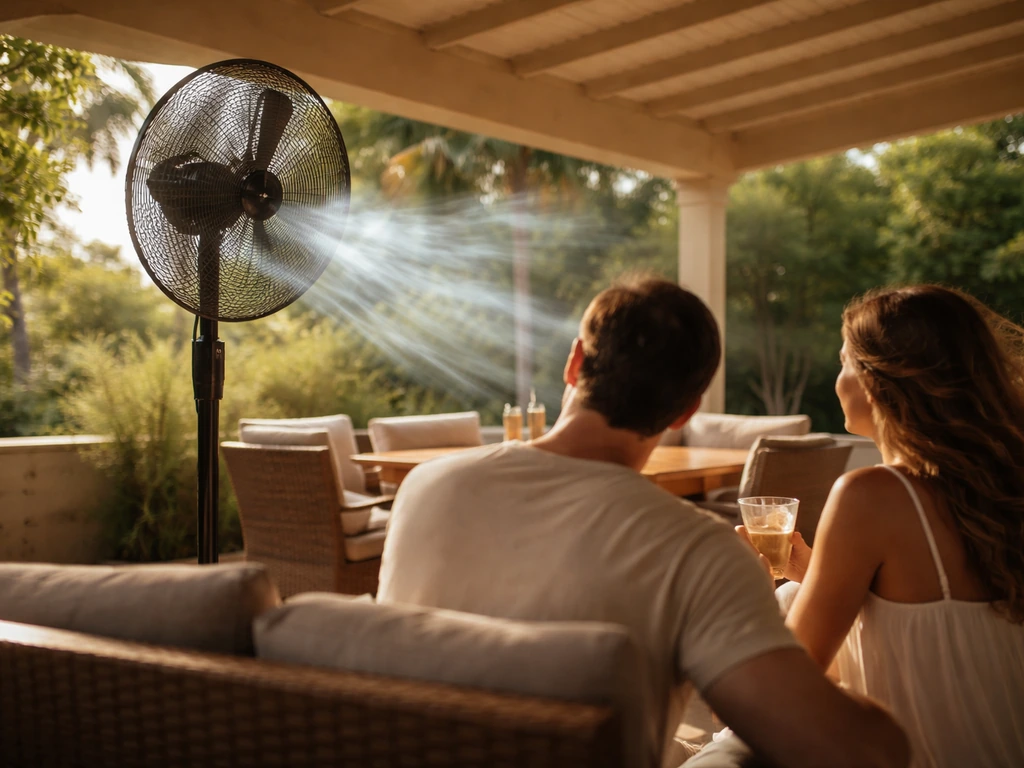
If you have a covered patio, the best patio ceiling fan option is usually a properly sized ceiling-mount model for steady, hands-free airflow ceiling-mount fan. And if you're in a dry-heat climate like Arizona or Texas, pairing any fan with a misting ring turns a 100-degree afternoon into something actually tolerable. The right answer depends on your specific setup, so here's how to figure out which one fits yours.
How to choose the best patio cooling fan for your space
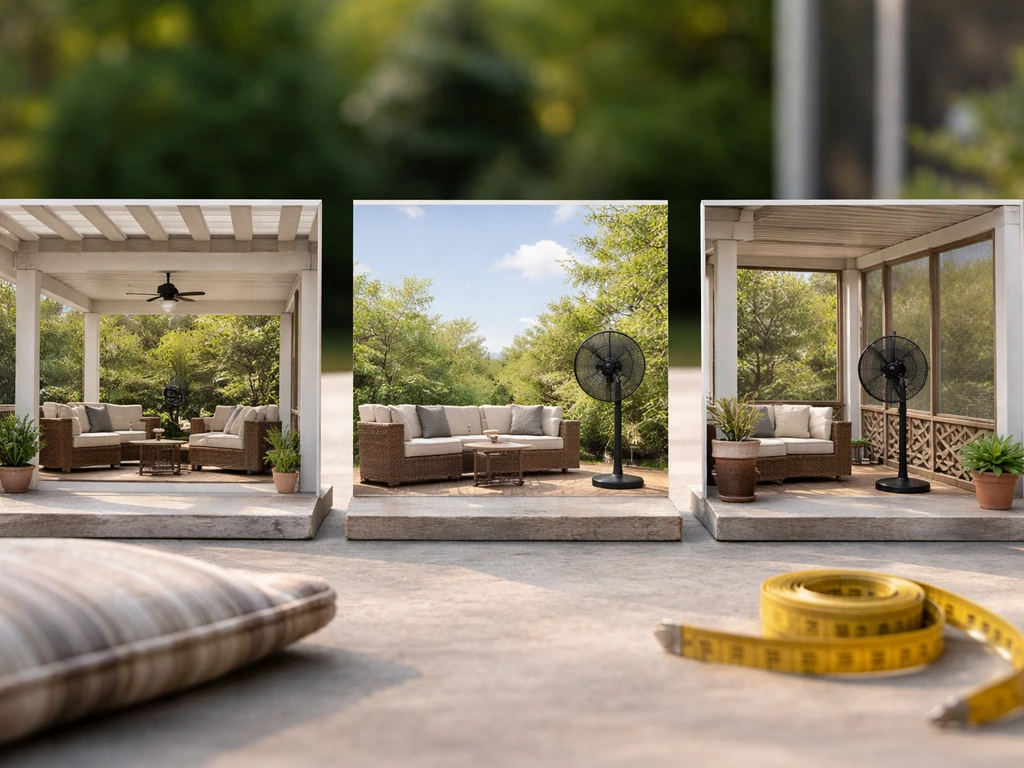
Start by asking three questions before you even look at products: Is your patio covered or open to the sky? How big is the area you want to cool? And what's your primary weather challenge, dry heat, humidity, or wind? Those three factors narrow the field faster than any spec sheet.
A covered patio, pergola, or screened porch opens the door to ceiling fans and wall-mount options that move a lot of air quietly and permanently. An open patio or yard limits you to portable floor fans, pedestal fans, or freestanding misting fans that you can wheel in and out. If you're in a humid climate like Florida or the Gulf Coast, a misting fan will only add to the misery, so stick with high-CFM fans that create wind-chill effect instead. In dry climates, misting can drop the perceived temperature by 10 to 20 degrees Fahrenheit on a hot afternoon.
Also think about permanence. A pedestal fan you plug in and move around is a weekend decision. A hardwired ceiling fan or a built-in misting system involves wiring, potentially a licensed electrician, and planning around your patio structure. Neither is wrong, but they require different levels of commitment and budget.
Fan type comparison: which style actually cools a patio
There are four main fan categories relevant to patios, and they are not interchangeable. Each has a real use case and some serious limitations depending on where you use it.
| Fan Type | Best For | Typical CFM Range | Pros | Cons |
|---|---|---|---|---|
| Pedestal / Floor Oscillating | Open patios, decks, temporary setups | 1,500 – 4,000+ | Portable, easy to power, wide oscillation | Can tip over in wind, takes up floor space |
| Box / Blower Fan | Directing air through a specific corridor or small covered area | 1,000 – 2,500 | Inexpensive, targeted airflow | No oscillation, limited coverage area |
| Misting Fan | Dry-heat climates (Southwest, inland South) | 1,500 – 3,500 + mist output | Dramatic cooling effect in low humidity | Adds humidity, clogs in hard-water areas |
| Ceiling / Overhead Mount | Covered patios, pergolas, screened porches | 3,000 – 8,000+ | Permanent, quiet, wide coverage, no floor space used | Requires overhead structure and wiring |
Pedestal fans are the workhorse choice for most homeowners because they are portable, affordable (good models start around $60 to $150), and easy to power from an existing outdoor outlet. Oscillating models cover a wider arc, which matters on a patio where people are spread around a table or seating area. If you want more detail on box and blower-style fans specifically, that is a category worth exploring separately for scenarios where you need concentrated directional airflow rather than broad circulation.
Ceiling fans on covered patios are genuinely the best long-term investment if you have the structure to support them. They move a large volume of air consistently, stay out of the way, and can double as ambient lighting fixtures. A well-chosen outdoor ceiling fan on a 12x16 covered patio will outperform a floor fan in both comfort and aesthetics. That category has its own depth worth digging into if a covered patio is your situation.
Misting fans are polarizing. In Phoenix or Albuquerque, they are transformative. In Houston or Miami, they make things worse. If your relative humidity routinely exceeds 60 to 65 percent, skip the misting and go for raw airflow instead.
Sizing it right: CFM, coverage area, and mounting height
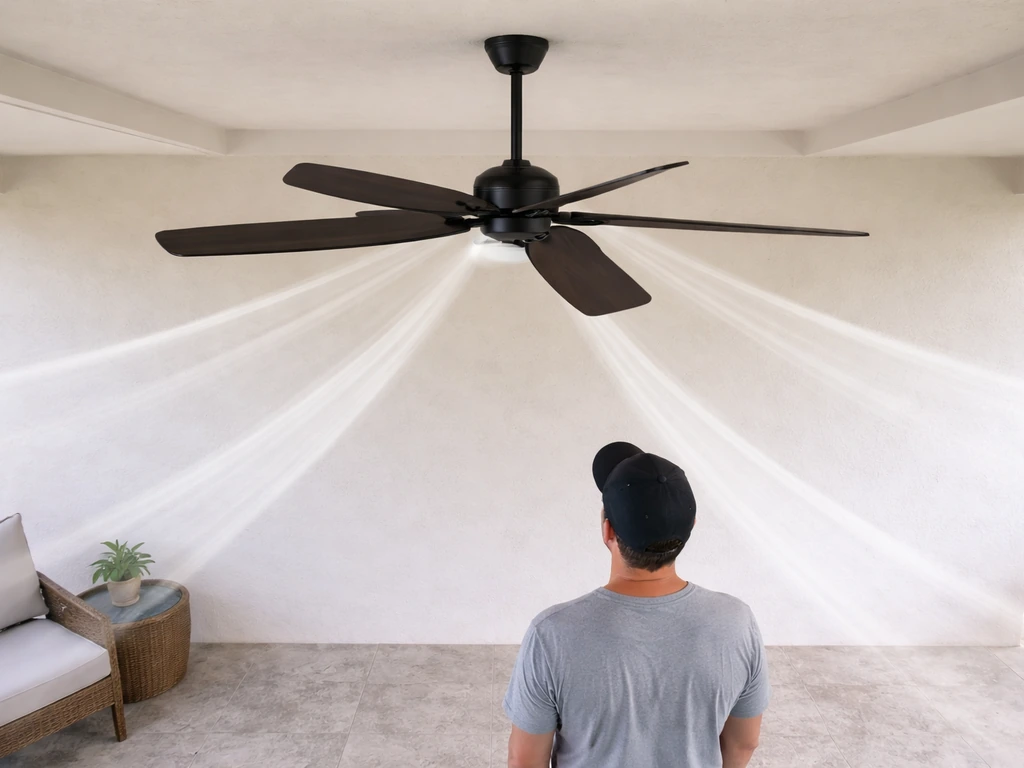
CFM stands for cubic feet per minute, and it is the most important number on any fan spec sheet for outdoor use. Indoors, HVAC rules of thumb use room volume, but outdoors there is no enclosed volume to fill. What matters instead is air velocity over the area where people are sitting. For a typical 10x12 patio, a fan producing 2,000 to 2,500 CFM is the minimum you want. For a 16x20 covered patio or larger deck, look for 4,500 CFM and up. If you need a single, standout option, the best floor fan for patio is one that is wet-rated and delivers strong airflow where people actually sit.
Mounting or placement height changes everything. A ceiling fan hung at 9 feet over a seating area pushes a broad column of air down across everyone at the table. A pedestal fan set at 4 to 5 feet and oscillating covers roughly a 15 to 20-foot sweep. Put the fan too high or point it too far over people's heads and you lose most of the cooling effect at body level. For floor fans on open patios, set them at chest height or angle slightly downward toward the seating zone.
For ceiling fans specifically, the industry sizing guideline is: up to 75 sq ft, use a fan with a 29 to 36-inch blade span; 76 to 144 sq ft, go 36 to 42 inches; 144 to 225 sq ft, use 44 to 50 inches; and anything larger than 225 sq ft benefits from a 52-inch or larger fan, or two fans working together. These guidelines assume standard 8 to 9-foot ceiling height. On a covered patio with a vaulted or cathedral ceiling above 10 feet, you may need a downrod extension to bring the fan to within 7 to 9 feet of the floor for effective airflow.
Weatherproofing and safety: what the ratings actually mean
Outdoor electrical safety is not optional, and this is the area where a lot of DIYers cut corners that come back to bite them. Fans and their power sources need to be matched to the actual exposure conditions of where they will be used.
The two key location categories are damp and wet. A damp location is a covered outdoor area protected from direct rain, like under a porch roof or pergola. A wet location is anywhere directly exposed to rain, splashing, or flowing water. The distinction matters because fans and fixtures are UL or ETL listed specifically for one or the other, and using a damp-rated fan in a wet location is both a safety risk and a code violation. Always look for the listing label on the fan itself, not just the manufacturer's marketing language.
For plug-in fans, the outlet you use matters as much as the fan itself. The NEC (National Electrical Code) requires GFCI protection for outdoor outlets under Section 210.8(F), and it specifies that receptacles in damp locations must be housed in weatherproof enclosures, meaning the cover keeps moisture out whether or not a plug is inserted. Wet locations require covers that seal even with the plug cap inserted. Using a standard indoor extension cord or a non-GFCI outlet with an outdoor fan is a genuine shock hazard.
IP ratings (from IEC 60529) show up on some fans and outdoor appliances. The first digit in an IP code rates protection against solids, and the second rates protection against water ingress. For example, IP44 means protection against solid objects larger than 1mm and against splashing water from any direction. IP65 means dust-tight and protected against water jets. These ratings are useful for comparing fans but are not a direct substitute for UL damp/wet location listing, which has its own testing protocol and is what most US electrical codes actually reference.
- Covered patio, no direct rain exposure: UL damp location rated fan minimum
- Open patio, deck, or anywhere rain can hit the fan: UL wet location rated fan required
- All outdoor outlets should be GFCI protected and housed in weatherproof enclosures
- Never use standard indoor extension cords outdoors; use a heavy-duty outdoor-rated cord if needed
- Hardwired ceiling fans in outdoor locations should be installed by a licensed electrician if you are not confident with outdoor wiring
Best options by patio setup and climate
Small covered patio or screened porch (under 200 sq ft)
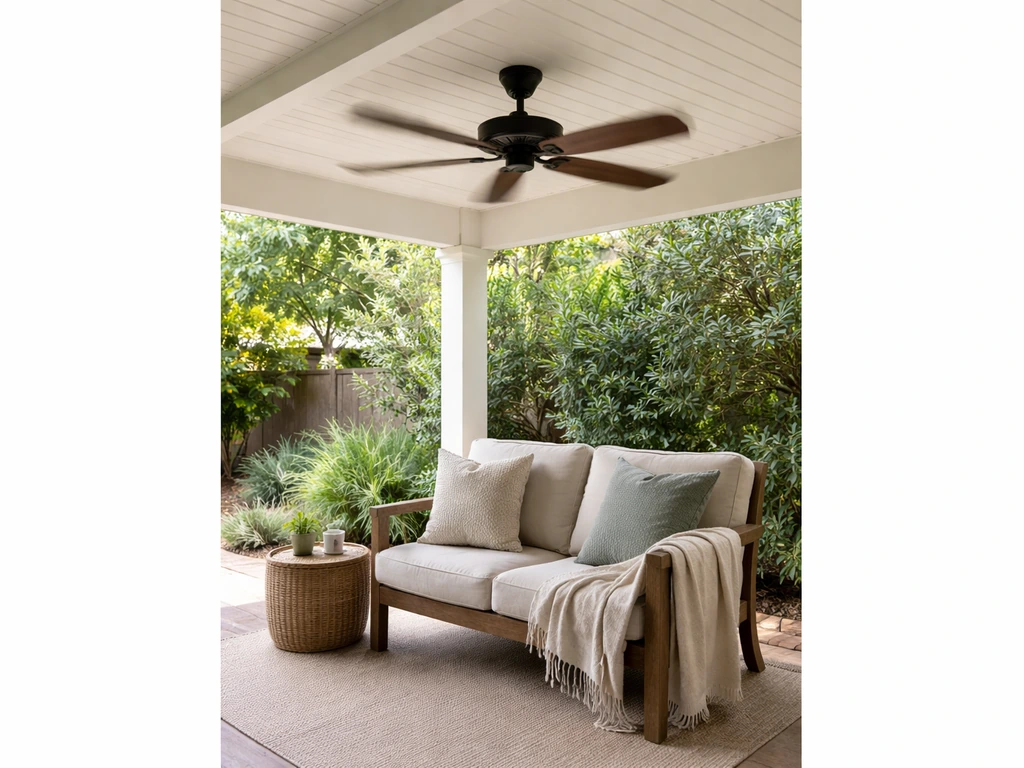
A 44 to 52-inch outdoor ceiling fan is the best investment here, full stop. It runs quietly, moves enough air to cool the whole space, and frees up every square foot of floor space. Look for a fan with a UL damp location rating at minimum, or wet location if the ceiling is open to weather on the sides. Budget models from brands like Hunter or Hampton Bay start around $80 to $120. Mid-range picks from Minka-Aire, Fanimation, or Monte Carlo run $150 to $350 and offer notably better motors and longer warranties.
Large covered patio or pergola (200+ sq ft)
One ceiling fan rarely cuts it above 200 square feet. Two smaller fans (44-inch each) spaced evenly work better than one giant fan, because coverage is about air velocity at person level across the whole seating area, not just the center. Alternatively, a large-diameter 60-inch or 72-inch ceiling fan paired with a secondary pedestal fan at the perimeter covers most large outdoor rooms well. If the pergola is partially open, make sure the ceiling fans are wet-rated, not just damp-rated.
Open deck or uncovered yard seating area
This is where a heavy-duty outdoor pedestal fan earns its keep. Look for a commercial-grade oscillating pedestal fan with a powder-coated steel or UV-resistant ABS housing, wet location rating, and at least 2,500 CFM. Brands like Lasko, NewAir, and Tornado make solid models in the $80 to $200 range. Place the fan at the upwind side of your seating area and let it blow across the group rather than directly at faces, which reduces noise annoyance and increases coverage. Anchor or weight the base if your area gets afternoon wind gusts.
Hot and dry climates (Southwest, inland Texas, high desert)
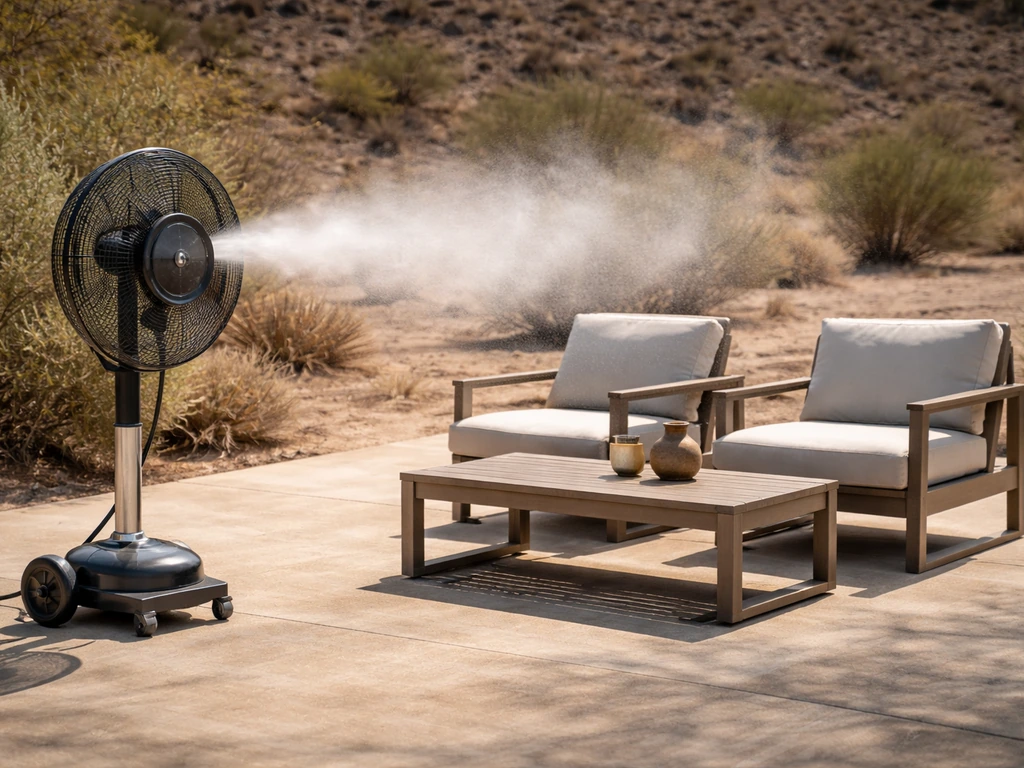
You are the prime candidate for a misting fan. Evaporative cooling works best when relative humidity is below 50 percent, and in much of Nevada, Arizona, New Mexico, and inland California, summer afternoons hit that mark regularly. A misting pedestal fan with a built-in pump and stainless or brass nozzles (avoid cheap plastic nozzles that clog fast) in the $150 to $300 range will cool the air around your seating area by 10 to 20 degrees. Connect to a garden hose and make sure the fan is rated for wet or damp use since the mist itself creates moisture exposure. Hard water areas need occasional nozzle cleaning or a simple inline filter.
Humid climates (Gulf Coast, Southeast, Pacific Northwest)
Skip misting entirely. In high humidity, you want maximum air velocity to create wind-chill effect, because evaporative cooling simply does not work when the air is already saturated. The highest-CFM floor fan or ceiling fan your space allows is the right call. In humid regions, also pay extra attention to the fan's rust and corrosion resistance since salt air, moisture, and heat degrade cheaper fans quickly. Spend a little more on a quality motor and powder-coated or rust-resistant housing and the fan will last four to five times longer.
Budget vs premium: what to spend and what to skip
You do not need to spend a fortune for a genuinely good patio cooling fan, but the cheapest options often fail within a season because their motors are not built for continuous outdoor use in heat and humidity. Here is a practical breakdown of where budget and premium money actually goes.
| Price Range | What You Get | Best For | Watch Out For |
|---|---|---|---|
| Under $80 | Basic plastic housing, standard motor, limited outdoor rating | Occasional use, mild climates, budget-first buyers | Short motor life in heat, may lack true wet/damp listing |
| $80 – $200 | Metal or quality ABS housing, oscillation, decent CFM, UL damp rating common | Most homeowners, regular seasonal use | Confirm actual UL listing, not just marketing language |
| $200 – $400 | Commercial-grade motor, higher CFM, often IP65 or UL wet rating, better warranty | Daily use, hot climates, humid regions | Overkill for light occasional use |
| $400+ | Industrial or architectural fans, smart controls, premium finishes, 5+ year warranties | Permanent installs, design-forward patios, year-round use | Requires proper mounting/wiring; often ceiling fan territory |
For most homeowners, the $100 to $200 range is the sweet spot for a portable pedestal or floor fan. At that price you get a quality motor, real oscillation, genuine outdoor ratings, and a fan that will handle three to five seasons without issues. For ceiling fans on covered patios, $150 to $300 is where quality starts, and spending up to $350 gets you a noticeably better motor, airflow performance, and finish that holds up to weather.
The one area worth spending more on is anything permanently installed and hardwired. A cheap motor in a hardwired ceiling fan is a pain to replace and a potential fire hazard after a few years of outdoor exposure. On a ceiling install, go mid-range or better every time.
Your next steps before you buy
Before you add anything to a cart, run through this quick checklist. It takes five minutes and saves you a return trip to the hardware store or worse, a fan that gets ruined in the first rainstorm.
- Measure your patio area (length x width in square feet) and decide whether it is covered or open to rain
- Check your average summer humidity: above 60% means skip misting, below 50% means misting is worth considering
- Verify you have an outdoor GFCI outlet within safe cord reach, or budget for an electrician to add one
- Confirm the fan's UL listing matches your exposure level: damp for covered, wet for open or rain-exposed
- For ceiling fans, measure ceiling height and calculate if you need a downrod to bring the fan to 7-9 feet above the floor
- Decide portable vs permanent: portable fans need only an outlet, but ceiling or hardwired fans need proper installation
- Set a realistic budget: $100 to $200 for a portable pedestal or floor fan, $150 to $350 for a covered-patio ceiling fan
If you are still deciding between a dedicated floor fan, a ceiling fan, or a blower-style unit for a specific zone of your patio, each of those options has its own nuances worth exploring based on your exact layout. If you are comparing models, the best blower for patio setups is the one that delivers strong directional airflow while still being properly wet-rated for outdoor use. The type of fan that works best for your patio overall is also worth thinking through carefully, because the right category matters more than any single brand recommendation. Once you have matched the fan type to your setup using the criteria above, you are choosing between good options rather than guessing.
FAQ
Do I always need the highest CFM fan to feel cooler on my patio?
Not always. For patio comfort, you want airflow that reaches people at seating height, and that depends on blade span, mounting height, and how far the fan projects. A low-mounted ceiling fan or a pedestal fan angled slightly downward often cools more effectively than a fan with higher CFM that blows above head level.
Can I use an indoor fan on a covered patio if it is not directly in the rain?
Yes for outdoor models, but the listing matters. Use a fan that is actually UL damp or UL wet listed for the location you will mount it, and if you are using a plug-in fan outdoors, confirm the outlet or extension setup is GFCI protected and weatherproof.
What extension cord considerations matter for the best patio cooling fan?
For plug-in pedestal or floor fans, use an outdoor-rated extension cord with a properly sized gauge and keep the cord connections off wet surfaces. More importantly, make sure the fan is wet-rated or damp-rated as appropriate, because the cord alone does not make the motor safe for moisture exposure.
Can one ceiling fan cool a large patio if I move the seating around?
If your patio has only a few seating zones, you can sometimes cover everything with one fan plus fans targeted at corners, but the key is overlap of air streams at person level. One ceiling fan may not provide even coverage across a long seating layout, so consider two smaller fans spaced evenly or add a second fan at the perimeter.
How do I size mounting height if my covered patio has a vaulted ceiling?
If the ceiling is above about 9 feet, you may need a downrod extension so the fan ends up around 7 to 9 feet from the floor for effective airflow, depending on your seating height. Without that adjustment, air can circulate too high to create noticeable wind-chill at the body level.
Should I choose damp-rated or wet-rated for a partially open pergola?
A wet-rated pedestal fan is generally safer and more flexible if your patio experiences splashing, blowing rain, or you clean the area with water. Damp-rated fans can be fine under a fully protected roof, but they are not meant for direct exposure.
Where should I place a pedestal fan for best results, and does oscillation placement matter?
Use the fan’s sweep and oscillation to your advantage. Position the fan so it blows across the group (upwind side) rather than directly at faces, and if wind gusts are common, weight or anchor the base to prevent wobble and loss of effective coverage.
How can I tell if a misting fan will actually cool or just make my patio feel clammy?
Misting is usually best when relative humidity is low enough for evaporation, and it tends to backfire in humid climates. A practical rule is to skip misting if your humidity is consistently above roughly 60 to 65 percent, because evaporative cooling will not produce meaningful temperature drop.
What is the biggest “gotcha” for long-lasting outdoor fans in humid or coastal locations?
For high humidity areas, prioritize corrosion resistance and motor quality, because moisture and salt air accelerate failure. Look for powder-coated steel or UV-resistant materials, and avoid bargain models with cheaper housings that can rust or warp faster outdoors.
Does maintenance differ for outdoor ceiling fans compared with pedestal fans?
If you are using a ceiling fan with damp or wet exposure, also plan for how you will access it for maintenance. Wet environments can require periodic cleaning, and if the fan becomes hard to reach, a permanently installed unit is more likely to be neglected, which reduces airflow over time.