
For most covered patios, a wet-rated or damp-rated outdoor ceiling fan is the best overall pick. If you want the best patio ceiling fan, start by matching the fan rating and CFM to your covered space size and humidity wet-rated or damp-rated outdoor ceiling fan. It stays out of your way, moves the most air for the space, and works well for seating areas up to about 400 square feet.
What Type of Fan Is Best for an Outdoor Patio

Elise Prescott
26 Jun 2026
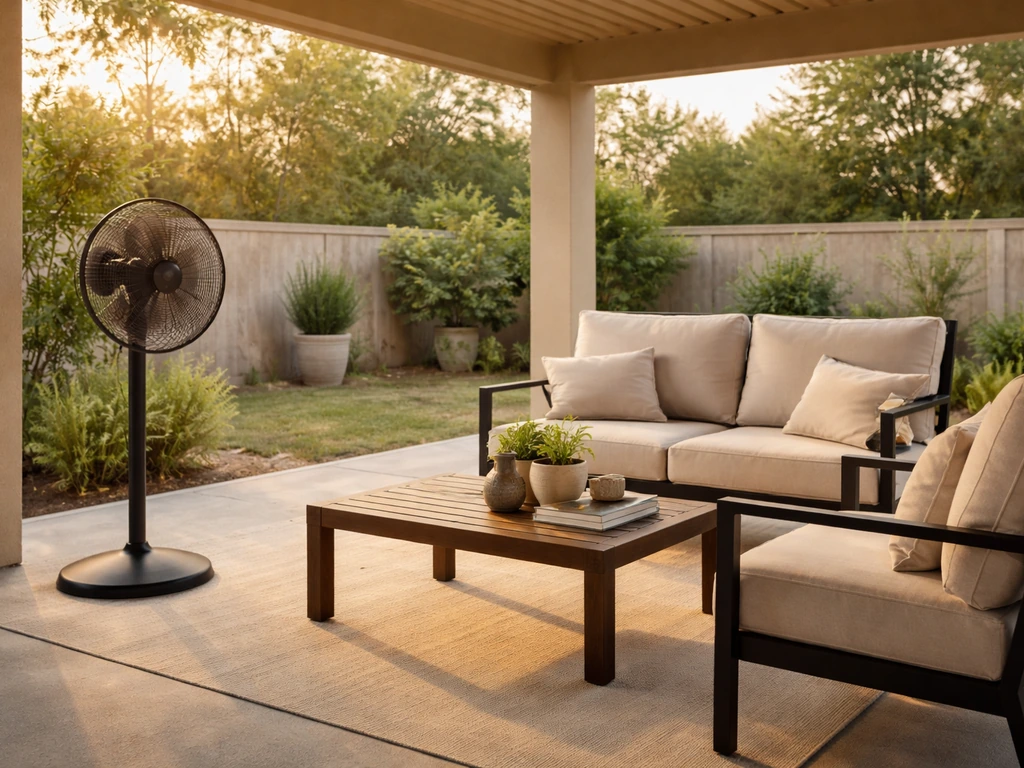
If you have no overhead structure, a pedestal fan or misting fan hybrid is your next best option. The right answer really comes down to three things: whether your patio has a ceiling to mount from, how exposed it is to rain and sun, and whether you need pure airflow or actual temperature reduction.
First, figure out what you actually need: cooling, airflow, or misting
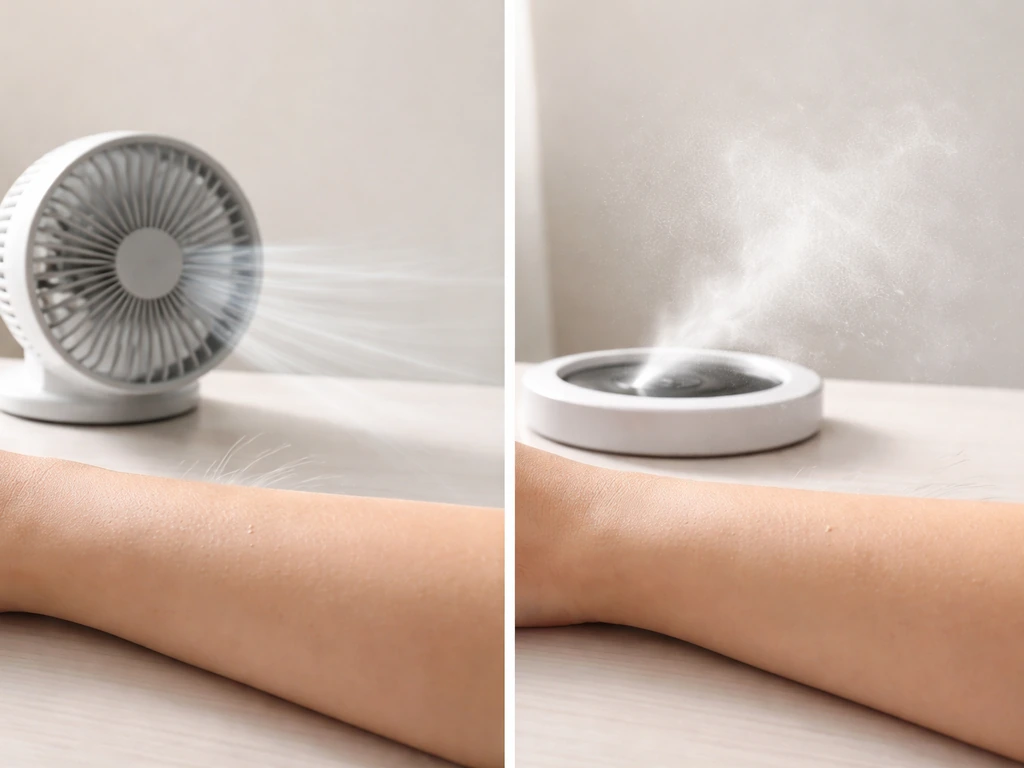
These three goals sound similar but they call for different hardware. Pure airflow means moving air across your skin so sweat evaporates faster. A good fan handles this on its own and works in any climate. True cooling means lowering the actual air temperature, which requires either misting (evaporative cooling) or a dedicated outdoor air conditioning unit.
Misting fans attach a water line to a fan and spray a fine mist into the moving air, which can drop the felt temperature by 10 to 20 degrees Fahrenheit in dry climates. In humid regions like Florida or the Gulf Coast, misting adds moisture to already-saturated air, so the evaporation that drives the cooling effect barely happens.
If you live somewhere with relative humidity above 60 to 65 percent most of the summer, a misting fan is mostly just a fan that gets you wet.
Once you know your goal, the fan type decision becomes much more straightforward. If you are in Arizona, New Mexico, or inland California, a misting fan hybrid can be a genuinely powerful cooling tool. If you are in Houston or Atlanta, stick to a high-CFM ceiling fan or pedestal fan and focus on moving air efficiently rather than adding moisture.
The main outdoor fan types and when each one makes sense
Outdoor ceiling fans
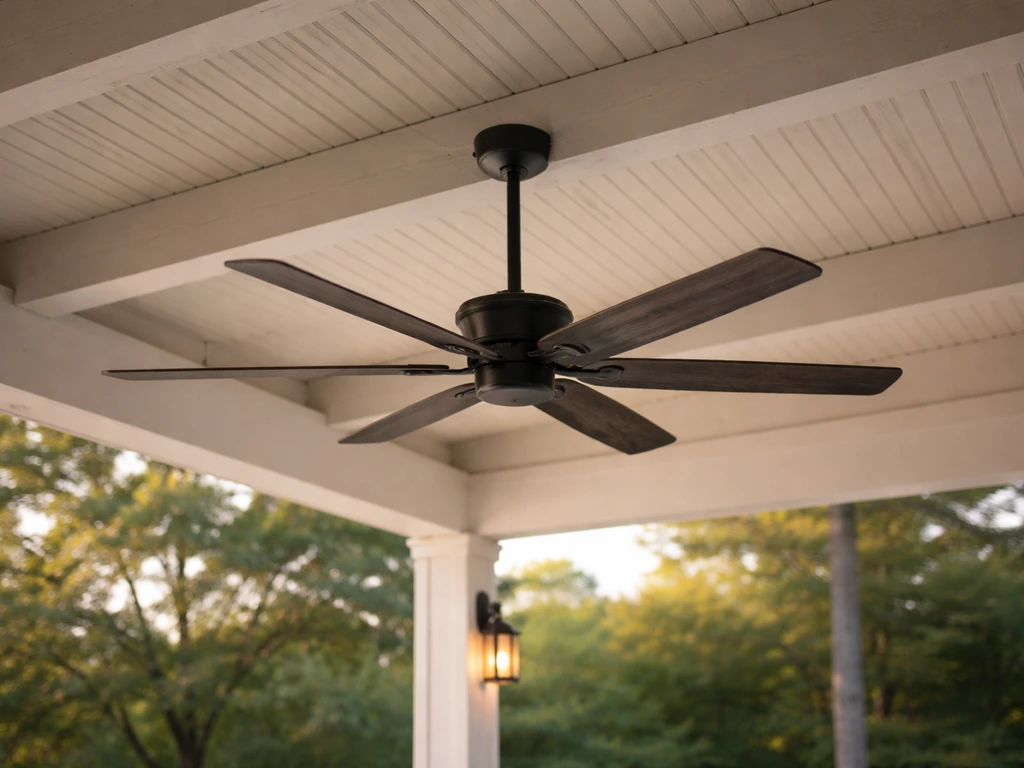
These are the gold standard for covered patios. If you want the best patio cooling fan for a covered setup, outdoor ceiling fans are usually the go-to option covered patios. A ceiling fan with a 52-inch blade span can move 4,000 to 7,000+ CFM depending on motor quality and blade pitch, which is enough to keep a 200 to 350 square foot seating area comfortable.
They stay permanently installed and out of foot traffic, they can include lights (a nice bonus for evening use), and they push air in a consistent downward column right over your seating area. The key requirement is that you need a solid overhead structure, whether that is a pergola with a solid roof, a covered porch, a patio cover, or a gazebo. If your patio is open to the sky, ceiling fans are off the table.
Pedestal and tower fans
These are the workhorses for open or semi-open patios. A quality outdoor-rated pedestal fan on a 16 to 18 inch head can oscillate across a wide angle and cool multiple people seated nearby. Tower fans are more compact and look cleaner on a modern patio, but they move less air than a comparable pedestal fan. If your patio is uncovered or you just want something you can move around easily, a pedestal fan is often the best call. The downside is that they take up floor space and need a nearby outlet or a heavy-duty outdoor extension cord.
Wall-mounted fans
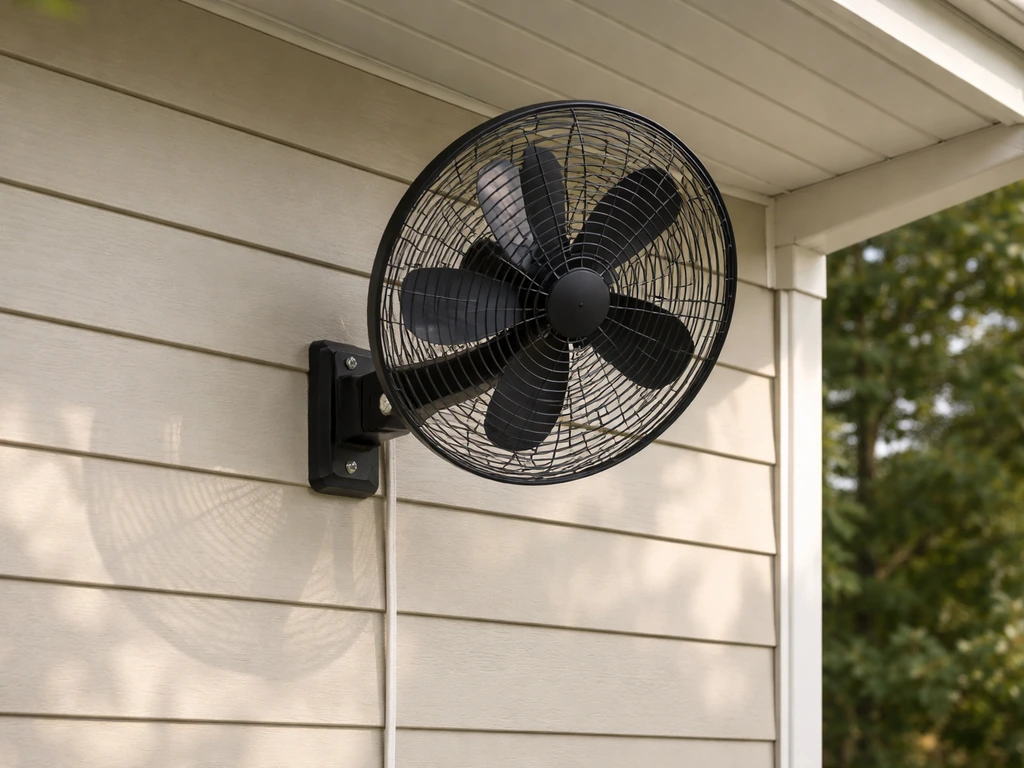
Wall fans are a smart middle ground for covered patios where you do not want to run wiring to the ceiling, or for spaces where the ceiling is too low for a standard ceiling fan. ENERGY STAR recommends a hanging height of at least 7 feet for ceiling fans, with 8 to 9 feet being ideal for best airflow performance. If your covered patio has a 7-foot ceiling, a wall-mounted fan actually performs better than a ceiling fan would. Wall fans can also be angled to direct airflow precisely toward your seating area, which ceiling fans cannot always do as effectively.
Table fans
Honestly, table fans are best as supplemental cooling for small spaces or for putting right next to one or two people at a table. A 12-inch outdoor-rated table fan moves maybe 800 to 1,500 CFM, which is fine for direct personal cooling but not enough to handle a full patio. They are cheap, portable, and easy to store, so they work well as a secondary fan alongside a ceiling or pedestal fan.
Misting fans and hybrid units
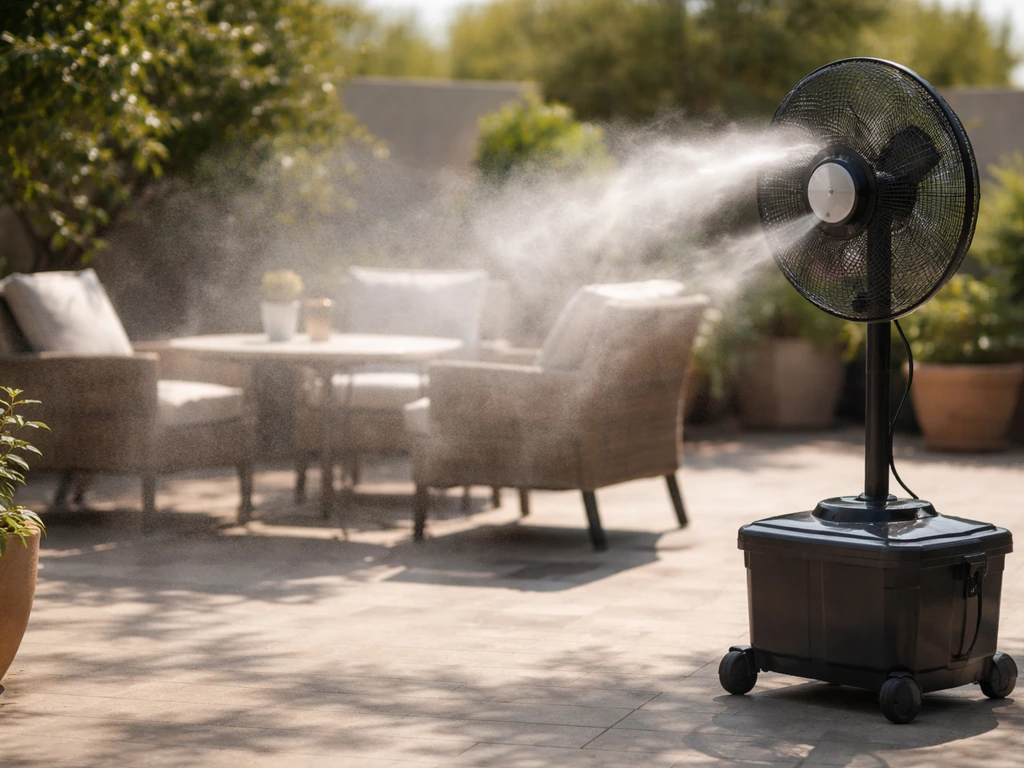
Misting fans combine a fan motor with a misting ring fed by a garden hose or pressurized water line. In dry climates, the evaporative effect is real and powerful. Units range from inexpensive freestanding models with a reservoir tank (no plumbing needed) to permanent wall or ceiling-mounted units plumbed directly into your water line for continuous misting. The permanent plumbed versions perform much better because they maintain consistent water pressure and finer droplet size. If you are in a dry climate and want the most dramatic temperature relief outside of full air conditioning, a misting fan hybrid is worth the investment. In humid climates, skip it.
High-velocity blower fans
Outdoor blower-style fans push a concentrated column of high-speed air rather than spreading it widely. They are excellent for very large open patios, outdoor restaurants, or spaces where you need to push air across a long distance. They are louder and less aesthetically polished than other fan types, but if you are dealing with a large uncovered patio and need serious airflow, a blower-style outdoor fan can cover ground that a pedestal fan simply cannot.
| Fan Type | Best For | Needs Ceiling/Wall? | Climate Fit | Portability |
|---|---|---|---|---|
| Ceiling Fan | Covered patios up to 400 sq ft | Yes, ceiling mount | All climates | No |
| Pedestal Fan | Open or semi-open patios | No | All climates | High |
| Wall-Mounted Fan | Low-ceiling covered patios | Yes, wall mount | All climates | No |
| Table Fan | Supplemental personal cooling | No | All climates | Very high |
| Misting Fan | Dry climate patios needing temp drop | No (some mount) | Dry/arid only | Medium |
| Blower Fan | Large open or commercial patios | No | All climates | Medium |
Outdoor safety and durability: ratings actually matter here
This is the part people skip and then regret. Do not buy an indoor fan for your patio, even a covered one. Outdoor fans need to handle humidity, UV exposure, salt air (if you are near the coast), and in some cases direct rain. The two ratings you need to know are damp-rated and wet-rated. For outdoor ceiling fans, Fanandlights notes the rule of fit: a wet-rated fan can be used in a damp location, but a damp-rated fan should not be used in a wet location.
- Damp-rated fans are designed for covered outdoor spaces where the fan will not be hit by direct rain or snow. A covered porch, screened lanai, or pergola with a solid roof qualifies. The motor and components are sealed against moisture in the air.
- Wet-rated fans are built to handle direct water exposure, whether from rain blowing in, sprinkler splash, or an open pergola without a solid roof. A wet-rated fan can always be used in a damp location, but a damp-rated fan should never be used in a wet location.
- UV resistance matters for blade materials and housing. Look for ABS plastic blades, powder-coated or marine-grade metal housings, and motors rated for outdoor use. Wood blades can warp and crack outdoors even on covered patios.
- If you are near the ocean, look specifically for rust-resistant or marine-grade finishes. Salt air accelerates corrosion on anything metal.
- For pedestal and table fans, check the IP (Ingress Protection) rating. An IP44 rating means the unit is protected against splashing water from any direction. IP55 or higher is better for exposed locations.
Power safety is equally important. Any outdoor fan powered by an extension cord needs a cord rated for outdoor use (look for a W on the jacket rating, such as SJTW or SOOW). Permanent ceiling and wall fans should be wired to a GFCI-protected outdoor circuit, which is code-required in most areas. If you are hardwiring a fan and are not comfortable running outdoor electrical, this is a good moment to bring in a licensed electrician. It is usually a half-day job and not expensive.
How to size your fan: CFM, blade span, and how many you need
CFM, or cubic feet per minute, is the number that actually tells you how much air a fan moves. For outdoor spaces, you want higher CFM than you would indoors because there is no ceiling to bounce air off of and airflow dissipates faster. As a general benchmark, ENERGY STAR's tiered performance criteria starts at a minimum of 5,000 CFM for qualifying residential ceiling fans, which gives you a useful floor to shop against. For outdoor ceiling fans specifically, aim for at least 5,000 CFM on high for any patio over 150 square feet.
ENERGY STAR also rates ceiling fan efficiency in CFM per watt, which tells you how much air movement you get for each watt of electricity. A higher CFM/W number means you are getting more airflow for less energy cost. Look for a CFM/W rating above 75 for a solid efficiency benchmark.
| Patio Size | Recommended Fan Size | Suggested CFM | Number of Fans |
|---|---|---|---|
| Up to 75 sq ft | 29–36 inch ceiling or pedestal | 2,000–3,500 CFM | 1 |
| 75–175 sq ft | 44–48 inch ceiling fan | 3,500–5,000 CFM | 1 |
| 175–350 sq ft | 52–54 inch ceiling fan | 5,000–7,000 CFM | 1–2 |
| 350–500 sq ft | 54–60 inch ceiling fan or dual fans | 6,000–9,000+ CFM | 2 |
| 500+ sq ft | Multiple fans or blower-type | 10,000+ CFM combined | 2–4 |
One important note on ceiling height: for a ceiling fan to work well, the blades should be at least 7 feet off the ground, and 8 to 9 feet is the sweet spot for both safety and airflow. If your covered patio has a ceiling lower than 7 feet, switch to a wall-mounted fan or pedestal fan instead. A ceiling fan hung too low actually performs worse because it does not have enough room to pull and push air properly.
Power, installation, and keeping it running season after season
Ceiling and wall fans are the most involved to install because they need a proper outdoor-rated junction box (a standard indoor box is not strong enough for a fan's weight and torque), GFCI-protected wiring, and in many cases a new dedicated circuit. If you already have outdoor lighting wired to your covered patio, a licensed electrician can often tie into that circuit for a ceiling fan in a few hours. DIYers comfortable with electrical work can do this themselves, but make sure the box is rated for fan support, typically marked as fan-rated on the box itself.
Pedestal and tower fans just need an outdoor outlet or a heavy-duty outdoor extension cord. One tip: if you are using an extension cord regularly, run it through a cord cover or conceal it along a wall to prevent tripping hazards and UV degradation of the cord jacket.
For maintenance, outdoor fans need more attention than indoor ones. At the start and end of each season, wipe down the blades, check and tighten all mounting hardware (vibration loosens screws over time), and lubricate the motor bearings if the manufacturer recommends it. If you live somewhere with harsh winters, take down portable fans and store them indoors. For permanent ceiling fans, cover them with a waterproof fan cover or at minimum wrap the motor housing before the coldest months. Keeping the blades clean also matters for performance: outdoor blades collect pollen, grime, and moisture that adds weight and throws off balance, which causes wobble and reduces efficiency.
Noise, comfort, and climate: what actually affects how good your patio feels
Noise is a bigger deal outdoors than people expect. On a quiet evening patio, a loud fan motor is genuinely annoying. blank" rel="noopener noreferrer">ENERGY STAR includes noise measurement as part of its ceiling fan qualification criteria, so shopping for an ENERGY STAR-rated outdoor fan is a reliable way to get a unit that has passed audible noise standards. In general, DC motor fans are significantly quieter than AC motor fans and also use 30 to 70 percent less electricity. If evening use is important to you, prioritize a DC motor fan.
Wind exposure is something most guides ignore. If your patio is naturally windy (an elevated deck, a coastal yard, or a corner lot with regular breeze), a fan may not add much on breezy days, but it becomes essential on still, hot evenings. Conversely, if your patio is sheltered and stagnant, a higher-CFM fan or multiple fans become more important to break up dead-air pockets in corners and under overhangs.
On the humidity question: this is the single biggest climate factor in choosing between a standard fan and a misting fan. In low-humidity climates (broadly, anywhere west of roughly the 100th meridian), misting fans can realistically cool the perceived temperature by 10 to 20 degrees. In high-humidity climates, a standard ceiling fan on high with good CFM output will make you feel cooler without adding moisture to already-heavy air. If you are unsure about your region's humidity profile, check average July relative humidity for your city. Above 60 to 65 percent average, skip the misting.
Budget vs premium: what you actually get for more money
At the budget end (roughly $50 to $150 for a pedestal fan, $80 to $180 for a basic outdoor ceiling fan), you get AC motors, basic weather resistance, and limited warranty coverage, usually one year. These are fine for occasional use or a patio you are not committed to yet. At the mid-range ($180 to $350 for a ceiling fan, $150 to $300 for a quality pedestal fan), you start getting DC motors, better wet ratings, longer warranties (3 to 5 years), and noticeably quieter operation. Premium outdoor ceiling fans ($350 to $700+) add features like smart home integration, remote controls, integrated LED lighting with dimmer capability, and truly marine-grade build quality with lifetime warranties on some components.
For misting fans, budget tank-reservoir models run $40 to $120 and are fine for occasional use. Plumbed permanent misting fan systems start around $200 to $400 for the fan unit alone, not counting plumbing, and can go much higher for whole-patio misting ring systems. If your climate supports misting, a mid-range plumbed misting ceiling or wall fan is worth the investment because the droplet consistency and continuous flow make a real difference versus a reservoir model that runs dry.
Quick scenario guide
| Patio Scenario | Best Fan Type | Budget Pick | Premium Pick |
|---|---|---|---|
| Small covered porch, humid climate | Damp-rated ceiling fan, 44–48 inch | $120–180 AC motor ceiling fan | $300–450 DC motor ceiling fan with light |
| Large covered patio, dry climate | Wet-rated ceiling fan + misting system | $200 ceiling fan + $80 misting kit | $400+ DC ceiling fan + plumbed misting |
| Open uncovered deck, any climate | Outdoor-rated pedestal fan | $80–130 pedestal fan | $200–300 heavy-duty pedestal fan |
| Low-ceiling covered patio (under 7 ft) | Outdoor wall-mounted fan | $60–100 wall fan | $150–250 oscillating wall fan |
| Very large patio or outdoor bar | Multiple ceiling fans or blower fan | $150–200 per fan x2 | $400–600 blower or dual premium ceiling fans |
| Covered patio, coastal/salt air exposure | Wet-rated, marine-grade ceiling fan | $180–250 wet-rated fan | $400–600 marine-grade ceiling fan |
Your next steps: a quick buying checklist
Before you buy anything, take five minutes to run through this checklist. It will save you from buying the wrong fan or returning something that does not fit.
- Measure your patio's square footage (length x width). This determines fan size and how many you need.
- Check whether your patio has a ceiling, wall, or neither. This decides whether ceiling, wall, or freestanding fans are viable.
- Measure ceiling height if applicable. Under 7 feet means a wall fan is a better call than a ceiling fan.
- Decide wet-rated vs damp-rated: will the fan be exposed to direct rain or just ambient moisture? When in doubt, choose wet-rated.
- Check your climate's average summer humidity. Above 65 percent, skip the misting fan. Below 50 percent, misting is worth serious consideration.
- Check for existing outdoor outlets or hardwired fixtures near your intended fan location. This affects installation cost and complexity.
- Set your budget and decide on motor type. If evening quiet use matters, choose a DC motor fan.
- Look for ENERGY STAR certification for both noise and CFM/watt efficiency, especially on ceiling fans.
- If installing a hardwired ceiling or wall fan yourself, confirm the outlet box is fan-rated and the circuit is GFCI-protected.
One last thought: the fan types covered here overlap with more specific buying decisions. If you are zeroing in on a ceiling fan specifically, the blade span, motor quality, and wet vs damp rating deserve a deeper look. If you are leaning toward a freestanding option, there are important differences between a floor pedestal fan and a tower fan that affect both performance and where it can sit on your patio.
And if you are dealing with a larger open space where straight airflow is the priority, blower-style fans have their own set of tradeoffs worth digging into before you commit. Starting with the right category for your patio type is the most important first step, and the checklist above should get you there.
FAQ
Can I use a standard indoor ceiling fan on a covered outdoor patio if it is under a roof?
No. Indoor fans are not built to handle UV exposure, humidity, and corrosion. Even under a roof, you can get damp air and condensation that degrade indoor motors and wiring over time, so you should only use a damp-rated or wet-rated outdoor ceiling fan.
What is the difference between damp-rated and wet-rated, and which one should I choose?
Damp-rated fans are designed for indirect exposure and condensation, wet-rated fans handle direct rain exposure and pooling water. If your patio is frequently exposed to direct drizzle, coastal spray, or splash zones, choose wet-rated even if the fan is on a covered porch.
How do I size the fan if my patio is an odd shape or has multiple seating zones?
Instead of treating it as one rectangle, estimate airflow for the main seating zone first. If you have separated conversation areas or a corner section, you often get better results with two smaller fans (or a ceiling fan plus a pedestal fan) than one unit aimed at the middle.
Do I need a bigger fan if my patio is very windy?
Not always. On consistently windy patios, airflow already exists, so you may need less additional output. Prioritize aiming, blade clearance, and fan direction, and consider multiple fans only if you have still pockets near walls or under overhangs.
Is misting actually worth it if I cannot measure humidity precisely?
A practical approach is to check your average summer relative humidity for your area, or observe whether outdoor surfaces feel muggy most evenings. If summers are typically muggy or you sweat but the air feels heavy, skip misting and rely on high-CFM airflow from a standard fan.
How close should a ceiling fan be to the seating area for best cooling?
Keep a safe blade height and then use spacing to optimize airflow. In general, having the blades roughly in the top part of the occupied area helps, but if your patio ceiling is low (under about 7 feet), switch to a pedestal or wall fan since a too-low ceiling fan will not move air properly.
What blade span or CFM target should I use for small patios, like under 150 square feet?
For very small covered areas, you can often go smaller than the 5,000 CFM guidance aimed at larger spaces. Focus on directional comfort (airflow across skin or seating) and look for sufficient high speed CFM for your fan model, since a smaller fan can still feel strong when it is close to people.
Are DC motor outdoor fans always quieter than AC motor fans?
They are typically quieter and more energy efficient, but sound varies by model and mounting. If evening use matters, look specifically for an ENERGY STAR-rated fan that meets noise requirements, then confirm whether the motor and mounting system are designed for outdoor vibration.
Do I need to use a specific extension cord for a pedestal or tower fan outdoors?
Yes. Use only outdoor-rated extension cords with the correct jacket designation (often shown as SJTW or SOOW with a visible W). Also avoid undersized cords, because voltage drop can reduce airflow performance and increase motor strain.
Can I plug an outdoor patio ceiling fan into a wall outlet instead of hardwiring?
Usually not, because most ceiling fan installations require proper support, an outdoor-rated junction box, and often a code-compliant outdoor circuit with GFCI protection. If you see a listed plug-in ceiling fan option designed for outdoor use, follow that product’s instructions, otherwise expect hardwiring.
What should I look for in an outdoor electrical setup for ceiling and wall fans?
Confirm the junction box is fan-rated for the weight and torque, and that the circuit includes GFCI protection (commonly required for outdoor outlets and fixtures). If you are unsure about your existing wiring capacity, have an electrician verify the circuit amperage and box suitability.
How do I prevent an outdoor ceiling fan from wobbling?
Outdoor vibration usually comes from loose hardware, blade imbalance, or changes after seasonal temperature swings. Tighten mounting screws at the start of the season, keep blades clean and dry, and check that the fan blades are fully seated per the installation instructions.
How often should I clean or maintain outdoor fans in pollen-heavy or coastal areas?
At minimum, wipe blades at least twice per season, but in pollen or coastal environments you may need extra cleaning. When grime builds up, it adds weight that can reduce balance and efficiency, so clean earlier if you notice wobble or uneven airflow.
If my patio has a recessed ceiling or a downrod setup, can I still use a standard outdoor ceiling fan?
You can, but blade clearance matters. Recessed ceilings can reduce airflow if the fan ends up too low, so verify final blade height stays around the 8 to 9 foot sweet spot when possible. If clearance will drop below roughly 7 feet, wall or pedestal placement usually performs better.
What is a good strategy if I want lighting and strong airflow on a patio ceiling fan?
Choose an outdoor fan that includes a rated outdoor light kit and ensure the fan still meets your CFM needs on high speed. If you prioritize evening ambiance, look for an integrated LED with dimming capability, but do not downsize the fan just to match lighting features.