
A Superfish Patio Cascade Pond is a solid choice for a small patio water feature in 2026, especially if you want something that arrives ready to run without building anything from scratch. The 115-liter kit includes a pump, cascade filter, and LED lighting right out of the box. It handles light fish loads and aquatic plants reasonably well, keeps water clearer than a basic barrel pond, and draws only 12 watts for the pump.
Superfish Patio Pond Review: Setup, Performance, Costs

Elise Prescott
8 Jun 2026
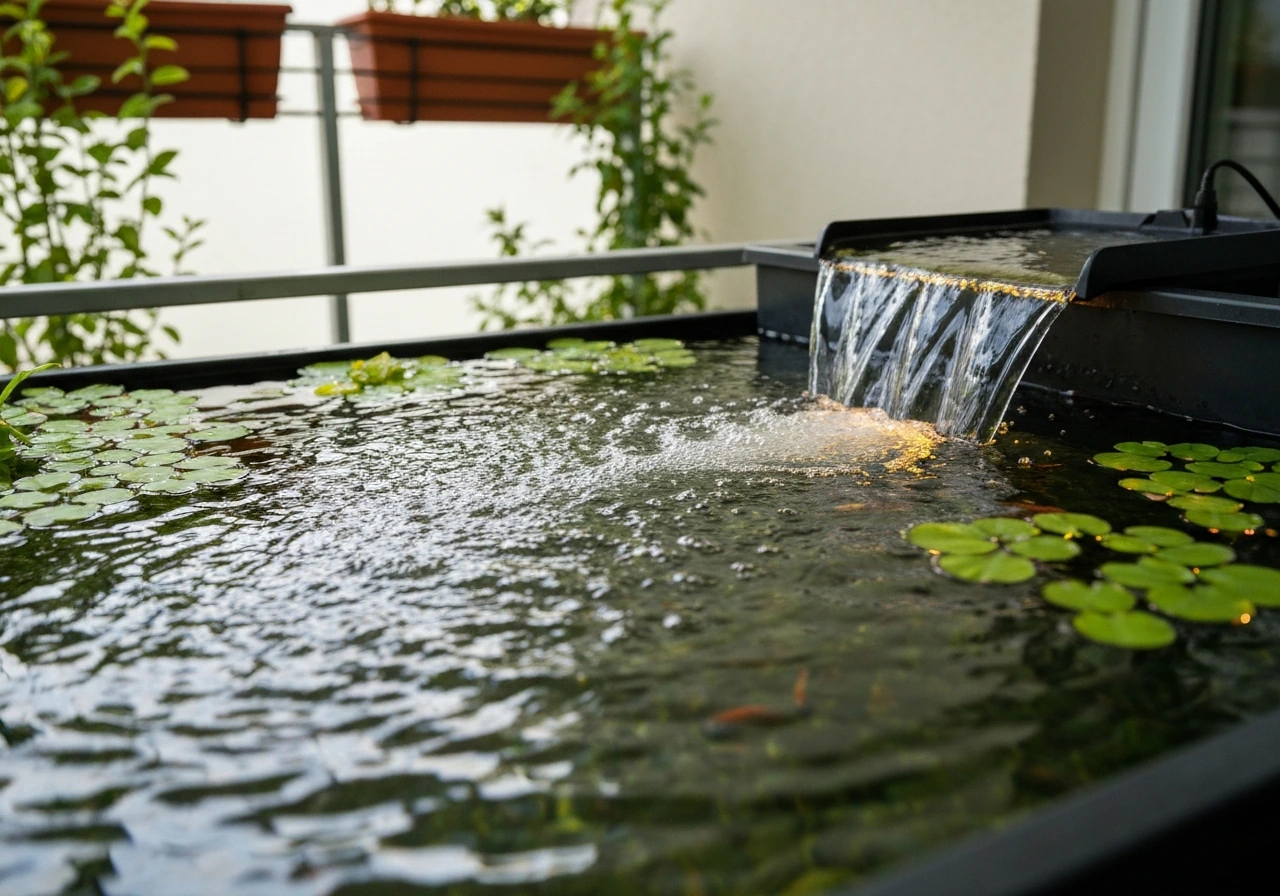
That said, it has real limits, the volume is tight for more than a couple of small ornamental fish, it needs consistent maintenance to stay clear in warm weather, and it is not built for harsh freeze-thaw winters without proper winterization. If you know what you are getting into, it is a genuinely useful product. This review walks you through everything: setup, performance, maintenance, costs, and when you should look at something else entirely.
What Superfish patio ponds are (and who they're actually for)
Superfish is a Dutch aquatics brand with a long history in the European hobby pond and aquarium market. Their Patio Cascade Pond is specifically designed for balconies, terraces, and small patio spaces, the kind of spot where you want the look and sound of water without digging a hole in the ground or hiring a contractor. The SKU 06080200 model is the flagship in that line: a self-contained, circular unit with a built-in cascade waterfall, plant filter shelf, submersible pump, and LED lighting all bundled together.
It is marketed for both ornamental fish and aquatic plants, which is accurate, with caveats. It is marketed for both ornamental fish and aquatic plants, which SuperFish positions as suitable for “plants and ornamental fish.”. A couple of small goldfish or shubunkins can work in this volume. A koi? No. Even a single koi will outgrow 115 liters fast and create more waste than the filter can handle. If your goal is a peaceful water feature with plants and maybe a few small fish, this hits the mark. If you are a serious pond hobbyist expecting koi-grade filtration in a patio-sized package, you will be disappointed.
The target buyer here is a homeowner or renter who wants a water feature without permanent construction, someone on a budget who still wants a finished, aesthetic look, or anyone who has limited outdoor space, a small courtyard, a covered patio, a balcony that can handle the weight. It is also a reasonable first step for people who are curious about water gardening before committing to a full in-ground or raised pond build.
Unboxing and setup: what to expect on day one
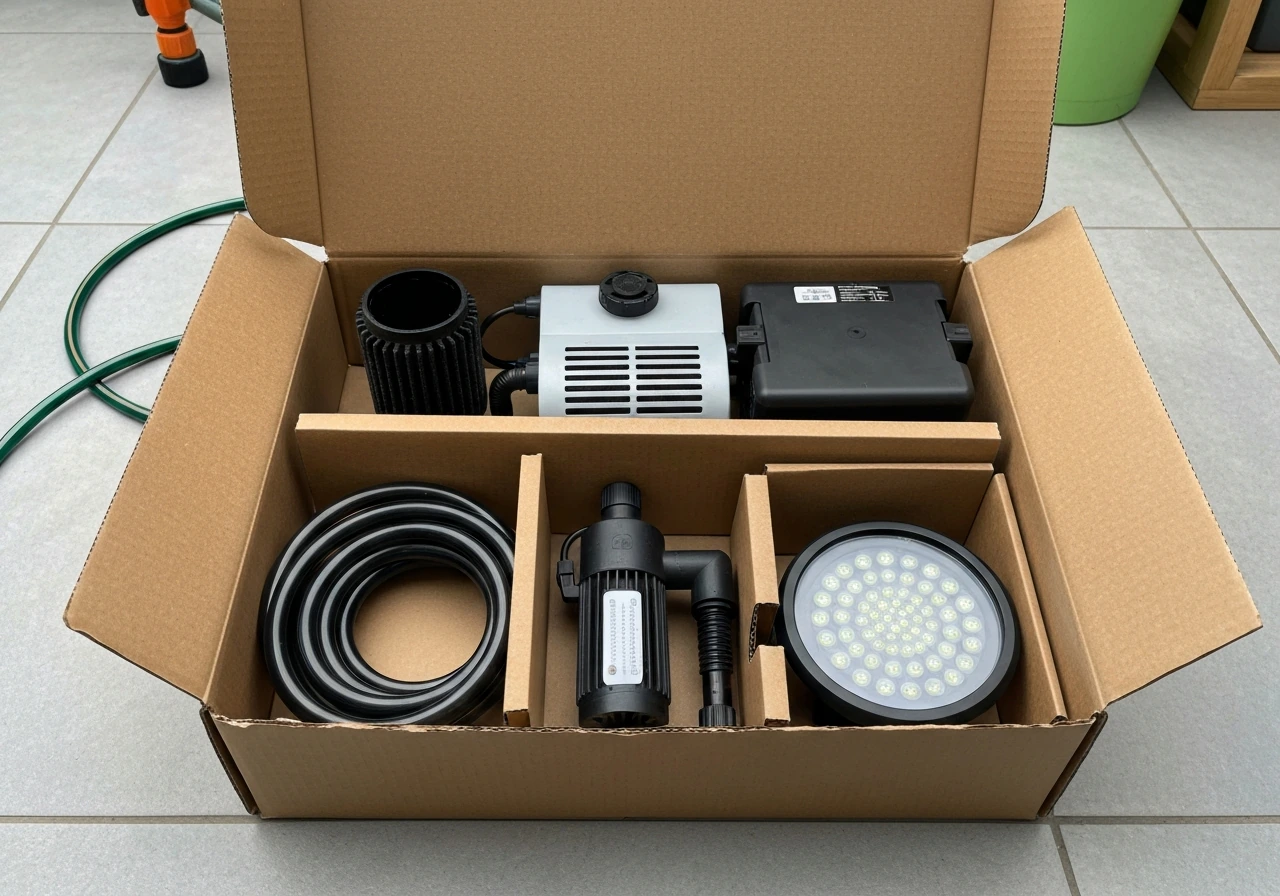
Setup is genuinely straightforward. The pond body, cascade filter unit, pump, tubing, and LED fixture all arrive in one box. There is no complicated plumbing and no power tools required. Plan on 30 to 45 minutes for a relaxed first setup.
Placement first, this matters more than people think
Before you touch any of the components, pick your spot carefully. The manual is clear on this: the unit needs a smooth, horizontal, load-bearing surface. A full 115-liter pond weighs around 115 kg of water alone, add the pond body and you are well over 130 kg total. Most poured concrete patios handle that without issue. Wooden decks need a careful check of the joist layout and load rating, especially older decks. Balconies in apartment buildings often have specific weight limits per square meter, so check with your building manager before filling. Do not place the pond on soft ground, gravel, or any surface that can shift, because an unlevel pond stresses the body and can cause leaks or tipping.
Sunlight exposure is the other placement decision you cannot easily undo. Partial shade is ideal, about 4 to 6 hours of direct sun per day. Full all-day sun in a hot climate like Texas, Arizona, or Georgia will push water temperatures into the 90s°F range by midsummer, which stresses fish and accelerates algae growth dramatically. A spot that gets morning sun and afternoon shade is the sweet spot in warm regions. In cooler climates like the Pacific Northwest or upper Midwest, a sunnier position helps the plants thrive without the overheating risk.
Assembly steps
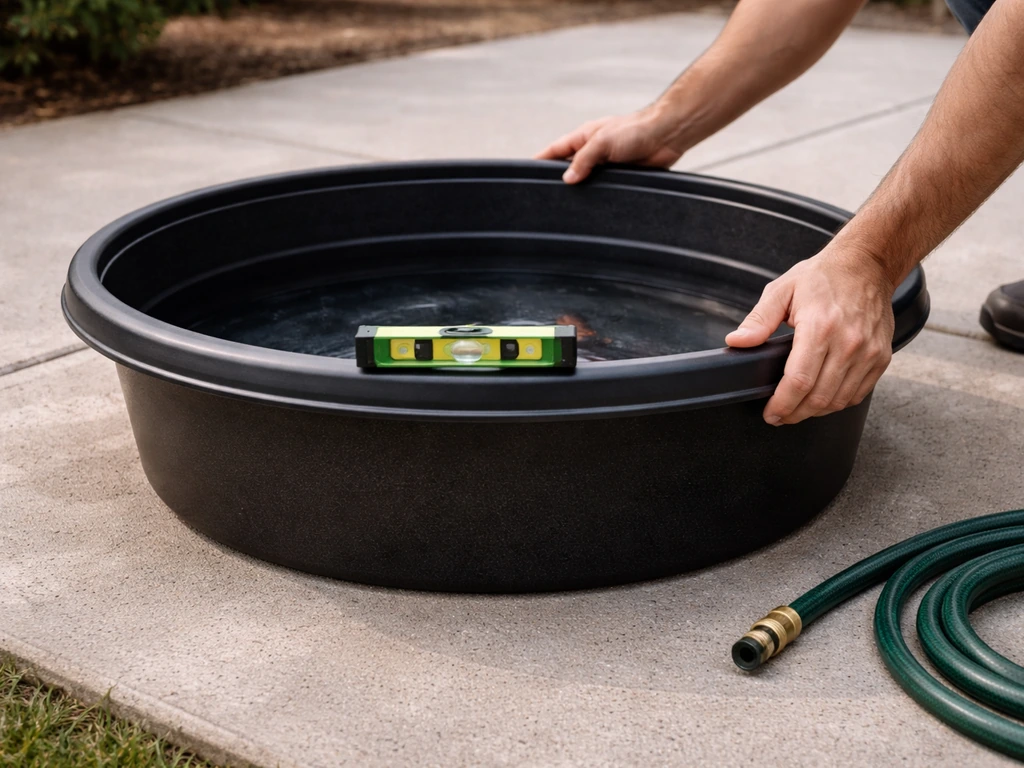
- Place the pond body on your chosen surface and confirm it sits level (use a bubble level — even a slight tilt will make the cascade run unevenly).
- Attach the cascade filter unit to the edge of the pond body. The detachable edge design clicks or clips into place — it is designed to come off easily for cleaning later.
- Connect the submersible pump to the cascade filter using the included tubing. The pump sits at the bottom of the pond and pushes water up through the filter and out over the cascade lip.
- Route the power cable and LED cable to your outdoor-rated electrical outlet. Keep cables away from foot traffic areas and make sure the outlet has GFCI protection — this is non-negotiable around water.
- Add your filter media to the cascade filter basket if it is not pre-loaded (some kits include foam or bio-media; rinse it before placing it).
- Fill the pond with water, stopping about 5 to 6 inches below the rim to leave room for splashing.
- Power on the pump and LED, then observe the cascade flow for a few minutes to confirm even distribution across the lip.
First fill and water conditioning
Tap water straight from the hose contains chlorine and chloramines that are harmless to humans but will kill fish and stress aquatic plants. Add a dechlorinator (sodium thiosulfate-based products like Seachem Prime work well) immediately after filling, even if you are not adding fish yet. If you plan to keep fish, do not add them for at least two to four weeks. The pond needs to go through a nitrogen cycle first, beneficial bacteria need time to colonize the filter media and convert ammonia from fish waste into nitrite and then into the far less toxic nitrate. Skipping this step is the number one reason new pond owners end up with sick or dead fish in the first month.
How well does it actually perform?
Pump flow and filtration
The included pump delivers 1,050 liters per hour at 12 watts, which is a healthy flow rate for a 115-liter pond, it turns the entire water volume over roughly nine times per hour. That is a good baseline for water clarity and oxygenation. In practice, the cascade filter acts as a mechanical and partial biological filter. The waterfall motion over the cascade lip also adds aeration, which helps oxygenate the water and supports both fish health and beneficial bacteria in the filter.
The honest limitation is that the biological filtration capacity is modest. A single-chamber cascade filter with basic foam or bio-media is adequate for a lightly stocked pond, one to three small fish and some plants, but it will not keep pace with heavy fish loads or large quantities of leaf debris. If you site the pond under a tree, expect frequent filter cleaning. Algae blooms are also common in the first four to six weeks while the bacterial colony establishes, and they can return in summer if nutrient levels climb. A UV clarifier add-on (sold separately) makes a noticeable difference if green water becomes a persistent problem.
Water clarity: what to realistically expect
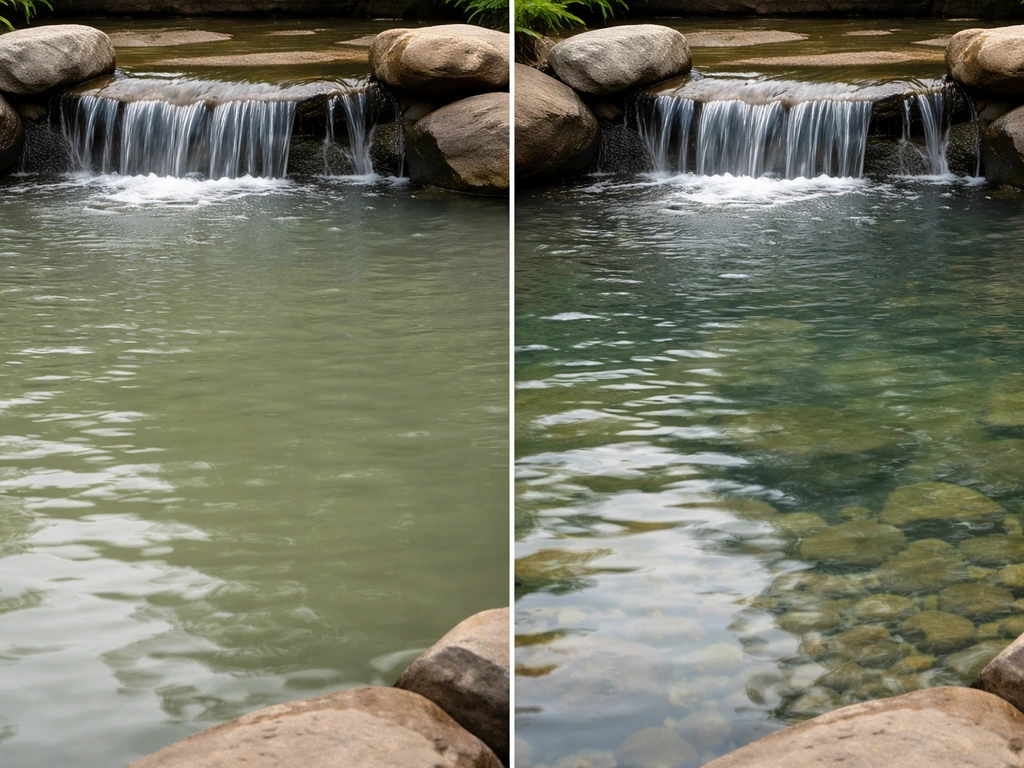
In the first week or two, some cloudiness is completely normal, it is a bacterial bloom, not a sign the filter is broken. After the pond cycles and the filter media matures, water in a lightly stocked, properly maintained Superfish patio pond can stay quite clear. Users in moderate climates report good clarity through spring and fall. Summer is the challenge: warm water holds less oxygen, algae thrives, and evaporation accelerates. Topping up with dechlorinated water and adding some floating plants like water lettuce or water hyacinth to shade the surface makes a meaningful difference. These plants also absorb excess nutrients that would otherwise feed algae.
Aeration
The cascade waterfall provides decent surface agitation, which is the primary aeration mechanism here. There is no separate air pump or airstone included. In cooler weather, this is perfectly adequate for a small ornamental fish load. On hot summer nights when water temperatures stay elevated, dissolved oxygen levels drop and fish can become stressed. If you are keeping fish and live somewhere with hot summers, adding a small air pump and airstone as a supplement is a worthwhile five-dollar investment. Run it especially at night when plant photosynthesis stops and fish oxygen demand remains.
Size, design, and what fits in this pond
The Patio Cascade Pond measures 56 cm tall and 64 cm in diameter. The usable water volume is 115 liters (about 30 US gallons). That circular footprint is roughly 25 inches across, which is compact enough for most patio spaces but also means you have limited surface area for plants and fish. The raised barrel-style design keeps children and pets from easily falling in, and the height is comfortable for viewing and tending to plants without crouching.
The pond body appears to be a hard molded resin or high-density polyethylene construction, durable, UV-stabilized, and maintenance-free from a material standpoint. There is no loose liner to wrinkle or puncture. The cascade filter shelf doubles as a planting ledge for marginal aquatic plants like dwarf cattail, marsh marigold, or water iris in small pots, which adds a natural look and also helps with filtration by drawing nutrients from the water.
For fish stocking, a general rule of thumb for ponds is no more than 1 inch of fish body length per 10 liters of water, which puts your safe limit around 11 inches of fish total in this pond. Three small goldfish at 3 to 4 inches each is a reasonable maximum. For a plant-only or water-feature-only use (no fish), you have much more flexibility and the filtration demands are significantly lower.
Maintenance schedule and running costs
Weekly tasks
- Top up water lost to evaporation using dechlorinated water (in hot weather, this can be 5 to 10 liters per week).
- Remove floating debris like leaves, pollen, or dead plant material with a fine net.
- Check that the pump and cascade are flowing normally — a reduced flow usually means the filter foam needs rinsing.
Monthly tasks
- Remove the cascade filter unit (using the easy-detach edge system) and rinse the filter foam in a bucket of pond water — never tap water, which kills the beneficial bacteria.
- Wipe down the cascade lip and interior walls to remove algae film.
- Check and clean the pump impeller if flow rate has dropped.
- Test water parameters if you are keeping fish: ammonia and nitrite should read zero, nitrate below 40 ppm.
Power consumption
The pump runs at 12 watts. Running it continuously for a full year costs roughly 10 to 13 US dollars in electricity at average 2026 US rates (around 13 cents per kWh). That is genuinely cheap, close to negligible in the context of annual outdoor living costs. The LED lighting adds a small additional draw. If you want to reduce costs further, a timer that cuts the pump off overnight works fine for plant-only ponds but is not recommended if you are keeping fish, since they rely on continuous filtration and oxygenation.
Winter care and freezing
This is where climate matters enormously. If you live somewhere that gets hard freezes (anything below about 20°F/-7°C for extended periods), you have two choices: bring the pond indoors or drain it. The pond body material can likely handle light frost, but a fully frozen solid pond will crack and potentially damage the pump and filter internals.
In USDA hardiness zones 7 and warmer, you can often run the pond year-round by removing the pump during the coldest weeks and keeping water moving with a pond de-icer or small heater if you have fish overwintering. In zones 6 and colder, plan on draining, cleaning, and storing the pond components inside each fall. Fish will need to be moved indoors to an aquarium or rehomed for the winter.
Honest pros and cons vs. building your own pond
| Factor | Superfish Patio Pond | DIY Built Pond |
|---|---|---|
| Setup time | 30 to 45 minutes | Days to weeks depending on size |
| Upfront cost | Moderate (kit pricing) | Variable — can be lower or much higher |
| Volume/depth | 115 liters, fixed | Fully customizable |
| Filtration included | Yes (basic cascade filter) | You choose and size it yourself |
| Portability | Yes — moveable if needed | Permanent or semi-permanent |
| Renter-friendly | Yes | Usually no |
| Fish capacity | Limited (small ornamentals only) | Scalable with proper filtration |
| Aesthetic control | Limited to one design | Fully customizable |
| Maintenance complexity | Low to moderate | Moderate to high |
| Winter handling | Drain and store, or de-icer needed | Depends on design and depth |
The Superfish patio pond wins clearly on speed, convenience, and renter-friendliness. A DIY pond built with a preformed shell or flexible liner can be more cost-effective per liter of volume at larger sizes, and you get complete control over shape, depth, and filtration. But a DIY build requires time, tools, some landscape knowledge, and a willingness to troubleshoot when things go wrong. For most people who just want water on their patio without a project, the Superfish is the smarter starting point.
Best-use scenarios for the Superfish patio pond
- Urban balcony or small patio where space is genuinely limited and weight load is a concern.
- Renters who want a water feature they can take with them when they move.
- Plant-only water gardens with dwarf lilies, water iris, and floating plants — no fish stress, minimal maintenance.
- Two or three small ornamental goldfish or shubunkins in a temperate climate with consistent maintenance.
- First-time water gardeners who want to try the hobby before committing to a permanent in-ground pond.
- A decorative focal point on a covered patio where ambient sound of running water is the primary goal.
Alternatives and when to go a different route
If the Superfish patio pond's 115-liter volume feels too restrictive but you still want a contained, above-ground option, look at larger preformed rigid pond shells in the 200 to 400 liter range paired with a separate external filter. You lose the all-in-one convenience but gain meaningful capacity for fish and plants. Half-barrel pond kits from brands like Laguna or Blagdon offer a similar concept with slightly different aesthetics.
If you want a fully custom water feature, a natural-looking in-ground pond, a pondless waterfall, or a raised stone or brick pond, that is a project where hiring a vetted local contractor genuinely pays off. A professional can assess your yard's drainage, recommend appropriate pump and filter sizing, handle any electrical work to code, and build something that lasts decades rather than years. The upfront cost is higher, but the result is incomparable. If you are on a larger patio project anyway (think pergola, paving, or landscaping), bundling a water feature into that scope often reduces the relative cost significantly.
It is also worth knowing that other compact patio water feature brands exist in this space. Reviewing options from brands positioned in the budget-to-mid-range patio product market, the kind of brands you might compare when looking at patio furniture, covers, or accessories, can surface alternatives that match your aesthetic or budget better. If you are specifically looking for flex patio reviews, compare how different compact water features handle weight, placement, and maintenance. Some readers comparing patio products end up looking at a range of brand-level reviews before making a call, which is smart shopping.
For most buyers landing on this review, though, the decision usually comes down to one simple question: do you want water on your patio in the next hour without any construction? If you are also wondering whether this brand is a good choice, check what to look for in patio pond brands before buying. If yes, the Superfish Patio Cascade Pond is a legitimate, well-designed answer to that question.
Keep up with the monthly filter cleaning, match your fish load to the volume, and plan proactively for your climate's winters, and this pond will run cleanly and quietly for years. If you are comparing options, these evergreen patio reviews can help you judge build quality, real-world upkeep, and overall value before you buy this pond.
FAQ
How should I add fish after setting up the Superfish Patio Cascade Pond? Do I stock all at once?
Plan on a fish restocking rule: once the pond is fully cycled, add fish slowly (for example, no more than one small fish at a time over a couple of weeks). If you add all at once, the filter’s bacteria can’t ramp up fast enough, and you will see a return of cloudy water, nitrite stress, or algae spikes.
What water tests should I use to know the pond is actually cycled?
Test for ammonia and nitrite during the first month, ideally with liquid test kits. If ammonia is present or nitrite rises above trace levels, the pond is not cycled yet, even if the water looks clear. Clear water can still happen during early bacterial changes, so rely on measurements, not appearance.
Why does my pond get algae even though the pump and cascade are running?
For this model, a common mistake is overfeeding because the biological filter is modest. Feed small amounts you can finish in a couple of minutes, and reduce feeding during cooler weather or after cloudy spells. Excess food quickly increases dissolved nutrients and drives algae.
Can I run the pond with plants only, or mix plants and fish successfully from the start?
Yes, but treat plants as part of filtration. Start with a few hardy plants in pots and keep them trimmed so they do not clog the cascade flow path or trap debris on the filter shelf. If you want fish, avoid adding too many nutrient-hungry plants at once, because die-off from acclimation can temporarily raise waste.
How often should I clean the cascade filter, and what’s the safest way to do it without crashing the cycle?
You may need to clean the filter more than you expect if the pond is under shade from trees or near windy areas that drop pollen and fine leaf dust. Instead of scrubbing aggressively (which can remove bacteria), rinse the foam or media in a bucket of old pond water and do it on a schedule you can keep during warm months.
When should I add a UV clarifier, and how do I confirm the pump flow isn’t the issue?
If green water comes and goes, it often improves with time as the biofilter matures and nutrient levels stabilize. If it becomes persistent, an add-on UV clarifier helps most. Also check that the cascade is actually delivering steady turnover (no partially blocked cascade lip), because weak circulation makes algae harder to clear.
Can the built-in LED light cause algae problems if I leave it on all evening?
Do not rely on just the LED. If you use lighting for convenience, set a timer and keep it modest (for example, only during viewing hours). Continuous lighting in warm weather can encourage algae growth, even when fish are not heavily stocked.
What should I do if my fish seem stressed during a hot summer night?
If you notice fish gasping at the surface on hot nights, add aeration immediately (an air pump with airstone is the simplest upgrade) and reduce feeding for a day. You can also top up with dechlorinated cooler water in small amounts. The key is oxygen support during hours when plants stop producing oxygen.
What stocking limit should I follow if I want more than a few small goldfish?
For the 115-liter limit, avoid stacking multiple species of small fish if they reach the same total body length. Use the body-length rule as a ceiling, then apply a safety buffer (stock lower if your climate is very hot or you have heavy debris). More fish also means more maintenance, especially in a compact, above-ground footprint.
Can I use a timer to reduce electricity costs, and when is it not safe for fish?
It is safer to turn the pump off only for brief tasks, like quick inspections or filter rinsing. If you switch it off for long periods, the cascade stops aerating and the nitrogen cycle can stall, which can worsen water quality. For plant-only ponds, a timer can work, but fish generally need continuous flow.
What’s the best way to top up or change water without disrupting the filter?
Yes, but do it gradually. Use dechlorinated water, pour slowly to avoid shocking the temperature, and match the water level rather than repeatedly removing and refilling. Frequent large water swings can stress plants and restart cycling, especially during the first month.
Do I need to drain the pond every winter, or can I leave it outside in my zone?
Hard freezes are the biggest risk. The article recommends draining during colder zones, but even in milder climates you should protect against accidental freezing in the equipment area by removing the pump during the coldest stretches and keeping the pump dry indoors. A pond that freezes solid can crack and damage internal components.