
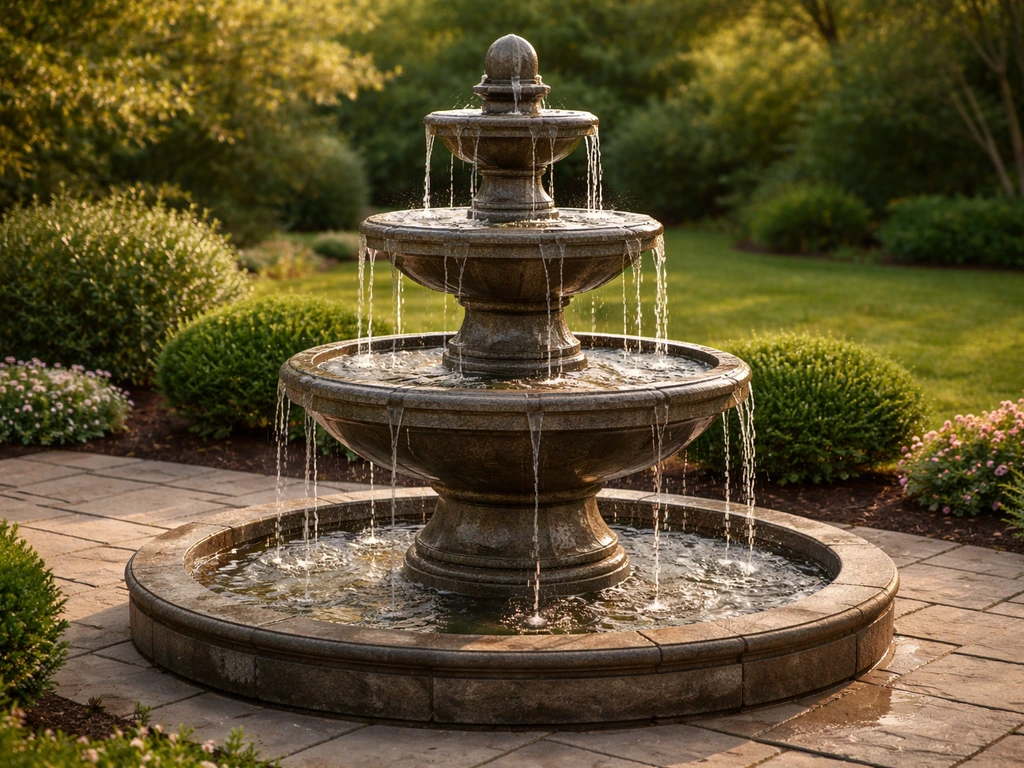
The best patio fountain for most homeowners is a self-contained, recirculating freestanding or bowl-style fountain made from cast stone, resin, or fiberglass, powered by a submersible electric pump, and sized to fit roughly one-third of your available patio space. That combination gives you reliable water sound, manageable maintenance, easy installation without a plumber, and enough visual weight to actually look intentional on the patio rather than like an afterthought. If you're aiming for the best outdoor patio fountains, focus on the type, size, and upkeep level that matches your climate and patio layout. From there, the right pick depends on your specific situation: how much space you have, whether you want a solar or electric setup, how cold your winters get, and how much time you want to spend cleaning.
Best Patio Fountains: Buyer Guide by Type, Features, and Budget

What 'Best' Actually Means for Your Patio
Before you start looking at specific fountains, it helps to get honest with yourself about four things: space, style, climate, and budget. A fountain that looks stunning on a 600-square-foot Texas courtyard is going to feel completely wrong crammed into a 10x12 covered porch in Minnesota. And a sleek stainless steel wall fountain that photographs beautifully in Phoenix will be a rust-prone headache in coastal Florida.
Space comes first. Measure your patio and plan for the fountain to occupy no more than 25 to 35 percent of the visual footprint. A fountain that's too small disappears; one that's too large blocks traffic and overwhelms the space. For patios under 150 square feet, tabletop and compact freestanding fountains (typically 18 to 36 inches tall) work well. Larger patios can support pedestal fountains in the 36 to 60 inch range, or even multi-tier statement pieces.
Style matters more than people think, and it's easy to get wrong. A rustic cast-stone tiered fountain feels completely out of place on a sleek modern concrete patio. Match the fountain material and finish to your existing patio hardscape: clean lines and smooth metal or fiberglass for contemporary spaces, carved stone or textured resin for traditional or Mediterranean settings, rough-cut slate or stacked-stone bowls for a natural or rustic look.
Climate is a factor that online reviews almost never address well. If you're in a freeze-thaw zone (think Colorado, Minnesota, the upper Midwest, or New England), you need a fountain that can be drained and stored, or one built from frost-resistant materials like dense fiberglass or HDPE. Cheap resin fountains crack after one hard freeze. If you're in a drought-prone area (California, Arizona, Nevada), look specifically for recirculating designs with tight-fitting covers that reduce evaporation. In hot, humid climates, algae is a bigger ongoing problem, so fountain material and UV resistance jump up the priority list.
Budget shapes everything. A decent freestanding resin or fiberglass fountain runs $150 to $500. Mid-range cast stone or concrete models land between $400 and $1,200. Premium natural stone, large-scale fiberglass, or custom wall-mounted fountains can range from $1,500 to well over $5,000 installed. Set a real budget before you fall in love with something on a website, and factor in the pump, power setup, and any basin or reservoir system you might need.
Fountain Types and When Each One Makes Sense
There are more fountain types than most people realize, and each one involves real tradeoffs on installation, maintenance, and how they look and sound. Here's how to think through them.
Tabletop and Bowl Fountains
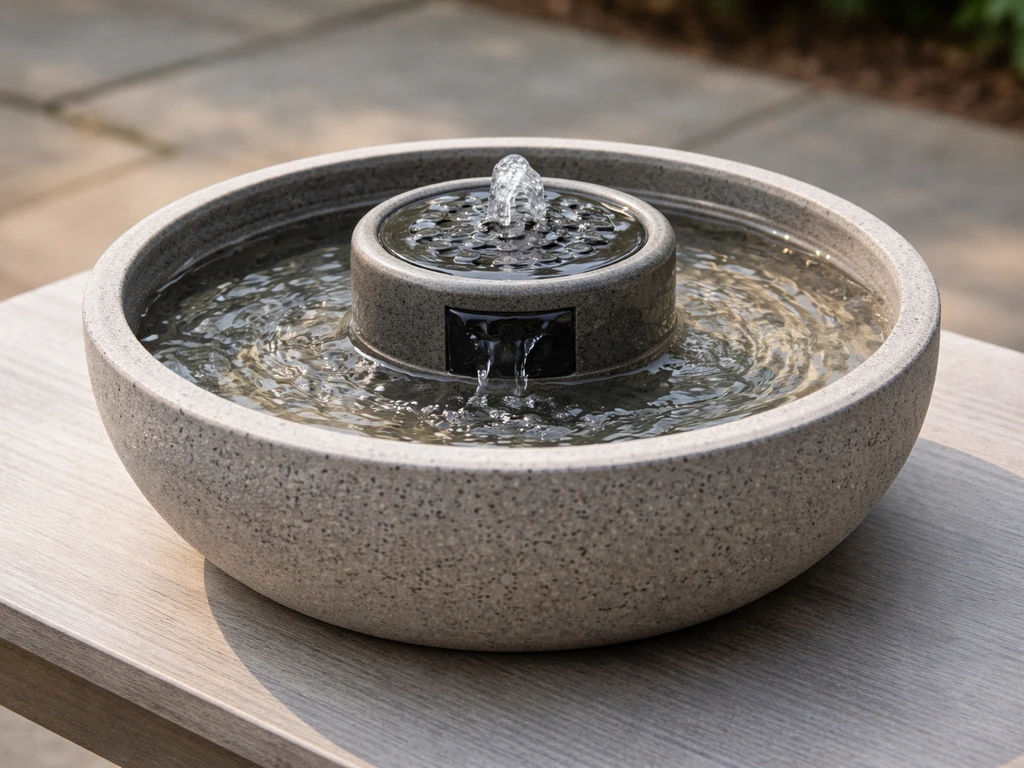
These are the easiest entry point. A self-contained bowl or basin with a built-in submersible pump, usually 12 to 24 inches in diameter, sits on a table, bench, or low platform. They're inexpensive ($50 to $300), easy to move, and genuinely relaxing to sit near. The downside is that they evaporate quickly in heat and dry wind, require more frequent refilling, and often don't produce enough water sound to mask traffic or neighbor noise. Best for: small covered porches, balconies, or someone just testing the waters before committing to something larger.
Freestanding Pedestal and Tiered Fountains
This is the classic patio fountain most people picture: a multi-tier cascading design on a pedestal, or a single large urn-style basin on a stand. These typically run 30 to 60 inches tall and work beautifully as a central focal point on medium to large patios. Materials range from lightweight resin and fiberglass (easy to move, freeze-tolerant) to genuine cast concrete or natural stone (heavier, more authentic-looking, harder to relocate). Electric submersible pumps are standard. Best for: open patios with a defined center point, traditional or Mediterranean-style homes, homeowners who want real visual impact. Best for: open patios with a defined center point, traditional or Mediterranean-style homes, homeowners who want real visual impact, and anyone shopping for the best water fountain for patio curb appeal.
Wall-Mounted Fountains
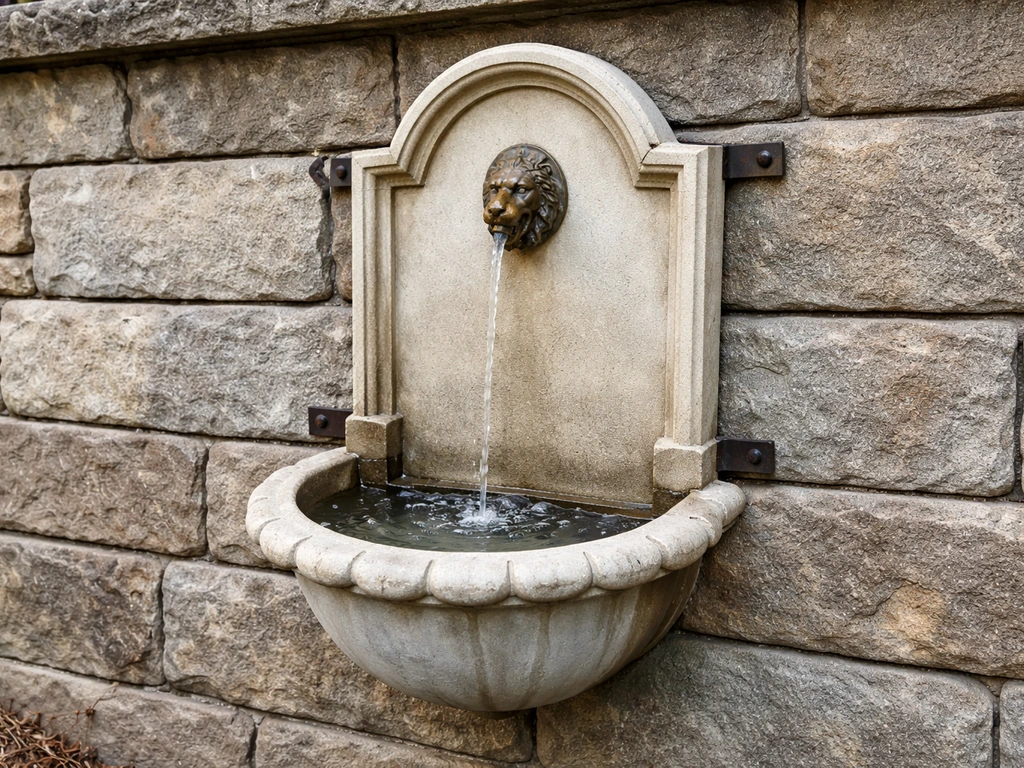
Wall fountains mount directly to a fence, retaining wall, or exterior house wall and include a basin at the bottom that recirculates water up through a spout or mask. They save floor space and look extremely polished in the right setting. The tradeoff is installation complexity: you need a solid, plumb wall surface, secure mounting hardware, and either a nearby GFCI outlet or a conduit run. Best for: smaller patios where floor space is limited, courtyard-style layouts, modern or Mediterranean aesthetics, and covered patio walls where weather exposure is reduced.
Pondless and Basin-Style Recirculating Systems
These are a step up in both cost and sophistication. A hidden underground or below-grade basin stores the water reservoir, a pump pushes water up through a decorative spitter, urn, or bubbling rock at the surface, and the water falls back down through a grate into the basin. Because there's no exposed standing water, they're safer for pets and kids, far less prone to algae, and dramatically reduce evaporation. Professional-grade systems like the Aquascape AquaBasin 45 use high-density polyethylene (HDPE) construction with a lifetime warranty, store up to 98 gallons, and can handle pump flow rates up to 4,000 gallons per hour. This kind of capacity means you can run large decorative stones, multiple spitters, or a bubbling urn without starving the pump. Best for: families with young kids or pets, drought-conscious homeowners, anyone integrating a fountain into a broader landscape design.
Solar vs. Electric Fountains
Solar fountains are appealing on paper: no wiring, no electricity cost, truly portable. In practice, they work well only in direct, consistent sunlight with a quality panel (at least 3 to 5 watts for a small fountain). Clouds, shade, or any obstruction cuts the flow significantly. Many solar fountains also stop when the sun drops, meaning no ambient water sound in the evening. Electric submersible pumps are more reliable, run consistently day and night, and are easy to find replacement parts for. If you want a fountain that runs dependably, electric is the way to go. Solar is fine for a small accent in a very sunny spot where reliability isn't critical.
Features That Actually Drive Satisfaction
Once you've settled on a type, these are the specific features worth checking before you buy. Once you know what matters most, you can narrow down the best patio filler options that match your space, style, and climate.
- Pump quality and flow rate: Look for a submersible pump rated to move at least 50 to 100 gallons per hour for small fountains, 200 to 500 GPH for medium freestanding models. A pump that's undersized for the fountain's height or water volume will strain, run hot, and fail early. Make sure replacement pumps are available before you commit to a brand.
- Materials and durability: Cast stone and concrete are heavy but authentic-looking and long-lasting. Resin is lightweight and affordable but lower quality versions yellow and crack in UV. Fiberglass is the sweet spot for most climates: lightweight, strong, UV-resistant, and freeze-tolerant. Stainless steel looks sharp but requires more care in humid or salty coastal environments.
- UV and weather resistance: Any fountain left outdoors year-round needs UV-stabilized materials or a weather-resistant finish. Ask specifically if the product is rated for full sun exposure. Dark or heavily pigmented finishes hold up better than light ones.
- LED lighting: Built-in submersible LED lights add a lot of ambiance for evening use and are worth the small price premium. Look for color-changing RGB LEDs with a remote or timer if you want flexibility. Make sure the lighting is waterproof rated and uses low-voltage power.
- Water capacity and evaporation control: Larger basins mean less frequent refilling. Covered or below-grade basin systems dramatically reduce evaporation in hot or windy climates. For open bowl designs, expect to top off every one to three days in summer heat.
- Safety for kids and pets: Avoid open basins over six inches deep if you have young children or small pets around. Pondless basin systems with grate covers are the safest option by far. Keep pump cords secured and out of reach.
- Ease of winterization: In freeze zones, you need to be able to fully drain the basin, remove and store the pump, and either store the fountain or confirm it's rated for freeze-thaw cycles. Lightweight resin and fiberglass fountains are easy to move inside. Heavy stone or concrete models need to be confirmed as frost-resistant.
Best Picks by Patio Scenario
Rather than ranking specific models (which come and go), here are the feature sets and types that consistently perform best in each real-world situation.
| Scenario | Best Fountain Type | Key Feature to Prioritize |
|---|---|---|
| Small patio or covered porch (under 150 sq ft) | Compact freestanding or wall-mounted (18–30 in) | Lightweight material (resin/fiberglass), wall-mount to save floor space |
| Low-maintenance lifestyle | Pondless/basin recirculating system | Covered reservoir, algae-resistant basin, auto-shutoff pump |
| Statement/focal point on large patio | Tiered pedestal or large urn with basin system | Cast stone or high-quality fiberglass, 200–500 GPH pump, LED lighting |
| Drought-conscious or water-restricted area | Pondless basin with tight grate cover | Low evaporation design, large reservoir (50+ gal), recirculating pump |
| Freeze-thaw climate (MN, CO, New England) | Lightweight fiberglass or HDPE basin system | Fully drainable design, frost-resistant materials, portable pump storage |
| Budget-conscious buyer (under $300) | Self-contained bowl or tabletop fountain | Built-in pump, easy-clean basin, readily available replacement parts |
| Sound-focused buyer (noise masking) | Tiered or multi-spout freestanding fountain | Higher flow rate pump, multiple pour points, textured basin for splash sound |
| Families with kids or pets | Pondless basin with grated cover | No exposed standing water, low-voltage electrics, secured pump cord |
For windy patios specifically, low and wide bowl fountains outperform tall tiered designs because wind disrupts narrow water columns and causes excessive water loss and noise. A wide shallow basin with a bubbling center spout is much more wind-stable than a three-tier pedestal fountain on an exposed deck.
Placement, Installation, and Power Setup
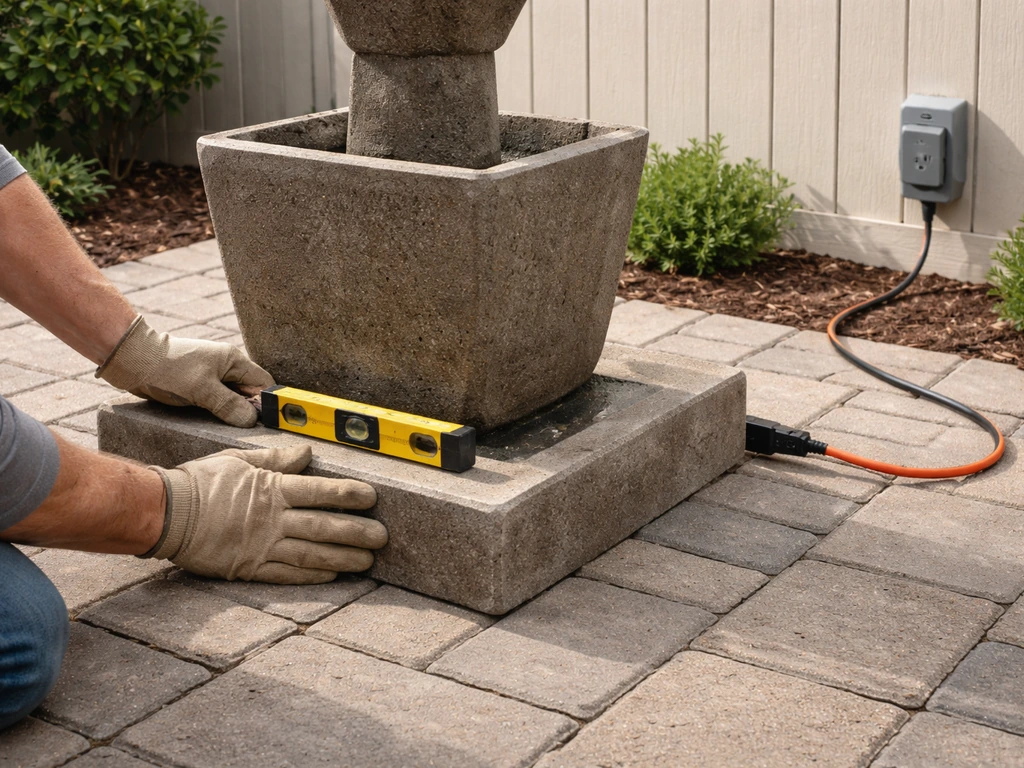
Where you put the fountain matters as much as which one you pick. A few placement principles that make a real difference:
- Keep it away from primary seating areas by at least 6 to 8 feet if you want background ambiance rather than constant front-row water noise. Closer placement creates a more immersive sound experience, which some people love and others find overwhelming after 20 minutes.
- Place it on a level, solid surface. Pavers, concrete, and flagstone all work well. Gravel, mulch, and soft soil are problematic because the fountain will shift, causing water to pool unevenly on one side, stressing the pump. Use a paver base or pre-leveled platform under any freestanding model.
- Position it so the spout or cascade faces your primary sightline from the house or main seating area. You want to see the movement of water, not just hear it.
- Integrate it into the existing landscape rather than plunking it in the center of open patio. Flanking plants, surrounding ground cover, or nearby lighting ties the fountain into the overall design and makes it look intentional.
- Power access is critical. You need a GFCI-protected outdoor outlet within reasonable cord distance (most fountain pumps come with 10 to 20 foot cords). Do not run extension cords across a patio permanently. If your patio doesn't have an outdoor outlet nearby, factor in the cost of adding one before you buy. That work requires an electrician and potentially a permit, usually running $150 to $400 depending on your area.
- For wall fountains, the mounting surface must be solid, plumb, and capable of bearing the full weight of the fountain filled with water. Use appropriate anchors for masonry or stud-backed wood fencing.
Solar setups need the panel positioned in unobstructed direct sun for at least six hours a day. Shading from a patio cover, pergola, or nearby tree will significantly reduce or stop flow. Run a test on the panel location before committing.
Keeping It Running: Maintenance, Algae, and Winterization
The number one reason homeowners stop using their patio fountain is that it becomes a maintenance burden they didn't anticipate. Getting ahead of this with a simple routine makes all the difference.
Routine Cleaning
Every one to two weeks during active use, wipe down the basin interior with a soft brush or sponge to remove mineral deposits and biofilm before they harden. Drain and fully clean the basin once a month in summer, including rinsing the pump filter or impeller. Most fountain pump impellers can be pulled apart by hand and rinsed under a hose. Doing this regularly adds years to pump life.
Algae Control
Algae grows fast in warm, sunny, nutrient-rich water. Your main tools: keep the fountain in partial shade if possible, use a fountain-safe algaecide or enzymes (look for products labeled safe for birds and pets), and change or top off with fresh water regularly rather than letting the same water sit for weeks. In very hot climates, you may find yourself fighting algae weekly. A UV sterilizer attachment on the pump circuit can help significantly in severe cases.
Winterization
If you're in a zone where temperatures drop below 32°F, winterizing your fountain is non-negotiable. Even one hard freeze can crack a basin, shatter a ceramic bowl, or damage a pump left full of water. The process is straightforward: fully drain the basin, remove and clean the pump (store it indoors in a bucket of water to keep the seals from drying out), and either bring the fountain inside or cover it with a fitted weatherproof cover. For heavy stone or concrete fountains that can't be moved, confirm the material is rated for freeze-thaw cycles and stuff the basin with burlap or foam to prevent water pooling inside.
Common Problems and How to Fix Them Fast
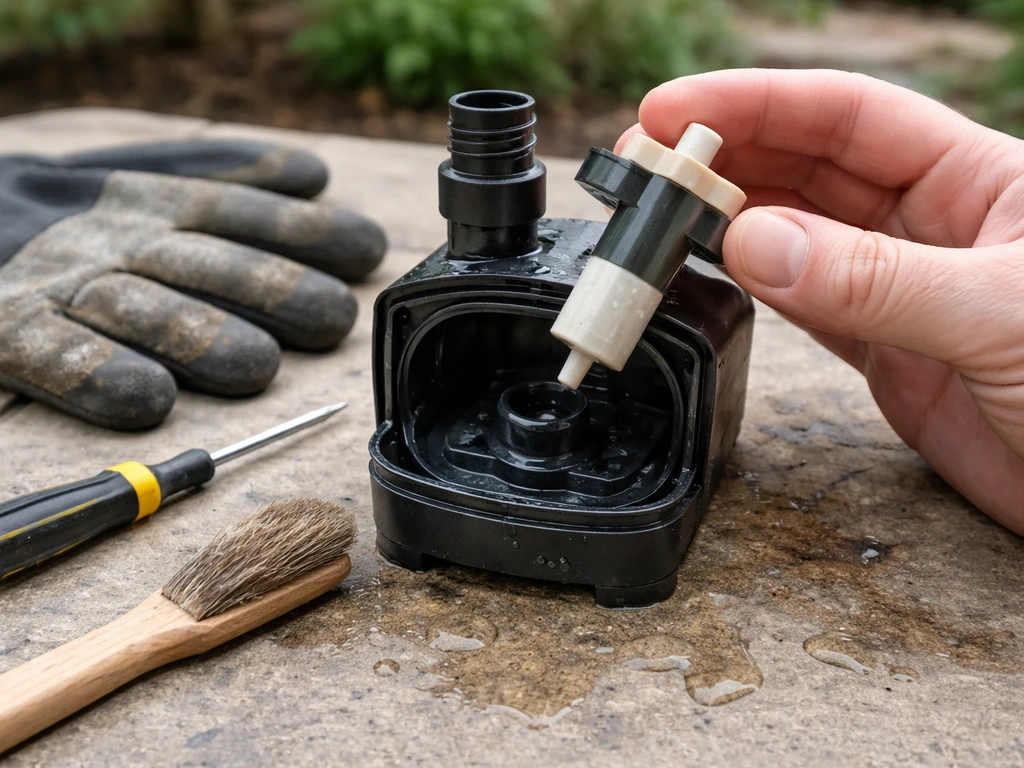
Even a well-chosen and well-maintained fountain runs into issues. Here's what you're most likely to encounter and how to handle it.
- Pump is running but water flow is weak or stopped: Almost always a clogged impeller. Disconnect the pump, pull out the impeller cap, and clean out debris (leaves, algae, mineral buildup). A five-minute clean usually restores full flow.
- Pump is making grinding or loud noise: The impeller may have debris stuck in it, or the pump is air-locked (running dry). Turn it off immediately, clean the impeller, and refill the basin before restarting. Running dry even briefly can burn out a pump motor.
- Water is green and cloudy: Algae bloom. Do a full drain and scrub, add a fountain-safe algae treatment, and increase cleaning frequency. If your fountain is in full sun, consider repositioning or adding shade.
- Water is disappearing too fast: Check for leaks first (look for wet spots around the base). If no leaks, evaporation is the culprit, especially in hot or windy conditions. Add a larger basin or use a covered pondless reservoir system to reduce evaporation losses.
- Fountain is uneven or tilting: The base surface has shifted or settled. Re-level using paver shims or a composite leveling pad. Don't run the fountain tilted since water pooling on one side will constantly expose the pump and cause it to air-lock.
- White mineral deposits on the basin or spout: Hard water scale. Scrub with undiluted white vinegar and a stiff brush. In very hard water areas, use a fountain water conditioner to slow buildup.
- Electrical outlet tripping the GFCI: First, check that the pump cord and connections are fully dry and undamaged. If the problem persists, the pump motor may be failing. Try a known-good replacement pump before calling an electrician.
- Fountain cracks after winter: The basin was not fully drained before a freeze. Unfortunately, cracked stone or ceramic is usually not repairable for structural use. Prevent it by fully draining and storing as described above.
When to Call a Pro
Most fountain setups are genuinely DIY-friendly, but there are a few situations where calling a professional is the smarter move. If you need a new outdoor electrical circuit or conduit run to power the fountain, hire a licensed electrician and pull the permit. Eaton’s NEC-focused guidance highlights expanded GFCI protection requirements for outdoor outlets in NEC 2020 Article 210.8(F), which matters when powering devices outdoors new outdoor electrical circuit or conduit run. If you're installing a heavy natural stone fountain (anything over 200 pounds), a landscaping or masonry contractor can handle the base prep and placement safely. If you're integrating a pondless system into a larger patio redesign with plumbing tie-ins or significant excavation, a landscape contractor will save you headaches. And if you're in a climate with complicated permitting for water features, a local pro will know exactly what's required.
If you're exploring other ways to bring water features into your outdoor space beyond freestanding fountains, it's worth looking into the full range of patio water features available, from wall spouts to naturalistic pondless streams, since some may be a better fit depending on your yard layout and aesthetic goals. And if you're still in the early stages of planning the patio itself, sorting out structural elements like edging and surface gaps first will make fountain placement and base prep much easier later. If your patio has visible surface gaps, the same planning mindset applies to choosing the best patio gap filler for a clean, finished look.
FAQ
How do I choose the right fountain size if my patio is oddly shaped or has furniture blocking sight lines?
Start by measuring the clear circulation path first (doorways, stairs, and walkway). If the fountain will be partially blocked, reduce the footprint target from 25 to 35 percent to the lower end so it still feels balanced when viewed from the seating area.
What water sound level should I expect from a small bowl fountain versus a multi-tier pedestal?
Small basins often sound like a gentle bubbling and can disappear next to hard, echoing surfaces. Multi-tier cascades produce more distinct splashing but also lose more water in wind, so for noise-sensitive neighbors choose a lower, wider basin or add a diffuser cover if available.
Can I run my electric fountain continuously, and will it overwork the pump?
Recirculating pumps are usually designed for ongoing use, but impeller strain rises when mineral scale builds up. If you want longer runtime, follow the cleaning schedule and keep the inlet intake free of debris, especially on covered patios where leaves collect.
Is solar always a bad choice for cloudy regions?
Not always. Solar can work if you have long daylight hours, minimal shade, and you’re willing to accept reduced flow in winter. For places with frequent storms, pick a fountain with a removable pump and separate reservoir so you can switch to supplemental electric if performance drops.
How do I prevent algae without creating unsafe conditions for pets or plants nearby?
Use only fountain-labeled treatments and apply them according to dosage for your basin size. Also avoid dumping strong chemicals into the yard, instead top off with clean water and treat the recirculating loop, keeping runoff away from edible plants.
What’s the best way to winterize if I cannot bring the fountain inside?
For non-movable heavy units, drain completely, remove any removable pump parts, and keep the pump storage indoors. Then cover with a fitted, breathable weather cover that sheds water while preventing trapped condensation and ice expansion in the basin.
Do I need a GFCI outlet for a wall fountain, and what if I already have outdoor outlets?
Many installations require GFCI protection even when an outlet is present, because outdoor-rated outlets are not always GFCI by default. If you are unsure, test the outlet and use an outdoor GFCI adapter or have an electrician verify compliance before mounting and wiring.
How can I tell whether my fountain is losing too much water in wind?
Watch the water level over 24 hours in windy conditions. If you’re refilling dramatically more often than the manufacturer’s norm, switch to a wider basin design, lower the splash profile (taller tiers lose more), or relocate it to a more sheltered corner.
What causes low or weak water flow, and should I clean before troubleshooting anything else?
Most weak flow issues come from mineral buildup, clogged pump screens, or air getting into the intake. Before replacing parts, fully clean the basin, rinse the pump intake, inspect the impeller for scale, and verify the pump is sitting level and fully submerged.
Are pondless, below-grade systems safe for kids and pets?
They are generally safer because there is no exposed standing water where small animals can access it, but safety still depends on the design and cover. Choose systems with secure grates and confirm the discharge height so curious pets cannot reach the splash area.
How do I estimate ongoing costs like water top-offs and electricity for an electric fountain?
Electric cost depends mainly on pump wattage and runtime. For water, evaporation and splash loss drive most usage, so in hot or windy climates plan for more frequent top-offs. If you want predictable costs, choose recirculating designs with tighter covers and keep the fountain in partial shade.